
10 Best Exercise Bikes For Knee Replacement Rehab in 2026
This post contains affiliate links. As an Amazon Associate, we earn from qualifying purchases.
The Sunny Health & Fitness Smart Low-Impact Recumbent Bike earns our Best Overall spot for its stable Q235 steel frame, 350 lb weight capacity, and free app access to over 1,000 guided workouts. For joint-friendly rehab with professional input, the YOSUDA Recumbent Exercise Bike RC-PRO is a standout, while the Marcy Magnetic Recumbent Bike NS-716R offers a strong value for budget-conscious buyers.
Recovering from a knee replacement means finding movement that rebuilds strength without risking the joint. Too much impact too soon can set you back, but the right bike lets you control resistance precisely and pedal through a smooth, pain-free range of motion.
This guide is built from manufacturer specifications, expert round-ups on post-surgery exercise, and patterns in owner feedback. We looked at what matters most for rehab: low-impact design, adjustability, resistance range, and overall stability. Here are the 10 best exercise bikes for knee replacement rehab to help you get back on track.
Top 10 Exercise Bikes For Knee Replacement Rehab in the Market

Certain content that appears on this site comes from Amazon. This content is provided "as is" and is subject to change or removal at any time.
The Best Exercise Bikes For Knee Replacement Rehab, Reviewed
Sunny Health & Fitness Smart Low-Impact Recumbent Bike

What We Like
- 350 lb weight capacity from Q235 steel
- 15 quiet magnetic resistance levels
- Wide cushioned seat with mesh back support
- Free SunnyFit app with 1,000+ workouts
Trade-offs
- At 86.4 lb, moving it takes effort
- Only 15 resistance levels, not 16 like some
- No built-in fan or water bottle holder
A 350-pound weight capacity on a recumbent bike built from commercial-grade Q235 carbon steel means this frame is built to handle heavy use without worry. The reclining position and mesh back support are designed for low-impact exercise that reduces stress on joints, making it suitable for general fitness, rehab, and cardiovascular health. Fifteen levels of magnetic resistance let you start with low tension and increase gradually, and the belt drive keeps the ride ultra-quiet so it works well in a home setting. The free SunnyFit app provides access to 1,000+ trainer-led workouts and 10,000+ virtual scenic tours, giving you variety without a membership fee.
The trade-off for that sturdy frame is weight: at 86.4 pounds, this bike is not something you’ll casually roll from room to room unless you have strong help or install it in a permanent spot. Compared to the YOSUDA RC-PRO, which offers 16 resistance levels and weighs 58.4 pounds, the Sunny gives you a wider, more supportive seat and a mesh back that breathes better during longer sessions. If you value stability and comfort over portability, and you don’t mind dedicating floor space, this recumbent bike is built for those priorities.
Product photos
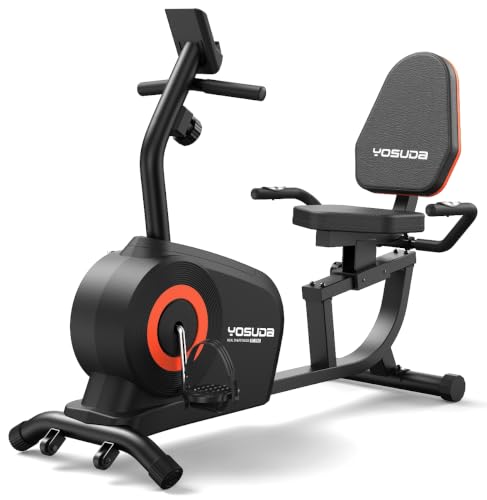
YOSUDA Recumbent Exercise Bike RC-PRO
What We Like
- Designed with rehab pro input
- 16 magnetic resistance levels
- Quiet magnetic resistance system
Trade-offs
- At 58.4 lb, not easy to move regularly
- At 58.4 lb, heavier than some alternatives
The YOSUDA RC-PRO supports up to 350 pounds on a light commercial-grade steel frame, which means it can handle a wide range of body types and daily use without feeling flimsy. The recumbent design, developed with input from rehabilitation professionals, keeps your hips and knees in a supported position for low-impact exercise, making it a comfortable option for those with knee or lower back concerns. Sixteen magnetic resistance levels let you start easy and gradually increase intensity, while the adjustable seat accommodates riders from 4’9″ to 6’2″ so you can find a comfortable leg position. The quiet operation means you can ride without disturbing others.
At 58.4 pounds, this bike is heavier than the Marcy Magnetic Recumbent Bike NS-716R (41 lb), so you’ll want to set it in one spot and leave it there. But if your priority is a stable, joint-friendly platform that grows with you from post-op stillness to steady cardio, the YOSUDA delivers that foundation without extra frills. Its quiet magnetic resistance means you can pedal through a show without annoying anyone in the next room.
Product photos
Schwinn Fitness 230 Recumbent Bike

What We Like
- 16 magnetic resistance levels for gradual progression
- 5.5-inch LCD with 13 workout programs
- Bluetooth connectivity for app-based tracking
Trade-offs
- At 80 lb, it is heavy to move for setup
- App subscriptions required for interactive training
A 5.5-inch LCD presents 13 workout programs, giving you structured variety from interval training to heart-rate-controlled sessions. Bluetooth connectivity allows the bike to pair with popular cycling apps like Zwift, so virtual routes can auto-adjust resistance in real time based on your pedaling speed. For those who enjoy exploring new scenery, over 100 global routes are available through the Explore the World subscription. The display keeps key metrics visible without overwhelming you with data, making it easy to follow a program or track progress during a ride. Riders who prefer app-based tracking can set and monitor their workouts through connected devices.
The trade-off is weight: at 80 pounds, this bike is heavy enough that you’ll want to set it in a permanent spot. You will also need a subscription to unlock the interactive routes that work with apps like Zwift. Compared to the YOSUDA RC-PRO, which is lighter at 58.4 pounds, the Schwinn 230 offers app-based motivation through Bluetooth connectivity.
Marcy Magnetic Recumbent Bike NS-716R

What We Like
- Fully adjustable seat for leg length
- 8 preset magnetic resistance levels
- LCD tracks speed, distance, time, calories
- Transport wheels for easy moving
Trade-offs
- Only 8 resistance levels limit progression
With 8 preset magnetic resistance levels dialed in by a simple knob, this Marcy recumbent bike gives you smooth, quiet pedaling that won’t rattle your joints or your focus. The fully adjustable seat lets you find a comfortable leg extension, so you’re not fighting the bike during your workout. For anyone watching their budget but wanting a reliable recumbent that covers the basics, this is a smart, no-fuss starting point.
The trade-off shows up in the details. With only 8 resistance levels, you’ll eventually outgrow the challenge if your training calls for steady progressive overload. Still, at 41 pounds, this bike is light enough to roll around on its transport wheels and tuck into a corner, making it a practical pick if space and simplicity matter more than advanced features.
Sunny Health & Fitness Smart Programmable Electro-Magnetic Recumbent Bike
What We Like
- 24 pre-built workout programs
- Programmable settings for custom routines
- Electro-magnetic resistance for precise control
- Free SunnyFit app with 1,000+ workouts
Trade-offs
- 300 lb capacity is lower than some recumbent bikes
- At 55 lb, not the lightest to move around
With 24 pre-built workout programs and fully programmable settings, this recumbent bike lets you dial in exactly the resistance and routine your rehab needs without guessing. The electro-magnetic resistance responds quickly and quietly, so you can fine-tune effort level smoothly as your knee strengthens. For someone recovering from knee replacement who wants structured, trackable sessions, the combination of pre-set programs and app connectivity makes it easy to follow a progression without overthinking it.
The trade-off comes in the 300 lb weight capacity and 55 lb frame, which is a bit lighter and lower-capacity than some other recumbent options like the Sunny Health & Fitness Smart Low-Impact Recumbent Bike. That means if you need extra stability or a higher weight limit, you might prefer a heavier build. But for most people focused on programmable, low-impact rehab workouts, the smart features here offer real convenience without a complicated setup.
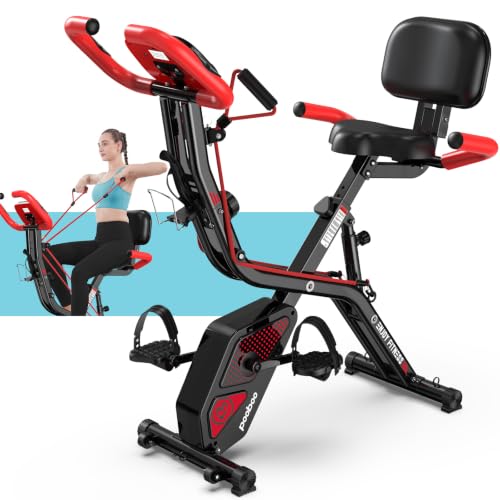
pooboo Folding Magnetic X-Bike
What We Like
- Folds fully for tight storage
- 300 lb weight capacity with reinforced frame
- Includes arm resistance bands for upper body
- 8-level magnetic resistance runs quietly
Trade-offs
- 6.6 lb flywheel provides lighter resistance feel
- Only 8 resistance levels limit workout progression.
A 300-pound weight capacity and a thickened steel frame keep this foldable bike steady during workouts, even at higher resistance levels. It folds fully and includes transport wheels, so it fits easily in a small apartment or a cramped corner where a bulky recumbent bike would dominate the space. The 8-level magnetic resistance runs silently, and the included arm bands let you work your upper body. The 6.6-pound flywheel means the resistance range is lighter than what heavier-flywheel models offer.
Product photos
VANSWE Recumbent Exercise Bike With Bluetooth

What We Like
- 380 lb capacity, reinforced steel frame
- Step-through frame for easy mounting
- Infinite slider seat for precise fit
- Bluetooth app connectivity included
Trade-offs
- No arm exerciser for upper-body rehab
- Shorter 47-inch length limits legroom for tall riders
A 380-pound weight capacity in a recumbent bike this compact is a rare find, and it’s the main reason this model stands out for knee rehab. The reinforced steel frame and low step-through design mean you can mount and dismount without twisting or lifting your leg high, a huge relief after surgery. The infinite slider seat lets you dial in leg extension millimeter by millimeter, which is exactly what you want to avoid straining that healing knee. It’s also whisper-quiet, so you can pedal through physical therapy while watching TV without annoying anyone.
This bike is lighter than some competitors, 53 pounds versus the 86.4-pound Sunny Health & Fitness Smart Low-Impact Recumbent Bike, which can make it feel less planted during harder efforts. That said, the lighter weight also makes it easier to move around with the built-in transport wheels. It’s a smart pick if you need a bike that’s easy to get on and off, but if you want a heavier, more stationary feel for intense sessions, the Sunny model might suit you better.
Product photos
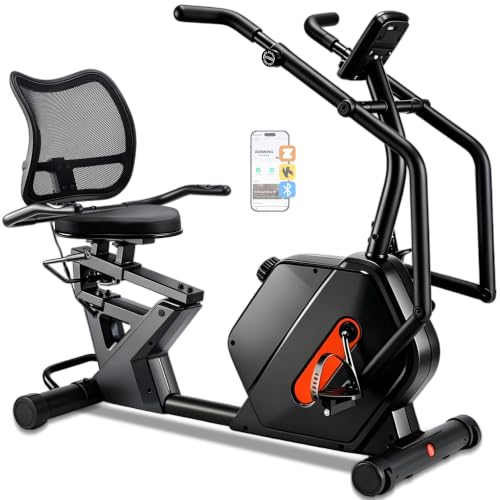
Kawnina Recumbent Exercise Bike With Arm Exerciser
What We Like
- 420 lb weight capacity for stability
- Dual-action arm exerciser for upper body
- Ergonomic mesh backrest with lumbar support
Trade-offs
- At 73.8 lb, moving it takes real effort
- No inseam range listed for shorter riders
- Arm exerciser adds width to the frame
A 420-pound weight capacity means this bike is built for riders who need rock-solid stability during rehab, not a wobble that makes you second-guess each pedal stroke. The synchronized dual-action handlebars engage both the upper and lower body simultaneously, so you get a full-body workout without putting extra stress on your lower body. That combination of a reinforced steel frame and synchronized upper-body movement makes it a smart choice for anyone who wants a stable, wobble-free ride. This is especially true if you’re a plus-size individual or senior looking for a reliable home gym solution.
At 73.8 pounds, this bike is heavy to shift around, so you’ll want to find a permanent spot for it rather than planning to tuck it in a corner after each ride. Compared to the YOSUDA Recumbent Exercise Bike RC-PRO at 58.4 pounds, this one demands more effort to relocate, but the reward is a noticeably steadier platform when you’re pushing through those 16 resistance levels. The breathable mesh backrest helps keep you cool during longer sessions, and the adjustable seat rail makes it easy to find a comfortable riding position, which matters a lot when you’re settling in for a longer workout.
Product photos
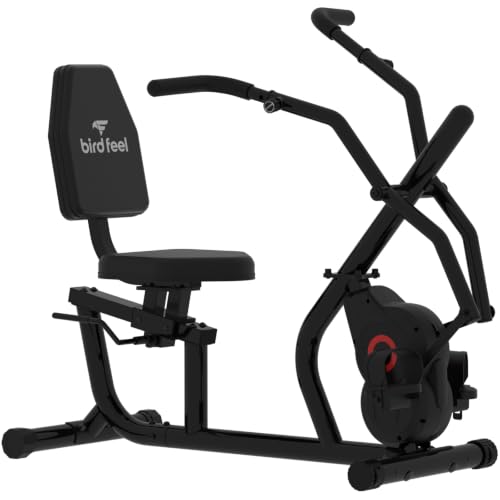
Birdfeel Recumbent Exercise Bike With Arm Exerciser
What We Like
- Wide cushioned seat with thick backrest
- Quick-adjust seating length handle
- Adjustable non-slip footrests lock feet
- Includes arm exerciser for full body
Trade-offs
- 55.1-inch length requires significant floor space
- At 53.1 lb, harder to move than lighter models
A wide cushioned seat with a thick supportive backrest provides comfort during longer sessions, and the easy-to-use adjustment handle lets you dial in the seating length quickly. The adjustable non-slip footrests lock your feet securely so you can focus on smooth, low-impact pedaling without slipping. That combination of comfort and stability is well suited for anyone who wants a stable, comfortable ride.
Space is the main consideration here: at 55.1 inches long, this recumbent bike asks for a dedicated corner of the room, so it won’t suit a tight apartment setup. Compared to the Marcy Magnetic Recumbent Bike NS-716R, which is 56 inches long and weighs 41 pounds, the Birdfeel is heavier and offers a cushioned seat with backrest and an arm exerciser. If your space can handle the footprint, the extra features make it a practical choice.
MERACH Recumbent Exercise Bike High-end Black
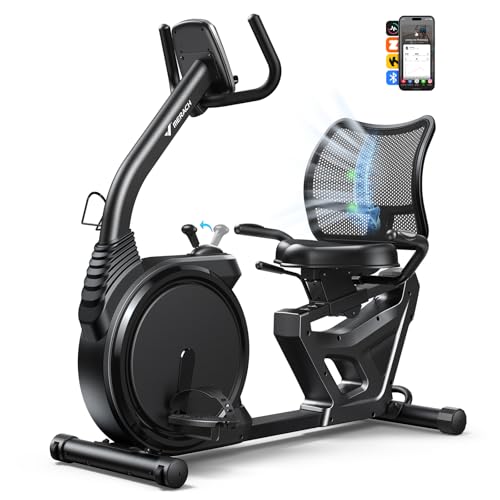
What We Like
- Silent dual-belt drive system
- Ergonomic thicker seat & backrest
- Heart rate tracking handlebars
- Bluetooth app with game experience
Trade-offs
- Only 8 resistance levels limit progression
- 85.5 lb makes it hard to move alone
- No arm exerciser for upper body rehab
A 6.6 lb perimeter-weighted flywheel and a silent dual-belt drive mean this bike glides so quietly you could watch an entire episode of your favorite show without turning up the volume. That matters a lot when you need consistent, low-stress movement without disturbing anyone else in the house. The eight car-style resistance levels let you start with almost no tension and gradually build strength, while the eight-position seat and breathable mesh backrest help you find a comfortable riding position. It’s designed for anyone who wants to exercise in peace, at their own pace, without complicated setup.
Eight resistance levels won’t challenge you forever. Once your fitness improves and you’re ready for more intensity, you might find yourself wanting the sixteen levels offered by the YOSUDA RC-PRO. The MERACH also weighs 85.5 pounds, so it’s not something you’ll casually roll from room to room without a bit of effort. But for quiet operation and a comfortable seat, this bike delivers exactly what you need. The included app provides real-time stats and a game-like experience to help keep you engaged.
How We Evaluated Exercise Bikes For Knee Replacement Rehab
We focused on research-based evaluation: manufacturer specs, expert guidance on post-surgery recovery, and common themes in owner experiences. No bike was tested in a lab. Instead, we looked at what the data says about safe, effective rehab equipment.
Four criteria drove our picks. Low-impact design was non-negotiable, recumbent bikes with smooth magnetic resistance win here because they eliminate jarring motion. Resistance range matters because early rehab needs very light tension, while later stages require progressive load. Adjustability, seat position, handlebar reach, and pedal placement, determines whether a bike fits your body and protects your knee angle. Stability and weight capacity tell you whether the frame will hold up without wobbling during controlled pedaling.
The honest limit of a research-led evaluation is that individual recovery varies. What works for one person’s range of motion or pain tolerance may not work for another. We recommend using this guide to narrow your options, then checking with your physical therapist before committing.
What To Look For In Exercise Bikes For Knee Replacement Rehab
Choosing a bike for rehab means looking past flashy features and focusing on what keeps your knee safe during every pedal stroke. The right bike lets you start feather-light and progress steadily.
A recumbent design with magnetic resistance, a low step-through frame, and at least 8 resistance levels is the safest starting point for knee replacement rehab. Prioritize a comfortable seat with back support and a weight capacity that exceeds your body weight.
Recumbent vs. Upright Design
A recumbent bike places your legs forward and your hips lower, which reduces the angle at the knee during pedaling. This is critical for rehab because it minimizes stress on the joint while still activating the quadriceps and hamstrings. Upright bikes put more weight through the knee and require more flexion, which can be uncomfortable or risky in early recovery. Every bike on this list is recumbent for that reason.
Resistance Type and Range
Magnetic resistance is the gold standard for rehab. It creates smooth, silent tension with no friction pads to wear out, so you can pedal through a full rotation without catching or jerking. Look for at least 8 resistance levels, early rehab may use only levels 1-3, but having room to progress keeps the bike useful for months. The YOSUDA RC-PRO offers 16 levels, which gives excellent granularity for gradual strengthening.
Seat Comfort and Adjustability
You will spend 15 to 30 minutes per session on this seat, so comfort is not optional. A wide, cushioned seat with a supportive backrest protects your lower back and encourages proper posture. The seat should slide forward and backward to match your leg length, the VANSWE Recumbent Bike’s infinite slider is a standout here. If the seat does not adjust far enough, your knee may hyperextend or remain too bent, both of which can aggravate recovery.
Frame Stability and Weight Capacity
A wobbly bike is dangerous for anyone with limited balance or a healing joint. Look for a reinforced steel frame and a weight capacity well above your body weight. The Kawnina Recumbent Bike’s 420 lb capacity and the Sunny Health & Fitness Smart Bike’s 350 lb capacity are excellent examples of heavy-duty stability. Heavier bikes also stay planted during pedaling, which matters when you are building confidence.
- Check that the pedals have adjustable straps or cages to keep your foot secure without over-tightening.
- Make sure the step-through height is low enough that you can mount and dismount without twisting your knee.
- Look for transport wheels if you need to move the bike to a different room, but remember that heavier bikes are harder to relocate.
- Verify that the resistance adjustment is within easy reach from the seated position so you never have to lean or stretch mid-workout.
A good rule of thumb: if the bike feels solid when you push on the handlebars, it will feel solid under pedal pressure.
Exercise Bikes For Knee Replacement Rehab Compared
The table below compares key specs for all 10 bikes side by side, so you can see at a glance how they differ in weight capacity, resistance levels, and special features.
| Product | Type | Resistance Levels | Product Weight |
|---|---|---|---|
| Sunny Health & Fitness Smart Low-Impact Recumbent Bike | Recumbent | 15 | 86.4 lb |
| YOSUDA Recumbent Exercise Bike RC-PRO | Recumbent | 16 | 58.4 lbs |
| Schwinn Fitness 230 Recumbent Bike | Recumbent | 16 levels magnetic | 80.0 pounds |
| Marcy Magnetic Recumbent Bike NS-716R | Recumbent | 8 preset | 41 lb |
| Sunny Health & Fitness Smart Programmable Electro-Magnetic Recumbent Bike | Recumbent | 16 | 55.0 lb |
| pooboo Folding Magnetic X-Bike | Upright | 8 | 39.3 pounds |
| VANSWE Recumbent Exercise Bike With Bluetooth | Recumbent | 16-level magnetic | 53 lbs |
| Kawnina Recumbent Exercise Bike With Arm Exerciser | Recumbent | 16-level magnetic | 73.8 pounds |
| Birdfeel Recumbent Exercise Bike With Arm Exerciser | Recumbent | N/A | 53.1 lb |
| MERACH Recumbent Exercise Bike High-end Black | Recumbent | 8 magnetic | 85.5 lb |
Frequently Asked Questions
When can I start using an exercise bike after knee replacement surgery?
Most surgeons and physical therapists recommend waiting until your incision is fully healed and you have sufficient knee flexion, typically around 3 to 6 weeks post-surgery. Always get clearance from your medical team before starting any new exercise.
How long should I ride a stationary bike for knee rehab?
Start with 5 to 10 minutes at very low resistance, focusing on smooth, full rotations. Gradually increase duration by 2 to 3 minutes per session as your knee tolerates the motion. Many owners report working up to 20-minute sessions within a few weeks of consistent use.
Is a recumbent bike better than an upright bike for knee replacement recovery?
Yes, for most people. The recumbent position reduces the angle of knee flexion and distributes weight across the back and glutes rather than through the knee joint. This makes pedaling more comfortable and lowers the risk of over-stressing the healing tissue.
What resistance level should I use after knee replacement?
Start at the lowest resistance setting, level 1 on most magnetic bikes, and focus on range of motion rather than effort. Only increase resistance when you can complete 10 to 15 minutes with no pain or swelling afterward. The goal is controlled movement, not muscle fatigue.
Can an exercise bike help with knee stiffness after replacement?
Yes. Gentle pedaling through a full range of motion helps maintain and gradually improve knee flexion and extension. Many physical therapists recommend the bike as a primary tool for reducing post-surgical stiffness because the motion is controlled, low-impact, and repeatable.
The Bottom Line
The Sunny Health & Fitness Smart Low-Impact Recumbent Bike is our Best Overall pick because it combines a rock-solid frame, a high 350 lb weight capacity, and app-guided workouts that keep rehab interesting. It is the bike we would recommend to someone who wants stability and long-term usability without a premium price tag.
If your budget is tighter, the Marcy Magnetic Recumbent Bike NS-716R gives you the essential features, adjustable seat, smooth magnetic resistance, and transport wheels, for early-stage rehab without extras you do not need. For those who want a design shaped by rehab professionals, the YOSUDA RC-PRO offers 16 resistance levels and a thoughtful frame that supports sensitive knees and backs.
Whatever bike you choose, the single most important factor is that it lets you pedal smoothly at very low resistance. Start easy, listen to your body, and let your range of motion, not your ego, set the pace.
