
10 Best Exercise Bikes For Stroke Patient in 2026
This post contains affiliate links. As an Amazon Associate, we earn from qualifying purchases.
The Sunny Health & Fitness Smart Recumbent Bike wins as Best Overall because its cushioned adjustable seat with padded backrest and flip-able side handle make getting on and off easier for stroke patients. The included resistance bands add upper-body rehab. For those needing motorized assistance, the PHYCISER Motorized Exercise Bike takes Best Motorized Rehab Bike. The ZIDAFIT Adjustable Pedal Exerciser Bike is our Best For Stroke Recovery pick for lightweight, adjustable arm and leg work.
Stroke recovery demands equipment that prioritizes safe entry and exit, adjustable resistance for gradual progression, and the ability to work both legs and arms from a seated position. Many standard exercise bikes overlook the limited mobility, balance issues, and muscle weakness that stroke survivors face daily.
This guide is research-based, drawing on manufacturer specifications, expert round-ups, and patterns in owner feedback. We evaluated ten bikes across key criteria like motorized assistance, weight capacity, adjustability, and portability to help you find the right fit for your recovery stage.
Top 10 Exercise Bikes For Stroke Patients in the Market
Certain content that appears on this site comes from Amazon. This content is provided "as is" and is subject to change or removal at any time.
The Best Exercise Bikes For Stroke Patients, Reviewed
Sunny Health & Fitness Smart Recumbent Bike
What We Like
- Cushioned adjustable seat with padded backrest
- Flip-able side handle for easy on/off
- Includes two 20 lb resistance bands
- Quiet magnetic belt-drive mechanism
Trade-offs
- At 63.9 lb, it's heavier to move than compact pedal exercisers
- No motorized assistance for leg movement
- Requires 27.2-inch minimum inseam, limiting very short users
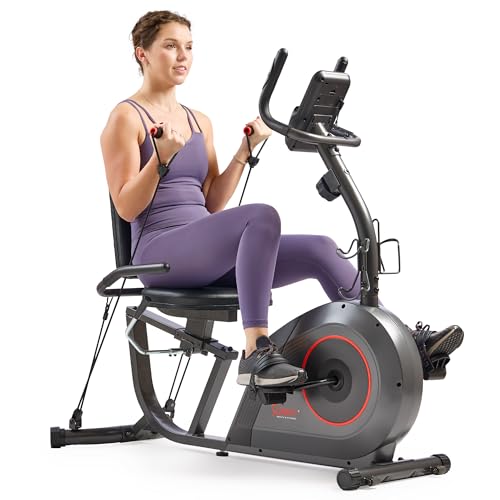
A 300-pound weight capacity and an inseam range that stretches from 27.2 to 35.8 inches mean this recumbent bike can accommodate a wide variety of body types. The cushioned adjustable seat and padded backrest let you settle into a comfortable position, while the flip-able side handle makes getting on and off much simpler than on a traditional upright bike. The two included 20-pound resistance bands add an upper-body workout option without needing extra equipment.
This bike is heavier than many compact pedal exercisers on the market. At 63.9 pounds, it’s not something you’ll casually move from room to room. Unlike motorized options like the PHYCISER Motorized Exercise Bike, this one relies entirely on your own leg strength to turn the pedals, so it may not be the right fit if you need active assistance to get your legs moving. But if you’re ready for low-impact cardio with the option to work your upper body at the same time, this Sunny Health & Fitness model gives you a sturdy, quiet machine.
ZIDAFIT Adjustable Pedal Exerciser Bike
What We Like
- Adjustable tension and height for arm/leg workouts
- Suction cups for floor stability
- Magnetic resistance for quiet operation
- Supports up to 265 lb
Trade-offs
- No motorized assistance for passive movement
- LCD shows session data only, no Bluetooth or app
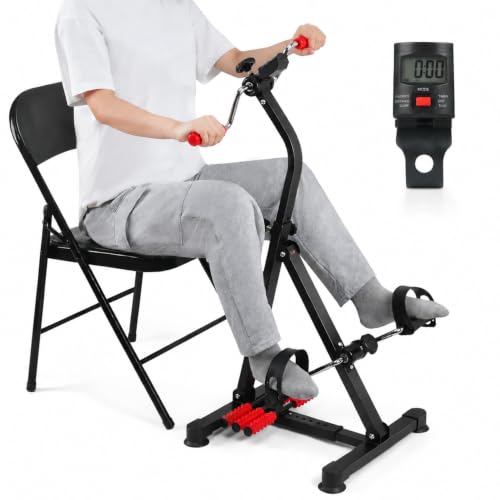
At 13.2 pounds, this pedal exerciser is light enough to move from room to room or tuck next to a chair, yet its four suction cups keep it planted on smooth floors during use. The tension and height adjust for either arm or leg workouts, so someone recovering from a stroke can do gentle, low-impact movement while seated. That combination makes it a practical tool for rebuilding strength without needing a dedicated exercise space.
There is no motor to assist limb movement if you have very limited strength early in recovery, unlike the motorized PHYCISER model in this guide. The one-button LCD tracks time, distance, calories, and count for each session, but it does not connect to an app or monitor heart rate. Still, the adjustable positioning, magnetic resistance for quiet operation, and stable base make this a useful tool for daily seated rehab at your own pace.
Product photos
PHYCISER Motorized Exercise Bike
What We Like
- Dual independent motors for arms and legs
- Forward & reverse rotation for targeted rehab
- Anti-slip pedals and leg guards
- Height-adjustable frame up to 36 inches
Trade-offs
- Compact 15-inch length limits leg extension
- Manual mode requires some user effort
- No recumbent seat for full back support
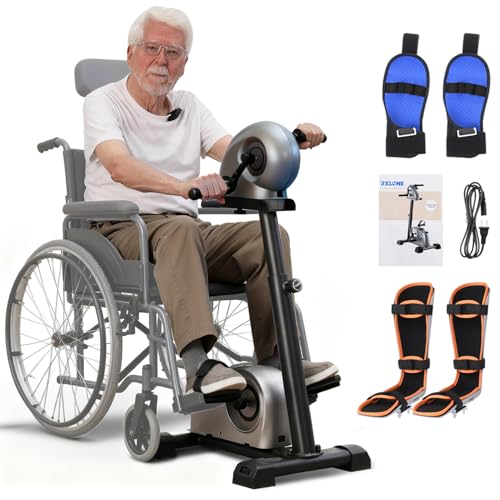
Size is the main consideration: at 15 inches long, this bike fits in a small room or beside a chair. But it also means shorter leg extension compared to a full recumbent bike like the Niceday Recumbent Exercise Bike, which is 50 inches long. The manual mode lets the user pedal on their own when they have strength, while the motorized mode assists when needed. For focused upper- and lower-body rehab with motorized assistance, this is a practical, space-saving option.
Niceday Recumbent Exercise Bike
What We Like
- 400 lb capacity for stability
- 16-level resistance for gentle progression
- Ergonomic seat with breathable mesh backrest
- 90% pre-assembled with transport wheels
Trade-offs
- At 84 lbs, it is heavy to move
- No arm exerciser included for upper body rehab
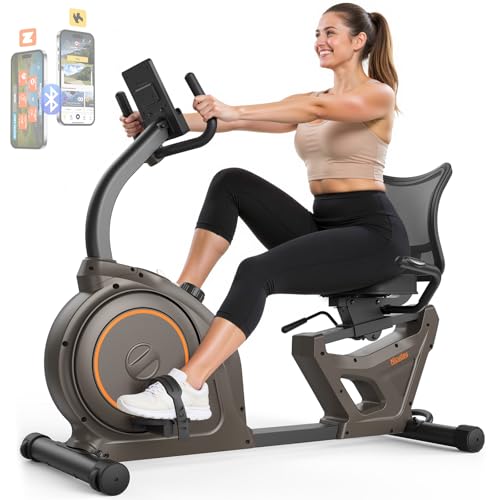
A 400-pound weight capacity and a 15-pound flywheel tell you this bike is built for steady, safe recovery work. The recumbent design puts less pressure on your back and joints, which matters a lot when you are rebuilding mobility after an injury or surgery. Sixteen resistance levels let you start with almost no effort and gradually increase as your strength returns, and the ergonomic seat with breathable mesh backrest keeps you comfortable during longer sessions. This bike offers a stable, low-impact platform for physical therapy and gentle cardio at home.
At 84 pounds, this bike stays planted on the floor during pedaling, so you won’t feel any wobble even during vigorous use. The 16-level mechanical resistance knob lets you dial in exactly the intensity you want, from gentle physical therapy to a more challenging cardio session. Compared to a lightweight pedal exerciser like the ZIDAFIT Adjustable Pedal Exerciser (13.2 pounds), this is a stationary machine meant to stay in one spot. That heft gives it a stable platform for users up to 400 pounds, making it a reliable choice for long-term rehab at home.
YOSUDA Recumbent Exercise Bike
What We Like
- Joint-friendly recumbent design from rehab input
- 350 lb weight capacity for stable support
- Quiet magnetic resistance for any-time use
- Adjustable seat fits 4'9" to 6'2" users
Trade-offs
- 58.4 lb frame is heavy to move around
- No built-in arm exerciser for upper body rehab
- Seat slides manually, no quick-release lever
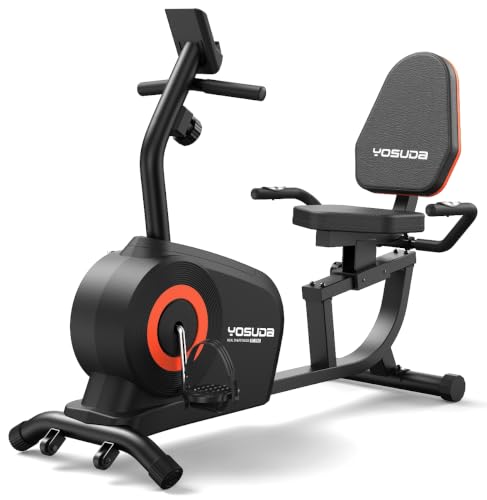
A 350-pound weight capacity and a recumbent frame developed with input from rehabilitation professionals make this bike a stable, low-impact option for seniors, larger-bodied users, pregnant women, and anyone with knee or lower back concerns. The adjustable seat slides easily to fit users from 4’9″ to 6’2″, so you can find a comfortable leg extension without straining your hips or knees. Sixteen levels of magnetic resistance let you start with almost no effort and gradually build intensity, while the quiet operation means you can pedal during TV time without disturbing the household.
This bike focuses purely on leg work, so there is no built-in arm exerciser like you get on the Birdfeel Recumbent Exercise Bike With Arm Exerciser. That feature could be helpful for those who want upper body rehab too. At 58.4 pounds, it is stable during use but not something you will want to haul from room to room. If your priority is a sturdy, joint-friendly platform for low-impact lower body exercise, this is a thoughtful pick that respects both safety and comfort.
Product photos
Birdfeel Recumbent Exercise Bike With Arm Exerciser
What We Like
- 400 lb capacity heavy-duty steel frame
- Synchronized arm and leg movement
- Adjustable padded seat with backrest
- Silent magnetic resistance under 20 dB
Trade-offs
- At 53.1 lb, moving it takes some effort
- Only 8 resistance levels limit progression
- Large footprint: 55.1 inches long
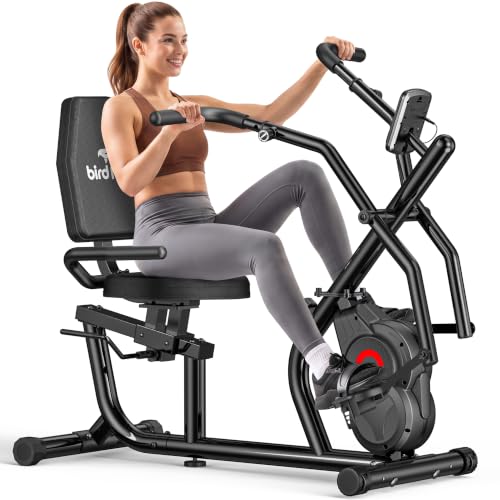
A 400-pound weight capacity on a solid steel frame means this recumbent bike can support a wide range of body types without wobbling, which matters a lot when stability is key during rehab. The synchronized arm and leg linkage engages your upper and lower body together, so you get a full workout from a seated position that keeps joints comfortable. That makes it a strong fit for stroke recovery where rebuilding coordination and strength safely is the priority.
The trade-off is size and simplicity. At 55.1 inches long, this bike needs dedicated floor space, and the 8 resistance levels are fewer than some other recumbent options like the Niceday, which offers 16 levels for more gradual challenge. But if full-body rehab with a sturdy, quiet ride is your focus, the Birdfeel delivers where it counts without overcomplicating things.
Product photos
Exerpeutic 2000M Motorized Under Desk Bike

What We Like
- Motor assists movement for limited mobility
- Overload protection stops cranks on excess speed
- Large foldable pedals with anti-slip straps
- 6ft cord for easy speed adjustment
Trade-offs
- No seat or back support included
- Under-desk design limits leg extension range
- Resistance increases when motor is off
Motor-assisted pedals provide low-impact exercise to strengthen muscles, improve range of motion, and increase blood flow, which is crucial for anyone with limited mobility or recovering from an injury. Overload protection stops the cranks’ rotation if there is excessive speed or the user’s legs cannot rotate freely, so there is no risk of the bike forcing a motion you are not ready for. The 6-foot remote cord lets you adjust speed without hunching over, and the LCD tracks distance, time, calories burned, and total repetitions to show progress over time.
This is a pedal exerciser, not a full bike, so you will need a stable chair. The under-desk design limits leg extension compared to a recumbent bike like the Sunny Health & Fitness Smart Recumbent Bike, which has a different riding position. That said, the motor makes it unique for those needing assistance: it provides motor-assisted pedaling to help initiate movement, something a passive pedal unit cannot do.
HOMGIM 2-in-1 Pedal Exerciser

What We Like
- Ultra-light at 5.5 pounds for easy portability
- 2-in-1 design for arms or legs
- Four anti-slip suction cups for stability
- Adjustable resistance and height settings
Trade-offs
- No motorized assistance for passive range of motion
- LCD tracker lacks heart rate or pulse monitoring
At just 5.5 pounds, this pedal exerciser is light enough to carry from the living room floor to a tabletop without breaking a sweat. That is a real advantage for stroke patients who need rehab options in multiple spots around the house. The 2-in-1 design means you can work legs while sitting in your favorite chair, then switch to arm pedaling on a desk or counter. All with adjustable resistance that lets you start gentle and build up as strength returns. Four industrial-strength suction cups anchor it firmly, so no sliding when you push hard with your hands or feet.
The trade-off for that featherweight build is a narrower footprint than some competitors like the ZIDAFIT Adjustable Pedal Exerciser Bike. The ZIDAFIT weighs nearly three times as much and offers a taller frame for those who prefer a more upright pedaling position. Still, if portability and easy setup matter more than a heavy-duty stationary feel, this HOMGIM model keeps rehab simple and accessible. Just note it relies entirely on your own effort, no motorized help for passive movement, so it works best for active recovery rather than assisted range-of-motion therapy.
Product photos
Goplus Arm And Leg Pedal Exerciser
What We Like
- Built-in foot massage rollers reduce fatigue
- Independent resistance dials for arms and legs
- Adjustable height (4 levels) and length (6 levels)
- Anti-slip suction cups for floor stability
Trade-offs
- No motorized assistance for limited mobility
- Massage rollers add bulk to base storage
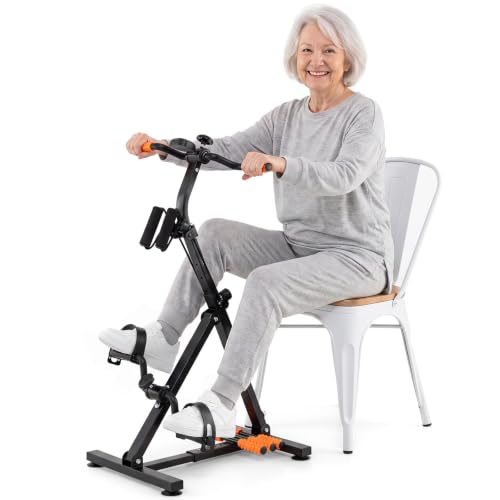
With a weight capacity of up to 265 pounds and a reinforced triangular support structure, this unit offers stable support during use. The independent resistance dials for handles and pedals let you adjust tension separately, which can be useful for tailoring workouts to different needs. The built-in foot massage rollers at the base are designed to reduce physical fatigue and soothe tired soles, adding a relaxation element after exercise. This bike is suited for seated workouts that focus on low-impact arm and leg movement, with the flexibility to adjust height (4 levels) and length (6 levels) to fit different body types.
This pedal exerciser does not include a motor, so it requires the user to initiate the pedaling motion themselves. That makes it less suitable for individuals who need assistance to start movement, compared to motorized options like the PHYCISER Motorized Exercise Bike. The PHYCISER is designed for rehabilitation with leg support and a stroke hand brace. However, if you have enough ability to move the pedals on your own, the Goplus offers adjustable resistance and massage rollers that some motorized models lack. Its 14-pound frame is relatively lightweight, making it easy to move and store when not in use.
Product photos
ZIDAFIT Pedal Exerciser Bike For Seniors
What We Like
- Includes resistance bands for upper body rehab
- 5-level adjustable height for seated comfort
- Sturdy triangular base with suction cups
Trade-offs
- At 15.4 lb, less portable than lighter pedal exercisers
- Heavier than some portable models at 15.4 lb
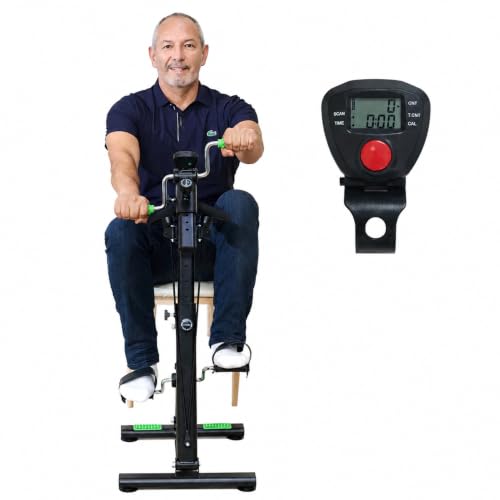
A 265-pound weight capacity and a triangular base with four suction cups keep the bike planted during active pedaling, so you can focus on recovery without worrying about tipping. The included resistance bands let you work arms and shoulders while your legs cycle, which helps relieve shoulder stiffness and soreness. With five height adjustments and a stepless base length, it adapts to different chair heights and body sizes, making it a practical choice for home exercise where stability matters.
At 15.4 pounds, it is heavier than some portable under-desk models like the HOMGIM 2-in-1 Pedal Exerciser, which weighs only 5.5 pounds and is easier to move between rooms. But that extra heft comes from thicker steel pipes and the U-shaped frame that resists shaking, so you get a sturdier platform for resistance band work. For someone who wants a stable, multi-use rehab station they can leave set up in one spot, this bike delivers without the bulk of a full recumbent machine.
Product photos
How We Evaluated Exercise Bikes For Stroke Patients
We analyzed specifications from manufacturers, studied expert round-ups from physical therapy sources, and identified consistent patterns in owner feedback for each model. The goal was to match features to the real needs of stroke survivors, not to test equipment ourselves.
Three criteria mattered most. First, entry and exit design: a low step-through frame, flip-away handle, or open front end can make the difference between a bike you use and one you avoid. Second, motorized assistance: for patients who cannot initiate pedaling, a motor that moves the legs passively is essential for rebuilding range of motion. Third, adjustability: seat height, arm position, and resistance levels must accommodate varying body types and recovery stages.
A research-led evaluation has limits. We cannot report how a bike feels during a 20-minute session or how well the motor holds up after months of daily use. What we can do is surface the features that matter most and flag trade-offs that owner feedback consistently highlights.
What To Look For In Exercise Bikes For Stroke Patients
Choosing the right bike means matching the machine to the patient’s current mobility, not where you hope to be in six months. Focus on safe access, the type of assistance needed, and the range of motion the bike allows.
Prioritize a recumbent or open-frame design for easy entry, check whether motorized pedaling is necessary, and confirm the bike adjusts to fit the user’s height and arm reach. A 400 lb weight capacity signals a stable, durable frame.
Entry Safety And Seat Design
A stroke patient’s first challenge is getting onto the bike safely. Recumbent bikes with low step-through frames and wide, padded seats with backrests reduce fall risk. Look for designs where the handlebars or side handles flip or swing away so the user can sit down without twisting or reaching awkwardly. The Sunny Health & Fitness model’s flip-able side handle is a good example of this design thinking.
Motorized Versus Manual Pedaling
Not all stroke survivors can initiate pedaling on their own. Motorized bikes like the PHYCISER and Exerpeutic 2000M use a motor to turn the cranks, helping the patient rebuild range of motion passively. If the user has some leg movement but needs gentle encouragement, a motor that offers overload protection (stopping if the patient pedals faster than the motor) adds a safety buffer. Manual bikes work well for patients who can start pedaling independently but need adjustable resistance to progress gradually.
Adjustability And Range Of Motion
The bike must fit the user’s body. Seat height adjustment should accommodate short inseams, and arm crank positions should bring the handles within easy reach. For leg extension, look at the bike’s stride length: compact under-desk models limit leg extension, while recumbent bikes offer a fuller pedal stroke. Consider these practical checks:
- Measure the user’s inseam and compare it to the bike’s minimum seat height requirement
- Check whether the arm exerciser moves independently or synchronizes with the pedals
- Confirm the bike’s weight capacity supports the user’s body weight plus any safety margin
- Look for transport wheels on heavier models (over 50 lb) so caregivers can move them
A bike that fits poorly will collect dust. Measure first, shop second.
Exercise Bikes For Stroke Patients Compared
The table below compares key specs across our top picks to help you match features to your recovery needs at a glance.
| Product | Type | Resistance | Unit Weight |
|---|---|---|---|
| Sunny Health & Fitness Smart Recumbent Bike | Recumbent | 16-level magnetic | 63.9 pounds |
| ZIDAFIT Adjustable Pedal Exerciser Bike | Pedal exerciser | Magnetic | 13.2 lb |
| PHYCISER Motorized Exercise Bike | Motorized | 15-level adjustable | N/A |
| Niceday Recumbent Exercise Bike | Recumbent | 16-level progressive | 84 lbs |
| YOSUDA Recumbent Exercise Bike | Recumbent | 16 magnetic | 58.4 pounds |
| Birdfeel Recumbent Exercise Bike With Arm Exerciser | Recumbent | 8 magnetic | 53.1 lbs |
| Exerpeutic 2000M Motorized Under Desk Bike | Motorized under desk | N/A | N/A |
| HOMGIM 2-in-1 Pedal Exerciser | Pedal exerciser | Adjustable levels | 5.5 pounds |
| Goplus Arm And Leg Pedal Exerciser | Pedal exerciser | Independent handle & pedal dials | 14.0 pounds |
| ZIDAFIT Pedal Exerciser Bike For Seniors | Pedal exerciser | N/A | 15.4 pounds |
Frequently Asked Questions
What type of exercise bike is best for stroke recovery?
A recumbent exercise bike with a low step-through frame, padded backrest, and easy-access design is typically best. For patients who cannot pedal on their own, a motorized bike that passively moves the legs helps rebuild range of motion. The Sunny Health & Fitness Smart Recumbent Bike and the PHYCISER Motorized Exercise Bike represent both ends of this spectrum.
Should I get a motorized exercise bike for stroke rehab?
If the stroke survivor has no voluntary leg movement or very limited strength, a motorized bike provides passive range-of-motion exercise that manual bikes cannot offer. Models like the Exerpeutic 2000M include overload protection that stops the motor if the user pedals faster, adding a safety feature. For patients who can initiate movement on their own, a manual bike with adjustable resistance is sufficient.
Can a pedal exerciser replace a full exercise bike for stroke recovery?
A pedal exerciser like the ZIDAFIT Adjustable Pedal Exerciser is lighter, more portable, and can be used for both arm and leg exercises on a table or floor. It works well for early-stage rehab where the patient is seated in a regular chair. A full recumbent bike offers better back support and a more natural pedaling position for longer sessions.
How much resistance do I need for stroke rehab exercise?
Start with the lowest resistance setting and increase only when the user can complete several minutes of smooth pedaling without fatigue. Most bikes offer 8 to 16 resistance levels, which provides enough range for gradual progression from passive movement to active strengthening. The Niceday Recumbent Exercise Bike‘s 16 levels are well-suited for this kind of step-by-step approach.
What safety features matter most on an exercise bike for stroke patients?
A stable base with a weight capacity of at least 300 lb prevents tipping. Anti-slip pedals with straps keep feet in place, and a low step-through frame or swing-away handlebar reduces fall risk during entry and exit. Motorized bikes should have overload protection that stops the cranks if the user pedals faster than the motor speed.
The Bottom Line
The Sunny Health & Fitness Smart Recumbent Bike is our Best Overall pick for stroke patients who can pedal independently and want upper-body band training in a stable, easy-access recumbent design. Its cushioned seat, padded backrest, and flip-able side handle address the two biggest barriers to consistent use: comfort and safe entry.
For those who need motorized assistance to start movement, the PHYCISER Motorized Exercise Bike provides dual motors for arms and legs with forward and reverse rotation. If portability matters more, the ZIDAFIT Adjustable Pedal Exerciser offers a lightweight, adjustable option for arm and leg rehab at a desk or table.
The single most important factor is safe, comfortable access. If the bike is hard to get onto, it will not get used. Measure the user’s inseam, check the step-through height, and confirm the seat adjusts to their body before making a choice.
