
10 Best Exercise Equipment For Glutes in 2026
This post contains affiliate links. As an Amazon Associate, we earn from qualifying purchases.
The Lifepro GluteBlast Hip Thrust Machine wins as best overall because it folds with built-in wheels for storage and doubles as a sissy squat machine, making it a versatile space-saver for home gyms. For those who want a dedicated, heavy-duty setup, the Body-Solid Powerline Glute Master offers targeted isolation, while the FEIERDUN Hip Thrust Machine is our budget pick for band-based resistance.
Finding the right exercise equipment for glutes can be confusing with so many hip thrust machines, GHDs, and standing options on the market. The real challenge is matching a machine to your available floor space, your current strength level, and whether you need to store it between workouts.
This guide is built from manufacturer specifications, expert round-ups, and patterns in owner feedback to help you compare the key factors that matter. We break down the ten best options by their strengths and trade-offs so you can choose with confidence.
Top 10 Exercise Equipment For Glutes in the Market
Certain content that appears on this site comes from Amazon. This content is provided "as is" and is subject to change or removal at any time.
The Best Exercise Equipment For Glutes, Reviewed
Lifepro GluteBlast Hip Thrust Machine

What We Like
- Folds with built-in wheels for storage
- PU leather cushion for comfort
- Doubles as sissy squat machine
Trade-offs
- 220 lb capacity limits heavier lifters
- Folded dimensions still require floor space
A 220-pound weight capacity and a foldable frame with wheels make this the kind of machine that fits into a home gym without taking over the living room. It targets glutes, hamstrings, and core through hip thrusts, sissy squats, and bodyweight moves like planks and push-ups. The powder-coated steel and PU leather pad keep things sturdy and comfortable enough for regular use, and the compact folded size means you can tuck it away after a session. This is a smart pick if you want a dedicated glute bench that also pulls double duty for full-body work, especially in smaller spaces.
The 220-pound capacity is a ceiling some lifters will bump against quickly, especially if you’re used to loading up a barbell for heavy hip thrusts. For someone starting out or upgrading from floor work, though, the convenience of folding wheels and the versatility of multiple exercise modes make it a balanced way to build glute strength. You can do it without dedicating a corner of the room to one machine.
Body-Solid Powerline Glute Master

What We Like
- Dedicated glute isolation machine
- Adjustable resistance for progressive overload
- Plush pads and rollers for comfort
Trade-offs
- At 67 lbs, not easy to move frequently
- Large footprint needs dedicated floor space
With a dedicated isolation design and adjustable resistance, this machine zeroes in on glute activation in a way free weights often miss. The plush pads and rollers keep you stable and comfortable during hip thrusts and glute bridges, so you can focus on form rather than fighting a wobbly bench. It suits someone serious about posterior chain work who wants a machine that stays put and delivers consistent tension through the full range of motion.
Size and weight are the main factors here: at 66 inches long and 67 pounds, it is not something you can tuck into a closet after each session. For someone with the room who wants a purpose-built glute machine that does not compromise on stability, it is worth the extra floor space.
Titan Fitness Standing Hip Thrust Machine
What We Like
- 440 lb capacity for heavy loading
- Six thigh pad height settings
- Three adjustable thrust angles
- Integrated band pegs for added resistance
Trade-offs
- At 157 lb, moving it is a workout itself
- No folding or wheels for storage
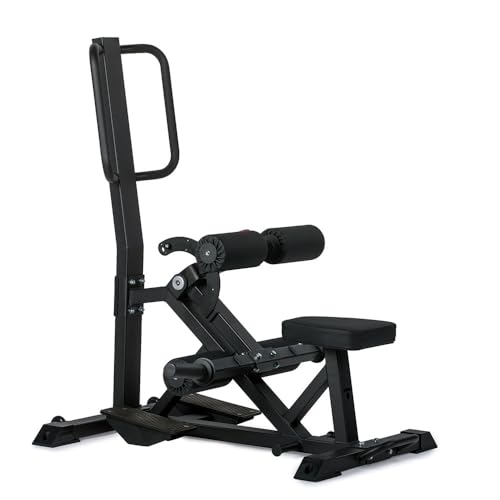
A 440-pound weight capacity means this machine can handle serious loading for glute work without wobbling or tipping. The six thigh pad heights and three thrust angles let you dial in your exact starting position, so you aren’t fighting the machine to get set up. That kind of adjustability is rare on standing hip thrusters, and it makes the movement feel more natural and targeted. If you want heavy, stable glute training without the hassle of balancing a barbell across your lap, this is the straightforward answer.
At 157 pounds, this machine is a permanent fixture in your gym, you won’t be stashing it in a closet after a session. The Lifepro GluteBlast folds and rolls away at 36.8 pounds, so the Titan demands a dedicated floor space rather than a living room corner.
Product photos
BootySprout Hip Thrust Machine

What We Like
- Three included resistance bands (45, 90, 135 lbs)
- Handles up to 400 lbs total weight
- Lightweight and durable design at 32.9 lbs
- Isolates all three main gluteal muscles
Trade-offs
- No foldable design or wheels for easy storage
- Resistance tops out at 135 lbs with included bands
With 135 pounds of resistance from the included bands, you can push your glutes hard without needing to buy extra plates or a barbell. The 32.9-pound frame is light enough to pick up and stash in a closet, and the machine can handle up to 400 pounds if you add heavier bands down the road.
The 29-inch-long platform means your feet might feel a bit snug if you’re tall or like a wide stance, but it keeps the whole unit compact. Unlike the Lifepro GluteBlast, which folds and rolls on wheels, this one is a single piece you have to carry. If you prefer a simple band-based setup that delivers heavy resistance without a barbell, this machine fits the bill.
HVO Hip Thrust Machine
What We Like
- 880 lb capacity for progressive overload
- Adjustable waist pad and foot platform
- Compact footprint for home gyms
- Body-following back pad for comfort
Trade-offs
- 85 lb unit needs floor space, not portable
- Plate-loaded only; plates sold separately
- No foldable design for tight storage
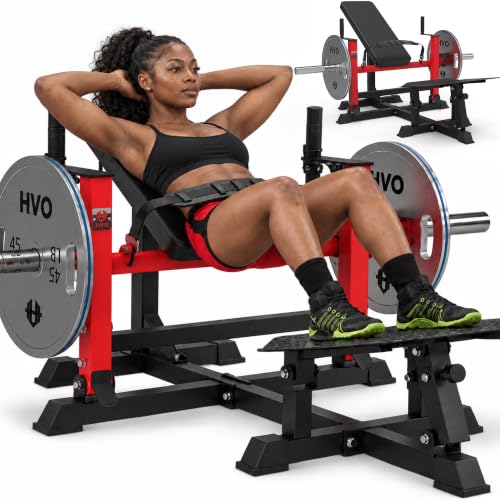
With an 880-pound weight capacity, this machine supports progressive overload for years, whether you are new to hip thrusts or experienced. The adjustable waist pad and four-level foot platform let different body sizes find a stable, comfortable setup. That means you can concentrate on your workout without adjusting a barbell on a bench. It is designed for home gym lifters who want a dedicated glute station that stays steady under load.
At 85 pounds and without a folding frame, this machine becomes a permanent fixture once assembled, not something you stash in a closet. Compared to the lighter, foldable Lifepro GluteBlast (36.8 lb, 220 lb capacity), the HVO demands more floor space but offers a higher weight capacity for those who need it. For someone with enough room who wants an adjustable platform for heavy glute work, this machine fits the bill.
GMWD Hip Thrust Machine

What We Like
- Safety limiter with grip handles
- Full-length spine support pad
- 800 lb weight capacity
- Three-position adjustable footboard
Trade-offs
- At 192 lbs, difficult to move
- No folding or storage feature
- Large footprint needs dedicated space
An 800-pound weight capacity means this machine can handle serious loading without wobbling or flexing, which is exactly what you want when you’re pushing heavy glute work. The safety limiter, a pair of grip handles mounted on the shoulder pad frame, lets you stop the movement precisely if you lose control, so you don’t need a spotter every set. That combination of raw durability and built-in control makes it a strong fit for anyone who wants to progress steadily without worrying about the barbell tipping or the pad slipping mid-rep. The full-length back pad also supports your entire spine, which takes the guesswork out of setup compared to balancing a bench and a bar.
The trade-off is size and weight: at 192 pounds and over five feet long, this is a permanent piece of equipment, not something you stash in a closet. It doesn’t fold or have wheels, so you’ll need a clear floor spot and a plan for where it lives. Compared to the BootySprout, which weighs 32.9 pounds, the GMWD demands space but offers a weight holder max capacity of 500 lbs. If your home gym has the room and you want a machine that grows with your strength, the extra heft is worth it. If you need portability or a smaller footprint, the BootySprout or the Lifepro GluteBlast might fit better.
Goimu HT01 Hip Thrust Machine
What We Like
- Built-in band pegs for variable resistance
- 800 lb weight capacity for heavy loading
- Large adjustable footplate targets glutes from multiple angles
- Dual safety limiter system with grip handles
Trade-offs
- Large footprint at 80.8 inches long needs dedicated floor space
- No folding or wheels for easy storage or moving
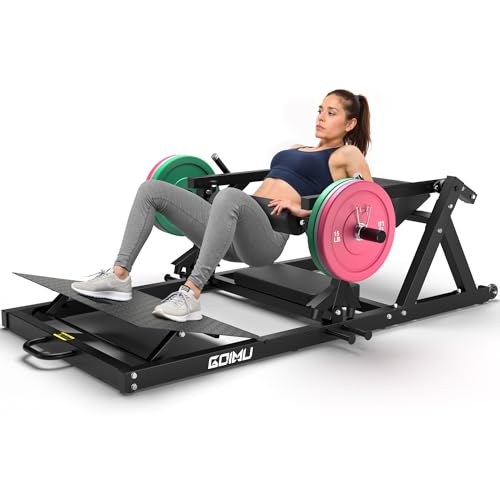
The 800-pound weight capacity on the Goimu HT01 means you can load up serious plates without worrying about the frame giving out. That is exactly what you want if progressive overload is your goal. Its built-in band pegs let you add resistance bands on top of that weight, creating tension that ramps up through the full range of motion, especially useful for the top of each rep where glute activation peaks. This machine is built for home lifters who want a dedicated setup for hip thrusts without stealing a barbell from the squat rack or wrestling with a bench. The half-round back pads with the spinal relief gap help keep your upper back comfortable and aligned, letting you drive through your heels rather than shifting around to find a good position.
Space is the main consideration here: at 80.8 inches long, this is a permanent resident of your gym floor. It doesn’t fold or have wheels, so you won’t be tucking it into a corner after every workout. Compared to the Lifepro GluteBlast, which folds up and rolls away at 50.6 inches long, the Goimu asks for more commitment to real estate. For those who have the room and want a machine that can handle serious weight plus band work without compromise, this one delivers exactly that.
Product photos
JFHID Foldable Hip Thrust Machine

What We Like
- Folds compact with built-in mobility wheels
- Adjustable footboard with 4 heights
- 3-position back cradle for comfort
- Triple-strap waist system for secure fit
Trade-offs
- At 103 lb, it is heavy to move without wheels
- Large footprint when unfolded (62.6 x 45.6 in)
- No included weight plates
A 103-pound machine that folds up and rolls away on built-in wheels means you can stash serious glute gear in a closet or corner when company comes over. It fits users from 4’11” to 6’3″, and the three-position back cradle and four-height footboard let you dial in your setup without wrestling a barbell across your hips. That triple-strap system (hook-and-loop, buckle, elastic) wraps your waist securely so you can push hard without the pad shifting.
The trade-off is the unfolded footprint: at over five feet long and nearly four feet wide, it needs a dedicated workout area when in use. Compared to the Lifepro GluteBlast, which weighs 36.8 pounds and folds to 27.2 inches long, this JFHID is heavier and larger, so it requires more floor space when set up. Reviewers note that if you have a garage or spare room where the machine can stay assembled, the adjustability and stability are practical. For those who need to pack gear away after every session, the wheels help, but the weight means it is not as easy to move as lighter models.
Product photos
REP Fitness Glute Ham Developer

What We Like
- 13 adjustment points for custom fit
- Built-in band pegs for added resistance
- Sturdy 16-gauge steel frame
- Rear transport wheels for easy moving
Trade-offs
- At 150 lbs, it's heavy to reposition often
- Large footprint needs dedicated floor space
Thirteen adjustment points on the footplate mean you can dial in the exact position for your height and training style. That is the difference between a GHD that feels awkward and one that lets you focus on your glutes and hamstrings. This REP Fitness model is built with a 16-gauge steel frame and weighs 150 pounds, so it stays planted during demanding posterior chain work. For someone who already knows they want a dedicated GHD machine and has the space for it, this is the kind of steady, adjustable platform that makes glute ham raises and back extensions feel controlled and effective.
A 150-pound weight and 70-inch length mean this machine is not something you’ll tuck into a closet after each workout. If your home gym is tight on square footage, a folding hip thrust machine like the Lifepro GluteBlast might be easier to store. But for lifters who prioritize a rock-solid base and the versatility to add band resistance for progressive overload, this GHD rewards the floor space it demands. It offers stability and adjustability that lighter, more portable options simply can’t match.
Product photos
FEIERDUN Hip Thrust Machine
What We Like
- 350 lb capacity with wobble-free frame
- 7 resistance levels from 40-160 lb
- Adaptive back pad with 4 fixed angles
- Fits users from 4'8" to 6'4"
Trade-offs
- At 64.7 lb, moving it takes effort
- Band-based resistance, not plate-loaded
- No folding design for compact storage
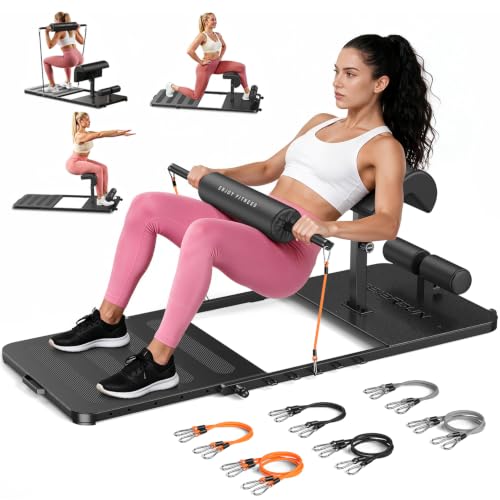
A 350 lb capacity on a 64.7 lb frame that stays planted rep after rep is the kind of stability that lets you push hard without second-guessing the equipment. That reinforced 2 mm alloy steel and wide rubber base mean no wobble, no creaking, just steady tension through every hip thrust and squat. For someone building a home gym on a budget, this machine covers six lower-body moves. These include hip thrusts, glute bridges, Bulgarian split squats, lunges, sissy squats, and barbell-style squats, without needing a spotter or a stack of plates. The 7-level band system from 40 to 160 lb gives you progressive overload in a compact package, and the adjustable back pad and foot hook let you dial in the fit whether you are 4’8″ or 6’4″.
Resistance comes from bands, not weight plates, which means the feel at the top of a hip thrust is different from a barbell. The short bands add tension at peak contraction, but you cannot load up beyond 160 lb like you could on a plate-loaded machine such as the Titan Fitness Standing Hip Thrust Machine. At 64.7 lb, it is heavy enough to stay put during use but not something you want to drag across the room between sets. The wheels help, but it does not fold like the Lifepro GluteBlast. Still, for someone who wants a dedicated glute trainer that fits a range of heights, offers real adjustability, and skips the need for a barbell and plates, this is a smart, space-conscious pick.
Product photos
How We Evaluated Exercise Equipment For Glutes
We reviewed the top glute machines by analyzing their weight capacities, dimensions, adjustability features, and build materials from official product documentation. We also looked at patterns in owner feedback to understand what holds up over time and what frustrates users in daily use.
For this category, the three most important criteria were weight capacity for progressive overload, storage and portability features, and adjustability for different body sizes. A machine that maxes out at 220 lb might be fine for a beginner but useless for someone who wants to grow stronger over months of training. Similarly, a 150 lb machine without wheels can turn a home gym into a furniture-moving nightmare.
A research-led evaluation has limits: we cannot tell you how a specific machine feels during a heavy set or whether the padding stays comfortable after fifty reps. We can tell you what specs matter, which features owners consistently praise or curse, and how each machine fits a real home gym scenario. For honest feedback on specific models, reading recent owner reviews is always a smart step.
What To Look For In Exercise Equipment For Glutes
The best machine for your glutes depends on your strength goals, floor space, and whether you need to stash it away between sessions. Focus on weight capacity, adjustability, and storage features first.
Weight Capacity and Resistance Type
Your glutes are among the strongest muscles in your body, so a machine that maxes out too low will stall your progress. Look for a weight capacity that exceeds your current hip thrust weight by at least 50 lb to leave room for growth. Also consider whether the machine uses plate-loaded resistance (you supply your own weight plates) or band-based resistance (bands are included or sold separately).
Plate-loaded machines like the HVO Hip Thrust Machine with its 880 lb capacity allow nearly unlimited progressive overload, while band-based machines like the BootySprout cap out at a fixed resistance level.
Adjustability and Fit
A glute machine that does not fit your body will never feel right. Check the number of pad height settings, footplate positions, and back cradle adjustments. The Titan Fitness Standing Hip Thrust Machine offers six thigh pad height settings and three thrust angles, which is generous for finding your perfect position. Machines with limited adjustability may leave taller or shorter users struggling to maintain proper form.
Storage and Portability
This is where most buyers get tripped up. A machine that weighs over a hundred pounds and has no wheels or folding mechanism will live in one spot permanently. If you need to reclaim your floor space between workouts, look for folding designs with built-in wheels like the JFHID Foldable Hip Thrust Machine or the Lifepro GluteBlast. If you have a dedicated gym area, a heavier machine like the Body-Solid Powerline Glute Master can stay put and offer more stability.
- Measure your workout space before buying, including the unfolded dimensions of any folding machine.
- Check the machine’s weight and whether it has transport wheels or a folding mechanism.
- Look for padded rollers and waist pads that match your comfort preferences.
- Consider whether you want band pegs for adding resistance variety.
A machine that fits your body and your room will get used far more often than one that is technically stronger but awkward to set up.
Exercise Equipment For Glutes Compared
The table below compares the key specs and features of all ten glute machines side by side, making it easier to see which one fits your home gym setup and strength goals.
| Product | Weight Capacity | Weight | Dimensions (Open) |
|---|---|---|---|
| Lifepro GluteBlast Hip Thrust Machine | 220 lb | 36.8 lb | 45.3 × 27.2 × 21.3 in |
| Body-Solid Powerline Glute Master | N/A | 67 lbs | 66 x 26 x 60 inches |
| Titan Fitness Standing Hip Thrust Machine | 440 lb | 157 lb | N/A |
| BootySprout Hip Thrust Machine | 400 lbs | 32.9 pounds | 29 x 25 x 7 inches |
| HVO Hip Thrust Machine | 880 lb | 85.0 lb | 50.6 × 57.2 × 33.1 in |
| GMWD Hip Thrust Machine | 800 lbs | 192 lbs | 71 x 31 x 22 in |
| Goimu HT01 Hip Thrust Machine | 800 lbs | N/A | 80.8 × 53.9 × 24.0 in |
| JFHID Foldable Hip Thrust Machine | N/A | 103.0 lb | 62.6 x 45.6 x 25.0 in |
| REP Fitness Glute Ham Developer | N/A | 150 lbs | 70.0 x 36.0 x 42.0 in |
| FEIERDUN Hip Thrust Machine | 350 lb | 64.7 lb | 41.0 x 26.8 x 18.5 in |
Frequently Asked Questions
What is the best exercise equipment for glutes at home?
The best overall choice for most home gym users is the Lifepro GluteBlast Hip Thrust Machine because it folds up with built-in wheels for easy storage and doubles as a sissy squat machine. For those who want dedicated glute isolation with heavy weight capacity, the Body-Solid Powerline Glute Master or the HVO Hip Thrust Machine are strong alternatives.
How much weight do I need on a glute machine?
Your glutes are powerful, so look for a machine with a weight capacity at least 50 lb above your current hip thrust max. Beginners may start fine with a 220 lb capacity machine like the Lifepro GluteBlast, but intermediate lifters should aim for 400 lb or more. The HVO Hip Thrust Machine supports up to 880 lb for serious progressive overload.
What is the difference between a hip thrust machine and a GHD?
A hip thrust machine isolates the glutes through a thrusting motion with a waist pad and footplate. A Glute Ham Developer (GHD) targets the entire posterior chain including the hamstrings and lower back through a rocking motion. The REP Fitness Glute Ham Developer is a GHD that offers 13 adjustment points for a custom fit.
Can I build glutes with band-based resistance machines?
Yes, band-based machines like the BootySprout and FEIERDUN Hip Thrust Machine can build glute strength effectively, especially for beginners and intermediate lifters. The BootySprout includes three bands totaling 135 lb of resistance and isolates all three gluteal muscles. However, band resistance maxes out, so heavy lifters may eventually need a plate-loaded machine.
Which glute machine is best for small apartments?
The Lifepro GluteBlast Hip Thrust Machine is the best choice for small apartments because it folds with built-in wheels for rolling into a closet. The BootySprout is also lightweight at 32.9 lb and easy to move, though it does not fold. The FEIERDUN Hip Thrust Machine has a compact footprint and fits users from 4’8″ to 6’4″ without taking up too much room.
The Bottom Line
The Lifepro GluteBlast Hip Thrust Machine is our best overall pick for home gym users who want a versatile, space-saving machine that folds and rolls away between workouts. It is ideal for light to moderate training and works well for those who also want a sissy squat option without buying a second machine.
If you have a dedicated gym space and want heavy, targeted glute isolation, the Body-Solid Powerline Glute Master offers adjustable resistance and stable construction. Budget-conscious shoppers should look at the FEIERDUN Hip Thrust Machine, which provides seven resistance levels and fits a wide range of body sizes for an affordable price.
The single most important factor in choosing glute equipment is matching the machine to your available floor space and strength goals. A machine that fits your room and lets you add weight over time will keep you training consistently, and consistency is what builds stronger glutes.
