
10 Best Exercise Equipment For Stroke Recovery in 2026
This post contains affiliate links. As an Amazon Associate, we earn from qualifying purchases.
For stroke survivors rebuilding strength and coordination, the torktak Stroke Hand Recovery Glove stands out as the best overall pick for its adjustable robotic assistance and bed-friendly design. The ODOXIA Mirror Therapy Box offers a unique brain-retraining approach, while the TooCust Arm and Leg Pedal Exerciser covers full-body rehab in one seated machine.
Recovery after a stroke is deeply personal, some need help opening a clenched fist, others need to rebuild walking stamina, and many need both. The right equipment matches the survivor’s current ability level and targets the specific deficit, whether that’s fine finger control, gross motor strength, or preventing muscle stiffness.
This guide is built from manufacturer specifications, therapy round-ups, and patterns in owner feedback across ten products. We break down what each tool does best and who it truly helps, so you can match a device to a real recovery need.
Top 10 Exercise Equipment For Stroke Recovery in the Market
Certain content that appears on this site comes from Amazon. This content is provided "as is" and is subject to change or removal at any time.
The Best Exercise Equipment For Stroke Recovery, Reviewed
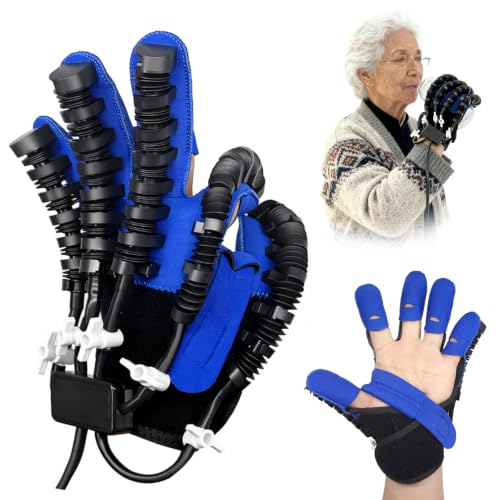
torktak Stroke Hand Recovery Glove
What We Like
- 1-5 adjustable strength levels for gradual progress
- Can be used while resting or lying in bed
- Complete set includes glove, adjustment system, and connectors
Trade-offs
- Must choose correct hand (left or right) before ordering
- Correct size essential, requires hand measurement and size chart check
- Sessions limited to 15 minutes per use
Unlike squeezing a ball or pulling a resistance band, this glove uses a robotic assistance structure to complete repetitive bending, stretching, and grip exercises for you. That means you don’t need your own strength to start moving again, the device guides your hand through controlled motions that are critical for recovery after a stroke. With five adjustable intensity levels, you can begin at a gentle setting and gradually increase the challenge as your hand improves, all while lying in bed or resting on the couch. That makes it a realistic option for anyone dealing with fatigue or limited mobility early in rehab.
This isn’t a grab-and-go tool. You need to measure your hand, pick the correct size from S to 2XL, and, most importantly, select the specific glove for your affected hand (left or right) before you order. Order the wrong side and it won’t work at all. Sessions are also capped at 15 minutes, which is plenty for focused rehab but means you’ll need to build a routine around short, consistent use. Compared to simpler tools like the FitBeast Finger Exerciser Set, which just offers passive resistance, the torktak glove delivers active robotic assistance that’s much more targeted for stroke recovery, but it also demands more upfront attention to sizing and hand selection.
Product photos
ODOXIA Mirror Therapy Box

What We Like
- Lightweight and portable for home or clinic
- Creates illusion of movement for brain retraining
- Supports neuroplasticity and motor function training
- Refund guarantee with no questions asked
Trade-offs
- Only addresses hand recovery, not full limb or gait
- Requires user to have one unaffected hand to operate
- No adjustable size or angle for different arm positions
The ODOXIA Mirror Therapy Box uses a simple but clever trick: place your unaffected hand inside, and the mirror creates the illusion that your affected hand is moving. That visual feedback is the whole point, it nudges your brain to rebuild neural pathways, a process called neuroplasticity. For someone early in stroke recovery who can still move one hand, this lightweight box makes it easy to practice at home or in a clinic without bulky gear. It’s especially suited for hand rehabilitation, phantom limb pain, or nerve injuries where retraining the brain matters more than building muscle.
The trade-off is that this tool is laser-focused on hand and brain work. It won’t help you rebuild leg strength or improve balance the way the TooCust Arm and Leg Pedal Exerciser can. And if your stroke has left both hands with limited movement, you’ll struggle to use the box at all. But for the right person, someone with one working hand who wants a low-fuss, portable way to practice visual feedback therapy, this is a thoughtful, purpose-built option that puts the science of mirror therapy into your hands.
Product photos
TooCust Arm and Leg Pedal Exerciser

What We Like
- Adjustable resistance and fit settings
- Sturdy steel frame supports up to 330 lbs
- Easy to move with transport wheels
Trade-offs
- Requires seated position, limits standing rehab options
- Full-body focus means less specialized for fine hand recovery
A 330-pound weight capacity and a stable triangle frame keep this pedal exerciser planted during use, so you can focus on rebuilding strength and mobility from a seated position without worrying about tipping. It combines arm cycling, leg swinging, rope pulls, and a foot roller bar in one adjustable frame, which means you don’t need to switch machines to work both upper and lower body.
This is a broad rehab tool, not a precision instrument for fine motor skills. If your primary need is hand dexterity or isolated finger movement, a device such as the FitBeast Finger Exerciser Set offers more targeted resistance for those small muscles. But for someone who wants to work legs, arms, and core in one session while seated, the TooCust covers a lot of ground without cluttering your home with separate gadgets.
Product photos
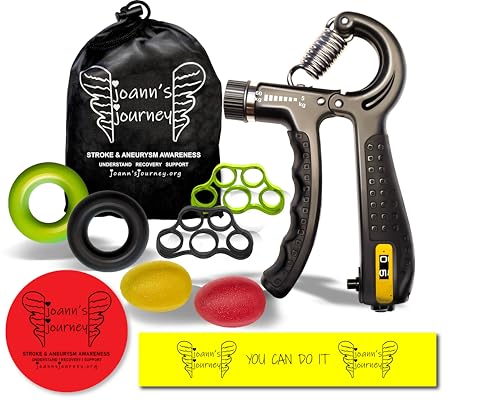
JoAnn's Journey Hand Therapy Kit
What We Like
- All-in-one OT/PT hand therapy set
- Includes resistance band and jar top gripper
- Progressive difficulty for different stages
- Designed by a stroke family caregiver
Trade-offs
- No upper body or leg exercise options
- Focuses only on hand and finger dexterity
A curated mix of hand exercisers, finger exercisers, and dexterity trainers means you don’t have to piece together separate products for home rehab. The kit includes a resistance band for upper extremity therapy exercises and a bottle or jar top gripper to support everyday independence at home. Built from lived caregiver experience, it targets stroke, aneurysm, and brain injury recovery with multiple tool types and resistance options that let you tailor sessions to current ability and gradually increase difficulty as coordination improves.
This kit is all-in on hand and finger work, there’s no leg or full-arm component. So if you need lower body rehab too, you’ll want to pair it with something like the ZIDAFIT Adjustable Pedal Exerciser. Compared to simpler options such as the FitBeast Finger Exerciser Set, the JoAnn’s Journey kit offers a broader range of tools and a clear progression path, making it a more complete starting point for someone focused on hand recovery. The components are described as comfortable, durable, and easy to clean, suitable for daily practice.
Product photos
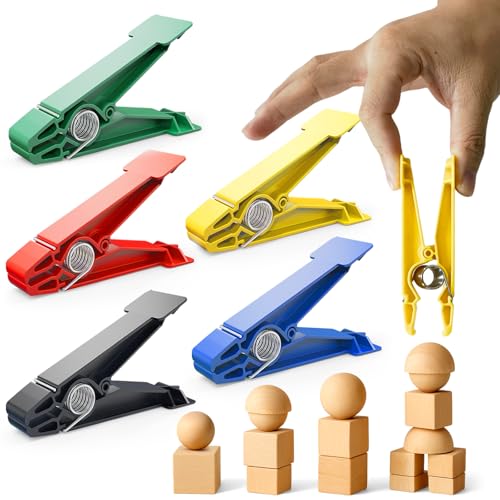
FitBeast Finger Exerciser Set
What We Like
- 5 color-coded resistance levels (1-8 lbs)
- Wooden blocks for playful grip tasks
- Compact size with travel pouch
- Wide grip fits all hand sizes
Trade-offs
- No adjustable resistance per finger
- Not suitable for children due to small parts
Five resistance levels from 1 to 8 pounds let you start light and build up gradually, which is useful for anyone looking to improve hand strength or coordination. The included wooden blocks turn simple squeezing into stacking and lifting games, making therapy feel more like play. The wide grip fits most hand sizes, and the compact design with a storage pouch makes it easy to take along.
Each finger works together on a single spring, so you cannot isolate individual fingers the way some other devices might. Compared to the XiangAi Rehabilitation Robot Glove, which is a robotic glove device for finger rehab, this set relies entirely on your own effort. That makes it better suited for someone who can already grip and wants an affordable, portable way to keep progressing, rather than someone who needs powered assistance to move their fingers.
Product photos
Fanwer Resting Hand Splint

What We Like
- Separate finger design prevents curling
- Soft foam padding for all-day comfort
- 5 adjustable straps for secure fit
- Breathable sleeve keeps hand cool
Trade-offs
- Immobilizes hand completely, limiting active movement
- Zipper and detachable panel add cleaning steps
The five adjustable straps let you secure the thumb, fingers, palm, and forearm individually, which helps achieve a precise fit for immobilization. The ergonomic C-shape keeps fingers and wrist in a relaxed, static position that discourages curling and contractures common after a stroke. If your priority is keeping the hand still and protected during sleep or rest, this splint delivers that stability with soft foam padding that won’t irritate skin over long wear.
The Fanwer Resting Hand Splint is designed to hold the hand and fingers in a fixed, comfortable position, which means it won’t rebuild grip strength or dexterity the way an active exerciser such as the FitBeast Finger Exerciser Set would. The separate finger separators keep the thumb and each finger in a relaxed, spread-out position, preventing the hand from curling into a fist during sleep. This makes it a practical choice for nighttime use or post-injury protection, where immobilization is the goal.
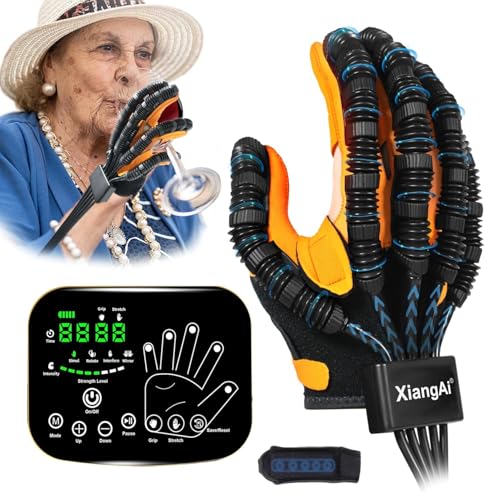
XiangAi Rehabilitation Robot Glove
What We Like
- Four distinct training modes
- Adjustable grip/stretch duration and speed
- FDA and CE certified for safety
- Comfortable double-layer fabric design
Trade-offs
- Requires charging before each session
- Not suitable for severe hand contractures without medical guidance
Four independently adjustable training modes. Simul, Rotate, Interfere, and Mirror, mean this glove adapts to different stages of hand recovery rather than forcing one repetitive motion. With 9 grip/stretch duration settings and 8 speed levels, you can start gentle and gradually increase intensity as your fingers gain strength and coordination. The 11.1V rechargeable battery keeps you untethered during sessions, and the double-layer fabric with medical-grade inner material reduces skin irritation, which matters when you’re using it daily. For someone recovering from stroke or hemiplegia who wants a device that grows with their progress instead of being outgrown, this glove offers real flexibility.
All those settings take a few minutes to learn; you won’t just slip it on and go. The mirror mode lets you control simultaneous gripping/stretching remotely, which can be useful for coordinated therapy, but the initial setup might frustrate someone who prefers a simpler grab-and-squeeze tool like the torktak Stroke Hand Recovery Glove. That said, the torktak doesn’t offer four distinct modes, so if you’re looking for progressive, adjustable therapy rather than a single resistance level, the extra learning curve here pays off. Just keep the charger handy; the battery will need recharging after use.
Vive Squeeze Balls 4-Pack

What We Like
- Four progressive resistance levels
- Egg-shaped for comfortable grip
- HSA/FSA eligible
- 60-day unconditional guarantee
Trade-offs
- Small size limits hand positioning options
- No guidance for specific stroke recovery exercises
- Only targets grip, not wrist or forearm
Four distinct resistance levels, soft, medium, firm, and very firm, let you start where your hand strength is today and work up gradually. That matters a lot when recovery is a slow, patient process. The egg-shaped design fits comfortably in the palm, and the set weighs 1.3 pounds, so it’s easy to keep nearby for a quick session during a break. For anyone rebuilding grip strength after an injury or condition like arthritis or carpal tunnel, the ability to choose a softer ball for early days and switch to a firmer one as grip improves gives real control over the pace of progress.
These are grip squeezers only, they don’t provide guided finger movement or wrist support like some other rehab tools do. For straightforward hand strengthening with four squishiness levels (soft, medium, firm, very firm), they let you increase the challenge over time. The egg-shaped design makes them easy to use anywhere, whether at home or on the go.
Product photos
ZIDAFIT Adjustable Pedal Exerciser
What We Like
- Magnetic resistance for quiet operation
- Suction cups keep it stable on floors
- Adjustable tension and height for seated use
- Supports up to 265 lbs with rustproof metal frame
Trade-offs
- At 13.2 lb, it's less portable than smaller hand tools
- LCD shows basic data only, no heart rate or Bluetooth
- Assembly required, though tools are included
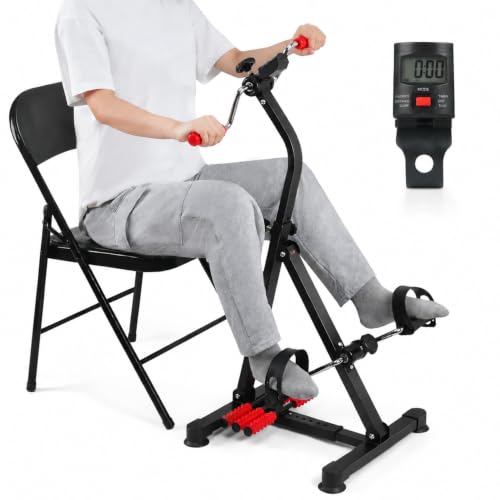
A 265-pound weight capacity and magnetic resistance make this pedal exerciser a steady, quiet companion for seated rehab after a stroke. You can adjust both the tension and height to work arms or legs from a chair or sofa, which matters when standing balance is still shaky. The four suction cups grip the floor, so the unit won’t slide during repetitive motion, a small but critical detail for safe recovery sessions. For someone who needs low-impact movement without leaving the house, this fills that gap neatly.
Portability is the trade-off here. At 13.2 pounds, it’s lighter than a full stationary bike but heavier than something like the TooCust Arm and Leg Pedal Exerciser, which offers a similar seated design but adds leg swing and arm rope exercises for variety. If your priority is a stable, whisper-quiet machine you can park next to your recliner and use daily, the ZIDAFIT delivers. Just know that moving it between rooms takes a bit of effort, and the simple LCD won’t track anything beyond the basics.
Product photos
Triceratops Finger Training Board
What We Like
- 3-in-1 rotation, pinch, and coordination training
- Solid hardwood with smooth rounded edges
- Ergonomic semi-circular shape fits hand curvature
- Compact and portable for home or clinic
Trade-offs
- No resistance clips for grip strength training
- No adjustable resistance for progressive strength training
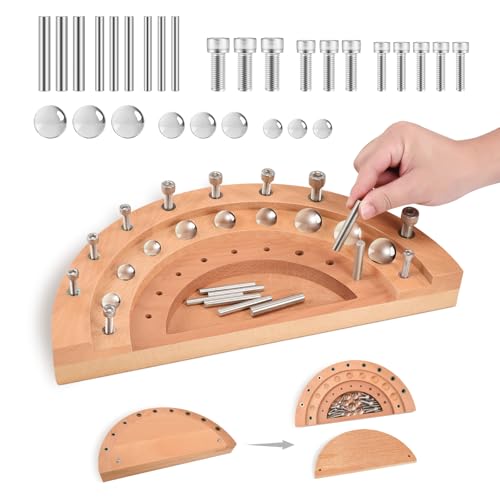
Twenty-seven holes, three distinct training modules, and a solid hardwood base that stays put on a tabletop, this board gives your fingers a full workout without any electronics or batteries. The rotation screws build twisting strength, the glass beads sharpen pinching control, and the peg-insertion task trains hand-eye coordination. All of that happens on one compact platform. It’s ideal for anyone in stroke recovery who needs to rebuild precise finger movements after hand function has been affected, especially during the later stages when you’re ready to practice deliberate, repeated motions rather than just squeezing a ball.
If you need to rebuild basic hand closure or build forearm endurance, the FitBeast Finger Exerciser Set offers five resistance clips for hand therapy and grip strength. But for anyone who wants to practice threading, pinching, and rotating, the small, coordinated actions that make daily tasks like buttoning a shirt or picking up a coin possible, the Triceratops board delivers a thoughtful, durable setup. It fits in a drawer and works as hard as you do.
How We Evaluated Exercise Equipment For Stroke Recovery
We reviewed each product against its stated purpose, examining specs like resistance ranges, weight capacity, adjustability, and safety certifications. Manufacturer documentation and therapy-focused product descriptions told us the intended use case, while patterns in owner feedback revealed what works in practice and what frustrates users.
Four criteria mattered most: the type of movement it supports, passive, active-assisted, or active, the adjustability range for progressive recovery, the portability and setup demands for home use, and the safety features for someone with limited mobility. A glove that requires charging and mode programming serves a different stage of rehab than a simple squeeze ball set.
A research-led evaluation has limits, we cannot replicate the individual variability of stroke recovery. What works for one survivor may not suit another with different muscle tone, spasticity, or cognitive challenges. We present the facts so you and your care team can decide.
What To Look For In Exercise Equipment For Stroke Recovery
The right tool depends on what movement you are trying to restore. Start with the type of assistance needed, passive, active-assisted, or active, then match the resistance range and safety features to the survivor’s current ability.
Choose equipment that matches the survivor’s current stage of recovery: passive for no voluntary movement, active-assisted for partial movement, and active for independent strengthening. Adjustability and safety come next.
Type Of Movement Assistance
Stroke recovery equipment falls into three movement categories. Passive devices like the Fanwer Resting Hand Splint hold the hand in a stretched position to prevent contractures during rest. Active-assisted tools like the torktak Stroke Hand Recovery Glove use robotic motion to help the fingers bend and straighten when the user cannot do it alone. Active tools like the Vive Squeeze Balls 4-Pack require voluntary grip strength and work best when some movement already exists.
Adjustability And Progression
Recovery is not static. A device with multiple resistance levels or adjustable speed settings lets the survivor progress without buying new equipment. The FitBeast Finger Exerciser Set offers five color-coded resistance levels from 1 to 8 lbs, while the XiangAi Rehabilitation Robot Glove lets you adjust grip duration and speed. For seated cardio, the ZIDAFIT Adjustable Pedal Exerciser has magnetic resistance that turns up smoothly as leg strength returns.
Safety And Comfort During Use
A survivor with limited balance or coordination needs equipment that stays put and feels secure. The TooCust Arm and Leg Pedal Exerciser has a sturdy steel frame rated for 330 lbs with transport wheels to avoid lifting. The ODOXIA Mirror Therapy Box is lightweight and portable but requires one functional hand to operate safely. For immobilization, the Fanwer Resting Hand Splint uses soft foam padding and a breathable sleeve to prevent skin breakdown during long wear.
- Check that the device can be used in a safe seated or lying position if balance is limited.
- Ensure straps, cuffs, or splints do not restrict circulation or cause skin irritation.
- Look for certifications like FDA or CE clearance for powered devices.
- Confirm the weight limit accommodates the user before assembly.
- Verify that cleaning and maintenance are straightforward for a caregiver.
Start with the least complex device that matches the survivor’s current ability, more features are not always better when cognitive fatigue is a factor.
Exercise Equipment For Stroke Recovery Compared
The table below compares all ten products across the features that matter most for stroke recovery, from movement type and adjustability to best-use setting.
| Product | Type | Target Area | Adjustability |
|---|---|---|---|
| torktak Stroke Hand Recovery Glove | Robotic glove | Hand/fingers | Intensity 1-5 levels |
| ODOXIA Mirror Therapy Box | Mirror therapy box | Hand | N/A |
| TooCust Arm and Leg Pedal Exerciser | Pedal exerciser | Arm and leg | Adjustable handle resistance |
| JoAnn's Journey Hand Therapy Kit | Hand therapy kit | Hand/fingers | Multiple resistance options |
| FitBeast Finger Exerciser Set | Finger exerciser set | Fingers | 5 resistance levels (1-8 lbs) |
| Fanwer Resting Hand Splint | Resting hand splint | Wrist/hand/fingers | 5 adjustable straps |
| XiangAi Rehabilitation Robot Glove | Robotic glove | Hand/fingers | 4 training modes, 8 speeds |
| Vive Squeeze Balls 4-Pack | Squeeze balls | Hand/grip | 4 resistance levels |
| ZIDAFIT Adjustable Pedal Exerciser | Pedal exerciser | Arm and leg | Adjustable tension and height |
| Triceratops Finger Training Board | Finger training board | Fingers/hand | 3-in-1 training modules |
Frequently Asked Questions
What type of exercise equipment is best for stroke recovery at home?
The best equipment depends on what movement needs retraining. For hand recovery, robotic gloves like the torktak Stroke Hand Recovery Glove provide active-assisted finger bending. For leg strength, seated pedal exercisers like the ZIDAFIT Adjustable Pedal Exerciser offer low-impact cardio. A therapy kit like JoAnn’s Journey Hand Therapy Kit covers multiple hand exercises in one set.
Can a stroke survivor use a stationary bike for rehab?
Yes, stationary bikes are a common rehab tool for rebuilding leg strength and cardiovascular endurance after a stroke. Many therapy programs recommend recumbent bikes with arm exercisers because the seated position is stable and the moving handlebars engage the upper body. For those who prefer a simpler setup, pedal exercisers work well under a desk or chair.
How long should a stroke survivor use hand therapy equipment each session?
Session length varies by device and ability. Robotic gloves like the torktak Stroke Hand Recovery Glove recommend 15-minute sessions to avoid muscle fatigue. Squeeze balls and finger exercisers can be used for shorter, more frequent intervals, several 5-minute sessions spread throughout the day often work better than one long session. Always follow the device instructions and stop if pain or unusual discomfort occurs.
What is mirror therapy for stroke recovery?
Mirror therapy uses a reflective surface to create the visual illusion that the affected hand is moving normally. The ODOXIA Mirror Therapy Box places the affected hand behind a mirror while the unaffected hand performs exercises in front of it. The brain perceives the reflected movement as coming from the affected hand, which may support neuroplasticity and motor function retraining.
Is electrical stimulation effective for stroke rehabilitation?
Electrical stimulation devices like muscle stimulators can help activate weakened muscles and reduce spasticity when used as part of a therapy program. NMES devices send gentle electrical pulses through electrodes placed on the skin to trigger muscle contractions. These should be used under the guidance of a physical therapist to ensure proper placement and settings.
The Bottom Line
The torktak Stroke Hand Recovery Glove is our best overall pick for stroke survivors who need robotic assistance to bend and straighten fingers, especially those who want to train while resting in bed. Its five adjustable strength levels make it suitable for gradual progress, and the complete set includes everything needed to start.
For survivors on a budget who already have some hand movement, the FitBeast Finger Exerciser Set offers five resistance levels in a compact travel pouch. Those focused on brain retraining through visual feedback should consider the ODOXIA Mirror Therapy Box, while caregivers wanting a complete hand therapy kit will appreciate JoAnn’s Journey Hand Therapy Kit.
The single most important factor in choosing stroke recovery equipment is matching the device to the survivor’s current movement ability, passive, active-assisted, or active. Start there, and the right tool becomes clear.
