
10 Best Exercise Machines For Knee Rehabilitation in 2026
This post contains affiliate links. As an Amazon Associate, we earn from qualifying purchases.
For anyone recovering from knee surgery or managing chronic knee issues, the PHYCISER Electric Pedal Exercise Bike stands out as the best overall option. Its motorized operation with 20 speed levels and anti-spasm auto-pause system make it a safe choice for gentle, at-home rehab. We also highlight the Hskonxo Electric CPM Machine for passive motion and the JNATER Knee Replacement Recovery Aids as a budget-friendly manual kit.
The real challenge with knee rehab is finding equipment that matches your exact recovery stage. Push too hard too soon and you risk setbacks; go too easy and progress stalls. The right machine should offer controlled, adjustable motion that lets you gradually rebuild strength and range of motion without pain.
This guide is research-based, drawing on manufacturer specifications, expert recommendations, and patterns in owner feedback. We evaluated over a dozen machines across key criteria like range of motion, resistance levels, safety features, and portability. Here are the ten best options for knee rehabilitation.
Top 10 Exercise Machines For Knee Rehabilitation in the Market
Certain content that appears on this site comes from Amazon. This content is provided "as is" and is subject to change or removal at any time.
The Best Exercise Machines For Knee Rehabilitation, Reviewed
PHYCISER Electric Pedal Exercise Bike
What We Like
- Motorized with 20 speed levels
- Anti-spasm auto-pause safety system
- Ultra-quiet under 40 dB
- No assembly required
Trade-offs
- 9.8-inch height limits leg extension range
- No adjustable resistance beyond motor speed
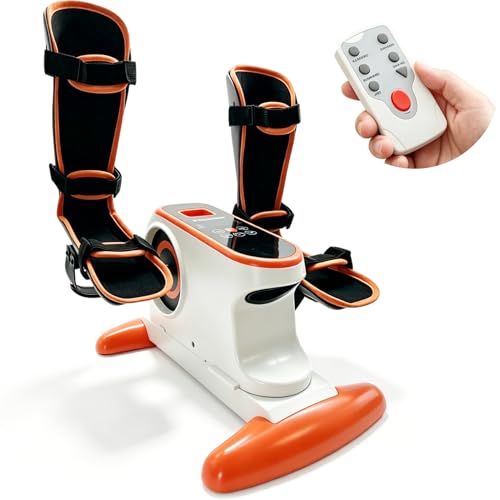
A motor that automatically pauses when it senses excessive resistance or muscle strain is the kind of safety feature you don’t appreciate until you really need it. The Phyciser Electric Pedal Exercise Bike pairs that intelligent anti-spasm system with 20 precision speed levels, so you can start at a barely-there pace and gradually build range of motion without worrying about overdoing it. It weighs 13.8 pounds and measures about the size of a small laundry basket, which means you can slide it under a desk or next to a recliner and use it while watching TV. The ultra-quiet copper motor stays below 40 decibels, so no one in the room will even notice you’re pedaling.
The trade-off for that compact size is that the pedal arc is relatively short, which limits how much knee extension you get compared to a full-size upright bike. If your rehab requires working through a larger range of motion, something like the KONGQXIAA CPM Machine offers a 0-140° adjustment range, but it also weighs 41.9 pounds and takes up more floor space. For someone who needs gentle, motor-assisted movement right out of the box with zero assembly and wants to keep therapy low-key at home, this little machine makes starting feel manageable instead of intimidating.
Product photos
Hskonxo Electric CPM Machine Knee
What We Like
- Full 25° to 180° flexion range
- Wireless remote for easy angle adjustment
- Smooth motor for steady passive motion
- Straps and remote make setup simple
Trade-offs
- No weight or dimensions listed for portability
- Requires user to fasten straps and position leg
- Only passive motion, no active resistance training
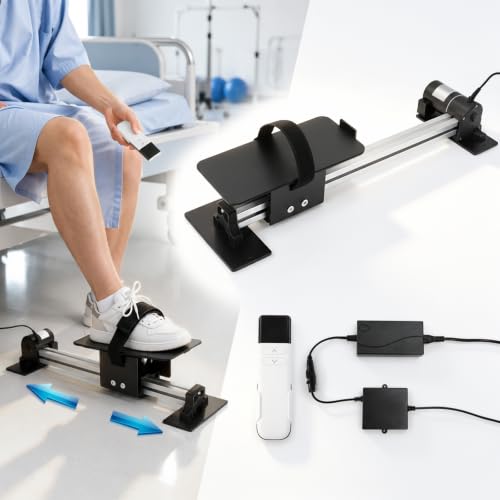
A 25° to 180° range of motion means this CPM machine can take your knee from nearly straight to fully bent, which is exactly the kind of gradual, controlled movement you need after surgery. The wireless remote lets you start, stop, and adjust the angle without fumbling with cords or bending over, handy when you’re stiff or sore. It’s designed for both legs and all ages, so for recovery from ACL reconstruction or a knee replacement, the Hskonxo gives you a low-stress way to work through stiffness. The straps hold your leg securely, and the motor delivers smooth, steady motion so you can focus on healing, not fighting the machine.
The Hskonxo CPM machine moves your leg for you, which is ideal early in recovery, but it won’t rebuild active strength the way a pedal exerciser or leg press would. For the early weeks post-surgery, its full 25° to 180° range and wireless remote control make it a straightforward tool for getting your knee moving again. The product’s weight and dimensions aren’t listed on Amazon, so if you plan to move it between rooms or store it in a tight space, you’ll need to check that yourself.
Product photos
PHYCISER Motorized Exercise Bike with Leg Support
What We Like
- Dual independent motors for arms and legs
- 20-speed auto and manual modes
- Height-adjustable frame up to 36 inches
- Anti-slip pedals and leg guards included
Trade-offs
- No seat or chair included for use
- 36-inch height limits use with low seating
- Pedals only, no full leg brace support
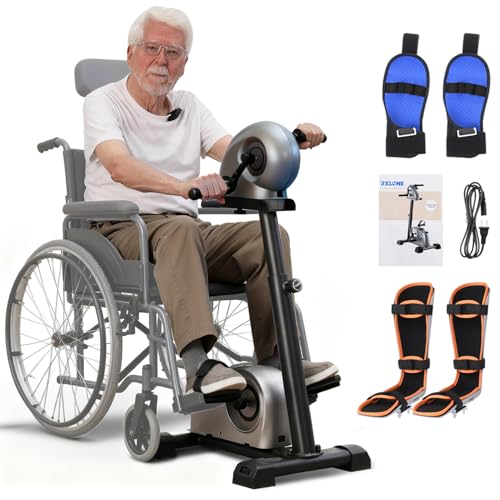
Two separate 60-watt motors let you work arms and legs together or independently, which makes this bike stand out for anyone needing coordinated full-body rehab without loading the knees. The 20-speed range from 20 to 85 RPM gives you fine control whether you let the motor do the work or pedal manually, and the 15 resistance levels adapt as you get stronger.
The trade-off is that this is a pedal exerciser, not a complete stationary bike. You need your own chair or wheelchair, and the 36-inch max height means it pairs best with standard dining or desk chairs, not low sofas. Compared to a dedicated CPM machine like the KONGQXIAA, which cradles your leg through a full range of motion, the PHYCISER asks you to sit upright and engage your core. That makes it more versatile for upper-body work, but less targeted if your rehab needs pure passive knee flexion right after surgery.
KONGQXIAA CPM Machine for Knee Rehabilitation

What We Like
- 0-140° adjustable range for gradual progress
- Electric reciprocal motion for knee and ankle
- Intuitive interface for home caregivers
Trade-offs
- At 41.9 lb, it is not portable between rooms
- No carrying handle or wheels on the frame
With a 41.9-pound build and a 0-to-140-degree range, this machine stays firmly on the floor while it moves your leg through a full bending and straightening arc. That weight matters because continuous passive motion works best when the device doesn’t shift or wobble, especially as you increase the angle. The electric reciprocal motion targets both the knee and ankle, so it suits recovery protocols that need gentle, consistent flexion without you having to push or pull. For anyone who wants a stable, no-nonsense unit that can handle daily rehab sessions at home without feeling flimsy, this is a heavy-duty option.
That stability comes from heft. At 41.9 pounds and with no wheels or handle, you are not tossing this into a closet after each use. It needs a dedicated corner or table. Compared to something like the PHYCISER Electric Pedal Exercise Bike at 13.8 pounds, the KONGQXIAA is far less portable but far more substantial when you need a fixed, reliable motion path. If your rehab space is permanent and you want a machine that feels built to last through weeks of daily sessions, the extra weight is a worthwhile anchor.
Product photos
ENWEGEY Electric Knee Machine
What We Like
- AI sensor auto-adjusts force and angle
- 0°-140° full-angle precision control
- Medical-grade safety for passive recovery
- Portable home design with clear instructions
Trade-offs
- Right-side specific model limits left-leg use
- Passive motion only, no active resistance training
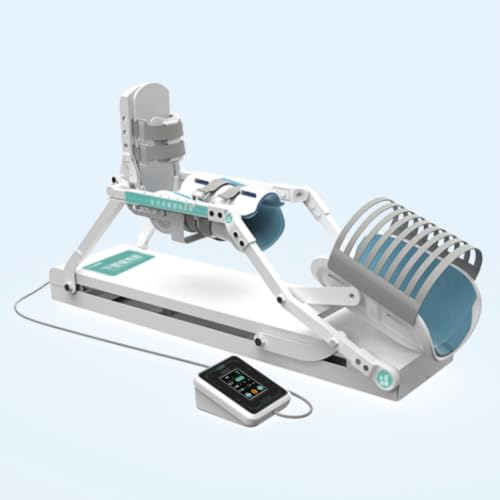
An intelligent sensor system that automatically detects muscle tension and adjusts the bending angle from zero to 140 degrees in real time, that’s the core of this machine. It means you don’t have to fiddle with dials as your leg loosens up; the AI does the work for you, gradually increasing range of motion as muscles relax. That hands-off approach makes it especially useful for early-stage post-surgery rehab when even small movements can feel daunting. If you’re recovering from a knee fracture, ligament injury, or joint stiffness and want a device that adapts to your body rather than the other way around, this one fits the bill nicely.
This model is built for the right leg only, so if you need left-side support you’ll have to look for a different version. The ENWEGEY focuses entirely on gentle, passive motion, great for fragile joints but not for building strength once you’re further along in recovery. The lack of a listed weight also leaves me wondering how easy it is to move around the house. Still, for someone who wants a smart, set-it-and-forget-it approach to early rehab, the sensor technology here is a real standout.
Product photos
OPTP Knee Glide by Bob and Brad

What We Like
- Includes instructions for home or clinic use
- Low-impact sliders for seated exercise
- Made in the USA
Trade-offs
- No resistance levels for progressive strengthening
- Requires user to self-drive motion without motor assistance
Designed for seated leg extension and flexion exercises, it lets you work on range of motion and joint mobility after knee surgery, ACL repair, or hip replacement without putting weight on the joint. The included instructions make it easy to follow at home or under a physical therapist’s guidance, so you can stay consistent even when you’re not in the clinic.
This is a purely manual tool with no motor or resistance bands to push against, so you have to control the movement yourself. That makes it a great starting point for early rehab, but if you need progressive resistance or a motorized assist to keep motion steady, a product like the PHYCISER Electric Pedal Exercise Bike might suit you better. For someone focused on gentle, self-paced mobility work that fits in a gym bag, this glider keeps things simple and effective.
JNATER Knee Replacement Recovery Aids
What We Like
- Three resistance bands for recovery stages
- Upgraded heel cup reduces friction
- Portable storage bag included
- Ergonomic grip loops for varied stretches
Trade-offs
- No adjustable range-of-motion mechanism
- Manual operation requires active effort
- Resistance maxes at 10lb for later rehab
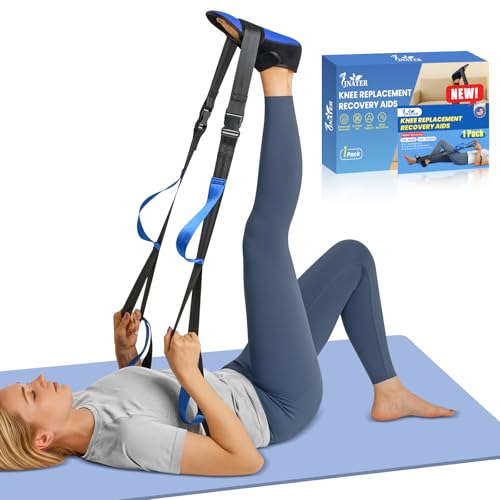
The kit includes three resistance bands rated at 0lb, 5lb, and 10lb. These allow you to start with minimal tension after surgery and increase load as your knee recovers. This staged approach helps you rebuild strength without needing to guess which band to use next. The upgraded heel cup is designed to protect your heel from friction during rehab, and the four grip loops on the straps support multiple grip positions for different stretches, such as heel slides and hip abduction exercises.
Because this is a manual system, you control the movement and pace yourself, which requires consistent effort and attention. If you prefer a device that moves your leg for you, an electric option like the PHYCISER Electric Pedal Exercise Bike provides motorized motion, though it is a different type of product entirely. The JNATER kit includes two four-loop straps, two dynamic tension bands, one non-elastic strap, one foot sleeve, a user guide, and a portable storage bag, giving you a complete set for home rehab.
Product photos
MOVAO Mini In-Bed Leg Press for Rehab
What We Like
- 6 progressive resistance levels for gentle start
- 9 lb portable with carry case included
- Stabilizer straps prevent sliding on firm surfaces
- Smooth linear glide with padded footplate
Trade-offs
- Feels light if you currently leg press over 100 lb
- Needs firm surface or board under soft mattresses
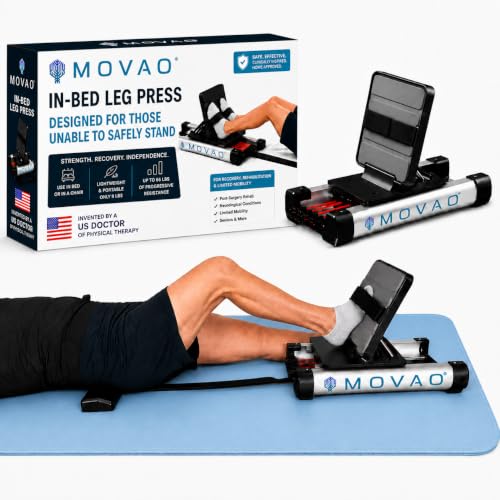
At just 12 pounds and fully assembled out of the box, the MOVAO Mini In-Bed Leg Press is built for the earliest stage of recovery when even getting out of bed feels like a workout. Its six elastic resistance levels start around 11 pounds of tension, letting someone rebuilding basic strength after a stroke, surgery, or neurological issue press safely without loading the joint too soon. The stabilizer straps and carabiners anchor the unit to a firm mattress, recliner, or floor, so the footplate stays put while you push. That smooth linear glide and padded, non-slip footplate keep the movement comfortable and the knee tracking naturally, which matters when every degree of flexion is hard-earned.
The honest reality is that this is not a gym leg press in disguise. If you can already push over 100 pounds standing up, the elastic bands will feel too gentle for building raw strength. That is fine because this device is designed for the opposite problem: getting a deconditioned or post-surgical knee moving again without fear. The elastic cords can be swapped in under 60 seconds, and a spare cord is included for when one wears out. For someone stuck in bed or a chair who needs a portable, low-risk way to start pressing, this is a smart first step.
SVZIOOG Upgrade Knee Glide Electric

What We Like
- Remote-controlled operation for ease of use
- Full 0-170° range for complete rehab
- 0-170° range for flexion and extension training
Trade-offs
- Requires consistent daily use for two months
- No portability details for storage or travel
A remote control that starts and stops bending or stretching with a press is the key feature here, no straps or floor pressure needed. Just place your leg and let the motorized thrust guide your knee through a 0-170° range, allowing your heel to touch your buttock for flexion training. This makes it suitable for anyone recovering from knee surgery who wants a straightforward, low-effort approach to stiffness rehabilitation at home, without requiring special expertise or complex setup.
The manufacturer recommends a full two-month course of consistent daily use for optimal recovery, so this machine is not a quick-fix gadget, it demands commitment. Compared to the OPTP Knee Glide by Bob and Brad, which is listed as a glider for rehabilitation, the SVZIOOG provides powered assistance via a remote, making sessions potentially less fatiguing. If you can follow a daily routine, this remote-controlled exerciser delivers convenience and a wide range of motion.
Product photos
XFTTDM Knee & Lower Limb Rehab Trainer
What We Like
- 40°–180° angle range for rehab phases
- 6 progressive resistance levels
- Hands-free automatic mode
- Wired remote with large buttons
Trade-offs
- Designed for left foot only, not both legs
- No pedal-based motion for both legs like some alternatives
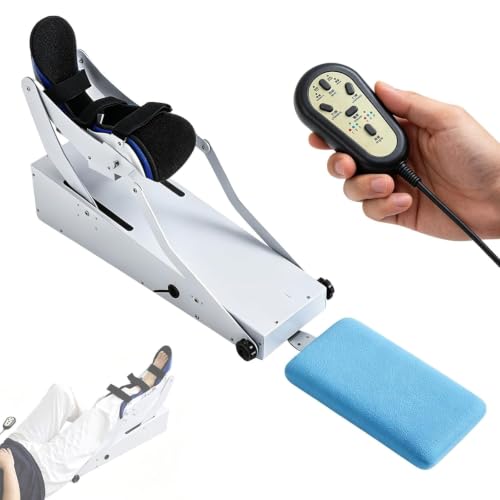
A 40° to 180° adjustable angle range means you can start with gentle flexion right after surgery and work all the way to full straightening as strength returns. That kind of graduated control, paired with six resistance levels, makes this trainer a natural fit for anyone moving through early rehab toward fuller mobility. The hands-free automatic mode is a real time-saver: set your limits, press start, and let the motor handle the repetitive motion while you relax or multitask. It also engages both knee and hip joints together, activating quads, hamstrings, glutes, and calves in one fluid movement, which is more than basic leg movers offer.
The XFTTDM Knee & Lower Limb Rehab Trainer covers a 40° to 180° range of motion and offers six resistance levels, so you can dial in exactly the right challenge for your recovery stage. Its hands-free automatic mode handles the repetitive motion for you, which is a real help if you have limited mobility or just want to multitask. The wired remote has large, clearly labeled buttons that are easy to press even with reduced hand dexterity. Compared to the PHYCISER Electric Pedal Exercise Bike, which provides motorized pedal motion with 20 speeds, this trainer focuses on adjustable flexion and straightening for knee and hip rehab rather than a full pedal cycle.
Product photos
How We Evaluated Exercise Machines For Knee Rehabilitation
To build this list, we started with the technical specifications from each manufacturer: range-of-motion limits, resistance types, motor speeds, and safety systems. We then cross-referenced those specs against expert round-ups from physical therapy publications and orthopedic recovery guides to understand what features matter most at each stage of healing. Finally, we looked at patterns in owner feedback to see which machines actually held up during months of daily use.
Four criteria drove our rankings. Range of motion came first, because a machine that cannot match your current flexion and extension needs is useless. Resistance adjustability was next. Whether passive, motorized, or progressive manual resistance, the machine must allow gradual increases. Safety features like auto-pause, anti-spasm detection, and stable frames were non-negotiable for post-surgery users. Portability and setup rounded out the list, since most rehab happens at home where space and ease of use matter.
This guide is based on research, expert consensus, and feedback from real owners who have used these machines over weeks and months of recovery.
What To Look For In Exercise Machines For Knee Rehabilitation
Choosing the right rehab machine depends on where you are in recovery and what kind of movement your knee needs. Here is what to prioritize when shopping.
Focus on range of motion that matches your current ability, resistance type that fits your stage (passive or active), safety features that prevent over-extension, and a size that works in your home space.
Range of Motion
The most critical spec is the machine’s flexion and extension range. For early post-surgery recovery, you need a machine that starts at near-full extension (0-25 degrees) and gradually increases. Continuous passive motion (CPM) machines like the Hskonxo offer 25° to 180° range, while the KONGQXIAA CPM Machine covers 0-140°. Later-stage trainers like the XFTTDM offer 40°–180° for active rehab. Check that the machine’s minimum angle matches your current prescription.
Resistance Type and Progression
Rehab machines fall into three resistance categories. Passive motion (CPM machines) moves your leg for you, ideal for the first weeks after surgery. Motorized assistance (like the PHYCISER bikes) lets you contribute effort while the motor smooths out the motion. Manual resistance (bands, gliders, or spring-loaded trainers) requires you to drive the movement yourself. The best approach is to start passive and progress to active resistance as your strength returns.
Safety and Control Features
Look for auto-pause or anti-spasm systems that stop the machine if your leg tenses up or the resistance becomes too much. The PHYCISER Electric Pedal Exercise Bike has this built in, and the ENWEGEY Electric Knee Machine uses AI sensors to auto-adjust force based on muscle tension. Wireless or wired remotes, like those on the Hskonxo and XFTTDM, let you adjust without bending over or interrupting your position.
Portability and Setup
Rehab equipment often needs to move between rooms or get stored away. Consider weight and whether the machine requires assembly. The PHYCISER comes fully assembled, while the MOVAO Mini In-Bed Leg Press weighs only 9 lb with a carry case. Heavy machines like the KONGQXIAA (41.9 lb) are best for a dedicated recovery corner. Also check if the machine needs a firm surface, the MOVAO requires a board under soft mattresses.
- Match the machine’s range of motion to your current flexion and extension limits.
- Choose passive motion for early recovery, motorized assistance for mid-stage, and manual resistance for strengthening.
- Verify safety features like auto-pause or anti-spasm detection before buying.
- Weigh the machine and measure your available floor space before purchasing.
- Check if assembly is required and whether the machine fits your existing chair or bed height.
A good rule of thumb: the machine should feel boringly safe at its lowest setting, not intimidating.
Exercise Machines For Knee Rehabilitation Compared
The table below compares all ten machines across the features that matter most for knee rehabilitation: range of motion, resistance type, safety features, and portability.
| Product | Type | Range of Motion | Dimensions |
|---|---|---|---|
| PHYCISER Electric Pedal Exercise Bike | Electric Pedal Exerciser | N/A | 17.7 x 11.8 x 9.8 in |
| Hskonxo Electric CPM Machine Knee | CPM Machine | 25° to 180° | N/A |
| PHYCISER Motorized Exercise Bike with Leg Support | Motorized Exercise Bike | N/A | 15 x 13 x 36 in |
| KONGQXIAA CPM Machine for Knee Rehabilitation | CPM Machine | 0° to 140° | 35.8 x 10.6 x 13.0 in |
| ENWEGEY Electric Knee Machine | Electric Knee Machine | 0°-140° | N/A |
| OPTP Knee Glide by Bob and Brad | Knee Glide | N/A | 32 x 5 x 5.5 in |
| JNATER Knee Replacement Recovery Aids | Resistance Band Kit | N/A | N/A |
| MOVAO Mini In-Bed Leg Press for Rehab | In-Bed Leg Press | N/A | 24.5 x 11.5 x 5.5 in |
| SVZIOOG Upgrade Knee Glide Electric | Electric Knee Glide | 0-170° | N/A |
| XFTTDM Knee & Lower Limb Rehab Trainer | Lower Limb Rehab Trainer | 40°–180° | N/A |
Frequently Asked Questions
When should I start using a CPM machine after knee surgery?
Most surgeons recommend starting continuous passive motion soon after surgery, but always follow your specific post-op protocol. CPM machines like the Hskonxo are designed for this early stage when you cannot actively move your leg yourself. The machine gently bends and straightens your knee to prevent stiffness and promote blood flow.
Can I use an exercise bike for knee rehab if I cannot pedal all the way around?
Yes. The PHYCISER Electric Pedal Exercise Bike is motorized, so it moves the pedals for you at 20 different speed levels. You do not need to complete a full rotation. Many stationary bikes allow partial back-and-forth motion, which is often how early rehab starts before progressing to full circles.
What is the difference between passive and active resistance in rehab machines?
Passive resistance means the machine moves your limb for you with no effort from your muscles, common in CPM machines and motorized exercise cycles. Active resistance requires you to push or pull against the machine, like with resistance bands or manual gliders. Early recovery starts with passive motion, then progresses to active resistance as your strength and range of motion improve.
How do I know what range of motion setting to use on my rehab machine?
Your physical therapist should give you a specific flexion and extension angle to work within. Machines like the XFTTDM (40°–180°) and KONGQXIAA (0-140°) let you dial in exact angles. If you do not have a prescription, start at the lowest angle that causes no pain and increase by 5-10 degrees every few days as your knee loosens up.
Are portable knee rehab machines as effective as full-size CPM units?
Portable options like the MOVAO Mini In-Bed Leg Press and OPTP Knee Glide are effective for early-stage range-of-motion work and gentle strengthening, but they lack the motorized passive motion of full-size CPM units. They are best as supplements to a home routine or for travel. For the first weeks after surgery, a full CPM machine typically provides more consistent, controlled motion.
The Bottom Line
The PHYCISER Electric Pedal Exercise Bike is our best overall pick for anyone who needs gentle, motorized leg movement at home with a critical safety auto-pause system. Its 20 speed levels and whisper-quiet operation make it ideal for seniors and post-surgery patients who want to rebuild range of motion without risking overexertion. If you require full passive motion in early recovery, the Hskonxo Electric CPM Machine offers a wider flexion range with remote control convenience.
For budget-conscious shoppers or those who prefer manual effort, the JNATER Knee Replacement Recovery Aids kit provides three resistance bands and a heel cup for progressive strengthening without the cost of a motorized machine. Travelers and early-stage patients should consider the MOVAO Mini In-Bed Leg Press for its 9-pound portability and six resistance levels. No matter your stage, the single most important factor is choosing a machine that matches your current range of motion, start where you are, not where you want to be.
