
10 Best Exercise Mats in 2026
This post contains affiliate links. As an Amazon Associate, we earn from qualifying purchases.
For most home workouts, the Retrospec Solana Thick Yoga Mat is the best exercise mat overall, offering a rare balance of thick joint cushioning, reliable grip, and easy portability. Budget-conscious shoppers will appreciate the Gaiam Essentials Thick Yoga Mat, while those seeking a lifetime investment can turn to the Manduka PRO Yoga Mat.
The problem with picking an exercise mat is that “one size fits all” rarely works. A mat that feels plush for yoga might be too soft for balance poses, and a dense, durable mat for HIIT can be too heavy to carry to the gym. You need to match the mat’s thickness, material, and weight to your specific workout style and space.
This guide is built on a deep dive into manufacturer specifications, material science, and patterns found in thousands of owner experiences across the fitness world. We break down the 10 best mats by their strengths, so you can find the one that fits your routine and your floor.
Top 10 Exercise Mats in the Market
Certain content that appears on this site comes from Amazon. This content is provided "as is" and is subject to change or removal at any time.
The Best Exercise Mats, Reviewed
Retrospec Solana Thick Yoga Mat

What We Like
- Extra 1/2-inch cushion for joints
- Non-slip surface for steady balance
- BPA-free and phthalate-free materials
- Easy to clean with soap and water
Trade-offs
- Narrower 24-inch width limits side-to-side space
- At 2.7 pounds, lighter than studio mats
A full half-inch of cushion means this mat takes the sting out of hard floors, whether you’re pressing your knees into a lunge or lying down for core work. That thickness relieves pressure on joints and hips without turning the surface into a wobbly marshmallow, thanks to a firm foam that keeps you balanced during standing poses. It’s a smart pick for anyone who wants comfort without sacrificing stability, and the included carrying strap makes it easy to roll up and bring along.
The 24-inch width feels snug if you like spreading your hands and feet wide during stretches or wider stances. The Manduka PRO offers a roomier 26-inch surface with a denser feel, but it weighs over seven pounds and costs more. The Retrospec is lighter and easier to tote, making it a better fit for home use where portability matters. If you mainly do yoga, Pilates, or floor stretching and don’t need extra real estate, this mat delivers generous padding and reliable traction at a practical weight.
Manduka PRO Yoga Mat

What We Like
- Ultra-dense 6mm cushioning for joint protection
- Closed-cell surface resists moisture and bacteria
- Guaranteed to last a lifetime of practice
Trade-offs
- At 7.5 lb, noticeably heavier than most mats
- Weighs 7.5 pounds, making it heavy to carry to class
The trade-off is weight: at 7.5 pounds, this mat is heavier than options like the Gaiam Essentials Thick Yoga Mat at 2.1 pounds. That heft gives it the floor-like stability that keeps it from sliding during practice, but it also makes it less convenient to carry around. If you practice at home and value steadiness over portability, the Manduka PRO delivers a stable surface that stays put.
Product photos
Gaiam Essentials Thick Yoga Mat

What We Like
- 10mm plush cushioning for joint comfort
- Textured surface reduces slipping on hard floors
- Lightweight at 2.1 lb with carrying strap
- Low-odor NBR foam, easy to wipe clean
Trade-offs
- Softer feel prioritizes comfort over firmness for stability
- Narrower 24-inch width limits side-to-side space
With 10mm of high-density NBR foam, this Gaiam mat provides plush cushioning that helps reduce pressure on knees, hips, and joints during floor work. The textured surface helps reduce slipping on most hard floors during dry workouts, so you can stretch, do Pilates, or follow a low-impact routine without sliding around. It rolls up quickly and includes an adjustable carrying strap for easy transport between rooms or classes.
The 10mm high-density NBR foam delivers plush cushioning that reduces pressure on knees, hips, and joints, making it ideal for beginners and low-impact routines on hard surfaces. That softness, however, means the surface prioritizes comfort and shock absorption over the firm, stable platform some people prefer for balance-intensive poses. Reviewers note the textured foam helps reduce slipping on most hard floors during dry workouts, but the cushioned feel is better suited to floor-based and recovery work than demanding standing balances.
Amazon Basics Extra Thick Exercise Mat

What We Like
- Half-inch thick NBR foam cushioning
- Lightweight at only 2.2 pounds
- Textured surface for secure grip
- Includes elastic carrying strap
Trade-offs
- Hand wash only; no machine cleaning
- 24-inch width limits side-to-side arm space
The half-inch thickness of NBR foam provides comfortable padding and shock absorption for yoga, gym workouts, and everyday exercises, which helps cushion knees, elbows, and tailbone during floor work or kneeling exercises. At just 2.2 pounds, it’s light enough to sling over your shoulder with the included elastic carrying strap and carry to the park or gym without feeling like you’re hauling equipment. That combination of cushion and portability makes it a practical choice if you want comfort without a heavy mat.
The NBR foam construction delivers noticeable cushioning, which means you get comfortable padded support and shock absorption for yoga, gym workouts, and everyday exercises. Reviewers note the 1/2-inch thickness provides a forgiving surface for floor work, though the foam’s spring-back quality helps maintain shape over time. At 2.2 pounds, it’s light enough to carry with the included elastic strap, making transport to the gym or studio straightforward. The textured grip surface adds traction to keep the mat in place, suitable for all fitness levels.
Product photos
Manduka PRO Hybrid Fitness Mat
What We Like
- Double-reinforced top layer withstands footwear
- 6mm dense foam cushions joints during high-impact moves
- Sweat-resistant closed-cell surface is easy to clean
Trade-offs
- At 9.3 lb, it's heavy to carry between rooms
- 6mm thickness offers less cushion than thicker yoga mats
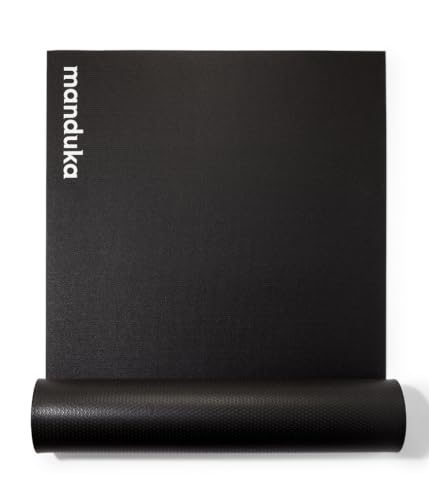
The 79 by 30 inch surface gives you room to move freely for burpees, lunges, and lateral shuffles without worrying about your hands or feet sliding off the edge. That generous size pairs with a dense 6mm foam layer that cushions joints during explosive movement and floor work, while the double-reinforced top layer is built to withstand footwear and repeated high-intensity movement. This mat is designed for strength training, conditioning, and demanding workouts.
The Manduka PRO Hybrid Fitness Mat weighs 9.3 pounds, so you’ll notice the heft when moving it from storage to your workout space. That weight comes from a dense 6mm foam layer that protects joints during explosive moves while keeping a firm, floor-like feel for stability and control. If you need extra cushioning for long floor work, a thicker mat might be more comfortable, but for high-intensity training in footwear, this mat delivers a stable surface that won’t shift underfoot.
Product photos
KEEP Extra Wide Yoga Mat
What We Like
- Extra-wide 32-inch surface for roomy poses
- 7mm thick cushioning for joint protection
- Double-sided non-slip texture for stability
- Lightweight 2.8 lbs with carrying strap
Trade-offs
- 7mm thickness less cushioning than 10mm+ mats
- Spot-clean only; avoid soaking or direct sun
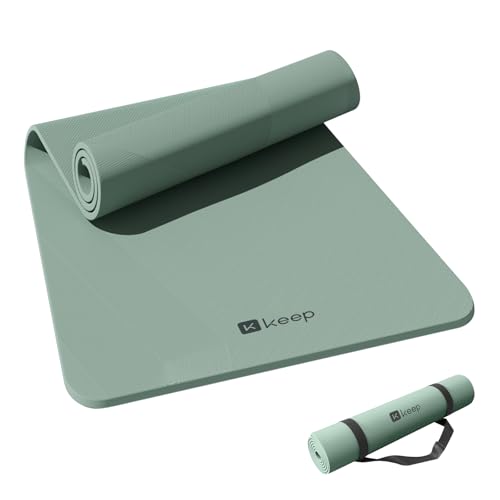
A 32-inch width means you can spread your arms wide in Warrior II or roll through a sun salutation without worrying about your hand slipping off the edge. That extra six to eight inches over standard 24-inch mats is the whole point here: it gives bigger frames and dynamic movers the space they need to feel secure. The 7mm TPE padding cushions knees and elbows during floor work, while the double-sided non-slip texture keeps the mat planted on hardwood or tile. This is the pick for anyone who finds typical mats too narrow or who simply wants room to breathe during practice.
The 7mm padding is moderate cushioning. If you spend a lot of time on your back or need serious padding for high-impact moves, a thicker mat like the Retrospec Solana (1/2 inch) offers more plushness. But that added thickness comes with a narrower 24-inch width, so you lose the spacious feel. The KEEP is also lighter than many extra-wide options, making it easy to carry to class with the included strap. For yogis and fitness enthusiasts who prioritize width and portability over maximum padding, this mat hits a smart balance.
Product photos
UMINEUX Non-Slip Pilates Mat
What We Like
- Eco-friendly TPE material, no PVC or smell
- Double-sided non-slip design for stability
- Lightweight at 1.8 pounds with carry strap
- Strong resilience for comfortable support
Trade-offs
- At 1/4 inch, less cushion for hard floors
- Not suitable for users over 72 inches tall
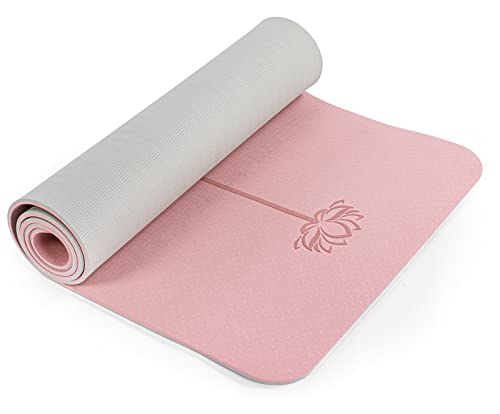
The 1/4-inch thickness provides a firm surface that keeps you connected to the floor during Pilates or yoga flows, which some people prefer for stability. Its TPE material contains no PVC and has no irritating smell, making it a gentler choice for indoor use, and it’s recyclable to reduce environmental waste. The double-sided non-slip texture means your hands and feet stay put even when you start sweating, and the wavy underside grips the floor so the mat doesn’t slide around. At just 1.8 pounds with a free carry strap, it’s easy to roll up and take to the studio or stash in a closet.
That lightweight design means less padding than thicker mats like the Retrospec Solana Thick Yoga Mat at 1/2 inch. So if you do a lot of floor work on hard surfaces, you might want a little more cushion. The care instructions note that shoes or pets’ paws may tear the material, so it’s best used barefoot. For someone who values a non-toxic, lightweight mat that stays put during sweaty sessions and doesn’t weigh down your bag, this is a thoughtful pick that balances performance with planet-friendly materials.
KEEP Foldable Yoga Mat
What We Like
- Lays perfectly flat, no curling
- Folds for quick storage under furniture
- Double-sided water ripple non-slip texture
- Eco-friendly, odorless TPE material
Trade-offs
- At 24 inches wide, narrow for broader movements
- Only 0.3 inches thick, less cushioning than thicker mats
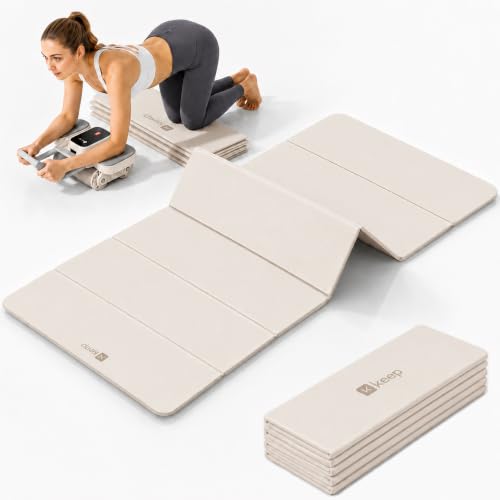
A foldable mat that actually stays flat the moment you set it down, no wrestling with curled corners or waiting for it to relax. That clever crease design means you can stash it under the sofa or in a closet in one second, which is a real win if floor space is tight. At 7 mm thick with high-density TPE, it gives solid joint protection for knees and elbows during yoga or stretching, and the double-sided water ripple texture keeps you planted even when things get sweaty. This is the mat for someone who values tidy storage and a no-fuss setup over maximum cushioning or a wide surface.
The 24-inch width feels snug if you like spreading out for side lunges or wide-legged poses. The Manduka PRO, at 26 inches, gives more real estate. And while 7 mm of TPE works well for most floor work, it won’t match the plushness of a 10 mm Gaiam Essentials mat for extra-sensitive joints. But if your priority is a mat that folds flat, stores out of sight, and doesn’t fight you every time you unroll it, this design solves a genuinely annoying problem. Just wipe it clean after use and it’s ready to go again.
Product photos
CAP 1/2 Inch Thick Yoga Mat
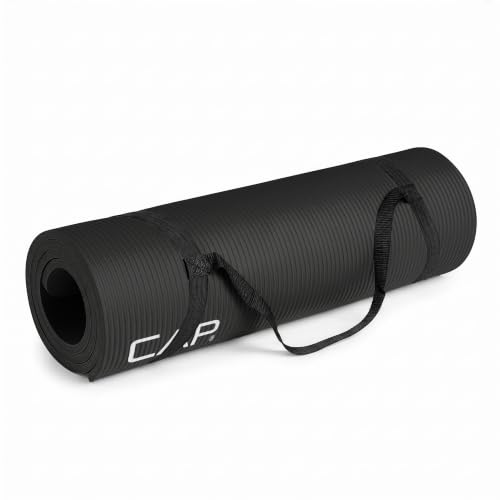
What We Like
- Half-inch NBR foam cushions joints
- Latex-free for sensitive skin
- Textured surface aids grip
- Carry strap for easy transport
Trade-offs
- At 68 inches, shorter than many mats
- Narrow 24-inch width limits sprawling poses
A full half-inch of high-density NBR foam sits between you and the floor, which means your knees, elbows, and lower back get real cushioning during floor work. That thickness makes this mat a natural fit if you spend a lot of time on hard surfaces doing Pilates, stretching, or core exercises and want to avoid that nagging pressure point discomfort. The textured surface also helps keep you stable during poses, and the included carrying strap means you can roll it up and take it to a class without wrestling a loose mat.
The half-inch NBR foam cushions knees and elbows against hard floors, making floor exercises noticeably more comfortable than thinner mats. At 68 inches long, it suits average-height users well, but taller individuals may find their head or feet hanging off the end during lying poses. The included carry strap makes rolling it up and taking it to the gym or studio simple, so it’s easy to keep your workout gear portable.
Product photos
Circuit Fitness by Marcy Non-Slip Mat
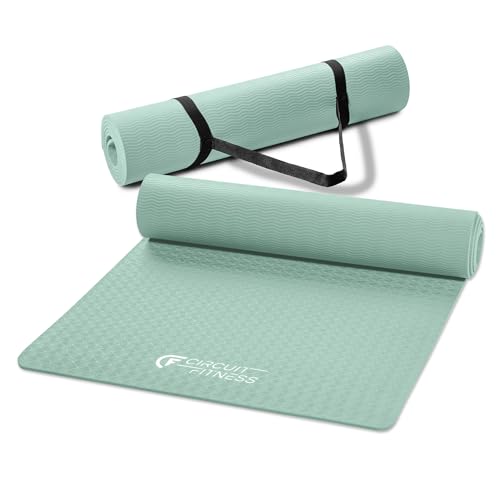
What We Like
- Dual-sided textured grip prevents slipping
- Moisture-resistant TPE resists sweat absorption
- Lightweight 1.5 lb with shoulder carry strap
- Tear-resistant construction for travel durability
Trade-offs
- At 6mm, offers less cushion than thicker mats
- Narrower than some extra-wide mats on the market
At just 1.5 pounds and rolling up with a shoulder carry strap, this mat is built to go wherever you do, studio, gym, or living room floor. The 6mm thickness offers high-density TPE cushioning that keeps your spine and knees comfortable during core work or stretching, while still being thin enough to roll up compactly without adding bulk. The dual-sided textured surface helps prevent shifting on hardwood, tile, or carpet, so you are not fighting a sliding mat during poses or stretches. If your routine leans toward yoga, Pilates, or travel-friendly floor exercises, this is the lightweight companion that actually works as a mat, not just a towel.
That portability comes with less plushness under pressure. Compared to the Retrospec Solana’s half-inch thickness, this 6mm mat offers less cushioning, which may be noticeable during floor exercises. And at 24 inches wide, it is narrower than some wider mats, so those who prefer extra room for sprawling stretches might find it limiting. But for the person who needs a reliable, non-slip surface they can toss in a bag and forget about until the next workout, the Circuit Fitness by Marcy delivers exactly that, without the weight penalty of a thicker mat.
Product photos
How We Evaluated Exercise Mats
We started by looking at the materials and construction of each mat, comparing density claims (like NBR versus TPE versus PVC) and their real-world trade-offs for durability and grip. We then cross-referenced those specs with expert round-ups from coaching and physical therapy sources to understand what actually matters for safety and performance.
The three criteria that mattered most were cushioning and joint protection, surface grip and stability, and portability. Thicker mats (10mm and up) protect knees and elbows during floor work, but a very soft foam can make balancing poses harder. Grip is critical for safety, especially in hot yoga or high-intensity work, and it changes based on whether the surface is open- or closed-cell. Finally, a mat’s weight and carrying system determine whether it stays in your home gym or travels with you.
An honest limit of this research-led approach is that we don’t have lab data on long-term foam compression or slip resistance. Instead, we rely on the collective feedback of thousands of users and the known properties of each material to guide our picks. For a complete look at different styles, check our home exercise mat guide.
What To Look For In Exercise Mats
The right mat protects your joints and keeps you stable. Here are the key factors to consider before you buy.
Focus on thickness for cushioning, material for grip and durability, and weight for portability. A mat that suits your specific workout type will last longer and feel better.
Thickness and Cushioning
Thickness is the most visible difference between mats. Standard yoga mats are about 3mm to 6mm thick, providing a firm connection to the floor for balance poses. Thick exercise mats (10mm or more) use plush foam like NBR to cushion knees, elbows, and hips during floor exercises. Very thick mats can feel unstable underfoot during standing poses. That makes them better for stretching and Pilates than for power yoga.
Material and Grip
The material defines the mat’s feel, grip, and lifespan. PVC mats (like the Manduka PRO) are dense and durable with a closed-cell surface that resists sweat and bacteria, making them ideal for heavy use. TPE mats are lighter, more eco-friendly, and offer good grip, but they are less durable over time. Natural rubber provides excellent grip when dry but can be heavy and may trigger latex allergies. For those working out on carpet, you may need to look at specific mats for carpet to ensure stability.
Portability and Storage
If you move your mat between rooms or take it to a gym, weight and carrying options matter. Lightweight TPE mats (under 2 pounds) are easy to sling over a shoulder but may not last as long. Dense PVC mats can weigh over 7 pounds but offer a lifetime of use. A carrying strap or bag is essential for any mat over 3 pounds. For those with limited storage, a folding design can be a better fit than a roll.
- Check if the mat’s length and width accommodate your height and stance.
- Look for a closed-cell surface if you sweat heavily or share a mat.
- Consider a mat with a textured or dual-sided grip for wet conditions.
- Verify the mat is free of phthalates, latex, or strong odors if you have sensitivities.
A good rule of thumb: buy the thickest mat you can balance on, and the lightest mat you won’t mind carrying.
Exercise Mats Compared
The table below compares our top picks across key specs like thickness, weight, and material to help you see the differences at a glance.
| Product | Thickness | Dimensions | Weight | Material |
|---|---|---|---|---|
| Retrospec Solana Thick Yoga Mat | 0.5 inches | 72 x 24 inches | 2.7 pounds | BPA-free, latex-free foam |
| Manduka PRO Yoga Mat | 6 mm | 71 x 26 in | 7.5 lb | PVC (OEKO-TEX certified) |
| Gaiam Essentials Thick Yoga Mat | 10mm (2/5 in) | 72 x 24 in | 2.1 lb | High-density NBR foam |
| Amazon Basics Extra Thick Exercise Mat | 0.5 inches | 74 x 24 inches | 2.2 pounds | NBR foam |
| Manduka PRO Hybrid Fitness Mat | 6 mm | 79 x 30 in | 9.3 lb | Double-reinforced top layer, dense foam |
| KEEP Extra Wide Yoga Mat | 7mm | 72"Lx32"Wx7mm Thick | 2.8 lbs | TPE (thermoplastic elastomer) |
| UMINEUX Non-Slip Pilates Mat | 1/4 inch (6mm) | 72 x 24 inches | 1.8 pounds | TPE (no PVC) |
| KEEP Foldable Yoga Mat | 7 mm | 72 x 24 x 0.3 in | N/A | High-density TPE |
| CAP 1/2 Inch Thick Yoga Mat | 0.5 inches | 68 x 24 inches | 2.1 pounds | Latex-free NBR foam |
| Circuit Fitness by Marcy Non-Slip Mat | 6mm (1/4 in) | 74 x 24 in | 1.5 lb | Closed-cell TPE |
Frequently Asked Questions
What thickness exercise mat is best for joint pain?
For joint pain, look for a mat that is at least half an inch thick. NBR foam mats like the Amazon Basics Extra Thick Exercise Mat or the CAP 1/2 Inch Thick Yoga Mat provide the plush cushioning needed to protect knees and elbows on hard floors. Thinner mats may not offer enough relief for sensitive joints.
How do I clean my exercise mat?
The cleaning method depends on the material. Closed-cell PVC mats like the Manduka PRO can be wiped down with a mild soap and water solution. Open-cell foam mats, such as NBR, should be cleaned with a gentle spray and air-dried. Avoid machine washing or soaking most mats, as this can break down the foam. Always check the manufacturer’s instructions first.
What is the difference between a yoga mat and an exercise mat?
Yoga mats are typically thinner (3-6mm) and designed for grip and stability during standing poses. Exercise mats for home are often thicker (10mm+) and prioritize cushioning for floor exercises like crunches, stretching, and Pilates. The best choice depends on your primary activity: yoga favors a firm, grippy surface, while general fitness favors more padding.
Can I use an exercise mat on carpet?
Yes, but with caution. Thicker mats work better on carpet because they provide enough cushion to prevent you from feeling the floor through the mat. However, a very soft or shaggy carpet can make any mat unstable. For a stable base, look for a mat with a textured bottom or consider using exercise mats on carpet that are specifically designed with a non-slip base.
How long should an exercise mat last?
A high-quality mat can last anywhere from one to five years or more, depending on use and material. Dense PVC mats like the Manduka PRO are built to last a lifetime with proper care. Lighter TPE and NBR mats typically have a shorter lifespan, especially with frequent use. Signs it’s time to replace a mat include visible wear, loss of grip, or foam that no longer returns to its original shape.
The Bottom Line
The Retrospec Solana Thick Yoga Mat is our Best Overall pick because it delivers the cushioning your joints need for floor work without the bulk that makes other thick mats hard to carry. It’s the sweet spot for anyone doing yoga, Pilates, or stretching at home. If your budget is tighter, the Gaiam Essentials Thick Yoga Mat offers similar plush comfort for less.
For those who want a mat that will outlast their workout streak, the Manduka PRO Yoga Mat is the premium choice for durability. If you’re setting up a home gym and need a mat that can handle footwear and high-impact moves, the Manduka PRO Hybrid Fitness Mat is built for the task. No matter your choice, the most important factor is matching the mat’s thickness and material to the floor surface and the type of exercise you do most.
