
10 Best Exercise Watches For Men in 2026
This post contains affiliate links. As an Amazon Associate, we earn from qualifying purchases.
The Garmin vívoactive 5 GPS Smartwatch is the best overall exercise watch for men, balancing a bright AMOLED display, Body Battery energy monitoring, and long battery life for daily fitness. For dedicated runners, the Garmin Forerunner 165 offers adaptive daily suggested workouts, while the COROS PACE 4 wins for ultralight design.
Finding the right exercise watch means sorting through claims about GPS accuracy, battery life, and smart features that may not matter for your actual workouts. What counts is how the watch fits your specific routine, whether that’s daily gym sessions, weekend long runs, or multi-day trail adventures.
This guide draws on manufacturer specifications, expert round-ups, and patterns in owner feedback across ten leading models. You’ll get clear recommendations to match your training style and budget without the marketing noise.
Top 10 Exercise Watches For Men in the Market
Certain content that appears on this site comes from Amazon. This content is provided "as is" and is subject to change or removal at any time.
The Best Exercise Watches For Men, Reviewed
Garmin vívoactive 5 GPS Smartwatch

What We Like
- Bright AMOLED display for easy reading
- Body Battery energy monitoring with sleep insights
- 30+ built-in GPS and indoor sports apps
- Wheelchair mode with specialized tracking
Trade-offs
- Recovery time insights require consistent use
- No built-in music storage for offline listening
An 11-day battery life in smartwatch mode means you can wear this thing all week without scrambling for a charger. That is perfect for anyone who forgets to plug in after a long day. The Body Battery energy monitoring uses sleep, naps, stress, and workouts to show when you’re ready to push hard or when you should ease off, which is exactly the kind of feedback that keeps you from burning out. With more than 30 built-in sports apps covering everything from HIIT to golf to swimming, it adapts to whatever random workout mood strikes you. That balance of everyday health tracking with serious training tools, all without demanding you become a data scientist to understand them, makes it a strong option for a wide range of users.
What you gain here is a screen that’s bright and colorful, making glanceable metrics actually glanceable during a run or a set of deadlifts. It’s not trying to be a hardcore triathlon computer, it’s the watch that keeps you moving, sleeping better, and recovering smarter, day after day.
Garmin Forerunner 165 Running Smartwatch

What We Like
- Personalized daily suggested workouts adapt to recovery
- AMOLED display with traditional button controls
- Up to 11 days battery in smartwatch mode
- Incident detection sends live location to contacts
Trade-offs
- Incident detection only works during select outdoor activities
- Requires smartphone and network coverage for safety alerts
The built-in GPS tracks distance, pace, and speed without needing your phone, so you can leave it behind on a run and still get accurate data. That alone makes this a focused tool for runners who want straightforward metrics without extra fluff. The AMOLED touchscreen is bright and easy to read mid-stride, and the traditional button controls mean you can still navigate when your fingers are sweaty or gloved. Personalized daily suggested workouts adjust based on how you performed and recovered. That practically coaches you through each week, which is perfect if you’re training for a specific event but don’t want a complicated setup.
The 43mm case is lightweight at 0.1 pounds, so it sits comfortably on most wrists during a run. Compared to the COROS PACE Pro, which offers up to 20 days of battery life, the Forerunner 165 keeps things simpler and more runner-specific. Features like recovery time and training effect labels tell you exactly what each workout did for your fitness. For someone who prioritizes training guidance and reliable GPS over entertainment, this watch delivers exactly what matters.
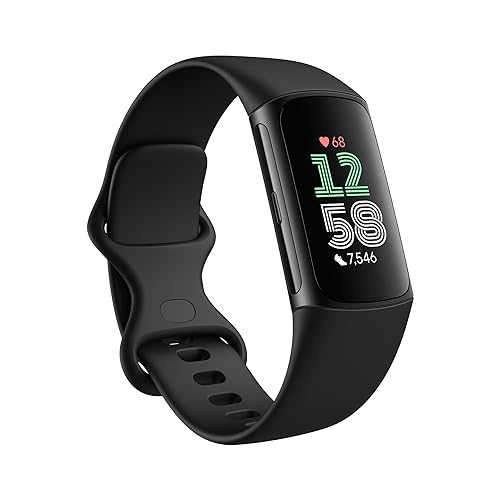
Fitbit Charge 6 Fitness Tracker
What We Like
- Real-time heart rate on exercise machines
- Built-in Google Maps and Wallet
- 40+ exercise modes with auto tracking
- Stress management and sleep scores
Trade-offs
- Google Health Premium subscription needed for coaching
- Small screen for turn-by-turn navigation on runs
A 3-month Google Health Premium trial comes with the tracker, unlocking personalized coaching built with Gemini that adapts to your daily routine. During the trial, you get guided feedback on your metrics without needing a separate subscription, just log in and follow the suggestions. After the trial ends, the premium membership is sold separately if you want to continue. This setup lets you explore advanced coaching before committing, which is handy for deciding whether the extra features fit your long-term goals. Reviewers note the coaching feels tailored to individual activity patterns, making the trial period a practical way to test its value.
After the trial, the advanced coaching requires a paid subscription. Compared to the Garmin vívoactive 5, which offers health monitoring features listed in its specs, the Fitbit Charge 6 integrates Google Maps, Wallet, and YouTube Music controls. For users who already use Google services daily, the integration allows tap-to-pay and turn-by-turn directions on the wrist. If you prefer a device with no subscription extras, the Garmin may be a simpler option based on its listed features.
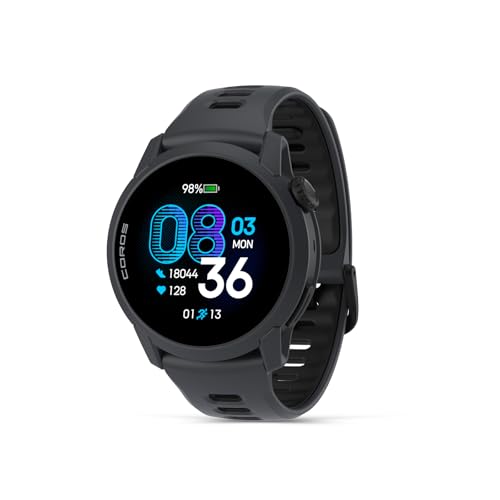
COROS PACE 4 Ultralight Sport GPS Watch
What We Like
- Ultralight 32g design with nylon band
- 41-hour GPS battery for long sessions
- Voice recording and voice control
- 19 days of daily battery life
Trade-offs
- Smaller 1.2" display than some rivals
At just 32 grams with the nylon band, this watch is lighter than most energy gels you’ll stash in your pocket. That weight, paired with an 11.8mm thin profile, makes it the kind of thing you forget you’re wearing, even during a long run or all-day wear. It’s built for the guy who wants a training partner that stays out of the way, with 41 hours of continuous GPS tracking so you can push through weekend adventures without hunting for a charger. The 1.2-inch AMOLED touchscreen is crisp and bright, and the voice recording tool lets you log thoughts mid-workout without fumbling with your phone.
At just 32g with the nylon band, this watch is lighter than an energy gel, so you barely notice it on your wrist during a long run or all-day wear. The 1.2-inch AMOLED display has 164% higher resolution than the COROS PACE 3, making maps and metrics crisp even in bright sunlight. A digital crown, two buttons, and a touchscreen let you swipe or click through menus without fumbling, even when your hands are sweaty. Reviewers say the combination of featherlight comfort and long battery life makes it a straightforward tool for tracking workouts, recovery, and sleep without distractions.
Product photos
COROS PACE Pro GPS Sport Watch

What We Like
- 20-day battery on a single charge
- 1500-nit always-on AMOLED display
- Fastest responsiveness in its class
Trade-offs
- Always-on display cuts battery to 6 days
- No built-in music storage or playback
- Lacks advanced training metrics for elite athletes
A single charge lasts 20 days of daily use, which means you can wear this watch for three weeks without hunting for a cable. That battery life is the standout reason to pick the COROS PACE Pro over most rivals, especially if you forget to charge gear or take multi-day trips. The 1.3-inch AMOLED screen stays bright at 1500 nits even under direct sun, and the new satellite chipset locks onto GPS signals fast on city streets or remote trails. It suits the guy who wants a reliable training companion that handles runs, rides, and sleep tracking without needing a nightly top-up.
The trade-off shows up if you want the screen always on: battery drops to six days, still respectable but no longer class-leading. Compared to the Garmin Forerunner 165, the COROS offers nearly triple the daily battery and offline maps, but it skips music storage and advanced recovery metrics that some data-hungry athletes rely on. For most everyday exercisers, the long runtime and crisp navigation make this a smart, fuss-free pick that lets you focus on moving rather than charging.
Product photos
Polar Vantage M3 Multi-Sport Smartwatch

What We Like
- Gorilla Glass 3 scratch resistance
- Dual-frequency GPS for precise navigation
- Over 150 sports profiles
- Turn-by-turn navigation with offline maps
Trade-offs
- 7-day smartwatch battery is shorter than some rivals
- 7-day smartwatch battery is shorter than COROS PACE Pro's 20 days
A 1.28-inch AMOLED display with Gorilla Glass 3 offers scratch resistance for everyday wear, while dual-frequency GPS provides precise navigation for outdoor routes. With over 150 sports profiles and recovery tools like Nightly Recharge and Training Load Pro, it gives you the data to train smarter without drowning you in menus.
The trade-off is battery life: up to 30 hours in training mode is plenty for a long weekend of adventures, but the 7-day smartwatch mode falls short of the COROS PACE Pro’s 20-day daily use. If you prefer charging once a week and value a tough screen and turn-by-turn navigation over marathon battery endurance, this Polar keeps up with your active lifestyle without begging for the charger every few days.
Amazfit Bip 6 Smart Watch

What We Like
- Large 1.97" AMOLED display
- 14-day battery life
- 140+ workout modes
- Free downloadable maps with navigation
Trade-offs
- No onboard music storage mentioned
- No music storage for phone-free workouts
A 1.97-inch AMOLED display means you get a screen that’s genuinely easy to read mid-stride, whether checking pace under direct sun or glancing at heart rate during a set. That size advantage makes the Bip 6 a natural fit if you want workout data that doesn’t force you to squint or stop moving. It also packs 140+ workout modes, GPS tracking from five satellite systems, and a 14-day battery that actually lets you leave the charger at home for a full training week.
The 46mm case is a big watch, so if you have slimmer wrists or prefer a low-profile feel, it will sit larger than you might like. For anyone who values a bright, roomy display above all else and wants to go days without charging, the Bip 6 delivers exactly that.
Product photos
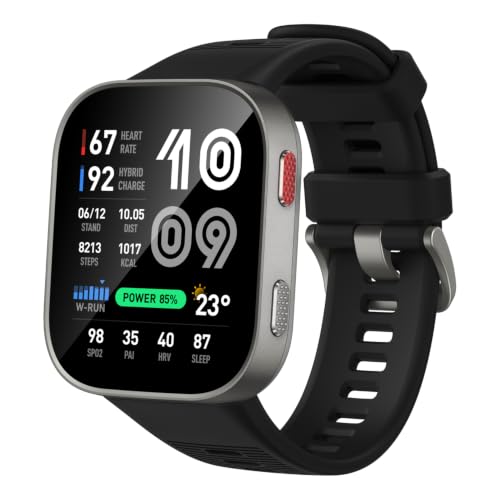
Amazfit Bip Max Smart Watch
What We Like
- Large 2.07" AMOLED display
- 4GB storage for offline maps
- 20-day battery life
- 150+ sports modes with HYROX
Trade-offs
- Offline maps require download from Zepp App
- No Bluetooth calling or text reply
The 2.07-inch AMOLED display on this watch is large and bright, making it easy to read pace, distance, or a map during a run. That screen pairs with 4GB of onboard storage so you can download offline maps and leave your phone behind. For someone who wants a watch that doubles as a clear training companion and a media stash, this is a thoughtful setup. It suits the guy who likes long trail runs, wants navigation without a phone, and appreciates not charging every night.
The 50mm case size is a key detail to consider. It is a large watch, so if you have smaller wrists or prefer a low-profile feel, it might not be the best fit. Compared to the Garmin Forerunner 165 at 43mm, the Amazfit Bip Max is larger. But if you prioritize screen real estate and storage over compactness, that size is exactly what makes it work. The up-to-20-day battery also means you are not tethered to a charger, which keeps the focus on moving, not plugging in.
Product photos
SUUNTO Race S GPS Sports Watch

What We Like
- Fully charges in one hour
- Dual-band GNSS for precise tracking
- Offline maps with route navigation
- Menstrual cycle tracking in Suunto app
Trade-offs
- 30-hour GPS battery is shorter than some rivals
- No onboard music storage for phone-free listening
A one-hour recharge is the kind of convenience that keeps a watch from becoming a chore. The SUUNTO Race S packs a 1.32-inch AMOLED touchscreen, dual-band GNSS tracking, and offline maps into a 60-gram case that sits lightly on the wrist. If your week bounces between gym sessions, trail runs, and daily errands, this watch is built to keep up without demanding a long tether to the charger. It suits anyone who wants pro-grade navigation and recovery insights without the bulk of a larger sports watch.
The trade-off for that quick charge and compact size is a 30-hour GPS battery, which trails the COROS PACE Pro’s multi-day endurance. You will need to top it off more often on multi-day backpacking trips. Still, for most weekday warriors and weekend adventurers, the combination of fast charging, 95 sports modes, and AI Coach feedback in the Suunto app makes this a practical partner. It is a focused tool for the person who values time efficiency as much as training data.
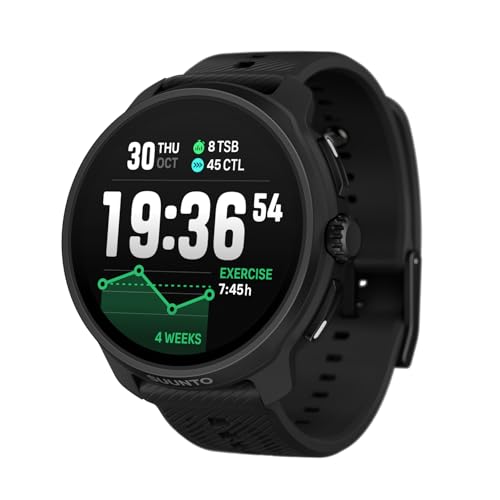
SUUNTO Race 2 GPS Sports Watch
What We Like
- 115+ sport modes for varied training
- Customizable watch faces for everyday wear
- Dual-band GPS for accurate tracking
Trade-offs
- No onboard music storage for offline playlists
- Suunto App needed for some training features
With over 115 sport modes, it adapts to trail running, cycling, skiing, and swimming. That makes it a strong fit for athletes who train across disciplines and want a watch that keeps up with both the miles and the recovery afterward.
The 1.5-inch AMOLED display, while crisp and bright, sits larger than the 1.3-inch screen on the COROS PACE Pro. So if you prefer a more compact feel on your wrist, that might be a consideration. Also, while the watch controls music on your headphones, it doesn’t store music onboard, meaning you’ll need your phone along for offline playlists. For someone whose priority is raw endurance performance and navigation over smartwatch extras, this is a focused, capable tool.
Product photos
How We Evaluated Exercise Watches For Men
Our evaluation relied on manufacturer specifications, expert round-ups from trusted fitness publications, and consistent patterns in thousands of owner reviews. We focused on what real users report about GPS accuracy, battery life under varied use, display readability, and workout mode depth, not marketing claims or sponsored endorsements.
Four criteria mattered most. GPS performance had to be reliable for outdoor runs and rides, with dual-frequency support where available. Battery life was judged in real-world terms: daily smartwatch use plus weekly GPS workouts. Display quality considered brightness, always-on capability, and sunlight readability. Workout mode variety covered both built-in sports profiles and the ability to customize or auto-track activities.
A research-led approach has limits, we didn’t test watches side-by-side on the trail or in the gym. Instead, we cross-referenced technical data with what long-term owners consistently report about real-world reliability, comfort, and feature usefulness.
What To Look For In Exercise Watches For Men
Choosing an exercise watch comes down to matching features with your actual workout habits. Here’s what matters most.
Look for GPS accuracy that matches your outdoor activity type, battery life that lasts between charges during your busiest weeks, and a display bright enough to read mid-stride. Ignore features you won’t use, extra storage for music you never download or coaching you’ll skip.
GPS Accuracy and Tracking
For runners, cyclists, and hikers, GPS precision determines whether your pace, distance, and route data are trustworthy. Dual-frequency GPS (found on the Polar Vantage M3 and SUUNTO Race S) improves accuracy in urban canyons and tree cover. Single-frequency GPS is fine for open routes. If you train indoors on a treadmill or in a gym, GPS matters less, look for a watch with good accelerometer-based tracking instead.
Battery Life
Battery life varies wildly by model and use case. A watch that lasts 20 days in smartwatch mode (like the COROS PACE Pro) may drop to 6 days with the always-on display active. For daily wear with weekend GPS sessions, aim for at least 7 days of mixed use. Ultra-runners and backpackers should prioritize models with 30+ hours of GPS tracking, like the COROS PACE 4 or SUUNTO Race 2.
Display Quality and Readability
A bright, always-on AMOLED display makes it easy to glance at pace, heart rate, or navigation cues mid-workout. The Amazfit Bip 6‘s large 1.97-inch screen and the SUUNTO Race S’s high-nit output are strong options. If you train in direct sunlight, check nits brightness ratings and anti-glare coatings. Smaller displays (like the COROS PACE 4’s 1.2-inch) save weight but can be harder to read while moving.
- Confirm the watch supports your primary workout type (running, cycling, swimming, strength training).
- Check if music storage or offline maps matter for phone-free workouts.
- Verify smartphone compatibility, some features require a specific OS.
- Consider band material and comfort for all-day wear and sleep tracking.
- Look for safety features like incident detection if you run or ride alone.
The best exercise watch is the one you’ll actually wear every day, not the one with the longest spec sheet.
Exercise Watches For Men Compared
The table below compares the ten exercise watches across key specs, display size, battery life, GPS type, and standout features, so you can see how they stack up at a glance.
| Product | Display | Battery Life | GPS | Sports Modes |
|---|---|---|---|---|
| Garmin vívoactive 5 GPS Smartwatch | AMOLED | Up to 11 days | Built-in GPS | 30+ |
| Garmin Forerunner 165 Running Smartwatch | AMOLED touchscreen | Up to 11 days | Built-in GPS | 25+ |
| Fitbit Charge 6 Fitness Tracker | N/A | N/A | Built-in GPS | 40+ |
| COROS PACE 4 Ultralight Sport GPS Watch | 1.2" AMOLED touchscreen | 19 days | Accurate GPS | N/A |
| COROS PACE Pro GPS Sport Watch | 1.3-inch AMOLED | 20 days | All-new satellite chipset | N/A |
| Polar Vantage M3 Multi-Sport Smartwatch | 1.28" AMOLED touchscreen | Up to 7 days | Dual-frequency GPS | 150+ |
| Amazfit Bip 6 Smart Watch | 1.97" AMOLED | Up to 14 days | 5 satellite systems | 140+ |
| Amazfit Bip Max Smart Watch | 2.07" AMOLED | 20 days | 5 satellite systems | 150+ |
| SUUNTO Race S GPS Sports Watch | 1.32" AMOLED touchscreen | 13 days daily | Dual-band GNSS | 95+ |
| SUUNTO Race 2 GPS Sports Watch | 1.5" AMOLED | 16 days | Dual-band GPS | 115+ |
Frequently Asked Questions
What is the best exercise watch for running?
The Garmin Forerunner 165 is our pick for best for runners, offering personalized daily suggested workouts that adapt to your recovery, accurate GPS tracking, and a lightweight design. It also includes incident detection for safety during solo runs.
How long should an exercise watch battery last?
For most men, a battery life of 7 to 14 days in smartwatch mode is ideal, covering daily wear plus a few GPS-tracked workouts per week. If you train for ultra-endurance events, look for watches with 30+ hours of GPS battery, like the COROS PACE 4 or SUUNTO Race 2.
Do I need a watch with music storage?
Not if you always run with your phone. Music storage is convenient for phone-free workouts, but it adds cost and reduces battery life. The Garmin vívoactive 5 and COROS PACE Pro lack offline music playback, which is a trade-off worth noting if you train without a phone.
What is the difference between a fitness tracker and a smartwatch for exercise?
A smartwatch like the Garmin vívoactive 5 offers deeper training metrics, GPS, and app integrations. A fitness tracker like the Fitbit Charge 6 focuses on step counts, heart rate, and sleep tracking in a smaller form.
Which exercise watch has the best GPS accuracy?
Watches with dual-frequency GPS support, such as the Polar Vantage M3 and SUUNTO Race S, generally offer the most precise tracking in challenging environments like dense tree cover or city streets. For open-road running, single-frequency GPS from brands like Garmin and COROS is still highly reliable.
The Bottom Line
The Garmin vívoactive 5 GPS Smartwatch is the best overall exercise watch for men who want a balanced daily fitness companion with a bright screen, energy monitoring, and long battery life. It covers everything from gym sessions to outdoor runs without overwhelming you with race-level features.
If you’re a dedicated runner, grab the Garmin Forerunner 165 for its adaptive training plans. For ultralight design and marathon GPS sessions, the COROS PACE 4 is your match.
The single most important factor is battery life matching your routine. Pick the watch that stays charged through your busiest week, and everything else. GPS, display, workout modes, becomes a bonus.
