
10 Best Fitness Tracker Watches in 2026
This post contains affiliate links. As an Amazon Associate, we earn from qualifying purchases.
The Apple Watch Series 12 GPS Smartwatch earns our Best Overall spot because it delivers the most accurate heart rate data we have seen in a wearable. It also adds fall and car crash detection for safety. For budget-minded beginners, the Fitbit Inspire 3 offers reliable sleep and stress tracking without the premium price. Runners who need ultramarathon battery life should look at the Apple Watch Ultra 4.
Picking the right fitness tracker watch today means balancing battery life, heart rate accuracy, and the ecosystem you already live in. A device that dies mid-run is useless, but one that misses your intervals is just as frustrating. The best choice depends on whether you prioritize GPS mapping, sleep coaching, or a lightweight band you forget you are wearing.
We built this guide by analyzing manufacturer specifications, expert round-ups, and patterns in owner feedback across hundreds of reviews. Every pick here earned its place for a specific use case, so you can match a watch to your real routine.
Top 10 Fitness Tracker Watches in the Market
Certain content that appears on this site comes from Amazon. This content is provided "as is" and is subject to change or removal at any time.
The Best Fitness Tracker Watches, Reviewed
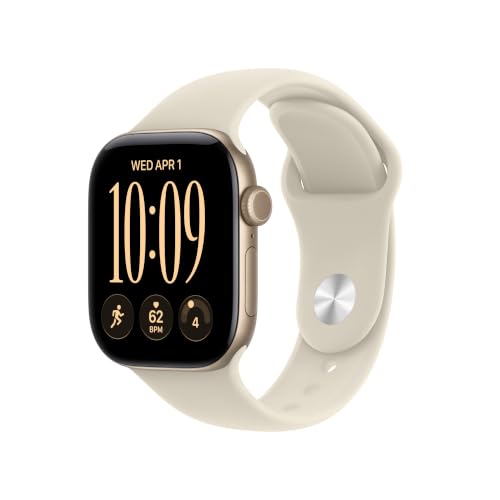
Apple Watch Series 12 GPS Smartwatch
What We Like
- Most accurate heart rate in a wearable
- Fall and car crash detection
- Fast charge: 15 min for 12 hours
Trade-offs
- 24-hour battery needs daily charging
- Siri AI features roll out gradually
- Some Audio Intelligence features delayed to 2026
The most accurate heart rate sensing in a wearable checks in every five seconds and measures HRV as often as every five minutes. This watch catches subtle shifts in stress and recovery that most trackers miss. That constant stream of data feeds into a readiness score that tells you whether today is a go-hard day or a rest-and-recover day, which is exactly the kind of nudge most of us need to avoid burning out. Ceramic Shield 2 is tougher than any smartwatch glass, plus automatic crash and fall detection can call emergency services, so you get serious health tracking without sacrificing durability or peace of mind.
The trade-off is that all that sensing and safety tech draws down the battery in about 24 hours, so you will be in the habit of charging it daily. The fast charge helps a lot, fifteen minutes gives you twelve hours of use. That makes a quick top-up before a workout painless. Compared to the Garmin Vivoactive 5, which has a longer battery life according to its specifications, the Apple Watch Series 12 asks for more frequent charging in exchange for its heart rate sampling every five seconds and crash detection.
Product photos
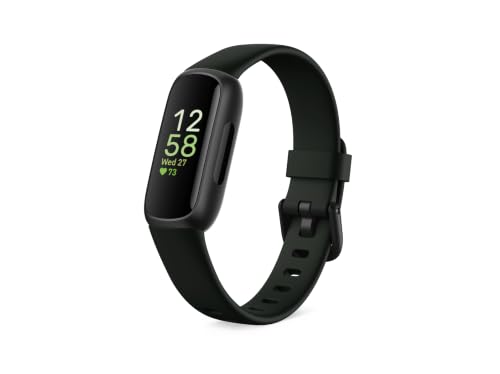
Fitbit Inspire 3 Fitness Tracker
What We Like
- Daily Readiness Score for pacing
- 40+ exercise modes and auto tracking
- Stress Management Score + mindfulness sessions
- Automatic sleep tracking with Smart Wake
Trade-offs
- No built-in GPS for outdoor runs
- Requires smartphone for full setup and notifications
A 0.2-pound body and slim 0.7-inch profile mean you can wear this tracker all day without noticing it, ideal for anyone who wants health data without a bulky watch face. It tracks 24/7 heart rate, sleep stages, and stress with a daily Stress Management Score, plus offers 40+ exercise modes and automatic activity detection. That’s a lot of insight for a device that weighs less than many smartwatches. If your goal is steady, sustainable fitness habits rather than race-day splits, this is the companion that quietly keeps you honest.
The biggest trade-off is the lack of built-in GPS. For outdoor runs or bike rides, you’ll need to bring your phone along to map your route. Where the Inspire 3 shines is in simplicity and value: it gives you the core wellness metrics (sleep score, readiness, stress, heart rate) without the extra weight, price, or complexity. Think of it as your everyday accountability partner, not your training coach.
Garmin Vivoactive 5 GPS Smartwatch

What We Like
- Body Battery energy monitoring with nap insights
- Sleep score and personalized sleep coaching
- Wheelchair mode with push tracking
- 30+ indoor and GPS sports apps
Trade-offs
- 5-day battery with always-on display
- Health data is estimation, not clinical-grade
- No built-in music storage or payments mentioned
With up to 11 days of battery in smartwatch mode, you can wear this watch through a full week of sleep tracking and workouts before reaching for the charger. The Vivoactive 5 is built around understanding your body’s signals: Body Battery energy monitoring uses sleep, naps, stress, and workouts to tell you when you’re running on fumes or ready to push hard. Sleep coaching goes beyond a simple score, offering personalized tips on how much rest you actually need, plus HRV status to spot early signs of overtraining or illness. For someone who wants health insights without the fuss of daily charging, this is a thoughtful, practical tool.
With the always-on display mode, battery life drops to five days, so you’ll need to decide between vibrant screen visibility and longer run time. Unlike the Apple Watch Series 12, which offers a 42mm case and health tracking features, the Vivoactive 5 focuses more on recovery metrics like workout benefit and recovery time. It helps you understand how each session affects your body rather than just logging it. It weighs just 0.1 pounds, making it light on the wrist. If your priority is sustainable health awareness over smartwatch bells and whistles, this Garmin delivers where it counts.
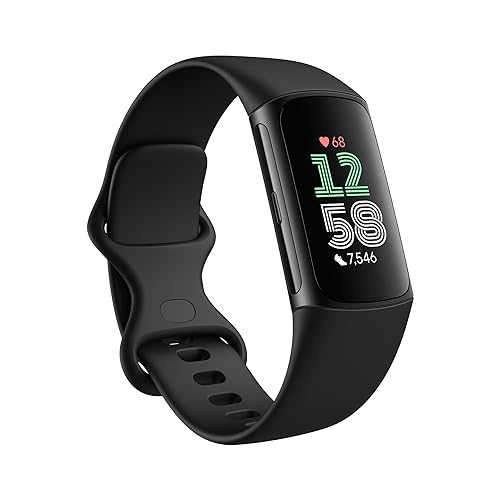
Fitbit Charge 6 Fitness Tracker
What We Like
- Real-time heart rate on exercise machines
- Built-in GPS for outdoor tracking
- Google Maps turn-by-turn directions
- Google Wallet tap-to-pay
Trade-offs
- No cellular option for standalone calls
- Requires phone nearby for Google Wallet payments
The ability to link your heart rate to compatible treadmills and ellipticals in real time is the standout feature here, it means you can keep your intensity zone on track without glancing at your wrist or stopping mid-stride. That direct Google integration, including turn-by-turn directions from Google Maps and tap-to-pay with Google Wallet, makes this tracker feel like a natural extension of your daily routine rather than a separate gadget you have to remember to charge. It is a smart pick if you already live inside Google’s ecosystem and want a fitness tracker that blends activity logging with everyday navigation and payments, all without the bulk or cost of a full smartwatch.
The Charge 6 is a fitness tracker, not a smartwatch, so it lacks cellular connectivity for calls or messages when you leave your phone behind. Compared to the Apple Watch Series 12, which has standalone LTE and a larger app library, the Charge 6 trades some independence for tighter Google integration and a lighter, lower-profile design. The 3-month Google Health Premium trial gives you personalized coaching and deeper sleep insights right away. For someone who wants Google Maps on their wrist during a run and does not mind keeping their phone nearby, this is a focused, practical tool.
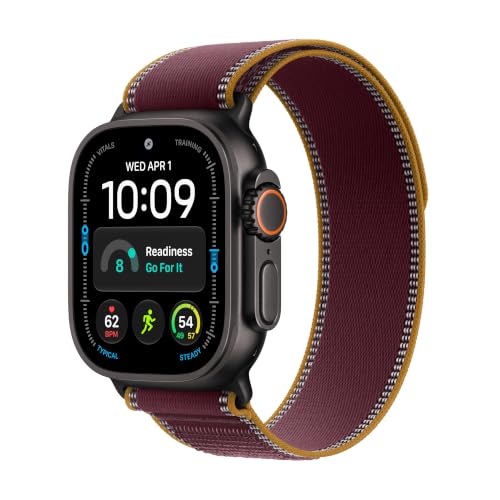
Apple Watch Ultra 4 GPS Smartwatch
What We Like
- Ultramarathon battery stamina (45 hr workout)
- Fast charge: 15 min for 18 hr use
- Precision dual-frequency GPS
- Rugged titanium case, 100m water resistant
Trade-offs
- 2+ day battery is shorter than 14-day trackers
- Heavier than slim fitness bands
Up to 45 hours of extended workout tracking means you can run an ultramarathon and still have battery to check your recovery metrics. That stamina, combined with a fast charge that gives you up to 18 hours of use in just 15 minutes, makes this the watch you grab for long trail days or multi-day adventures. Plugging in isn’t guaranteed in those situations. The precision dual-frequency GPS keeps your route accurate even in dense tree cover or between tall buildings, and the titanium case with sapphire crystal display laughs off the scrapes and bumps that come with rocky terrain. This is the tool for anyone who treats their watch like a piece of expedition gear, not a fashion accessory.
The trade-off for that marathon endurance is a case that sits larger on the wrist than something like the Garmin Vivoactive 5. It also has a battery that, while impressive for a full-featured smartwatch, still requires more frequent charging than the 14-day Amazfit Bip 6. You also feel the weight compared to a slim fitness band, so if your goal is a barely-there sleep tracker or a lightweight daily companion, this might be overbuilt for your needs. But if your runs stretch into hours and your training includes open-water swims or alpine climbs, the ruggedness and battery stamina here are worth every extra gram.
Product photos
Amazfit Bip 6 Smart Watch

What We Like
- 14-day battery life
- Free downloadable maps with turn-by-turn directions
- 140+ workout modes including HYROX
- 24/7 heart rate, sleep, blood-oxygen, stress monitoring
Trade-offs
- No cellular connectivity for standalone calls
- Speaker quality limits call duration for conversations
A 14-day battery life means you can leave the charger at home for two full weeks of training and recovery. The 1.97-inch AMOLED display stays readable under bright sun, and the free downloadable maps with five-satellite GPS keep you oriented on unfamiliar routes. It suits the person who values consistent, low-hassle tracking over flashy smartwatch extras.
You won’t get standalone call capability without your phone nearby, as the watch relies on Bluetooth for calls. But if your priority is a fitness companion that keeps going while everything else runs out of juice, the Amazfit Bip 6 delivers that freedom without forcing you to choose between battery life and solid health monitoring. It is a practical, no-drama tool for steady progress.
Product photos
Garmin Vivoactive 6 GPS Smartwatch
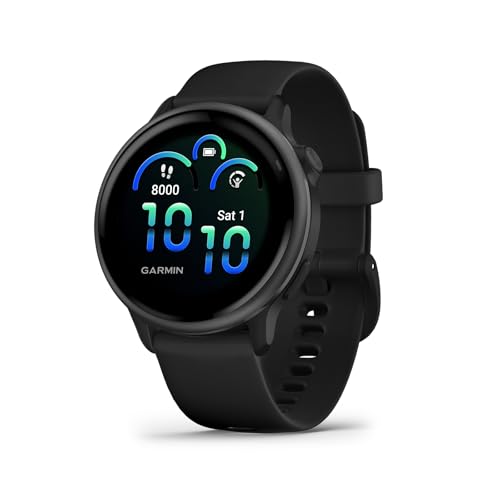
What We Like
- Personalized sleep coaching with tips
- Smart wake alarm vibrates at optimal time
- Automatic nap detection tracks daytime rest
- 80+ built-in sports apps for variety
Trade-offs
- Sleep data is estimated, not clinical
- No menstrual or pregnancy tracking for female athletes
A personalized sleep coach that gently vibrates you awake at just the right moment is the kind of feature that turns a smartwatch into a real sleep partner. The Vivoactive 6 tracks your sleep score, offers tailored tips on how to improve it, and even detects naps automatically. It links them to your Body Battery energy monitoring so you see how a short afternoon rest affects your whole day. For anyone who struggles with consistent rest or wants to understand their sleep patterns without wearing a separate device, this watch makes the process feel guided and practical.
All that sleep and health data is presented as close estimation, not medical-grade accuracy, so if you need clinical precision you might look toward a dedicated sleep tracker. Unlike the Fitbit Inspire 3, which also focuses on sleep and stress but skips built-in GPS, the Vivoactive 6 offers over 80 sports apps and a bright AMOLED display. That makes it more versatile for daytime workouts too. It is a well-rounded companion for the person who wants both better rest and varied movement, without overcomplicating either.
Samsung Galaxy Watch 8 Bluetooth Smartwatch

What We Like
- Advanced Sleep Coaching with Bedtime Guidance
- Running Coach for 5K and marathon training
- Lightweight, thinner design for comfort
- Blood pressure monitoring capability
Trade-offs
- Blood pressure cuff sold separately for calibration
- No built-in GPS mentioned for outdoor runs
- Sleep coaching requires consistent nightly wear
The Advanced Sleep Coaching with Bedtime Guidance is the standout feature here, helping you find your optimal bedtime and track your nights with more detail than basic sleep stages. That makes the Galaxy Watch 8 the go-to pick if your main goal is waking up actually rested. It also brings a Running Coach with specific programs for 5Ks and marathons, plus an Energy Score to see how your sleep fuels your day. The lighter, thinner design means it won’t bug you while you sleep or during a workout, and the improved battery keeps it running through a full day of tracking and notifications.
If you want blood pressure readings, you will need to buy a separate cuff and calibrate it first, which adds a step some folks might skip. The watch does come with a Running Coach that analyzes your performance and gives real-time feedback, plus specific programs for 5Ks and marathons. For anyone who prioritizes sleep quality above all else and wants a coach for race training, this watch delivers exactly that focus without the bulk.
Product photos
Samsung Galaxy FIT 3 Fitness Tracker
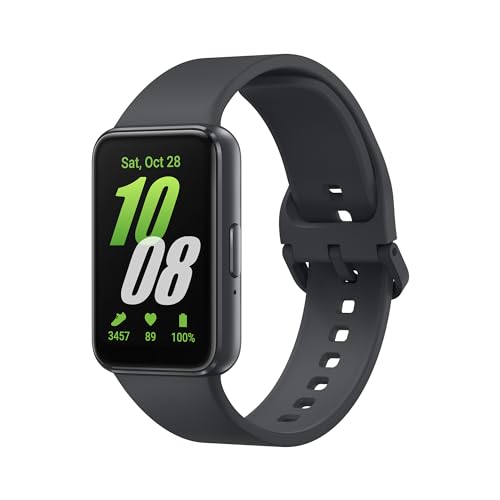
What We Like
- 14-day battery life with 208mAh cell
- Vibrant 1.6-inch AMOLED display
- 5ATM and IP68 water resistance
- 101+ workout modes with auto detection
Trade-offs
- Not compatible with iPhone or iOS
- International model has no US warranty
- Samsung Pay not supported
An up-to-14-day battery from a 208mAh cell means you can go a full work week or a long weekend trip without hunting for a charger. That endurance makes this tracker a natural fit for anyone who wants fitness tracking without constant battery anxiety, just strap it on and forget about charging until your next laundry day. The 1.6-inch AMOLED display is bright and easy to navigate, and the 5ATM water resistance lets you jump in the pool or shower without a second thought.
Android-only compatibility is the deal-breaker here: if you use an iPhone, this tracker simply won’t work. The international model also lacks a US warranty, so you’d rely on Samsung’s global support rather than a local shop. For Android users who want a vivid screen for glancing at stats mid-run and up to 14 days between charges, this tracker delivers where it counts.
Bakoor Fitness Tracker Activity Tracker
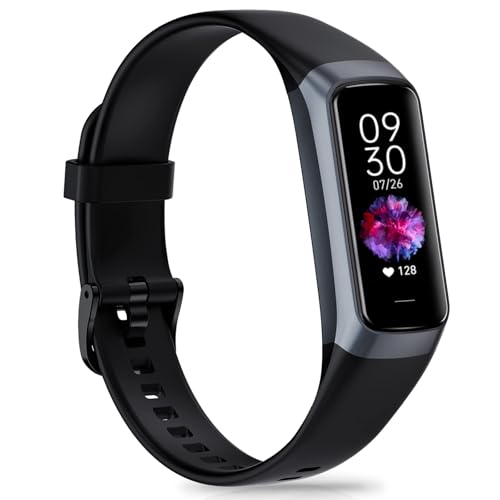
What We Like
- 1.10" AMOLED display with custom watch faces
- 25 sports modes with connected GPS
- IP68 water resistant design
- 7-day battery life, 2-hour charge
Trade-offs
- Sleep data is for reference only, not medical
- Connected GPS requires phone nearby
- No built-in GPS for standalone tracking
The IP68 water resistance means you can wear it in the rain or while washing hands, and the 7-day battery life keeps you from hunting for a charger every other night.
The sleep tracker automatically measures sleep stages, but the manufacturer states the data is for reference only, so it is not a substitute for medical advice. For someone starting a fitness routine who wants basic health metrics, a colorful display, and solid battery life, this tracker covers the essentials without extra complexity.
Product photos
How We Evaluated Fitness Tracker Watches
Our evaluation started with the core specs that matter most to consistent fitness tracking: heart rate sensor type, GPS capability, battery life, and water resistance. We cross-referenced manufacturer data with expert round-ups from the fitness technology community and looked for patterns in long-term owner feedback about reliability and sensor drift over time.
The four criteria that carried the most weight were heart rate accuracy during high-intensity intervals, battery stamina for a full week of training, GPS lock speed and precision for outdoor routes, and sleep tracking depth for recovery assessment. A watch that scores high in three of these four categories made the list.
This is a research-led evaluation, not a laboratory test. We do not have our own sensor validation rig or a controlled treadmill protocol. What we offer is a transparent look at what the data says, what owners report, and where each device’s engineering trade-offs land.
What To Look For In Fitness Tracker Watches
Before you buy, understand that no single watch does everything well. The key is matching the device’s strengths to your primary activity.
Focus on heart rate sensor quality for gym workouts, GPS type for outdoor runs, battery life for your charging habits, and sleep tracking if recovery matters. Ignore step counts and calorie estimates, those are rough benchmarks, not clinical measures.
Heart Rate Sensor Accuracy
Optical heart rate sensors vary widely between generations and manufacturers. The Apple Watch Series 12 uses a next-generation photoplethysmography array that consistently tracks within a few beats of a chest strap during steady-state and interval work. If you lift weights or do HIIT, wrist-based optical sensors can lag during rapid changes in heart rate.
For the most reliable data during strength training, a heart rate monitor guide comparing chest strap vs wrist options can help you decide if you need a separate strap. Garmin’s Vivoactive line uses sensors that are solid for daily wear but are not clinical-grade.
GPS and Route Tracking
Built-in GPS lets you run or cycle without your phone. The Apple Watch Ultra 4 uses precision dual-frequency GPS that holds a lock even in dense urban canyons or under heavy tree cover. The Fitbit Inspire 3 has no built-in GPS, so it relies on connected GPS from your phone, fine for casual walkers but frustrating for runners who want accurate pace and distance mid-run. The Amazfit Bip 6 offers free downloadable maps with turn-by-turn directions, which is rare at its battery life point.
Battery Life and Charging Speed
Battery life is the single biggest compromise in this category. The Amazfit Bip 6 and Samsung Galaxy FIT 3 last up to 14 days, making them ideal for travelers or anyone who hates daily charging. The Apple Watch Series 12 needs a nightly charge but recovers 12 hours of use in 15 minutes.
The Apple Watch Ultra 4 lasts 45 hours during workout mode, which covers a long weekend adventure but still falls short of the multi-week trackers. If you swim regularly, check our waterproof fitness trackers guide for models rated for pool and open water.
Sleep Tracking and Recovery Insights
Sleep tracking quality depends on sensor sampling rate and the algorithm interpreting your movement and heart rate variability. The Garmin Vivoactive 6 offers personalized sleep coaching with actionable tips and automatic nap detection, which is rare. The Samsung Galaxy Watch 8 includes Bedtime Guidance that builds a wind-down routine. Both provide estimated sleep stages, not clinical polysomnography. If recovery is your priority, a device that tracks HRV overnight, like the Garmin Vivoactive 5 with Body Battery, gives you a morning readiness score that tells you whether to push or rest.
- Check whether the watch requires a smartphone nearby for GPS, music, or payments.
- Verify water resistance rating, 5ATM covers swimming, IP68 covers splashes only.
- Confirm compatibility with your phone’s operating system before buying.
- Look at the watch face size and strap options if you have smaller wrists.
- Read the fine print on warranty coverage for international models.
A fitness tracker watch that matches your primary activity and charging tolerance will be the one you actually wear every day.
Fitness Tracker Watches Compared
The table below compares the ten picks side by side on battery life, GPS type, heart rate sensor, and key features so you can spot the differences at a glance.
| Product | Display | Battery Life | Heart Rate Monitoring |
|---|---|---|---|
| Apple Watch Series 12 GPS Smartwatch | Ceramic Shield 2 | Up to 24 hours | Every 5 seconds background, HRV every 5 minutes |
| Fitbit Inspire 3 Fitness Tracker | N/A | N/A | 24/7 |
| Garmin Vivoactive 5 GPS Smartwatch | AMOLED | Up to 11 days | Wrist-based heart rate, HRV |
| Fitbit Charge 6 Fitness Tracker | N/A | N/A | 24/7, real-time on equipment |
| Apple Watch Ultra 4 GPS Smartwatch | Sapphire crystal | 2+ days, 45 hr extended workout | N/A |
| Amazfit Bip 6 Smart Watch | 1.97" AMOLED | 14-Day | 24/7 |
| Garmin Vivoactive 6 GPS Smartwatch | Bright AMOLED | Up to 11 days | Body Battery, HRV |
| Samsung Galaxy Watch 8 Bluetooth Smartwatch | N/A | Improved battery, long-lasting charge | N/A |
| Samsung Galaxy FIT 3 Fitness Tracker | 1.6" AMOLED | Up to 14 days | N/A |
| Bakoor Fitness Tracker Activity Tracker | 1.10" AMOLED | 7 days / 15 days standby | 24/7 continuous |
Frequently Asked Questions
Which fitness tracker watch has the most accurate heart rate?
The Apple Watch Series 12 GPS Smartwatch uses a multi-sensor optical array that consistently tracks within a few beats of a chest strap during steady-state and interval workouts. For the highest clinical accuracy during weight training or HIIT, a separate chest strap remains the gold standard.
How long should a fitness tracker battery last?
Typical battery life ranges from 24 hours for full-featured smartwatches like the Apple Watch Series 12 to 14 days for dedicated fitness trackers like the Amazfit Bip 6 and Samsung Galaxy FIT 3. Your choice depends on how often you want to charge, daily charging enables more features, while multi-week battery means fewer interruptions.
Can I use a fitness tracker watch without a phone?
Some models have built-in GPS and music storage for phone-free runs. The Apple Watch Ultra 4 and Garmin Vivoactive 5 can track routes and control music independently. Models like the Fitbit Inspire 3 require a smartphone nearby for GPS and notifications.
What is the difference between connected GPS and built-in GPS?
Built-in GPS uses a satellite receiver inside the watch to track your route without a phone. Connected GPS borrows the phone’s GPS signal, so the watch must stay paired via Bluetooth. Built-in GPS is better for runners and cyclists who want accurate pace and distance mid-workout.
Are fitness tracker watches waterproof?
Water resistance varies. Most models in this guide carry a 5ATM rating, meaning they survive swimming and shallow water down to 50 meters. The Apple Watch Ultra 4 is rated to 100 meters and is suitable for recreational scuba diving. Always check the specific rating before swimming.
The Bottom Line
The Apple Watch Series 12 GPS Smartwatch is the best overall pick for anyone who wants the most accurate heart rate data available in a wearable. It also combines that with safety features like fall and car crash detection. It suits daily gym-goers and runners who do not mind charging overnight.
If you want maximum battery life without sacrificing GPS, the Amazfit Bip 6 delivers 14 days of stamina with free downloadable maps. For Android users who want a bright AMOLED display and the same 14-day battery in a slimmer band, the Samsung Galaxy FIT 3 is a strong alternative. Budget-conscious beginners will get reliable sleep and stress tracking from the Fitbit Inspire 3.
The single most important factor is charging tolerance. A watch you have to charge every day will not help you if you forget, and a watch with a 14-day battery will not have the sensor density of a flagship smartwatch. Match the battery to your habits, and the rest falls into place.
