
8 Best Fitness Trackers For Crossfit in 2026
This post contains affiliate links. As an Amazon Associate, we earn from qualifying purchases.
For CrossFit, you need a tracker that handles HIIT, tracks recovery, and survives heavy sweat. The Garmin vívoactive 5 GPS Smartwatch is our best overall pick. It has a bright AMOLED display and 30+ built-in sports apps including HIIT. Body Battery insights tell you when to push and when to rest. The Amazfit Helio Strap Screenless Tracker wins for strength training, while the WHOOP 5.0 leads for recovery.
CrossFit workouts blend Olympic lifting, gymnastics, and metabolic conditioning, often in the same session. A general step counter won’t cut it. You need a device that captures heart rate spikes during burpees, tracks rest between sets, and helps you gauge readiness for the next WOD.
This guide is research-based, drawing on manufacturer specs, expert round-ups, and patterns in owner feedback. We’ve ranked eight fitness trackers for CrossFit to help you find the right match for your training style.
Top 8 Fitness Trackers For CrossFit in the Market
Certain content that appears on this site comes from Amazon. This content is provided "as is" and is subject to change or removal at any time.
The Best Fitness Trackers For CrossFit, Reviewed
Garmin vívoactive 5 GPS Smartwatch

What We Like
- Bright AMOLED display for easy viewing
- 30+ built-in sports apps including HIIT
- Body Battery and recovery time insights
- Wheelchair mode for inclusive tracking
Trade-offs
- No dedicated CrossFit-specific workout mode listed
- Wrist-based heart rate less accurate during rapid movements
With battery life rated up to 11 days in smartwatch mode, you can wear this through a full week of workouts, recovery days, and sleep tracking without hunting for a charger. The bright AMOLED display keeps your intervals and rep counts readable even in a sunlit gym. Body Battery energy monitoring and recovery time features help you decide whether to push hard or take a rest day. With over 30 built-in sports apps including HIIT, it covers the varied demands of CrossFit workouts, from short bursts to steady-state conditioning. This is the tracker for someone who wants health insights that go beyond step counts and actually support smarter training decisions.
Compared to the screenless WHOOP 5.0, the Garmin offers a full display and built-in recovery insights without needing a membership, though the WHOOP’s screenless form factor may appeal to those who prefer minimal wrist bulk. If you want a more running-focused wearable, the Polar Pacer Pro is an option, while the Garmin balances everyday health features with fitness tracking that suits a mixed training style.
Amazfit Helio Strap Screenless Tracker

What We Like
- Tracks reps, sets, and rest periods precisely
- Exclusive HYROX Race mode for race prep
- 10-day battery lasts through training weeks
- Subscription-free Zepp app with AI insights
Trade-offs
- No screen means no glanceable stats during workout
- Requires Zepp app for all data analysis
- Lacks built-in GPS for outdoor route tracking
A screenless design that tracks reps, sets, and rest periods with precision makes this strap a focused tool for anyone who spends serious time under the barbell. Where a smartwatch can get in the way during wrist-heavy lifts or burpees, this lightweight band stays out of your way while logging every set. The exclusive HYROX Race mode offers tailored support for race prep, and the battery lasts up to 10 days, so you are not hunting for a charger mid-week. Pair it with the free Zepp app, and you get recovery insights, training load, and performance analysis without a monthly fee.
The biggest trade-off is that you give up live stats on your wrist, there’s no screen to glance at mid-rep. After your workout, you open the Zepp App to see your numbers, which works well for post-session analysis. If you need real-time feedback during a circuit, a watch like the Garmin vívoactive 5 gives you that display and GPS in a wrist-worn form. For lifters who want clean data and less bulk on the wrist, this strap delivers exactly what strength training needs.
Product photos
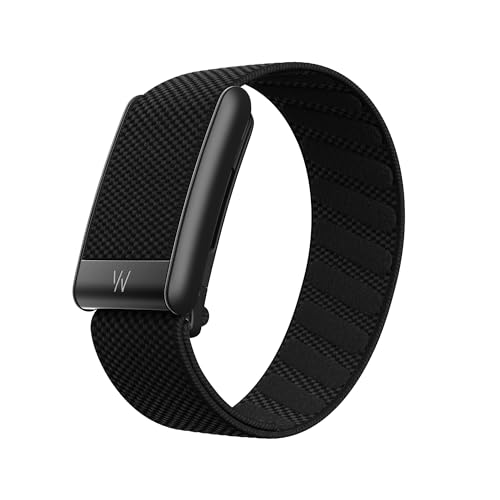
WHOOP 5.0 Screenless Fitness Wearable
What We Like
- Screenless design for all-night sleep tracking
- AI Coach turns metrics into actionable insights
- 14+ day battery with on-wrist charging
- IP68 water-resistant up to 10 meters
Trade-offs
- Requires ongoing membership fee beyond first year
- No screen means no glanceable stats during workouts
- On-wrist charging pod adds bulk while charging
The WHOOP 5.0 tracks heart rate and HRV with 99%+ accuracy, so you can trust the recovery data without second-guessing. With 14+ days of battery life, you won’t need to charge it constantly, just slip on the waterproof Wireless PowerPack to top up without removing the band. The screenless design keeps the band light and comfortable for sleep, letting you wake up knowing exactly how your body responded to yesterday’s training. That focus on readiness and long-term healthspan makes it a natural fit for anyone who prioritizes recovery over glancing at stats mid-workout.
The trade-off is that you don’t get a display to glance at during a workout, so you’ll rely on the app for real-time feedback. And unlike some competitors that may include features without a subscription, the WHOOP 5.0 requires a 12-month Peak membership to unlock all its coaching and journal insights. If you’re willing to commit to the ecosystem for deep recovery data, it’s a focused tool that delivers where it counts.
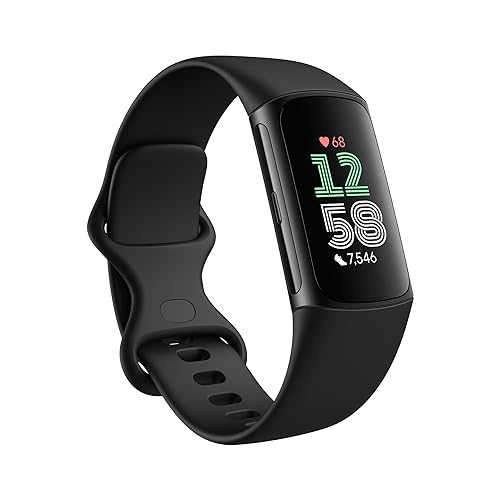
Fitbit Charge 6 Fitness Tracker
What We Like
- Real-time heart rate on exercise machines
- Google Maps turn-by-turn directions
- Google Wallet tap-to-pay
- Built-in GPS for runs and rides
Trade-offs
- No screenless option for minimalists
- Premium features require subscription after trial
A built-in GPS and 40-plus exercise modes make the Charge 6 ready for outdoor runs and gym circuits alike. The real standout is how it links to compatible exercise machines to show your heart rate in real time, useful when you’re pushing through a WOD and want to stay in your zone. It also brings Google Maps directions and Google Wallet payments to your wrist, so you can pay for a post-workout snack without pulling out your phone. Owners who already use Google services will find the integration convenient, though the experience depends on having a compatible exercise machine for the heart-rate link.
The catch is that the most personalized coaching lives behind a subscription after the three-month trial ends, which may frustrate budget-conscious athletes who prefer a one-time purchase. Compared to the Garmin vívoactive 5, which offers similar health metrics, the Charge 6 leans harder on Google integration. For those who value navigation and payment convenience over long-term cost predictability, this is a capable companion, just know the premium features aren’t permanent.
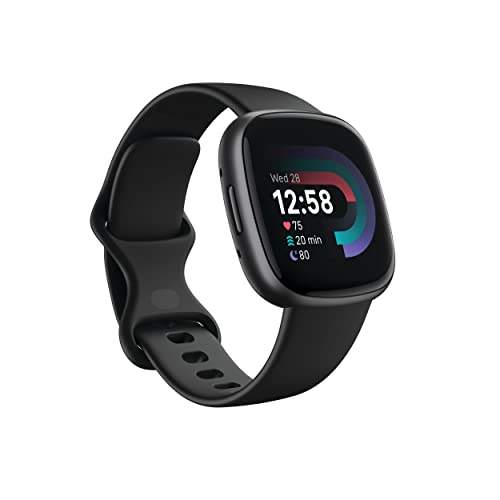
Fitbit Versa 4 Fitness Smartwatch
What We Like
- Daily Readiness Score guides workout vs. recovery
- Built-in GPS with workout intensity map
- 40+ exercise modes and automatic tracking
- Sleep stages, Sleep Score, and smart wake alarm
Trade-offs
- Not designed for heavy equipment contact
- No built-in music storage for offline playback
A Daily Readiness Score that tells you when to push and when to rest is the kind of practical feedback athletes need. Built-in GPS lets you map outdoor runs without your phone, and 40-plus exercise modes cover most gym and cardio activities. Sleep tracking and a Stress Management Score round out the picture, so you get data that helps you train smarter, not just harder.
A potential drawback is that the Versa 4’s screen and casing are not described as rugged for heavy equipment contact, so it may not suit those who need a watch built for that. Compared to the Garmin vívoactive 5, which offers similar health metrics, the Versa 4 focuses on daily readiness and recovery, making it a better fit if your priority is knowing when to back off.
Product photos
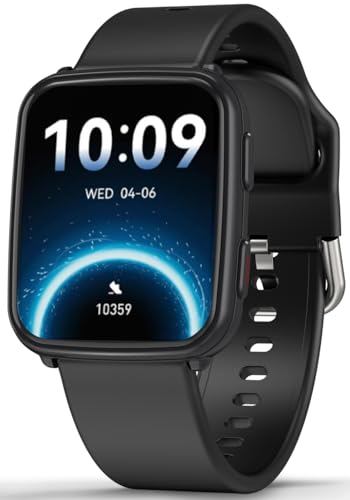
MorePro Fitness Tracker
What We Like
- Built-in blood pressure and SpO2 monitoring
- 120+ sport modes for varied workouts
- IP68 waterproof for sweat and rain
- 7-day battery with quick 2-hour charge
Trade-offs
- No built-in GPS for outdoor route tracking
- Not compatible with PCs or tablets
- Health data not for medical use
A 24/7 blood pressure monitor on your wrist lets you check a metric most fitness trackers skip, though the manufacturer notes it is not for medical use. That means you can keep an eye on your heart rate and blood pressure during workouts or rest without a separate cuff. It also tracks blood oxygen on demand, sleep stages, and over 120 sport modes including running and walking. The IP68 waterproof design handles sweat, rain, and hand-washing, and the charge holds for up to 7 days.
This tracker relies on your phone for GPS data, so outdoor distance and pace tracking require carrying your phone along. That is less of an issue in a gym or at home, but if you frequently run or bike outdoors, a watch like the Garmin vívoactive 5 with built-in GPS might be a better fit. The MorePro is not compatible with PCs or tablets, so all setup and data review happens through your phone. For someone who wants continuous health monitoring during daily activities and indoor workouts, this is a capable companion that covers the basics well.
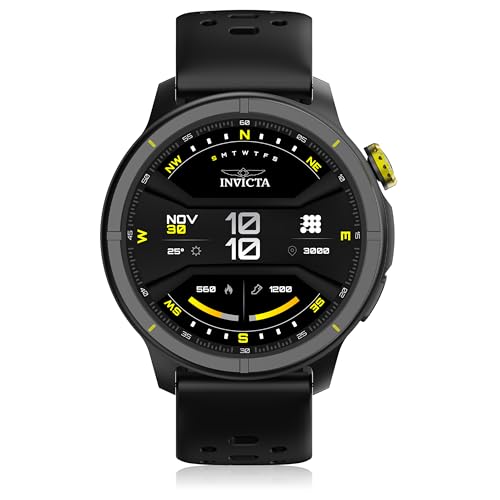
Invicta I-Tech 2 Pro Smartwatch
What We Like
- 50M waterproof with swim tracking
- Built-in GPS for outdoor routes
- 100+ sport modes for variety
- Comfortable silicone strap for workouts
Trade-offs
- Only one strap option limits customization for heavy sweat
- No sleep coach or energy monitoring like the Garmin vívoactive 5
A 50-meter waterproof rating means you can take this smartwatch through pool laps, rainy runs, and sweaty WODs without worrying about moisture damage. That depth rating, paired with swim tracking and over 100 sport modes, makes it a versatile companion for anyone who mixes gym sessions with outdoor or water-based training. The built-in GPS and Bluetooth 5.3 keep your route data and phone connection reliable, while the soft silicone strap stays comfortable during long workouts. If you want a watch that handles water exposure and a wide range of activities without fuss, this one fits the bill.
The Invicta I-Tech 2 Pro keeps things simple and affordable compared to the Garmin vívoactive 5, which offers built-in sports apps and more advanced training features. It’s a straightforward choice if your priority is waterproof durability and broad activity tracking rather than deep sport-specific analytics.
Product photos
Polar Pacer Pro GPS Smartwatch

What We Like
- Ultra-light 41g design
- 35-hour battery in training mode
- Optical heart rate with recovery tools
- Crystal clear color display
Trade-offs
- No dedicated strength training modes or rep counting
- No screenless mode for minimalists
At 41 grams, this watch is lightweight enough for long runs or all-day wear without feeling bulky. You can get up to 35 hours of training mode before recharging, so you can go several days between charges if you are not using GPS constantly. Polar’s optical heart rate sensor works with sleep and recovery tools to help you understand your body’s response to exercise. Runners will appreciate the high-speed processor that tracks time, pace, distance, and laps on a clear color display.
The Polar Pacer Pro weighs just 41 grams, making it light enough to forget you are wearing it during a long run. Its high-speed processor tracks time, pace, distance, and laps on a color display, and you can get up to 35 hours of training mode before recharging. Polar Precision Prime optical heart rate monitoring gives you sleep and recovery tools, so you know when your body is ready to push again.
Product photos
How We Evaluated Fitness Trackers For CrossFit
We reviewed specifications, manufacturer documentation, and expert round-ups to understand what makes a tracker work for CrossFit’s unique demands. Owner feedback patterns helped us identify real-world strengths and weaknesses.
The four criteria that mattered most: workout mode variety (does it track HIIT, strength, and cardio?). Recovery tools (can it tell you when to rest?). Durability and waterproofing (will it survive chalk, sweat, and the occasional drop?). And battery life (does it last through a training week?).
A research-led evaluation has limits. We haven’t tested these devices ourselves, and individual fit, wrist size, and personal preference affect comfort. Use this guide as a starting point, then check the return policy if you’re unsure.
What To Look For In Fitness Trackers For CrossFit
CrossFit is not a steady-state sport. Your tracker needs to handle rapid heart rate changes, track multiple movement types, and survive a punishing environment.
Choose a tracker with HIIT or CrossFit-specific modes, strong recovery insights, at least 5ATM water resistance, and a battery that lasts through a week of daily training.
Workout Modes and Rep Tracking
Look for built-in HIIT, strength, or CrossFit modes. The Garmin vívoactive 5 includes 30+ sports apps with HIIT support, while the Amazfit Helio Strap tracks reps, sets, and rest periods precisely. If you want automatic rep counting without looking at a screen, a screenless option like the Amazfit or WHOOP works well. For more on this, see our guide on trackers that count reps and sets.
Recovery and Readiness Metrics
CrossFit’s intensity demands smart recovery. The WHOOP 5.0 uses AI Coach to turn sleep and strain data into actionable advice. The Fitbit Versa 4 offers a Daily Readiness Score that tells you when to train hard and when to take it easy. The Garmin’s Body Battery and recovery time insights help you avoid overtraining.
Durability and Water Resistance
Your tracker will face chalk dust, sweat, and the occasional barbell scrape. Look for at least 5ATM (50 meters) water resistance. The Invicta I-Tech 2 Pro offers 50M waterproofing with swim tracking, while the MorePro Fitness Tracker is IP68-rated for sweat and rain. If you plan to wear it during rope climbs or heavy lifts, consider a rugged build or a screenless strap.
- Check if the tracker has a dedicated CrossFit or HIIT workout mode.
- Verify water resistance rating, 5ATM is the minimum for serious training.
- Consider screenless options if you don’t need glanceable stats mid-WOD.
- Look for recovery metrics like Body Battery, Daily Readiness, or strain analysis.
- Ensure battery life lasts at least 5-7 days to avoid charging mid-week.
A good rule: the best CrossFit tracker is the one you’ll wear 24/7. Recovery data is useless if you take it off at night.
Fitness Trackers For CrossFit Compared
The table below compares our eight picks across the features that matter most for CrossFit: workout modes, recovery tools, waterproofing, and battery life.
| Product | Display | Battery Life | Sports Modes |
|---|---|---|---|
| Garmin vívoactive 5 GPS Smartwatch | AMOLED | Up to 11 days smartwatch mode | 30+ indoor and GPS apps |
| Amazfit Helio Strap Screenless Tracker | Screenless | Up to 10 days | 27 modes |
| WHOOP 5.0 Screenless Fitness Wearable | Screenless | 14+ days | N/A |
| Fitbit Charge 6 Fitness Tracker | N/A | N/A | 40+ exercise modes |
| Fitbit Versa 4 Fitness Smartwatch | N/A | 6+ days | 40+ |
| MorePro Fitness Tracker | N/A | 7 days normal, 15 days standby | 120+ |
| Invicta I-Tech 2 Pro Smartwatch | 1.48″ digital | N/A | 100+ |
| Polar Pacer Pro GPS Smartwatch | Color | 35 hours (training) | 150+ |
Frequently Asked Questions
What is the best fitness tracker for CrossFit workouts?
The Garmin vívoactive 5 GPS Smartwatch is our top pick. It offers 30+ sports apps including HIIT, Body Battery recovery insights, and a bright AMOLED display for quick glances between sets.
Do I need a screenless tracker for CrossFit?
Not necessarily. Screenless trackers like the Amazfit Helio Strap and WHOOP 5.0 are great for rep counting and recovery, but you’ll need your phone to check stats. If you want live data during a workout, a smartwatch with a screen is better.
Can fitness trackers accurately track CrossFit movements?
Many trackers handle HIIT and strength training well, but automatic rep counting for Olympic lifts can be inconsistent. The Amazfit Helio Strap is designed for precise rep, set, and rest tracking. For general CrossFit, any tracker with a HIIT mode will capture the workout’s intensity.
How important is water resistance for a CrossFit tracker?
Very. Sweat and chalk are constant, and many boxes have water events. Look for at least 5ATM (50 meters) water resistance. The Invicta I-Tech 2 Pro offers 50M waterproofing with swim tracking for pools and open water.
What is the difference between a fitness tracker and a smartwatch for the gym?
Smartwatches offer screens, GPS, and apps, while screenless trackers focus on data collection and longer battery life. For CrossFit, the choice depends on whether you want glanceable stats mid-WOD or prefer a lightweight, distraction-free strap. Our gym tracker comparison breaks it down further.
The Bottom Line
The Garmin vívoactive 5 GPS Smartwatch is the best overall fitness tracker for CrossFit. It balances detailed recovery insights, a versatile app suite for HIIT and strength, and a bright display that’s easy to read between sets. If you want a single device for training and daily life, this is it.
For lifters who want precise rep and set tracking without a screen, the Amazfit Helio Strap is the clear choice. Its HYROX race mode and 10-day battery make it a dedicated training companion. If recovery is your priority, the WHOOP 5.0’s AI-driven insights and sleep tracking are unmatched.
The single most important factor is choosing a tracker you’ll wear consistently. Recovery data only works if you track it 24/7, and a device that’s uncomfortable or needs constant charging will end up in a drawer. Pick the one that fits your wrist and your routine.
