
7 Best Fitness Trackers For Iphone in 2026
This post contains affiliate links. As an Amazon Associate, we earn from qualifying purchases.
The Google Fitbit Charge 6 Fitness Tracker is the best overall fitness tracker for iPhone users. It combines built-in GPS for outdoor workouts with Google Wallet and Maps integration, all in a familiar wristband design. For extended battery life, the Garmin Vívosmart 5 Health Tracker delivers a full week between charges. The Domhong Screenless Fitness Tracker offers a budget-friendly option with a 30-day battery.
The real challenge with pairing a tracker to an iPhone isn’t compatibility, most modern trackers work fine. It’s finding the right balance between features, battery life, and whether you want a screen or a distraction-free band.
This guide is based on thorough research of specifications, manufacturer documentation, expert round-ups, and patterns in owner feedback. We’ve organized the seven best options by what matters most for iPhone users: GPS accuracy, battery life, and subscription costs.
Top 7 Fitness Trackers For iPhone in the Market
Certain content that appears on this site comes from Amazon. This content is provided "as is" and is subject to change or removal at any time.
The Best Fitness Trackers For iPhone, Reviewed
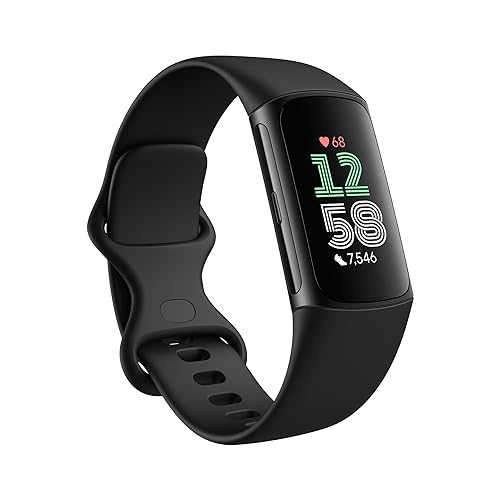
Google Fitbit Charge 6 Fitness Tracker
What We Like
- Built-in GPS for runs and rides
- Google Maps turn-by-turn directions
- Google Wallet tap-to-pay
- 3-month Google Health Premium trial included
Trade-offs
- Subscription required after 3-month trial for full coaching
- Full coaching requires subscription after trial
Built-in GPS and Google Maps turn-by-turn directions mean you can leave your phone at home during runs or bike rides, then pay for a post-workout snack with Google Wallet. That kind of real-world convenience makes the Charge 6 feel less like a tracker and more like a pocket-sized assistant strapped to your wrist. It tracks heart rate, sleep quality, stress management, and even links to compatible gym equipment so you can see your pulse on the treadmill display. For anyone who wants a fitness tracker that does the thinking for them, this is a natural pick.
The built-in GPS means you can track runs and rides without carrying your phone, which is a real convenience for outdoor workouts. The Charge 6 also links to compatible gym machines like treadmills and ellipticals to show your heart rate in real time. Google Maps gives turn-by-turn directions on your wrist, and Google Wallet lets you tap to pay for a snack break. A 3-month Google Health Premium trial is included, though the full coaching features require a subscription after that.
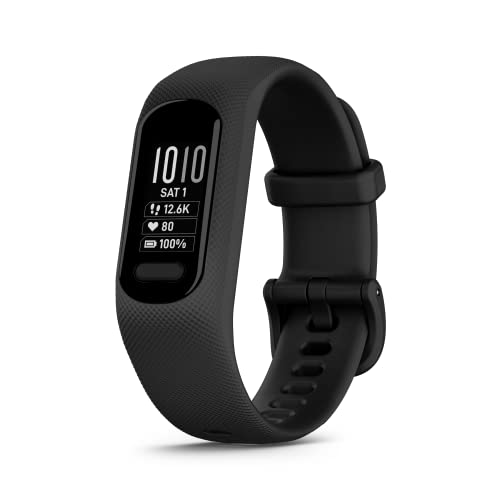
Garmin Vívosmart 5 Health Tracker
What We Like
- 7-day battery life in smartwatch mode
- Bright, larger display for easy reading
- Water-resistant for swimming and showering
- Tracks sleep quality with improvement insights
Trade-offs
- Relies on phone GPS for outdoor route tracking
- No built-in GPS for standalone use
- Pulse Ox not available in all countries
Up to seven days of battery life between charges means you can wear this tracker through the workweek and weekend without hunting for a charger. That is a genuine relief for anyone who has woken up to a dead fitness band before a morning run. The brighter, bigger display makes glancing at your stats mid-workout actually comfortable, and the swim-proof build lets you keep tracking in the pool or shower without worry. For someone who values consistency over constant plugging in, this is the kind of low-hassle companion that keeps you focused on moving, not on charging.
The Vívosmart 5 relies on your smartphone’s GPS to track outdoor walks, runs, and rides, so if you like to leave your phone behind on a trail run, you’ll want a tracker with built-in GPS. It still covers the essentials: heart rate, stress, sleep scoring, and a handful of sport profiles, and the button-plus-touchscreen interface is simple to use mid-sweat. Just know that for phone-free outdoor navigation, you’ll want a tracker with built-in GPS.
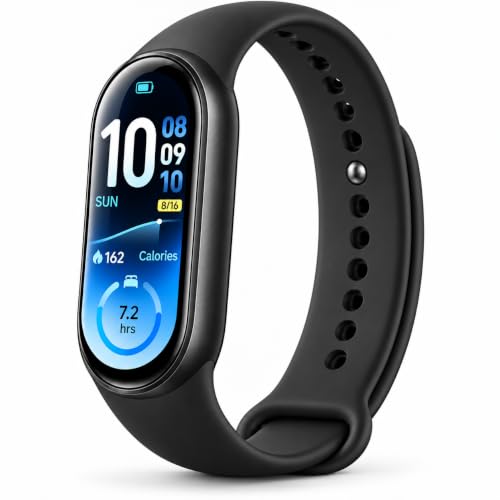
Xiaomi Smart Band 11 Fitness Tracker
What We Like
- Ultralight 15.6g design
- Thin 9.99mm curved body
- 21-day battery life
- 5ATM water resistance
Trade-offs
- No built-in GPS for outdoor runs
- No built-in GPS for phone-free run tracking
At just 15.6 grams without the strap, this band is light enough that you barely notice it on your wrist. The body is 9.99mm thin with a curved shape and a breathable textured strap that sits flush against your skin, so it stays comfortable during sleep, workouts, or a full day at the office. That featherlight feel makes it a strong choice if you want a tracker that blends into your routine rather than drawing attention.
The trade-off for that slim profile is the lack of built-in GPS, so mapping outdoor runs requires a connected phone. Still, with up to 21 days of battery life and 5ATM waterproofing good for swimming, this band covers the daily essentials without extra weight. If your priority is a barely-there fitness tracker for all-day wear, sleep tracking, and gym sessions, this model fits the bill.
Product photos
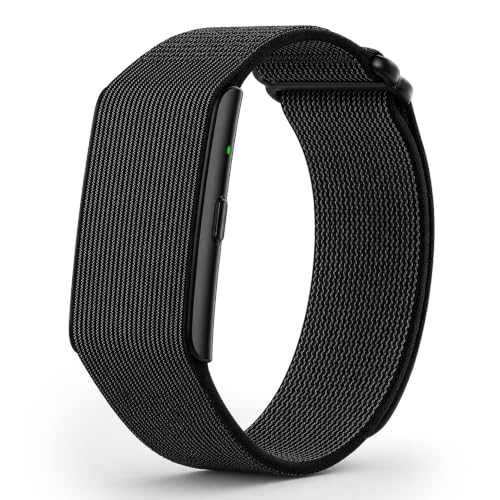
Domhong Screenless Fitness Tracker
What We Like
- 30-day battery life
- 170+ sports modes
- IP68 water resistance
- Free QwatchPro app, no subscription
Trade-offs
- No on-wrist display for quick glances
- No screen means no real-time stats during workouts
A 20-30 day battery means you can wear this tracker for weeks without hunting for a charger, which is a rare luxury in a fitness band. The Domhong Screenless Fitness Tracker keeps things simple: no screen to distract you, just vibration alerts for calls, messages, and app notifications, plus 170+ sports modes and IP68 water resistance so sweat and rain won’t slow you down. It’s an ideal pick if you want reliable health data, heart rate, SpO2, HRV, sleep stages, and daily energy insights, without the constant glow of another display on your wrist. The free QwatchPro app ties everything together with AI wellness insights, and there’s no subscription to worry about.
The biggest trade-off is that you won’t see stats on your wrist during a workout; you’ll need to pull out your smartphone to check real-time numbers or GPS routes. That’s the price of a 25-gram band that’s comfortable enough to wear all day and night without noticing it. If you’re fine glancing at your phone for details and want a lightweight tracker that stays out of the way, this is a sensible way to monitor daily activity and recovery.
Product photos
Garmin CIRQA Smart Band
What We Like
- No subscription fees for full features
- Up to 10 days of battery life
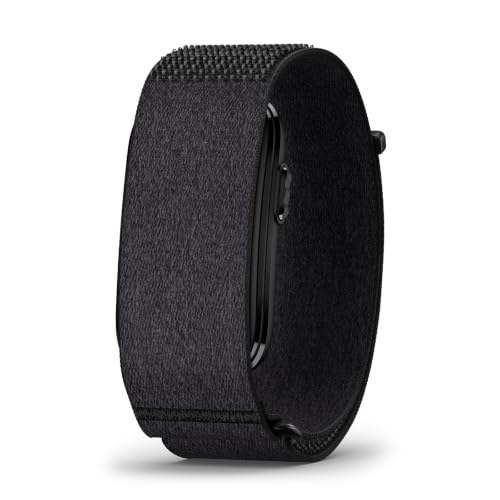
- Screenless design for minimal distraction
- Auto-detects and adapts to activities
Trade-offs
- No on-screen display for quick stats
- Relies on smartphone GPS for outdoor routes
You get heart rate, Body Battery energy monitoring, sleep coaching, and stress tracking through the Garmin Connect app without needing any subscription, the device itself requires no monthly fee. That keeps costs predictable if you want sleep scores and circadian rhythm insights without a recurring charge. The screenless design uses a soft fabric band for all-day and all-night wear, so there’s no display to distract you.
The catch is that you don’t get an on-screen display for quick glances at your stats, so you’ll need to check the Garmin Connect app for details. Compared to the Google Fitbit Charge 6, which includes Google apps and heart rate tracking on exercise equipment, the CIRQA focuses on health trends rather than instant feedback. But for someone who values battery life that lasts up to 10 days and wants to avoid any subscription fees, this band offers steady tracking without hidden costs.
FITVII Screenless Fitness Tracker
What We Like
- No subscription or hidden fees
- Heart rate, blood pressure, HRV, and sleep tracking
- IP68 waterproof protection
Trade-offs
- No screen means no glanceable stats during activity
- Battery drops to 1-3 days with frequent sports modes
- Not compatible with PC or tablet
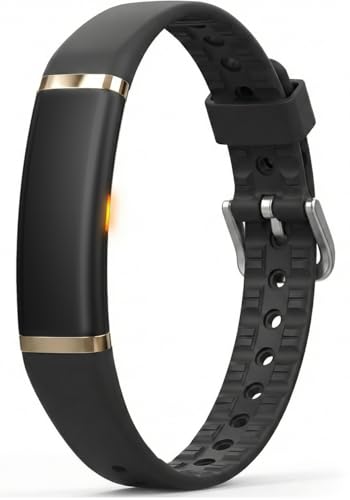
For anyone focused on health tracking rather than notifications or on-the-go stats, that means you get detailed wellness data without the glare or temptation to check a screen. It suits the busy professional or fitness beginner who wants to log trends over time and prefers a privacy-friendly app that works without registration or subscription fees.
The obvious downside is the lack of a display: you cannot glance at your step count mid-run or see incoming call alerts without pulling out your phone. Compared to the Charge 6 from Fitbit, which includes Google apps and heart rate on exercise equipment, the FITVII is a simpler tracker focused on background health logging. Its battery shortens to 1-3 days if you frequently use sports modes, so charging more often may be needed during active weeks.
Product photos
Withings Scanwatch 2 Hybrid Smartwatch

What We Like
- 35-day battery life
- Sapphire glass and stainless steel case
- Tracks sleep stages and 40+ sports
Trade-offs
- No touchscreen display for quick interactions
- Proprietary OS limits third-party app support
- Connected GPS requires phone nearby
A hybrid design combines analog watch hands with digital health tracking, so the watch looks appropriate in a boardroom or on a trail. The stainless steel case and sapphire glass offer durability for daily wear. Battery life reaches up to 35 days on a single charge, which means you can wear it continuously for over a month without needing to recharge. This extended power supports uninterrupted nightly sleep tracking and daytime health monitoring. The proprietary HealthSense OS uses on-device machine learning to calculate precise health metrics, keeping the data processing local rather than relying on cloud uploads.
The downside is you give up the touchscreen and app ecosystem you get with something like the Charge 6 from Fitbit, which offers a full smartwatch experience with Google apps and heart rate on exercise equipment. There is no color display to swipe through, and the connected GPS means your phone still comes along for accurate route mapping. If you prefer a full smartwatch experience with quick interactions and app support, the Charge 6 will feel more familiar. But if you want a tracker that fades into your daily life rather than demanding your attention, the Scanwatch 2 delivers where it counts.
Product photos
How We Evaluated Fitness Trackers For iPhone
We started by looking at the technical compatibility between each tracker and the Apple ecosystem. Every device here pairs with the iPhone’s Health app, but we dug into how well they handle notifications, GPS syncing, and third-party app support. Our research focused on published specs, manufacturer data, and patterns from expert round-ups and owner communities.
The four criteria that mattered most were GPS accuracy for outdoor workouts, battery life for daily wear, display type for glanceable stats, and subscription requirements. IPhone users tend to rely on their phone’s GPS already. So we weighed whether a tracker needed its own GPS or could lean on the phone. Battery life varied from 1 day to 35 days, which changes how you charge and wear the device.
For a deeper look at the full landscape, see our guide to the best fitness trackers for every budget and need.
What To Look For In Fitness Trackers For iPhone
The right fitness tracker for your iPhone balances GPS accuracy, battery life, display preference, and subscription costs. Most iPhone users already carry a powerful GPS in their pocket, so decide whether you want a standalone GPS tracker or one that relies on your phone.
Choose a tracker based on three things: whether you need on-wrist GPS, how long you want between charges, and if you’re okay with a subscription for advanced coaching features.
GPS: Built-in vs. Connected
If you run or cycle and want to leave your phone at home, you need a tracker with built-in GPS. The Google Fitbit Charge 6 includes this, giving you accurate distance and pace data without your iPhone. Trackers like the Garmin Vívosmart 5 use connected GPS, which means your phone must be nearby for route tracking. For most gym-goers and casual walkers, connected GPS works fine, your phone is usually with you anyway. For a full comparison of iOS-compatible trackers, we break down which models offer standalone GPS.
Battery Life: Daily vs. Weekly vs. Monthly
Battery life ranges from 1 day to 35 days depending on the tracker’s screen type and features. Screenless trackers like the Domhong last 30 days because they have no display to drain power. The Garmin Vívosmart 5 delivers 7 days in smartwatch mode, while the Withings Scanwatch 2 stretches to 35 days with its hybrid analog design. If you dislike charging devices, prioritize battery life over flashy screens. Our roundup of tracker watches for iPhone highlights the best battery performers.
Display: Screen vs. Screenless
Decide whether you want real-time stats on your wrist or prefer checking your phone. Screenless trackers like the Domhong and Garmin CIRQA are lighter, last longer, and cause less distraction. Screen-based trackers like the Fitbit Charge 6 and Garmin Vívosmart 5 let you glance at pace, heart rate, and notifications during workouts. The Xiaomi Smart Band 11 splits the difference with a thin, curved display that’s barely noticeable at 15.6 grams.
- Check whether the tracker’s app syncs smoothly with Apple Health
- Verify that notification support includes calls, texts, and your most-used apps
- Confirm water resistance rating matches your swimming or showering habits
- Look at strap options, some trackers use proprietary bands that are harder to replace
- Read the fine print on subscriptions: some features unlock only after a free trial ends
A simple rule: if you never want to think about charging, choose a screenless tracker with 30-day battery life. If you want stats mid-run, choose a GPS-equipped screen model.
Fitness Trackers For iPhone Compared
The table below compares key specs across all seven picks, so you can see at a glance which tracker matches your priorities.
| Product | Battery Life | Water Resistance | Health Sensors |
|---|---|---|---|
| Google Fitbit Charge 6 Fitness Tracker | N/A | N/A | Heart Rate: 24/7 |
| Garmin Vívosmart 5 Health Tracker | Up to 7 days | Swim-proof, shower-safe | Heart rate, Pulse Ox, stress, Body Battery |
| Xiaomi Smart Band 11 Fitness Tracker | 21 days | 5ATM | Heart Rate & SpO2 |
| Domhong Screenless Fitness Tracker | 20-30 days | IP68 | Heart rate, SpO2, HRV |
| Garmin CIRQA Smart Band | Up to 10 days | N/A | N/A |
| FITVII Screenless Fitness Tracker | 3-5 days | IP68 | Heart rate, blood pressure, SpO2, HRV |
| Withings Scanwatch 2 Hybrid Smartwatch | 35 days | N/A | ECG, HR, temperature |
Frequently Asked Questions
Do fitness trackers work with iPhone Health app?
Yes, all seven trackers in this guide sync with the Apple Health app. The Google Fitbit Charge 6, Garmin Vívosmart 5, and Withings Scanwatch 2 are particularly well-integrated, sharing step counts, heart rate data, sleep stages, and workout summaries directly into the Health dashboard.
Which fitness tracker has the longest battery life for iPhone?
The Withings Scanwatch 2 lasts up to 35 days on a single charge thanks to its hybrid analog design with no always-on screen. Among screenless options, the Domhong Screenless Fitness Tracker offers 30 days, while the Xiaomi Smart Band 11 delivers 21 days with its small display.
Can I use a Garmin tracker with an iPhone?
Absolutely. Garmin trackers like the Vívosmart 5 and CIRQA Smart Band pair easily with iPhones via the Garmin Connect app. They sync workout data, sleep scores, and heart rate readings to Apple Health. Garmin’s app ecosystem is mature and iPhone-friendly.
What is the best screenless fitness tracker for iPhone?
The Domhong Screenless Fitness Tracker is the best budget-friendly screenless option with 30-day battery life and 170+ sports modes. For a premium screenless experience with no subscription, the Garmin CIRQA Smart Band offers auto-detection of activities and up to 10 days of battery.
How accurate are fitness tracker calories for iPhone users?
Calorie burn estimates vary by device and algorithm. Most trackers use heart rate data combined with personal stats like age, weight, and height to estimate calorie expenditure. For a deeper look at calorie burn accuracy, we explain how these estimates work and where they tend to over- or under-count.
The Bottom Line
The Google Fitbit Charge 6 Fitness Tracker is our top pick for iPhone users who want built-in GPS, Google Maps navigation, and contactless payments without upgrading to a smartwatch. It’s ideal for runners and cyclists who leave their phone behind but still want accurate distance and pace tracking.
If battery life is your priority, the Garmin Vívosmart 5 gives you a full week of wear with a bright, readable display. Budget-conscious shoppers should consider the Domhong Screenless Fitness Tracker, which lasts 30 days and covers 170 sports modes without any subscription fees. For those who want a stylish, long-lasting companion, the Withings Scanwatch 2 blends classic watch design with 35-day battery life and medical-grade health tracking.
The single most important factor is whether you need on-wrist GPS. If you do, prioritize the Fitbit Charge 6 or another GPS-equipped model. If your phone is always with you, a connected-GPS tracker or screenless band will save you money and charging time.
