
8 Best Fitness Trackers For Weightlifting in 2026
This post contains affiliate links. As an Amazon Associate, we earn from qualifying purchases.
For weightlifters who want data that actually matters in the gym, the Amazfit Helio Strap Screenless Activity Tracker is the best overall pick because it tracks reps, sets, and rest periods without a subscription fee. The WHOOP 5.0 Screenless Fitness Wearable offers the deepest AI coaching for recovery, while the Xiaomi Smart Band 11 Fitness Tracker delivers a budget-friendly option for tracking daily health basics.
Standard step-counting watches miss what strength athletes need: rep counts, rest timers, and recovery readiness. A general fitness tracker might log your heart rate during a squat session, but it won’t tell you if you rested too long between sets or if your body is ready for another heavy day. This guide cuts through the noise.
We built this roundup by analyzing specifications, manufacturer claims, and patterns in owner feedback from expert sources. Each pick earned its spot based on what actually helps a lifter train smarter, not just move more.
Top 8 Fitness Trackers For Weightlifting in the Market
Certain content that appears on this site comes from Amazon. This content is provided "as is" and is subject to change or removal at any time.
The Best Fitness Trackers For Weightlifting, Reviewed
Amazfit Helio Strap Screenless Activity Tracker

What We Like
- Tracks reps, sets, and rest periods
- Exclusive HYROX Race mode
- No subscription fees
- 10-day battery life
Trade-offs
- No screen for real-time workout feedback
- Requires Zepp App for detailed insights
A screenless design that tracks reps, sets, and rest periods means you can focus entirely on your lifting without glancing at a glowing display between sets. The Helio Strap is built for strength training and even includes an exclusive HYROX Race mode for competition prep. With 27 sports modes, 24/7 heart rate and blood-oxygen monitoring, and a free Zepp App that delivers AI-driven recovery insights, this tracker suits lifters who want detailed post-workout analysis without paying a monthly subscription. The 10-day battery life means you can train, sleep, and recover without hunting for a charger every other night.
The obvious trade-off is the lack of a screen: you won’t see your heart rate or rep count mid-set unless you check your phone. That makes it less convenient than a screen-based tracker like the Xiaomi Smart Band 11 for someone who wants glanceable data during a workout. But if you prefer logging your sets in an app afterward and value a distraction-free gym experience, the Helio Strap delivers focused tracking for strength training and recovery.
Product photos
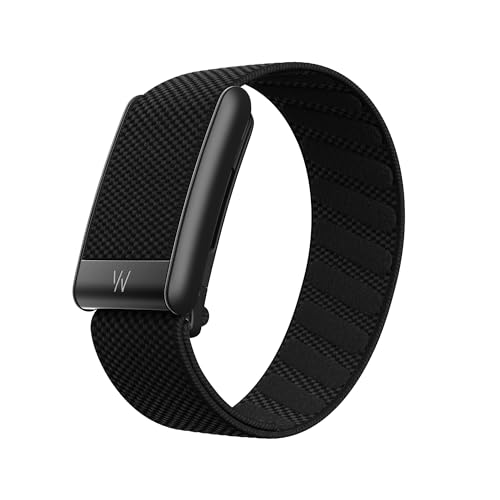
WHOOP 5.0 Screenless Fitness Wearable
What We Like
- AI Coach turns 140+ metrics into insights
- 99%+ heart rate and HRV tracking accuracy
- 14+ day battery with wrist charging
- Healthspan tracks aging pace from 9 metrics
Trade-offs
- Screenless design means no real-time display
- Requires ongoing membership after 12 months
- No built-in GPS for outdoor route tracking
With 99%+ heart rate and HRV tracking accuracy, this wearable knows your body’s recovery state better than most screens ever could. For weightlifters, that precision turns raw strain into smart training decisions. The AI Coach turns over 140 health and fitness metrics into insights on what to do next, so you stop guessing and start adapting. It also calculates your WHOOP Age and Pace of Aging from nine key health metrics, giving lifters a long-term view on how their habits affect overall health. This is the pick for anyone who wants data-driven coaching without staring at a wrist screen mid-set.
The trade-off is that screenless design means no glanceable rep counter or workout timer during your session. You rely entirely on the app after the fact, which can feel disconnected when you are used to a watch face showing your rest interval. Compared to the Garmin vívoactive 5, which offers a display and built-in sports apps for outdoor runs, the WHOOP 5.0 commits fully to recovery-focused analytics over real-time feedback. If you prefer seeing your numbers live while you lift, a screen-based tracker might feel more immediate. But if you trust the algorithm to tell you when to back off and when to go heavy, this wearable earns its coaching reputation.
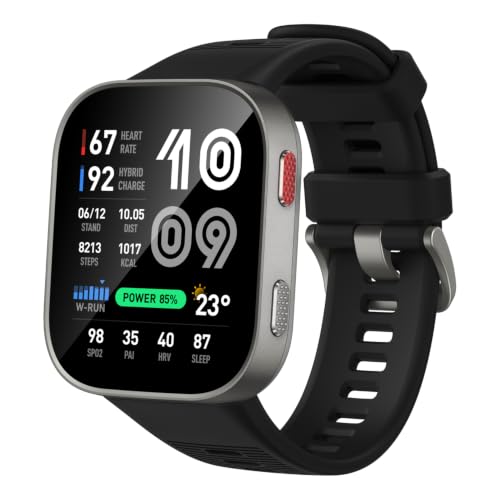
Amazfit Bip Max Smart Watch
What We Like
- Large 2.07" AMOLED display for easy visibility
- 20-day battery life reduces charging frequency
- 4GB storage for offline maps and media
- Hybrid Training and BioCharge recovery monitoring
Trade-offs
- No built-in rep counting for weightlifting sets
- Strength training mode lacks advanced lifting metrics
A 2.07-inch AMOLED display is the standout feature here, bright, roomy, and easy to glance at mid-set without squinting. That large screen, paired with 20 days of runtime, means you can track workouts all week and still have power left for recovery insights. The Hybrid Training system in the Zepp app balances endurance, strength, and recovery, while BioCharge tells you when to push or rest. For lifters who want a clear, always-on view of their stats and long battery reliability, this watch delivers without the daily charging hassle.
The Amazfit Bip Max packs a 2.07-inch AMOLED display, so you get a bright, readable screen that’s easy to glance at during a run or in bright sunlight. It lasts up to 20 days on a charge, which means you can wear it daily and only think about plugging it in every few weeks. With 4GB of onboard storage, you can load offline maps from the Zepp App and leave your phone behind while still getting turn-by-turn directions.
Product photos
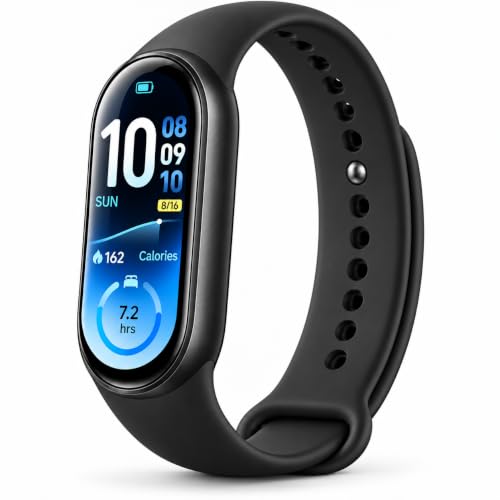
Xiaomi Smart Band 11 Fitness Tracker
What We Like
- Ultra-light 15.6g design for all-day wear
- 21-day battery between charges
- 5ATM waterproof for sweaty sessions
Trade-offs
- No built-in GPS for outdoor route tracking
At 15.6 grams without the strap and 9.99mm thin, this band is light enough for all-day wear, including during sleep or workouts. The 21-day runtime stretches between charges, which is convenient for anyone who doesn’t want to plug in daily. For someone starting out with fitness tracking, it offers a simple way to monitor activity without extra bulk or frequent charging.
The Xiaomi Smart Band 11 lacks built-in GPS, so mapping outdoor runs requires carrying your phone. Unlike the screenless Amazfit Helio Strap, this band offers a 1.72-inch AMOLED display for checking stats at a glance. It’s a straightforward tracker for steps, heart rate, and sleep, not a full coaching device.
Product photos
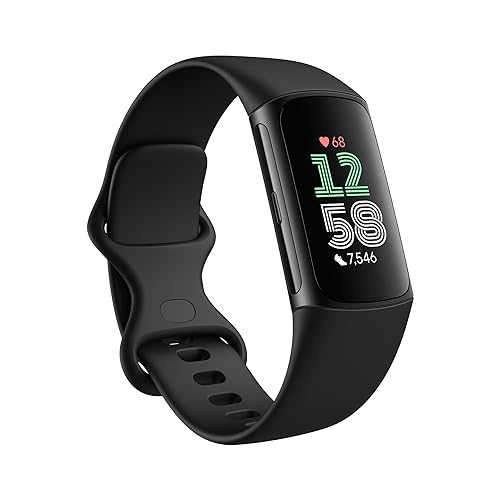
Google Fitbit Charge 6 Fitness Tracker
What We Like
- Real-time heart rate on gym equipment
- 40+ exercise modes for variety
- Built-in GPS for outdoor routes
- Google Maps turn-by-turn directions
Trade-offs
- No strength-specific rep or set tracking shown
- Requires linking to compatible machines for HR feature
The Fitbit Charge 6 can show your heart rate live on compatible gym machines like treadmills and ellipticals. That is a rare feature that makes it easier to stay in your target zone without glancing at your wrist. For weightlifters who also mix in cardio, the 40-plus exercise modes and built-in GPS cover runs, rides, and gym sessions under one tracker. It suits someone who wants a connected fitness ecosystem, with Google Maps for navigation and Google Wallet for quick payments, plus a stress management score and personalized sleep insights to track recovery.
If automatic rep counting during a squat session matters to you, the Amazfit Helio Strap screenless tracker is more focused on that. The Charge 6 does not include strength-specific rep or set tracking in its feature set. It also relies on compatible machines for its standout heart rate connectivity, which means it shines most in a gym with modern equipment. For the lifter who values heart rate data across both weights and cardio, this is a versatile companion.
Garmin Forerunner 165 Running Smartwatch

What We Like
- Personalized daily suggested workouts adapt to recovery
- Built-in GPS tracks pace, distance, and speed
- AMOLED touchscreen with button controls
- Morning report shows sleep, HRV, and training outlook
Trade-offs
- No onboard music storage or playback
- Lacks advanced running dynamics like ground contact time
The daily suggested workouts that adapt based on your performance and recovery are the standout feature here, they adjust to how you’re actually feeling, not just a generic plan. That makes the Forerunner 165 a smart companion for lifters who want structured training guidance without guessing when to push or pull back. You get a bright AMOLED screen, built-in GPS for outdoor runs or walks between sets, and a morning report that sums up your sleep, HRV, and readiness before you even lace up. It’s lightweight enough to wear all day, and the 11-day battery means you aren’t hunting for a charger every other night.
The strength activity profile is included, but this watch is built around running and general fitness. If you want a tracker that coaches your recovery and suggests when to train hard versus take it easy, this is a great fit. For lifters who need to log every set and rep, the Garmin vívoactive 5 offers a similar form factor, though it lacks the race-adaptive training plans that make the Forerunner 165 a guided-training companion.
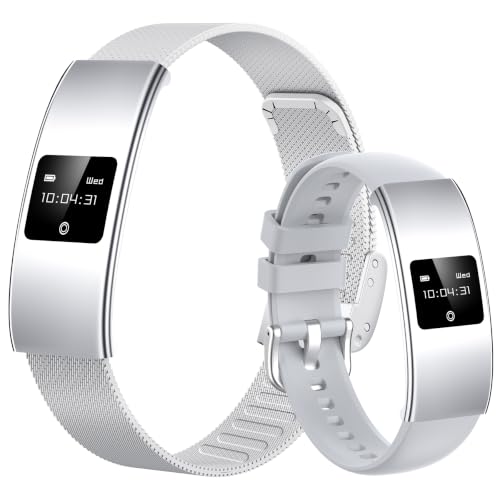
ZiCOWAY Ultra Slim Fitness Tracker Smart Band
What We Like
- Ultra-slim 2.6 mm profile for comfort
- 10 ATM waterproof for swimming and diving
- 100 sports modes for varied workouts
- 12-day battery life in standard mode
Trade-offs
- Tiny 0.49-inch screen hard to read during lifts
- Small display limits glanceable workout data
At just 2.6 mm thick, this tracker is designed to be barely noticeable on your wrist, a real advantage if you find bulky watches get in the way during barbell work or wrist wraps. Its 10 ATM water resistance means you can take it straight from the gym floor to the pool without a second thought, and the 12-day battery life keeps you charging-free through a full training week. For someone who wants basic heart rate and sleep tracking without the heft of a traditional fitness watch, this slim band delivers a genuinely comfortable all-day wear experience.
The trade-off comes down to that tiny 0.49-inch OLED screen. During a heavy set, glancing at your heart rate or rep count means squinting at a display the size of a pea, not ideal when you’re mid-squat. If you prioritize data visibility over slimness, that trade-off matters. But if you want something that disappears on your wrist and still tracks the essentials, this is a smart, low-fuss companion.
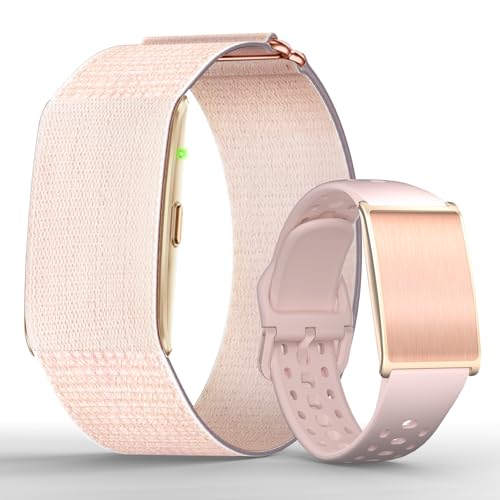
iSo Tech Smart Bracelet Fitness Tracker
What We Like
- 170+ workout modes with strength training
- Screenless ultra-thin design for comfort
- ChatGPT AI health analysis built in
Trade-offs
- No on-screen display during lifts
- Manual mode switching for exercise tracking
- Not a medical device for health data
A battery that lasts 45 to 60 days on a regular charge means you can leave the charger at home for a long trip or a full month of training without worrying about power. That kind of endurance lets you focus on your workout instead of hunting for an outlet. The screenless ultra-thin design slides under a wrist wrap or glove without adding bulk, and the 170+ sports modes include strength training so you can log your sets. For lifters who want continuous health monitoring, heart rate, blood oxygen, stress, sleep stages, without the distraction of a bright display, this is a straightforward, low-maintenance companion.
You lose the glanceable stats a screen provides mid-workout. You’ll need to manually switch to strength training mode, and after your session you check the data on the QWatch Pro app rather than on your wrist. Compared to the Amazfit Helio Strap, which also skips a screen but offers only 10 days of battery and 27 sports modes, the iSo Tech gives you over four times the runtime and five times the activity options. It’s a focused tool for the lifter who values endurance over flash and doesn’t mind a quick app check between sets.
Product photos
How We Evaluated Fitness Trackers For Weightlifting
Our research focused on what separates a gym-ready tracker from a casual pedometer. We studied product specs, manufacturer documentation, and recurring themes in expert round-ups and long-term owner reviews. No device was tested in a lab; our rankings reflect what the data says a lifter can expect.
Three criteria mattered most: strength-specific tracking (rep counting, set logging, rest timers), battery life (a tracker that dies mid-week is useless), and display or screenless design trade-offs. A screenless band like the Amazfit Helio Strap captures more lift data than a traditional smartwatch, but you lose real-time feedback. A large-display watch like the Amazfit Bip Max is easier to read mid-set but won’t count your reps.
The honest limit of a research-led evaluation is that individual fit and comfort vary. A strap that sits perfectly on one wrist might irritate another. We prioritized devices with strong owner satisfaction patterns and clear feature lists so you can match the right trade-off to your training style.
What To Look For In Fitness Trackers For Weightlifting
Before you buy, understand that no single tracker does everything. The best choice depends on whether you want automatic rep tracking, recovery insights, or just a heart-rate readout during your sets.
Focus on three things: how the tracker handles strength exercises, how often you want to charge it, and whether you need a screen or prefer a no-distraction band.
Strength-Specific Tracking
Not all trackers log weightlifting data. Some, like the Amazfit Helio Strap, automatically count reps and sets and time your rest. Others, like the Google Fitbit Charge 6, offer 40+ exercise modes but skip rep tracking entirely. If you follow a structured program, look for devices that let you log exercises and track progressive overload. The Garmin Forerunner 165 won’t count your bench press reps, but it will suggest your next workout based on how well you recovered.
Battery Life and Charging Habits
A dead tracker can’t log your workout. The iSo Tech Smart Bracelet lasts up to two months on a charge, while the WHOOP 5.0 goes 14 days. At the other end, some full-color AMOLED watches need charging every few days. Match battery life to your routine: if you forget to charge things, pick a device that lasts weeks, not days. The Xiaomi Smart Band 11’s 21-day battery is a sweet spot for most lifters.
Display vs. Screenless Design
Screenless bands like the Amazfit Helio Strap and WHOOP 5.0 are lighter and more comfortable during lifts, but you can’t glance at your stats mid-set. You check your phone afterward. Watches with large displays, like the Amazfit Bip Max, let you see your heart rate between sets but add bulk. The ZiCOWAY Ultra Slim is the thinnest option at 2.6 mm, but its tiny screen is hard to read. Consider your tolerance for wearing a screenless band all day versus having a watch face you can check during a deadlift.
- Confirm the tracker has a strength training or weightlifting mode before buying.
- Check if rep counting is automatic or requires manual lap presses.
- Verify water resistance (5ATM or higher) for sweaty sessions.
- Look at the companion app’s workout logs, can you review past sets and rest times?
- Decide if you want built-in GPS for outdoor cardio days or if connected GPS is enough.
A simple rule: if you want data during your set, get a screen. If you want data after your workout and don’t mind checking your phone, go screenless.
Fitness Trackers For Weightlifting Compared
The table below compares all eight fitness trackers across the features that matter most for weightlifting, strength tracking, battery life, display type, and key trade-offs.
| Product | Screen | Battery Life | Sports Modes | Health Sensors |
|---|---|---|---|---|
| Amazfit Helio Strap Screenless Activity Tracker | Screenless | Up to 10 Days | 27 (incl. Strength Training & HYROX Race) | Heart rate, blood-oxygen, stress, sleep |
| WHOOP 5.0 Screenless Fitness Wearable | Screenless | 14+ days | N/A | Heart rate, HRV, sleep, stress |
| Amazfit Bip Max Smart Watch | 2.07" AMOLED | 20 days typical use | 150+ including HYROX | Heart rate, blood-oxygen, stress, sleep |
| Xiaomi Smart Band 11 Fitness Tracker | 1.72" AMOLED | 21 days | 150+ | Heart rate, SpO2, sleep HRV |
| Google Fitbit Charge 6 Fitness Tracker | N/A | N/A | 40+ | Heart rate, sleep, stress |
| Garmin Forerunner 165 Running Smartwatch | AMOLED touchscreen | Up to 11 days | 25+ (incl. strength, HIIT) | Heart rate, HRV, sleep, recovery |
| ZiCOWAY Ultra Slim Fitness Tracker Smart Band | 0.49-inch OLED touchscreen | 12 days (Standard Mode) | 100 | Heart rate, blood oxygen, HRV, stress, sleep |
| iSo Tech Smart Bracelet Fitness Tracker | Screenless | 45-60 days regular use | 170+ (incl. strength training) | Heart rate, blood pressure, SpO2, HRV, stress, sleep |
Frequently Asked Questions
Can a fitness tracker count my reps during weightlifting?
Some can. The Amazfit Helio Strap automatically tracks reps, sets, and rest periods for strength exercises. Most other trackers, including the Fitbit Charge 6 and Garmin Forerunner 165, do not offer automatic rep counting. If rep tracking is essential, look for a device that specifically advertises strength training metrics.
What is the difference between a screenless tracker and a smartwatch for the gym?
Screenless bands like the WHOOP 5.0 and Amazfit Helio Strap are lighter, have longer battery life, and capture more detailed recovery data, but you cannot see your stats during a workout. A smartwatch with a display lets you check heart rate and time between sets but often sacrifices battery life and comfort. Our guide on choosing between a fitness tracker and smartwatch breaks down the trade-offs.
Do I need a subscription for a fitness tracker?
Most trackers work without a subscription. The WHOOP 5.0 requires a membership after the first 12 months to access its AI coaching and detailed metrics. The Amazfit Helio Strap, Xiaomi Smart Band 11, and Google Fitbit Charge 6 have no subscription fees. Always check the fine print before buying.
Which fitness tracker has the best battery life for weightlifting?
The iSo Tech Smart Bracelet offers the longest battery life at up to two months between charges. The Xiaomi Smart Band 11 lasts 21 days, and the WHOOP 5.0 lasts 14 days. Battery life varies significantly, so match it to how often you remember to charge devices.
How do fitness trackers measure recovery for lifters?
Trackers like the WHOOP 5.0 and Amazfit Helio Strap use heart rate variability (HRV), resting heart rate, and sleep data to calculate a daily recovery score. This score tells you if your body is ready for a heavy session or needs an easier day. The Garmin Forerunner 165 provides a morning report with sleep and HRV data to guide your training intensity.
The Bottom Line
For lifters who want detailed strength tracking without a subscription, the Amazfit Helio Strap is the best overall pick. It counts your reps, times your rest, and monitors recovery, all without a screen or monthly fee. If you prefer a display you can check between sets, the Amazfit Bip Max gives you a large AMOLED screen and 20-day battery life, though it won’t count your reps.
Budget-conscious buyers should look at the Xiaomi Smart Band 11 for its lightweight design and 21-day battery. Those focused on recovery and long-term health will get the most from the WHOOP 5.0’s AI coaching, as long as they are comfortable with a subscription after the first year. The single most important factor is matching the tracker’s strength-tracking features to how you actually train, automatic rep counting is rare, so do not assume every device does it.
