
10 Best Gifts For Yoga Lovers in 2026
This post contains affiliate links. As an Amazon Associate, we earn from qualifying purchases.
The Liforme Printed Yoga Mat is the best gift for yoga lovers because its patented AlignForMe system guides hand and foot placement while the GripForMe surface gets tackier as you sweat. For durable cushioning that protects joints over years of practice, the Manduka PRO Yoga Mat is a top choice. The JadeYoga Harmony Yoga Mat offers eco-conscious practitioners a grippy natural rubber surface.
Finding the perfect present for a dedicated yogi means choosing something that enhances their practice without ending up in a closet. A mat is the most personal piece of gear, it affects stability, comfort, and alignment in every pose. The right mat respects their style, whether that means hot vinyasa, gentle yin, or daily home practice.
We researched specifications, manufacturer materials, expert recommendations, and patterns in owner feedback to build this list. This guide focuses on what matters most for yoga lovers: grip, cushioning, durability, and portability. We also cover yoga gifts beyond mats for a well-rounded present.
Top 10 Yoga Mats For Yoga Lovers in the Market
Certain content that appears on this site comes from Amazon. This content is provided "as is" and is subject to change or removal at any time.
The Best Yoga Mats For Yoga Lovers, Reviewed
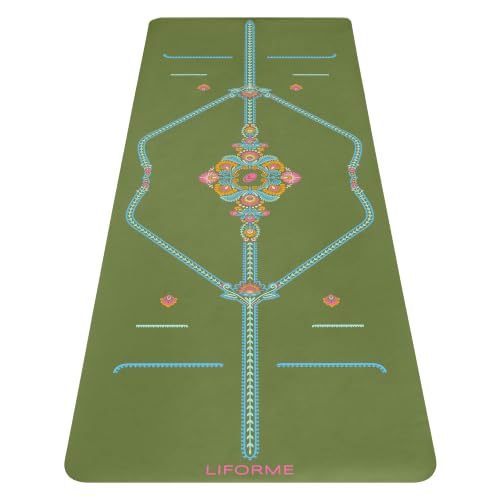
Liforme Printed Yoga Mat
What We Like
- Patented AlignForMe alignment guides
- Sweat-activated GripForMe surface
- Eco-friendly, PVC-free materials
- Comes with free yoga bag
Trade-offs
- At 5.5 lb, heavier than travel mats
- 4.2 mm thickness offers less cushion than thicker mats
The Liforme Printed Yoga Mat’s GripForMe surface actually gets grippier as you sweat, so you won’t slide through downward dog even in a hot class. That alone makes it a standout for anyone who has ever felt their hands creep mid-flow. The patented AlignForMe markers guide your foot and hand placement pose by pose, which is a huge confidence builder for yogis at any level. It is also built from eco-polyurethane and natural rubber with non-toxic inks, so you are not breathing in questionable chemicals while you stretch.
The trade-off is that at 5.5 pounds and 4.2 mm thick, it’s not the lightest or plushest mat you can roll up. If you’re after maximum cushion for knees and elbows, the Manduka PRO Yoga Mat offers 6 mm of padding, though it lacks the alignment guides and sweat-activated grip. For yogis who value stability, feedback, and eco-conscious design over ultra-soft padding, this mat delivers a focused practice without the slip.
Manduka PRO Yoga Mat

What We Like
- Ultra-dense 6mm cushioning for joint protection
- Closed-cell surface resists moisture and bacteria
- No-slip dot bottom keeps mat steady
Trade-offs
- At 7.5 lbs, heavy to carry to class
- Only 71 inches long, tight for taller practitioners
The Manduka PRO Yoga Mat’s 6mm ultra-dense cushioning provides joint protection and stability, and its closed-cell surface seals out moisture for a cleaner practice. Trusted by teachers worldwide, the mat is guaranteed to last a lifetime of practice. If you want a durable mat that stays put, this is a strong option.
At 7.5 pounds, this mat is noticeably heavier than the Liforme Printed Yoga Mat’s 5.5 pounds, so it’s less ideal if you’re hauling it across town. It’s also made from PVC, which is OEKO-TEX certified and latex-free. But for a durable, supportive mat that stays put and lasts, the Manduka PRO is hard to beat.
JadeYoga Harmony Yoga Mat

What We Like
- Non-slip open-cell natural rubber grip
- Free of PVC, phthalates, and heavy metals
- Made in USA with imported natural rubber
Trade-offs
- At 4.2 lb, heavier than most travel mats
- Narrower (24") than many premium mats
- Open-cell rubber absorbs sweat and needs cleaning
The 0.2-inch thickness is the first thing to notice: it’s thin enough to keep you grounded and stable in standing poses, yet the natural rubber provides just enough cushion for knees and wrists. For yoga lovers who prioritize a secure, non-slip surface over pillow-like padding, this mat delivers exactly that. The open-cell rubber offers a non-slip grip that holds steady during practice, which is why it’s a top choice among yoga teachers and practitioners worldwide. Plus, every mat sold funds a tree planting, so your purchase supports reforestation efforts.
This mat asks you to decide what matters most. At 4.2 pounds, it’s heavier than the Gaiam Essentials Thick Yoga Mat (2.1 lb), so carrying it to a studio feels like more of a commitment. And at 24 inches wide, it’s narrower than the Liforme Printed Yoga Mat (26.8 inches), which can be a squeeze for taller or broader practitioners. The open-cell rubber also needs cleaning with a dedicated mat wash to keep it fresh. Still, if grip and environmental values matter most, this mat earns its spot.
Product photos
Liforme Special Yoga Mat

What We Like
- Patented alignment design for form
- Sweat-resistant grip stays grippy when wet
- Eco-friendly, non-toxic, PVC-free materials
- Includes free yoga bag
Trade-offs
- At 5.5 lbs, heavier than standard mats
- 4.2mm thickness less cushioning than thicker mats
The Liforme Special Yoga Mat uses a patented GripForMe material that stays non-slip even when wet, making it a strong option for hot yoga where sweat can make other mats slippery. At 72.8 inches long and 26.8 inches wide, it provides a large surface area for most body types. The mat is made from eco-polyurethane and rubber, is PVC-free and non-toxic, so it avoids the chemical smell some synthetic mats have. It comes with a free yoga bag for storage and transport.
At 5.5 pounds, this mat is heavier than many travel mats, so carrying it to class adds noticeable heft. The 4.2mm thickness offers moderate cushioning, but if you have sensitive knees or prefer extra padding for restorative poses, you may want a thicker mat. For yogis who prioritize grip and eco-friendly materials, especially in hot yoga, this mat delivers on those key features.
Gaiam Essentials Thick Yoga Mat

What We Like
- Extra-thick 10mm NBR foam cushioning
- Reduces pressure on knees and joints
- Lightweight at 2.1 pounds
- Includes adjustable carrying strap
Trade-offs
- Initial foam odor needs 24-48 hours to fade
- Narrower than some premium mats
A 10mm thick NBR foam mat means serious cushioning for anyone whose knees, hips, or joints complain during floor work. That plush layer absorbs shock on hard tile or wood, so beginners and recovery-focused yogis can hold poses longer without discomfort. The textured foam surface helps keep you steady during dry routines, and at just 2.1 pounds with a carrying strap, it’s easy to roll up and move between rooms or to a class. This mat is designed for comfort-focused, low-impact workouts like gentle yoga, Pilates, stretching, and floor exercises on hard surfaces.
The 10mm NBR foam cushions joints like knees and hips, making it ideal for beginners and low-impact routines on hard floors. The textured surface helps reduce slipping during dry workouts, and the initial foam odor typically fades after airing out for 24 to 48 hours. It’s a forgiving entry point that makes yoga feel approachable, not punishing.
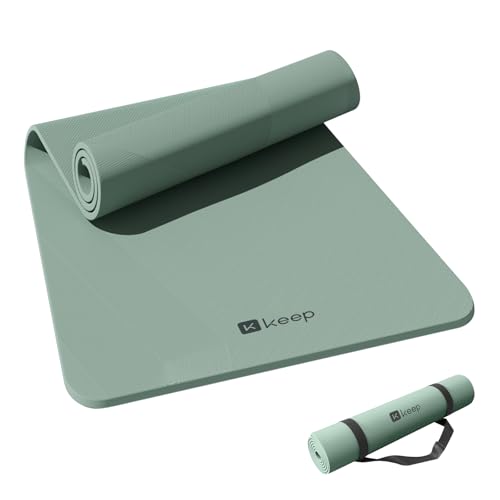
KEEP Non-Slip Large Yoga Mat
What We Like
- Extra-wide 32-inch surface for roomy poses
- Lightweight 2.8 lbs with carrying strap
- Double-sided non-slip texture for dry or wet surfaces
Trade-offs
- At 7mm, less cushioning than thicker mats
- Requires airing out before first use
- Spot-clean only, no machine washing
A 32-inch width means you can stretch your arms wide, shift into a lunge, or roll through sun salutations without ever worrying about your hand or foot slipping off the edge. That extra real estate is the whole point here: it turns a standard yoga mat into a personal studio floor, especially if you’re taller or just like spreading out. For someone who values space and stability over extreme padding, this mat delivers exactly what it promises.
This mat’s 7mm of cushioning sits in the middle ground: it is thicker than a travel mat but thinner than a dedicated pilates or floor-work mat. If your practice involves lots of kneeling or you have sensitive joints, a 10mm option like the Gaiam Essentials Thick Yoga Mat might feel plusher. But that extra thickness also adds weight and bulk, while this KEEP mat stays at 2.8 pounds with the included carrying strap. It is a practical choice for the yogi who wants room to move without carrying a heavy roll.
Product photos
YOGATI Yoga Mat with Alignment Lines

What We Like
- Textured closed-cell surface stays non-slip when sweaty
- Dense foam cushions joints without sacrificing stability
- Laser-etched alignment lines guide hand and foot placement
- Lightweight at 1.9 pounds with included carrying strap
Trade-offs
- At 24 inches wide, narrower than some premium mats
- Too narrow for wide-shouldered practitioners or large frames
A laser-etched center marking right on the mat shows where your palms and heels belong. That helps beginners learn correct form and lets experienced yogis fine-tune symmetry. The textured closed-cell surface holds hands and feet steady through hot flows, and the dense foam cushions knees, elbows, hips, and spine against hard ground while staying firm enough to stand tall during tree or warrior sequences. At 1.9 pounds with a shoulder strap included, it rolls tight and goes everywhere with you.
A dense foam layer softens knees, elbows, hips, and spine against hard ground, yet the mat remains firm enough to stand tall during tree or warrior sequences. The trade-off for keeping the overall weight under two pounds is a 24-inch width and a 6mm thickness that might not feel plush enough for someone with very sensitive joints on a hardwood floor. Reviewers note the closed-cell surface holds hands and feet steady through hot flows, planks, and lunges, so every pose feels secure instead of slippery.
Product photos
Retrospec Solana Extra Thick Yoga Mat

What We Like
- 1-inch thick for joint comfort
- Non-slip grip for stability
- BPA-free and latex-free materials
- Easy to clean with soap and water
Trade-offs
- Narrower than some premium mats at 24 inches
- Not designed specifically for hot yoga sweat resistance
A full inch of cushioning means your knees, hips, and hands finally get a break, no more wincing through kneeling poses or feeling every floorboard under your mat. That thick padding also helps with balance, giving you a stable, forgiving surface for holding a long downward dog or working through a gentle flow. It’s a smart pick for anyone who finds standard mats too thin or has sensitive joints, and the included carrying strap makes it easy to bring along to the studio without wrestling a rolled-up tube.
At 24 inches wide, this mat matches the width of a basic yoga mat. If you tend to spread out or have a broader frame, you may find your hands or feet slipping off the edge during wide-legged poses. The Liforme Printed Yoga Mat is wider at 26.8 inches and includes a patented alignment system, but it is only 4.2mm thick. The Solana’s one-inch padding and included carrying strap make it a comfortable option for home practice or light studio use, though those who do hot yoga might prefer a mat with a dedicated sweat-resistant surface.
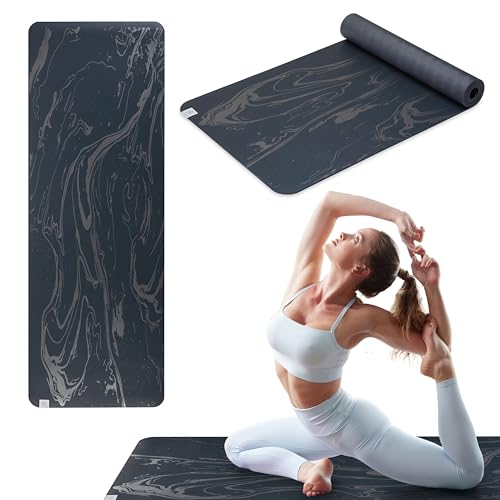
Gaiam Dry-Grip Yoga Mat
What We Like
- Moisture-wicking topcoat for sweaty sessions
- Lightweight and easy to carry
- Cushioned support for joints and stability
- Suitable for hot yoga and high-intensity workouts
Trade-offs
- Small surface area limits full-body poses
- Thinner cushioning than premium 6mm mats
The moisture-wicking topcoat is the standout feature here, it pulls sweat away from the surface so your hands and feet stay planted even in a hot yoga class or a high-sweat Vinyasa flow. That dry-grip design means you can skip the towel on top of the mat, which keeps your transitions smooth and your balance steady. Weighing 4.8 pounds, it’s portable for studio trips or gym sessions, and the rubber construction gives support for wrists and knees during floor work. This mat is built for anyone who sweats hard and wants grip that doesn’t quit, especially if you practice hot yoga or fast-paced routines where slipping is a real frustration.
This mat is built for sweaty practices where grip matters most, not for restorative or alignment-heavy styles. The moisture-wicking topcoat helps maintain traction during hot yoga, Vinyasa, or Bikram sessions, so you won’t slide even when you’re drenched. It’s a focused tool for the yoga lover who hates slipping and wants a stable surface for high-intensity workouts.
Product photos
Manduka Begin Yoga Mat

What We Like
- Lightweight at 2.1 pounds
- Reversible dual-color design
- Center alignment stripe for form
- Eco-friendly TPE foam cushioning
Trade-offs
- 5mm thickness offers less joint protection than thicker mats.
At just 2.1 pounds and 5mm thick, this mat is light enough to toss in a tote and carry to class without feeling like you are hauling a gym bag full of bricks. The center alignment stripe gives new yogis a clear visual cue for hand and foot placement. That helps build confidence when you are still figuring out whether your downward dog looks more like a confused cat. Made from eco-friendly TPE foam, it is free of latex and easy to wipe clean after practice, so beginners can focus on breathing instead of worrying about slippery surfaces or awkward poses.
Compared to the Manduka PRO at 7.5 pounds and 71 inches long, the Begin is clearly built for portability and entry-level comfort rather than a full-on studio foundation. If you are just starting out and want something that won’t intimidate your shoulders or your budget, this mat makes the first step feel simple and sustainable.
Product photos
How We Evaluated Yoga Mats For Yoga Lovers
We started with the technical specs that define a mat’s performance, thickness, weight, material composition, and surface texture. Manufacturer data told us about eco-credentials, closed-cell versus open-cell construction, and warranty periods. These details separate a mat built for daily use from one that will degrade after a few months.
Owner feedback patterns revealed what matters in real practice: which mats develop a slippery film over time, which ones absorb sweat without becoming hazardous, and which materials break down after repeated washing. We paid close attention to complaints about durability, odor, and grip degradation across different practice styles.
Three criteria carried the most weight: grip performance (especially when wet), cushioning for joint protection, and build quality that justifies the investment. Portability for studio-goers and eco-friendly materials for sustainability-minded practitioners were also considered. This evaluation is based on expert round-ups and verified owner experiences.
What To Look For In Yoga Mats For Yoga Lovers
Choosing the right yoga mat comes down to matching the material and construction to how you actually practice. Here are the key factors to consider.
The best yoga mat for you balances grip, cushioning, durability, and weight based on your practice style and where you practice most often.
Material and Grip
Natural rubber offers the best dry grip and is eco-friendly, but it absorbs sweat and needs regular cleaning. PVC mats are durable and grip well when dry but can become slick when wet. TPE foam is lightweight and recyclable but less durable. Closed-cell surfaces resist moisture and bacteria, making them ideal for hot yoga, they don’t absorb sweat like open-cell rubber does.
Thickness and Cushioning
Standard yoga mats are 4-5mm thick, offering a balance of stability and comfort. Mats at 6mm provide noticeably better joint protection for knees and wrists during kneeling poses and prone postures. Extra-thick mats at 10mm or more cushion sensitive joints but can feel unstable for balancing poses like tree or handstand. Thicker mats also weigh more and roll up bulkier for storage.
Portability and Size
Studio practitioners need a mat that’s easy to carry. Travel-friendly mats weigh under a few pounds, while premium dense mats can exceed seven pounds. Width matters too; standard mats are 24 inches wide, which can feel tight for broad-shouldered practitioners. Extra-wide mats give room for expansive poses but add weight. Length is critical for tall practitioners; look for 72 inches or more.
- Check the mat’s rolled diameter to ensure it fits your existing yoga bag or carrying strap
- Verify the material is compatible with your preferred cleaning method (spray vs. Machine wash)
- Test the grip by pressing your palm into the surface, it should feel tacky, not slick
- Consider a mat with alignment lines if you practice at home without a mirror or instructor
A mat that works for hot yoga should have a closed-cell or moisture-wicking surface, open-cell rubber becomes a slip hazard when saturated.
Yoga Mats For Yoga Lovers Compared
The table below compares the ten yoga mats side by side, highlighting their key strengths and trade-offs at a glance.
| Product | Dimensions | Thickness | Weight | Material |
|---|---|---|---|---|
| Liforme Printed Yoga Mat | 72.8 x 26.8 inches | 4.2 mm | 5.5 pounds | Eco-polyurethane / natural rubber |
| Manduka PRO Yoga Mat | 71 x 26 in | 6mm | 7.5 lbs | OEKO-TEX certified PVC |
| JadeYoga Harmony Yoga Mat | 68" x 24" | 3/16'' thick | 4.2 lb | Natural rubber |
| Liforme Special Yoga Mat | 72.8 x 26.8 x 0.2 inches | 4.2mm | 5.5 pounds | Eco-polyurethane & rubber |
| Gaiam Essentials Thick Yoga Mat | 72"L X 24"W X 2/5 Inch Thick | 10mm (2/5 in) | 2.1 pounds | High-density NBR foam |
| KEEP Non-Slip Large Yoga Mat | 72"Lx32"Wx7mm Thick | 7mm | 2.8 pounds | TPE |
| YOGATI Yoga Mat with Alignment Lines | 72 x 24 x 0.2 inches | 6mm | 1.9 pounds | Dual Layer TPE |
| Retrospec Solana Extra Thick Yoga Mat | 72"x24"x1" | 1 inch | 2.2 pounds | BPA-free, latex-free |
| Gaiam Dry-Grip Yoga Mat | N/A | N/A | 4.8 pounds | N/A |
| Manduka Begin Yoga Mat | 68 x 24 inches | 5mm | 2.1 pounds | Eco-friendly TPE foam |
Frequently Asked Questions
What thickness yoga mat is best for beginners?
A 5mm to 6mm mat offers a good balance of cushioning and stability for new practitioners. The Manduka Begin Yoga Mat at 5mm provides enough padding for floor poses while remaining stable enough for standing balances. Beginners with sensitive joints may prefer extra-thick options like the Gaiam Essentials Thick Yoga Mat at 10mm.
How do I clean a yoga mat without damaging it?
Most mats can be cleaned with a diluted vinegar and water solution or a dedicated mat spray. Open-cell natural rubber mats like the JadeYoga Harmony need more frequent cleaning because they absorb sweat. Avoid machine washing unless the manufacturer explicitly allows it, the KEEP Non-Slip Large Yoga Mat specifies spot-cleaning only.
What makes a yoga mat non-slip for hot yoga?
A closed-cell surface or moisture-wicking topcoat prevents slippage when you sweat. The Gaiam Dry-Grip Yoga Mat uses a moisture-wicking topcoat that stays grippy during sweaty sessions. Open-cell rubber mats become more slippery when saturated, so they’re less suitable for hot yoga without a towel overlay.
How long should a quality yoga mat last?
A well-made mat from dense materials like the Manduka PRO can last many years with proper care. Lighter mats made from TPE foam typically last a few years before the cushioning compresses. Natural rubber mats last several years but can develop a smooth surface over time as the grip wears down.
Are extra-wide yoga mats worth it for tall people?
Yes, if you’re over 5’10” or have broad shoulders. Standard 24-inch mats can feel restrictive during wide-legged poses and lateral stretches. The KEEP Non-Slip Large Yoga Mat at 32 inches wide gives ample room, while the Manduka PRO at 71 inches long may feel tight for practitioners over 6 feet.
The Bottom Line
The Liforme Printed Yoga Mat is the best overall gift for yoga lovers who care about alignment and grip. Its proprietary alignment guides help practitioners refine their form, and the sweat-activated surface keeps them stable through the most demanding sequences. It’s a thoughtful investment for someone who practices regularly and wants to improve their foundation.
If your recipient prioritizes joint protection and long-term durability, the Manduka PRO Yoga Mat is worth the extra weight. For eco-conscious practitioners, the JadeYoga Harmony offers that natural rubber grip with a smaller environmental footprint. Beginners will appreciate the affordability and cushioning of the Gaiam Essentials Thick Yoga Mat.
The single most important factor when choosing a yoga mat is matching the surface material to how and where the person practices. A hot yoga enthusiast needs a closed-cell or moisture-wicking surface, while a yin practitioner can enjoy the grip of natural rubber. Get that match right, and you’ve found a gift they’ll use every day. For more gift ideas and presents for yoga lovers, explore our complete collection.
