
10 Best Gym Shoes For Support in 2026
This post contains affiliate links. As an Amazon Associate, we earn from qualifying purchases.
The adidas Dropset Vario Training Shoes take the Best Overall spot for their TPU torsion system and wide-fit base that lock in stability for heavy lifts. For those who need extra ankle support under a barbell, the NOBULL Outwork High Shoe earns our Best For Heavy Lifting award. The New Balance 608 V5 Cross Trainer wins Best Cushioned Support for mixed gym sessions.
Real support in a gym shoe means more than a padded collar. It is the difference between a solid squat platform and a wobbly heel, between controlled lateral movement and an ankle roll. Whether you are deadlifting, doing box jumps, or just starting a strength routine, the wrong shoe can undermine your foundation.
This guide is built from manufacturer specs, expert round-up patterns, and the consensus in owner feedback across dozens of models. We focused on the support features that matter most for gym work, arch structure, heel stability, motion control, and sole firmness, so you can match a shoe to your training style.
Top 10 Gym Shoes For Support in the Market
Certain content that appears on this site comes from Amazon. This content is provided "as is" and is subject to change or removal at any time.
The Best Gym Shoes For Support, Reviewed
adidas Dropset Vario Training Shoes

What We Like
- TPU torsion system for heavy lifts
- Repetitor Foam for stable comfort
- Breathable mesh keeps feet cool
- Wide-fit base enhances ground connection
Trade-offs
- Low profile limits cushion for long cardio
The TPU midfoot torsion system in this shoe provides targeted support during heavy lifts to help maintain proper form, giving you a stable base for strength training. The Repetitor Foam delivers consistent responsiveness and stable conditioning, so you get a reliable platform for lifting with comfort for dynamic movements and functional training. The wide-fit construction enhances stability during lifts, and the low-profile design maintains ground connection for better lifting mechanics and controlled movements. This combination of support and comfort makes the shoe suitable for anyone focused on strength training in the gym.
The trade-off is that the wide fit and low profile are built for stability first, not for long treadmill sessions or high-impact cardio. If your workout leans heavily on running or jumping, the PUMA Voltaic Evo Cross Training Shoes offer more midsole cushion for those movements. But for the lifter who wants a shoe that provides a solid foundation for heavy lifting while maintaining flexibility for warmups, the Dropset Vario delivers a stable platform that supports proper form throughout your workout.
Product photos
NOBULL Outwork High Shoe
What We Like
- Extended high-top locks in ankle support
- Flat, firm sole stabilizes heavy lifts
- Carbon rubber grip sticks to gym flooring
Trade-offs
- Light cushioning means less comfort for all-day wear
- 4mm drop favors lifting over running or cardio
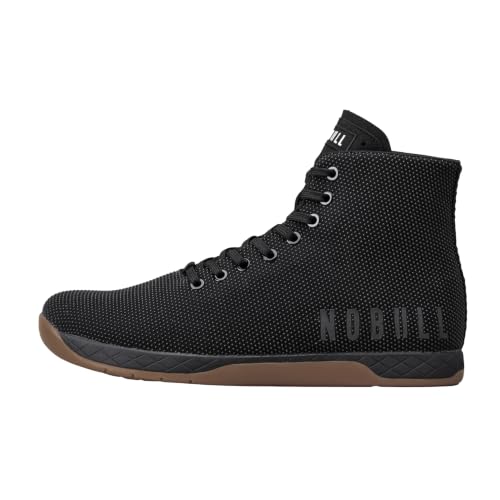
A flat, firm platform with only 4mm of heel-toe drop keeps you low to the ground, so every squat and deadlift starts from a stable base. That extended high-top profile wraps your ankle in support, giving you confidence under heavy loads without the wobble that sneakers with thicker soles can introduce. This shoe is built for the lifter who wants to feel the floor beneath each rep, not sink into a cloud of foam.
Light cushioning works great for the platform but less so if you plan to jog between sets or wear them all day around the gym. If your priority is locking in your stance for heavy squats and pulls, this shoe delivers exactly that without extra bulk.
NOBULL Women's Outwork High-Top Shoe
What We Like
- Locked-in ankle support from high-top design
- Flat, firm sole for stable lifting stance
- Wider toe box helps with footing
- Durable water-repellent coating
Trade-offs
- Light cushioning only, not for running or cardio
- Not suitable for running or high-impact cardio.
A 4mm heel-toe drop and a flat, carbon rubber sole mean this shoe is built to keep you planted during heavy lifts. The high-top profile wraps your ankle securely, so you can focus on driving through deadlifts or squats without wobbling. For anyone who prioritizes stability over bounce, this is a straightforward choice that doesn’t overcomplicate things.
Light cushioning works well for standing under a barbell but feels firm during dynamic warm-ups or box jumps. For lifters who prioritize stability over bounce, this shoe delivers a straightforward, planted feel without overcomplicating things.
New Balance 608 V5 Cross Trainer

What We Like
- ABZORB heel pad absorbs impact
- Suede leather upper for structure
- Dual density collar supports ankle
- Phantom Liner reduces irritation
Trade-offs
- Heavier build than minimalist training shoes
- Suede upper lacks mesh's breathability for hot workouts
The ABZORB heel crash pad absorbs impact on every step, and the molded PU insert adds underfoot comfort that lasts from morning to night. The dual density collar foam supports the ankle and helps maintain stability during workouts, walks, and all-day wear. The suede leather upper provides supportive structure and a classic look that breaks in nicely over time for a personalized fit. This shoe suits anyone who wants a supportive, cushioned ride for daily activities and gym use.
The New Balance 608 V5 Cross Trainer weighs 0.9 pounds, so it’s a substantial shoe that prioritizes cushioning over a featherlight feel. Its ABZORB heel crash pad absorbs impact on every step, and the molded PU insert keeps you comfortable from morning to night. If all-day support matters more than a minimalist platform, this shoe delivers where it counts.
New Balance Women's 608 V5 Cross Trainer

What We Like
- ABZORB heel pad absorbs impact
- Suede leather upper molds to foot
- Cushioned footbed for all-day comfort
Trade-offs
- Suede upper is not machine washable
- Not for weightlifting or powerlifting stability
At 0.7 pounds, this cross trainer is light enough for all-day wear without feeling heavy. The ABZORB heel pad and IMEVA midsole absorb impact and add cushioning, which helps during standing or walking. The cushioned footbed provides soft comfort underfoot, and the suede upper molds to your foot over time for a supportive fit. This shoe is suited for someone who wants a comfortable option for training and everyday activities.
Because the cushioning is designed for comfort rather than a flat, stable platform, it may not be the best choice for workouts that require a firm base. For heavy lifting, a shoe like the NOBULL Outwork High Shoe offers flat and stable support. But for general gym use and casual fitness, this cross trainer provides reliable cushioning and a secure lace-up fit. You can adjust the laces for a snug feel, and the durable outsole offers traction on gym floors and sidewalks.
PUMA Voltaic Evo Cross Training Shoes

What We Like
- 10CELL heel absorbs impact well
- Dual-side lacing cage for secure lockdown
- TPU toe cap and shank add durability
- SoftFoam+ sockliner for step-in comfort
Trade-offs
- Full rubber outsole adds weight for lifters who want minimal sole
- Cushioned sole reduces ground feel for heavy lifting.
The 10CELL heel unit is the standout feature here, it works with the midsole to absorb impact and keep your foot stable on each step, which matters when you’re landing jumps or moving between stations. That plush SoftFoam+ sockliner means you get cushioned comfort from the first wear, so your feet don’t ache halfway through a circuit. People who want a supportive, forgiving ride for dynamic gym work like cardio, agility drills, or light strength training will find impact protection matters more than a rock-solid base.
This isn’t a flat, rigid platform for heavy squats or deadlifts. For everyday gym-goers who mix in some running, box jumps, and machine work, the Voltaic Evo gives you the plush support without sacrificing lockdown.
PUMA Tazon 6 FM Cross Training Shoes
What We Like
- TPU shank for motion control
- EVA heel pod absorbs shock
- Engineered midfoot saddle locks fit
- SoftFoam+ sockliner for all-day comfort
Trade-offs
- Road running category limits gym-specific tread
- 0.8 pounds per shoe adds heft for fast cardio
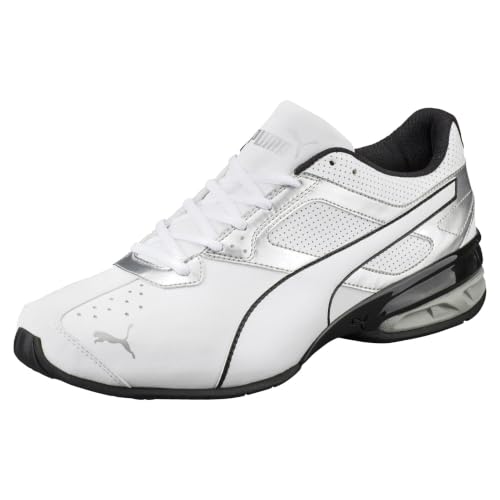
The built-in TPU shank enhances stability and motion control, so your foot stays balanced during gym workouts and cross training routines. The integrated EVA heel pod helps absorb shock on impact, which reduces joint stress during high-impact training. Those who want a secure, locked-in fit for workouts, gym sessions, and all-day wear will appreciate what this shoe offers.
At 0.8 pounds per shoe, this is not the lightest option for fast-paced cardio or agility drills. The built-in TPU shank support and EVA heel pod cushioning add stability and shock absorption, which makes the weight a fair trade-off for gym work that demands a secure, controlled platform. For pure sprint intervals or plyometric footwork, a lighter trainer might serve you better.
Product photos
K-Swiss Tubes 220 Training Shoe
What We Like
- Breathable mesh upper for airflow
- OrthoLite liner manages moisture
- Patented Tubes cushioning for responsive support
- Extra wide width for stability
Trade-offs
- Not designed for heavy powerlifting stability
- Lacks a flat, stable platform for Olympic lifts
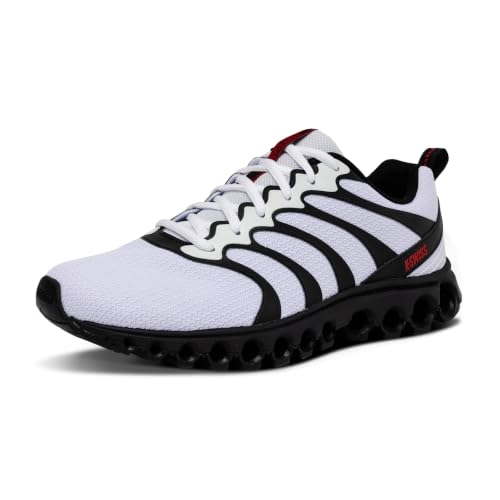
The K-Swiss Tubes 220’s lightweight textile mesh upper lets your feet breathe during even the sweatiest gym session, while the OrthoLite sock liner wicks moisture away to keep things dry. That breathable combo is what makes this shoe a standout for anyone who runs hot during circuits, cardio-heavy classes, or long training days. The patented Tubes cushioning system compresses and rebounds with each step, giving you responsive support without the heavy, clunky feel of some stability shoes. It’s a smart pick if you move between machines, free weights, and the treadmill and want airflow that doesn’t sacrifice structure.
The extra wide fit is a clear advantage for anyone with broad feet or who simply wants more toe room. If your foot runs narrow, you may want to try the shoe on first to see how it feels, as the fit is generous. Compared to the adidas Dropset Vario, the K-Swiss focuses on cushioning and airflow rather than a locked-down heel hold. It’s not the shoe for heavy deadlifts or squat sessions where a flat, rigid base matters more than breathability. For everyday gym-goers who value a cool, dry foot and stable support across varied workouts, this is a refreshingly practical choice.
Product photos
Nike Air Max Alpha Trainer 6
What We Like
- Tuned heel Max Air for stability
- Flat wide sole with rubber traction
- Foam collar pads ankle during moves
- Rubber side wrap for lateral support
Trade-offs
- At 1.0 lb, heavier than some trainers
- Flex grooves only in forefoot, not midsole
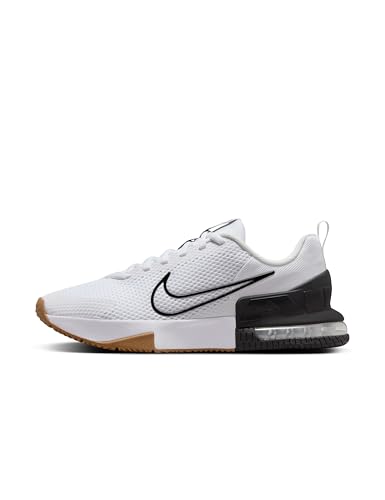
A wide, flat sole with an optimized rubber tread pattern gives you a planted feel during lifts and lateral moves, so you can focus on form without worrying about wobbling. The heel Max Air unit has been fine-tuned for better stability, while foam cushioning under both forefoot and heel softens impact. People who want a secure stance for heavier strength work or dynamic gym sessions will find padding that keeps their ankles comfortable from one rep to the next.
Weight is a factor here: at one pound, it feels denser than some other training shoes, which may matter if you prefer a lighter, more agile feel for quick cardio intervals. Also, the flex grooves are only in the forefoot, not the midsole, so the shoe prioritizes stability over full-foot bending. If your routine leans toward squats, presses, and lateral drills rather than explosive jumping, this tuned support makes the extra heft worthwhile.
Product photos
Drew Echo Cross Trainer
What We Like
- Strong nylon shank for arch support
- Slip-resistant rubber outsole for grip
- Extended medial heel stabilizer for motion control
- Available in widths up to 6E
Trade-offs
- Focused on stability over flexibility
- Narrower appeal for dynamic cross-training moves
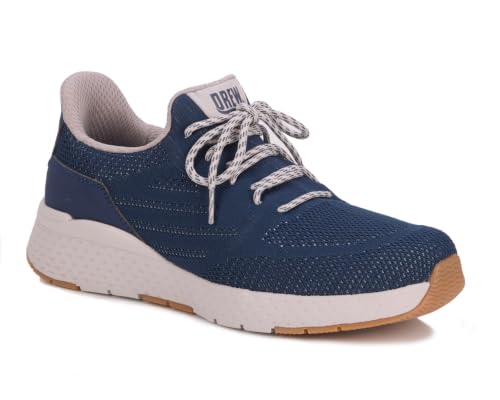
A strong nylon shank running through the midsole is the backbone of this shoe, giving you serious arch support that keeps your foot from collapsing under heavy loads. That makes the Drew Echo Cross Trainer a smart pick if you’re dealing with flat feet or just want a stable platform for lifting and walking. The Plus Fitting System with Walk Right Technology insole adds another layer of customized comfort. The slip-resistant rubber outsole and extended medial heel stabilizer work together to keep you planted during squats or on slick gym floors. It’s built for those who prioritize support and motion control over flashy features.
At just 1.7 pounds, these shoes are noticeably lighter than some other cross-trainers like the New Balance 608 V5, which weighs nearly a full pound less. That weight comes from the dense materials needed for that arch support and heel stability, so it’s a fair exchange if your main goal is steady support for walking, lifting, and standing. The strong nylon shank adds extra arch support, while the extended medial heel stabilizer and firm heel counter work together to control motion and minimize slippage. Reviewers note that the Plus Fitting System with Walk Right Technology insole helps the shoe conform well to the foot, making it feel more secure during long periods on your feet.
Product photos
How We Evaluated Gym Shoes For Support
We started by combing through the technical specs and design notes from major athletic brands. We looked for the structural elements that define real gym support: shank systems, heel counters, midsole density, outsole footprint, and lacing architecture. From there, we cross-referenced patterns in owner feedback to see which features actually held up under heavy loads and repetitive movement.
The four criteria that mattered most were sole stability (a flat, wide base for squats and deadlifts), motion control (torsional rigidity and heel lockdown), cushioning balance (enough shock absorption without sacrificing ground feel), and fit architecture (ankle collar height, toe box shape, and lacing adjustability). A shoe that scores on all four works across strength, conditioning, and lateral drills.
A research-led evaluation has limits, we did not put each shoe through a training cycle ourselves. But by triangulating engineering specs with what experienced lifters and trainers report, we can confidently point you toward the models that offer genuine support rather than marketing claims. For a deeper dive into the full evaluation process, our guide to picking gym shoes walks through every factor.
What To Look For In Gym Shoes For Support
Think of a supportive gym shoe as your training platform; it needs to be stable under load, secure around your foot, and matched to the movements you actually do. Here is what separates a solid foundation from a wobbly one.
A supportive gym shoe should have a flat, non-compressible sole for lifting, a secure heel lock that prevents slip, and enough torsional rigidity to resist twisting during lateral moves. Arch support and motion control features matter most if you overpronate or have flat feet.
Sole Stability And Platform Width
The most critical support feature for strength training is a sole that does not squish. Look for a flat, wide outsole with minimal heel-to-toe drop, ideally 4mm or less, that gives you a planted base for squats, deadlifts, and presses. A narrow or heavily cushioned sole forces your foot to work overtime to maintain balance under load.
Shoes like the adidas Dropset Vario and NOBULL Outwork High Shoe excel here because their outsoles are wide enough to spread force evenly. If you are comparing training shoe types, know that a dedicated lifting shoe offers the most rigid platform, while a cross trainer trades some stability for versatility.
Ankle Support And Heel Lockdown
Ankle support comes from two places: the collar height and the heel counter. A high-top design, like the NOBULL Outwork, physically wraps the ankle joint and limits excessive range of motion during heavy lifts. A well-structured heel counter, the stiff cup at the back of the shoe, prevents your heel from lifting inside the shoe during squats.
The lacing system matters here too. Look for a midfoot saddle or a cage that lets you cinch the shoe independently around your arch and ankle. The PUMA Voltaic Evo uses a dual-side lacing cage for this purpose, giving you a locked-in feel that does not loosen during lateral movements.
Arch Support And Motion Control
If your feet roll inward (overpronate) or you have flat arches, you need a shoe with a built-in shank or medial post that resists that motion. The Drew Echo Cross Trainer has a strong nylon shank and an extended medial heel stabilizer, making it one of the best options for those who need maximum arch support and motion control.
For a broader look at this category, our roundup of shoes for overpronation covers models designed specifically to correct excessive inward roll. Similarly, if you have flat feet, our list of workout shoes for flat feet highlights trainers with the structural support to keep your gait stable.
- Check if the shoe has a removable insole, this lets you swap in custom orthotics if you need more targeted arch support.
- Press the heel counter with your thumb, it should feel firm, not flimsy, and hold its shape.
- Twist the shoe from heel to toe, a supportive shoe should resist twisting, not bend like a rag.
- Try the shoe on with the socks you actually train in; a half-size up often works better for wide feet.
A supportive gym shoe should feel like an extension of your foot, not a pillow underneath it.
Gym Shoes For Support Compared
The table below compares each model’s support structure, best use case, and key trade-offs so you can see at a glance which shoe fits your training style.
| Product | Support Feature | Cushioning | Weight |
|---|---|---|---|
| adidas Dropset Vario Training Shoes | TPU midfoot torsion system | Repetitor Foam | N/A |
| NOBULL Outwork High Shoe | Flat & Stable Support | Phylon EVA midsole | 11.2 oz |
| NOBULL Women's Outwork High-Top Shoe | Flat & Stable Support | Phylon EVA midsole | 9.6 oz |
| New Balance 608 V5 Cross Trainer | Dual density collar foam | ABZORB heel crash pad | 0.9 pounds |
| New Balance Women's 608 V5 Cross Trainer | N/A | ABZORB heel pad + IMEVA midsole | 0.7 pounds |
| PUMA Voltaic Evo Cross Training Shoes | TPU toe cap & shank | 10CELL heel unit | N/A |
| PUMA Tazon 6 FM Cross Training Shoes | TPU shank | EVA heel pod | 0.8 lb |
| K-Swiss Tubes 220 Training Shoe | Stable Support | Patented Tubes system | N/A |
| Nike Air Max Alpha Trainer 6 | Tuned support | Foam midsole + Max Air heel | 1.0 lb |
| Drew Echo Cross Trainer | Extended medial heel stabilizer | N/A | 1.7 pounds |
Frequently Asked Questions
What is the difference between a cross trainer and a weightlifting shoe for support?
A cross trainer is designed for varied movement, running, jumping, lateral drills, so it offers moderate support with some heel cushioning and flexibility. A weightlifting shoe has a raised, non-compressible heel and a rigid sole that keeps your foot completely stable under heavy loads. If you do mostly strength work, a lifting shoe gives better support; if you mix cardio and weights, a cross trainer is more practical.
Do I need high-top shoes for ankle support in the gym?
Not always, but high-top shoes like the NOBULL Outwork High Shoe provide the most direct ankle stabilization for heavy squats and presses. For most gym-goers, a well-structured low-top with a firm heel counter and a secure lacing system offers enough support. High-tops are best if you have a history of ankle instability or lift very heavy weights regularly.
What does motion control mean in a gym shoe?
Motion control refers to features that limit excessive foot movement, especially overpronation (when your foot rolls inward too much). A motion-control shoe typically has a stiff heel counter, a medial post or shank, and a wide base. The PUMA Tazon 6 FM and Drew Echo are good examples, they resist twisting and keep your foot aligned during lifts and lateral movements.
Can I wear supportive gym shoes for running on the treadmill?
It depends on the shoe. Models like the New Balance 608 V5 have enough heel cushioning for light jogging and walking, but flat-soled lifting shoes like the adidas Dropset Vario offer minimal shock absorption. If you run more than a warm-up mile, look for a cross trainer with both support and cushioning. For a complete breakdown of versatile options, our roundup of all-around gym shoes covers trainers that handle both strength and cardio.
How do I know if I need arch support in my gym shoes?
If your feet feel tired or sore along the arch after standing or lifting, or if you notice your shoes wearing unevenly on the inner edge, you likely need more arch support. You can also do a wet-foot test, step on a piece of paper and check the imprint. A full footprint with little curve suggests flat feet that benefit from arch support shoes. Our guide to gym shoes with arch support lists models with built-in shanks and medial posts.
The Bottom Line
The adidas Dropset Vario Training Shoes earn the Best Overall spot for lifters who want a stable, breathable platform that handles heavy squats and deadlifts without sacrificing comfort. Its TPU torsion system and wide-fit base give you the ground connection you need for controlled strength work.
If you need locked-in ankle support under a heavy barbell, the NOBULL Outwork High Shoe is your best bet. For those on a budget or looking for plush cushioning across mixed workouts, the New Balance 608 V5 Cross Trainer delivers solid support without breaking the bank. Women with similar needs can check the New Balance Women’s 608 V5.
The single most important factor in choosing a supportive gym shoe is sole stability. A flat, wide, non-compressible base protects your joints and lets you transfer force cleanly through the floor, everything else is secondary.
