
10 Best Gyro Ball Hand Exercisers in 2026
This post contains affiliate links. As an Amazon Associate, we earn from qualifying purchases.
The Powerball 280Hz Autostart Classic is our Best Overall pick for its durable autostart design and quality hand assembly. The DFX Sports Lighted Gyro Exerciser Ball offers real-time LED feedback, while the NSD Spinner Gyro Ball with Counter tracks RPMs for data-driven training.
A gyro ball works by spinning an internal rotor, creating gyroscopic resistance that challenges your wrist, forearm, and grip muscles. The harder you spin, the more resistance you feel, making it a compact tool for strength and rehab.
We evaluated these gyro balls based on specifications, manufacturer details, and patterns in owner feedback to help you choose the right one. This guide covers ten models, from autostart designs to string-start options, so you can find the best fit for your routine.
Top 10 Gyro Ball Hand Exercisers in the Market
Certain content that appears on this site comes from Amazon. This content is provided "as is" and is subject to change or removal at any time.
The Best Gyro Ball Hand Exercisers, Reviewed
Powerball 280Hz Autostart Classic

What We Like
- Autostart design, no starter cord needed
- Indestructiball design for long-term durability
- Digital speed meter can be added later
- Hand-assembled for quality control
Trade-offs
- No built-in speed display (add-on sold separately)
- Recommended for ages 14 and up only
An autostart mechanism means you can jump straight into wrist and forearm training without fumbling with a starter cord. The Indestructiball construction promises years of use, which matters when you’re building a consistent grip routine. It’s a fantastic fit for athletes rehabbing from Carpal Tunnel or RSI, musicians needing finger dexterity, or anyone who wants a durable, no-fuss gyro ball that just works out of the box. The hand-assembled build is a detail that some buyers appreciate for quality control.
The trade-off is that there’s no built-in digital speed meter, so you’ll need to buy the add-on if you want to track RPMs. If you care more about smooth autostart convenience and a nearly unbreakable shell than counting every rotation, this is the better daily driver. It’s a simple, well-built choice that doesn’t try to do too much.
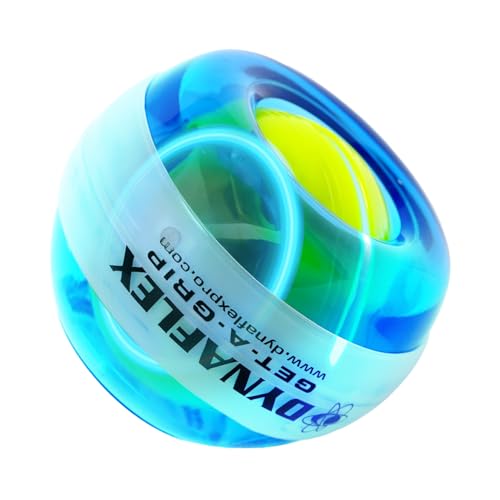
DFX Sports Lighted Gyro Exerciser Ball
What We Like
- Real-time LED feedback as speed increases
- Joint-friendly strength training up to 40 lb
- Compact and portable for on-the-go use
- Versatile for training, rehab, or gaming
Trade-offs
- No autostart: requires manual spin to begin
- LED intensity tied to speed, not adjustable
- No digital counter for tracking reps or RPM
The built-in blue LED lights that brighten as you spin faster give you instant visual feedback on your effort, so you can see when you’re pushing hard without needing a separate screen or counter. With dynamic resistance climbing to 40 lb, this gyro ball suits anyone who wants progressive wrist and forearm training without the joint impact of dumbbells or bands. It is listed for versatile use including training, rehab, or gaming, making it a reasonable option for building grip endurance while keeping rehab gentle on the elbows and wrists.
The DFX Sports Lighted Gyro Exerciser Ball delivers dynamic resistance that climbs up to 40 lb as you spin faster. That means your wrist and forearm get a progressive workout without the joint impact of traditional weights. Built-in blue LED lights glow brighter with speed, giving you real-time visual feedback instead of a digital readout. That trade-off means you rely on the LEDs to gauge effort rather than tracking RPM or reps, but the joint-friendly design makes it a practical rehab or training tool for gamers, musicians, and athletes.
Product photos
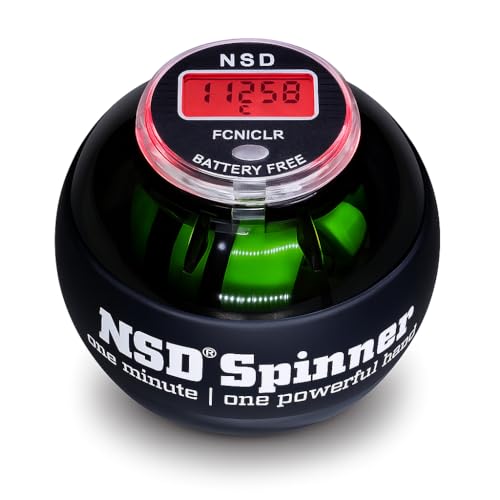
NSD Spinner Gyro Ball with Counter
What We Like
- Built-in speedometer tracks RPMs
- Thumb-wind start, no string or battery needed
- Stop control for smooth transitions between sets
- Stable, vibration-free performance from military-grade materials
Trade-offs
- Requires basic grip strength to operate effectively
- No battery or string means no backup power option
The built-in speedometer that monitors RPMs up to 18,000 is the standout feature here, turning each session into a mini performance check. That means you can actually see your progress as you build grip and forearm strength, which is motivating for anyone who likes data. It’s ideal for athletes, climbers, or rehab users who already have some hand strength and want to track their output, not just spin a ball in the dark. The thumb-wind start keeps things simple, no strings to fumble with and no batteries to hunt for, so you can jump right into a workout.
The thumb-wind start on this gyro ball means you have to actively engage your hand and wrist to get it spinning, so it’s not a grab-and-go device for someone with very limited hand strength. Once you wind the wheel and release it, rotating your wrist builds up to 18,000 RPM and 24.9 lbs of resistance, which translates into serious forearm and grip work. The stop control lets you reverse the rotor to halt instantly, making it easy to manage reps between sets. For anyone ready to put in the effort, this is a durable tool that tracks your power with a built-in speedometer.
Product photos
PBLX 10000 Gyro Ball Hand Exerciser

What We Like
- Compact polycarbonate sphere for easy grip
- No batteries or motor needed
- Helps prevent repetitive strain injuries
Trade-offs
- Requires manual start, no autostart feature.
The rotor inside this compact polycarbonate sphere can spin to nearly 9,000 RPM, generating up to 32 pounds of gyroscopic force that works your wrist, grip, and arms. Because the outer ball stays still and there is no motor or battery, you can use it anywhere without worrying about power. At half a pound and roughly the size of a small apple, it fits easily in a bag or desk drawer.
For steady strengthening and injury prevention, the 9,000 RPM range is plenty for most people. If you want a model with a digital counter to track your reps, the NSD Spinner Gyro Ball with Counter offers that feature. The PBLX 10000 keeps things simple and effective, perfect for daily use without extra frills.
Product photos
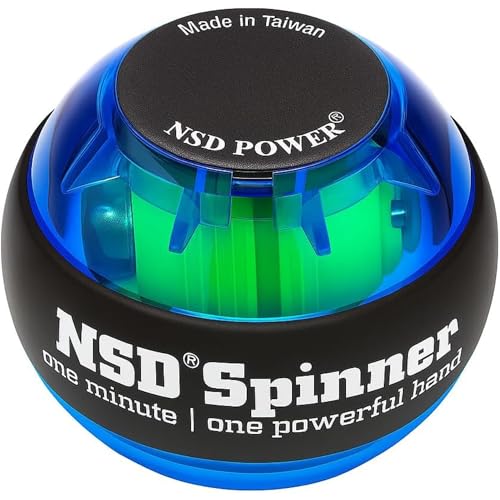
NSD Essential Spinner Gyro Ball
What We Like
- String start needs no batteries
- Zinc rotor and stainless steel axle
- Modular design for easy cleaning
- Targets forearms, wrists, and hands
Trade-offs
- String start takes practice to master
- No built-in counter or LED lights
Pulling the string to hit up to 15,000 RPM and over 26.8 lbs of gyroscopic resistance means you get a serious forearm burn without ever plugging anything in. That string-start design is the whole point here: no batteries, no switches, just a quick yank and the rotor spins up fast. It suits anyone who wants a no-fuss strength tool for desk fatigue, athletic grip work, or finger dexterity practice, especially if you appreciate a bit of old-school ritual over push-button convenience.
The string start takes a few tries to get smooth, and you won’t find a digital counter or flashy lights to track your reps. If you prefer a model with a counter, the NSD Spinner with Counter offers that convenience for a similar build. But for raw torque and a durable zinc rotor wrapped in a military-grade shell, this one delivers a straightforward, battery-free challenge that keeps your hands honest.
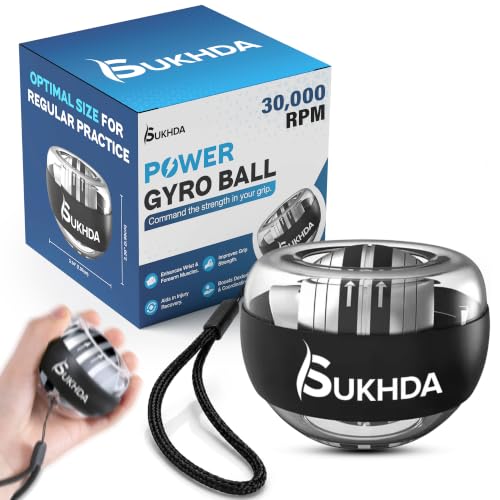
SUKHDA Power Gyro Ball
What We Like
- Self-starting rotor needs no batteries
- Compact and travel-friendly design
- Includes wrist strap for security
Trade-offs
- Resistance depends entirely on your spinning speed
- No digital counter or LED lights
- Tool only: no battery or charger included
The self-starting rotor eliminates the need for batteries or charging, so the device is ready whenever you are. A simple wrist flick activates the gyroscopic mechanism, and resistance builds naturally as spin speed increases. This design supports progressive muscle training for the hands, wrists, and forearms without requiring external power sources or startup accessories like strings. Users can keep it in a gym bag or office drawer and begin a session in seconds.
Because the resistance changes with how fast you spin the rotor, you have to stay engaged to feel the heavier end of that 77 lb range. That’s fine for focused sessions, but if you prefer a more predictable load, the DFX Sports Lighted Gyro Exerciser Ball offers a fixed 40 lb resistance with LED lights. The SUKHDA also skips extras like a counter or lights, keeping things simple and built from polycarbonate, silicone, and zinc alloy. If you’re okay with that hands-on approach and want a tool that adapts to your spinning speed, this one delivers real versatility.
Product photos
Aurellorzo Torque Ball Hand Exerciser

What We Like
- Auto-start gyro technology for easy activation
- Real-time digital tracking of RPM and time
- Portable and ergonomic non-slip silicone grip
- Versatile for athletes, musicians, and seniors
Trade-offs
- Battery and charger sold separately (tool only)
- No counter on models without LCD display
The self-powered LCD counter on this torque ball tracks RPM, training time, and estimated energy expenditure without needing batteries, so you can monitor your grip strength progress after every session. That real-time feedback suits people recovering from an injury or training for a sport like golf or rock climbing. The auto-start gyro technology means no fumbling with pull cords, just press and twist to get the internal rotor spinning, which keeps your workout flowing smoothly.
The Aurellorzo Torque Ball Hand Exerciser uses auto-start gyro technology, so you just press the inner ball with your thumb and twist to activate it, no pull cord needed. Its self-powered LCD counter tracks RPM, training time, and estimated energy expenditure without any batteries, which means the display works immediately. Compared to the NSD Spinner with Counter, which requires a manual thumb wind start, this model offers a simpler startup process while still providing a counter for tracking progress.
Product photos
Planet Waves PW-DFP-01 Gyro Ball Hand Exerciser

What We Like
- Lightweight at 0.4 pounds
- Designed for pre-show warm-up
- Improves hand speed and endurance
- Exercises hands, wrists, forearms
Trade-offs
- Docking station not included
- Larger footprint than compact gyro balls
- No auto-start or counter feature
Weighing 0.4 pounds, this hand exerciser is lighter than several other gyro balls in this guide, such as the Powerball 280Hz Classic at 0.6 pounds and the NSD model with Counter at 0.6 pounds. That lower weight makes it easy to carry in a pocket or small bag for quick use before a performance or practice session. The feature list highlights pre-show warm-up as a primary use, along with improving hand speed and endurance, so it is designed to prepare your hands without causing fatigue.
This model keeps things simple. The docking station is not included, so you will need to start the ball manually each time, and there is no built-in counter or LED lights. Compared to the NSD Spinner with Counter, which tracks RPMs, the Planet Waves model focuses on a straightforward warm-up tool. If you want a lightweight option for pre-show preparation, this fits that need. For those who prefer auto-start or performance tracking during longer training sessions, another option may suit you better.
Product photos
GOZATO Auto-Start Wrist Power Gyro Ball

What We Like
- Auto-start design eliminates string hassle
- LED lights powered by rotation, no batteries needed
- Silicone grip helps prevent slipping
- Compact 2.8-inch size fits most hands
Trade-offs
- Battery and charger sold separately if needed
- No digital counter for tracking spin speed
The auto-start design means you just twist your wrist to get the gyro spinning, no string to fumble with. The LED lights inside glow as the rotor turns, powered by the motion itself, so there’s no battery to replace. The silicone grip helps keep the ball steady in your hand during use. At 2.8 inches across and 0.6 pounds, it’s compact enough to toss in a bag for quick sessions anywhere.
There’s no built-in counter to show RPM or total spins, so you’ll have to judge speed by feel or use an external timer if you want to track progress. The NSD Spinner with Counter does include a display, but it requires a manual thumb-wind start rather than the auto-start here. For someone who just wants a straightforward gyro ball with LED lights and doesn’t need spin data, this model keeps things simple.
FREEZE2TRIM Vital Wrist Ball Exerciser

What We Like
- Zinc alloy rotor for smooth spinning
- Progressive resistance adapts to speed
- Compact size fits in a desk drawer
- Includes wrist strap for secure grip
Trade-offs
- Requires baseline hand strength to wind rotor
- Manual thumb wind start takes 2-3 tries
- No autostart or counter for tracking reps
A zinc alloy rotor shaft gives this gyro ball a noticeably smooth spin. That means less friction and more consistent resistance as you build speed. The progressive resistance, the faster you rotate your wrist, the harder the gyroscopic force pushes back, makes it a smart pick for anyone who wants to gradually strengthen their grip, forearm, and wrist without jumping to a heavier spring-loaded device. It’s especially suited for climbers, musicians, or desk workers who need a compact tool that fits in a bag and can be used in short daily sessions. The manual thumb wind start is a bit of a ritual, but once you get the hang of it, the payoff is a workout that scales naturally with your effort.
Winding the rotor requires some baseline hand strength, so if you’re recovering from an injury or have very weak grip, the initial learning curve might frustrate you. Compared to the NSD Essential Spinner Gyro Ball, which uses a string start, this FREEZE2TRIM model demands more deliberate setup. But that same manual start also means no batteries or autostart mechanisms to fail, and the zinc rotor holds up well over time. It’s a straightforward, durable tool for someone ready to put in a few tries to get it spinning, then let the gyroscopic resistance do the work.
Product photos
How We Evaluated Gyro Ball Hand Exercisers
Our evaluation focused on three main areas: start mechanism, build quality, and feedback features. We looked at how each model gets the rotor spinning, the materials used in construction, and whether it offers counters, lights, or other tracking tools.
The start mechanism matters most because it determines ease of use. Autostart models like the Powerball 280Hz are ready to go with a simple twist, while string-start and thumb-wind options require more dexterity. We also considered durability, with zinc rotors and stainless steel axles indicating longer life.
This evaluation has limits. Instead of testing these models, we relied on manufacturer documentation and patterns in user feedback to identify strengths and trade-offs. For more context, our comprehensive guide to hand exercisers covers additional tools for grip and wrist training.
What To Look For In Gyro Ball Hand Exercisers
Choosing a gyro ball comes down to how you want to start it, what feedback you need, and how much durability you expect. Here are the key criteria to consider.
A gyro ball works by spinning an internal rotor; the faster it spins, the more resistance you feel. Look for a start mechanism that matches your grip strength and a build quality that will last.
Start Mechanism
Start mechanisms fall into three types: autostart, string start, and thumb wind. Autostart models, like the Powerball 280Hz, use a twist motion to engage the rotor without extra tools. String-start models require a cord to be wound around the rotor and pulled, which takes practice. Thumb-wind models rely on spinning the rotor with your thumb, demanding baseline hand strength.
Feedback and Tracking
Some gyro balls include built-in speedometers, LED lights, or digital counters to show RPM and workout time. The NSD Spinner Gyro Ball with Counter tracks RPMs, while the DFX Sports Lighted model uses LEDs that brighten as speed increases. If you want to monitor progress, choose a model with a display. If you prefer a simple workout, a basic model without tracking works fine.
Build Quality and Materials
Durable construction means a longer-lasting tool. Look for zinc rotors, stainless steel axles, and polycarbonate spheres that resist cracking. Hand-assembled models, like the Powerball, often have tighter quality control. Silicone grips on models like the GOZATO Auto-Start help prevent slipping during use.
- Check the start mechanism: autostart is easiest, string start needs practice, thumb wind requires grip strength.
- Decide on feedback: want RPM tracking, LED lights, or a simple workout without extras?
- Look for durable materials: zinc rotors and stainless steel axles last longer than plastic parts.
- Consider size: most gyro balls are about 2.5 to 3 inches in diameter, but some are larger.
A good rule of thumb: if you are new to gyro balls, start with an autostart model. You can always upgrade to a string-start or tracked version later.
Gyro Ball Hand Exercisers Compared
The table below compares the ten gyro ball hand exercisers across key features to help you see the differences at a glance.
| Product | Weight | Start Type | Resistance |
|---|---|---|---|
| Powerball 280Hz Autostart Classic | 0.6 lb | Autostart (no cord) | N/A |
| DFX Sports Lighted Gyro Exerciser Ball | N/A | Requires spin to activate | Dynamic up to 40 lb |
| NSD Spinner Gyro Ball with Counter | 0.6 pounds | Thumb-wind, spring-loaded | 24.9 lbs |
| PBLX 10000 Gyro Ball Hand Exerciser | 0.5 lbs | N/A | 32 lbs |
| NSD Essential Spinner Gyro Ball | 0.6 pounds | String pull | 26.8 |
| SUKHDA Power Gyro Ball | N/A | Self-starting | 15-77 lbs |
| Aurellorzo Torque Ball Hand Exerciser | 0.7 lbs | Auto-Start (no pull cord) | N/A |
| Planet Waves PW-DFP-01 Gyro Ball Hand Exerciser | 0.4 pounds | N/A | N/A |
| GOZATO Auto-Start Wrist Power Gyro Ball | 0.6 lb | Auto-start (no string) | N/A |
| FREEZE2TRIM Vital Wrist Ball Exerciser | 0.5 pounds | Manual thumb wind | N/A |
Frequently Asked Questions
What is a gyro ball hand exerciser?
A gyro ball is a spherical device with an internal rotor that spins to create gyroscopic resistance. As you rotate your wrist to keep the rotor spinning, the resistance increases, working your forearms, wrists, and grip. It is used for strength training, rehab, and improving dexterity.
How do you start a gyro ball?
Starting a gyro ball depends on the model. Autostart versions use a twisting motion to engage the rotor. String-start models require winding a cord around the rotor and pulling it. Thumb-wind models need you to spin the rotor with your thumb. Some models, like the Powerball 280Hz, make starting effortless.
Can a gyro ball help with wrist pain?
A gyro ball can help strengthen the muscles around the wrist, which may reduce strain during daily activities. It is sometimes used in rehab for conditions like carpal tunnel or repetitive strain injuries. However, if you have chronic wrist pain, consult a doctor before starting any exercise routine.
How fast does a gyro ball spin?
Gyro balls can reach speeds of several thousand RPM, depending on the model and your effort. Faster spinning creates more resistance, which builds forearm and grip strength. Some models include a speedometer to track your RPM, while others rely on feel.
What is the difference between a gyro ball and a hand gripper?
A gyro ball uses gyroscopic resistance that changes with spin speed, working your wrist, forearm, and grip dynamically. A hand gripper targets grip strength with a static squeeze motion. Gyro balls are better for wrist mobility and endurance, while grippers focus on crushing strength. Our guide on grip strengtheners explains the differences further.
The Bottom Line
The Powerball 280Hz Autostart Classic is our Best Overall pick for anyone wanting a durable, easy-to-use gyro ball without extra frills. Its autostart design and hand-assembled build make it a reliable choice for everyday wrist and hand strengthening.
If you want real-time feedback, the DFX Sports Lighted Gyro Exerciser Ball shows LED lights that brighten as you spin faster. For tracking RPMs, the NSD Spinner Gyro Ball with Counter offers a built-in speedometer. Budget-minded shoppers can look at the PBLX 10000 for a battery-free option.
The single most important factor is the start mechanism. Choose an autostart model for convenience, a string-start for torque, or a thumb-wind for a compact, battery-free trainer. For more on building grip strength, check out our effective grip strength trainers guide.
