
10 Best Lifting Belts in 2026
This post contains affiliate links. As an Amazon Associate, we earn from qualifying purchases.
The Dark Iron Fitness Genuine Leather Weightlifting Belt is the best overall lifting belt because it combines durable double-row reinforced stitching with 12 adjustment holes for a precise fit. For lifters who want a quick-release lever, the IBRO Powerlifting Lever Belt is our top lever pick, while the SBD 13mm Powerlifting Lever Belt delivers maximum competition-level support.
Choosing the right belt comes down to how you train. A prong belt offers fine-tuned adjustments between sets, while a lever buckle locks consistent tension for heavy work. Leather belts need a break-in period but mold to your body over time, whereas nylon belts are ready to go immediately.
This guide is based on manufacturer specifications, expert round-ups, and patterns in owner feedback across dozens of models. We focused on buckle type, thickness, width, materials, and competition approvals to help you match the right belt to your training style.
Top 10 Lifting Belts in the Market
Certain content that appears on this site comes from Amazon. This content is provided "as is" and is subject to change or removal at any time.
The Best Lifting Belts, Reviewed
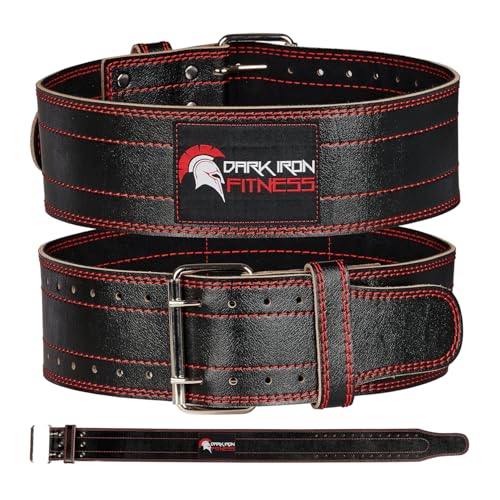
Dark Iron Fitness Genuine Leather Weightlifting Belt
What We Like
- Double-row reinforced stitching for durability
- 12 adjustment holes for precise fit
- Keeper loop secures excess belt length
- Genuine leather contours to body
Trade-offs
- Double-prong buckle slower than quick-release lever
- Leather requires break-in period for full comfort
A 4-inch width and genuine leather construction give this belt a balanced feel that works for squats, deadlifts, and other heavy lifts without digging into your ribs. The double-row stitching and reinforced build mean it can handle heavy loads session after session, while the 12 adjustment holes let you dial in the fit precisely around your natural waist. It is a versatile option for lifters who want one belt that provides core support for powerlifting, CrossFit, and strength training.
If you prefer a quicker fastening system, a lever model like the IBRO Powerlifting Lever Belt might be a better fit. But for most lifters, the secure hold and precise fit from the 12 adjustment holes make this a practical daily choice for consistent training.
Product photos
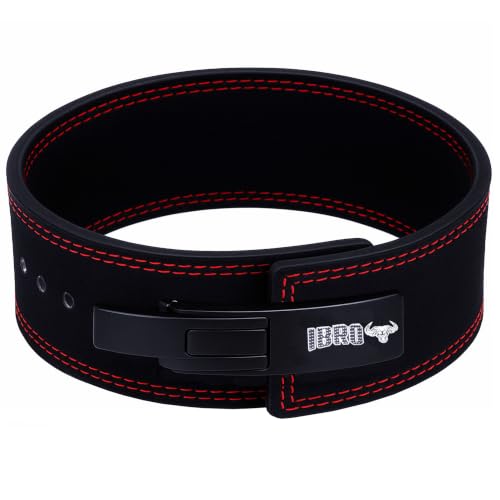
IBRO Powerlifting Lever Belt
What We Like
- Steel lever buckle for consistent tightness
- Three thickness choices for different needs
- Double-stitched genuine leather holds shape
- Easy 2-minute setup with sizing guide
Trade-offs
- Arrives unassembled, requires Phillips screwdriver
- Lever screws need checking before each session
- Sizing can be tricky if waist falls between two sizes
The steel lever buckle on this belt clamps to the exact same tightness every time and opens in one motion between sets. IBRO offers three thickness options, 8mm, 10mm, or 13mm, so you can pick the stiffness that matches your experience and goals. The genuine leather core with double stitching holds its shape well, softening slightly after a few sessions without rolling or folding. That means you get consistent support set after set, whether you are squatting, deadlifting, or benching.
The trade-off is setup: the belt arrives unassembled, and you will need a Phillips screwdriver (not included) to mount the lever. You also need to tighten those lever screws firmly and check them before every session. For someone who values the quick-release convenience and repeatable fit of a lever system, that small effort is well worth it.
Product photos
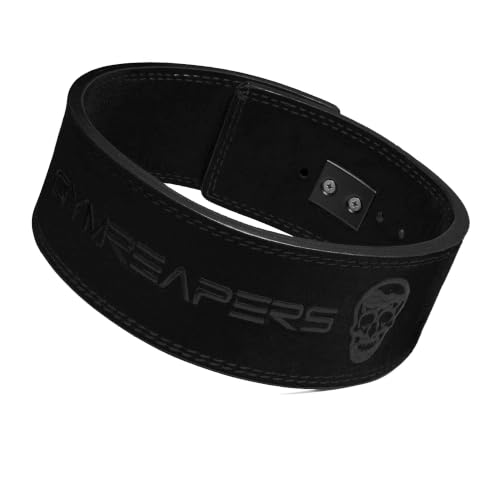
Gymreapers 10MM Lever Weightlifting Belt
What We Like
- 10mm thick bovine leather for core stability
- Steel lever buckle holds without slipping
- 3.9-inch width for torso wrap
Trade-offs
- Lever buckle limits quick size adjustments between sets
- Requires a tool to adjust tension mid-session
At 10mm thick and 3.9 inches wide, this belt delivers rigid support that helps you brace hard against heavy squats and deadlifts. The premium bovine leather with suede exterior provides a structured feel that synthetic belts often lack.
The trade-off with a lever buckle is convenience versus flexibility. Once you set the tension, it stays locked through your whole session, but if you need to loosen or tighten between exercises, you are reaching for a tool rather than just pulling a strap. That makes it less ideal for lifters who want to adjust their belt tightness between squats and deadlifts.
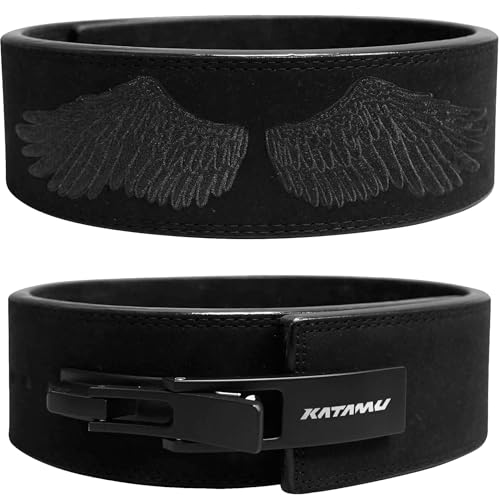
Katamu Black Out Wings 10mm Lever Weightlifting Belt
What We Like
- USPA & IPL competition approved
- Steel lever locks same tension every set
- Reinforced stitching at stress points
- 10mm breaks in faster than 13mm
Trade-offs
- Lever requires mini screwdriver to adjust fit
- Too rigid for beginners who prefer a soft belt
A 10mm leather belt with USPA and IPL approval means you can walk into a sanctioned meet knowing your gear won’t get flagged. The steel lever buckle clamps to the same tension every time you tighten it, so you don’t waste a set fiddling with prong holes. That consistency is exactly what you want when every rep matters. The 4-inch width gives you a solid wall to brace your abs against, building the intra-abdominal pressure that protects your lower back on squats and deadlifts. It’s built from thick leather with reinforced stitching at every stress point, so it holds its shape under heavy loads and molds to your body as it breaks in. For lifters who compete or train seriously, this belt is a straightforward choice that covers the essentials without extra fluff.
The Katamu Black Out Wings 10mm Lever Weightlifting Belt uses a steel lever buckle that clamps to the same tension every set and releases instantly between sets. Adjusting the lever fit requires a mini screwdriver, not a quick twist of a dial. You set it once and it stays, but if you share the belt or change your preferred tightness between squat and deadlift day, that’s an extra step compared to a prong buckle like the Dark Iron Fitness belt. For most powerlifters and general strength athletes, though, the Katamu delivers rigid support that locks in fast and stays put set after set. It’s a no-nonsense lever belt built to last through years of heavy training.
Product photos
Iron Bull Strength PowerLifting Belt

What We Like
- IPF, USAPL, USPA, IPL approved
Trade-offs
- Leather requires break-in for full comfort.
An IPF certification means this belt meets the strict standards powerlifting federations use at competitions, so you can walk onto any platform confident your gear won’t get flagged.
Compared to the Gymreapers 10mm lever belt, the Iron Bull gives you that same IPF approval but with a traditional double-prong feel that some lifters prefer for micro-adjustments.
RDX IPF Compliant Powerlifting Belt

What We Like
- Two thickness choices (10mm and 13mm)
- 12 adjustment holes for custom fit
- Reinforced roller buckle stays locked
Trade-offs
- Dual-prong buckle is slower than a lever buckle
- 13mm version is very stiff for new lifters
With both 10mm and 13mm thickness options, this RDX belt lets you match support to your training style. The 13mm adds extra rigidity for max-effort squats and deadlifts, while the 10mm offers a touch more flexibility for volume work or warm-ups. The 12 adjustment holes make dialing in the fit straightforward, and the dual-prong roller buckle holds tight through the whole session, no mid-lift surprises.
SBD 13mm Powerlifting Lever Belt
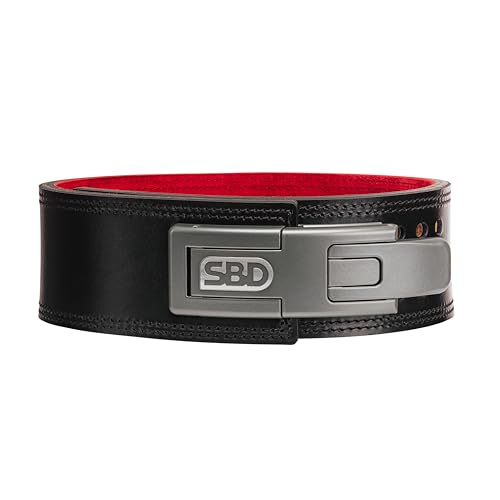
What We Like
- 13mm thickness delivers max competition support
- Patented Gliding Lever for quick adjustments
- Four-layer British leather molds to waist
Trade-offs
- 13mm thickness feels stiffer than 10mm belts
- Lever closure limits fine-tuned fit adjustments
- Premium materials make it a heavy-duty investment
A 13mm thickness and 10cm width make this belt the strongest support allowed in competition, trusted by elite lifters for squats, deadlifts, and bench press. The patented Gliding Lever combines the adjustability of a prong belt with the tight, secure lock of a lever belt, so you can make quick changes between training sets or competition attempts. Constructed from four layers of British leather and suede, it delivers unmatched strength while molding naturally to your waist over time. If you want a competition-ready belt that provides maximum powerlifting support, this is a straightforward choice.
A 13mm belt is stiffer than 10mm options like the Gymreapers 10mm Lever Belt, which some lifters prefer for daily training. The lever closure also limits fine-tuned fit adjustments compared to a prong belt, so you need to find your size carefully using the guide. But for anyone who wants the strongest support allowed in competition, that stiffness and secure lock are exactly what makes this belt a premium investment.
Product photos
Element 26 Self-Locking Weight Lifting Belt
What We Like
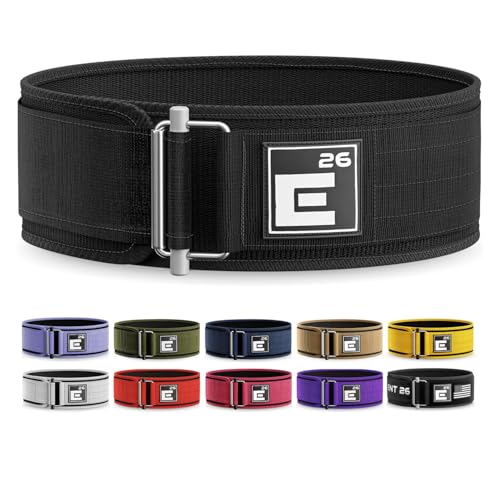
- Self-locking buckle engages automatically under load
- Infinitely adjustable for precise pressure control
- Breathable nylon resists sweat retention
- No break-in period required
Trade-offs
- 0.6 lb nylon belt offers less rigidity than leather belts
- 4-inch width offers less coverage for larger lifters
The full metal self-locking buckle engages automatically under load, so you get secure support during heavy squats, deadlifts, and cleans without worrying about the belt slipping. That single feature makes this nylon belt a standout for anyone who wants quick, secure adjustments between sets without fumbling with a prong or lever. Designed by a doctor of physical therapy, the pliable nylon conforms to your core right out of the box, creating consistent intra-abdominal pressure without any break-in period. It meets requirements for sanctioned Olympic lifting competitions and functional fitness events, making it a suitable choice for gym-goers who train across multiple disciplines.
The lightweight nylon construction (0.6 pounds) does not offer the same heft as a leather belt such as the Dark Iron Fitness Genuine Leather Weightlifting Belt, which weighs 1.5 pounds and uses a double prong buckle. For those who prefer a heavier, stiffer belt for maximal loads, that extra mass can provide a different feel. But if you value speed, comfort, and a belt that folds up easily into your gym bag, the Element 26 delivers a practical solution that many leather alternatives cannot match in portability. It is a smart pick for dynamic workouts where you need to reposition quickly between sets.
Product photos
RDX Cowhide Leather Weight Lifting Belt

What We Like
- Genuine cowhide leather construction
- Wide padded back for lumbar support
- Dual-prong roller buckle prevents slipping
- Suede inner lining for comfort
Trade-offs
- 7 mm thickness offers less rigidity than thicker belts
- Sizing requires careful measurement, not pant size
A 7 mm genuine cowhide leather belt with a wide padded lumbar section means you get bracing support during squats, deadlifts, and other gym exercises. The suede inner lining helps reduce chafing. The dual-prong roller buckle with ten adjustment holes lets you dial in the fit precisely, so you can focus on your form rather than fidgeting with your gear.
Seven mm leather won’t provide the same rigidity as thicker belts like the Gymreapers 10 mm lever model, which is designed for competition-level use. For lifters who train in the moderate-to-heavy range and want a padded, comfortable belt, this offers a balance of support and flexibility. Just be sure to measure around your belly button, not your pant size, to get the right fit.
Jaffick Leather Weight Lifting Belt

What We Like
- 6-inch widened design for extra support
- Double-sided leather for strength and durability
- Suede lining adds comfort and padding
- Reinforced top stitching for long-term use
Trade-offs
- Adjustable buckle can be slower to adjust than lever belts
- No prong or lever quick-release mechanism
A 6-inch widened leather belt gives you noticeably more lower back coverage than the standard 4-inch designs most lifters use. The double-sided leather construction with reinforced top stitching is built to withstand high-strength use for years, and the suede lining is designed to protect your skin and provide firm back support. If you want extra support for your back and abdomen during weightlifting, this belt is a practical option.
The 6-inch width can feel restrictive during movements where you need to bend at the hips, such as deadlifts. A belt with a 4-inch width, like the Dark Iron Fitness Genuine Leather Weightlifting Belt, is preferred by some lifters for pulling exercises. The adjustable buckle sizing is straightforward, but it takes a few seconds longer to fasten than a lever system. This belt is best for lifters who want maximum back support and are willing to accept a little less flexibility in exchange for that extra coverage.
Product photos
How We Evaluated Lifting Belts
We reviewed specifications from manufacturers, studied expert recommendations from strength coaches, and analyzed patterns in thousands of owner reviews to understand what makes a belt effective for different training goals. Our evaluation focused on the features that directly affect performance and comfort under a heavy barbell.
The three most important criteria were buckle mechanism, thickness, and material quality. A lever buckle provides consistent tension but limits mid-session adjustments, while a prong buckle offers more flexibility. Thickness determines support level, 10mm suits most general training, while 13mm is standard for competition. Genuine leather molds to your body but requires break-in, and nylon offers breathability with less rigidity.
A research-based evaluation has honest limits. Instead of testing these belts under a barbell, we cross-referenced technical specs with what experienced lifters consistently report about fit, durability, and real-world performance. For more detail on how these factors interact, our comprehensive guide to lifting belts covers the full picture.
What To Look For In Lifting Belts
A lifting belt is a simple tool, but picking the wrong one can mean discomfort, poor support, or wasted money. Focus on buckle type, thickness, width, and material to find the belt that matches your training.
Choose a lever buckle for consistent tension during heavy sets, a prong buckle for fine adjustments, or a self-locking nylon buckle for quick changes. Pick 10mm thickness for general training and 13mm for competition-level support. Match belt width to your torso length, wider is not always better if it digs into your ribs or hips.
Buckle Mechanism
The buckle determines how quickly you can get in and out of the belt and how precisely you can adjust tension. Lever buckles, found on lever lifting belts, lock at a single setting and provide the same tightness every set, ideal for competition lifts where consistency matters. Prong buckles let you micro-adjust between exercises, which helps when switching from squats to deadlifts. Self-locking nylon buckles engage automatically under load and release instantly, making them the fastest option for functional fitness.
Thickness and Width
Thickness directly affects how much intra-abdominal pressure the belt can help you create. Standard powerlifting belts come in 10mm and 13mm options. A 10mm belt offers a good balance of support and flexibility for most lifters, while 13mm is stiffer and preferred for maximal-effort competition lifts. Width typically ranges from 4 to 6 inches, wider belts distribute pressure over a larger area but can limit hip mobility for deadlifts. A 4-inch width works well for shorter torsos, while 6-inch belts provide maximum lower back support.
Material and Construction
Genuine leather is the standard for serious lifting belts because it holds its shape and molds to your body over time. Leather belts require a break-in period of several sessions before they become comfortable, but they last for years with proper care. Nylon belts are lighter, breathable, and require no break-in. They are a reasonable choice for CrossFit and Olympic lifting where you move through a wider range of motion. Look for reinforced stitching at stress points and a suede or padded inner lining for comfort.
- Measure your waist at the navel level, not your pant size, to find the right belt length
- Check competition approval (IPF, USPA, IPL) if you plan to compete
- Ensure the belt width does not dig into your lower ribs or hip bones when you sit into a squat
- Look for a keeper loop or strap to secure excess belt length on prong models
A belt should feel snug but not painful when you brace, if you cannot take a full breath, it is too tight.
Lifting Belts Compared
The table below compares the key specs of each belt so you can see at a glance how thickness, buckle type, and competition approvals stack up against each other.
| Product | Material | Width | Closure |
|---|---|---|---|
| Dark Iron Fitness Genuine Leather Weightlifting Belt | 100% genuine leather | 4.0 inches | Double-prong metal lever buckle |
| IBRO Powerlifting Lever Belt | Genuine leather with suede finish | 4 inches | Quick-release steel lever buckle |
| Gymreapers 10MM Lever Weightlifting Belt | Premium bovine leather | 3.9 inches | 100% Camac steel lever |
| Katamu Black Out Wings 10mm Lever Weightlifting Belt | Premium leather | 4 inches | Steel lever buckle |
| Iron Bull Strength PowerLifting Belt | Single-cut suede leather | 4 inches | Double prong |
| RDX IPF Compliant Powerlifting Belt | Genuine cowhide leather, multi-layer | 4 inches | Dual-pronged roller buckle |
| SBD 13mm Powerlifting Lever Belt | Premium British Cowhide Leather | 10cm | Patented Gliding Lever |
| Element 26 Self-Locking Weight Lifting Belt | 100% premium nylon | 4.0 inches | Full metal self-locking buckle |
| RDX Cowhide Leather Weight Lifting Belt | Genuine cowhide leather | 4" 6" | Dual-prong roller buckle |
| Jaffick Leather Weight Lifting Belt | Double-sided leather with suede lining | 6.0 inches | Adjustable buckle |
Frequently Asked Questions
What thickness lifting belt should I get?
Choose 10mm if you train for general strength, do Olympic lifts, or want a belt that breaks in faster. Pick 13mm if you compete in powerlifting or need maximum support for heavy squats and deadlifts. Beginners often find 10mm more comfortable to start with.
How should a lifting belt fit?
The belt should sit snugly around your waist, just above your hip bones, and allow you to brace your core against it. You should be able to take a full breath without the belt digging into your ribs. Most belts recommend measuring your waist at the navel for sizing.
When should you use a lifting belt?
Use a belt for heavy compound lifts where intra-abdominal pressure helps protect your spine, typically squats, deadlifts, overhead presses, and barbell rows above most of your one-rep max. For lighter warm-up sets or accessory work, a belt is not necessary. Our guide on when to use a belt covers the details.
Are lever belts better than prong belts?
Lever belts lock at a consistent tightness and are faster to take on and off between sets, making them popular for competition. Prong belts allow micro-adjustments between exercises, which is useful if you train multiple lifts in one session. Neither is inherently better, it depends on whether you prioritize consistency or flexibility.
Can I use a lifting belt for deadlifts?
Yes, but the ideal belt for deadlifts may differ from your squat belt. A tapered or narrower front allows better hip mobility at the starting position. Some lifters prefer a thinner belt or a 4-inch width for deadlifts to avoid restricting their setup. Check our recommendations for deadlift belts if deadlifts are your primary lift.
The Bottom Line
The Dark Iron Fitness Genuine Leather Weightlifting Belt earns the best overall spot because it delivers the durability and adjustability most lifters need, with a classic prong buckle that lets you fine-tune fit between exercises. It is the right choice for anyone building a home gym or starting a serious strength program.
If you prefer the consistent tension of a lever buckle, the IBRO Powerlifting Lever Belt offers thickness options and a steel lever that holds tight through a whole session. For competition-ready gear, the Gymreapers 10MM Lever Weightlifting Belt carries IPF approval and a 10mm bovine leather build that balances support with a manageable break-in.
The single most important factor is matching the buckle type to how you train. A lever belt rewards consistency, a prong belt rewards flexibility, and a nylon belt rewards speed, pick the one that fits your routine, not someone else’s.
