
9 Best Parallettes in 2026
This post contains affiliate links. As an Amazon Associate, we earn from qualifying purchases.
The Josmimic Adjustable Parallettes Bars earns our Best Overall award for its adjustable height range and 880 lb capacity, making it a versatile pick for push-ups, dips, and L-sits. For those wanting a rock-solid fixed base, the Teclor Steel Push Up Bar is the Best Stable Design. The Lebert Parallette Bars offer the Best Durable Steel Build for heavy-duty training.
Finding the right parallettes means balancing height, stability, weight capacity, and grip material. Too short and you lose range of motion for dips; too tall and handstands become unstable. The wrong grip can cause hand fatigue, and a wobbly bar ruins any hold.
This guide is built on manufacturer specifications, expert round-ups, and patterns in owner feedback. We evaluated nine models across four key criteria to help you match the right parallettes to your training style and space.
Top 9 Parallettes in the Market
Certain content that appears on this site comes from Amazon. This content is provided "as is" and is subject to change or removal at any time.
The Best Parallettes, Reviewed
Josmimic Adjustable Parallettes Bars
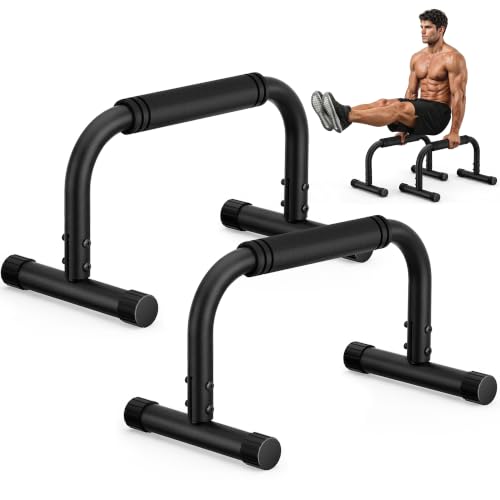
What We Like
- Adjustable 10-12.5 in height for varied exercises
- 880 lb capacity handles heavy bodyweight work
- Foam handles reduce palm and wrist pressure
- Non-slip rubber feet protect floors
Trade-offs
- Assembly required to change height setting
- 16.3 in length limits close-grip hand placement
An 880-pound weight capacity means these parallettes can handle just about any bodyweight movement you throw at them, from deep dips to planche holds, without wobbling. The adjustable height, 10 or 12.5 inches, lets you tailor the bar to your routine: lower for controlled push-ups, higher for deeper L-sits or tuck holds. That flexibility, paired with foam handles that ease pressure on your palms and wrists, makes them a smart pick for anyone building a home calisthenics setup who wants one pair of bars that does it all.
The trade-off is that changing the height requires disassembly and reassembly, so you won’t want to switch mid-workout. Compared to fixed-height options like the SNADER Wood Parallettes (12.8 inches, no adjustment), the Josmimic gives you two distinct settings but asks for a bit more setup time. The foam grips are comfortable for long sessions, and the threaded non-slip rubber feet help protect floors from scratches. Still, for the combination of strength, stability, and adjustability, these earn their spot as the most versatile choice for most trainees.
Product photos
Teclor Steel Push Up Bar

What We Like
- 660 lb capacity for heavy loads
- Adjustable rubber feet for uneven floors
- 1.5-inch foam grip for hand comfort
Trade-offs
- 7.3 pounds limits portability for travel
- Fixed height cannot adjust for varied exercises
The Teclor Steel Push Up Bar supports up to 660 pounds, built from fully welded 2mm steel, so it stays planted during heavy calisthenics moves. Its 1.5-inch foam grip and rubber feet that rotate to level on uneven floors help protect wrists and keep the bar steady. Owners say it works well for L-sits, dips, and handstand push-ups, though the fixed height and weight mean it’s not the lightest option to carry around.
Product photos
Lebert Parallette Bars

What We Like
- Alloy steel with reinforced welds
- 400 lb capacity per bar
- Non-slip neoprene foam grips
- Includes workout app access
Trade-offs
- Fixed 12-inch height limits floor clearance
- 5 lb each is heavier than some alternatives
Each bar supports up to 400 lb, so these parallettes can handle heavy dips, planche leans, and L-sits with the stability that comes from alloy steel and reinforced welds. The build gives a solid feel that suits anyone pushing calisthenics progress. If you want a pair that stays stable under your full bodyweight, this construction delivers that confidence.
A fixed 12-inch height won’t adjust for shorter or taller users, so you’re locked into one range of motion. Compared to the Josmimic Adjustable Parallettes Bars, which let you tweak height from 10 to 12.5 inches, the Lebert bars offer less versatility for different exercises or body types. But if you value a stable steel frame over adjustability, this is the set that stays steady through the toughest holds.
GanFindX Wooden Parallel Bars
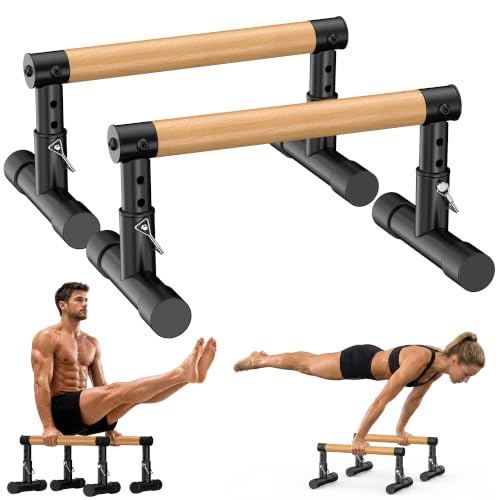
What We Like
- Natural beech wood grip absorbs moisture
- Adjustable 6-8 inch height for varied exercises
- 600 lb capacity for heavy-duty support
- Non-slip steel base keeps bars steady
Trade-offs
- Only three height settings (6, 7, 8 inches).
- Steel base can scratch delicate floor surfaces.
A 600-pound capacity on a compact frame means these bars handle serious bodyweight work without wobbling, even during handstands or L-sits. The natural beech wood grips absorb sweat and feel warm against your palms, which makes longer sets more comfortable than cold metal or foam that gets slippery. For anyone who values a secure, natural-feeling hold and wants to adjust height between 6 and 8 inches for push-ups, dips, or skill work, this is a thoughtful setup that prioritizes grip confidence and stability.
At 8 inches, the maximum height is shorter than some adjustable options, which means deeper dip movements or taller users might feel a bit cramped. The wood grip does need occasional light sanding to stay smooth, but that small bit of upkeep is a fair exchange for the natural feel and moisture control.
Product photos
IMAYCC Adjustable Parallettes

What We Like
- Two height settings for varied exercises
- 660-lb capacity for heavy-duty use
- Full-coverage foam reduces hand fatigue
- Easy 2-minute assembly with included tool
Trade-offs
- Only two height options limit fine-tuning
- Weight of 8.8 pounds is heavier than some portable bars
With a 660-pound load rating and two height settings (19 and 27 cm), these parallettes give you real range for dips, L-sits, and handstands without wobbling. The fully welded 2mm steel frame and twin screws per side keep things planted, so you can focus on form instead of balancing. It’s a smart fit if you’re between heights or want one bar that adapts to floor work and elevated pressing, no need to buy a second pair.
The two height settings, 19cm and 27cm, are simple to switch between, but you can’t dial in a middle position if you need it. The foam handles are comfortable for longer sets, and the quick assembly makes them easy to stash between workouts. If you value adjustability over infinite tweaks, this is a practical, sturdy choice.
Product photos
Docaharbour Wooden Parallettes Bars
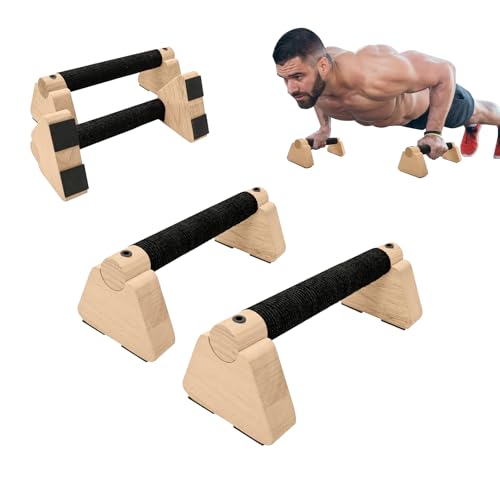
What We Like
- Solid wood construction for stability
- Non-slip base protects floors
- Ergonomic rounded grip reduces wrist strain
- Lightweight and portable at 1.4 lbs
Trade-offs
- 10-inch height limits advanced dip movements
- Non-adjustable design for varied exercises
At 10 inches tall and 1.4 pounds, these Docaharbour parallettes are compact and portable. The solid wood build provides a sturdy platform for push-ups, L-sits, and basic calisthenics, while the non-slip pads keep them planted on any floor. If you want a set you can carry easily to the gym or outdoors, this is a straightforward tool for getting your hands off the ground.
The 10-inch height is fixed, so you won’t get the deeper range of motion that taller or adjustable parallettes offer. That’s fine if your focus is push-ups and core holds, but if you plan to progress into deeper ranges of motion, you may find the height limiting. For a simple, stable, no-fuss tool, these deliver what a portable set needs.
Product photos
SNADER Wood Parallettes

What We Like
- Natural beech wood handles absorb sweat
- Heavy-duty steel brackets eliminate wobble
- Rotating rubber pads level on any surface
Trade-offs
- Fixed 12.8-inch height not adjustable
- At 2.0 lbs, lighter than some steel options
The trade-off is weight: at 2.0 pounds, these are lighter than many steel options, so they’re easy to carry. The fixed 12.8-inch height works for push-ups, dips, L-sits, and handstand work. If you want adjustable height, the Josmimic Adjustable Parallettes Bars (10-12.5 inches) offer that flexibility. For lifters who want stable footing on uneven floors, the SNADER’s rotating pad system helps keep the stand level.
Product photos
TABEKE Push Up Bar
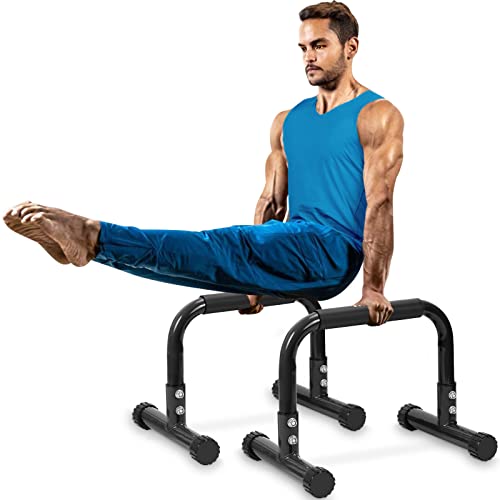
What We Like
- 660 lb weight capacity
- 12-inch height for versatile moves
- Foam handles reduce hand fatigue
- Adjustable non-slip feet for uneven ground
Trade-offs
- At 8.8 lb, heavier than some portable options
- Fixed height limits customization for advanced users
A 660-pound weight capacity means these parallettes can handle just about any bodyweight exercise you throw at them, even if you’re adding extra load with a weight vest or resistance bands. The 12-inch height gives you enough clearance for deep push-ups, L-sits, and handstand work without feeling cramped, while the 1.5mm thickened steel frame keeps things steady when you’re shifting weight. This is the set for someone who wants a no-worry, overbuilt pair of bars that won’t wobble or flex, suited for athletes who prioritize stability and capacity.
Portability is the main compromise here: at 8.8 pounds, these aren’t the lightest parallettes to toss in a gym bag, and the fixed 12-inch height means you can’t adjust them shorter for planche progressions or taller for deeper dips like you could with the adjustable Josmimic Parallettes Bars. But the non-slip rubber feet with rotating inserts do a great job leveling them on uneven ground, and the foam handles are thick enough to stay comfy during longer sets. If you prioritize stability and capacity over adjustability and weight, this is your pair.
Product photos
Fit4Fun Wooden Push Up Bars
What We Like
- Non-slip rubber feet prevent sliding
- Detachable design for easy storage
- Up to 550 lb capacity for stable support
Trade-offs
- 5.7 in height limits exercises needing more clearance
- Fixed 5.7-inch height limits leg raises and handstands
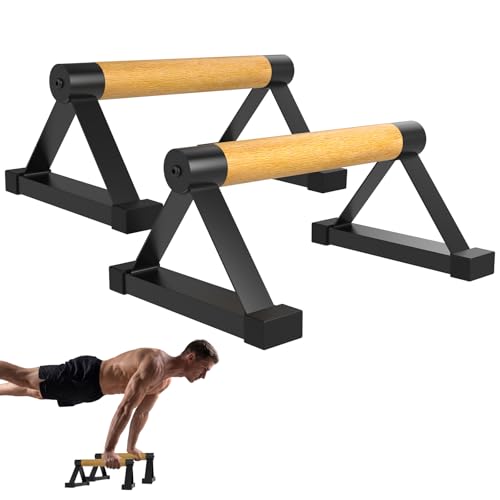
If your training focuses on push-ups, triceps work, and basic calisthenics without needing to lift your body high off the ground, this design keeps things simple and steady. The beech wood handles have a naturally grippy surface that improves comfort during reps, while the 1.6-inch diameter helps spread pressure evenly across the palms. Reinforced metal brackets support up to 550 lbs, so the structure stays stable even during intense sets. Soft rubber foot pads grip the floor to reduce sliding, which means you can focus on form rather than worrying about the bars shifting mid-movement.
That same low height is the main limitation here. At just under six inches tall, these bars limit how much range of motion you get on dips or L-sits compared to adjustable parallettes that reach 10 to 12.5 inches. You won’t be doing full handstands or deep dip work with this setup. For push-ups and triceps extensions, though, the compact profile actually helps by keeping your wrists in a neutral position and reducing strain. Reviewers note that the detachable structure makes storage easy, so it’s practical for home gyms where space is tight.
Product photos
How We Evaluated Parallettes
Our evaluation focused on four criteria that matter most for home calisthenics: height adjustability, weight capacity, grip comfort, and base stability. We cross-referenced manufacturer specs with expert recommendations from strength training communities to understand what makes a parallettes set perform well for different bodyweight exercises.
Height adjustability ranked first because it determines exercise versatility. A bar set at 6 inches works for push-ups but limits dip depth, while 12 inches or more allows L-sits and deeper ranges of motion. Weight capacity matters for safety during dynamic movements, lighter bars can flex or tip under heavy loads. We also examined grip materials, as foam, wood, and neoprene each affect hand comfort and sweat absorption differently.
This is a research-led evaluation, not a hands-on test. We analyzed product documentation and aggregated owner feedback to identify consistent strengths and trade-offs. If you want to compare more options, our detailed parallettes buying guide covers additional models and specifications.
What To Look For In Parallettes
Choosing parallettes comes down to understanding your training goals and space. The right pair supports your current exercises and leaves room to progress.
Look for adjustable height (6-12 inches) for versatility, a weight capacity above your bodyweight plus dynamic load, and a grip material that stays comfortable during long holds. Base stability and floor protection matter for home use.
Height and Adjustability
Height determines what exercises you can perform. Low parallettes (5-7 inches) work for push-ups and basic holds but limit dip depth and L-sit clearance. Medium heights (8-10 inches) open up dips and tuck holds. Tall bars (12+ inches) allow full-range dips, L-sits, and handstand work.
Adjustable models like the Josmimic (10-12.5 inches) and GanFindX (6-8 inches) let you switch between exercises without owning multiple sets. Fixed-height bars are simpler but lock you into one movement type. Consider your current routine and where you want to progress.
Weight Capacity and Stability
Weight capacity isn’t just about your bodyweight, dynamic movements like dips and muscle-ups add force above your static weight. A 400 lb capacity works for most users, but heavier athletes or those doing explosive movements should look for 600 lb or more.
Stability comes from base design and materials. Steel frames with wide bases resist tipping better than narrow or plastic designs. Adjustable rubber feet, like those on the Teclor and TABEKE models, help level bars on uneven floors. For more variety in home gym setups, our guide on best power towers for home covers integrated dip stations.
Grip Material and Comfort
Grip material affects hand fatigue, sweat management, and overall comfort during longer holds. Common options include:
- Foam: Soft and forgiving, reduces palm pressure but can wear out over time.
- Wood: Natural beech absorbs sweat, stays cool, and feels smooth. Requires occasional maintenance.
- Neoprene: Non-slip even when wet, durable, but can feel sticky in hot conditions.
Match the grip to your training environment. Wood works well for sweaty hands, foam suits longer static holds, and neoprene handles high-volume sets. For those considering full-body setups, our home gymnastics gear guide covers complementary equipment.
A good rule of thumb: choose wood for grip-intensive holds, foam for high-rep push-ups, and neoprene for all-around durability.
Parallettes Compared
The table below compares the nine parallettes sets across height, weight capacity, grip material, and key features to help you narrow your choice.
| Product | Height | Weight Capacity | Handle Material |
|---|---|---|---|
| Josmimic Adjustable Parallettes Bars | 10-12.5 in (adjustable) | 880 lbs | Foam grips |
| Teclor Steel Push Up Bar | 9.5 inches | 660 lbs | N/A |
| Lebert Parallette Bars | 12 inches | 400 lb per bar | High-density neoprene foam |
| GanFindX Wooden Parallel Bars | 6-8 in (adjustable) | 600 lb | Natural beech wood |
| IMAYCC Adjustable Parallettes | 7.5–10.6'' | 660 lbs | Full-coverage foam |
| Docaharbour Wooden Parallettes Bars | 10 inches | N/A | Solid wood |
| SNADER Wood Parallettes | 12.8 inches | 660 lbs | Natural beech wood |
| TABEKE Push Up Bar | 12 inches | 660 lbs | Foam |
| Fit4Fun Wooden Push Up Bars | 5.7 in | 550 lb | Beech wood |
Frequently Asked Questions
What height parallettes should I buy for dips?
For full-range dips, look for parallettes at least 10 inches tall. The Josmimic Adjustable Parallettes Bars adjust from 10 to 12.5 inches, giving you room for deep dips and L-sits. Lower bars around 6-8 inches work for push-ups but limit dip depth.
Are wooden or foam parallettes better?
Wooden grips absorb sweat and stay cool during long holds, making them ideal for L-sits and handstand work. Foam grips reduce palm pressure and suit high-rep push-up sets. Both are good, choose based on your primary exercises and hand comfort preference.
Can I use parallettes for handstands?
Yes, but choose taller bars (10 inches or more) to give your head enough clearance. Fixed-height bars at 12 inches work well, while adjustable models let you start lower and increase height as your balance improves. Ensure the base is wide enough for stability.
How much weight should parallettes support?
Look for a weight capacity at least 100 lb above your bodyweight to account for dynamic force during dips and muscle-ups. Most steel parallettes support 400–660 lb, which covers most home users. The Josmimic handles 880 lb for heavier loads.
What is the difference between parallettes and push-up bars?
Parallettes are typically taller (6–12 inches) and designed for a wider range of bodyweight exercises including dips, L-sits, and handstand work. Push-up bars are shorter and optimized for push-ups with a neutral grip. Parallettes offer more versatility for calisthenics.
The Bottom Line
The Josmimic Adjustable Parallettes Bars is our Best Overall pick for home calisthenics athletes who want one pair that handles push-ups, dips, L-sits, and handstand work with an adjustable height range and massive weight capacity. It fits most training spaces and grows with your progression.
If budget is a concern, the Docaharbour Wooden Parallettes Bars offer solid wood construction at a lightweight, portable price for basic bodyweight holds. For those who prioritize rock-solid stability and train in a fixed home gym, the Teclor Steel Push Up Bar delivers with its adjustable rubber feet and high weight capacity.
The single most important factor when buying parallettes is matching the height to your primary exercises. Choose adjustable if you plan to progress through different movements, or a fixed height that matches your current routine. Get the height right, and everything else falls into place.
