
10 Best Pilates Reformers For Professional Studios Us (2026)
This post contains affiliate links. As an Amazon Associate, we earn from qualifying purchases.
The Moveincore 94″ Foldable Pilates Reformer is the best overall pick for professional studios. Its 94-inch frame accommodates taller clients, the gas-assisted fold saves floor space, and the 440 lb weight capacity handles a wide range of body types. For eco-conscious owners, the Balanced Body Bravo Pilates Reformer uses recycled materials, while the STMHOM Foldable Pilates Reformer offers a budget-friendly entry point with an 800 lb capacity.
Running a professional studio means equipment takes real abuse, daily classes, multiple users, and constant adjustments. A reformer that wobbles, wears out springs, or takes up too much room isn’t just annoying; it hurts your business. You need machines that feel solid, adjust quickly, and keep clients coming back.
This guide is research-based, drawing on manufacturer specifications, expert round-ups, and patterns in owner feedback from instructors who use these machines daily. We focused on frame durability, resistance systems, storage needs, and weight capacity to help you match a reformer to your studio’s specific demands.
Top 10 Pilates Reformers For Professional Studios in the Market
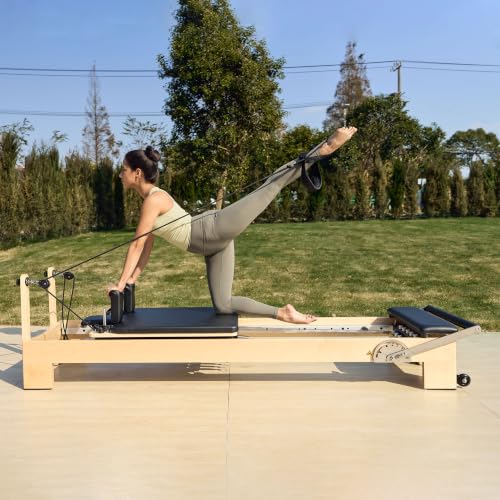
Certain content that appears on this site comes from Amazon. This content is provided "as is" and is subject to change or removal at any time.
The Best Pilates Reformers For Professional Studios, Reviewed
Moveincore 94" Foldable Pilates Reformer
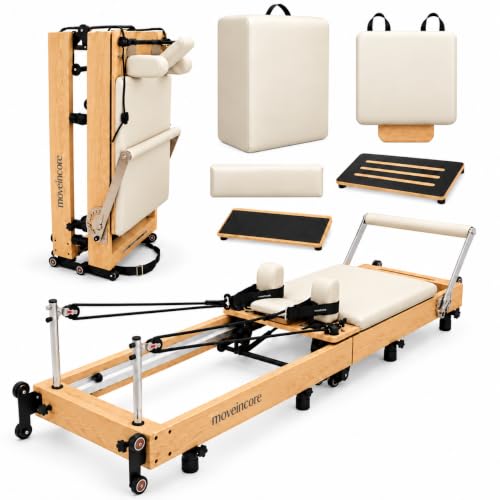
What We Like
- 94-inch frame fits taller users
- Gas-assisted folding for easy storage
- 440 lb weight capacity
- 6 color-coded springs, 3 resistance levels
Trade-offs
- No tower attachment included for studio versatility
- 440 lb weight capacity limits use for heavier individuals
A 94-inch deck with a 440-pound weight capacity means this reformer can comfortably accommodate taller clients and a wide range of body types without feeling cramped. The premium oak wood frame gives it a solid, studio-grade feel, while the gas-assisted folding system and built-in transport wheels make it surprisingly manageable for a machine that weighs over 150 pounds. It’s a strong fit for a professional studio that values durability, space efficiency, and the ability to serve clients up to about six-foot-three.
Balanced Body Bravo Pilates Reformer
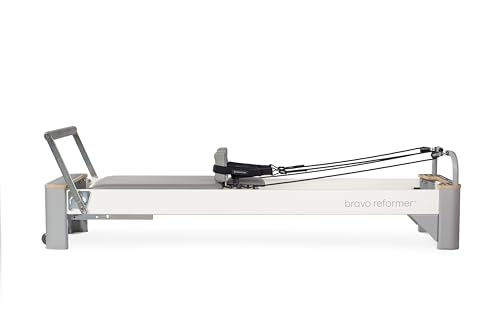
What We Like
- Frame made from 256+ recycled plastic bottles
- 4-position adjustable footbar
- Transport wheels for easy moving
Trade-offs
- At 143.3 lb, it's heavy to reposition
- No foldable design for storage
A frame built from over 256 recycled plastic bottles means this reformer turns waste into a sturdy, studio-ready machine that holds up to daily use without the environmental guilt.
The trade-off is that this is a fixed-frame machine at 143.3 pounds, so it’s not something you’ll fold up and stash between classes. Compared to the Moveincore 94″ Foldable model, which weighs 152.1 pounds, the Bravo is slightly lighter but still requires dedicated floor space. If your studio has the room and you want a reformer that uses recycled materials while offering smooth, adjustable resistance, this is your pick.
Balanced Body Bravo Reformer with Tower
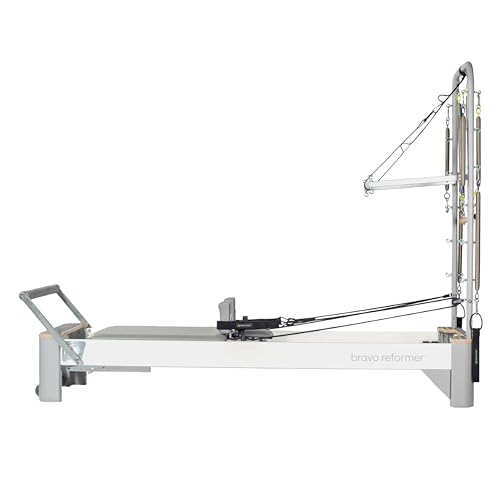
What We Like
- Includes tower with 29 spring-attachment points
- Ultra-smooth carriage with 4-position adjustable footbar
- Durable frame made from 256+ recycled bottles
- Solid maple roll-down bar and push-through bar
Trade-offs
- At 200.6 lb, it's heavy to reposition frequently
- Fixed-height risers limit customization for very tall users
Twenty-nine spring-attachment points on the tower mean you can replicate nearly any Cadillac exercise without dedicating floor space to a second machine. The included tower adds eight Signature Springs, a solid maple roll-down bar with arm springs, and a push-through bar, so the range of movements rivals a full Cadillac setup. A single-piece mat conversion installs and removes easily, letting you switch between reformer and tower work in seconds. Owners report the tower’s 29 attachment points give them the versatility to target core, strength, flexibility, balance, and cardio all on one frame.
This machine demands dedicated floor space and a ceiling high enough to accommodate the tower. At 200.6 pounds and 68.8 inches tall, it is not something you will tuck into a corner after class. If your studio is tight on vertical clearance or you frequently rearrange equipment, the lighter Moveincore 94″ Foldable Reformer (152.1 lb) might be easier to maneuver. But for a permanent station where you want the broadest exercise library in one footprint, this combo delivers. The fixed-height risers offer two preset options, which reviewers find adequate for most users in a studio setting.
MASTER HEALTH PRODUCT StudioSolid Wooden Reformer
What We Like
- Solid maple wood non-folding frame for stability
- 304 stainless steel foot bar resists corrosion
- Five Korean-made springs for varied resistance
- Includes jump board, box, and pulley system
Trade-offs
- Non-folding frame limits storage and portability
- At 92.5 inches long, needs dedicated floor space
A 352-pound max user weight and solid hard maple frame mean this reformer stays planted during even the most dynamic exercises. The non-folding design eliminates any wobble at joints, though you won’t be tucking it into a closet. Five Korean-made springs, a 7-position adjustable foot bar, and a 4-position carriage stopper let you fine-tune resistance and range of motion for different moves. It’s built for commercial studios, fitness centers, personal training spaces, and luxury home gyms, and the included jump board, box, and pulley system cover a wide range of exercises right out of the box.
This reformer is built to stay put. At over 92 inches long and with a fixed frame, it takes up a permanent footprint and won’t fold away for storage or transport. If your studio doubles as a multipurpose space or you need to reconfigure rooms often, the foldable Moveincore 94-inch model offers easier mobility. But for a dedicated studio that values stability over flexibility, the StudioSolid’s maple construction and stainless steel hardware are built for long-term use, backed by a lifetime limited frame warranty.
Product photos
PAETA 92" Aluminum Pilates Reformer
What We Like
- Aircraft-grade aluminum frame resists humidity
- Folds to 2.7 sq ft for storage
- 8 silent-glide wheels on anodized tracks
- 5 pulley positions, 8-level footbar
Trade-offs
- No tower attachment included
- 10.3 in height limits leg length for taller users
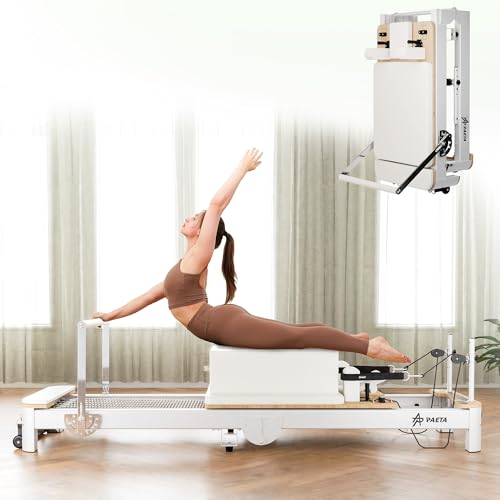
The aircraft-grade aluminum frame won’t warp in humid coastal air or sweat-soaked floors, so you can focus on teaching instead of worrying about your machine. Color-coded music wire springs rated for over 100,000 cycles give you consistent resistance across five pulley positions and an eight-level footbar, making it adaptable for everyone from beginners to advanced clients.
The lightweight build comes with a stability trade-off. At 10.3 inches tall and without a tower attachment, this reformer sits lower to the ground than the Balanced Body Bravo (14 inches tall) and weighs less, which may affect stability during vigorous jump-board work. Taller users might find the low profile limits leg extension in some exercises. For buyers who prioritize portability, humidity resistance, and foldability over maximum height or tower integration, this PAETA model delivers. It suits instructors who need a second machine for travel or small studios where space is tight.
STMHOM Foldable Pilates Reformer
What We Like
- Foldable design for compact storage
- 6 reinforced legs prevent wobble
- 800 lb weight capacity
Trade-offs
- At 89.3 lbs, still heavy to move
- No tower attachment available
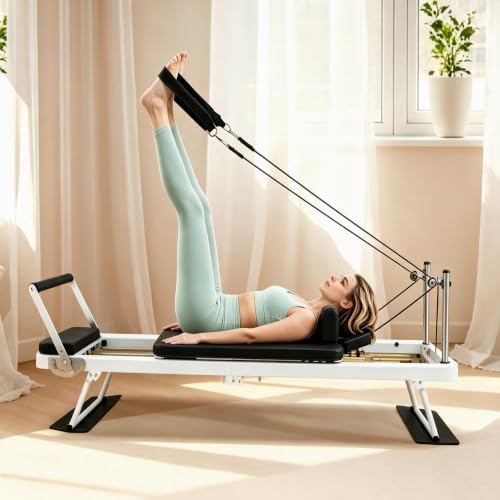
For a studio on a budget, the combination of stability, capacity, and quiet operation makes it a practical workhorse. The heavy-duty steel frame and six reinforced support legs handle up to 800 pounds, far exceeding the 400- to 500-pound industry standard, so it stays planted during jump board exercises. Full-coverage non-slip base pads keep it from shifting on any floor surface. When space is tight, the foldable design allows convenient storage in a corner or under a bed between sessions. Reviewers note that the precision steel rails and silent PU pulleys deliver a friction-free glide that won’t disturb others, making it suitable for early morning or late evening workouts.
Length is the main consideration here. At 78 inches, this reformer is shorter than the 94.5-inch Moveincore or the 92.9-inch Balanced Body Bravo, which means taller clients may feel cramped during long-glide exercises. At 89.3 pounds, it’s also lighter than those models, which helps with folding and storage but means it has less mass than heavier studio machines. If your studio serves a broad height range, the longer rails of those models might be worth considering. For a studio that prioritizes capacity and foldability, this is a space-conscious choice.
Product photos
LeisureKing Pilates Reformer with Tower

What We Like
- Solid oak frame supports 440 lbs
- Tower with 27 eye bolts for suspension
- Adjustable footbar, headrest, and springs
- Tower easily detaches for mat conversion
Trade-offs
- Non-foldable design requires dedicated floor space
- At 78 inches tall, needs ceiling clearance for tower
A 440-pound weight capacity on a solid oak frame means this reformer tower combo is built to handle serious daily studio use without wobbling or flexing. The stainless steel tower adds 27 eye bolts for suspension work, letting you target muscles from angles a standard reformer can’t reach. This is a dedicated machine for professionals who want a stable, adjustable platform for everything from rehab to advanced strength training, with the flexibility to switch between tower and mat work using the quick-release system.
Size and permanence are the key factors here. At 89.8 inches long and 78 inches tall, this isn’t something you’ll tuck into a closet. It’s heavier than a foldable aluminum model like the PAETA 92″ reformer, and the non-foldable design demands a permanent spot in your studio. But if you prioritize stability and a full tower setup over portability, the solid wood frame and 5 reformer springs give you a reliable, long-term tool that won’t shift under load.
PAETA Pilates Reformer with Tower
What We Like
- 2-in-1 reformer and tower design
- 29 tower spring attachment points
- Friction-free stainless steel rail track
Trade-offs
- At 84 lbs, less stable for heavy studio use
- Lighter than studio-grade machines at 84 lbs
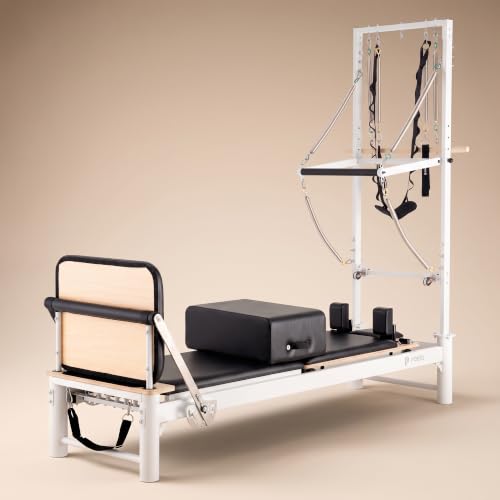
The trade-off is weight and footprint. At 84 pounds and 86.8 inches long, this machine is lighter and shorter than the Balanced Body Bravo Reformer with Tower (200.6 lbs, 92.9 inches). That means it’s easier to move around but may not feel as solid during intense tower work. If your studio sees heavy daily use or you coach taller clients, the extra heft and length of the Bravo might be worth considering. For someone who values versatility and doesn’t need a commercial-grade machine, this PAETA offers a lot of function in a compact package.
Product photos
VEVOR Wooden Pilates Reformer
What We Like
- Solid maple wood frame for stability
- 400 lb weight capacity handles all body types
- Six spring levels for progressive resistance
- High-density foam padding for comfort
Trade-offs
- At 176.4 lb, very heavy to reposition
- Non-foldable design takes up permanent floor space
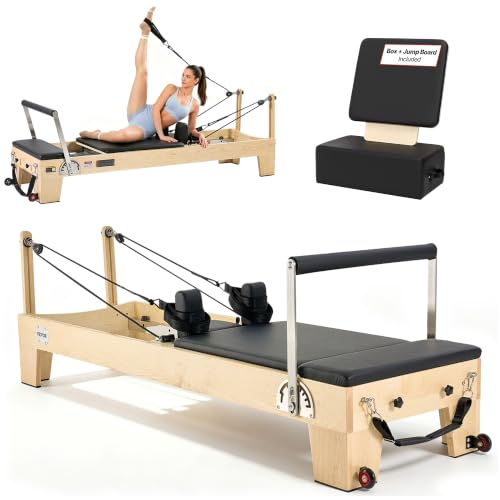
With a 400-pound weight limit on a solid maple wood frame, this reformer is built to handle repeated daily use without giving way. The six springs, one heavy, three medium, two light, let you dial in resistance for any exercise, from gentle stretches to intense core work. For someone who wants a natural wood machine that feels solid and lasts, this is a straightforward choice that focuses on strength over frills.
At 176.4 pounds and with a non-foldable design, this reformer is a permanent fixture once you set it up, you won’t be moving it between rooms or storing it after a session. For comparison, the Balanced Body Bravo weighs 143.3 pounds, so the VEVOR is heavier, which helps keep it planted during use but makes it a pain if you ever need to rearrange your space. If you have a dedicated spot and want a substantial wooden machine, this works well. If you need something you can tuck away, consider a foldable aluminum model instead.
Product photos
Gndigufa Foldable Aluminum Reformer
What We Like
- 350 lb weight capacity for diverse users
- 6 precision-calibrated springs for varied resistance
- Folds for compact storage
- 90% pre-assembled for quick setup
Trade-offs
- No tower attachment available from the manufacturer
- 94-inch length requires dedicated floor space when unfolded
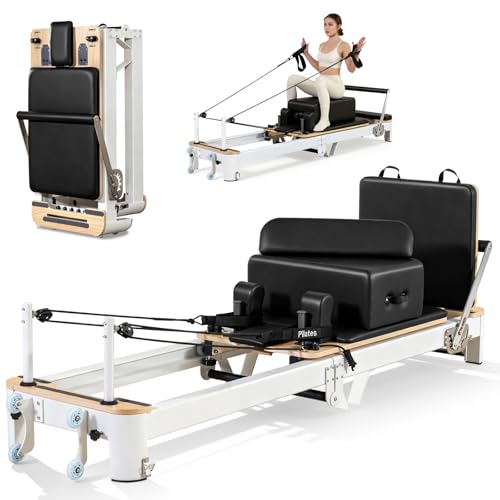
The 350-pound weight capacity on this reformer means it can handle a wide range of body types in a busy studio, yet the aluminum-and-maple construction keeps it light enough to move between sessions without a struggle. The six springs, two heavy, two medium, two light, let an instructor dial in gentle rehab resistance for a beginner one hour and crank up advanced core work the next. It folds for storage, which saves floor space when you need it, and the materials resist rust and wear over time. For a professional setting that demands both durability and portability, this is a practical, well-thought-out tool.
The straightforward reality is that at 94 inches long, you are committing to a full-length machine that needs room when it is set up, even if it folds for storage. Compared to the Balanced Body Bravo, which weighs 143.3 pounds, this Gndigufa is lighter and easier to reposition between sessions, but it does not have quite the same tank-like feel. If your studio prioritizes quick reconfigurations and a mix of materials that keep weight down without sacrificing stability, this hybrid approach makes sense. It is a smart middle ground for instructors who want professional capability without a permanent fixture.
Product photos
How We Evaluated Pilates Reformers For Professional Studios
We built this guide by analyzing manufacturer specs, studying expert round-ups from certified instructors, and identifying patterns in owner feedback from studio operators who run multi-class schedules. Our goal was to find machines that survive daily use, not just weekend workouts.
Four criteria mattered most. Frame durability and weight tells you whether a reformer will stay stable during heavy jump-board work. Resistance system quality includes spring count, attachment points, and adjustability. That determines how many exercises you can teach. Storage and portability separates machines that live in one spot from those that fold away between sessions. Weight capacity and frame length ensures you can serve taller or heavier clients without equipment limits.
A research-led evaluation has honest limits. What we offer is a systematic look at what the market says about itself, filtered through the real-world complaints and praise that instructors actually share. If a reformer has a reputation for squeaky carriages or slipping springs, the feedback patterns reveal it.
What To Look For In Pilates Reformers For Professional Studios
Choosing a studio reformer means balancing durability, adjustability, and floor space. The right machine handles daily classes without maintenance headaches and gives you enough resistance options to teach a full repertoire.
Look for a solid frame (wood or heavy-gauge steel), at least four spring resistance levels, and a weight capacity of 350 lb or more. Also look for a carriage length of at least 90 inches for taller clients. Folding models save space but often trade away tower attachments.
Frame Material and Build Quality
The frame is your reformer’s backbone. Solid maple wood frames, like those on the MASTER HEALTH PRODUCT StudioSolid Wooden Reformer and the VEVOR Wooden Pilates Reformer, absorb vibration and stay quiet during intense sessions. Aluminum frames, like the PAETA 92″ Aluminum Pilates Reformer, resist humidity and weigh less, making them easier to reposition. Steel frames offer the highest durability but add significant weight. For a studio, heavier usually means more stable, clients notice when a machine shifts under them.
Resistance System and Spring Quality
Springs dictate the feel of every exercise. Look for color-coded springs (typically 4-6 per machine) that let you quickly switch resistance levels between clients. The Balanced Body Bravo Reformer with Tower offers 29 spring-attachment points, giving you Cadillac-level variety. The Moveincore uses six color-coded springs with three resistance levels. Avoid machines with proprietary springs that are hard to replace; standard springs from the manufacturer should be available for years.
Weight Capacity and Frame Length
If you serve a diverse clientele, these two specs matter most. A 350 lb minimum weight capacity is the industry standard for studios. The STMHOM Foldable Pilates Reformer goes up to 800 lb, while the Moveincore and LeisureKing both handle 440 lb. Frame length is equally critical, clients over six feet tall need a 92-94 inch carriage for full leg extension. The Moveincore’s 94-inch frame is the longest on this list, while shorter frames can leave tall clients cramped.
Storage and Portability
- Measure your studio floor space before buying, non-folding reformers need a permanent footprint of 92-100 inches.
- Check ceiling height if you’re considering a tower combo; the LeisureKing stands 78 inches tall.
- Folding reformers like the Moveincore and PAETA save space but add assembly time between uses.
- Look for transport wheels on non-folding models like the Balanced Body Bravo for occasional repositioning.
- Consider whether you’ll ever need to move the machine between rooms or locations, a heavy tower combo won’t leave easily.
A reformer that lives in one spot should be as heavy and solid as your budget allows. A reformer that folds should lock securely when open and roll easily when closed.
Pilates Reformers For Professional Studios Compared
The table below compares each reformer’s frame material, weight capacity, resistance options, and storage features side by side, so you can see at a glance which machine fits your studio’s priorities.
| Product | Frame Material | Weight | Dimensions |
|---|---|---|---|
| Moveincore 94" Foldable Pilates Reformer | Premium oak wood | 152.1 lb | 94.5 x 23.6 x 11.8 in |
| Balanced Body Bravo Pilates Reformer | 256+ recycled plastic bottles | 143.3 lb | 92.9 x 27.0 x 14.0 in |
| Balanced Body Bravo Reformer with Tower | Recycled bottles (256+) in frame | 200.6 lb | 92.9 x 27.0 x 68.8 in |
| MASTER HEALTH PRODUCT StudioSolid Wooden Reformer | Solid North American hard maple wood | N/A | N/A |
| PAETA 92" Aluminum Pilates Reformer | Aircraft-grade aluminum | N/A | 92 x 25.4 x 10.3 in |
| STMHOM Foldable Pilates Reformer | Heavy-duty steel | 89.3 lbs | 78 x 36.2 x 22.4 in |
| LeisureKing Pilates Reformer with Tower | Solid Oak | N/A | 89.8 x 28.7 x 78.0 in |
| PAETA Pilates Reformer with Tower | N/A | 84.0 lbs | 86.8 x 29.7 x 79.3 in |
| VEVOR Wooden Pilates Reformer | Solid maple wood | 176.4 lbs | 29.0 x 94.0 x 36.0 in |
| Gndigufa Foldable Aluminum Reformer | Aluminum alloy & maple wood | N/A | 94 x 25 x 13 inches |
Frequently Asked Questions
How much floor space does a studio reformer need?
Non-folding reformers typically need 92-100 inches of length and 24-30 inches of width. Folding models like the Moveincore 94″ Foldable Pilates Reformer reduce storage footprint to roughly 2-3 square feet when collapsed, but still need the full length when in use. Always measure your ceiling height if you plan to add a tower attachment.
What weight capacity should a studio reformer have?
A minimum of 350 lb is the standard for professional studios. The STMHOM Foldable Pilates Reformer supports 800 lb, the Moveincore and LeisureKing handle 440 lb, and the VEVOR Wooden Pilates Reformer supports 400 lb. Higher capacity means more clients can use the machine safely, and the frame tends to be more stable overall.
Can I add a tower attachment to any reformer?
No, tower attachments are specific to certain models. The Balanced Body Bravo Reformer with Tower and LeisureKing Pilates Reformer with Tower come with integrated towers. The PAETA Pilates Reformer with Tower is also a 2-in-1 design. Most folding reformers like the Moveincore and STMHOM do not support tower attachments from the manufacturer.
How often should studio reformer springs be replaced?
Springs lose tension after heavy daily use. Many instructors replace springs every several months in a busy studio, or when they notice uneven resistance or a “bouncy” feel. High-quality Korean-made springs, like those on the MASTER HEALTH PRODUCT StudioSolid Wooden Reformer, tend to last longer than budget alternatives.
What is the difference between a wooden and aluminum reformer frame?
Wooden frames (maple or oak) absorb vibration better and feel quieter during use, but they are heavier and can warp in humid environments. Aluminum frames, like the PAETA 92″ Aluminum Pilates Reformer, resist humidity and weigh significantly less, making them easier to fold and move. Steel frames offer the best durability but are the heaviest option.
The Bottom Line
The Moveincore 94″ Foldable Pilates Reformer is the best overall pick for professional studios that need a long, heavy-duty machine with a compact storage option. Its 94-inch frame, 440 lb capacity, and gas-assisted folding make it a practical choice for studios serving diverse clients in limited floor space.
If your priority is sustainability, the Balanced Body Bravo Pilates Reformer uses recycled materials and delivers smooth performance. For a budget-friendly option that still handles heavy use, the STMHOM Foldable Pilates Reformer offers an 800 lb capacity and foldable design at a lower investment.
The single most important factor is frame length, a reformer that is too short for your clients will limit their range of motion and make your studio feel less professional. Measure your tallest client and buy accordingly.
