
8 Best Protein Powders For Kidney Disease in 2026
This post contains affiliate links. As an Amazon Associate, we earn from qualifying purchases.
For anyone managing kidney disease, choosing the right protein supplement means balancing protein needs with careful electrolyte control. Our research points to the Nepro Renal Nutrition Shake as the best overall for dialysis patients, thanks to its Carbsteady blend that helps minimize blood sugar spikes while delivering 19 grams of protein per serving. The Novasource Renal Vanilla Shake earns our pick for dialysis support with 22 grams of protein and reduced potassium and phosphorus, while LiquaCel Liquid Protein Watermelon stands out as a best low-electrolyte liquid protein option.
The challenge with kidney disease is that standard protein powders often contain too much potassium, phosphorus, or sodium for a restricted renal diet. At the same time, dialysis itself strips protein from the body, creating a real need for targeted supplementation that standard gym protein powders simply cannot meet.
We built this guide by analyzing manufacturer specifications, clinical guidelines for renal nutrition, and patterns in user feedback across eight specialized products. Our goal is to help you find a protein powder that supports your health without compromising your dietary restrictions.
Top 8 Protein Powders For Kidney Disease in the Market
Certain content that appears on this site comes from Amazon. This content is provided "as is" and is subject to change or removal at any time.
The Best Protein Powders For Kidney Disease, Reviewed
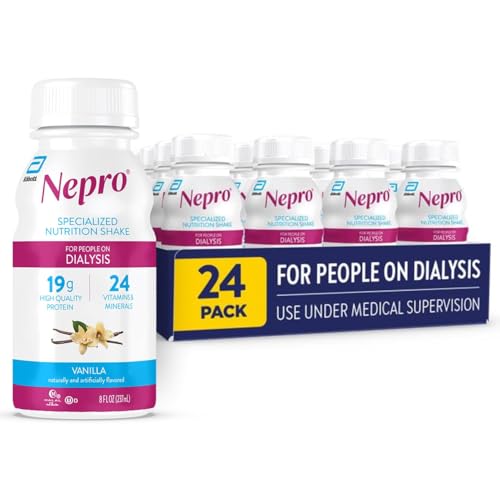
Nepro Renal Nutrition Shake
What We Like
- 19g protein per shake
- Carbsteady blend helps minimize blood sugar spike compared to high-glycemic carbs
- 420 calories per shake
Trade-offs
- Targeted only for dialysis patients, not general kidney disease
- 19g protein vs. 22g in Novasource Renal
The trade-off is that this shake is laser-focused on dialysis support, not earlier stages of kidney disease. That means the calorie and nutrient profile is higher than what someone not on dialysis might need. Compared to the Novasource Renal shake, which offers 22g protein and 475 calories, Nepro gives you slightly less protein per serving but makes up for it with the Carbsteady carb profile. That is a real plus if blood sugar management is a concern. For anyone on dialysis who wants a shake that’s been studied specifically for that situation, this is the most straightforward pick.
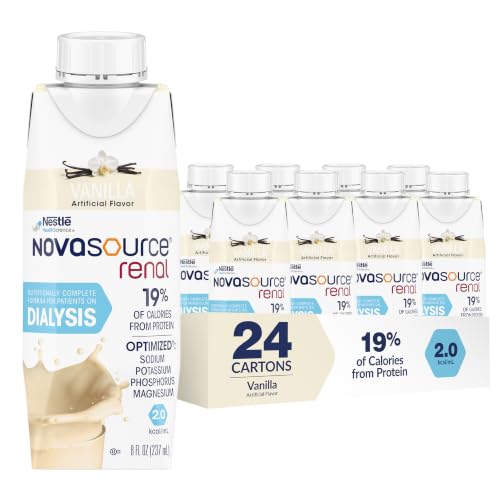
Novasource Renal Vanilla Shake
What We Like
- Reduced potassium, magnesium, phosphorus
- Calorically dense for fluid restrictions
- 22g protein to replace dialysis losses
- Formulated per renal clinical guidelines
Trade-offs
- Single vanilla flavor limits variety
- Only 24 shakes per pack
With 475 calories packed into just 8 ounces, this shake delivers serious energy without forcing you to drink extra fluid. That is a real advantage when your doctor has you on a fluid restriction. The reduced levels of potassium, magnesium, and phosphorus are designed specifically to help manage the electrolyte imbalances that come with dialysis, and the 22 grams of protein aim to replace what those sessions strip away. If you or someone you care for is on dialysis and struggling to keep weight up or meet protein needs, this is the kind of targeted support that makes daily nutrition feel less like a chore.
The 475 calories per 8-ounce shake deliver 2.0 kcal/mL, making it calorically dense for anyone on a fluid restriction. That density means you get more nutrition in less volume, which matters when your doctor limits how much you can drink. The 22 grams of protein come from a formula designed to meet the specific recommendations in the a.S.Percente.N. clinical guidelines for renal failure nutrition support. Vanilla is the only flavor offered, so if you want to switch things up, you would need to buy a different product for that.
LiquaCel Liquid Protein Watermelon

What We Like
- Low potassium and phosphorus for renal diets
- 16 g protein in just 1 oz
- Sugar free and gluten free
- IDDSI Level 3 moderately thick consistency
Trade-offs
- Only 16 g protein per serving (less than competitors)
- Concentrated liquid requires mixing for palatability
A single 1-ounce serving delivers 16 grams of hydrolyzed collagen protein with low potassium and low phosphorus, making it one of the most electrolyte-friendly options for anyone managing kidney disease. That concentrated format means you get a meaningful protein boost without flooding your system with the minerals dialysis patients need to watch closely. It fits neatly into clinical settings like dialysis centers or bariatric recovery, but also works for everyday use at home. Just stir it into water, juice, or even club soda for a quick, sugar-free protein hit.
The catch is that 16 grams per serving is noticeably lower than the 19 to 22 grams you will find in renal shakes like Nepro or Novasource Renal, so you may need two servings to match their protein punch. The protein comes from hydrolyzed collagen, which the manufacturer says is a complete protein source with added tryptophan, so it can serve as a standalone supplement. For someone who needs tight electrolyte control and values a low-volume, flexible liquid over a pre-mixed shake, this is a smart fit. If you prefer a higher-protein, all-in-one meal replacement, the Nepro Renal Nutrition Shake delivers more per bottle.
Product photos
Kate Farms Renal Support Shake

What We Like
- Certified USDA Organic and Non-GMO
- 20 g easy-to-digest organic pea protein
- Optimized sodium, potassium, phosphorus for renal needs
- Low glycemic and free of common allergens
Trade-offs
- Not a complete meal replacement
- Contains pea protein, which some avoid
Twenty grams of easy-to-digest organic pea protein per shake makes this a thoughtful option for anyone on dialysis who wants plant-based nutrition without worrying about mineral overload. The optimized sodium, potassium, and phosphorus levels are designed to support renal needs, while the USDA Organic and Non-GMO certifications add confidence for those who prioritize clean ingredients. It delivers low-glycemic nutrition and is made without common allergens, fitting well into a kidney-conscious routine.
You get slightly less protein per serving than something like the Novasource Renal Vanilla Shake, which packs 22 grams. So if your protein needs are higher, you might need an extra shake or a different option. On the other hand, this one is made without common allergens, making it a cleaner fit for sensitive systems. It’s best for anyone who values organic plant-based ingredients and needs a renal-friendly shake that’s easy on digestion and mineral balance.
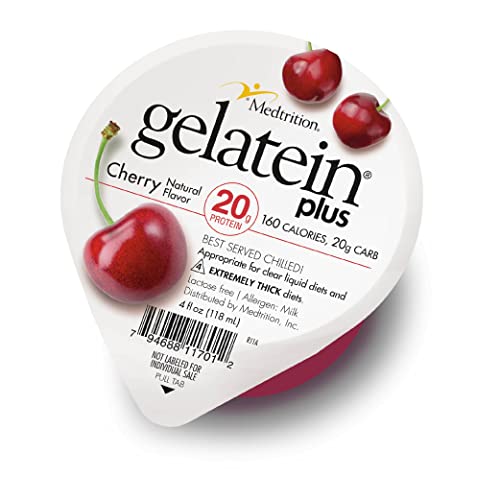
Medtrition Gelatein Plus Cherry
What We Like
- 20 g protein in a small 4 oz serving
- IDDSI Level 4 for swallowing difficulties
- Low electrolytes suit clear liquid diets
- Lactose-free and gluten-free
Trade-offs
- Only 4 oz per serving means smaller volume
- Not a complete renal nutrition shake
Twenty grams of protein packed into just four ounces makes this a concentrated option when you need nutrition without a lot of volume. That small serving size is especially helpful for anyone on a clear liquid diet or dealing with swallowing difficulties, since you get real protein without having to down a full glass. The IDDSI Level 4 rating means it’s suitable for dysphagia diets, and the low electrolyte profile fits clear liquid diet restrictions. This cherry drink delivers protein without extra volume or electrolytes.
This isn’t a meal replacement like the Nepro Renal Nutrition Shake, which offers more calories and a broader nutrient profile for dialysis support. Medtrition Gelatein Plus is a focused protein supplement, not a complete renal formula, so you’d pair it with other foods or shakes to cover your full nutritional needs. But when the goal is simply getting high-quality protein into a restricted diet, the concentrated dose and suitability for dysphagia diets give it a clear role alongside standard shakes.
Product photos
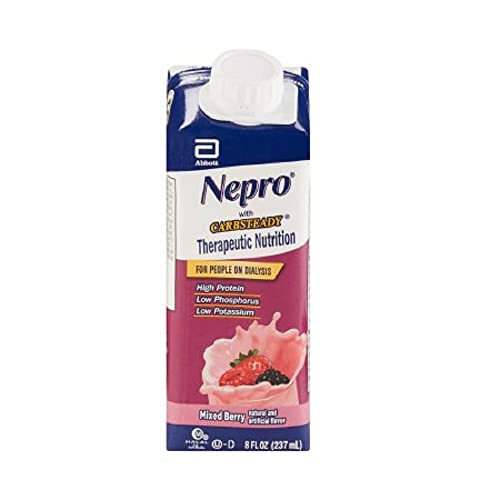
Nepro Carb Steady Mixed Berry
What We Like
- Slowly digested carbs for steady blood sugar
- Contains Fibersol and Maltitol
- Designed for dialysis nutrient needs
- Ready-to-drink convenience
Trade-offs
- No protein content listed on the product page
The Nepro Carb Steady Mixed Berry shake uses slowly digested carbohydrates, along with Fibersol and Maltitol, to help provide steady energy for people on dialysis. The ready-to-drink format makes portion control simple, so you can grab one container and know exactly what you’re getting without any mixing or measuring.
The Carb Steady blend uses slowly digested carbohydrates along with Fibersol and Maltitol, which means it’s designed to help manage blood sugar response during a dialysis diet. That focus on carb management is the main reason to choose this shake over others, even though some renal formulas pack more protein per serving. If your priority is strictly protein density, the Novasource Renal Vanilla Shake delivers 22 grams in 475 calories, but it lacks the same carb-stabilizing ingredients.
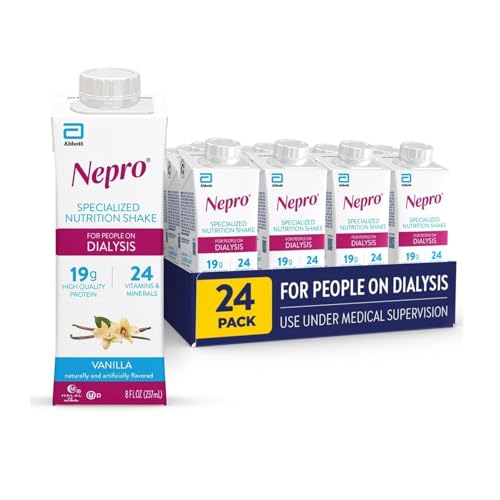
Abbott Nepro Carb Steady Vanilla Shake
What We Like
- CarbSteady supports blood sugar management
- High protein for dialysis nutrient replacement
- Concentrated 420-425 calories per serving
- Suitable for both oral and tube feeding
Trade-offs
- Requires medical supervision for tube feeding
- Not ideal for those seeking flavor variety
With 420-425 calories packed into each 8-ounce serving, this shake delivers concentrated nutrition for people on dialysis who need to replace lost protein and manage blood sugar at the same time. The CarbSteady blend is designed to help keep glucose levels steadier, which matters a lot when your body is working hard during treatment. It’s a ready-to-drink option that works for both sipping and tube feeding, so it fits a range of daily routines without extra prep.
You’re locked into vanilla, no variety if your taste buds get bored, and this isn’t something you grab without a doctor’s okay. Compared to the Novasource Renal Vanilla Shake, which offers 22 grams of protein and 475 calories per serving, the Nepro Carb Steady provides 420-425 calories and focuses on blood sugar management with its CarbSteady formula. If steady glucose is your priority, this shake is a strong option for dialysis patients needing high protein and blood sugar control.
Product photos
Abbott Nepro Carbsteady 1.8 Cal Bottle

What We Like
- High calorie density per mL
- Ready-to-drink convenience
- Large 1 liter bottle size
Trade-offs
- Only available in 8-pack case
- Not suitable for people not on dialysis
At 1.8 calories per milliliter, this shake packs a lot of energy into every sip, useful when you need concentrated nutrition without drinking large volumes. That makes it a practical choice for anyone on a renal diet who struggles to meet calorie goals, especially during dialysis or recovery. The ready-to-drink format means no mixing or measuring, just open and go.
The ready-to-drink format means no mixing or measuring, just open and go. Compared to the Nepro Renal Nutrition Shake, which provides 19 g protein and 420 calories per serving, this product’s calorie density is higher at 1.8 Cal/mL, making it a more concentrated energy source. It is best for those who prioritize calorie density over detailed protein information.
Product photos
How We Evaluated Protein Powders For Kidney Disease
Our research approach focused on understanding what makes a protein powder safe and effective for kidney disease management. We examined manufacturer-provided nutritional data, clinical formulation guidelines for renal diets, and patterns in user experiences shared across medical and consumer platforms. This is a research-led evaluation based on available documentation and expert consensus.
The three criteria that mattered most were electrolyte content, protein density, and formulation purpose. Products needed to show controlled levels of potassium, phosphorus, and sodium to fit renal diet restrictions. Protein density mattered because many kidney patients face fluid restrictions and need concentrated nutrition in smaller volumes. We also prioritized products specifically formulated for renal needs rather than general protein powders that might contain hidden electrolytes.
An honest limitation of this approach is that individual nutritional needs vary significantly by kidney disease stage, dialysis status, and lab results. What works for a dialysis patient may be inappropriate for someone in early-stage chronic kidney disease. Always consult your nephrologist or renal dietitian before adding any supplement to your routine.
What To Look For In Protein Powders For Kidney Disease
Choosing a protein powder for kidney disease means looking past the flashy labels and checking the fine print on electrolytes. Here is what actually matters.
Look for protein powders specifically formulated for renal diets. Check potassium, phosphorus, and sodium levels on the label. Prioritize products with at least 15 grams of protein per serving in a low-volume format. Avoid general fitness protein powders unless a dietitian approves them.
Electrolyte Profile: Potassium, Phosphorus, and Sodium
The kidneys regulate these minerals, and when they are compromised, excess amounts build up in the blood. Most standard protein powders contain significant potassium and phosphorus from milk-based proteins or added minerals. Renal-specific products like Novasource Renal Vanilla Shake are formulated with reduced levels of all three. For those on stricter clear liquid diets, the Medtrition Gelatein Plus Cherry offers low electrolytes in a small 4-ounce serving. Always compare the electrolyte numbers on the label against your prescribed limits.
Protein Density and Fluid Restrictions
Many kidney disease patients, especially those on dialysis, face fluid restrictions that limit how much they can drink each day. This makes protein density critical. Products like LiquaCel Liquid Protein Watermelon pack 16 grams of protein into just 1 ounce of liquid. The concentrated Nepro Carbsteady 1.8 Cal Bottle delivers high calorie density per milliliter for those who need both calories and protein in minimal volume. A good rule of thumb is to aim for at least 15 grams of protein per 4 ounces of liquid or less.
Formulation for Blood Sugar Management
Kidney disease and diabetes frequently overlap, and many renal patients struggle with blood sugar fluctuations. The Nepro Carb Steady line, including the Mixed Berry and Vanilla varieties, uses slowly digested carbohydrates and ingredients like Fibersol and Maltitol to help minimize blood sugar spikes. This is especially important for dialysis patients who may also need to manage diabetes. For more on this overlap, our guide to protein for diabetics covers options that support stable glucose levels.
- Check that the product is labeled specifically for renal diets, not just general nutrition.
- Confirm the protein source is appropriate for your dietary needs (pea protein for plant-based, milk protein for standard).
- Look for third-party testing or clinical formulation credentials on the label.
- Verify the serving size matches your fluid allowance.
- Ask your dietitian to review the electrolyte numbers against your latest lab results.
The safest approach is to bring the product label to your next nephrology appointment and get a professional thumbs-up before buying in bulk.
Protein Powders For Kidney Disease Compared
The table below compares all eight protein powders across the key factors that matter most for kidney disease management: protein content, electrolyte control, and formulation purpose.
| Product | Protein per Serving | Calories per Serving | Dietary Features |
|---|---|---|---|
| Nepro Renal Nutrition Shake | 19 g | 420 | Low-glycemic (Carbsteady) |
| Novasource Renal Vanilla Shake | 22 g | 475 | Nutritionally complete |
| LiquaCel Liquid Protein Watermelon | 16 g | N/A | Sugar free, gluten free |
| Kate Farms Renal Support Shake | 20 g | N/A | USDA Organic, Non-GMO, Kosher, Gluten Free |
| Medtrition Gelatein Plus Cherry | 20 g | N/A | Lactose-free, gluten-free |
| Nepro Carb Steady Mixed Berry | N/A | N/A | Slowly digested carbohydrates |
| Abbott Nepro Carb Steady Vanilla Shake | N/A | 420-425 | CarbSteady |
| Abbott Nepro Carbsteady 1.8 Cal Bottle | N/A | 1.8 Cal/mL | N/A |
Frequently Asked Questions
What kind of protein is best for kidney disease?
Renal-specific protein powders formulated with reduced potassium, phosphorus, and sodium are best. Products like Nepro Renal Nutrition Shake and Novasource Renal Vanilla Shake are designed to meet the unique needs of dialysis patients. For earlier stages of kidney disease, a dietitian may recommend plant-based options like Kate Farms Renal Support Shake, which uses organic pea protein and has optimized mineral levels. Never use general fitness protein powders without medical approval.
Can protein powder help with dialysis-related muscle loss?
Yes, dialysis strips protein from the blood, and targeted supplementation helps replace those losses. The Novasource Renal Vanilla Shake provides 22 grams of protein per serving specifically to address dialysis-related protein depletion. For those needing a concentrated option, our guide to protein for dialysis covers products designed to meet these higher protein needs while respecting fluid restrictions.
How much protein should someone with kidney disease have daily?
Protein needs vary by kidney disease stage and dialysis status. Dialysis patients typically need more protein to compensate for losses during treatment. Earlier-stage kidney disease may require protein restriction instead. Only your nephrologist or renal dietitian can determine the right target based on your lab results and treatment plan.
Are plant-based protein powders safe for kidney disease?
Some are, but not all. Standard plant-based protein powders often contain added potassium and phosphorus from natural sources. The Kate Farms Renal Support Shake is specifically formulated with optimized sodium, potassium, and phosphorus levels for renal needs and uses organic pea protein that is easy to digest. Always check the electrolyte numbers rather than assuming plant-based means kidney-friendly.
What electrolytes should I avoid in protein powders for kidney disease?
Potassium, phosphorus, and sodium are the three main electrolytes to monitor. Standard protein powders, especially whey-based ones, can be high in potassium and phosphorus. Renal-specific products like LiquaCel Liquid Protein Watermelon are formulated to be low in both. For those also watching sodium intake, our guide to low sodium protein powder highlights options with minimal sodium content.
The Bottom Line
For dialysis patients who need a complete, kidney-specific nutritional shake, the Nepro Renal Nutrition Shake is our best overall pick. Its Carbsteady blend helps manage blood sugar while delivering 19 grams of protein and 420 calories per serving. It is specifically designed for the high-calorie, low-electrolyte needs of people on dialysis.
If your priority is the highest protein content to replace dialysis losses, the Novasource Renal Vanilla Shake offers 22 grams per serving with reduced potassium and phosphorus. For those needing a low-volume, sugar-free liquid protein that mixes easily into other beverages, the LiquaCel Liquid Protein Watermelon delivers 16 grams in just one ounce. Plant-based shoppers should consider the Kate Farms Renal Support Shake for its certified organic pea protein and optimized mineral profile.
The single most important factor is medical guidance. No protein powder replaces a personalized renal diet plan. Bring your chosen product to your nephrologist or dietitian for approval based on your specific lab values and treatment stage. For a broader look at what makes a protein supplement safe, our guide to safe protein powders covers third-party testing and quality markers that apply across health conditions.
