
9 Best Recumbent Exercise Cycles in 2026
This post contains affiliate links. As an Amazon Associate, we earn from qualifying purchases.
The Niceday Recumbent Exercise Bike is our best overall pick for its high 400-pound weight capacity, smooth 15-pound flywheel, and ergonomic seat with breathable mesh backrest that keeps longer rides comfortable. For app-guided training, the Sunny Health & Fitness Smart Recumbent Bike offers free trainer-led workouts and built-in resistance bands. Budget-conscious riders will appreciate the MERACH Recumbent Exercise Bike‘s quiet magnetic resistance and basic Bluetooth connectivity.
Shopping for a recumbent cycle means balancing comfort, resistance range, and floor space against your fitness goals. The wrong choice can leave you with a bike that feels cramped, noisy, or too simple to challenge you after a few weeks. We get it, most of us have bought gear that collected dust because it didn’t quite fit our routine.
This guide is built from manufacturer specifications, expert round-ups, and patterns in owner feedback across nine models. We focused on the features that actually matter for home use: weight capacity, seat adjustability, resistance quality, and ease of assembly. No testing claims, just honest research to help you pick with confidence.
Top 9 Recumbent Exercise Cycles in the Market
Certain content that appears on this site comes from Amazon. This content is provided "as is" and is subject to change or removal at any time.
The Best Recumbent Exercise Cycles, Reviewed
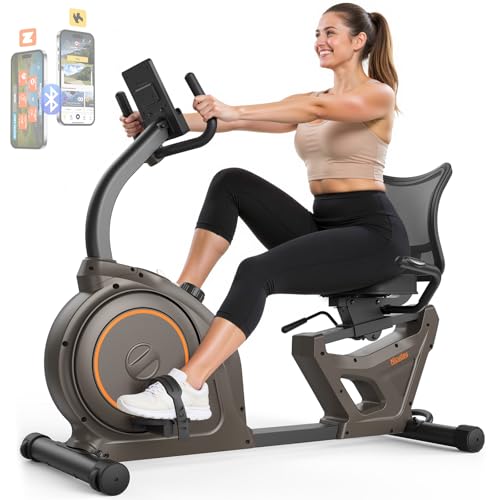
Niceday Recumbent Exercise Bike
What We Like
- 400 lb weight capacity for larger users
- 15 lb flywheel for smooth quiet rides
- Ergonomic seat with breathable mesh backrest
- 90% pre-assembled with transport wheels
Trade-offs
- At 84 lb, it's heavy to move around
- Mechanical knob resistance lacks preset programs
A 400-pound weight capacity is uncommon among recumbent bikes, and this model’s heavy-duty frame supports that limit while keeping the bike stable during use. The 15-pound flywheel and magnetic resistance deliver smooth, quiet operation, so it won’t disturb others nearby. For anyone who needs a sturdy machine with a high weight limit, this bike provides a confidence-inspiring ride.
The trade-off for that sturdy build is heft: at 84 pounds, moving it between rooms takes some effort, though the integrated transport wheels help. The mechanical resistance knob is simple and reliable, but it doesn’t offer the app-controlled preset workouts you’ll find on the Sunny Health & Fitness Smart Recumbent Bike. If you prefer to dial in resistance manually and value stability above all, the Niceday delivers where it counts.
With a 400-pound weight capacity and a heavy-duty frame, this bike offers excellent stability for larger users, while the ergonomic seat and backrest make it comfortable for extended sessions. The 16-level resistance knob is simple to adjust, ideal for gentle physical therapy or low-impact cardio. However, it lacks app-guided interval programs and its 84-pound weight makes it less convenient for frequent relocation.
Product photos
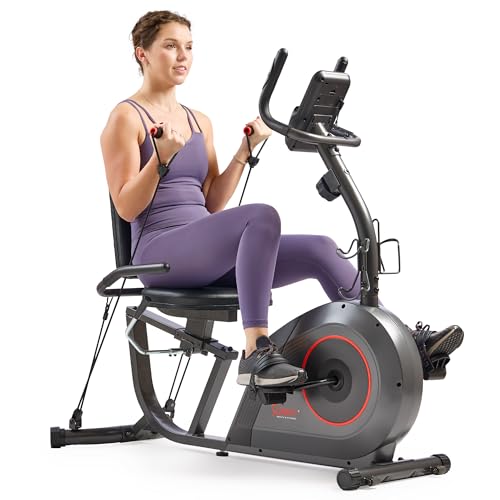
Sunny Health & Fitness Smart Recumbent Bike
What We Like
- Free app with 1,000+ trainer-led workouts
- Built-in resistance bands for upper body
- Quiet magnetic belt-drive mechanism
- Flip-away side handle for easy access
Trade-offs
- 300 lb weight limit is lower than some rivals
- No built-in touchscreen or display for app
The Sunny Health & Fitness Smart Recumbent Bike pairs a free fitness app with over 1,000 trainer-led workouts and 10,000 virtual scenic tours, so you never have to guess what to do next. That app access, with no membership fees, makes it a smart pick if you want guided variety without monthly bills. The cushioned adjustable seat and flip-away side handle also make getting on and off easy, which matters if you are new to recumbent cycling or working around stiffness.
At 63.9 pounds, this bike is lighter than some competitors such as the Niceday Recumbent Exercise Bike at 84 pounds, which may make it easier to move if needed. The 300-pound weight capacity matches what the manufacturer specifies, while several other bikes in this guide support up to 400 pounds. If app-driven workouts and upper-body bands matter more than a higher weight limit, this is a practical, approachable choice.
Schwinn Fitness 230 Recumbent Bike

What We Like
- 16 magnetic resistance levels
- Contoured seat with large vented back
- 5.5" LCD with 13 workout programs
Trade-offs
- App subscriptions required for route and Zwift features
- No telemetry heart rate chest strap included
A 5.5-inch LCD screen provides 13 different workout programs, giving plenty of variety to keep training interesting. The 16 levels of magnetic resistance allow fine-tuning of intensity, from a gentle warm-up to a challenging climb. Owners appreciate the contoured seat with its large, vented back, which helps keep the rider cool during longer sessions. Weighted pedals with straps keep feet securely in place, even when pushing a higher resistance level.
The trade-off here is that those app features require separate subscriptions. Explore the World and Zwift aren’t free, so the upfront value depends on how much you want to use them. At 80 pounds, the Schwinn is noticeably lighter than the 3G Cardio Elite RB X (115 lbs) or the Horizon 5.0R (123 lbs), which means it won’t anchor itself to the floor as firmly during aggressive pedaling.
3G Cardio Elite RB X Recumbent Bike

What We Like
- Oversized cushioned seat with 25 forward/back positions
- Airflow Mesh Flex backrest tilts and adjusts
- FreeSync FTMS Bluetooth connects to fitness apps
- Compact 49-inch length rolls through doorways
Trade-offs
- At 115 lb, it is heavy to move frequently
- No built-in touchscreen or display for app-free workouts
The 3G Cardio Elite RB X weighs 115 pounds and measures just 49 inches long, which means it can fit through a standard doorway and stay planted during a hard workout. That weight, combined with a 350-pound capacity and a frame backed by a lifetime warranty, signals commercial-grade build quality. The oversized cushioned seat adjusts 25 positions forward and back and tilts 5 ways, so you can dial in a position that actually fits your body rather than forcing you into a one-size-fits-all posture. The Airflow Mesh Flex backrest also tilts and conforms to your shape, keeping your back cool while you ride. This is the bike for someone who wants comfort to be the priority and is willing to pay for it.
The trade-off is that same solid construction makes this bike a chore to relocate. At 115 pounds, it is significantly heavier than the Niceday Recumbent Bike, which comes in at 84 pounds and still offers a 400-pound capacity. If you plan to move the bike between rooms or store it after each ride, the 3G Cardio will test your patience. For anyone who values a rock-steady, supremely adjustable seat and a small footprint over portability, this is the recumbent bike that delivers on comfort without cutting corners.
Horizon Fitness 5.0R Recumbent Bike

What We Like
- Extra-large seat with lumbar support
- Step-through frame for easy access
- Bluetooth FTMS connects to fitness apps
- Smooth quiet ride from 15.4 lb flywheel
Trade-offs
- At 123 lb, it is heavy to move
- Takes up more floor space than many recumbent bikes
A 15.4-pound aluminum flywheel and an extra-large seat with lumbar support that glides on an aluminum rail mean this bike puts comfort and smoothness first. The step-through frame makes mounting almost effortless, which matters a lot if your hips or knees don’t love high steps. That supportive seat, paired with the ability to slide it exactly where you need it, is why this model stands out for anyone who wants to ride without their lower back complaining afterward.
The trade-off is weight: at 123 pounds, the Horizon 5.0R is heavier than the Niceday Recumbent Exercise Bike, which comes in at 84 pounds. The extra weight can make it harder to move, but the transport wheels help. If you plan to tuck it away after every ride, the lighter Niceday may be easier to move. But if a comfortable, lumbar-friendly seat is your priority, the Horizon is a strong option.
NordicTrack 10 Recumbent Bike

What We Like
- 26 digital resistance levels for precise intensity
- 10" HD touchscreen with iFIT streaming workouts
- Cushioned seat with lumbar support
- Integrated handle controls for easy adjustments
Trade-offs
- Requires/mo iFIT Pro Membership for full features
- At 157 lb, it's heavy to move or rearrange
- Long 67.2-inch footprint needs generous floor space
A 10-inch HD touchscreen brings interactive training front and center, turning each ride into a guided experience with iFIT workouts that adjust resistance automatically through 26 levels. That screen can also stream shows and movies with an iFIT Pro Membership, making this bike feel less like a machine and more like a personal studio. It suits anyone who craves variety and connection during cardio, especially if you thrive on coach-led sessions or need motivation to stick with low-impact exercise.
Accessing the full library of iFIT workouts and connected features requires a monthly membership for the entire household. That subscription unlocks not only trainer-led rides but also yoga and strength classes, plus streaming of favorite shows and movies directly on the bike’s display. Owners should view this as an ongoing commitment to content rather than a one-time hardware purchase. The 26 digital resistance levels adjust automatically during iFIT sessions to match the workout’s demands, whether the goal is recovery, endurance, or high-intensity training. Resistance shortcuts on the display and integrated handle controls let riders change intensity without breaking rhythm.
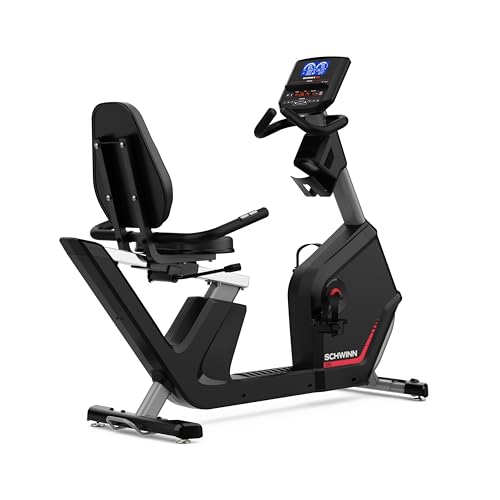
Schwinn 280 Recumbent Bike
What We Like
- 100 magnetic resistance levels
- Extra-large padded seat with lumbar support
- Bluetooth heart rate enabled
- Works with popular fitness apps
Trade-offs
- At 123 lb, it is heavy to move
- No built-in screen for apps
A hundred magnetic resistance levels let you dial in exactly the tension that matches your day, from a gentle recovery spin to a grinding climb that tests your legs. That range of fine control makes the Schwinn 280 a natural fit for anyone who wants to progress gradually without jumping between huge gaps in effort. The extra-large seat with full lumbar support also helps you stay comfortable during longer sessions, which matters when you are trying to build a consistent habit.
At 123 pounds, this bike stays planted on the floor during intense workouts, but it’s not something you’ll want to drag across the room after every ride. Compared to the Niceday Recumbent Bike at 84 pounds, the Schwinn 280 is noticeably heavier. It connects to apps like Peloton and Zwift through your own phone or tablet, but there’s no built-in screen, so you’ll need a device stand nearby. That’s a small compromise for the resistance range, but worth knowing if you prefer an all-in-one display.
Product photos
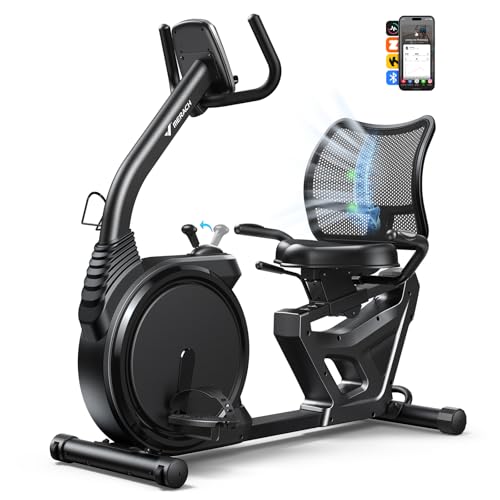
MERACH Recumbent Exercise Bike
What We Like
- 8-level magnetic resistance lever
- Ergonomic thicker seat with mesh backrest
- Silent dual-belt drive system
- Bluetooth MERACH app connectivity
Trade-offs
- 85.5 lb weight makes relocation less convenient
- Heavy 85.5 lb frame is difficult to move.
At 85.5 pounds and 48 inches long, this recumbent bike is compact and stable enough to fit in a living room without dominating the space. Its 8-level magnetic resistance lever lets you adjust effort quickly, while the dual-belt drive keeps operation quiet, making it suitable for shared spaces or early-morning use. The thicker seat with breathable mesh backrest and 8-position seat adjustment helps riders find a comfortable position, especially for seniors or anyone wanting a low-impact workout. The included Bluetooth app tracks real-time stats like distance and calories, adding motivation without needing a premium touchscreen.
The 85.5-pound frame keeps the bike planted during intense rides, but moving it between rooms requires some effort. With just 8 resistance levels, you’ll have fewer options to dial in the exact challenge compared to bikes offering 16 levels. The seat adjusts to 8 positions, so most riders can find a comfortable leg extension. For someone starting out or wanting a quiet, comfortable recumbent bike without spending a lot, this is a straightforward choice.
Product photos
TRMDDF 3-in-1 Recumbent Exercise Bike
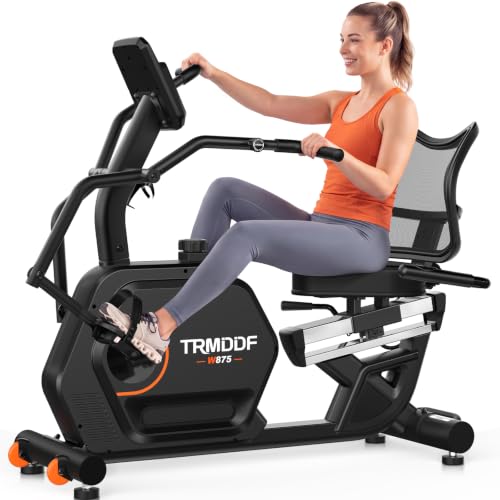
What We Like
- 3-in-1 arm and leg training
- 400 lb weight capacity
- Below 15dB quiet operation
- Fits users 4'9" to 6'3"
Trade-offs
- 88 lb weight makes relocation harder
- Mechanical knob lacks preset programs
A 400-pound weight capacity and reinforced 2.5mm steel tubing mean this bike is built to handle serious use without wobbling or wearing out. The real standout is the 3-in-1 design: three adjustable handle positions let you work just your arms, just your legs, or both together for a coordinated full-body session. That makes it a smart fit for anyone recovering from an injury who needs to isolate lower body movement. It also works for the home gym user who wants to add upper body conditioning without buying a separate machine. The magnetic resistance keeps things near-silent at under 15 decibels, so you can pedal while someone else watches TV in the same room.
At 88 pounds, this bike is heavy enough to stay planted during intense workouts, though the built-in transport wheels make it manageable to shift around the house. Compared to the YOSUDA RC-PRO at 58.4 pounds, it’s noticeably sturdier but less portable. The mechanical resistance knob gives you 16 levels to dial in manually, which works well if you prefer to set it and forget it. For guided interval sessions, you’ll need to pair with one of the compatible apps like Kinomap or Zwift to get that structure.
Product photos
How We Evaluated Recumbent Exercise Cycles
We started by combing through manufacturer spec sheets and owner feedback for each of the nine bikes, looking for consistent praise and recurring complaints. The market is crowded with bikes that look similar on paper but differ sharply in real-world comfort and durability. Our goal was to separate genuine value from marketing hype by cross-referencing specs against what hundreds of owners actually report.
Three criteria mattered most. Weight capacity tells you whether the frame will feel solid or shaky under load. A 300-pound limit and a 400-pound limit are different machines. Seat adjustability determines whether the bike fits your height and protects your lower back during longer sessions. Resistance quality separates a bike that challenges you for years from one you outgrow in months. We also weighed assembly difficulty, noise level, and any smart features that add real training value.
An honest limit of this research-led approach: we haven’t ridden these bikes ourselves. Owner feedback can skew toward extremes, and a bike that pleases most buyers may still not suit your body or space. Use this guide as a starting point, then check the return policy and measure your room before buying. For a deeper look at the category, our full review of recumbent bikes covers additional models and long-term owner experiences.
What To Look For In Recumbent Exercise Cycles
A recumbent bike is a long-term investment in your home gym. Focus on the specs that directly affect your comfort, safety, and willingness to ride day after day.
Prioritize weight capacity that exceeds your body weight by at least 50 pounds, seat adjustment that matches your inseam, and magnetic resistance for quiet, low-maintenance operation. The best bike is the one you actually use.
Weight Capacity and Frame Stability
The frame is the foundation. A bike rated for 400 pounds uses thicker steel and wider stabilizers than one rated for 300 pounds, which translates to less wobble during hard efforts. The Niceday and TRMDDF models both support 400 pounds, while the Schwinn 280 and Horizon 5.0R handle 300 pounds. If you’re near the upper limit of a bike’s rating, the ride will feel less solid over time. For a focused look at models built for larger riders, check our guide to sturdy recumbent exercise bikes.
Seat Comfort and Adjustability
Seat design separates a bike you tolerate from one you look forward to riding. Look for a contoured, padded seat with a mesh or vented backrest, the Niceday and 3G Cardio Elite RB X both excel here. The Horizon 5.0R adds dedicated lumbar support, which makes a real difference for riders with lower-back sensitivity. Fore-aft seat adjustment should cover several inches to accommodate different leg lengths. Some bikes offer backrest tilt as well, which helps you find a neutral spine position.
Resistance Type and Range
Magnetic resistance is the standard for quiet, friction-free operation. The number of levels varies widely: the Schwinn 280 offers 100 levels for micro-adjustments, while the MERACH gives you 8. More levels mean finer intensity control, which matters for structured training. Mechanical knob resistance (like the Niceday’s) is simple and reliable but lacks the preset programs of digital resistance. If you plan to follow app-based workouts, Bluetooth-enabled magnetic resistance lets the app adjust intensity automatically.
Smart Features and App Compatibility
- Does the bike have Bluetooth FTMS for third-party app connectivity?
- Is there a built-in screen, or do you need to use your own tablet?
- Are app subscriptions required for full functionality?
- Does the bike offer heart rate monitoring via Bluetooth or included sensors?
- Can the bike connect to Zwift, Peloton, or other popular training platforms?
A rule of thumb: if you plan to use apps regularly, choose a bike with Bluetooth FTMS and a device holder rather than paying extra for a built-in screen you may outgrow.
Recumbent Exercise Cycles Compared
The table below compares all nine recumbent cycles across weight capacity, resistance levels, seat features, and smart connectivity to help you narrow your options at a glance.
| Product | Resistance Levels | Weight | Dimensions |
|---|---|---|---|
| Niceday Recumbent Exercise Bike | 16 | 84.0 pounds | L 50.0 inches, W 23.0 inches, H 45.0 inches |
| Sunny Health & Fitness Smart Recumbent Bike | 16 | 63.9 lb | L 46.1 inches, W 25.6 inches, H 51.8 inches |
| Schwinn Fitness 230 Recumbent Bike | 16 | 80.0 lbs | N/A |
| 3G Cardio Elite RB X Recumbent Bike | 16 | 115.0 lb | L 49.0 inches, W 27.0 inches, H 43.0 inches |
| Horizon Fitness 5.0R Recumbent Bike | N/A | 123.0 lb | L 66.0 inches, W 25.2 inches, H 52.2 inches |
| NordicTrack 10 Recumbent Bike | 26 | 157.0 pounds | L 67.2 x W 23.3 x H 51.9 in |
| Schwinn 280 Recumbent Bike | 100 | 123.0 pounds | L 48.2 inches, W 11.0 inches, H 28.0 inches |
| MERACH Recumbent Exercise Bike | 8-level | 85.5 lb | 48 x 23.6 x 46.5 in |
| TRMDDF 3-in-1 Recumbent Exercise Bike | 16 | 88.0 lbs | L 51.0 inches, W 26.0 inches, H 51.0 inches |
Frequently Asked Questions
What is the difference between a recumbent bike and an upright bike?
A recumbent bike places you in a reclined, chair-like position with your legs extended forward, which reduces lower-back strain and targets the glutes and hamstrings more directly. Upright bikes mimic a traditional cycling posture, engaging the core more but putting more pressure on the wrists and lower back. Recumbent bikes are generally more comfortable for longer sessions and for riders with back concerns.
How much floor space does a recumbent exercise bike need?
Most recumbent bikes measure between 48 and 67 inches in length and 23 to 28 inches in width. The 3G Cardio Elite RB X is one of the most compact at 49 inches long, while the NordicTrack 10 requires 67.2 inches. You’ll also need about 6 inches of clearance behind the bike for safe mounting and dismounting. For tight spaces, browse our list of folding recumbent bikes for more compact options.
Are recumbent bikes good for seniors?
Yes, recumbent bikes are often recommended for seniors because the step-through frame makes mounting easy, the seated position reduces fall risk, and the low-impact motion is gentle on joints. The Horizon 5.0R and MERACH are popular choices for older riders due to their accessible frames and comfortable seats. For a targeted selection, see our guide to senior-friendly bikes.
Can you get a good workout on a recumbent bike?
Absolutely. Recumbent bikes engage the quadriceps, hamstrings, glutes, and calves with every pedal stroke, and models with arm exercisers like the TRMDDF 3-in-1 add upper-body work. High-resistance models like the Schwinn 280 with 100 levels allow progressive overload for serious training. The key is choosing a bike with enough resistance range to challenge you as your fitness improves.
Do recumbent bikes help with lower back pain?
Many riders report reduced lower-back discomfort compared to upright bikes because the reclined position and lumbar support take pressure off the spine. The Horizon 5.0R is specifically designed with extra lumbar support, and the 3G Cardio Elite RB X offers a tilting backrest for custom spinal alignment. If back pain is a concern, look for a bike with a well-padded, adjustable backrest and a step-through frame for easy entry.
The Bottom Line
The Niceday Recumbent Exercise Bike earns the top spot for its 400-pound weight capacity, stable ride, and genuinely comfortable seat that makes longer sessions feel manageable. It’s the bike we’d recommend to anyone who wants a solid, straightforward machine without worrying about frame flex or back pain. If your budget is tighter, the MERACH Recumbent Exercise Bike delivers quiet magnetic resistance and basic Bluetooth for less. The Sunny Health & Fitness Smart Recumbent Bike adds free app-guided workouts and upper-body bands for just a bit more.
For riders who need extra lower-back support, the Horizon 5.0R is worth the investment. Those chasing precise resistance for structured training should look at the Schwinn 280’s 100-level system. And if you want a full-body workout from a single machine, the TRMDDF 3-in-1 combines pedaling with arm exerciser handles. The one factor that ties them all together: choose a bike that fits your body and your space first, because no amount of smart features will make up for an uncomfortable ride.
