
10 Best Rubber Mats For Home Gym in 2026
This post contains affiliate links. As an Amazon Associate, we earn from qualifying purchases.
The SUPERJARE Rubber Top Exercise Mat is the best overall rubber mat for a home gym because it combines a tear-resistant EPDM rubber top with a noise-dampening foam layer in a modular tile system that fits most workout spaces. For heavy deadlifts and dropped barbells, the SUPERJARE Extra-Thick Gym Flooring is our best heavy-duty pick. The Marcy Interlocking Gym Floor Mat offers a smart dual-density design for those who want cushion and easy cleaning.
Building a home gym means protecting both your floor and your equipment, but rubber mats vary in thickness, material, and coverage. Some are great for yoga and light dumbbell work; others can handle a heavy squat rack.
This guide was built by studying manufacturer specifications, material composition, and owner feedback patterns across dozens of models. The result is a focused list of picks that match real home gym setups, from garage powerlifting stations to spare-room cardio corners.
Top 10 Rubber Mats For Home Gym in the Market
Certain content that appears on this site comes from Amazon. This content is provided "as is" and is subject to change or removal at any time.
The Best Rubber Mats For Home Gym, Reviewed
SUPERJARE Rubber Top Exercise Mat
What We Like
- EPDM rubber top resists tears and heavy gear
- 0.4-inch foam layer dampens noise and vibration
- Interlocking tiles with detachable borders for custom layouts
- Protects floors from impact and scratches
Trade-offs
- At 0.4 inches, thinner than some heavy-lifting mats
- 24 tiles require assembly time to lock together
- Rubber odor noted as reduced but not eliminated
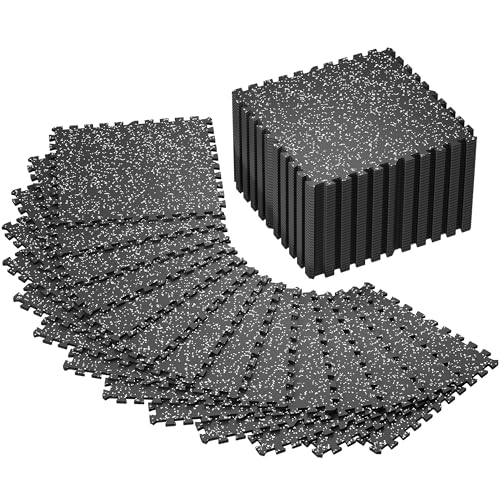
A 96-square-foot coverage with interlocking edges means you can outfit an entire home gym floor in one box, snapping tiles together to fit oddly shaped rooms or leaving borders off for a clean finish. The EPDM rubber top handles heavy equipment like treadmills and kettlebells without tearing, while the high-density EVA foam underneath absorbs shock and quiets footfalls, so your downstairs neighbor won’t hear every deadlift rep. This mat suits anyone who wants a solid, protective surface for general strength training, HIIT, or yoga without breaking the bank on thick rubber slabs.
The trade-off is thickness: at 0.4 inches, it’s thinner than some heavy-lifting mats, such as the SUPERJARE Extra-Thick 1-inch version. Assembly requires locking each of the 24 tiles together, each with two detachable borders that you align and press into place. Once down, the mat stays put and doesn’t shift during burpees or landmine presses. If your routine is mostly bodyweight, dumbbells, and cardio machines, this is a versatile, durable floor that balances protection and affordability.
Product photos
SUPERJARE Extra-Thick Gym Flooring
What We Like
- 1-inch thickness for heavy drops
- EPDM rubber top for strong traction
- Interlocking tiles with detachable borders
- Reduces impact noise for shared spaces
Trade-offs
- EVA foam base, not solid rubber throughout
- Heavier than thinner mats for rearranging
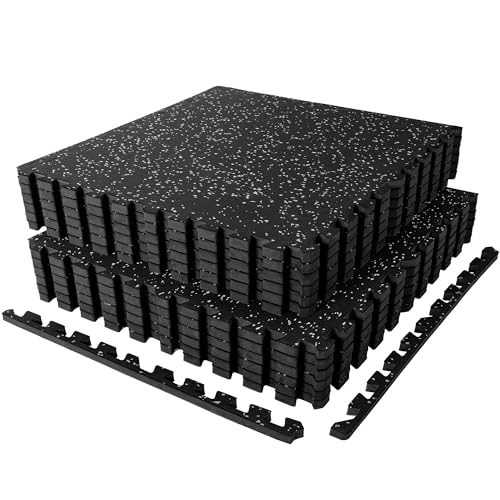
A full inch of padding means this mat takes the sting out of dropping a loaded barbell or slamming kettlebells during HIIT circuits. The EPDM rubber top grips your shoes and equipment, while the EVA foam base absorbs shock so your floor and joints feel the difference. For anyone setting up a serious home gym where heavy weights and high-impact moves are the norm, that thickness and material combo is exactly what you want underfoot. It also keeps noise down, which matters if your gym shares a ceiling with a downstairs neighbor or a family room.
Twelve 24-inch tiles cover 48 square feet, which is enough for a deadlift platform or a compact home gym setup. If you need a larger continuous area, the SUPERJARE 0.4-inch version covers twice the space with less weight, but you lose that full inch of cushion. Stick with this mat if your main concern is protecting your floor and joints from heavy impacts, and you can always add another pack later.
Product photos
Marcy Interlocking Gym Floor Mat

What We Like
- Dual-density rubber and foam for impact absorption
- Rubber top wipes clean easily
- Interlocking tiles expand coverage as needed
- Cushioned foam layer reduces noise and vibration
Trade-offs
- Only 16 sq ft per pack, requires multiple packs for larger rooms
- Thinner than 1-inch mats for heavy deadlifts or dropping barbells
A dual-density design, tough rubber on top, cushioned EVA foam underneath, means this mat handles both heavy equipment and your joints. The rubber surface resists wear from dumbbells, treadmills, and HIIT drills, while the foam layer absorbs shock and quiets footfalls, so you can train without waking the whole house. It’s ideal for a home gym where you want protection for your floor and your knees, all in a package that snaps together without tools and expands as your space grows.
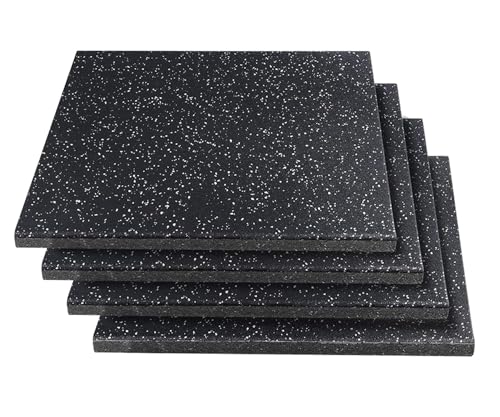
A single pack of four 2×2-foot tiles covers 16 square feet. That’s enough for a small workout zone or under one machine, but a garage gym will need two or three packs. For most home gym setups, dumbbells, kettlebells, bodyweight circuits, and cardio, it strikes a balanced middle ground between comfort and durability.
Product photos
AIRHOP Exercise Equipment Mats

What We Like
- 48 sq ft coverage from 12 tiles
- Dual-layer rubber and EVA foam
- Interlocking locks prevent shifting
- Waterproof and easy to clean
Trade-offs
- At 0.56 in, less cushion than thicker options
- Heavier than some foam-only mats at 29 lbs
Covering 48 square feet with 12 interlocking tiles, the AIRHOP Exercise Equipment Mats give you a full 8×6 foot workout zone without piecing together odd shapes. That dual-layer build, textured rubber on top, high-density EVA foam underneath, means your barbell or dumbbell drops get absorbed without scuffing the floor, and the larger interlocking locks keep the whole surface from sliding apart mid-session. It’s a straightforward setup for anyone turning a garage corner or basement into a dedicated gym space, where you want one continuous area for deadlifts, cardio, or stretching without worrying about gaps or shifting tiles.
The main difference is thickness. At 0.56 inches, this mat handles heavy equipment and general impact well, but if you’re regularly dropping heavy deadlifts or stacking heavy kettlebells, the SUPERJARE Extra-Thick Gym Flooring at a full inch offers more shock absorption for that kind of abuse. On the flip side, the AIRHOP stays thinner and lighter than that thicker option, which makes it easier to move or reconfigure when your workout space needs to double as a playroom or storage area. For most home gym setups, machines, benches, bodyweight work, this coverage and durability hit a practical middle ground.
Product photos
Ackland AMZ-RFM-0002 Rubber Mat

What We Like
- 0.75-inch solid rubber absorbs heavy weights
- Anti-vibration design keeps workouts quiet
- Non-slip surface for stable exercises
- Easy to clean with a wipe or brush
Trade-offs
- At 69.3 pounds, moving it is a two-person job
- Single large mat limits room layout flexibility
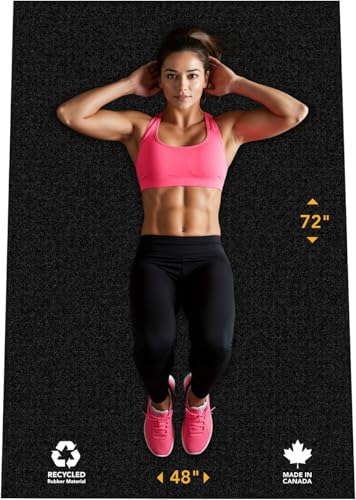
A full 72 by 42 inches of solid rubber at 69.3 pounds means this mat stays put under heavy weights, absorbing shock and protecting your floor without shifting around. The 0.75-inch thickness provides a quiet, stable surface that minimizes vibrations during workouts, so you can exercise without disturbing others. It’s built for someone who wants a single, no-nonsense slab that just works, no assembly, no puzzle pieces to line up.
The Ackland mat weighs 69.3 pounds and measures 72 by 42 inches, so once you place it, you’re not moving it around easily, and you can’t adjust it to fit an irregular room. The Marcy Interlocking Gym Floor Mat comes as a 48-inch square tile that connects to others, letting you cover different layouts. You get dense rubber from the Ackland, but you sacrifice flexibility for that stability. Best for someone who wants a fixed, heavy-duty surface and doesn’t need to reconfigure the floor.
Product photos
AIRHOP Heavy Weight Gym Flooring

What We Like
- Dual-layer rubber and EVA foam design
- Textured non-slip top surface
- Supports heavy machinery and weights
- Waterproof and easy to clean
Trade-offs
- At 0.79 in, thinner than 1 in options
- Tile-based assembly means seams between pieces
A 0.79-inch thickness with a rubber top and high-density EVA foam bottom provides floor protection against scratches, scuffs, and dents from heavy machinery and workout gear. The textured rubber surface is non-slip, and the foam layer helps minimize noise and vibration. For someone setting up a home gym who wants floor protection and a surface that stays put during use, this set covers 48 square feet right out of the box.
At 0.79 inches thick, this mat provides sturdy support for stationary equipment and a non-slip surface, but it doesn’t match the cushion of a full 1-inch mat like SUPERJARE Extra-Thick Gym Flooring. That extra quarter-inch matters if you’re dropping heavy deadlifts or standing for long sessions on hard concrete. If your priority is reliable floor protection without the bulk and cost of thicker mats, this set gets the job done cleanly.
Product photos
Dalmbox Rubber Top Gym Flooring
What We Like
- Cushioned foam core absorbs impact
- Textured rubber top provides reliable traction
- Easy to wipe clean after workouts
- Engineered to resist tearing and cracking
Trade-offs
- Foam core, not solid rubber, less durable under extreme weight
- Thinner than some options at 0.56 inches
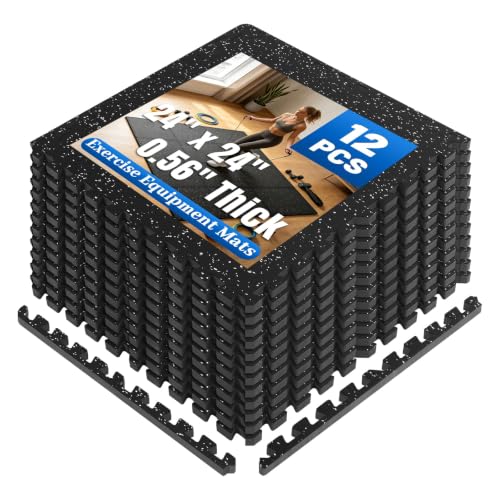
At 0.56 inches thick with a rubber top over a foam core, the Dalmbox tiles give you a forgiving surface that cushions your joints during bodyweight moves and light dumbbell work. The textured rubber keeps your mat or equipment from sliding around. That combination makes it a smart, budget-friendly choice for someone setting up a home gym on a tighter budget, you get decent protection for your floor and enough shock absorption for everyday workouts without overspending on heavy-duty rubber slabs. The interlocking tiles cover 48 square feet, which is plenty for a small to mid-size workout area, and the easy-clean top means you can wipe up sweat and dust in seconds.
This mat uses a foam core with a rubber top, not solid rubber, so it’s built for cushioning and everyday workouts rather than extreme heavy use. For home exercisers doing bodyweight circuits, light dumbbell work, or using cardio equipment, the Dalmbox gives you a practical floor that does the job. If your setup involves heavy powerlifting or dropping weights from overhead, a denser option like the Ackland 0.8-inch thick rubber mat may be a better fit.
Product photos
AIVORO Interlocking Gym Floor Tiles
What We Like
- Recycled rubber top layer
- Water-resistant, wipe-clean surface
- Interlocking edges limit separation
- Cushioned EVA foam base
Trade-offs
- Thinner than some gym mats at 0.6 inches
- Heavier than some rival mats at 29 pounds per 12-pack
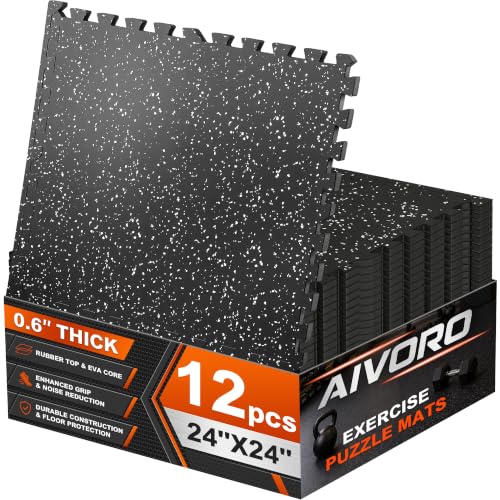
A recycled rubber top bonded to high-density EVA foam gives these tiles a cushioned surface that helps soften impact during floor work while the slip-resistant texture supports steady footing. The 0.6-inch thickness is suitable for yoga, HIIT, stretching, and bodyweight training, and the interlocking edges hold together during movement. The water-resistant surface wipes clean with a damp cloth, which keeps maintenance simple after workouts.
The 0.6-inch thickness provides less padding than thicker options such as SUPERJARE’s 1-inch Extra-Thick Gym Flooring, so if your routine involves heavy drops from dumbbells or barbells, you may want to consider a thicker mat. For floor-based exercises like bodyweight circuits and light dumbbell work, this thickness works well and keeps the tiles easy to rearrange.
Product photos
Dinoflex Rubber King Multi-Purpose Exercise Mat
What We Like
- 100% recycled tire rubber
- FloorScore certified low odor
- Non-slip, water-resistant surface
- 5-year limited warranty
Trade-offs
- At 3mm, thin for heavy deadlifts
- Not recommended over carpet
- Single 4×6 sheet limits coverage
At just 3mm thick, this mat sits close to the floor, giving you a stable surface for bodyweight circuits, yoga flows, and light dumbbell work. Made entirely from recycled rubber tires and FloorScore certified for low VOCs, it’s a low-odor choice that supports indoor air quality. If your routine leans toward stretching, HIIT, or cardio machines, this mat offers a non-slip, water-resistant surface that’s suitable for those activities.
A thickness of 3mm is thin for heavy deadlifts or dropping iron, where you’d want the impact absorption of a thicker mat like the 0.8-inch Ackland rubber mat. It also comes as a single 4×6 sheet, so covering a full gym floor means buying multiple units, whereas interlocking tile options like the SUPERJARE Rubber Top mats let you expand room by room. For a dedicated home gym space where you’re mostly moving bodyweight or light gear, this is a low-odor, durable mat that does what it promises.
Product photos
MYOYAY 4 Pack Interlocking Heavy Duty Rubber Flooring Mat
What We Like
- 1-inch thick for heavy shock absorption
- Anti-vibration and anti-slip surface
- Includes 12 interlocking buckles
- Water-resistant and easy to clean
Trade-offs
- Small coverage per pack (11.12 sq ft)
- No rubber top layer over foam core
This mat is a full inch thick and made of high-density rubber, so it absorbs impact and shock from heavy equipment while protecting your floor. The textured, non-skid surface gives you a stable footing during exercise, and the anti-vibration design helps reduce noise transfer. For a small workout area or under a single machine, these tiles provide solid cushion without feeling too soft underfoot.
Product photos
How We Evaluated Rubber Mats For Home Gym
This guide is research-based. We examined manufacturer data sheets, expert round-ups from fitness publications, and patterns in verified owner feedback to understand what works, and what doesn’t, for a home gym.
The four criteria that mattered most were thickness (for impact absorption), material density (rubber vs. Foam vs. Blends), coverage per pack (how many tiles or square feet you get), and surface texture (traction for dynamic movements and stability under heavy gear). Thickness and material density directly affect noise reduction and floor protection. That is why they dominate our picks.
A research-led evaluation has honest limits: we haven’t dropped barbells on every mat ourselves, and owner feedback can vary with floor type and humidity. But by cross-referencing specs with real-world reports, we’ve identified the best options for rubber flooring that consistently satisfy home gym owners.
What To Look For In Rubber Mats For Home Gym
Choosing the right rubber mat starts with matching thickness and material to your workout style. A yoga-and-bodyweight setup needs less cushion than a power rack with iron plates.
Key buying criteria: Thickness (0.4-1 inch for most needs), material type (solid rubber, rubber-top/foam-core blends, or recycled rubber), coverage area per pack, and surface texture for traction.
Thickness and Impact Absorption
Thickness is the single most important spec for home gym mats. Mats under half an inch protect against scratches and light dumbbell drops but won’t save your subfloor from a heavy plate. For Olympic lifting or heavy deadlifts, look for three-quarters of an inch or more; the SUPERJARE Extra-Thick Gym Flooring uses a full inch of material. Thinner mats like the AIVORO Interlocking Gym Floor Tiles (0.6 inches) work well for bodyweight training and stretching.
Material: Rubber vs. Foam Blends
Solid rubber mats like the Ackland AMZ-RFM-0002 absorb vibration and resist tearing better than foam-core alternatives, but they’re heavy and hard to move. Rubber gym tiles with an EPDM or recycled rubber top and an EVA foam base, like the SUPERJARE and Marcy models, offer a good balance of traction, cushion, and manageable weight. Pure foam mats lack the durability for heavy equipment.
Coverage and Tile Design
Interlocking tiles let you customize your layout and expand later, but seams can collect dust and sweat. Single-sheet mats like the Dinoflex Rubber King give a surface without seams but limit your floor plan. Check the square footage per pack: the AIRHOP Exercise Equipment Mats cover 48 square feet from 12 tiles, while the MYOYAY thick tiles cover a smaller area per pack. For large garages, interlocking tiles are usually the practical choice.
- Measure your workout area before buying, add 6 inches on each side for equipment clearance.
- Check your subfloor: mats over carpet need a denser base to prevent shifting.
- Look for detachable border pieces if you want a clean edge against walls.
- Consider weight: heavy mats like the Ackland need two people to position.
- Read the warranty: the Dinoflex Rubber King offers a 5-year limited warranty.
Rule of thumb: If you drop weights, buy at least three-quarters of an inch thick. If you do bodyweight and cardio, half an inch is enough.
Rubber Mats For Home Gym Compared
The table below compares thickness, material, coverage, and best use for each of our picks so you can see at a glance which mat fits your space and workout style.
| Product | Thickness | Coverage | Material | Tile Size |
|---|---|---|---|---|
| SUPERJARE Rubber Top Exercise Mat | 0.4 inches | 96 sq ft (24 tiles) | EPDM rubber top / high-density EVA foam base | 24 x 24 inches |
| SUPERJARE Extra-Thick Gym Flooring | 1 inch | 48 sq ft (12 tiles) | EPDM rubber top / EVA foam base | 24 x 24 inches |
| Marcy Interlocking Gym Floor Mat | 0.8 inches | 16 Sq Ft | Dual-density: rubber top, EVA foam base | 48.0 x 48.0 inches |
| AIRHOP Exercise Equipment Mats | 0.56 inches | 48 sq ft (12 tiles) | Rubber top / EVA foam bottom | 24 x 24 inches |
| Ackland AMZ-RFM-0002 Rubber Mat | 0.75 inches | N/A | Solid rubber | 72 x 42 inches |
| AIRHOP Heavy Weight Gym Flooring | 0.79 in | 48 sq ft (12 tiles) | Rubber top / EVA foam bottom | 24 x 24 inches |
| Dalmbox Rubber Top Gym Flooring | 0.56 inches | 48 Sq Ft (12 tiles, 24×24 inches each) | Rubber top with foam core | 24×24 inches |
| AIVORO Interlocking Gym Floor Tiles | 0.6 inches | 48 sq ft (12 tiles) | Recycled rubber top / EVA foam base | 24 x 24 inches |
| Dinoflex Rubber King Multi-Purpose Exercise Mat | 3mm | N/A | 100% recycled rubber | 4' x 6' |
| MYOYAY 4 Pack Interlocking Heavy Duty Rubber Flooring Mat | 1 inch | 11.12 Sq.Ft | High density rubber | 20" x 20" |
Frequently Asked Questions
What thickness of rubber mat do I need for a home gym?
For bodyweight exercises, yoga, and light dumbbell work, 0.4 to 0.6 inches is sufficient. For heavy deadlifts, Olympic lifting, or dropping loaded barbells, choose at least 0.75 inches, ideally 1 inch. Thicker mats also reduce noise transfer to rooms below.
Can I put rubber mats over carpet?
Yes, but only with dense, thick mats that won’t compress unevenly. Avoid thin foam-core mats, as they can buckle or shift on carpet. Look for flooring options specifically designed with a firm rubber base to stay flat over carpet.
How do I clean rubber gym mats?
Wipe mats with a mild soap-and-water solution or a dedicated rubber floor cleaner. Avoid harsh chemicals that can dry out the rubber. A microfiber mop works well for large areas, and you can find mops for gym floors that handle textured surfaces without leaving residue.
Do rubber gym mats smell?
New rubber mats can have a distinct odor, especially those made from recycled tire rubber. EPDM rubber tops and FloorScore-certified options like the Dinoflex Rubber King tend to have lower odor. Most mats air out within a few days to a couple of weeks in a ventilated space.
How much coverage do I need for a home gym?
Measure your equipment footprint and add at least 12 inches on each side for safe movement. A basic weight bench and rack setup needs about 6×8 feet (48 square feet). For a full garage gym with multiple stations, plan for a larger space, using interlocking floor tiles to expand as needed.
The Bottom Line
For most home gym owners, the SUPERJARE Rubber Top Exercise Mat is the best overall choice. Its modular tiles, durable EPDM surface, and decent impact protection work for everything from dumbbell circuits to treadmill placement without breaking the bank on full-room coverage.
If you drop heavy weights regularly, step up to the SUPERJARE Extra-Thick Gym Flooring for that full inch of cushion. Budget-minded exercisers will find the Dalmbox Rubber Top Gym Flooring a solid entry point. The Ackland solid rubber mat is worth paying more for if you want a single sheet without seams under a heavy power rack.
The most important factor is matching thickness to your workout. Measure your space, know your heaviest lift, and buy the thickest mat your floor plan and budget allow. Your joints, and your downstairs neighbors, will thank you.
