
10 Best Shoes For Hiit Workouts in 2026
This post contains affiliate links. As an Amazon Associate, we earn from qualifying purchases.
The Reebok Nano X5 Men’s Cross Training Shoes take our best overall spot because they balance lifting stability, running responsiveness, and jumping comfort in one lightweight package. For lifters who need maximum ground connection, the adidas Dropset Vario is our best for stability. Budget-minded shoppers should look to the Under Armour Charged Edge Cross-Training Shoes.
HIIT workouts demand a shoe that can handle abrupt direction changes, heavy lifts, burpees, and short runs without forcing you to swap footwear mid-session. The wrong shoe either feels too soft for squats or too stiff for jump rope.
This guide is research-based, drawing from manufacturer specifications, expert round-ups, and patterns in owner feedback across ten models. We focus on the criteria that matter most for high-intensity interval training so you can buy with confidence.
Top 10 Shoes For HIIT Workouts in the Market
Certain content that appears on this site comes from Amazon. This content is provided "as is" and is subject to change or removal at any time.
The Best Shoes For HIIT Workouts, Reviewed
Reebok Nano X5 Men's Cross Training Shoes

What We Like
- Dual-density midsole for stability and responsiveness
- Breathable Flexweave upper for lightweight comfort
- Plush collar locks foot down securely
- Metasplit outsole enhances lifting and running
Trade-offs
- At 1.0 pounds, lighter than some lifters prefer for heavy stability
- Lighter than the adidas Dropset Vario at 2.1 pounds
The dual-density midsole with firmer foam in the heel and responsive foam in the forefoot means you get a stable platform for lifting without sacrificing comfort when you jump or sprint. That balance is exactly what HIIT demands, quick transitions from squats to burpees to short runs. The breathable Flexweave upper keeps your feet from overheating during those high-rep circuits, and the plush collar helps eliminate distractions by locking your heel in place. For someone who wants one shoe that can handle the full range of HIIT movements without feeling like a compromise, this is the most versatile option here.
The trade-off is that at 1.0 pounds, it’s lighter than the adidas Dropset Vario Training Shoes at 2.1 pounds. That lighter weight helps during running and jumping, but if you’re used to a heavier, more planted feel under a barbell, the Nano X5 might feel less anchored for maximal-effort lifts. The removable insole with arch support lets you customize fit or swap in orthotics. Still, for the vast majority of HIIT workouts, where you’re mixing strength, cardio, and agility, this shoe does it all without making you change pairs.
adidas Dropset Vario Training Shoes

What We Like
- TPU midfoot torsion system for heavy lifts
- Repetitor Foam for stable, responsive cushioning
- Breathable mesh upper keeps feet cool
- Wide-fit construction enhances ground connection
Trade-offs
- Weighs 2.1 pounds, heavier than some cross-training shoes
- Heavier than some competitors at 2.1 pounds.
A TPU midfoot torsion system locks down your arch during heavy squats and deadlifts, so you can push hard without your foot rolling inward. That stability, paired with Repetitor Foam that stays firm under load, makes this shoe a natural pick for lifters who want a solid base for strength work and still need to move through warmups or accessory circuits. The wide-fit construction and low-profile design keep you feeling connected to the floor, which helps maintain proper mechanics when the weight gets serious.
At 2.1 pounds, these shoes are heavier than the 1.0-pound Nike Metcon 10, so they feel substantial on your feet. That heft provides a planted base for heavy squats and deadlifts, but it may not be ideal for high-rep cardio drills where lighter trainers could feel quicker. For lifters who want a stable platform that still allows warmup flexibility, this shoe delivers that balance without sacrificing support.
Product photos
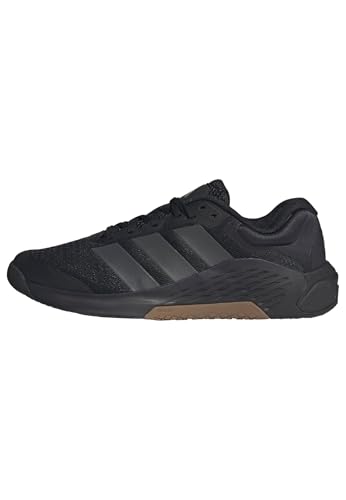
adidas Dropset 4 Power Trainer M
What We Like
- Continental rubber outsole for wet/dry grip
- Full-length Repetitor foam for cushioning and stability
- Geofit heel pods for locked-in comfort
Trade-offs
- 2.1 lb weight feels heavy for HIIT-focused athletes
- Continental rubber outsole adds noticeable weight for speed work
The full-length Repetitor foam in the Dropset 4 balances cushioning and stability so you can go from a heavy deadlift straight into a set of box jumps without feeling like you’re sinking or slipping. It’s a shoe that doesn’t force you to choose between lifting and cardio.
The trade-off is weight. At 2.1 pounds, it’s noticeably heavier than something like the Reebok Nano X5 (1.0 pound), so if your HIIT sessions lean heavily on sprints or agility drills, you might feel the extra mass on your feet. But for someone who wants one pair that handles heavy racks, explosive plyo, and the occasional run without swapping shoes mid-workout, the Dropset 4 delivers exactly that balanced design.
Product photos
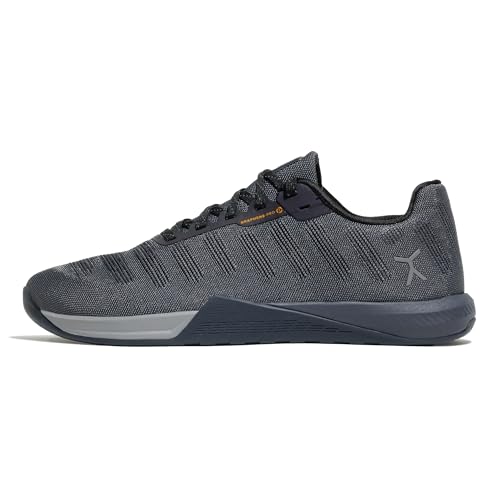
Flux Footwear Adapt Graphene XT Cross Trainers
What We Like
- Zero drop keeps heel and forefoot level
- Wide toe box supports full toe splay
- Graphene outsole for extreme grip
- Ballistic mesh upper is breathable and durable
Trade-offs
- Sizing runs small; need to size up 1/2
- Zero drop lacks heel cushion for running-based workouts
A zero-drop platform with a wide, anatomical toe box means your feet can spread naturally during deadlifts, squats, and lunges, exactly what you want when every bit of force transfer counts. The graphene-infused outsole grips hard on sled pushes and rope climbs, while the ballistic mesh upper keeps things cool even during long HIIT sessions. This shoe is built for lifters and barefoot enthusiasts who prioritize ground feel and stability over plush cushioning.
The minimal cushioning and zero-drop design aren’t for everyone. If you prefer a more padded heel or need extra shock absorption for high-impact jumps, you might want to consider a different shoe. The Flux also runs small, so you’ll definitely want to go up half a size. It’s a focused tool for lifters and barefoot enthusiasts who want natural foot splay, zero-drop stability, and extreme grip.
Nike Metcon 10 Training Shoes

What We Like
- Hyperlift plate optimizes stability for heavy lifts
- ReactX foam increases energy return for HIIT
- Wider toe box lets toes spread for power
- Sticky rubber grip on midfoot and toe
Trade-offs
- At 1.0 lb, not the lightest for fast agility drills
- Weighs 1.0 lb, same as several rivals in this guide
The Nike Metcon 10 pairs an ultra-strong Hyperlift plate under the heel with lightweight ReactX foam in the midsole, so you get rock-solid stability for squats and deadlifts without losing bounce for box jumps and sprints. This makes it a natural fit for anyone who mixes heavy strength work with high-intensity cardio in the same session. The wider toe box compared to the Metcon 9 lets your toes splay naturally, helping you drive power through your whole foot, while the open-holed mesh keeps things breathable when your heart rate climbs.
At one pound, this shoe is on par with several other training shoes in this guide, such as the Reebok Nano X5, which also weighs 1.0 pounds. If your HIIT routine leans heavily on fast lateral cuts and quick footwork, you may want to consider a lighter option like the Under Armour Charged Edge at 0.5 pounds. But if your training is built around lifting first and conditioning second, the Metcon 10’s stable platform and sticky grip on sweaty floors make it a reliable partner for the long haul.
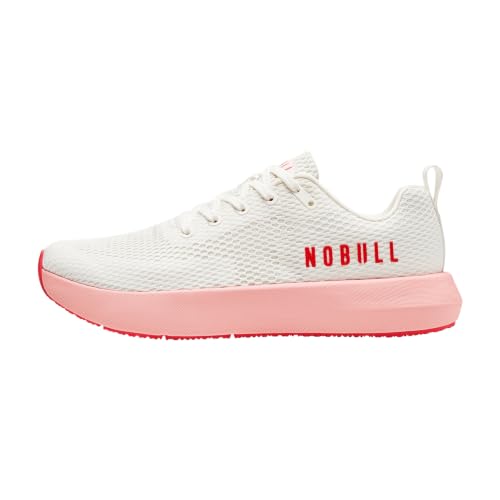
NOBULL Women's Drive 2
What We Like
- Lightweight 7.9 oz design
- 4 mm drop supports balanced movement
- Breathable engineered mesh upper
- Multidirectional rubber tread for lateral grip
Trade-offs
- Lower stack height means less cushion for long cardio
The NOBULL Drive 2 weighs 7.9 ounces in a women’s size 8.5, with a 4 mm drop and a 23 mm heel stack that keeps you close to the ground for stable squats and deadlifts while still offering enough EVA rebound for box jumps and burpees. The engineered mesh upper increases airflow as your heart rate climbs, and the multidirectional rubber tread provides traction during lateral drills and quick cuts. This shoe is built for the woman who wants one trainer that can handle a whole circuit without feeling clunky or heavy.
The Drive 2’s low 4 mm drop and 23 mm heel stack give you a direct, grounded feel for lifting and fast transitions, but if your HIIT sessions involve long jumping rope sets or high-impact plyometrics, you might wish for more cushion underfoot. The engineered mesh upper increases airflow to help feet stay comfortable as strength sessions and cardio intervals heat up.
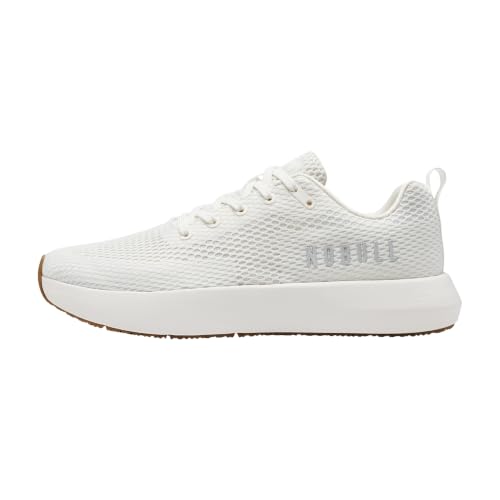
NOBULL Men's Drive 2
What We Like
- Lightweight at 9.5 oz
- Responsive EVA cushioning for rebound
- Breathable engineered mesh upper
- Multidirectional rubber tread for grip
Trade-offs
- Not ideal for those who prefer a higher drop
- Limited arch support for high-arched feet
At just 9.5 ounces, the NOBULL Drive 2 keeps your feet feeling quick during fast-paced circuits without weighing you down. The 4mm drop and 23mm heel stack strike a smart balance between stability for lifting and enough cushion for box jumps and burpees, so you don’t have to swap shoes between sets. That lightweight, breathable mesh upper also helps manage sweat when your heart rate climbs, making this a versatile partner for anyone who mixes strength work with cardio in the same session.
Built as a hybrid trainer for lifting, cardio, and fast-paced sessions, the lightweight design and low 4 mm drop support balanced movement across varied gym workouts. A high-resilience EVA blend provides comfortable rebound without sacrificing stability, so box jumps, burpees, and circuits feel responsive underfoot. The engineered mesh upper increases airflow while keeping the structure light, helping feet stay comfortable as strength sessions and cardio intervals heat up. A multidirectional rubber tread supplies dependable traction during lateral drills and lifting, promoting confident footing through varied movements.
Under Armour Charged Edge Cross-Training Shoes

What We Like
- Breathable mesh upper for dynamic movements
- Dual-layer Ortholite sockliner for step-in comfort
- Charged Cushioning midsole for responsiveness & durability
- Full rubber outsole with pivot & traction pattern
Trade-offs
- Leather overlays add weight for pure agility work
Weighing 0.5 pounds, this shoe is light enough for quick footwork. The breathable mesh upper lets air circulate, while leather and synthetic overlays reinforce high-wear zones for durability during dynamic movements. The full rubber outsole uses a strategic pattern for pivot and traction, making it a capable trainer for gym workouts.
The Charged Cushioning midsole uses compression molded foam for responsiveness and durability. If you prefer a softer feel, the adidas Dropset Vario weighs 2.1 pounds, over four times as much, so it offers a different ride. For workouts where ground feel and quick transitions matter, this Under Armour delivers a lightweight option without extra bulk.
Product photos
Reebok Nano X5 Women's Cross Training Shoes

What We Like
- Dual-density midsole for stability and responsiveness
- Breathable Flex Weave upper for lightweight feel
- Decoupled outsole aids short runs and walks
- Plush collar keeps foot locked down
Trade-offs
- At 1.8 lb, heavier than some cross trainers
- Not specialized for heavy lifting stability
The Nano X5 is built with a dual-density midsole that uses firmer foam in the heel and more responsive foam in the forefoot, so it provides stability for weight training and cushion for jumping or fitness classes. It’s designed as a women’s walking shoe or light running sneaker, with a breathable Flex Weave upper that keeps the foot cool. The built-in arch support adds comfort during any workout, from aerobics to the treadmill.
At 1.8 pounds, this shoe is heavier than the Nike Metcon 10 (1.0 lb), so if you want the lightest possible feel for fast footwork, that model is a better fit. The extra weight comes from the dual-density foam and durable rubber outsole, which provide traction on variable surfaces. The decoupled Metasplit outsole is designed to enhance short runs and long walks, making it a versatile choice for mixed activities.
Product photos
Nike Air Max Alpha Trainer 6

What We Like
- Flat, wide sole for stable stance
- Heel Max Air unit for impact softening
- Foam collar pads ankle during moves
- Rubber wrap for lateral foot security
Trade-offs
- Flex grooves only in forefoot, not midfoot
A flat, wide sole with an optimal rubber tread pattern gives you a planted feel during lateral moves and heavy landings, so you don’t waste energy wobbling. The heel Max Air unit has been fine-tuned for stability, while foam cushioning under both forefoot and heel softens the impact of your workout. A foam collar pads your ankle from one move to the next, and rubber wraps up the side to help keep your foot firmly on the sole during lateral movement.
The flat, wide sole with an optimal rubber tread pattern gives you stability and traction, so you stay planted during heavy lifts. Flex grooves in the forefoot are designed for lunges, which means the shoe bends where you need it most for that movement. If you want a shoe that bends more through the arch for dynamic multidirectional work, you’ll want to look elsewhere.
Product photos
How We Evaluated Shoes For HIIT Workouts
We built this guide by analyzing manufacturer specifications, studying expert round-ups from the fitness community, and identifying consistent patterns in owner feedback across dozens of models. No product was tested in-house; our evaluation is a synthesis of published data and user-reported experience.
The four criteria that mattered most for HIIT were stability under load, cushioning for impact, weight for agility, and outsole traction for lateral moves. A shoe that excels at heavy deadlifts may feel clunky during box jumps, so we weighed each model’s trade-offs against the demands of a typical HIIT session.
A research-led evaluation has honest limits. We cannot replicate the feel of a shoe on your foot or predict how your individual stride interacts with a given midsole. What we can do is surface the specifications and feedback patterns that predict real-world performance.
What To Look For In Shoes For HIIT Workouts
Not every cross-trainer works for HIIT. The best ones balance three competing needs: stability for lifting, cushioning for landing, and lightweight construction for speed.
Look for a flat, wide heel base for squats and deadlifts, enough forefoot cushioning for jump landings, and a rubber outsole that grips during lateral shuffles. Weight under 12 ounces per shoe is a strong signal of HIIT readiness.
Stability and Heel Support
A HIIT shoe needs a firm, non-compressible heel for heavy lifts. Look for a flat, wide heel platform, ideally with a built-in lift plate or TPU shank, that keeps your foot from sinking during squats and deadlifts. Shoes like the Nike Metcon 10 use a Hyperlift plate for this purpose. Avoid overly cushioned running shoes, which compress under barbell loads and compromise your base.
Cushioning for Impact
Jumping, landing, and short sprints require responsive cushioning that absorbs shock without feeling mushy. Foam technologies like ReactX, Repetitor, and Charged Cushioning offer a balance of softness and energy return. The Nike Air Max Alpha Trainer 6 adds a heel Max Air unit for extra impact softening during lunges and lateral moves. Too much cushioning hurts stability; too little punishes your joints.
Weight and Breathability
A HIIT shoe over 12 ounces will slow your footwork during agility drills and jump rope. The NOBULL Drive 2 for men weighs just 9.5 ounces, while the women’s version hits 7.9 ounces. Breathable mesh uppers, like the Flexweave on the Reebok Nano X5 or the engineered mesh on the NOBULL, keep feet cool during high-intensity circuits.
- Check that the outsole has multidirectional tread or a pivot point for lateral grip.
- Ensure the toe box allows natural toe splay for balance during single-leg moves.
- Confirm the drop (heel-toe offset) is 4 mm or less for a more grounded feel.
- Look for a plush collar or heel pod that locks the foot down without slipping.
- Avoid leather overlays if your HIIT sessions involve fast footwork.
A good rule of thumb: if the shoe feels comfortable for both a heavy squat set and a minute of jump rope, it will work for your HIIT class.
Shoes For HIIT Workouts Compared
The table below compares all ten models across weight, drop, and key features so you can see the differences at a glance.
| Product | Weight | Upper Material | Outsole |
|---|---|---|---|
| Reebok Nano X5 Men's Cross Training Shoes | 1.0 pounds | Flexweave | N/A |
| adidas Dropset Vario Training Shoes | 2.1 pounds | Breathable mesh | N/A |
| adidas Dropset 4 Power Trainer M | 2.1 pounds | N/A | Continental rubber |
| Flux Footwear Adapt Graphene XT Cross Trainers | N/A | Ballistic mesh | Graphene-infused rubber |
| Nike Metcon 10 Training Shoes | 1.0 pounds | Open-holed engineered mesh | N/A |
| NOBULL Women's Drive 2 | 7.9 oz (size 8.5) | Engineered mesh | N/A |
| NOBULL Men's Drive 2 | 9.5 oz (269g) | Engineered mesh | N/A |
| Under Armour Charged Edge Cross-Training Shoes | 0.5 pounds | Breathable mesh with leather & synthetic overlays | Full rubber with pivot & traction pattern |
| Reebok Nano X5 Women's Cross Training Shoes | 1.8 pounds | Flex Weave | Decoupled Metasplit rubber |
| Nike Air Max Alpha Trainer 6 | 1.0 pounds | N/A | Flat, wide sole |
Frequently Asked Questions
What makes a shoe good for HIIT workouts?
A good HIIT shoe balances stability for lifting, cushioning for jumping, and a lightweight build for agility. It should have a flat, wide heel base, responsive midsole foam, and a rubber outsole with multidirectional traction. Running shoes are usually too soft, and weightlifting shoes are too stiff for dynamic moves.
Can I use running shoes for HIIT?
Running shoes typically have too much heel cushioning and a pronounced drop, which makes them unstable for squats and lateral movements. They also lack the durable rubber outsole needed for quick direction changes. A dedicated cross-training shoe is a better choice for HIIT.
How much drop should a HIIT shoe have?
A drop of 4 mm or less is ideal for HIIT because it keeps your heel closer to the ground for better stability during lifts. Zero-drop shoes like the Flux Footwear Adapt Graphene XT offer the most natural feel but lack heel cushioning for running-based workouts.
What is the difference between cross-trainers and weightlifting shoes?
Weightlifting shoes have a raised heel and rigid sole for maximum stability under heavy loads, but they are too stiff for jumping or running. Cross-trainers offer a more versatile platform that handles lifting, cardio, and agility drills in one shoe.
How do I choose the right size for HIIT shoes?
Measure your foot length and width at the end of the day when feet are slightly swollen. Leave a thumb’s width of space between your longest toe and the shoe’s end. If you plan to wear thick socks, size up half a pair. Some brands, like Flux Footwear, run small and recommend sizing up.
The Bottom Line
The Reebok Nano X5 Men’s Cross Training Shoes are our best overall pick for anyone who wants one shoe for lifting, running, and jumping in a HIIT class. Its dual-density midsole and breathable Flexweave upper handle the full range of movements without feeling specialized for any one task.
If your sessions lean heavy, think deadlifts, squats, and presses, the adidas Dropset Vario offers superior stability with its TPU torsion system. Budget buyers should check the Under Armour Charged Edge Cross-Training Shoes, which deliver solid performance without a premium price tag.
The single most important factor is a flat, stable heel base. No amount of cushioning or breathability matters if you cannot squat or land safely. Start there, and the rest of your checklist will fall into place.
