
10 Best Size Exercise Balls For Pregnancy in 2026
This post contains affiliate links. As an Amazon Associate, we earn from qualifying purchases.
For expectant mothers, the ProBody Pilates Yoga Ball is the best overall pick, offering five sizes to fit heights from 4’4″ to 6’3″+ and recommended by OBs, midwives, and doulas. The BABYGO Birthing Ball handles higher weight capacities, while the Trideer Pregnancy Ball provides a non-slip surface for labor support.
Finding the right size exercise ball during pregnancy matters more than you might think. A ball that is too small or too large can throw off your posture, make sitting uncomfortable, and reduce the effectiveness of gentle movements that help with back pain and labor preparation.
This guide is built on manufacturer specifications, expert recommendations from pregnancy and fitness professionals, and patterns in owner feedback. We cover what to look for, compare the top 10 options, and answer common questions to help you choose with confidence.
Top 10 Exercise Balls For Pregnancy in the Market
Certain content that appears on this site comes from Amazon. This content is provided "as is" and is subject to change or removal at any time.
The Best Exercise Balls For Pregnancy, Reviewed
ProBody Pilates Yoga Ball

What We Like
- Five sizes for heights 4'4" to 6'3"+
- Anti-burst PVC deflates slowly if punctured
- Includes dual-action pump and exercise guide
- Recommended by OBs, midwives, and doulas
Trade-offs
- Needs 24-hour settle before full inflation
- No non-slip surface mentioned for labor use
Five sizes from 45 to 85 cm let you match the ball to your height, and the 330-pound load capacity covers most users through pregnancy and postpartum recovery. The anti-burst PVC is designed to deflate slowly if punctured, a safety feature physical therapy clinics look for. Obstetricians, midwives, and doulas recommend it for gentle hip rotation and pelvic mobility, making it a versatile pick for active sitting at a desk, labor prep, or guided PT homework between visits. The included dual-action pump and printed exercise guide get you started right away, and the 12-month replacement promise backs the build.
The main trade-off is that the ball needs a 24-hour settle after the first inflation before you top it up, so you cannot use it immediately out of the box. Compared to the Trideer Pregnancy Ball, which has a thicker 1.7mm PVC and a non-slip surface, the ProBody does not advertise a textured finish, so it may feel slightly less grippy during active labor positions. Still, the wide size range and OB-endorsed design make it the most adaptable choice for expecting mothers who want one ball to carry them from desk work through delivery.
BABYGO Birthing Ball

What We Like
- Tested to 2,200 lb anti-burst strength
- 5x stronger than standard gym balls
- Includes 100-page pregnancy exercise book
- Hypoallergenic, phthalate-free materials
Trade-offs
- Only two size options limit fit for very short or tall users
- Pump is manual, not electric, so inflation takes effort
The BABYGO birthing ball is tested to hold 2,200 pounds and has a 2 mm anti-burst wall that deflates slowly if punctured, so you can sit and move without worrying about a sudden pop. That wall is five times thicker than a standard gym ball’s, which means it stays stable during active use. The included 100-page book covers over 40 trimester-specific exercises and labor positions, turning the ball into a guided routine from pregnancy through postpartum recovery.
Trideer Pregnancy Ball
What We Like
- 1.7mm thick anti-burst PVC
- 550 lb max load capacity
- Enhanced non-slip surface pattern
- CA Prop65 compliant materials
Trade-offs
- At 4.6 lb, heavier to move around
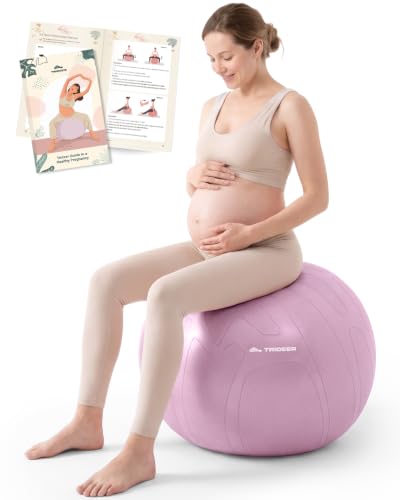
A 550-pound weight capacity and 1.7mm thick honeycomb PVC mean this ball is built to handle active pregnancy without worrying about a sudden pop; if punctured, it deflates slowly instead of bursting. That extra thickness also gives it a denser, more stable feel under you, which matters when you’re shifting positions for back relief or trying to find a comfortable sitting angle during labor. The textured surface pattern enhances friction with the ground, so the ball stays in place better on smooth floors, helping you focus on your stretches.
The trade-off is that this ball weighs 4.6 pounds, heavier than the ProBody Pilates Yoga Ball (2.2 lb) or the Trideer Yoga Ball (2.2 lb). If you plan to move it between rooms or take it to a class, the extra heft can be a minor hassle. For someone who values stability and peace of mind over portability, especially during late pregnancy when falls are a real concern, this design makes sense.
ProBody Pilates Pregnancy Ball
What We Like
- Includes trimester-by-trimester exercise guide
- 1,000 lb static-load rating for safety
- CA 10P certified, stricter than standard balls
- Anti-burst PVC for slow deflation
Trade-offs
- Requires 2-3 days to fully stretch before use
- Heavier at 3.4 lb than some comparable balls
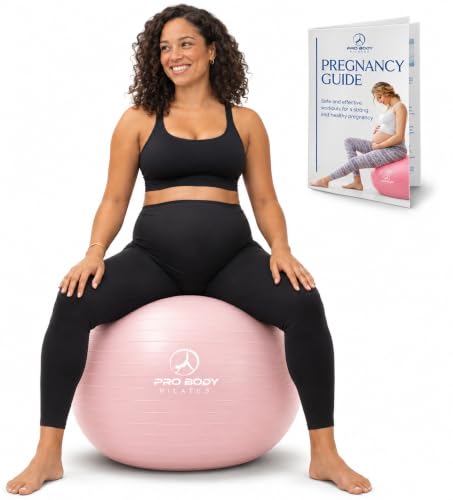
A 1,000-pound static-load rating means this ball can handle active use through every stage of pregnancy without worrying about sudden failure. The included pregnancy book walks you through trimester-specific exercises, pelvic tilts, and labor-prep movements right from day one. That makes it especially useful for first-time moms or anyone who wants a structured guide rather than guessing positions. The CA 10P certification is a stricter safety standard than typical yoga balls, so you get extra peace of mind during bouncing, sitting, or leaning into labor positions.
The ball needs to sit at 80% inflation for a few hours, ideally two to three days, before you fill it completely, so plan ahead if you want it ready for a specific date. At 3.4 pounds, it’s heavier than the 2.2-pound ProBody Pilates Yoga Ball, which matters if you’re carrying it between rooms or to a birth center.
Product photos
Trideer Yoga Ball

What We Like
- Anti-slip frosted surface for stability
- Burst-resistant with slow air release
- 330 lb load capacity
- Quick inflation pump included
Trade-offs
- No exercise guide included with the ball
- Heavier than some rival pregnancy balls at 2.2 pounds
A 330-pound load capacity and burst-resistant construction mean this ball handles pregnancy workouts, sitting, and gentle bouncing without deflating or popping unexpectedly. The frosted surface with anti-slip stripes keeps it planted on the floor and your body stable, which matters a lot when you’re balancing while doing prenatal core moves or just shifting positions at a desk. It’s a versatile exercise ball that works for yoga, Pilates, balance training, and active sitting.
The five size options let you pick the right fit for your height, and the included pump inflates quickly whether you choose the hand or foot version. If you’re comfortable finding your own exercises, this ball delivers safety and grip for a range of activities.
Product photos
Retrospec Luna Exercise Ball

What We Like
- 1000 lb weight capacity for stability
- Anti-burst material for safety
- Includes pump and stability base
- Non-slip surface for steady use
Trade-offs
- At 4.0 lb, heavier than some pregnancy balls
- No pregnancy-specific guide or exercises included
With a 1000 lb weight capacity, this ball can handle vigorous workouts without worrying about a blowout, which is a big deal when you are using it for core work or HIIT sessions. The anti-burst PVC and non-slip surface add real peace of mind, especially if you are swapping it in for a desk chair or using it for gentle labor prep. With the included pump and stability base, you are set up for home gym use right out of the box, no extra gear needed. It is a practical fit for someone who wants one ball that pulls double duty: pregnancy support and general fitness.
This ball does not come with any pregnancy-specific guide or exercise booklet, so you will need to source your own routines or rely on what you already know. Compared to the ProBody Pilates Yoga Ball, which is recommended by OBs, the Retrospec Luna is more of a blank slate. It is great if you are confident in your own plan, less ideal if you want step-by-step direction. At 4.0 pounds it is also heavier than some other exercise balls listed, which matters if you plan to move it between rooms often.
URBNFit Yoga Ball

What We Like
- Five sizes from 45 to 85 cm
- Anti-burst PVC deflates slowly if punctured
- 330 lb load capacity
- Quick pump included
Trade-offs
- At 2.6 lb, lighter than some thicker-walled balls
- Requires overnight inflation before first use
The URBNFit Yoga Ball is available in five sizes from 45 to 85 cm, so you can pick the one that fits your height and pregnancy stage. That range covers everyone from shorter expecting moms to taller ones who need extra hip clearance during labor prep. The anti-burst PVC deflates slowly if punctured, so no sudden pop mid-workout. It supports up to 330 lb, which gives you confidence for a wide range of exercises.
This ball weighs 2.6 lb, which is noticeably lighter than thicker-walled options like the Trideer Pregnancy Ball at 4.6 lb. That lighter build makes it easier to move between rooms or store away, but it may feel less substantial under heavier pressure or if you prefer a denser surface. For most expecting moms who value size flexibility and a solid safety feature, this ball covers a lot of ground.
THERABAND Pro Series Exercise Ball

What We Like
- Burst-resistant material for safety
- Designed for taller users 5'7" to 6'1"
- Slow-deflate construction for durability
- Easy to clean with a damp cloth
Trade-offs
- Only one size (65 cm) limits shorter users
- No pump included in the package
This 26-inch ball is built for people 5’7″ to 6’1″ tall, so you get a size that fits your frame without second-guessing. The burst-resistant material and slow-deflate design add safety during seated core work or balance exercises, which matters if you’re using it daily. For taller users who want a professional-grade ball that holds up, this one delivers reliable support.
The downside is that it only comes in the 65 cm size, so if you’re under 5’7″ you’ll need a different option, the ProBody Pilates Yoga Ball offers multiple sizes for shorter users. But if you’re in the height range, the THERABAND’s textured grip and sturdy build keep it steady during stability work without slipping. It’s a straightforward tool that does exactly what it promises.
Product photos
Gruper Yoga Ball

What We Like
- 2mm wall far exceeds standard yoga balls
Trade-offs
- At 2.3 pounds, it is lighter than some competitors
A 2mm wall thickness means this ball can handle serious pressure without feeling flimsy under you. That extra-thick construction supports up to 2000 pounds, so whether you are using it for gentle pregnancy stretches or more active core work, it holds steady without that squishy give cheaper balls develop over time. For anyone who wants a stability ball that feels substantial and secure, especially during pregnancy when balance and trust in your equipment matter most, this one delivers real peace of mind.
At 2.3 pounds, it is noticeably lighter than some other pregnancy balls like the Trideer Pregnancy Ball at 4.6 pounds. That might make it feel less planted on slick floors if you are moving around a lot. The anti-slip surface helps, but the lighter weight means it can slide more easily than a heavier ball during active exercises. That said, for seated birthing ball work, gentle rocking, and posture correction at a desk, the lightness is actually convenient for carrying between rooms. Just pair it with a yoga mat or rug if you plan to do more dynamic movements.
Product photos
The Birth Ball Birthing Ball

What We Like
- Includes 18-page trimester-specific exercise guide
- Comes with non-slip socks for grip
- Designed for pregnancy, labor, and dilation
Trade-offs
- Only one size (65 cm) limits fit for shorter users
- Heavier than some other 65 cm balls at 3.0 pounds
The Birth Ball comes with an 18-page exercise guide organized by trimester and a pair of non-slip socks, so you get more than just a bare ball. That guide gives you structured movement ideas for each stage of pregnancy, which makes this kit feel like a complete tool rather than a piece of equipment you have to figure out on your own.
At 3.0 pounds, this ball is heavier than the Trideer Yoga Ball (2.2 pounds), so it’s a bit less convenient to carry from room to room. It only comes in 65 cm, which works for most average-height users, but if you’re shorter you may find the fit less comfortable. If you want a dedicated pregnancy ball with a built-in exercise plan and grippy socks for stability, this delivers exactly that.
Product photos
How We Evaluated Exercise Balls For Pregnancy
Our evaluation started with a close look at the specifications each manufacturer provides. We examined size ranges, weight capacities, material thickness, and safety certifications like anti-burst construction and CA Prop65 compliance. This data formed the foundation of our comparison.
From there, we focused on the four criteria that matter most during pregnancy: size availability, safety features, included extras, and surface design. A ball must match your height and stage of pregnancy, use anti-burst PVC with a reasonable weight limit, come with an exercise guide and pump, and have a non-slip surface for labor use. These factors determine whether a ball will serve you comfortably through the third trimester and beyond.
This approach gives you a reliable starting point, but your personal comfort remains the final test.
What To Look For In Exercise Balls For Pregnancy
Choosing the right pregnancy ball means matching your height to the correct diameter and prioritizing safety features that protect you during labor and daily use.
Pick a ball that lets your knees rest at a 90-degree angle when sitting, with anti-burst construction that deflates slowly if punctured. Look for a pump and exercise guide to get started right away.
Size and Height Matching
The most critical factor is getting the right size for your height. A ball that is too large forces your hips higher than your knees, straining the lower back. A ball that is too small makes you curl forward, compressing your belly.
Standard sizing guidelines recommend a 55 cm ball for heights under 5’3″, a 65 cm ball for heights between 5’3″ and 5’10”, and a 75 cm ball for heights over 5’10”. Some brands offer 45 cm and 85 cm options for very short or tall users. The ProBody Pilates yoga ball covers all these sizes, making it the most versatile choice. For more detail, our pregnancy ball sizing guide walks through each measurement.
Anti-Burst Construction and Weight Capacity
During pregnancy, safety is non-negotiable. Anti-burst PVC means the ball will deflate slowly if punctured rather than popping explosively. This is especially important for labor support when you might be leaning or bearing down on the ball.
Weight capacity varies widely. Standard balls hold around 330 lb, while heavy-duty options like the BABYGO Birthing Ball test to 2,200 lb. The ProBody Pilates Pregnancy Ball carries a 1,000 lb static-load rating. A higher weight capacity generally means thicker, more durable walls. For users who need extra strength, our guide to durable exercise balls covers models with higher ratings.
Surface Texture and Stability
A smooth ball can slide on hardwood or tile floors, especially during active labor when you are shifting positions. Non-slip surfaces, like the textured pattern on the Trideer Pregnancy Ball, provide extra grip for your hands and legs.
Some balls also include a stability base to prevent rolling, though this is less common in pregnancy-specific models. If you plan to use the ball on carpet, smooth surfaces are usually fine. For hard floors, a non-slip design or a yoga mat underneath adds security.
- Measure your height and match it to the ball size chart before buying.
- Confirm the ball is made from anti-burst PVC, not standard vinyl.
- Check whether a pump is included, many do, but some require a separate purchase.
- Look for an exercise guide if you want structured movements for each trimester.
- Consider the weight of the ball if you plan to move it between rooms.
A ball that feels slightly too firm when new will soften after a few days of use, so don’t judge comfort on day one.
Exercise Balls For Pregnancy Compared
The table below compares the top 10 exercise balls for pregnancy, highlighting size options, weight capacity, and key features to help you find the right match.
| Product | Size Options | Material | Included Extras |
|---|---|---|---|
| ProBody Pilates Yoga Ball | 45/55/65/75/85 cm | Thick non-toxic PVC | Dual-action pump, plugs, stopper remover, guide |
| BABYGO Birthing Ball | 65 cm, 75 cm | Hypoallergenic PVC | Book, pump, tape measure, 2 plugs |
| Trideer Pregnancy Ball | N/A | 1.7mm honeycomb PVC | Exercise guide |
| ProBody Pilates Pregnancy Ball | 55, 65, 75 cm | 1.7mm anti-burst PVC | Pregnancy book, pump, plugs |
| Trideer Yoga Ball | N/A | N/A | Pump, two air stoppers |
| Retrospec Luna Exercise Ball | 65cm | Anti-burst PVC | Pump and base |
| URBNFit Yoga Ball | 45/55/65/75/85 cm | Anti-burst PVC | Quick pump |
| THERABAND Pro Series Exercise Ball | 26" (65 cm) | Burst-resistant | N/A |
| Gruper Yoga Ball | 4 sizes | BPA-free PVC | Foot pump, 2 air plugs, plug puller, workout guide |
| The Birth Ball Birthing Ball | 65 cm | N/A | 18-page guide, non-slip socks |
Frequently Asked Questions
What size exercise ball should I get for pregnancy?
Choose a ball that lets your knees bend at a 90-degree angle when you sit on it. For most women, a 65 cm ball works for heights between 5’3″ and 5’10”. Shorter women under 5’3″ should use a 55 cm ball, while taller women over 5’10” need a 75 cm ball.
Is it safe to sit on an exercise ball during pregnancy?
Yes, sitting on an anti-burst exercise ball is generally safe during pregnancy. It engages your core, improves posture, and can relieve lower back pressure. Always choose a ball with anti-burst PVC that deflates slowly if punctured. Avoid bouncing vigorously, and stop if you feel dizzy or uncomfortable.
Can I use a regular yoga ball for pregnancy?
A regular anti-burst yoga ball is fine for pregnancy as long as it is the correct size and has a sufficient weight capacity. The main difference with pregnancy-specific balls is that they often include exercise guides designed for each trimester. If you are comfortable finding your own routines, a general exercise ball works well.
How do I inflate a pregnancy ball correctly?
Inflate the ball to about 80% of its full size, then let it sit for a day to stretch the PVC. After that, add air until it reaches the recommended diameter. Over-inflating makes the ball too firm and increases the risk of bursting. Most balls come with a pump, but you can use a standard ball pump or a compressor with the correct adapter.
What exercises can I do on a pregnancy ball?
Safe exercises include gentle pelvic tilts, hip circles, seated marches, and cat-cow stretches. These movements help relieve back pain, improve circulation, and prepare your body for labor. For structured routines, look for balls that include a trimester-by-trimester guide. Our collection of ball workouts has ideas for all stages of pregnancy.
The Bottom Line
The ProBody Pilates Yoga Ball takes the top spot because it offers five sizes to fit nearly every height, carries recommendations from OBs and midwives, and includes a pump and exercise guide. It is the most versatile option for desk sitting, labor prep, and postpartum recovery.
If you need a higher weight capacity, the BABYGO Birthing Ball is tested to 2,200 lb and includes a 100-page exercise book. For a non-slip surface that helps during labor, the Trideer Pregnancy Ball delivers with its textured pattern and thick anti-burst wall. Budget-conscious shoppers will find the Trideer Yoga Ball a solid value, while taller moms should consider the THERABAND Pro Series designed for users 5’7″ to 6’1″.
The single most important factor is getting the right size for your height. Measure yourself, check the chart, and choose a ball that lets your knees rest at a 90-degree angle. Everything else, surface texture, included extras, pump quality, comes second to that fit.
