
10 Best Sneakers For Gym Workouts in 2026
This post contains affiliate links. As an Amazon Associate, we earn from qualifying purchases.
The best sneaker for gym workouts is the Nike Metcon 10 Cross Training Shoe, which balances stability for heavy lifts with responsive cushioning for explosive movements. For those who need one shoe for everything, the Reebok Nano X5 Cross Training Sneaker offers versatile performance, while the adidas Dropset Vario Training Shoe delivers a dedicated platform for strength work.
Choosing the right gym shoe means balancing stability for lifting with cushioning for cardio, all within a fit that matches your foot shape. A shoe that excels at heavy squats may feel stiff during burpees, and a plush trainer can feel unstable under a loaded barbell.
This guide is based on a review of specifications, manufacturer design goals, expert round-ups, and patterns in owner feedback. We break down the key trade-offs to help you find the shoe that fits your specific workout style.
Top 10 Sneakers For Gym Workouts in the Market
Certain content that appears on this site comes from Amazon. This content is provided "as is" and is subject to change or removal at any time.
The Best Sneakers For Gym Workouts, Reviewed
Nike Metcon 10 Cross Training Shoe

What We Like
- Hyperlift plate for heavy lifts
- ReactX foam for responsive cushioning
- Wider toe box for foot power
- Sticky rubber in high-wear zones
Trade-offs
- Not ideal for long cardio sessions
- Stiff Hyperlift plate reduces flexibility for dynamic moves
A Hyperlift plate under the heel means you can squat, deadlift, or clean without your foot wobbling, stability that matters when the bar gets heavy. Combined with ReactX foam in the midsole, this shoe handles box jumps and sprints without feeling like a brick. The wider toe box compared to the Metcon 9 lets your toes splay naturally, which helps you push through your whole foot during lifts. It’s the kind of balanced design that suits someone who wants one shoe for both the rack and the plyo box, without switching pairs mid-session.
The Hyperlift plate under the heel optimizes stability for heavy lifts like squats and deadlifts, making this shoe a focused tool for strength work rather than a do-everything trainer. At 1.0 pound, it matches the Reebok Nano X5 in weight, but the Metcon 10 prioritizes a locked-in feel over all-day cushioning. The midfoot band and heel cup secure your foot during dynamic moves, so you can focus on form without worrying about slipping. If your training leans toward heavy lifting with occasional high-intensity intervals, this stability-first design fits well.
Reebok Nano X5 Cross Training Sneaker

What We Like
- Dual-density midsole for stability and comfort
- Breathable Flexweave upper for lightweight feel
- Metasplit outsole for varied gym movements
- Removable insole with arch support
Trade-offs
- At 1.0 lb, lighter than some lifting-focused shoes
- Not built for heavy outdoor terrain
A dual-density midsole with firmer foam in the heel and responsive foam in the forefoot means this shoe doesn’t force you to choose between stable lifts and comfortable runs. That balance is exactly what makes it the right pick for anyone whose gym session jumps from deadlifts to box jumps to a quick treadmill cooldown. The breathable Flexweave upper keeps things light, and the decoupled Metasplit outsole lets your foot move naturally when planting for a squat or pushing off for a sprint.
The trade-off is that at just one pound, it’s lighter than some lifting-focused shoes, so it may not offer the solid platform a dedicated powerlifter wants for maximal loads. But if your workout is a mix of strength, cardio, and agility drills, the Nano X5’s lighter build and versatile sole make it a practical daily companion. The removable arch-support insole also lets you swap in your own orthotics if needed.
adidas Dropset Vario Training Shoe

What We Like
- TPU midfoot torsion system for heavy lifts
- Repetitor Foam for stable responsiveness
- Breathable mesh upper keeps feet cool
- Wide-fit low-profile design enhances ground connection
Trade-offs
- At 2.1 lb, heavier than some training shoes
The TPU midfoot torsion system provides targeted support during heavy lifts to help maintain proper form. Repetitor Foam delivers consistent responsiveness for a solid foundation during squatting or deadlifting without sacrificing comfort during warmups and dynamic movements. The breathable mesh upper keeps air moving around your feet, so you stay cool even when a set pushes you hard. This shoe is built for anyone who wants to focus on strength work without sacrificing the flexibility needed for the rest of their gym session.
At 2.1 pounds for the women’s version, the Dropset Vario is heavier than lighter options like the Nike Metcon 10, which comes in at 1.0 pound. That extra heft pays off in stability for lifting, but if your routine includes a lot of jumping or agility drills, you might feel a bit more drag. The wide-fit construction also means it runs roomy, which is great for foot splay during heavy lifts but could feel loose if you prefer a snugger lockdown.
Product photos
Reebok Nano X5 Women's Cross Trainer

What We Like
- Dual-density midsole for stability and responsiveness
- Breathable Flex Weave upper
- Decoupled Metasplit outsole aids running and walking
- Plush collar keeps foot locked down
Trade-offs
- Heavier than some men's cross trainers at 1.8 lb
- Heavier than the men's Nano X5 at 1.8 lb vs 1.0 lb
A dual-density midsole with firmer foam in the heel for stability and more responsive foam in the forefoot means this shoe actually splits the difference between heavy lifting and quick jumping. That makes it the rare trainer that doesn’t force you to choose between a solid base for squats and spring for box jumps. The breathable Flex Weave upper keeps things light and airy, while the plush collar locks your heel down so you’re not fiddling with laces mid-set. If you bounce between weight racks, treadmills, and fitness classes in a single session, this is the one that keeps up without complaint.
At 1.8 pounds, the women’s Nano X5 is heavier than the men’s version (1.0 lb) from the same line. That extra heft comes from the dual-density construction and durable rubber outsole, so you get stability and traction in return. For gym-goers who want one shoe that handles strength, cardio, and daily wear without switching pairs, the Nano X5’s versatility is worth the extra ounces.
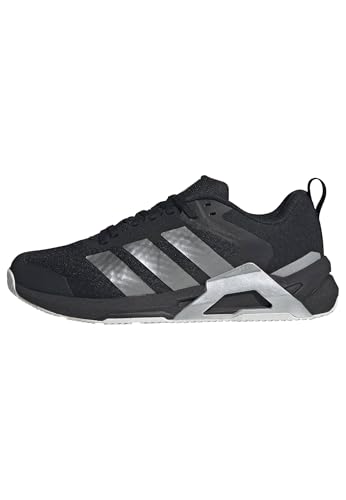
adidas Women's Dropset Vario Training Shoe
What We Like
- Wide fit for natural foot splay
- Repetitor foam midsole for energy return
- TPU torsion system for heavy lifts
- Breathable mesh upper manages moisture
Trade-offs
- At 2.1 lb, heavier than many gym sneakers
A TPU midfoot torsion system locks your foot in place under the barbell, giving you a solid base for heavy squats and deadlifts without wobbling. That stability, paired with a wide fit that lets your toes splay naturally, makes this shoe a smart pick if your gym sessions revolve around lifting. The Repetitor foam midsole also gives consistent energy return, so you’re not sinking into a soft cushion when you need to push through a tough set.
At 2.1 pounds, these shoes are heavier than the Reebok Nano X5 Women’s Cross Trainer (1.8 lb), which means they’re built for stability under the bar rather than for fast-paced conditioning. The wide fit is designed to accommodate natural foot splay during lifts, creating a stable foundation that prevents wobbling when you’re under a heavy load. If you prioritize a planted stance in the squat rack, this adidas delivers exactly what you need.
Product photos
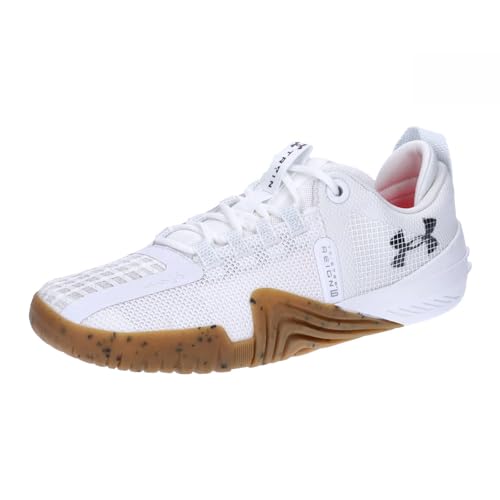
Under Armour TriBase Reign 6 Training Shoe
What We Like
- Three-point ground contact for stability
- Strategic rubber under toe box for grip
- Dual-density midsole for support and comfort
- Low-to-ground build for power transfer
Trade-offs
- Heavier than some cross-training shoes at 2.4 lb
A low-to-ground build with three points of ground contact means your feet stay planted during lifts, and the strategic rubber under the toe box delivers extra bite when you push off for explosive moves. That combination makes this shoe a natural fit for anyone who wants reliable traction on the gym floor. The UA WARP upper wraps the foot securely, so you don’t slide around inside the shoe when changing direction or bracing under load.
The TriBase Reign 6 weighs 2.4 pounds, making it heavier than some other training shoes. That extra heft can feel noticeable during quick movements. But for those who prioritize a planted, grippy foundation, this shoe delivers. The dual-density midsole also keeps the forefoot softer for comfort while the firmer heel supports your stance during squats and presses.
New Balance 608 V5 Cross Trainer

What We Like
- ABZORB heel pad absorbs impact
- Suede upper breaks in for fit
- Dual density collar supports ankle
- Phantom Liner reduces interior irritation
Trade-offs
- Suede upper is not suitable for wet or muddy conditions.
- Lacks the stability needed for heavy lifting.
The ABZORB heel crash pad and lightweight EVA foam midsole team up to deliver a notably soft, forgiving step, ideal for gym days that mix cardio, light strength, and long hours on your feet. At just 0.9 pounds, these sneakers feel almost like slippers, letting you move through circuits or treadmill intervals without that clunky, weighted-down sensation. They suit anyone who values all-day comfort over raw stability, especially if your workouts lean toward dynamic movement rather than max-effort squats or deadlifts.
The New Balance 608 V5 weighs just 0.9 pounds, so it feels light on your feet during walks or casual gym sessions. Its ABZORB heel crash pad absorbs impact with every step, and the dual density collar foam supports the ankle to keep you stable during workouts. For anyone who wants a shoe that works for both the gym and all-day wear, this is a practical choice.
Nike Free Metcon 5 Training Shoe

What We Like
- Wide heel for stable lifting
- Softer foam core cushions impact
- Internal weave supports quick direction changes
Trade-offs
- Heavier than the 1.0-pound Nike Metcon 10
The wide heel on this shoe gives you a planted base for squats and deadlifts, so you can focus on pushing through your legs instead of wobbling. That stability pairs with a softer foam core that cushions landings during box jumps or burpees, making it a natural fit for workouts that mix strength moves with agility drills. If your gym sessions bounce between the rack and the turf, this design keeps you comfortable without sacrificing control.
The wide heel creates a solid base for weight lifting, so you can plant your foot securely during heavy squats or deadlifts. A softer foam core cushions the foot, which helps absorb impact when you land from jumps or box steps. The internal weave distributes pressure around the midfoot, providing a comfortable, supportive fit during sudden braking and rapid changes of direction. This combination of stability under the heel and cushioning through the midsole makes the shoe feel planted yet responsive when you transition from the rack to a burpee or shuttle run.
Product photos
Under Armour Charged Commit Trainer 4 Cross Trainer

What We Like
- Maximum breathability from lightweight mesh upper
- Textured overlay adds durability without bulk
- Designed for cross-training versatility
- Under Armour's performance-focused construction
Trade-offs
- At 6.6 pounds, heavier than most gym sneakers
- Not ideal for runners needing more cushioning.
The mesh upper is designed for complete breathability, so air moves through the shoe freely during a workout. Under Armour’s stated mission is to help you crush your goals through performance innovation, and this model reflects that focus with a lightweight mesh and textured overlay. The shoe is built for training, with a construction that supports a range of gym movements.
At 6.6 pounds, this sneaker is heavier than many cross-trainers, which can affect how it feels during quick movements. Reviewers note that the weight is a trade-off for the breathable upper and sturdy build. For those who prioritize lighter footwear for fast-paced drills, other options like the Nike Metcon 10 (1.0 pounds) may be a better fit.
Product photos
New Balance Women's 608 V5 Cross Trainer

What We Like
- ABZORB heel pad absorbs impact
- Suede upper molds to your foot
- Lightweight at 0.7 pounds
- Cushioned footbed for extra softness
Trade-offs
- Not designed for heavy lifting stability
- Suede upper is not breathable for sweaty cardio sessions
At just 0.7 pounds, these are among the lightest cross-trainers you’ll find, perfect for someone who wants a shoe that disappears on your feet during a long gym session or a full day of walking. The ABZORB heel pad and IMEVA midsole work together to soften every step, while the cushioned footbed adds an extra layer of comfort that keeps your feet happy from your morning warm-up through your cool-down. This is the shoe for anyone who prioritizes all-day wearability over specialized performance, mixing light gym work with errands or standing on a hard floor for hours.
The New Balance 608 V5 prioritizes all-day comfort over hardcore gym performance, with its ABZORB heel cushioning and cushioned footbed making it ideal for light training and daily wear. At 0.7 pounds, it’s lighter than the Nike Metcon 10 (1.0 pounds), but that softness means you won’t get the firm, stable platform needed for heavy squats or Olympic lifts. For moderate movement and staying comfortable on your feet, this shoe delivers; for chasing PRs in the squat rack, look to a stiffer trainer.
Product photos
How We Evaluated Sneakers For Gym Workouts
To build this list, we analyzed manufacturer data on materials, outsole designs, and midsole construction, and cross-referenced those specs with expert round-ups and the patterns that emerge from thousands of owner reviews. We focused on the features that actually affect performance in the gym, not marketing claims.
The three most important criteria were stability under load, versatility across movements, and fit and breathability. A shoe’s heel stack height, outsole rubber placement, and midsole density tell you how it will behave under a squat versus a box jump. We also considered weight, because a heavy shoe can fatigue your feet during high-rep circuits.
A research-led evaluation like this has an honest limit: we haven’t put each shoe through months of training. Instead, we rely on the consensus of experienced lifters and trainers whose feedback highlights real-world strengths and weaknesses. For a deeper look at the process, read our guide to choosing gym footwear.
What To Look For In Sneakers For Gym Workouts
The right gym shoe depends on what you actually do in the gym. A powerlifter needs a different shoe than someone who mixes sprints with kettlebells. Here are the key factors to consider.
A good gym shoe provides a stable base for lifting, enough cushioning for light cardio, and a secure fit that doesn’t slip during lateral movements.
Stability and Heel Support
For any workout that involves a barbell, stability is non-negotiable. Look for a shoe with a low, firm heel, ideally with a heel-to-toe drop of 4-8mm, and a wide base that doesn’t compress under weight. Shoes with a rigid plate or TPU torsion system, like the Nike Metcon 10’s Hyperlift plate, prevent your foot from sinking during heavy squats. If you primarily lift, a comparison of cross-trainers and dedicated lifting shoes can clarify the trade-offs.
Cushioning and Responsiveness
Too much cushioning can make a shoe unstable for lifting; too little can make box jumps and short runs uncomfortable. The best gym shoes use a dual-density midsole, a firm outer layer for stability and a softer inner core for impact absorption. For HIIT workouts, look for responsive foam that returns energy without sacrificing ground feel. Our picks for the best sneakers for HIIT can help you find a shoe that handles quick transitions.
Outsole Grip and Durability
The outsole determines how well your foot stays planted on different gym surfaces. Look for full-coverage rubber with a tread pattern that grips the floor during lateral slides and pivots. Some shoes place extra rubber in high-wear zones under the toe box for exercises like mountain climbers and burpees. A sticky rubber compound is essential for maintaining traction on dusty or polished gym floors.
Fit and Breathability
A gym shoe should fit snugly in the heel and midfoot while allowing your toes to splay naturally. Look for a breathable mesh upper that manages moisture during intense sessions, and avoid materials like suede if you train in humid conditions. For those with flat arches, finding the right support is critical; check our list of workout shoes for flat feet for options with better arch support.
- Check that your heel doesn’t slip when you walk or lunge.
- Ensure there’s a thumb’s width of space between your longest toe and the shoe’s end.
- Test the shoe on a slight incline to see if your foot slides forward.
- Consider removable insoles if you need custom orthotics.
A well-fitting gym shoe should feel secure from the first wear, no break-in period required for the basic fit.
Sneakers For Gym Workouts Compared
The table below compares the key specs and best-use scenarios for each of our top picks.
| Product | Weight | Midsole | Upper |
|---|---|---|---|
| Nike Metcon 10 Cross Training Shoe | 1.0 pounds | ReactX foam | Open-holed engineered mesh |
| Reebok Nano X5 Cross Training Sneaker | 1.0 pounds | Dual-density foam | Flexweave |
| adidas Dropset Vario Training Shoe | 2.1 pounds | Repetitor Foam | Breathable mesh |
| Reebok Nano X5 Women's Cross Trainer | 1.8 pounds | Dual-density EVA | Flex Weave |
| adidas Women's Dropset Vario Training Shoe | 2.1 pounds | Repetitor foam | Breathable mesh |
| Under Armour TriBase Reign 6 Training Shoe | 2.4 pounds | Dual-density | UA WARP |
| New Balance 608 V5 Cross Trainer | 0.9 pounds | ABZORB heel + EVA foam | Suede leather |
| Nike Free Metcon 5 Training Shoe | 1.8 pounds | Softer foam core | N/A |
| Under Armour Charged Commit Trainer 4 Cross Trainer | 6.6 pounds | N/A | Lightweight mesh with textured overlay |
| New Balance Women's 608 V5 Cross Trainer | 0.7 pounds | ABZORB heel pad + IMEVA midsole | Suede leather |
Frequently Asked Questions
Are cross-training shoes good for running?
Cross-training shoes are designed for short runs and intervals, not long-distance running. Their firmer midsoles provide stability for lifting but lack the cushioning needed for runs over a few miles.
What is the difference between a weightlifting shoe and a cross-trainer?
Weightlifting shoes have a raised heel and a rigid, non-compressible sole for maximum stability during squats and Olympic lifts. Cross-trainers have a flatter, more flexible sole and moderate cushioning for a wider range of gym movements. The difference between shoe types determines which is right for your training style.
How often should I replace my gym sneakers?
Replace gym sneakers when the midsole feels less responsive or the outsole shows smooth patches. A shoe that has lost its stability can compromise your form during lifts and increase injury risk.
Can I use running shoes for weightlifting?
Running shoes are not ideal for weightlifting because their thick, compressible midsoles create an unstable base under a barbell. This forces your feet to work harder to maintain balance and can reduce the power you can produce during a squat or deadlift.
What gym shoe is best for wide feet?
Look for cross-trainers with a wide-fit option or a naturally roomy toe box. The adidas Dropset Vario and Nike Metcon 10 both offer wider fits in the forefoot.
The Bottom Line
For most gym-goers, the Nike Metcon 10 Cross Training Shoe is the best overall choice because it offers the stability needed for heavy lifting with enough responsiveness for explosive work. It’s the shoe for someone who squats and deadlifts but also does box jumps and burpees.
If you want one shoe for everything, lifting, jumping, and short runs, the Reebok Nano X5 Cross Training Sneaker is the versatile pick. For those who rarely run and focus on strength, the adidas Dropset Vario Training Shoe provides a stable, low-profile platform. Budget-minded shoppers can look to the New Balance 608 V5 Cross Trainer for lightweight cushioning in mixed cardio sessions.
The single most important factor is matching the shoe to your primary workout style. A shoe that excels at your main activity but compromises on a secondary one is still a better choice than a jack-of-all-trades that does nothing well.
