
10 Best Treadmills Without Screen in 2026
This post contains affiliate links. As an Amazon Associate, we earn from qualifying purchases.
For runners who want to focus on their stride, not a streaming library, the NordicTrack Commercial LE Treadmill is the best overall pick. It delivers motorized speed and incline control with a simple LCD display, letting you use your own device for entertainment if you choose. We also highlight the Efficraft Curved Manual Treadmill for self-powered interval training and the AKLUER Dual Flywheel Manual Treadmill for tight spaces.
The real challenge with screenless treadmills is balancing convenience with control. You want a machine that shows you essential stats like pace and distance without locking you into a subscription ecosystem or a bulky touchscreen that can break. Many buyers also need a deck that folds or moves easily, especially when the treadmill lives in a shared room.
This guide is built from a deep look at manufacturer specs, expert round-ups, and patterns in owner feedback across ten models. We break down what matters most for a screenless treadmill: motor vs. Manual drive, running surface size, resistance options, and storage footprint. You will find a clear pick for every home gym setup.
Top 10 Treadmills Without Screen in the Market
Certain content that appears on this site comes from Amazon. This content is provided "as is" and is subject to change or removal at any time.
The Best Treadmills Without Screen, Reviewed
NordicTrack Commercial LE Treadmill
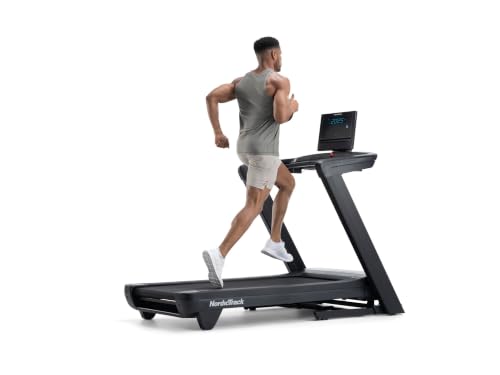
What We Like
- Motorized speed and incline control
- RunFlex cushioning reduces joint impact
- Folds compact for small spaces
- 7-inch LCD display for live stats
Trade-offs
- Requires iFIT membership for auto-adjust features
- Heavy 258 lbs makes moving it a two-person job
- No built-in screen, you must supply your own device
The motor delivers speeds from 0 to 12 MPH, so you can walk, jog, or sprint, and the -3% decline to 12% incline range lets you simulate hills and downhills for varied training. The RunFlex cushioning is designed to reduce impact and support joints, which helps make indoor running more comfortable on your body. If you prefer to follow workouts on your own tablet or phone, this treadmill gives you that flexibility without a built-in screen you might not use.
To use the treadmill’s auto-adjust features, where speed and incline change to match a trainer’s terrain, you’ll need an iFIT membership, which is an ongoing cost. At 258 pounds, the treadmill is heavy enough to feel stable during use, but you’ll likely need help when folding and moving it. Compared to the non-electric Sole Fitness C80 Curved Manual Treadmill, the NordicTrack offers powered incline and decline control, which can be useful for interval training and terrain simulation.
Product photos
Efficraft Curved Manual Treadmill
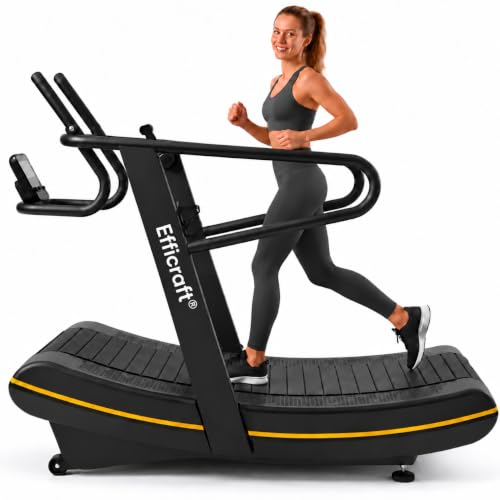
What We Like
- Spacious 78.74" x 35.43" running surface
- 8 instant-adjust resistance levels
- Self-powered, no electrical outlet needed
- Built-in transport wheels for easy repositioning
Trade-offs
- At 418.5 lb, very heavy to move without wheels
- No included heart rate monitor or fitness watch
A 78.74-inch running surface and 418.5-pound frame mean this curved manual treadmill stays planted even when you’re sprinting hard. That stability is the whole point: you can push through high-intensity intervals without worrying about wobble or shifting. The self-powered design also means you burn more calories by driving the belt yourself. With 8 resistance levels you can go from a light recovery walk to a tough sprint in seconds by turning the side knob. For anyone who wants a sturdy, no-nonsense machine that demands your effort and rewards it with solid feedback, this is a natural fit.
The trade-off is weight: at 418.5 pounds it’s not something you’ll casually move from room to room, though the built-in transport wheels do help. Compared to the Sole Fitness C80 curved manual treadmill, which has a similar slat-belt concept but a shorter 72-inch deck, the Efficraft gives taller runners extra room to stride naturally. If you’re okay with a machine that stays put and asks you to bring the energy, this one delivers exactly what it promises.
Sole Fitness C80 Curved Manual Treadmill
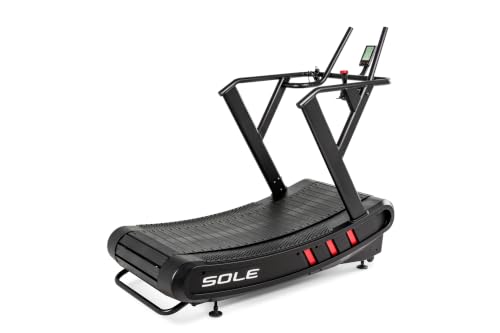
What We Like
- Self-propelled curved slat belt
- 8 magnetic resistance levels
- Bluetooth LCD console tracks heart rate
- No motor means quiet operation
Trade-offs
- At 72 inches long, requires dedicated floor space
- Manual drive demands constant effort, no coasting
- 330 lb capacity limits heavier runners
A 19-by-62-inch curved slat belt that runs entirely on your own effort means every stride controls the speed, no motor, no cord, no waiting for a warm-up. That instant responsiveness makes this treadmill a natural fit for sprint intervals and steady-state cardio where you want to dial intensity with your legs, not a button. The eight levels of magnetic resistance let you adjust the challenge. The Bluetooth LCD console tracks speed, distance, and heart rate so you can monitor your workout. For someone building a home gym around sustainable, self-driven training, this curved deck encourages a midfoot strike that engages glutes, hamstrings, and core with every step, exactly the kind of full-body engagement that makes cardio feel less like a chore and more like movement that actually works.
The self-propelled design of this treadmill means you cannot coast, every step demands your effort, with no motor to set a pace and zone out. If you prefer to walk while reading or ease into a run gradually, the curved slat belt speeds up and slows down the instant you shift your stride, so you stay engaged from the first step. Compared to the NordicTrack Commercial LE, which uses a motor and foldable frame, the Sole C80 is a manual design that requires constant effort and is less suited for casual strolling. But for someone who wants a quiet, low-maintenance machine that rewards every push with immediate feedback, this curved manual treadmill delivers a training experience that motorized options simply cannot match. It fits best in a dedicated home gym space where you are ready to work from the moment you step on.
DELAVIN Sturdy Curved Manual Treadmill

What We Like
- 440 lb capacity supports larger athletes
- Alloy steel frame and corrosion-proof hardware
- Curved belt reduces joint impact
- Self-powered, no electricity needed
Trade-offs
- At 286 lb, moving it takes real effort
- Only 4 resistance levels limit progression
- Manual curve requires constant effort to maintain speed
A 440-pound weight capacity is a standout spec among manual treadmills, and the DELAVIN Sturdy Curved Manual Treadmill backs it up with an alloy steel frame and corrosion-proof hardware. The curved belt design is intended to reduce ankle and knee impact compared to a flat deck, and the self-powered operation means you don’t need an electrical outlet. This machine is designed for walking, jogging, sprinting, or HIIT training without a motor.
At 286 pounds, the treadmill is heavy, though bottom pulleys are included to help move it. With four resistance levels, you have fewer options for adjusting intensity compared to the Efficraft Curved Manual Treadmill’s eight levels. But if your priority is a sturdy, self-powered treadmill with a high weight limit and low maintenance, the DELAVIN fits that description.
AKLUER Dual Flywheel Manual Treadmill
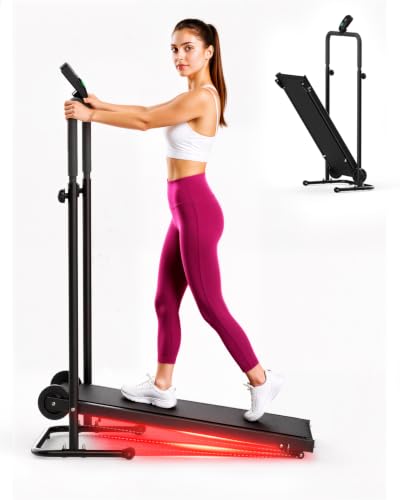
What We Like
- Folds flat to 5.9 inches tall
- No power outlet needed
- Non-slip belt and foam grips
- LCD tracks time, pace, distance, calories
Trade-offs
- Short 36-inch deck limits stride for jogging
- Fixed incline cannot be adjusted by user
- Manual belt requires effort to start and maintain
At just 5.9 inches tall when folded and a running deck of 36 by 15 inches, this treadmill tucks into a closet corner or under a bed with almost no footprint. That compact size is the whole point: it’s built for small apartments, home offices, or anyone who needs exercise gear that disappears after the workout. The dual flywheel system and fixed incline mean you get a steady, challenging walk or light jog without plugging into a wall, handy if your only free spot is far from an outlet. It suits the person who wants a simple, low-maintenance way to move more during the day, not a full-blown running machine.
A short deck and a fixed incline that you can’t tweak are the main compromises here. For brisk walking and gentle jogging, the 36-inch belt works fine, but taller users or anyone with a natural running stride will feel cramped. The Efficraft Curved Manual Treadmill offers a full 78.7-inch deck and adjustable resistance levels for more intense training. The AKLUER is lighter, cheaper, and far easier to store, but it’s not built for sprints or long runs. If your goal is daily walking without sacrificing living space, this is a smart, fuss-free pick.
Product photos
Rongle Manual Treadmill

What We Like
- 8 levels of adjustable resistance
- Curved design encourages natural running posture
- Non-slip rubber belt with raised particles
- Folds with wheels for easy storage
Trade-offs
- At 152 lb, moving it still takes effort
- 15.7-inch belt width is narrow for taller runners
Eight resistance levels give you real control over intensity without plugging into a wall, that’s the whole point of a manual treadmill done right. The curved deck is designed to encourage a forefoot strike, which simulates the natural posture of outdoor running and engages more muscle groups during exercise. At 350 lb capacity, it supports a wide range of body types, and the zoned belt design (front for acceleration, middle for steady speed, rear for deceleration) helps you manage your pace. This is a good fit for anyone who wants adjustable resistance for walking or jogging, without relying on a motor or screen.
At 152 pounds, it is still heavy to reposition, even with the included wheels, you won’t want to fold and unfold it daily unless you have to. And the 15.7-inch belt width is narrower than some other manual treadmills, which might feel restrictive if you’re tall or have a long stride. If space and portability are your top concerns, the Rongle’s foldable design helps, but if a roomier deck matters more, other models give you more room to move.
ANCHEER Foldable Manual Treadmill
What We Like
- 500 lb weight capacity for larger users
- 20% fixed incline boosts calorie burn
- Folds compact for storage
Trade-offs
- Fixed incline can't be adjusted lower
- No motor means speed is user-driven only
- Short 37-inch deck limits stride length
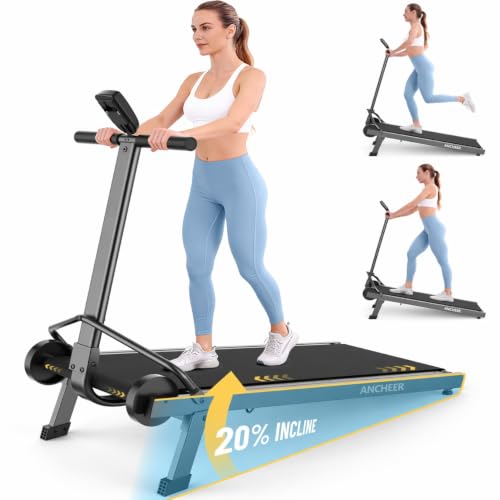
A 500-pound weight capacity means this treadmill can support heavier users or anyone who wants a machine that doesn’t wobble under stress. The reinforced steel frame and 7-layer shock-absorbing belt are designed to reduce impact on knees and joints, which helps during walking or light jogging. The fixed 20% incline targets your glutes, calves, and hamstrings for a more intense workout than flat walking, and it runs without electricity.
Because the incline is fixed at 20%, you cannot flatten it or change it during a session, so this treadmill is not for varying terrain or recovery walking. The Efficraft Curved Manual Treadmill has eight resistance levels and a longer frame. In contrast, the ANCHEER’s 37-inch running surface and fixed slope are better for steady incline walking than for sprint intervals or long strides. It folds up and has built-in transport wheels, so it stores easily in tight spaces and moves without hassle.
FUNMILY Walking Pad Manual Treadmill
What We Like
- No outlet needed, works anywhere
- 500 lb capacity, heavy-duty steel frame
- Folds flat with transport wheels
- Near-silent operation
Trade-offs
- Fixed 20% incline cannot be adjusted
- Short 40.5-inch deck limits stride length
- Max 4 mph too slow for running
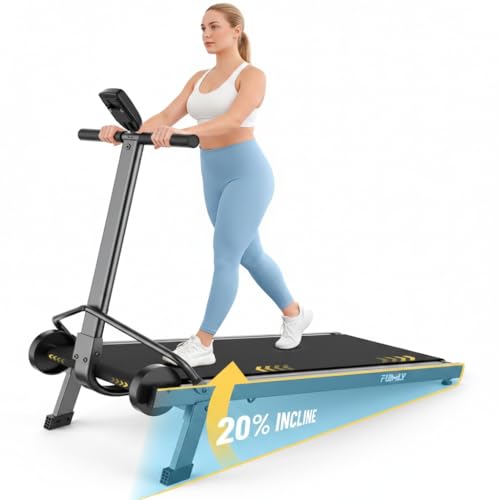
A fixed 20% incline on a non-electric treadmill means every step you take works your glutes, hamstrings, and calves harder than a flat belt would. The dual flywheel system keeps motion smooth up to 4 mph. The 500-pound capacity frame lets you set it up on an apartment balcony, a covered deck, or in a vacation cabin without needing an outlet or extension cord. For anyone who wants low-impact incline walking without hunting for power, this is a portable, setup-free option.
The 40.5-inch deck and the fact that the incline is permanent create a clear limitation. Taller users or anyone who wants a longer stride may find the deck length limiting compared to the Efficraft Curved Manual Treadmill, which offers a 78.7-inch running surface. And if you ever want to walk on a flat surface or vary the gradient, you cannot, the 20% slope is fixed. That makes this best for steady incline walking in tight spaces, not for running or varied terrain.
Product photos
FUNRAY Manual Treadmill
What We Like
- Cordless design for any location
- Non-slip belt and foam grips
- Compact foldable build saves space
- LCD tracks pace, distance, calories
Trade-offs
- Fixed incline limits intensity variety
- Short deck (36 in) restricts stride length
- Manual resistance requires consistent effort
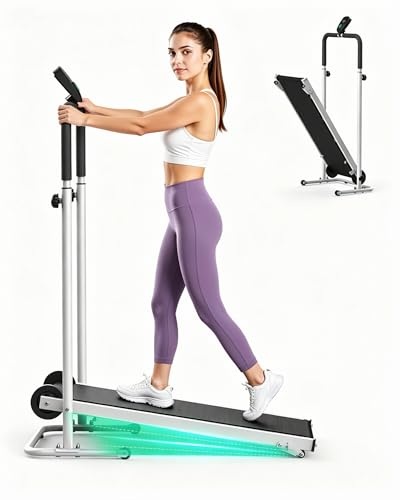
A 36-inch running deck and fixed incline mean this treadmill is built for purposeful walking and gentle jogging, not long strides or sprints. The cordless design frees you from outlet proximity, so you can set it up in a corner, near a window, or even take it to a different room when you want a change of scenery. That portability, paired with a slim 5.9-inch height when folded, makes it the obvious pick for anyone who needs their cardio gear to disappear between sessions. The dual flywheel system adds resistance as you push harder, giving a natural feel that rewards steady effort without a motor hum.
The payoff for that space-saving cordless setup is a fixed incline and a deck that feels short if you have a longer stride. The Efficraft Curved Manual Treadmill offers eight resistance levels and a full 78.7-inch platform. By contrast, the FUNRAY asks you to work within a tighter range of motion and intensity. That is fine if your goal is consistent low-impact walking or a light jog while watching a show, but runners or interval lovers will quickly hit the ceiling. For the person who values convenience and compact storage over variable challenge, this is a straightforward, no-fuss companion.
Product photos
JOROTO Manual Curved Walking Pad
What We Like
- ASTM-certified solid wood construction
- No electricity needed, eco-friendly
- Foldable with transport wheels
- Anti-slip textured belt
Trade-offs
- Short running surface limits stride length
- Only for walking and light jogging
- At 57 lb, not ultralight to carry
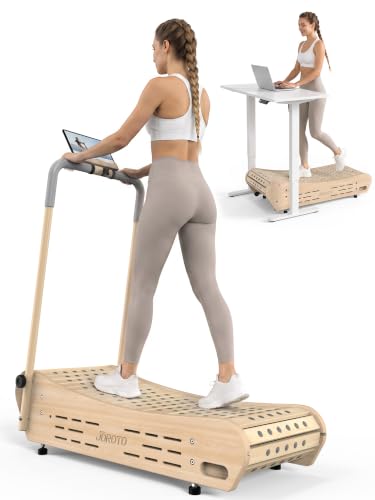
The JOROTO F50PRO supports up to 330 pounds, so it can handle most users for daily walking and light jogging. Its solid wood deck with internal steel reinforcement gives it a home-friendly look that blends into a living room or office without screaming gym equipment. Because it requires no electricity, you can use it anywhere without hunting for an outlet, and the foldable design with transport wheels makes it easy to move between rooms or take outdoors.
At 45.3 inches long, the JOROTO is shorter than the 78.7-inch Efficraft Curved Manual Treadmill, so taller users may find their stride limited. The curved deck and textured, anti-slip belt help promote a more natural walking posture and reduce impact on knees and joints. The manual says to keep your hands on the handrail and start with a slow walk to get familiar with the moving belt, then gradually increase pace as you gain confidence.
This walking pad is designed for walking and light jogging, not running. It folds up and has built-in transport wheels for easy storage and portability. Reviewers report it arrives well-calibrated and ready to use out of the box.
Product photos
How We Evaluated Treadmills Without Screen
We analyzed each model based on its published specifications, manufacturer documentation, and the consensus from expert fitness-equipment round-ups. Owner feedback patterns helped us spot real-world durability issues and assembly headaches that spec sheets don’t show. This research-led approach means we can tell you what a treadmill is built to do, even if we haven’t spent months on every belt.
Four criteria drove our rankings. First, drive type, motorized units offer set-and-forget speed, while manual curved decks demand constant effort and build running form. Second, running surface, deck length and width determine whether a 6-foot runner can take a full stride or will feel cramped. Third, resistance and incline, adjustable levels let you progress over time, while fixed inclines lock you into one intensity. Fourth, storage and portability, folding height, transport wheels, and total weight decide if the treadmill lives in a corner or gets moved daily.
A research-based evaluation has honest limits. We cannot report on long-term belt wear or motor noise after a year of use. We also cannot verify every claim about joint impact reduction. What we can do is compare the engineering choices each brand made and match them to the right buyer.
What To Look For In Treadmills Without Screen
Choosing a screenless treadmill means deciding what you are willing to supply yourself. Some models let you prop a phone or tablet on a shelf, while others expect nothing but your own effort. The key is matching the deck size, resistance type, and storage profile to your height, fitness goals, and floor space.
Prioritize deck length over motor power if you run. A short deck forces you to shuffle, while a longer belt lets you open your stride. For walkers, a shorter deck is fine.
Drive Type: Motorized vs. Manual
Motorized treadmills use an electric motor to move the belt, so you can set a steady speed and hold it without thinking. The NordicTrack Commercial LE is a strong example, it offers motorized incline and speed control through a simple LCD. Non-motorized treadmills, like the Efficraft Curved Manual Treadmill, are self-powered. You control the pace with your feet, which builds more muscle engagement but also means no coasting. If you want to zone out and watch a show, go motorized. If you want a more active, interval-friendly workout, go manual.
Running Surface and Belt Width
A treadmill’s running surface is the single most important dimension for comfort. For jogging and running, look for a deck that is long and wide enough for a natural stride. The Efficraft Curved Manual Treadmill offers a spacious 78.74-inch surface that suits tall runners. Shorter decks, like the belt on the AKLUER Dual Flywheel Manual Treadmill, work for walking and light jogging but will feel restrictive at a running pace. Belt width matters too; a narrow belt, like the one on the Rongle Manual Treadmill, is tight for taller athletes.
Resistance Levels and Incline Options
Adjustable resistance lets you increase difficulty as you get fitter. The Sole Fitness C80 and Rongle Manual Treadmill both offer 8 magnetic resistance levels. Some manual treadmills, like the DELAVIN Sturdy Curved Manual Treadmill, have only 4 levels, which limits long-term progression. Incline can be fixed or adjustable. Fixed inclines, like the 20% grade on the ANCHEER Foldable Manual Treadmill, boost calorie burn but cannot be lowered for recovery walks. Motorized models with incline control, like the NordicTrack Commercial LE, give you the most flexibility.
Storage Footprint and Portability
Screenless treadmills often live in living rooms, bedrooms, or home offices, so how they store matters. The AKLUER Dual Flywheel Manual Treadmill folds flat to just 5.9 inches tall, making it easy to slide under a bed. The FUNMILY Walking Pad also folds flat and includes transport wheels. Heavier models like the NordicTrack Commercial LE (258 lb) and the Efficraft Curved Manual Treadmill (418.5 lb) are not easily moved by one person. Check the folded dimensions against your storage spot before buying.
- Measure your ceiling height if you plan to store the treadmill upright.
- Confirm the deck length matches your stride, add 10 inches to your inseam for a rough minimum.
- Look for at least 8 resistance levels if you want to progress over time.
- Check the weight limit against your body weight plus any added gear.
- See if the treadmill has a device shelf or tablet holder for your phone.
A good rule of thumb: if you cannot move the treadmill into its storage spot alone, budget for a helper or pick a lighter model.
Treadmills Without Screen Compared
The table below compares the ten screenless treadmills side by side, covering drive type, running surface, resistance levels, weight capacity, and storage dimensions so you can quickly spot the right fit.
| Product | Type | Running Surface | Weight Capacity |
|---|---|---|---|
| NordicTrack Commercial LE Treadmill | Motorized | N/A | N/A |
| Efficraft Curved Manual Treadmill | Manual | 78.74" x 35.43" | N/A |
| Sole Fitness C80 Curved Manual Treadmill | Manual | 19 x 62 inches | 330 lb |
| DELAVIN Sturdy Curved Manual Treadmill | Manual | 62.9 x 18.9 in | 440 lbs |
| AKLUER Dual Flywheel Manual Treadmill | Manual | 36 x 15 in | 330 lbs |
| Rongle Manual Treadmill | Manual | 59 x 15.7 inches | 350 lbs |
| ANCHEER Foldable Manual Treadmill | Manual | N/A | 500 lbs |
| FUNMILY Walking Pad Manual Treadmill | Manual | N/A | 500 lbs |
| FUNRAY Manual Treadmill | Manual | 36 x 15 in | 330 lbs |
| JOROTO Manual Curved Walking Pad | Manual | 41.34 × 15.75 inches | 330 lbs |
Frequently Asked Questions
Can I watch TV or use a tablet on a treadmill without a screen?
Yes, most screenless treadmills include a device shelf or tablet holder on the console. The NordicTrack Commercial LE has a 7-inch LCD for stats and a place to prop your own device. This lets you watch shows or follow workout apps on your phone or tablet while the treadmill handles the basics.
Are manual treadmills harder to run on than motorized ones?
Manual treadmills require more effort because there is no motor to push the belt. You control the speed with your stride, which means you cannot coast. This makes them great for interval training and building running form, but they can feel harder for long steady-state runs. Motorized models like the NordicTrack Commercial LE let you set a pace and relax.
What is the best screenless treadmill for a small apartment?
The AKLUER Dual Flywheel Manual Treadmill is the best compact foldable pick. It folds flat to 5.9 inches tall and stores under a bed or in a closet. The FUNMILY Walking Pad also folds flat and includes transport wheels. Both are self-powered, so you do not need an outlet, and they are quiet enough for shared walls.
How much space do I need for a screenless treadmill?
You need the treadmill’s footprint plus clearance on each side and behind. A compact model like the AKLUER needs about 4 feet by 2 feet when in use. The Efficraft Curved Manual Treadmill needs a dedicated space of about 6.5 feet by 3 feet. Always measure your room and the treadmill’s full length with the belt running, not just the folded size.
Do screenless treadmills require a subscription?
No, screenless treadmills do not require any subscription to operate. The NordicTrack Commercial LE offers auto-adjust features through iFIT, but you can use the manual controls without paying. Manual treadmills like the Sole Fitness C80 and DELAVIN Sturdy Curved Manual Treadmill need nothing but your own effort. This is a major advantage if you want to avoid monthly fees.
The Bottom Line
The NordicTrack Commercial LE Treadmill is the best overall choice for runners and walkers who want motorized speed and incline control without a built-in screen. It gives you the option to use your own device while keeping essential stats on a clear LCD. If you prefer a self-powered workout that builds running form, the Efficraft Curved Manual Treadmill offers a spacious deck and instant resistance changes.
Budget-conscious buyers and those in tight spaces should look at the AKLUER Dual Flywheel Manual Treadmill. It folds nearly flat, needs no electricity, and works well for walking and light jogging. Heavier athletes will appreciate the ANCHEER Foldable Manual Treadmill with its 500-pound capacity and fixed 20% incline.
The single most important factor in choosing a screenless treadmill is matching the deck length to your height and stride. A short deck will frustrate you every time you run, while a long one lets you move naturally. Measure your inseam, add ten inches, and start there.
