
8 Best Workout Bracelets in 2026
This post contains affiliate links. As an Amazon Associate, we earn from qualifying purchases.
The Google Fitbit Air Screenless Tracker is the best overall workout bracelet because it removes the screen distraction while still delivering accurate health data. For sleep-focused buyers, the Garmin Vivosmart 5 Tracker offers dedicated recovery insights. Those wanting a nearly invisible band will appreciate the Xiaomi Smart Band 11 Tracker.
A workout bracelet should vanish during exercise, not demand your attention. The real challenge is finding one that tracks what matters, heart rate, steps, sleep, without becoming another screen to stare at during sets.
We researched specs, manufacturer data, expert round-ups, and owner feedback patterns to find the eight best workout bracelets. This guide breaks down what each does well, who it suits, and what trade-offs matter most.
Top 8 Workout Bracelets in the Market
Certain content that appears on this site comes from Amazon. This content is provided "as is" and is subject to change or removal at any time.
The Best Workout Bracelets, Reviewed
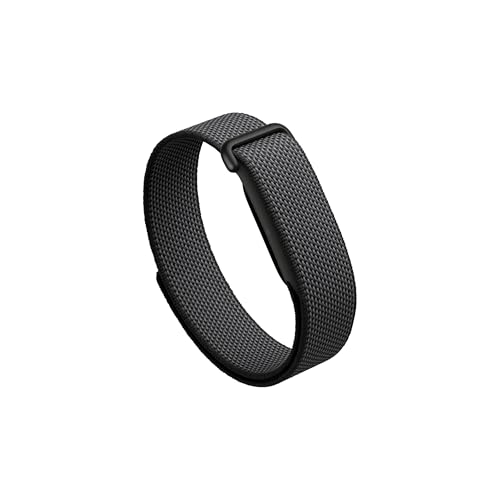
Google Fitbit Air Screenless Tracker
What We Like
- Screenless design avoids distractions
- Lightweight, micro-adjustable comfortable fit
- Up to 7 days battery life
- Fast charging gives 1 day in 5 minutes
Trade-offs
- No screen to display stats during workouts
- Requires Google Health Premium subscription for AI coaching
- One size fits 130-210 mm wrists only
A battery that lasts up to seven days and charges to a full day of use in just five minutes means you can forget about plugging in every night. You still never run out of juice mid-week. The Google Fitbit Air is built for people who want health tracking without a glowing screen pulling their attention away from the moment. Its lightweight, micro-adjustable band sits quietly on your wrist through work, sleep, and exercise, and the pebble-style tracker pops into different bands in seconds so it matches your look whether you are in the gym or at a dinner table.
The trade-off for that screenless design is that you cannot see your heart rate or step count on the tracker itself; you have to check the app on your phone. Compared to a tracker like the Samsung Galaxy FIT 3, which has a screen, the Fitbit Air requires you to view your stats on your phone rather than on your wrist. If you prefer seeing live data during a workout, a tracker with a display may suit you better. But if you want a tracker that stays out of your way and still delivers heart rate, sleep, and activity data with personalized coaching through Google Health Premium, the Fitbit Air offers a comfortable, screen-free experience.
Product photos
Garmin Vivosmart 5 Tracker
What We Like
- Dedicated sleep score plus improvement tips
- Body Battery energy monitoring throughout day
- Swim-proof and shower-safe design
- Bright bigger display than previous model
Trade-offs
- Pulse Ox not available in all countries
- Relies on phone GPS for outdoor route tracking
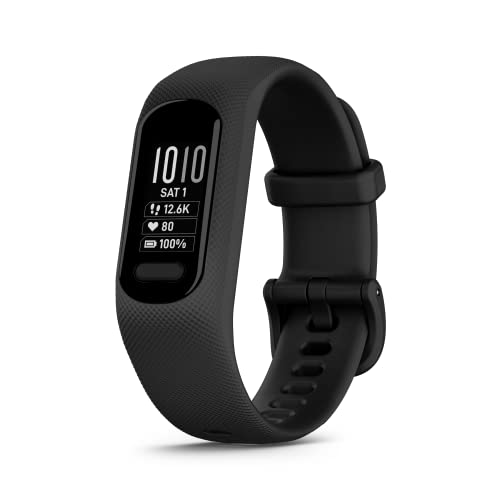
A sleep score that comes with personalized advice on how to improve it is the standout feature here. The Garmin Vivosmart 5 gives you a nightly rating based on your restlessness, breathing, and heart rate, then the Garmin Connect app offers specific suggestions like adjusting your bedtime or winding down differently. That guidance makes it more useful than a simple number, especially if you are trying to build better sleep habits without guesswork. It also tracks your Body Battery energy levels throughout the day, so you can see how your sleep quality affects your afternoon energy. For anyone who wants to understand their recovery as much as their step count, this tracker delivers real context.
The trade-off is that the Vivosmart 5 depends on your phone’s GPS for outdoor walks and runs, so if you leave your phone behind, you will not get distance or pace data. The screen uses a touchscreen and button interface, meaning you have to tap or press the button to check the time or your stats. Still, the sleep insights and Body Battery feature are unique at this level, and the seven-day battery means you can wear it to bed every night without hunting for a charger.
Xiaomi Smart Band 11 Tracker
What We Like
- Weighs just 15.6g without strap
- Ultra-thin 9.99mm curved body
- 21-day battery life
- 5ATM waterproof for swimming
Trade-offs
- No built-in GPS for outdoor runs
- PPG sensor protrudes slightly from the thin body
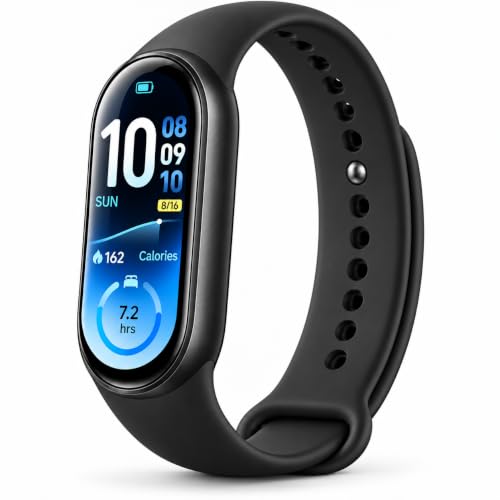
At 15.6 grams without the strap, this band is light enough that you will genuinely forget it is on your wrist. That matters when you are swinging kettlebells, doing push-ups, or trying to sleep with a tracker that does not dig in or catch on sleeves. The 9.99mm curved body and breathable strap sit flush against your skin, so there is no bulk or irritation. If you want a fitness companion that stays out of your way all day and night, this is the one that delivers on that promise without compromise.
The trade-off for that featherlight feel is that you lose built-in GPS, so if you run or cycle without your phone, you will not get accurate distance or pace data. For gym goers, walkers, and swimmers who carry their phone anyway, the Xiaomi Smart Band 11 Tracker offers an unbeatable combination of invisibility on the wrist. It also has a vibrant 1.72-inch AMOLED screen that actually shows your stats clearly.
Product photos
WHOOP 5.0 Screenless Wearable
What We Like
- AI Coach turns 140+ metrics into guidance
- 14+ day battery charges on wrist
- Healthspan tracks aging pace from 9 metrics
- Screenless design for undisturbed sleep tracking
Trade-offs
- Requires ongoing 12-month membership to function
- No screen means no glanceable stats during workouts
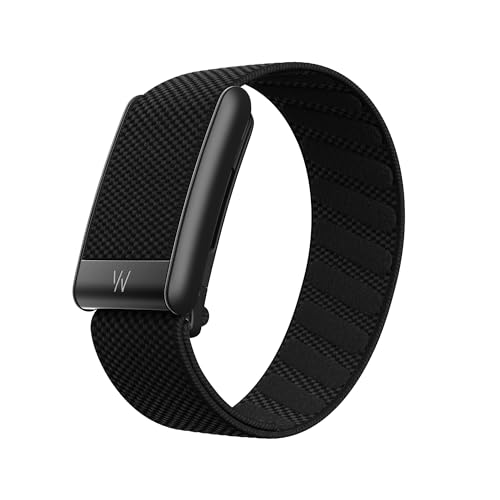
A 14-day battery you can recharge without taking the band off means this tracker stays on your wrist through sleep, sweat, and shower without interruption. That screenless design also helps it disappear during the night, so the sleep tracking, REM, deep, light, awake time, and sleep debt, happens without a glowing screen nudging you awake. The real draw here is the AI Coach: it takes over 140 health and fitness metrics and turns them into personalized next-step advice. The advice adapts as your journal entries reveal how training, alcohol, or travel affect your recovery. If you want a wearable that does more than count steps and actually tells you what to do differently tomorrow, this is the one.
The catch is that membership. You pay for a 12-month Peak subscription upfront, and the device itself is included in that cost, so there is no way to use the WHOOP 5.0 without an ongoing commitment. That makes it a different kind of purchase compared to the Garmin CIRQA Smart Band, which works with no subscription at all. The trade-off is depth: WHOOP gives you the Healthspan feature that calculates your pace of aging from nine key metrics, plus a Stress Monitor that tracks how your body responds throughout the day. For someone ready to invest in long-term habit coaching rather than just daily tracking, the membership model buys a level of insight you will not get from a subscription-free band.
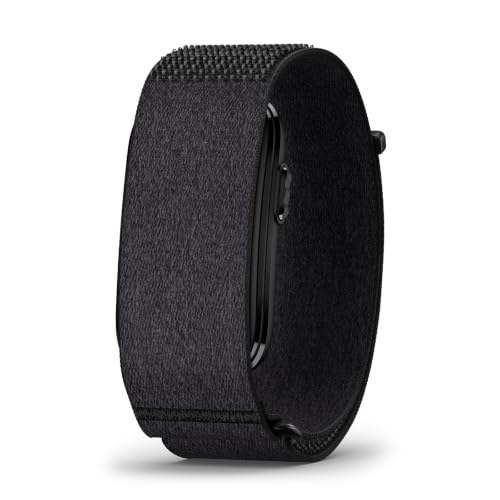
Garmin CIRQA Smart Band
What We Like
- No subscription for full health tracking
- Up to 10 days battery life
- Screenless design for distraction-free wear
- Automatic activity detection learns your habits
Trade-offs
- No on-device display; must check phone for data
- Relies on smartphone GPS for outdoor tracking accuracy
A full ten days of battery life means you can wear this band through the week and still have juice left for the weekend without hunting for a charger. The screenless design keeps your focus on the workout, not a glowing screen, while the soft fabric band stays comfortable for all-day and all-night wear. It automatically detects activities like running, cycling, or yoga, and over time it learns your patterns so the tracking gets smarter. For anyone who wants solid health metrics, heart rate, sleep score, Body Battery energy, stress, without paying a monthly subscription, this is a straightforward, no-strings-attached tool.
The catch is that there is no display on the band itself, so you check your data through the Garmin Connect app on your phone. That works fine for reviewing after a workout, but if you want glanceable stats mid-run, a tracker with a screen like the Xiaomi Smart Band 11 gives you that at-a-glance feedback. The CIRQA can pair with your phone’s GPS for accurate outdoor route tracking, so if you want distance and pace data, you will need to bring your phone along. For the distraction-free, subscription-free crowd, though, this band delivers the essentials without the extra cost.
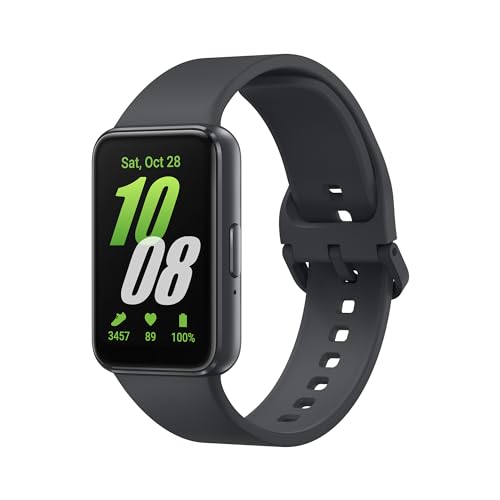
Samsung Galaxy FIT 3 Tracker
What We Like
- 5ATM & IP68 water resistance for swimming
- Vibrant 1.6" AMOLED display for easy navigation
- Up to 14 days battery life between charges
- 101+ workout modes with auto detection
Trade-offs
- No iPhone or iOS compatibility
- International model has no US warranty
- Samsung Pay not supported
A 5ATM and IP68 water resistance rating means this tracker is ready for laps in the pool or a splashy run in the rain without you worrying about damage. That swim-ready durability, paired with a 1.6-inch AMOLED display that offers smooth touch navigation, makes it a natural fit for anyone who spends as much time in the water as on dry land. The 101+ workout modes and auto detection handle everything from freestyle to yoga, so you can focus on moving instead of fumbling with settings.
If you use an iPhone, this Samsung tracker won’t work with it, it’s only compatible with Android devices, and the international model carries no US warranty. For Android users who want a swim-ready fitness band without a high price, the Galaxy Fit 3’s 5ATM and IP68 water resistance means you can take it in the pool or shower without worry.
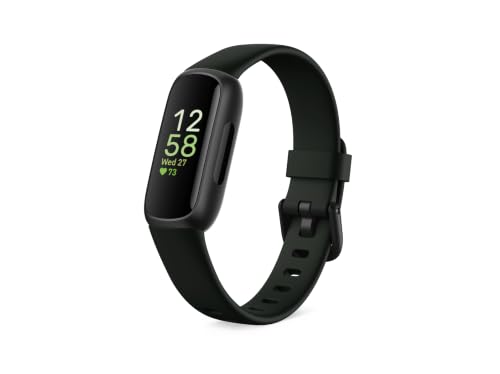
Fitbit Inspire 3 Fitness Tracker
What We Like
- Daily Stress Management Score included
- Mindfulness and relax breathing sessions
- 24/7 heart rate and SpO2 monitoring
- Automatic sleep tracking with Sleep Score
Trade-offs
- Requires iOS 16.4 or Android 11.0 or higher
A daily Stress Management Score and guided breathing sessions make this tracker a genuine companion for anyone who wants to keep an eye on their mental load alongside their step count. It monitors heart rate around the clock, tracks sleep automatically with a detailed Sleep Score, and even checks SpO2 and irregular heart rhythms. That mix of wellness and activity data suits people who treat recovery and stress as seriously as their workout splits.
The trade-off comes in the overall size: at just 0.7 inches long, the device is compact compared to the Xiaomi Smart Band 11’s 1.72-inch AMOLED panel. That means checking stats mid-set or glancing at notifications takes a bit more focus. If you prefer a larger display for quick reads during exercise, the Xiaomi offers a roomier view. For stress-aware training and sleep recovery, though, the Inspire 3 packs a lot of calm into a small wristband.
Product photos
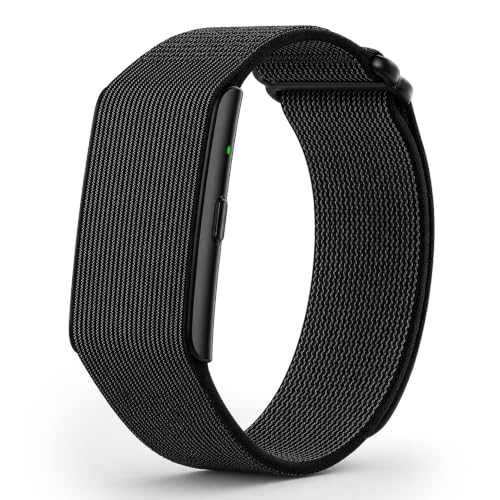
Domhong Screenless Fitness Tracker
What We Like
- Ultra-light 25g design for comfortable wear
- IP68 water resistance for sweat and rain
- 170+ sports modes with connected GPS
Trade-offs
- No on-wrist display for real-time stats
- Connected GPS requires carrying your phone
- Readings are reference-only, not medical grade
The catch is that you give up glanceable stats mid-workout; to see your pace or heart rate, you need to pull out your phone and open the QwatchPro app. Compared to a band like the Xiaomi Smart Band 11, which has a 1.72-inch AMOLED display, the Domhong relies on vibration alerts and post-exercise review in the app. If you prefer checking your progress without reaching for your pocket, a band with a screen may suit you better. But if your priority is a lightweight band that tracks 170 sports and offers up to 30 days of battery, this one fits that need.
Product photos
How We Evaluated Workout Bracelets
We built this guide by studying manufacturer specifications, expert round-ups from fitness publications, and patterns in owner feedback. No product was tested in-house; our conclusions come from comparing published data and what real users consistently report.
Four criteria mattered most for this category. Accuracy and sensor quality came first, a bracelet that misreads heart rate or skips steps is worse than none. Battery life was next because frequent charging kills the habit of wearing a tracker daily. Comfort and fit ranked high since a bracelet you notice during push-ups or sleep gets left in a drawer. Screen presence or absence rounded out the list. Some people want glanceable stats while others need zero distraction.
A research-led evaluation has limits: we cannot verify battery claims in every scenario, and individual wrist size affects comfort differently. What we can offer is a clear map of each product’s strengths and trade-offs so you can match them to your own routine.
What To Look For In Workout Bracelets
Pick a workout bracelet that matches how you actually move. A runner who wants pace data needs different features than someone who just wants step counts and sleep tracking.
Focus on sensor accuracy, battery life that fits your charging habits, and whether you want a screen or not. Ignore flashy features you will never use.
Screen or No Screen
The biggest fork in the road is whether you want a display. Screenless designs like the Google Fitbit Air Screenless Tracker and WHOOP 5.0 remove the temptation to check notifications during workouts. They also tend to be lighter and last longer between charges. Screen-equipped bands like the Samsung Galaxy FIT 3 Tracker let you see heart rate and lap time mid-set, which matters for interval training.
Battery life differences are real. Many screenless models run a week or more. A bright AMOLED display like the one on the Samsung Galaxy FIT 3 still manages up to 14 days, but that is the exception rather than the rule.
Water Resistance and Durability
If you swim, shower with your tracker, or sweat heavily, check the water resistance rating. 5ATM means it is safe for swimming. IP68 covers dust and submersion beyond one meter but is less specific about pressure. The Garmin Vivosmart 5 is swim-proof and shower-safe without needing a special mode.
For gym use, any IP68 or 5ATM rating handles sweat and rain. The Domhong Screenless Fitness Tracker offers IP68 for basic protection at a lower price point.
Battery Life and Charging Convenience
A tracker that needs charging every night defeats the purpose of sleep tracking. Look for at least seven days of battery life if you want uninterrupted data. The Xiaomi Smart Band 11 lasts 21 days, which makes it one of the longest-lasting options. The Google Fitbit Air charges fast enough to give a full day of use from just five minutes of charging, which matters when you forget to plug it in.
- Check if the charger is proprietary or uses standard USB.
- Confirm the battery claim covers real-world use with heart rate on.
- Look for fast-charge features if you are prone to forgetting overnight charging.
A good rule: if the battery does not last as long as your typical training week, you will stop wearing it.
Workout Bracelets Compared
The table below compares the eight workout bracelets side by side so you can see battery life, water resistance, and screen type at a glance.
| Product | Screen | Battery Life | Weight |
|---|---|---|---|
| Google Fitbit Air Screenless Tracker | Screenless | Up to 7 days | 0.0 pounds |
| Garmin Vivosmart 5 Tracker | Touchscreen + button | Up to 7 days | 0.1 pounds |
| Xiaomi Smart Band 11 Tracker | 1.72" AMOLED | 21 days | 15.6g (without strap) |
| WHOOP 5.0 Screenless Wearable | Screenless | 14+ days | 0.2 pounds |
| Garmin CIRQA Smart Band | Screenless fabric band | Up to 10 days | 0.0 pounds |
| Samsung Galaxy FIT 3 Tracker | 1.6" AMOLED | Up to 14 days | 0.1 pounds |
| Fitbit Inspire 3 Fitness Tracker | 0.7 x 0.4 x 1.5 inches | N/A | 0.2 pounds |
| Domhong Screenless Fitness Tracker | Screenless | 20-30 days | 25g |
Frequently Asked Questions
Do I need a screen on my workout bracelet?
Not necessarily. Screenless trackers like the Google Fitbit Air and WHOOP 5.0 are lighter, have longer battery life, and remove the temptation to check notifications. If you need real-time heart rate or lap data during intervals, a screen is useful. For steady-state cardio or daily step counting, screenless works fine.
How accurate are workout bracelet heart rate sensors?
Optical heart rate sensors on modern bracelets are generally accurate for steady-state activity but can lag during high-intensity intervals or weightlifting. Chest straps remain more precise for heart rate variability and zone training. For most gym-goers, wrist-based sensors offer good enough data to track trends over time.
Can I swim with a workout bracelet?
Only if the bracelet has a 5ATM or IP68 rating. 5ATM means it is safe for swimming in pools and open water. IP68 covers submersion beyond one meter but is less specific about swimming pressure. The Samsung Galaxy FIT 3 and Xiaomi Smart Band 11 both carry 5ATM ratings for swim readiness.
How long should a workout bracelet battery last?
Aim for at least seven days of battery life to avoid frequent charging interruptions. The Xiaomi Smart Band 11 leads with 21 days. The Garmin CIRQA Smart Band lasts up to 10 days. Shorter battery life is acceptable if you are okay with charging during showers or while at your desk.
What is the difference between a fitness tracker and a smartwatch?
A fitness tracker focuses on health metrics like steps, heart rate, sleep, and activity. A smartwatch adds notifications, apps, and often a larger screen. Workout bracelets are lighter and more discreet. If you want on-wrist notifications and app support, look at workout watches instead.
The Bottom Line
The Google Fitbit Air Screenless Tracker is the best overall workout bracelet for anyone who wants accurate health tracking without a screen demanding attention during sets. It is light, comfortable, and charges fast enough that a five-minute top-up gets you through a full day.
Budget-conscious buyers and those who prefer no subscription should look at the Garmin CIRQA Smart Band. Swimmers will appreciate the Samsung Galaxy FIT 3 Tracker with its 5ATM rating and vivid display. Sleep-focused readers should consider the Garmin Vivosmart 5 for its dedicated sleep score and recovery insights.
The single most important factor is choosing a bracelet that you will actually wear every day. Comfort, battery life, and the screen-or-no-screen decision matter more than feature lists. Pick the one that fits your routine, not the one with the longest spec sheet.
