
9 Best Workout Machines For Booty in 2026
This post contains affiliate links. As an Amazon Associate, we earn from qualifying purchases.
The Lifepro GluteBlast Hip Thrust Machine takes the best overall spot because it folds up with built-in wheels for easy storage while still delivering a versatile hip thrust, sissy squat, and core workout experience. For lifters who need serious weight capacity, the Goimu HT01 is our best heavy-duty pick, while the Titan Fitness Standing Hip Thrust Machine offers a different movement angle for those with permanent floor space.
The real challenge for most home gym shoppers is finding a booty machine that fits their available square footage without sacrificing the resistance level needed for real progress. A machine that lives permanently in the corner of a bedroom works differently than one that gets wheeled out of a closet before each session.
This guide is built from manufacturer specifications, expert round-ups, and patterns we found in owner feedback across dozens of models. We focused on what actually matters for home use: footprint, weight capacity, adjustability, and whether the machine can grow with you.
Top 9 Workout Machines For Booty in the Market
Certain content that appears on this site comes from Amazon. This content is provided "as is" and is subject to change or removal at any time.
The Best Workout Machines For Booty, Reviewed
Lifepro GluteBlast Hip Thrust Machine

What We Like
- Folds with built-in wheels for storage
- Versatile: hip thrust, sissy squat, core moves
- PU leather cushioning for comfort
- Compact open footprint at 45.3 inches long
Trade-offs
- 220 lb capacity limits heavy plate loading
- No weight plate storage or band pegs
With a 220-pound capacity and a foldable design that shrinks to 39 inches long, this machine fits into small home gym corners without demanding you sacrifice your living space. It targets glutes, hamstrings, and core through hip thrusts, sissy squats, and even push-ups or tricep dips, making it a true all-in-one booty builder for someone starting or progressing steadily. The powder-coated steel frame and PU leather pad keep things stable and comfortable, so you can focus on form rather than fidgeting with wobbly parts.
The trade-off is that 220 pounds is a ceiling, not a floor; if you’re already loading more than that on a barbell hip thrust, this bench will top out before your glutes do. Compared to the Goimu HT01, which holds 800 pounds and includes band pegs, the Lifepro is clearly built for lighter, more space-conscious training. It’s the right call for apartment dwellers or anyone who wants a dedicated glute station that tucks away after a session, not a permanent floor fixture.
Goimu HT01 Hip Thrust Machine
What We Like
- 800 lb plate-loaded capacity
- Built-in band pegs for variable resistance
- Dual safety limiter system with grip handles
Trade-offs
- At 80.8 inches long, needs substantial floor space
- No folding or wheels for easy storage
- Plate-loaded only; no included weights
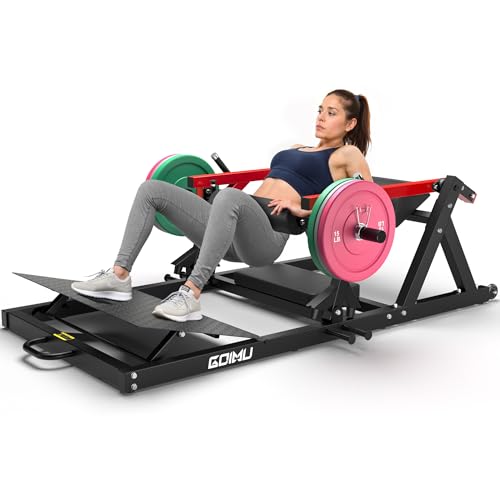
An 800-pound weight capacity lets this machine take on the heaviest glute work most home gyms will throw at it, without wobble or worry. The half-round back pads with a spinal relief gap keep your upper back comfortable even when you’re pushing near your max. The 21-inch hip pad spreads the load so you don’t feel pinching on your hip bones. If you’re someone who has outgrown makeshift barbell-on-bench setups and wants a dedicated station that lets you load up heavy and drive through every rep with control, this is the kind of build that makes you feel ready to grind.
At 80.8 inches long and 53.9 inches wide, this machine needs a permanent spot in your workout area. It doesn’t fold or roll away like the Lifepro GluteBlast, so if your garage doubles as a parking spot, measure twice before buying. For anyone with a dedicated training space who wants raw capacity and stability, the Goimu HT01 delivers exactly what the heavy-duty label promises.
Titan Fitness Standing Hip Thrust Machine
What We Like
- 440 lb plate capacity for heavy loads
- Adjustable thigh pad and thrust angle
- Knurled handles and non-slip foot platforms
- Integrated band pegs for added resistance
Trade-offs
- At 157 lb, it's heavy to move around
- Weighs 157 lb, making it difficult to move
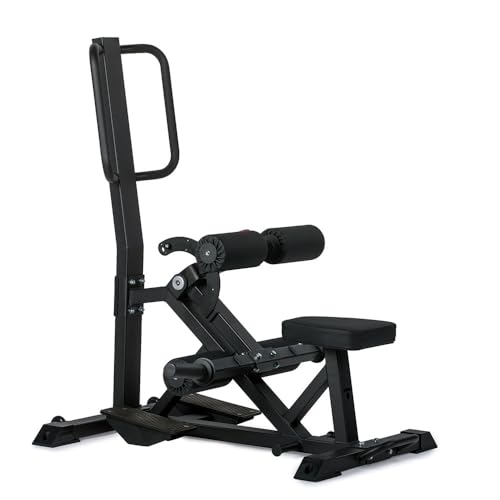
A 440-pound weight capacity means you can load this machine seriously heavy without worrying about stability, perfect for anyone who wants to push glute strength past bodyweight squats and lunges. The standing design lets you step in and out quickly, with six thigh pad height settings and three thrust angles to dial in your exact position. That makes it a strong fit for lifters who want targeted glute work without the hassle of setting up a barbell on the floor or wrestling with a bench.
The 157-pound frame is heavy, so you will not be sliding it across the room between exercises. The Lifepro GluteBlast weighs 36.8 pounds and folds for storage, making it easier to move and stow. If you have dedicated floor space and want a standing machine that handles heavy loads, the Titan fits. If you need to store your gear after each session, the Lifepro’s lighter, foldable design is more practical.
Product photos
YOLEO Smith Machine Hip Thrust Machine

What We Like
- 1210 lb total rated capacity
- Smooth guided lifting with linear bearings
- Adjustable backrest, seat, and uprights
- Resistance band pegs for added exercises
Trade-offs
- At 45 lb, heavy to reposition without wheels
- Large footprint: 61.9 x 56.6 inches
A 1210 lb total rated capacity supports serious loading for progressive glute training without worrying about structural limits. The guided barbell path keeps the bar moving smoothly through hip thrusts and glute bridges, which helps you focus on muscle activation rather than balance. With a backrest that adjusts to six height positions and a seat that slides seven ways, you can dial in the setup for your body proportions. Resistance band pegs add variety for banded hip thrusts, rows, and abductions, making it a versatile addition to a home gym focused on lower body strength.
Space and assembly patience are the main trade-offs here. The Lifepro GluteBlast folds and rolls away, while this YOLEO is a permanent fixture. But if you have the room and want a smith-machine-style guide bar for controlled glute work with heavy loads, this offers a sturdy platform that the lighter foldable options can’t match.
Yagud Hip Abductor Machine

What We Like
- 2-in-1 abduction and adduction modes
- 9 adjustable resistance levels
- 440 lb weight capacity
- Space-saving compact design
Trade-offs
- No plate-loading for progressive overload beyond bands
- At 35 inches long, it still needs floor space
With a 440-pound weight capacity and nine resistance levels, this machine gives you room to grow without needing to swap equipment. The 2-in-1 design lets you switch between hip abduction and adduction in seconds by pulling a knob and adjusting the leg bar, so you can target both outer glutes and inner thighs in one session. It’s a smart pick if you want a compact setup that fits in a corner of your home and still delivers enough challenge to keep your lower body progressing over time. The 3-level adjustable seat and thick leather cushions help keep your posture comfortable, and the 360-degree rotating pads guide your knees through the right path during both inner and outer thigh movements.
The Yagud Hip Abductor Machine uses a built-in resistance system with nine levels, which keeps training simple but means you can’t add extra weight plates for heavier loads. For someone starting out or working out in a tight space, it keeps things stable thanks to a reinforced triangular steel frame that supports up to 440 pounds without wobbling. Assembly takes about ten minutes, and its compact footprint won’t dominate a room the way a larger plate-loaded bench does. It’s a practical, no-fuss tool for building glute and thigh strength at home.
fed fitness Workout Machine
What We Like
- 108 lb adjustable resistance for progressive training
- Switches between abduction and adduction without leaving seat
- Dual foot bars for varied glute angles
- Stable 48.5 lb steel frame, 600 lb capacity
Trade-offs
- Recommended up to 6 ft height limits taller users
- Not suitable for users over 6 ft tall
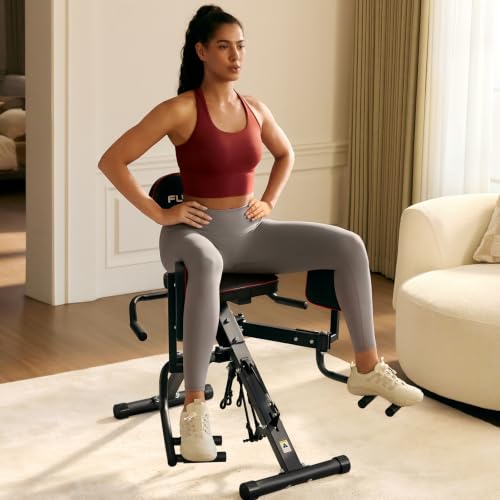
With up to 108 pounds of resistance from six adjustable bands, this machine lets you start light and build strength steadily without needing a stack of plates. The ability to switch between hip abduction and adduction by pulling a pin and flipping the thigh pads means you can target glutes, inner thighs, and hip stability in one compact setup. It suits home gym enthusiasts who want a dedicated booty machine that fits a small footprint and stays quiet during workouts.
The resistance comes from six 18 lb bands instead of plates, so the maximum is 108 lb, fine for most home users but not for anyone who needs heavier loading. Compared to the plate-loaded Goimu HT01, which handles more weight, this Fed Fitness model suits beginners through intermediate trainees who want a compact setup. It also limits taller users to about six feet, so check your height before committing.
HVO Hip Thrust Machine
What We Like
- 880 lb capacity for heavy progressive loading
- Ergonomic back pad and waist belt
- Adjustable foot platform with 4 levels
- Compact footprint for home gyms
Trade-offs
- At 85 lb, it's heavy to move around
- Footprint is wide at 57.2 inches
- No built-in resistance bands included
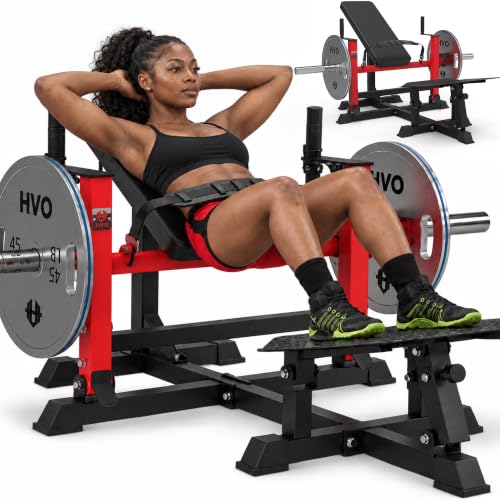
An 880-pound weight capacity supports serious progressive overload without breaking a sweat. That heavy-duty alloy steel frame and the ergonomic back pad that moves with your motion make it feel like a dedicated glute station rather than a hacked-together barbell setup. If you’re someone who wants to push your hip thrusts into triple-digit plates without worrying about stability or comfort, this is the kind of gear that lets you focus on the lift instead of the setup.
At 85 pounds and a 57.2-inch width, it’s not something you’ll casually tuck into a corner after each session. The Lifepro GluteBlast folds up and rolls away at 36.8 pounds, while this machine asks for a permanent spot on your floor. But if you have the space and want a platform that grows with your strength without creaking or wobbling, that solid footprint becomes a feature, not a flaw.
Product photos
GMWD Hip Thrust Machine

What We Like
- Safety limiter with grip handles
- Full-length spine-supporting back pad
- Three-position adjustable footboard
Trade-offs
- At 192 lbs, difficult to move around
- Non-foldable design needs dedicated floor space
- Large footprint at 71 inches long
The trade-off for that build is size and weight. At 192 pounds and 71 inches long, this machine is not easy to move or store. The Lifepro GluteBlast folds and weighs 36.8 pounds, making it more portable for those with limited space. If you have a dedicated area and want a heavy-duty machine that stays put, the GMWD delivers the capacity and support for serious training. For someone who needs to store equipment between workouts, a lighter folding option would be more practical.
Product photos
REP Fitness Glute Ham Developer

What We Like
- 13 adjustment points for precise fit
- Sturdy 16-gauge steel frame
- Built-in band pegs for added resistance
- Rear transport wheels for easy moving
Trade-offs
- At 150 lb, it's heavy to reposition often
- Large footprint: 70" long, 36" wide
Thirteen adjustment points on the footplate let you dial in the angle and height for your body, which matters for glute-ham raises and back extensions where small misalignments can affect form. The 16-gauge steel frame and thick padded rollers with vinyl covers provide a stable platform during demanding strength training sessions. For anyone focused on posterior chain work and willing to dedicate floor space, this machine supports a range of exercises including glute ham raises, back extensions, hip extensions, and GHD sit-ups.
Size and weight are the main considerations here. At 150 pounds and 70 inches long, it’s not something you’ll tuck into a corner after every workout. The rear transport wheels help you roll it around, but you’ll still need a dedicated spot in your garage or home gym. The Lifepro GluteBlast hip thrust machine is 50.6 inches long and 36.8 pounds, so this GHD takes up more room and is heavier.
Product photos
How We Evaluated Workout Machines For Booty
We started by combing through manufacturer specs on dimensions, weight capacities, and construction materials for every machine in this category. Then we cross-referenced those numbers against patterns we found in owner feedback. Things like whether a 220 lb capacity feels limiting after six months, or how much floor space a 71-inch-long machine really eats up in a standard bedroom.
Three criteria mattered most for this category: footprint and portability, progressive overload potential, and movement variety. A machine that hits all three is rare, so we prioritized based on the reader’s likely home gym setup. A lifter with a dedicated garage gym has different needs than someone training in a living room corner.
The honest limit of a research-led evaluation is that we can’t tell you how the padding feels after a year of heavy hip thrusts or whether the welds hold up at 800 lb over time. What we can do is surface the trade-offs, like the fact that a 192 lb frame with safety stops gives you stability but makes you think twice about moving it weekly.
What To Look For In Workout Machines For Booty
The right machine for your booty workouts comes down to matching your space, your strength level, and your willingness to move equipment around. Here is what to check before you buy.
Focus on three things: the machine’s footprint (length and width when set up), its maximum weight capacity (look for something that allows room to grow), and whether it folds or rolls for storage. Ignore marketing claims about “total body” if you only want glute isolation.
Footprint and Portability
The most common regret we see in owner feedback is buying a machine that is too long for the available floor space. At 45.3 inches, the Lifepro GluteBlast fits in a bedroom corner, while the Goimu HT01 stretches 80.8 inches and needs a dedicated spot. Measure your space before you shop, and if you plan to store the machine between sessions, look for folding frames or built-in transport wheels.
Weight Capacity and Progressive Overload
Your glutes are strong muscles, and they adapt quickly. A machine with a 220 lb capacity might feel fine for the first few months but can become a ceiling that forces you into single-leg variations or slower reps. The 800 lb and 880 lb options on this list give serious headroom for progressive overload, but those machines also weigh more and take up more space. Be honest about where you are now and where you want to be in a year.
Adjustability and Movement Variety
A fixed-position machine locks you into one movement path. The best machines let you adjust the backrest angle, foot platform height, and thigh pad position to match your anatomy and target different parts of the glute. Some models also include band pegs for adding variable resistance, which keeps the muscle guessing without needing another plate.
- Check whether the machine has multiple foot platform positions for different hip angles.
- Look for adjustable backrest and seat positions that accommodate your height.
- Confirm the machine supports band resistance if you want to add variety without buying more plates.
- Verify the frame material and gauge, thicker steel (14-16 gauge) handles heavy loads better over time.
A good rule of thumb: the machine should feel slightly overbuilt for your current strength level so it stays useful as you get stronger.
Workout Machines For Booty Compared
The table below puts these nine workout machines for booty side by side so you can compare dimensions, capacities, and key features at a glance.
| Product | Weight Capacity | Weight | Dimensions |
|---|---|---|---|
| Lifepro GluteBlast Hip Thrust Machine | 220 lbs | 36.8 pounds | 45.3" × 27.2" × 21.3" |
| Goimu HT01 Hip Thrust Machine | 800 lbs | N/A | 80.8 x 53.9 x 24.0 in |
| Titan Fitness Standing Hip Thrust Machine | 440 lb | 157 lb | N/A |
| YOLEO Smith Machine Hip Thrust Machine | 1210 lb | 45.0 lb | L 61.9 x W 56.6 x H 43.8 in |
| Yagud Hip Abductor Machine | 440 pounds | N/A | 35.0 x 18.1 x 32.1 inches |
| fed fitness Workout Machine | 600 lb | 48.5 lb | 16.1 × 34.8 in |
| HVO Hip Thrust Machine | 880 lb | 85.0 lb | 50.6" D x 57.2" W |
| GMWD Hip Thrust Machine | 800 lbs | 192 lbs | 71" L x 31" W x 22" H |
| REP Fitness Glute Ham Developer | N/A | 150 lb | L 70.0 inches, W 36.0 inches, H 42.0 inches |
Frequently Asked Questions
What is the best workout machine for building glutes at home?
The Lifepro GluteBlast Hip Thrust Machine is the best overall pick for most home gyms because it folds for storage and handles hip thrusts, sissy squats, and core work. For lifters who want maximum weight capacity and have permanent floor space, the Goimu HT01 supports up to 800 lb.
How much weight capacity do I need in a glute machine?
Start with a machine that holds at least 300 lb if you are new to hip thrusts, but consider 600 lb or more if you plan to train seriously for a year or longer. The glutes are powerful muscles, and many lifters find that a 220 lb limit feels restrictive within a few months of consistent training.
Can I build glutes with a band resistance machine instead of plates?
Yes, band resistance machines like the fed fitness Workout Machine can build glute strength and size, especially for beginners or those returning from injury. The trade-off is that you cannot add as much resistance as you can with plate-loaded machines, which limits long-term progressive overload for advanced lifters.
What size space do I need for a hip thrust machine?
Compact models like the Lifepro GluteBlast need about 45 inches of floor length, while heavy-duty options like the GMWD Hip Thrust Machine require 71 inches. Always measure your training area and account for clearance around the machine for loading plates and getting into position.
Do standing hip thrust machines work better than seated ones?
Standing hip thrust machines, like the Titan Fitness model, engage the glutes through a different movement pattern that some lifters find more natural for their hip hinge mechanics. Neither style is inherently better, the best choice depends on your anatomy, comfort, and whether you prefer a seated or standing starting position.
The Bottom Line
The Lifepro GluteBlast Hip Thrust Machine is the best overall pick for home gym enthusiasts who need a foldable, versatile machine that stores easily and still delivers solid glute training. It works best for moderate weight training in limited spaces, and the built-in wheels make it practical for people who share their workout area with other household activities.
If your priority is heavy progressive overload and you have permanent floor space, the Goimu HT01 gives you an 800 lb capacity with safety limiters and band pegs. Budget-conscious shoppers or taller users should check the Titan Fitness Standing Hip Thrust Machine for its adjustable angle and 440 lb capacity. The REP Fitness Glute Ham Developer is another option for a posterior chain machine that stays put.
The single most important factor in choosing a booty machine is being honest about your available floor space and how often you are willing to move the machine. A perfect machine that you cannot fit or cannot be bothered to set up will not build glutes.
