
10 Best Workout Monitors in 2026
This post contains affiliate links. As an Amazon Associate, we earn from qualifying purchases.
The Garmin vívoactive 5 Fitness Smartwatch is the best overall workout monitor because it combines an 11-day battery with a bright AMOLED display, Body Battery energy monitoring, and over 30 built-in sports apps. Those apps cover everything from running to wheelchair mode. For runners who want adaptive coaching, the Garmin Forerunner 165 delivers daily suggested workouts and built-in GPS. Gym-goers who link heart rate to cardio machines should consider the Fitbit Charge 6.
Finding the right workout monitor means balancing battery life, display type, and the specific metrics that actually drive your training. A long-distance runner needs GPS accuracy and recovery insights, while a lifter might prioritize heart rate feedback on gym equipment and a comfortable band you forget you are wearing.
This guide is research-based: we combed through manufacturer specifications, expert round-ups, and patterns in owner feedback to pick ten monitors that cover every budget and training style. No testing claims here, just honest evaluation of what each device does best and where it falls short.
Top 10 Workout Monitors in the Market
Certain content that appears on this site comes from Amazon. This content is provided "as is" and is subject to change or removal at any time.
The Best Workout Monitors, Reviewed
Garmin vívoactive 5 Fitness Smartwatch

What We Like
- 11-day battery with bright AMOLED display
- Body Battery energy monitoring with sleep insights
- 30+ built-in sports apps including wheelchair mode
- Sleep score and personalized sleep coaching
Trade-offs
- Recovery time estimates are approximations, not precise
- Automatic nap detection only provides close estimations, not exact measurements
An 11-day battery life paired with a vivid AMOLED display means you can wear this watch around the clock without needing to recharge every other night. That matters when you want sleep tracking, nap logging, and Body Battery energy monitoring to actually work as a continuous picture of your health, not a snapshot you keep forgetting to check. With over 30 built-in sports apps covering everything from HIIT to golf to wheelchair pushes, this is the kind of everyday companion that fits someone who mixes gym sessions with outdoor runs and still wants a gentle nudge about when to rest.
A bright, colorful AMOLED display makes the screen easy to read in varied lighting, and the battery lasts up to 11 days in smartwatch mode so you can wear it through the week without needing to recharge constantly. Body Battery energy monitoring estimates your energy levels by factoring in sleep, naps, stress, and workouts, giving a practical sense of when to push or rest. A sleep score with personalized coaching suggests how much sleep you need and offers tips for improvement, while HRV status adds another layer of insight into your overall health.
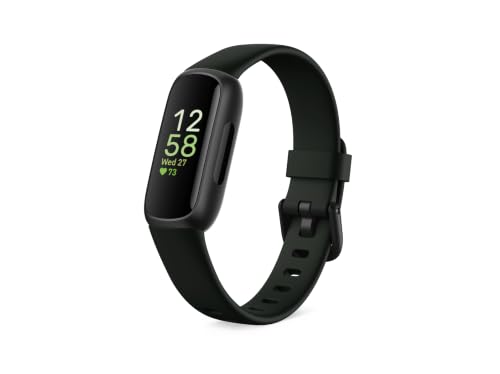
Fitbit Inspire 3 Fitness Tracker
What We Like
- Daily Stress Management Score included
- Automatic sleep tracking with Sleep Score
- Relax breathing sessions built in
Trade-offs
- No built-in GPS for outdoor runs
- 40+ exercise modes, no count comparison available
A daily Stress Management Score, mindfulness sessions, and relax breathing exercises make this tracker a genuine partner for winding down, not just counting steps. It also tracks sleep automatically, gives you a detailed Sleep Score each morning, and includes a smart wake vibrating alarm that won’t jolt you awake. For anyone whose main goal is feeling rested and less frazzled rather than chasing PRs, this is a focused, affordable tool that keeps the essentials simple.
The trade-off is that the Inspire 3 skips built-in GPS, so if you want accurate pace and distance on outdoor runs without carrying your phone, a GPS-enabled watch like the Garmin vívoactive 5 would be a better fit. The small form factor keeps the band lightweight and comfortable, but if your priority is understanding your stress triggers and improving sleep quality, this Fitbit delivers those insights in a band you barely notice wearing.
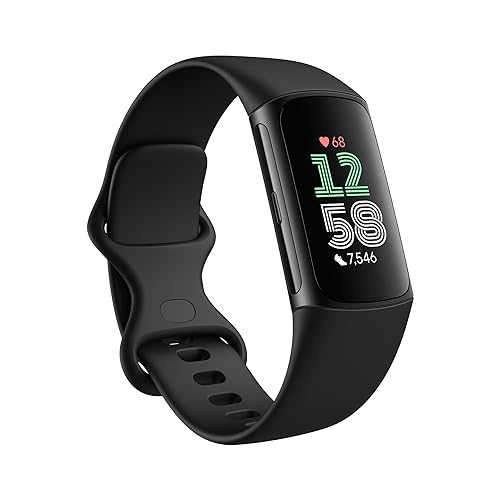
Fitbit Charge 6 Fitness Tracker
What We Like
- Links heart rate to compatible gym machines
- 40+ exercise modes for varied workouts
- Built-in GPS for outdoor runs and rides
- Google Maps turn-by-turn directions on wrist
Trade-offs
- Requires compatible exercise machines for heart rate link
- Google Health Premium subscription needed after 3-month trial
The ability to link heart rate to compatible gym equipment is a practical feature for anyone who uses modern treadmills, ellipticals, or similar machines. You can strap on the Charge 6 and see your pulse displayed on the machine’s console, which helps with pacing during intervals or steady-state cardio. With 40-plus exercise modes and built-in GPS, it also handles outdoor runs and bike rides without needing your phone along.
The heart-rate link works only with compatible exercise machines like treadmills and ellipticals, so it won’t connect to older gear or basic gym equipment. Compared to the Garmin vívoactive 5, the Charge 6 adds Google Maps turn-by-turn directions and Google Wallet tap-to-pay, while the Garmin has a larger display for quick data glances during workouts. For anyone who regularly uses modern cardio machines and wants a tracker that pairs with them, this Fitbit fits that need.
Garmin Forerunner 165 Running Smartwatch

What We Like
- Personalized daily suggested workouts adapt to recovery
- Built-in GPS tracks pace, distance, and speed
- Bright AMOLED touchscreen with button controls
- Safety features include incident detection and assistance
Trade-offs
- Smart notifications require a paired smartphone nearby
- HRV and recovery data are estimates, not medical-grade
The built-in GPS tracks pace, distance, and speed, so you can monitor your run metrics without needing to carry your phone. That data, combined with personalized daily suggested workouts that adjust based on your performance and recovery, helps you train smarter. The AMOLED touchscreen is bright and responsive, and the physical buttons let you start a run even when your fingers are sweaty or gloved.
The 43mm case and lightweight design make it comfortable for running, but the screen size may not suit those who prefer larger displays for data fields or maps. If you want a bigger screen, the Amazfit Active Max offers a 48mm case. But for a dedicated running companion with adaptive training plans and essential fitness features, the Forerunner 165 keeps the focus on your run.
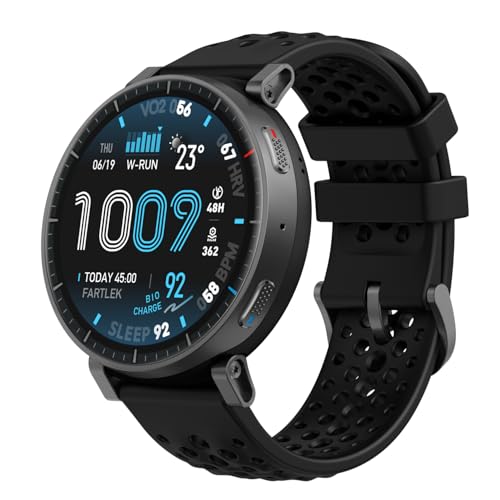
Amazfit Active Max Smart Watch
What We Like
- 25-day battery life
- 3000-nit AMOLED display
- 4GB storage for maps and music
- 170+ workout modes
Trade-offs
- Bluetooth calls require Android phone for hands-free replies
- No cellular connectivity for standalone calls without phone.
Up to 25 days of battery life means you can train, sleep, and go about your week without needing to recharge every few nights. That long endurance pairs with a 3000-nit AMOLED display that stays readable even under direct sun, so checking pace on a midday run or glancing at notifications on a bright trail doesn’t wash out the screen. It’s built for anyone who wants a watch that keeps up with daily workouts and everyday life without demanding constant power stops.
The Active Max packs a 25-day battery, so you can go weeks between charges even with regular workouts and GPS tracking. Compared to the Garmin vívoactive 5, which has a smaller 1.7-inch case dimension, the Amazfit offers more than double the battery life and 4GB of onboard storage for offline maps and music. That endurance makes it a strong pick if you want to leave the charger at home during long training blocks or multi-day trips.
Product photos
Xiaomi Mi Smart Band 10

What We Like
- 21-day battery on single charge
- 1-hour fast recharge
- 1500 nits sunlight-readable display
- Swim tracking with electronic compass
Trade-offs
- Xiaomi Fit app uses metric only natively
- Requires third-party app for imperial units
A 21-day battery life and a full recharge in just one hour mean this band spends almost no time on the charger and almost all of it on your wrist. That combination makes it an excellent companion for anyone who wants to track workouts, sleep, and daily activity without the nagging habit of plugging in every night. The large 1.72-inch AMOLED screen is crisp and bright enough to read in direct sunlight, so you can glance at your pace or a notification mid-run without squinting. It also brings a high-precision electronic compass for tracking swimming direction in the pool, giving you more detailed feedback on your laps than many bands at this level.
The real trade-off here is software: the Xiaomi Fit app only supports the metric system out of the box, so if you think in pounds and inches, you will need to connect it with Google Fit through a third-party app to see imperial units. That extra step is a bit of friction compared to something like the Garmin vívoactive 5, which handles both systems natively. But if you are comfortable with metric or willing to set up that bridge once, the band itself delivers exceptional battery stamina and fast charging that keeps up with your routine, not the other way around.
Product photos
SUUNTO Run GPS Sport Running Watch

What We Like
- Weighs only 36g with textile strap
- Dual-band GPS for precise location tracking
- 12-day battery in daily mode
- 4GB offline music storage
Trade-offs
- 20-hour GPS battery limits ultra-distance runs
- No music streaming services, only offline storage
At 36 grams with the textile strap, this is one of the lightest GPS running watches you can strap on. That weight matters more than most people realize: a heavy watch bounces on your wrist, distracts your stride, and can even chafe over long miles. The Suunto Run keeps things featherlight while still packing a 1.32-inch AMOLED touchscreen that’s easy to read mid-stride. Dual-band GNSS means it locks onto your position quickly and holds it even under heavy tree cover or next to tall buildings, so you can focus on your pace instead of wondering if the route is recording.
The trade-off for that low weight is a 20-hour GPS battery life. That’s plenty for marathon training and most weekend long runs, but if you regularly push beyond that on a single charge, you might need to recharge more often. The Suunto Run is built for the runner who values comfort and accurate tracking over multi-day expeditions.
Product photos
Polar Pacer GPS Fitness Tracker Smartwatch

What We Like
- Ultra-light 0.1 lb design
- 35-hour battery in training mode
- Always-on MIP color display
- GPS tracks every step and turn
Trade-offs
- No built-in music storage or playback
- No color touchscreen or AMOLED display
At just 0.1 pounds, the Polar Pacer is barely noticeable on your wrist, a huge plus if you hate feeling weighed down during a run. That featherlight build pairs with up to 35 hours of battery in training mode, so you can go through a whole week of workouts without needing to recharge constantly. The always-on MIP color display is easy to read, and the GPS tracks every step and turn. This watch provides essential tracking for runners: time, pace, distance, laps, and a stopwatch.
The Polar Pacer weighs just 0.1 pounds, so you barely notice it on your wrist during a long run, and it delivers up to 35 hours of battery life in training mode. It focuses on essential running metrics like time, pace, distance, and laps, displayed on a clear always-on MIP color screen. There is no music storage, color touchscreen, or smartwatch extras such as contactless payments or app notifications. For runners who want simplicity and long battery life without extra features, this watch fits the bill.
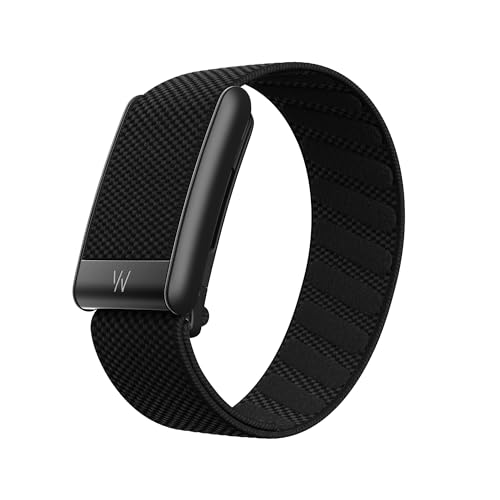
WHOOP 5.0 Screenless Fitness Wearable
What We Like
- 14+ day battery with wrist charging
- Screenless design for all-night sleep tracking
- AI Coach turns 140+ metrics into insights
Trade-offs
- Requires ongoing membership subscription
- No on-device display for glanceable data
The catch is that the WHOOP 5.0 requires a 12-month Peak membership, which covers the device cost but adds an ongoing commitment. You also won’t get a display for checking your pace or distance during a workout. For anyone who prioritizes sleep science, recovery coaching, and long-term healthspan tracking over on-wrist convenience, this is a focused tool that delivers where traditional fitness watches often skim the surface.
Product photos
Polar Loop Screen-Free Health Band
What We Like
- Screen-free design for zero distractions
- No subscription fees ever
- 24/7 heart rate and sleep tracking
- Lightweight 29g band is easy to forget
Trade-offs
- No screen means no glanceable stats mid-workout
- No GPS for outdoor route tracking
- 8-day battery is shorter than some competitors
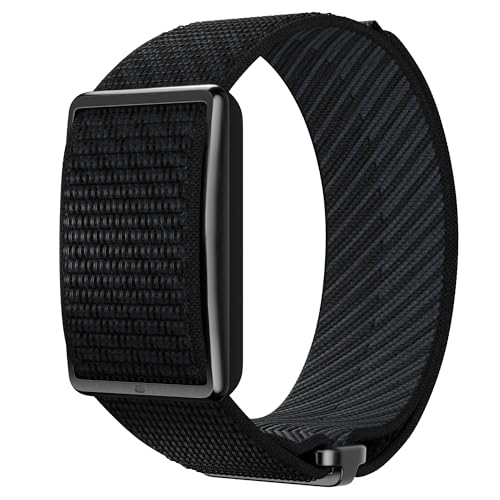
A 29-gram band with no screen and no subscription means this tracker is built for one thing: staying out of your way while still watching your heart and sleep around the clock. That continuous heart rate monitoring uses Polar’s Precision Prime sensor, so you get the same trusted tech found in their sports watches, but without a glowing face tempting you to check notifications. For anyone who wants health data without another screen in their life, this is a refreshingly simple approach that keeps your focus where it belongs.
The downside is that you cannot glance down during a set to see your heart rate or lap time, you will need to sync with the Polar Flow app afterward. And while the 8-day battery is solid, the Amazfit Active Max lasts over three times as long, so if charging once a week still feels like a chore, that watch might suit you better. But if your priority is a truly distraction-free tracker that never asks for a monthly fee, the Polar Loop delivers exactly that promise.
Product photos
How We Evaluated Workout Monitors
We evaluated workout monitors by cross-referencing manufacturer specs, expert round-up consensus, and recurring themes in real owner feedback. Because no single device suits every training style, we looked at each monitor through the lens of its intended user. That ranges from the data-driven athlete who wants recovery coaching to the casual gym-goer who just wants step and sleep tracking without a subscription.
The four criteria that mattered most were battery life (how long between charges during typical daily use), GPS accuracy (built-in versus connected GPS and satellite support), display readability (AMOLED brightness for outdoor visibility versus MIP for always-on efficiency), and sport-mode depth (number of built-in activities and whether metrics like HRV, recovery time, or sleep score are included). For gym integration, we also considered compatibility with third-party equipment and subscription requirements.
An evaluation based on published information has limits: it relies on published specs and the aggregate experience of thousands of owners. That means it can tell you what features a monitor claims and what owners commonly report, but it cannot guarantee how a specific unit will perform in your exact gym or running route.
What To Look For In Workout Monitors
Before you buy, match the monitor’s strengths to your primary workout. A runner needs GPS and training load data; a swimmer needs water resistance and stroke tracking; a lifter benefits from heart rate broadcast to gym machines.
Choose a workout monitor by first deciding whether you need built-in GPS, how often you want to charge it, and whether you prefer glanceable stats on a screen or screen-free sleep coaching.
Battery Life and Charging Speed
Battery life varies wildly, from 8 days on a screen-free band to 25 days on a watch with a large AMOLED display. Consider how often you want to charge. A 21-day band like the Xiaomi Mi Smart Band 10 with a 1-hour fast recharge suits travelers and ultra runners, while an 8-day band like the Polar Loop works for someone who charges weekly. If you track sleep nightly, a longer battery means fewer charging interruptions.
GPS Accuracy and Display Type
Runners and cyclists need accurate pace and distance tracking. Dual-band GPS, found on the SUUNTO Run GPS Sport Running Watch, locks onto signals faster in urban canyons and tree cover. Display type matters for readability: AMOLED screens look vivid but drain more battery, while always-on MIP displays like the Polar Pacer’s stay readable in direct sun without killing the battery.
Sport Modes and Recovery Metrics
A monitor with 170+ workout modes (Amazfit Active Max) covers niche activities like paddleboarding or indoor climbing, but most people need only 10-20 core modes. Recovery metrics like Garmin’s Body Battery or WHOOP’s AI Coach turn raw heart rate and sleep data into actionable guidance, how hard to push today versus when to rest. If you train for a race, look for personalized daily suggested workouts (Garmin Forerunner 165).
- Check whether the monitor requires a subscription for advanced metrics (WHOOP 5.0, Fitbit Charge 6 after trial).
- Confirm native unit support: the Xiaomi Mi Smart Band 10 uses metric only without a third-party app.
- For gym use, verify heart rate broadcast compatibility with your gym’s cardio machines (Fitbit Charge 6).
- Consider weight: the Polar Pacer at 0.1 lb and SUUNTO Run at 36g are barely noticeable on the wrist.
- If you prefer screen-free tracking, the Polar Loop and WHOOP 5.0 offer zero-distraction alternatives.
The best monitor is the one you will actually wear every day and charge without resentment.
Workout Monitors Compared
The table below compares all ten workout monitors side by side on battery life, GPS, display, and key features so you can see at a glance which model matches your training needs and daily habits.
| Product | Battery Life | Heart Rate | Weight |
|---|---|---|---|
| Garmin vívoactive 5 Fitness Smartwatch | Up to 11 days | Heart rate | 0.1 pounds |
| Fitbit Inspire 3 Fitness Tracker | N/A | 24/7 | 0.2 pounds |
| Fitbit Charge 6 Fitness Tracker | N/A | Heart rate on gym equipment | 0.3 pounds |
| Garmin Forerunner 165 Running Smartwatch | Up to 11 days | wrist-based heart rate | 0.1 pounds |
| Amazfit Active Max Smart Watch | Up to 25 days | Heart rate | 0.1 pounds |
| Xiaomi Mi Smart Band 10 | 21 days | Heart rate monitor | 0.1 pounds |
| SUUNTO Run GPS Sport Running Watch | 12 days | N/A | 36g |
| Polar Pacer GPS Fitness Tracker Smartwatch | 35 hours | N/A | 0.1 pounds |
| WHOOP 5.0 Screenless Fitness Wearable | 14+ days | HR | 0.2 pounds |
| Polar Loop Screen-Free Health Band | Up to 8 days | 24/7 | 0.1 pounds |
Frequently Asked Questions
What is the difference between a fitness tracker and a smartwatch for workouts?
A fitness tracker prioritizes health metrics and battery life, often with a smaller display or no screen at all. A smartwatch adds apps, notifications, and sometimes music streaming, but typically needs charging more often. Our guide on fitness tracker vs smartwatch breaks down the trade-offs for gym use.
Which workout monitor has the best battery life?
The Amazfit Active Max Smart Watch claims up to 25 days on a single charge, making it the longest-lasting option among our picks. The Xiaomi Mi Smart Band 10 offers 21 days and recharges fully in one hour, which is ideal for travelers or anyone who forgets to charge nightly.
Do I need a monitor with built-in GPS?
If you run, cycle, or hike outdoors and want accurate pace and distance without carrying your phone, yes. The Garmin Forerunner 165 and SUUNTO Run both have built-in GPS. If you primarily work out indoors or always have your phone nearby, a connected GPS tracker like the Fitbit Inspire 3 will work fine.
What is the best heart rate monitor for the gym?
The Fitbit Charge 6 links your heart rate to compatible gym machines so you see your pulse on the treadmill or elliptical console. For chest-strap-level accuracy during high-intensity intervals, dedicated heart rate monitors are more precise than wrist-based optical sensors.
Can I use a workout monitor for swimming?
Yes, several picks offer swim tracking. The Xiaomi Mi Smart Band 10 includes an electronic compass and swim-friendly design. The Garmin vívoactive 5 and Amazfit Active Max both have water resistance ratings suitable for pool swimming and open water tracking. Always check the depth rating before submerging any device.
The Bottom Line
The Garmin vívoactive 5 Fitness Smartwatch is our best overall workout monitor because it balances long battery life, a bright AMOLED screen, and diverse sport modes with thoughtful recovery tools like Body Battery and sleep coaching. It suits anyone who wants a health-first smartwatch without charging every other day.
If you are a runner who needs adaptive training plans and precise GPS, the Garmin Forerunner 165 delivers daily suggested workouts and safety features like incident detection. For gym-goers who want real-time heart rate on cardio machines, the Fitbit Charge 6 bridges the gap between wearable and equipment. Budget-conscious buyers or data nerds will appreciate the screen-free WHOOP 5.0 or the subscription-free Polar Loop.
The single most important factor is honesty about your training habits. A monitor that tracks the metrics you actually use and fits comfortably enough to wear all night will serve you far better than one with every bell and whistle you never open.
