
10 Best Workout Technology in 2026
This post contains affiliate links. As an Amazon Associate, we earn from qualifying purchases.
The Garmin vívoactive 5 GPS Smartwatch combines a bright AMOLED display with up to 11 days of battery and Body Battery energy monitoring that tells you when to rest. That makes it the best overall workout technology. For stress and sleep focus, the Fitbit Inspire 3 delivers a daily Stress Management Score and automatic sleep tracking. Athletes who want deep recovery data without a screen should look at the WHOOP 5.0 Screenless Fitness Tracker.
Choosing the right workout tech means sorting through watches, bands, and screenless coaches that all promise better results. The real challenge is matching a device to your specific habits, do you need built-in GPS for runs, a subscription for advanced analytics, or a week of battery between charges?
This guide compares 10 top options based on specifications, manufacturer features, and patterns in owner feedback. We highlight what each device does well and where it falls short so you can pick the right tool for your routine.
Top 10 Workout Technology in the Market
Certain content that appears on this site comes from Amazon. This content is provided "as is" and is subject to change or removal at any time.
The Best Workout Technology, Reviewed
Garmin vívoactive 5 GPS Smartwatch

What We Like
- Bright AMOLED display with up to 11 days battery
- Body Battery energy monitoring for rest guidance
- 30+ built-in GPS and indoor sports apps
- Wheelchair mode tracks pushes and handcycle activities
Trade-offs
- Always-on display cuts battery to 5 days
- Health metrics are estimations, not medical-grade
An 11-day battery life in smartwatch mode means you can wear this thing through a full work week and a weekend hike without hunting for a charger. That AMOLED screen stays bright and colorful for checking your health stats or workout data. It’s built for people who want more than step counting. The Body Battery energy monitoring shows when you’re charged up or need to rest, and the sleep coach gives personalized tips based on your actual sleep score and HRV. With over 30 built-in sports apps covering walking, cycling, HIIT, swimming, and golf, it handles whatever workout you throw at it without needing to download extras.
The trade-off is that if you keep the display always on, battery drops to five days, still decent, but worth knowing if you hate seeing a low battery warning mid-week. Compared to the screenless WHOOP 5.0, this gives you a watch face you can actually read during a workout, but you lose the 24/7 subscription coaching model. The health tracking data is clearly labeled as close estimation, so it’s a helpful guide rather than a clinical tool. For someone who wants a single device that monitors sleep, guides recovery, and tracks dozens of activities without fuss, this hits the sweet spot between depth and simplicity.
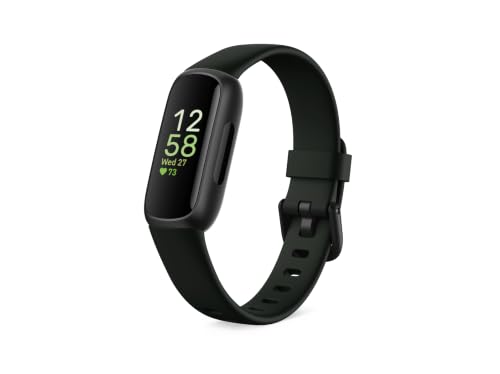
Fitbit Inspire 3 Fitness Tracker
What We Like
- Daily Stress Management Score with mindfulness sessions
- Automatic sleep tracking with detailed Sleep Score
- Smart wake vibrating alarm
Trade-offs
- No built-in GPS for outdoor workout tracking
- Requires smartphone for full feature access
A daily Stress Management Score, paired with guided mindfulness and relax breathing sessions, makes this tracker a genuine tool for winding down, not just another step counter. It also watches your sleep automatically, giving you a detailed Sleep Score each morning and a smart wake alarm that vibrates gently rather than jolting you awake. For anyone whose main fitness goal is feeling steadier, less frazzled, and better rested, the Inspire 3 delivers those specific insights without overwhelming you with data you don’t need.
The Inspire 3 does not include built-in GPS, so if you want to map runs or rides without carrying your phone, you will need to look at other options. The display is compact, which keeps the tracker lightweight and unobtrusive on your wrist. But for the person who values calm mornings, stress awareness, and solid sleep habits over advanced navigation features, this is the tracker that quietly does what it promises.
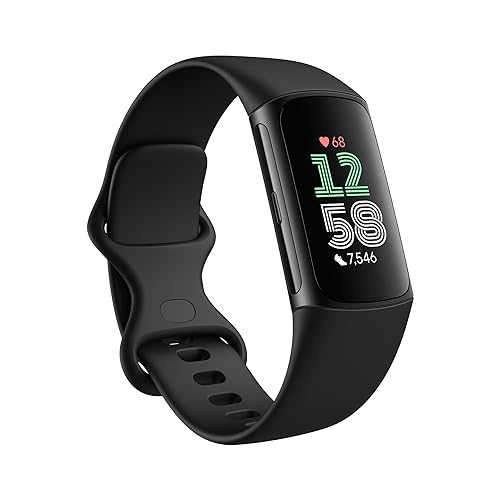
Fitbit Charge 6 Fitness Tracker
What We Like
- Google Maps turn-by-turn directions
- Google Wallet tap-to-pay
- Heart rate on compatible exercise machines
- 40+ exercise modes with built-in GPS
Trade-offs
- Google Health Premium subscription needed after trial
- Requires Google Health Premium subscription for full features
Built-in GPS and 40-plus exercise modes mean you can track outdoor runs, rides, and gym sessions without lugging your phone. The real standout is how Google Maps gives turn-by-turn directions right on your wrist, so you never have to stop and check a screen mid-stride. Google Wallet also lets you grab a snack or a post-workout smoothie with a quick tap. For someone who lives inside Google’s ecosystem and wants a fitness tracker that keeps pace with daily life, this is a natural fit.
The Charge 6 ties your workout data to Google apps like Maps, Wallet, and YouTube Music, so you can navigate a run, pay for a snack, or switch playlists without pulling out your phone. Compared to the Garmin vívoactive 5, which packs standalone health monitoring and built-in sports apps, this Fitbit leans on Google integration. If you live inside Google’s ecosystem, the tracker keeps those tools on your wrist; if you want a device that doesn’t depend on a phone for navigation or payments, the Garmin is a better fit.
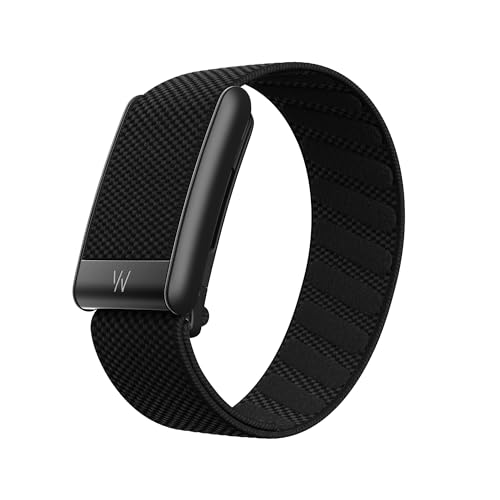
WHOOP 5.0 Screenless Fitness Tracker
What We Like
- AI coach turns 140+ metrics into guidance
- 14+ day battery charges without removal
- 24/7 stress and health monitoring
Trade-offs
- No screen for glanceable workout stats
- No built-in GPS for outdoor route tracking
A screenless design that tracks over 140 health and fitness metrics means this device focuses entirely on the data that matters, not on distracting you with notifications. The AI coach turns all those numbers into simple, actionable steps, so you know exactly when to push harder and when to rest. It suits anyone who wants a dedicated training partner that lives on their wrist, especially if sleep and recovery are where you need the most help. The 14+ day battery and wrist-chargeable PowerPack mean you never have to take it off, which keeps your tracking continuous and honest.
You also lose the convenience of a screen for quick glanceable stats during a workout, and there is no built-in GPS for mapping outdoor runs. If you prefer a subscription-free tracker with a display and navigation, the Garmin is a stronger fit. But if you want a coach that learns your habits and adjusts your training day by day, the WHOOP 5.0 delivers that without any screen to pull you out of the moment.
Amazfit Helio Strap Activity Tracker

What We Like
- No subscription required for full features
- Tracks reps and sets for strength training
- 10-day battery life between charges
- Integrates with Strava, TrainingPeaks, adidas Running
Trade-offs
- Requires Zepp App for all data analysis
- No built-in GPS for outdoor route tracking
A 10-day battery life lets you go over a week of training and sleeping without hunting for a charger. That freedom from daily plugging in is rare among fitness wearables, especially ones that track heart rate, blood-oxygen, stress, and sleep around the clock. For anyone who wants detailed recovery and fatigue data, plus rep-by-rep strength tracking, without paying a monthly fee, this is the straightforward option. The screenless design keeps it light and low-profile, so it won’t snag on gym equipment or feel bulky under a sleeve.
You lose the convenience of glancing at your wrist mid-workout. With no display, you rely entirely on the Zepp App to see your stats, which means pulling out your phone after each set or at the end of a run. That works well if you prefer to stay in the moment during exercise and review insights afterward, but it’s not ideal for anyone who wants instant feedback during a session.
Product photos
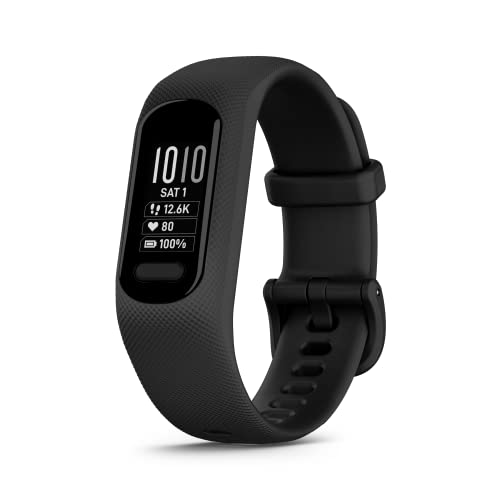
Garmin vívosmart 5 Fitness Tracker
What We Like
- Up to 7 days of battery life
- Touchscreen and button interface
- Swim and shower safe
- Monitors sleep, stress, heart rate
Trade-offs
- GPS requires a paired smartphone, not built-in
- Pulse Ox not available in all countries
Up to seven days of battery life gets you through a full work week and a weekend without hunting for the charger. That kind of endurance makes it a quiet workhorse for anyone who wants health data, heart rate, sleep stages, stress levels, even respiration, without the daily ritual of plugging in. It’s slim, comfortable, and the touchscreen plus physical button gives you two ways to navigate, which helps when your fingers are sweaty or you’re fumbling mid-stride. For someone who values consistency over flashy features, this is the tracker that stays on your wrist and out of your way.
The vívosmart 5 leans on your phone’s GPS for outdoor route tracking, so if you want to leave your phone behind on a run, you won’t get a mapped path. That puts it a step behind the Garmin vívoactive 5, which has its own built-in GPS and can go fully phone-free for outdoor workouts. But if your priority is battery life that actually lasts the week, and you’re fine keeping your phone in a pocket or armband, the vívosmart 5 delivers that endurance without skimping on the core health metrics most people check daily.
Samsung Galaxy Fit 3 Fitness Tracker
What We Like
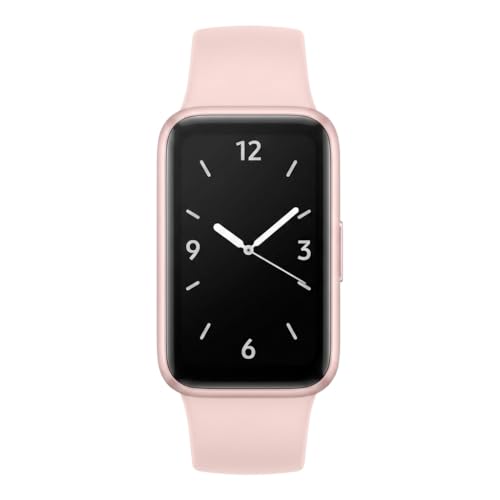
- Bright 1.6" AMOLED display for easy viewing
- 101+ workout modes with auto detection
- 14-day battery life between charges
- 5ATM water resistance for swimming
Trade-offs
- No iPhone or iOS compatibility at all
- No US warranty on international model
- Samsung Pay not supported on this tracker
A 1.6-inch AMOLED screen gives you a clear view of your stats during workouts, and with over 100 workout modes plus automatic detection for common activities, logging exercise is straightforward. The display is easy to read, and the battery lasts up to 14 days, so you won’t need to charge it often. This tracker fits someone who wants a bright screen and long battery life without frequent recharging.
The biggest catch is that this tracker only works with Android phones, so iPhone owners are out of luck. It’s an international model, meaning there’s no warranty in the US, which matters if you want coverage on electronics. But for Android users after a bright screen and tons of workout modes in a water-resistant package, this delivers on the essentials.
Product photos
Samsung Galaxy Watch Ultra Smartwatch

What We Like
- Titanium casing for durability
- 10ATM water resistance for swimming
- Dual-frequency GPS for accurate tracking
- Advanced Sleep Coaching included
Trade-offs
- Heavier and bulkier than basic fitness trackers
- Larger case than slim fitness trackers
Samsung’s longest-lasting battery yet means you can head out for a multi-day trail run or backcountry hike without hunting for an outlet. The titanium casing and 10ATM water resistance let you take it through rain, dust, and ocean swims without worrying about damage. This watch is built for the person who wants one device to handle sleep tracking, running coaching, and heart rate monitoring without rethinking their charging routine every night.
This watch is built for rugged outdoor use, which means it has a larger, more substantial case than slim fitness trackers. If you prefer a lightweight device that disappears on your wrist, the Ultra’s titanium casing and 10ATM water resistance might feel like overkill for daily gym sessions. But if you want a durable companion that keeps going when you do, the battery life and build quality make it a practical choice for serious outdoor training.
Product photos
Hrevzon GPS Smartwatch Fitness Tracker
What We Like
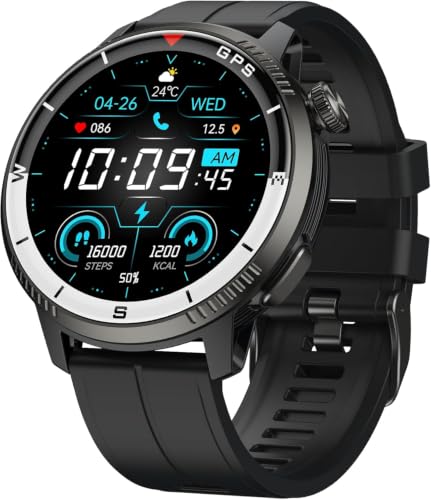
- 170+ sport modes for any activity
- 5 ATM waterproof for swimming
- Built-in GPS with 5 satellite systems
- Bluetooth 5.4 calling and notifications
Trade-offs
- No battery life spec listed for heavy GPS use
- No built-in music storage for phone-free runs
With over 170 sport modes, this watch covers everything from yoga to skiing, so you never have to switch devices for a new hobby. The built-in GPS uses five satellite systems to track outdoor routes and distance, and the 5 ATM waterproofing means you can take it swimming without worry. It is a great fit for anyone who likes to mix up their routine, trail running one day, laps in the pool the next, and wants one smartwatch to handle it all without fuss.
With 170+ sport modes and 5ATM water resistance, this watch covers everything from swimming to skiing, so you can switch activities without switching devices. The built-in GPS uses five satellite systems to track outdoor routes accurately, even in bad weather, which means runners and cyclists can rely on it for distance and pace. If you want deep training analytics or a known battery track record, the Garmin vívoactive 5 offers more specialized health metrics. But for someone who likes variety and doesn’t need advanced data, this is a straightforward all-in-one option.
Product photos
Bestinn Smart Watch Fitness Tracker

What We Like
- 24/7 blood pressure and blood oxygen tracking
- 120+ exercise modes for varied workouts
- Always-on display and full touch controls
Trade-offs
- No onboard music storage or streaming
- No onboard GPS for standalone route tracking
A 1.58-inch ultra high resolution display with always-on capability means you can glance at your stats mid-rep without fumbling for a button. The Bestinn Smart Watch Fitness Tracker packs 24/7 monitoring for heart rate, blood oxygen, and blood pressure directly on your wrist, giving you a fuller picture of how your body responds to daily activity and rest. It suits anyone who wants detailed health metrics alongside 120-plus sports modes, from casual walkers to gym-goers who track everything from step count to sleep stages. The IP68 rating protects against water exposure, so it can handle splashes and brief submersion.
The GPS connectivity on this watch works through your phone, so you’ll need to carry your phone along to get a map of your outdoor workout route. That’s a trade-off for the lower price point, but the 1.58-inch ultra high resolution display and full touch controls make everyday use smooth and enjoyable. The 24/7 heart rate, blood oxygen, and blood pressure monitors give you real-time health data right on your wrist, which is handy for keeping tabs on your wellness throughout the day.
Product photos
How We Evaluated Workout Technology
To build this guide, we analyzed published specifications, manufacturer documentation, and expert round-ups alongside consistent themes from thousands of owner reviews. The goal was to identify reliable devices that actually fit real workout lifestyles rather than just listing specs.
Four criteria mattered most for this category. Battery life determines whether a device becomes a daily habit or a charger-drawer ornament. Built-in versus phone-dependent GPS separates runners from casual walkers. Screen type and brightness affect how usable the watch is outdoors or during a swim. And the subscription model, or lack of one, defines the long-term cost of ownership.
A research-based evaluation has honest limits. Instead, we looked at what owners consistently praise and complain about, cross-referenced those patterns with the specs, and prioritized devices that earn trust through predictable performance. For more on the broader landscape, see our guide on workout wearables for a deeper look at the category.
What To Look For In Workout Technology
The right device fits your specific workout style, not just a spec sheet. Focus on battery life that matches your charging tolerance, GPS that works where you train, and a data ecosystem that gives you useful feedback without a surprise subscription bill.
Battery Life and Charging Convenience
Battery life ranges from 5 to 14 days depending on display settings and GPS use. Always-on AMOLED displays drain faster, the Garmin vívoactive 5 drops from 11 days to 5 with the screen always lit. Screenless devices like the WHOOP 5.0 last over two weeks and charge without removal, which removes the “forgot to charge” excuse entirely.
GPS: Built-In or Phone-Dependent
If you run, cycle, or hike without your phone, built-in GPS is non-negotiable. The Fitbit Inspire 3 lacks it entirely, while the Garmin vívoactive 5 and Fitbit Charge 6 include it. For gym-only users, phone-dependent tracking is fine and saves battery. For more on the trade-offs, check our fitness tracker vs smartwatch comparison.
Subscription Costs and Data Access
Some devices lock advanced metrics behind a monthly fee. The WHOOP 5.0 requires an ongoing membership for all features. The Fitbit Charge 6 offers a subscription trial for Google Health Premium. The Amazfit Helio Strap gives full data access with no subscription. Always check what you get for free and what costs extra before buying.
Screen Type and Workout Modes
AMOLED displays look great but consume more power. The Samsung Galaxy Fit 3 offers a bright 1.6-inch AMOLED with 14-day battery life, an impressive balance. For variety seekers, the Hrevzon GPS Smartwatch includes 170+ sport modes. If you want to gamify your routine, our workout games guide has ideas for making movement fun.
- Check whether the device supports your primary activity (swimming, cycling, yoga, strength training).
- Confirm phone compatibility, the Samsung Galaxy Fit 3 works only with Android.
- Look at water resistance ratings: 5ATM is fine for swimming, 10ATM suits diving.
- Read the fine print on included versus subscription-only features.
- Consider strap comfort and size for all-day wear, especially during sleep tracking.
The best workout technology is the one you actually wear every day.
Workout Technology Compared
The table below compares the 10 devices across battery life, GPS type, screen design, and subscription model so you can see the trade-offs at a glance.
| Product | Display | Battery Life | Sports Modes |
|---|---|---|---|
| Garmin vívoactive 5 GPS Smartwatch | AMOLED | Up to 11 days (5 days always-on) | 30+ indoor & GPS apps |
| Fitbit Inspire 3 Fitness Tracker | N/A | N/A | 40+ exercise modes |
| Fitbit Charge 6 Fitness Tracker | N/A | N/A | 40+ |
| WHOOP 5.0 Screenless Fitness Tracker | Screenless | 14+ days | N/A |
| Amazfit Helio Strap Activity Tracker | Screenless | Up to 10 days | 27 sports modes |
| Garmin vívosmart 5 Fitness Tracker | Touchscreen + button | Up to 7 days | Built-in sports apps |
| Samsung Galaxy Fit 3 Fitness Tracker | 1.6" AMOLED | Up to 14 days | 101+ with auto detection |
| Samsung Galaxy Watch Ultra Smartwatch | N/A | Longest-lasting yet | N/A |
| Hrevzon GPS Smartwatch Fitness Tracker | 1.43-inch AMOLED 3D HD | N/A | 170+ |
| Bestinn Smart Watch Fitness Tracker | 1.58" ultra high resolution | N/A | 120+ |
Frequently Asked Questions
Which workout technology has the longest battery life?
The WHOOP 5.0 Screenless Fitness Tracker lasts over 14 days and charges without removal. The Samsung Galaxy Fit 3 and Garmin vívoactive 5 both offer up to 14 and 11 days respectively with typical use, though always-on display settings reduce those numbers. Screenless trackers generally last longest because they lack power-hungry displays.
Do I need built-in GPS on a fitness tracker?
Only if you want to map outdoor runs, rides, or hikes without carrying your phone. The Fitbit Charge 6 and Garmin vívoactive 5 include built-in GPS. The Fitbit Inspire 3 and Amazfit Helio Strap rely on your phone’s GPS, which works fine for gym workouts or if you always run with your phone. For tracking your workouts accurately, built-in GPS makes a real difference for outdoor athletes.
What is the difference between a fitness tracker and a smartwatch for workouts?
Fitness trackers focus on health metrics, sleep, and activity logging with simpler screens and longer battery life. Smartwatches add apps, notifications, maps, and payments but often need daily charging. The gym tracker comparison article breaks down exactly which situations favor each type.
Can I use a fitness tracker for swimming?
Yes, if it has adequate water resistance. The Samsung Galaxy Fit 3 and Hrevzon GPS Smartwatch are rated 5ATM, safe for swimming and showering. The Samsung Galaxy Watch Ultra has 10ATM for deeper water activities. Always check the rating before submerging any device.
Is a subscription-based fitness tracker worth the cost?
It depends on how much you value advanced analytics. The WHOOP 5.0’s AI coach turns 140+ metrics into daily guidance, but requires an ongoing fee. The Amazfit Helio Strap offers similar recovery and strength tracking without a subscription. If you want deep data without recurring costs, a subscription-free device is the better choice.
The Bottom Line
The Garmin vívoactive 5 GPS Smartwatch is the best overall pick for most people. It balances a bright AMOLED display, long battery life, built-in GPS, and Body Battery recovery insights that help you train smarter without feeling overwhelmed by data. It works for runners, gym-goers, swimmers, and anyone who wants a versatile daily companion.
If sleep and stress are your main concerns, the Fitbit Inspire 3 delivers excellent tracking at a more focused scope. For Android users who want a vibrant screen and tons of workout modes without daily charging, the Samsung Galaxy Fit 3 is a strong contender. Athletes who want deep recovery metrics without a screen should consider the WHOOP 5.0, but be ready for the subscription cost.
The single most important factor in choosing workout technology is honesty about your habits. A device with perfect specs that sits in a drawer helps nobody. Pick the one you will actually wear, charge, and check, that is the one that will improve your training.
