
8 Best Workout Tracker Bands in 2026
This post contains affiliate links. As an Amazon Associate, we earn from qualifying purchases.
The Google Fitbit Air Screenless Tracker earns our Best Overall pick because it removes the screen entirely, letting you focus on your workout without notifications or glanceable stats tempting you out of the moment. For lifters who want rep-by-rep data, the Amazfit Helio Strap Screenless Tracker is our pick for Best For Strength Training, while the Garmin CIRQA Smart Band offers the same screenless freedom with no subscription required.
Choosing the right tracker band means deciding what you actually want on your wrist. Some of us need real-time pace and heart rate during a run, while others just want the data to appear in an app after the session ends. Screenless designs help you stay present, but they also mean you will need your phone to check anything mid-workout.
This guide is built from manufacturer specifications, expert round-ups, and patterns in owner feedback across hundreds of user reports. We focused on what actually matters for different training styles so you can match a band to your routine without guessing.
Top 8 Workout Tracker Bands in the Market
Certain content that appears on this site comes from Amazon. This content is provided "as is" and is subject to change or removal at any time.
The Best Workout Tracker Bands, Reviewed
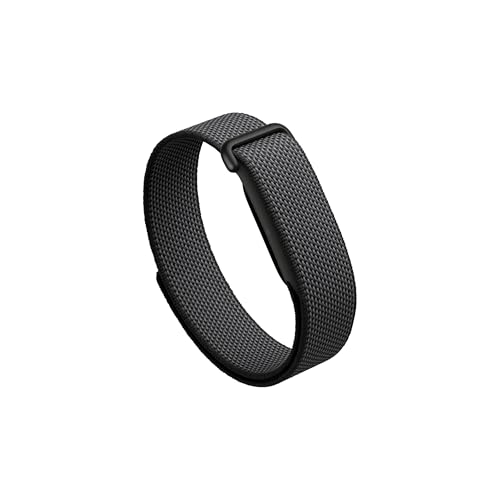
Google Fitbit Air Screenless Tracker
What We Like
- No screen means zero distractions
- Lightweight micro-adjustable fit
- Up to 7 days battery life
- Fast charge gives 1 day in 5 minutes
Trade-offs
- No screen to check stats mid-workout
- Premium coaching requires paid subscription
A lightweight band that vanishes on your wrist and lasts up to seven days between charges means you can forget about it until you need it. The micro-adjustable fit (130-210 mm) stays comfortable through sleep, work, and workouts. Fast charging gives you one full day of power in just five minutes, which saves you when you realize it’s low before a morning run. This is the tracker for anyone who wants health data without a glowing screen pulling their attention away from the real moment.
Choosing a screenless tracker means you give up the ability to check your heart rate or step count at a glance, but you gain a design that stays out of your way during any activity. The Google Fitbit Air weighs nothing noticeable and its micro-adjustable band fits wrists from 130 to 210 mm, so it stays put through workouts, work hours, and overnight sleep without digging in or slipping. Reviewers note that the lack of a display also means no distracting notifications or screen glare, making it easy to focus on the moment. Advanced sensors and updated algorithms power more accurate 24/7 health tracking, so the data you do see on your phone is reliable enough to trust for daily decisions.
Product photos
Amazfit Helio Strap Screenless Tracker

What We Like
- Tracks reps, sets, and rest periods
- Exclusive HYROX Race mode
- Up to 10 days battery life
- 24/7 heart rate and recovery monitoring
Trade-offs
- No screen for real-time workout feedback
- Requires Zepp App for full analysis
- Needs paired smartwatch for uninterrupted data
The Helio Strap tracks reps, sets, and rest periods during strength training, and includes a dedicated HYROX Race mode. It offers 27 sports modes and continuous monitoring of heart rate, blood-oxygen, stress, and sleep through Amazfit’s BioTracker technology. All data syncs to the free Zepp App, where you can review training load, VO₂ max, and recovery time. For lifters and race-event athletes who prefer to analyze their numbers after a session, this tracker provides detailed metrics without a screen.
The Amazfit Helio Strap has no screen, so you won’t see live stats during a workout, you’ll review reps, sets, and rest periods later in the Zepp App. That means after a strength session or HYROX race, you can dig into the data rather than glance at your wrist mid-set. It tracks 27 sports modes and provides post-workout insights like VO₂ max and recovery time through the app, so the focus is on analysis after the fact.
Product photos
Garmin CIRQA Smart Band
What We Like
- Screenless design for minimal distraction
- Up to 10 days of battery life
- No subscription required for full use
- Automatically detects and adapts to activities
Trade-offs
- No on-device display means phone needed for data
- Pulse Ox not available in all countries
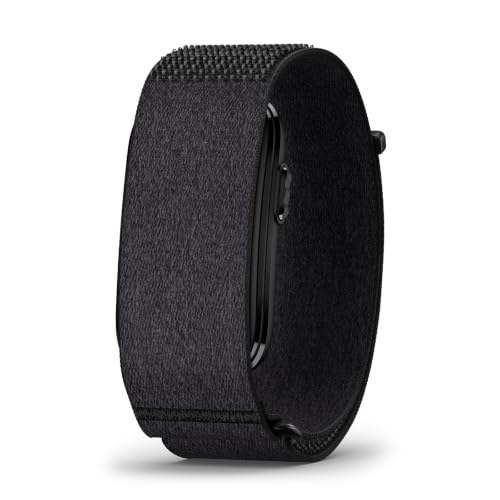
Up to 10 days of battery life means you can wear this band around the clock without constantly hunting for a charger, which makes it ideal for tracking sleep and recovery without interruption. The screenless design keeps you focused on your movement rather than buzzing notifications, and the soft fabric band stays comfortable through workouts and overnight wear. For anyone who wants a no-nonsense health tracker that blends into daily life, this is a refreshingly simple approach, just put it on and let it do its job through the Garmin Connect app.
The biggest reason to pick this tracker is its battery: you can go up to 10 days without charging, which means fewer interruptions than the Google Fitbit Air Screenless Tracker’s 7-day limit. Since there’s no screen, you won’t be glancing at stats mid-run, you’ll need your phone nearby to see detailed metrics. For someone who wants uninterrupted activity logging and doesn’t mind pulling out a phone, this trade-off works well.
Garmin vívosmart 5 Fitness Tracker
What We Like
- Swim and shower safe design
- Up to 7-day battery life
- Built-in pool swim activity profile
- Bright, larger display with touchscreen and button
Trade-offs
- Relies on smartphone GPS for outdoor tracking
- Pulse Ox not available in all countries
- No built-in GPS; needs phone for route mapping
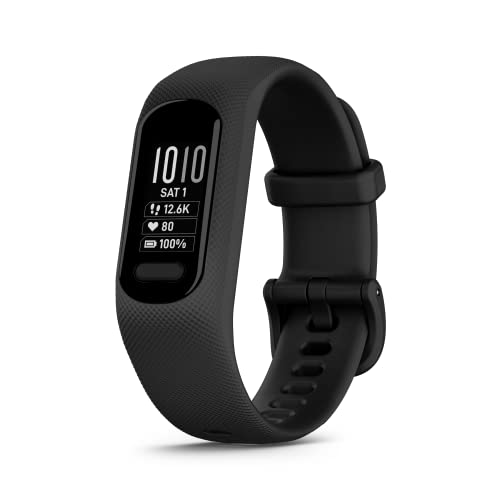
Safe for swimming and showering, this tracker lets you wear it through your morning laps and straight into the rinse without a second thought. The built-in pool swim activity profile means you can log lengths and intervals right from your wrist. The up to 7-day battery life keeps it running through a week of workouts and sleep tracking without hunting for a charger. If you split your routine between the pool and the gym, or just want a band that handles the wet parts of your day without fuss, the vívosmart 5 fits that life comfortably.
Outdoor tracking leans on your phone’s GPS rather than a built-in chip, so if you run or cycle without carrying your smartphone, you won’t get distance or pace data from the band alone. That puts it a step behind the Xiaomi Smart Band 11, which includes its own GPS for standalone route mapping. But for swimmers and shower-wearers who want a straightforward health monitor with sleep scores, heart rate alerts, and a button you can actually press with wet fingers, this Garmin delivers exactly what it promises.
Xiaomi Smart Band 11 Fitness Tracker
What We Like
- Ultra-light 15.6g design
- Slim 9.99mm curved body
- 21-day battery life
- 150+ sports modes
Trade-offs
- No built-in GPS for outdoor routes
- Battery life drops with continuous heart rate or SpO2 monitoring
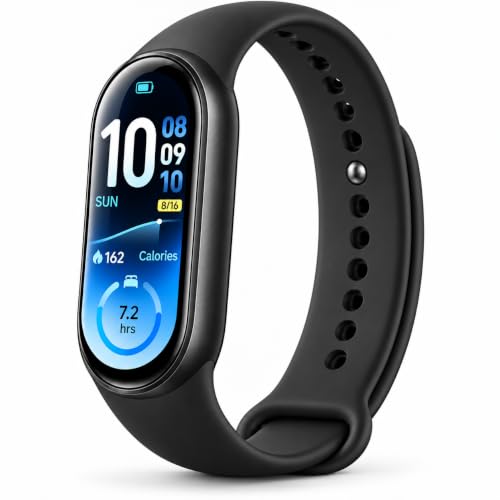
At 15.6 grams and 9.99 millimeters thin, this band is designed to be lightweight and slim. The 1.72-inch AMOLED screen provides readable stats, and the 21-day battery life reduces the need for frequent charging. It suits anyone who wants fitness tracking without a heavy device, especially if you prefer a band that doesn’t add bulk during daily wear or sleep.
The trade-off for that light weight is that this band relies on your phone for GPS tracking, so you won’t get standalone distance or pace data on outdoor runs without your phone along. Compare that to the Garmin CIRQA Smart Band, which has no screen at all, while the Xiaomi offers a full display and 150+ sports modes. If you want a tracker that stays out of your way while still offering rich data, this is one to consider.
Product photos
WHOOP 5.0 Screenless Wearable
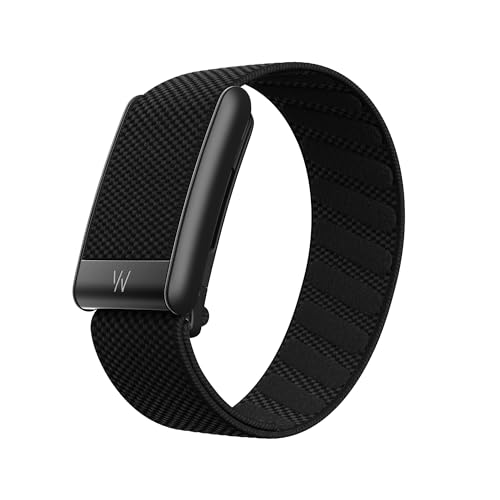
What We Like
- 14+ day battery with on-wrist charging
- Tracks Healthspan and aging pace
- Women's health and cycle insights
Trade-offs
- Requires 12-month membership to use
- No screen for glanceable stats
- No built-in GPS for outdoor routes
A 14-plus-day battery that charges on your wrist without removing the band means you can track sleep, recovery, and daily strain continuously, which is the whole point of a screenless tracker. It’s built for the person who cares more about understanding how their body responds to training, stress, and sleep than about checking a screen mid-run.
The membership model is the main catch: you pay for a 12-month Peak subscription, and the device itself is included. That’s a bigger upfront commitment than the subscription-free Garmin CIRQA Smart Band, which doesn’t lock you into a yearly plan. If you’re the type who likes to try a tracker for a few months and then switch, the WHOOP’s membership could feel restrictive. But if you want a wearable that digs into recovery, sleep, and hormonal health with AI coaching that adapts to your journal entries, the subscription buys you a level of personalized insight that one-time-purchase trackers rarely match.
Samsung Galaxy Fit 3 Fitness Band
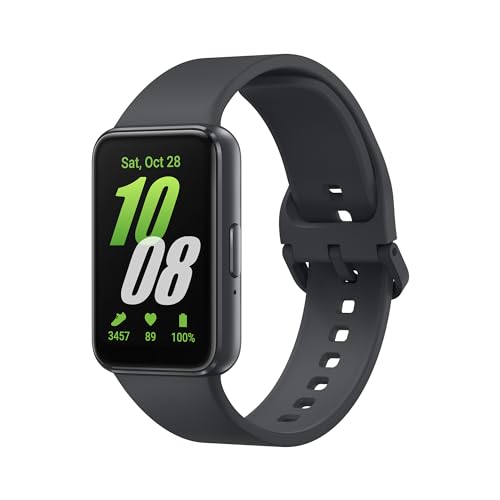
What We Like
- Vibrant 1.6" AMOLED display for easy navigation
- Swim-ready with 5ATM and IP68 resistance
- Up to 14 days of battery life
- 101+ workout modes with auto detection
Trade-offs
- No iPhone or iOS compatibility
- International model with no US warranty
- Samsung Pay not supported
The 1.6-inch AMOLED display on this band gives you a large, high-resolution screen with smooth touch navigation, so you can check your heart rate or rep count quickly during a workout. With up to 14 days of battery life, you will not need to charge it every weekend, which helps if you are building a consistent fitness routine. The display is easy to read thanks to the AMOLED technology, and the touch response is designed for easy navigation.
The catch is that this band only works with Android phones, so if you have an iPhone, you will need to look at a different tracker that supports iOS. Also, because this is an international model, there is no US warranty, so you are relying on Samsung’s global support if something goes wrong. That said, the display quality and long battery life make it a strong option for Android users who want a clear screen for tracking workouts and daily health.
Luna Band Screenless Fitness Tracker
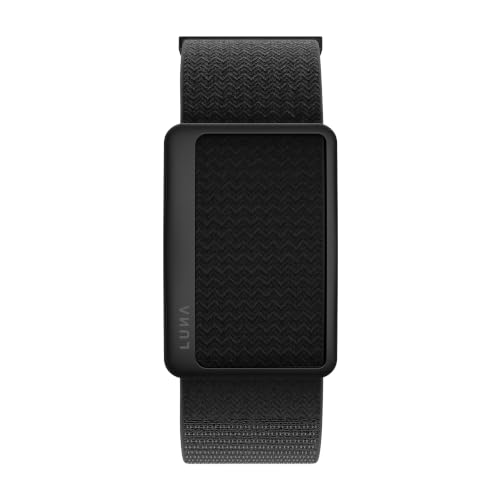
What We Like
- No subscription fees ever
- Tracks VO2 Max, HRV, SpO2, skin temperature
- Voice control built in
- Two strap sizes included in box
Trade-offs
- No screen means no glanceable stats during workouts
- Relies entirely on LifeOS app for all feedback
For anyone who wants deep biomarker data without another glowing distraction on their wrist, the Luna Band has no screen and no subscription. It tracks VO2 Max, heart rate variability, blood oxygen, skin temperature, heart rate, and sleep, all feeding into LifeOS, an intelligence engine built from over 150 million sleep events and 5.4 million tracked behavior events. That means every signal informs a single layer where training and recovery talk to each other automatically, so you don’t have to guess whether yesterday’s run left you ready or wrecked. This is for data-focused athletes who prefer checking trends on their phone rather than tapping a tiny display mid-set.
The lack of a screen means no instant feedback during a workout. If you want to see your heart rate mid-rep or check the time with a flick of the wrist, you’ll need a screen-based tracker instead, such as the Xiaomi Smart Band 11, which offers a 1.72″ AMOLED display and 21-day battery for similar subscription-free tracking. But if you’re willing to trade glanceability for richer biometrics, especially skin temperature and VO2 Max, the Luna Band gives you more health signals than most screenless bands at this level.
Product photos
How We Evaluated Workout Tracker Bands
We started by pulling every spec sheet and feature list from the eight bands in this roundup. Battery life claims, water resistance ratings, sensor suites, and companion app capabilities all went into a side-by-side comparison. Then we cross-referenced those specs against expert round-ups from fitness technology reviewers and aggregated owner feedback to spot consistent strengths and trade-offs.
The four criteria that mattered most were battery life, activity tracking accuracy, durability and water resistance, and the quality of the companion app experience. A band you have to charge daily defeats the purpose. Screenless designs added an extra layer of consideration: how well does the band communicate data through the phone app?
A research-led evaluation has honest limits. What we can offer is a clear picture of what each band promises, what owners consistently report, and where the trade-offs actually live so you can make an informed choice.
What To Look For In Workout Tracker Bands
The best band for you depends on how you train, where you train, and how much data you need mid-workout. Here is what to check before you buy.
Focus on battery life that matches your routine, water resistance that covers your activities, and a companion app that gives you the data you actually review, not just the data the band can collect.
Battery Life and Charging Speed
Battery life is the single most practical difference between bands. A tracker that lasts 7 days lets you wear it through the work week and charge it once on the weekend. Models like the Xiaomi Smart Band 11 claim 21 days, though that drops significantly with continuous heart rate or SpO2 monitoring. Fast charging matters too: the Google Fitbit Air can get a full day of charge in just five minutes, which saves you if you forget to plug it in overnight.
Water Resistance and Activity Profiles
Not all water resistance is equal. A band rated 5ATM can handle swimming and showering, while an IP68 rating covers dust and shallow submersion. The Garmin vívosmart 5 includes a dedicated pool swim profile that tracks laps and stroke types, making it the obvious choice for swimmers. If you only need splash protection from sweat and rain, a lower rating is fine.
Display Type and Real-Time Feedback
Screenless bands remove distraction but force you to check your phone for data mid-workout. Bands with AMOLED displays, like the Samsung Galaxy Fit 3, give you crisp, glanceable stats while you exercise. The trade-off is that bright screens can pull you out of the moment. Consider how often you actually need to see your pace, heart rate, or rep count during a set versus after you finish.
- Confirm the band works with your phone’s operating system (iOS or Android) before buying.
- Check whether GPS is built-in or relies on your phone for route tracking.
- Look for subscription costs: some bands require monthly fees for full features.
- Verify the strap size fits your wrist and consider whether replacement straps are available.
- Read the fine print on warranty coverage, especially for international models.
A band you forget you are wearing is better than a band with more features you never use.
Workout Tracker Bands Compared
The table below lays out the key specs for each band side by side so you can compare battery life, water resistance, display type, and subscription requirements at a glance.
| Product | Battery Life | Display | Water Resistance |
|---|---|---|---|
| Google Fitbit Air Screenless Tracker | Up to 7 days | Screenless | N/A |
| Amazfit Helio Strap Screenless Tracker | Up to 10 days | Screenless | N/A |
| Garmin CIRQA Smart Band | Up to 10 days | Screenless | N/A |
| Garmin vívosmart 5 Fitness Tracker | Up to 7 days | Touchscreen + button | Safe for swimming & showering |
| Xiaomi Smart Band 11 Fitness Tracker | 21 days | 1.72" AMOLED | 5ATM |
| WHOOP 5.0 Screenless Wearable | 14+ days | Screenless | IP68 |
| Samsung Galaxy Fit 3 Fitness Band | Up to 14 days | 1.6" AMOLED | 5ATM & IP68 |
| Luna Band Screenless Fitness Tracker | N/A | None (screenless) | N/A |
Frequently Asked Questions
Which fitness tracker band is most accurate for heart rate?
Optical heart rate sensors on wrist bands are generally reliable for steady-state cardio but can lag during high-intensity intervals or weightlifting. The WHOOP 5.0 and Amazfit Helio Strap both use multi-LED sensors designed for continuous 24/7 monitoring, which helps capture resting and recovery heart rate more consistently than bands that sample less frequently.
Can I wear a fitness tracker band while swimming?
Yes, if the band has a sufficient water resistance rating. The Garmin vívosmart 5 is rated 5ATM, meaning it is safe for swimming and showering, and it includes a built-in pool swim profile. The Samsung Galaxy Fit 3 is also swim-ready with 5ATM and IP68 resistance. Bands with only splash resistance should not be submerged.
Do I need a subscription for a screenless fitness tracker?
Not always. The Garmin CIRQA Smart Band and Luna Band Screenless Fitness Tracker require no subscription for full use. The WHOOP 5.0 requires a 12-month membership, and the Google Fitbit Air offers premium coaching through a paid subscription. Always check the fine print before buying a screenless band.
How long do fitness tracker bands typically last on a single charge?
Battery life ranges from roughly 7 days to over 21 days depending on the model and settings. The Xiaomi Smart Band 11 claims 21 days with typical use, while the Garmin vívosmart 5 and Google Fitbit Air last about 7 days. Continuous heart rate and SpO2 monitoring drain the battery faster, so actual life depends on your settings.
What is the difference between a fitness tracker band and a smartwatch for the gym?
A fitness tracker band focuses on health and activity data with a smaller, lighter design and longer battery life. A smartwatch adds apps, notifications, and often a larger screen. The fitness tracker vs smartwatch decision comes down to whether you want a distraction-free tool for workouts or a multi-purpose device you wear all day.
The Bottom Line
The Google Fitbit Air Screenless Tracker is our Best Overall pick for anyone who wants effortless health tracking without a screen pulling them out of their workout. Its five-minute fast charge and week-long battery make it easy to keep on your wrist, and the micro-adjustable fit means it stays comfortable through any movement.
If you lift weights or race HYROX, the Amazfit Helio Strap gives you rep, set, and recovery tracking that most bands miss. For swimmers, the Garmin vívosmart 5 offers a pool swim profile and full water-safe durability. Budget-conscious data lovers should look at the Luna Band, which tracks VO2 Max, HRV, and SpO2 with no subscription fees.
The single most important factor is matching the band to how you actually train. A screenless band is great for presence but useless if you need pace mid-run. A bright AMOLED display helps you check stats quickly but can distract you from the set. Pick the trade-off that fits your routine, not the one with the longest spec sheet.
