
10 Best Workout Watches For Men in 2026
This post contains affiliate links. As an Amazon Associate, we earn from qualifying purchases.
The Garmin Forerunner 165 Running Smartwatch is the best overall pick for men who want a lightweight, easy-to-use smartwatch with adaptive daily coaching and an 11-day battery. For athletes chasing the lightest possible build, the COROS PACE 4 Pro GPS Sport Watch delivers an ultralight titanium frame. The Apple Watch Series 12 GPS Smartwatch stands out for men who want the most accurate heart-rate sensing and straightforward iPhone integration.
Choosing a workout watch for men means balancing battery life, GPS accuracy, and display quality against your specific training habits. A runner logging daily miles needs different features than a gym-goer lifting three times a week. The wrong watch can mean charging mid-week or losing signal on a trail run.
We built this guide by comparing specifications, manufacturer claims, and patterns in owner feedback across dozens of models. We focused on the features that matter most for real workouts: battery life, GPS reliability, display visibility, and overall build quality.
Top 10 Workout Watches For Men in the Market
Certain content that appears on this site comes from Amazon. This content is provided "as is" and is subject to change or removal at any time.
The Best Workout Watches For Men, Reviewed
Garmin Forerunner 165 Running Smartwatch

What We Like
- AMOLED touchscreen with button controls
- Personalized daily suggested workouts
- 11-day battery in smartwatch mode
- Safety features: incident detection, Assistance
Trade-offs
- No dual-frequency GPS for urban accuracy
An 11-day battery life in smartwatch mode means you can wear this watch all week without hunting for a charger, perfect for anyone who wants fitness tracking without the daily plug-in ritual. The built-in GPS gives you reliable pace and distance for runs, while the AMOLED touchscreen feels crisp and responsive. Daily suggested workouts adapt to how you actually slept and recovered, so you never feel like the watch is pushing you past your limits. That combination of battery stamina, clear display, and smart training guidance is why this watch suits someone who wants a straightforward, encouraging companion for everyday running and gym sessions.
The trade-off here is that the Garmin Forerunner 165 sticks to standard GPS, not the dual-frequency system found on the COROS PACE 4 Pro. In dense city blocks or under heavy tree cover, you might see slightly less precise tracking, though for most park runs and neighborhood jogs it stays accurate. But for the runner who wants a lightweight, easy-to-use watch with long battery life and smart coaching that actually listens to your body, this Garmin delivers where it counts.
COROS PACE 4 Pro GPS Sport Watch

What We Like
- Ultralight 43g titanium build
- 1.47" AMOLED with 3,500-nit brightness
- 60-hour GPS battery life
- Dual-frequency GPS with maps
Trade-offs
- White silicone strap shows dirt quickly
- No onboard music storage
At 43 grams, this watch weighs less than most GPS sport watches, so you can wear it all day without feeling it. The 1.47-inch AMOLED display hits 3,500 nits peak brightness, which keeps your data readable in direct sunlight. Dual-frequency GPS locks onto signals fast in city canyons or dense tree cover, and the 60-hour GPS battery lets you go on multi-day adventures without hunting for a charger.
The white silicone band picks up scuffs and smudges from everyday use, so it may require more frequent cleaning than darker straps. Compared to the Garmin Forerunner 165, the COROS PACE 4 Pro offers a titanium case and a larger, brighter AMOLED display, while the Forerunner 165 focuses on essential training features and a smaller screen.
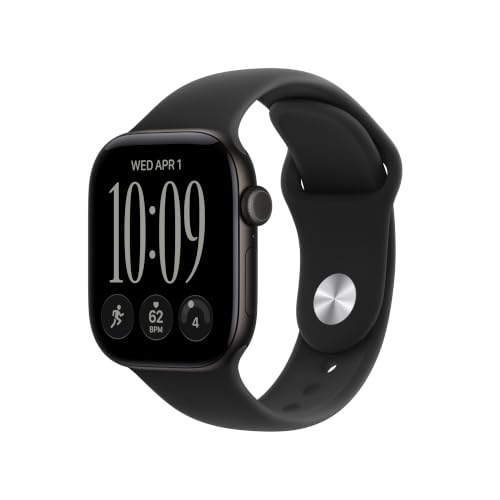
Apple Watch Series 12 GPS Smartwatch
What We Like
- Most accurate heart rate sensing in a wearable
Trade-offs
- 24-hour battery needs daily charging for heavy use
- Siri AI features roll out late 2026
The Apple Watch Series 12 measures your heart rate every five seconds and checks HRV every five minutes, giving you the most accurate heart-rate sensing in a wearable today. That constant stream of data feeds the Vitals app, daily sleep score, and readiness experience, so you know when to push hard and when to ease up.
The trade-off is battery life: up to 24 hours of normal use means you will charge daily, especially if you track sleep and wear it all day. That is shorter than the COROS PACE 4 Pro’s 21 days of daily use, so if you want to go on multi-day trips without a charger, the COROS stretches further. The Siri AI and Audio Intelligence features are still rolling out, with some Audio Intelligence functions not arriving until late 2026. For someone who wants accurate health tracking, tight integration with an iPhone, and safety features that work automatically, this watch delivers a complete package.
Product photos
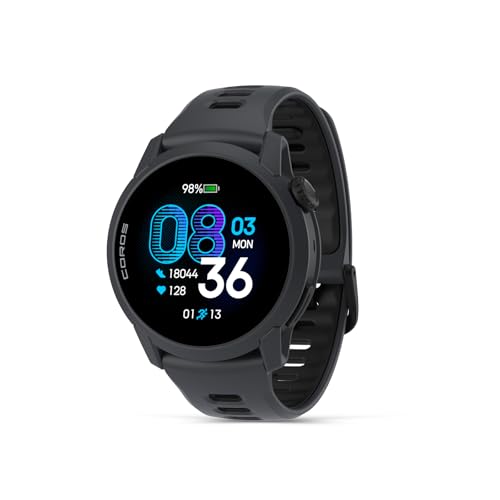
COROS PACE 4 Ultralight Sport GPS Watch
What We Like
- Ultralight 32g with nylon band
- 41 hours of continuous GPS use
- Voice control for hands-free tasks
- Auto-adjusting AMOLED display brightness
Trade-offs
- No dual-frequency GPS for dense urban or heavy tree cover.
- No dual-frequency GPS for dense urban areas.
At just 32g with the nylon band, this watch is lighter than most energy gels you’d toss in your pocket mid-run. That weight savings isn’t just a number on a spec sheet, it means you barely feel it on your wrist during a long session, and it won’t bounce or shift when you’re pushing hard. The 11.8mm thin profile tucks under a jacket cuff without catching, and the 41 hours of GPS battery lets you track multiple long runs before reaching for the charger. For anyone who prioritizes comfort over bulk, especially runners who log serious miles, this is the kind of watch that disappears on your wrist so you can focus on the road ahead.
Product photos
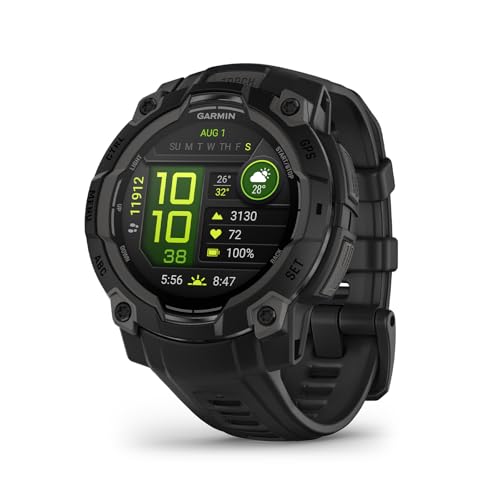
Garmin Instinct 3 AMOLED Rugged GPS Smartwatch
What We Like
- Fiber-reinforced polymer case and metal-reinforced bezel
- Built-in LED flashlight with variable intensities and strobe modes
- Multi-band GPS with SatIQ for superior positioning
- Up to 18 days of battery life
Trade-offs
- Pulse Ox not available in all countries
- Health data is estimation, not medical-grade
A 45mm fiber-reinforced polymer case with a metal-reinforced bezel means this watch is built to shrug off bumps, scrapes, and the kind of clumsy drops that would send a glass-and-steel smartwatch to the repair shop. If your workouts take you onto rocky trails, into job sites, or anywhere a watch might get knocked around, that rugged shell gives real peace of mind. The built-in LED flashlight with variable intensities and strobe modes is a surprisingly handy bonus for early morning runs or late-night campsite navigation. And the multi-band GPS with SatIQ keeps your route tracking accurate without draining the battery too fast.
This watch prioritizes toughness over sleekness. The health monitoring features, including wrist-based heart rate and Pulse Ox, are useful for spotting trends but are clearly labeled as estimations rather than medical-grade data. For anyone who needs a workout watch that can survive real abuse and still deliver solid GPS and battery life, that trade-off is easy to accept.
SUUNTO Run GPS Sport Running Watch

What We Like
- 4GB offline music storage
- 36g lightweight textile strap
- 12-day battery with daily tracking
- Dual-band GNSS for precise routing
Trade-offs
- 34 sports modes limit variety vs. rivals
4GB of built-in offline music storage means you can leave your phone behind and still have your favorite running playlist pumping through Bluetooth earbuds. That’s a rare feature in a watch this light: at 36 grams with the textile strap, it practically disappears on your wrist. The 1.32-inch AMOLED touchscreen is crisp and easy to glance at mid-stride, and the dual-band GNSS keeps your route accurate in city blocks or forest trails. For anyone who wants a soundtrack on their runs without extra gear, this watch delivers that freedom.
Up to 20 hours of high-precision GPS tracking covers weekly long runs and marathons, but for all-day adventures you’d need to recharge. The Suunto Run prioritizes a lightweight build and offline music over the extended daily battery of the COROS PACE 4 Pro, which claims 21 days of daily use. It’s a focused tool for runners who want a lighter wrist and a personal playlist rather than expedition-length endurance.
Product photos
Jugeman Military Smart Watch

What We Like
- Dual-band GPS with 6 satellite systems
- Rugged metal-alloy body and reinforced bezel
- 1.43" vivid AMOLED display
- 160+ sports modes and 5ATM water resistance
Trade-offs
- 5-7 day battery is shorter than some competitors
- Health tracking is for wellness, not medical use
- No onboard maps or offline navigation mentioned
A dual-band GPS that supports six satellite systems means this watch can track your position without a cellular signal, which is useful for hikers and campers who venture off the grid. The rugged metal-alloy body and reinforced bezel are designed to handle outdoor use, and the 1.43-inch AMOLED display delivers rich colors and deep contrast for checking stats or notifications. With 160-plus sports modes and 5ATM water resistance, it covers everything from gym workouts to swimming. The design fits daily routines and outdoor adventures alike.
You’ll charge this watch more often than a COROS PACE 4 Pro, which offers up to 21 days of daily use, at five to seven days of typical use, it’s a shorter runtime. That’s fine for weekend trips, but if you’re planning multi-day backcountry excursions without a power bank, you might prefer a longer runtime. Health tracking covers heart rate, SpO2, and sleep, but it’s designed for general wellness, not medical diagnosis.
POLAR Vantage M3 Multi-Sport Smartwatch

What We Like
- Dual-frequency GPS for precise navigation
- AMOLED display with Gorilla Glass 3
- 150+ sports profiles for versatile tracking
Trade-offs
- Battery life shorter than some rivals in smartwatch mode
- No onboard music storage for phone-free runs
The Polar Vantage M3 uses dual-frequency GPS and turn-by-turn navigation powered by Komoot, so you can follow planned routes with precision on trails or roads. Its 1.28-inch AMOLED touchscreen has Gorilla Glass 3 for scratch resistance, and the watch is water-resistant to 50 meters, making it suitable for swimming and wet conditions. Weighing 53 grams, it stays light on the wrist during long workouts. Training features include running power, recovery tracking, Nightly Recharge, SleepWise, and Training Load Pro to help optimize your routine.
The main downside is battery life. Training mode lasts up to 30 hours, but smartwatch mode gives you up to 7 days, which means more frequent charging if you wear it around the clock. That makes the Polar better suited for focused training blocks rather than all-week wear between adventures. If your priority is detailed recovery and performance data from a watch that helps you navigate routes, this model delivers those insights.
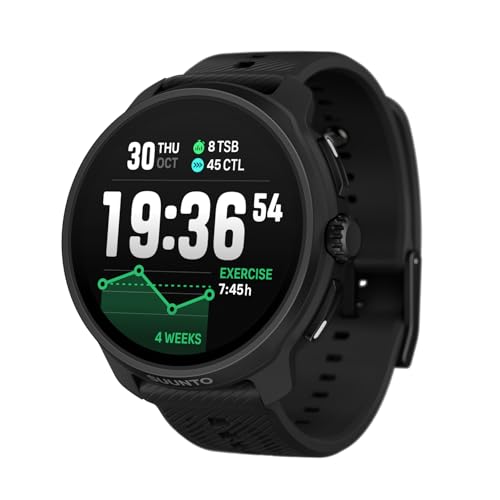
SUUNTO Race 2 GPS Sports Watch
What We Like
- 55-hour GPS battery for ultra runs
- Dual-band GNSS with offline maps
- ClimbGuidance for technical terrain
- 115+ sport modes for cross-training
Trade-offs
- No built-in music storage mentioned
A 55-hour battery in GPS mode means you can run a long ultra or tackle a full day on the trail without hunting for an outlet. That endurance focus is exactly what makes the SUUNTO Race 2 the right companion for athletes who measure their runs in hours, not minutes. It pairs that stamina with dual-band GNSS and offline maps, so even when the trail markers disappear or the cell signal drops, you still know exactly where you are and how to get back. ClimbGuidance adds a layer of smarts for steep ascents, showing remaining elevation and grade so you can pace yourself instead of blowing up halfway up the hill. This is a watch built for the long haul, literally.
The battery lasts up to 16 days in daily use and up to 55 hours in best GPS training mode. So you can stay focused on your effort, not your charging schedule. For the runner who prioritizes navigation reliability and training insights over a barely-there feel, the Race 2 delivers where it counts: on the trail, when the miles stack up, and when every ounce of battery confidence matters.
Product photos
Polar Street X GPS Running Watch

What We Like
- Shock-resistant and waterproof to 50 m
- Built-in route guidance and back-to-start navigation
- 170+ sport profiles for hybrid training
- Wrist-based heart rate monitor included
Trade-offs
- GPS battery life limited to 43 hours for long ultras
- No dual-frequency GPS for dense urban areas
A 10-day battery life with 43 hours of GPS tracking means you can run all week and still head out for a long weekend trail without scrambling for a charger. That kind of stamina, paired with a shock-resistant build and 50-meter water resistance, makes this watch a natural fit for anyone who treats their gear rough, rain, mud, gym floors, or an accidental dunk in a puddle. It covers over 170 sport profiles. So for strength training, HIIT, or logging miles on pavement, the Polar Street X keeps up without asking you to switch modes every time you change exercises. The wrist-based heart rate monitor gives real-time feedback on effort, which helps you pace yourself without needing an extra chest strap.
The trade-off for that ruggedness is that the GPS battery tops out at 43 hours, so for an ultra that stretches past that time, you will need to recharge mid-event. Compared to the Garmin Instinct 3 AMOLED, which also targets tough outdoor use, the Polar Street X offers a lighter 48-gram build for all-day comfort. For most everyday gym-goers and weekend trail runners, though, this watch delivers exactly what it promises: a durable, straightforward companion that won’t quit before you do.
Product photos
How We Evaluated Workout Watches For Men
The research method combined manufacturer specifications, expert round-up analysis, and common themes in user feedback. We looked for consistent praise or complaints across multiple sources to understand what works and what doesn’t.
Four criteria drove the rankings. Battery life was first: a watch that dies mid-run is useless, so we prioritized models with at least 10 days of smartwatch mode or enough hours of continuous GPS for long training sessions. GPS accuracy came second, with dual-frequency and multi-band systems earning higher marks for urban and trail use. Display quality mattered for outdoor readability, and build weight influenced comfort for all-day wear.
The honest limit of a research-led evaluation is that personal fit and feel can only be guessed from photos and specs. A 32-gram watch like the COROS PACE 4 Ultralight feels different on a wrist than a 60-gram rugged model. We recommend checking the return policy if wrist comfort is your top concern.
What To Look For In Workout Watches For Men
The right watch matches your training style. A marathon runner needs GPS endurance; a lifter needs a comfortable daily wearer. Focus on battery life, GPS type, display brightness, and weight before you compare sports modes or smart features.
Pick a watch with at least 10 days of smartwatch battery for daily wear, or enough GPS hours for long runs. Dual-frequency GPS helps in cities and under tree cover. AMOLED displays are brightest but use more power. Weight under 50 grams is comfortable for all-day use.
Battery Life
Battery life is the single most practical difference between workout watches. Smartwatch mode matters for daily wear: the Garmin Instinct 3 AMOLED lasts up to 18 days, while the Apple Watch Series 12 needs charging every 24 hours. GPS battery life matters for runners and hikers. The SUUNTO Race 2 offers 55 hours of GPS, enough for ultra runs, while the Jugeman Military Smart Watch gives 5-7 days of mixed use.
GPS Accuracy
GPS determines whether your pace, distance, and route data are reliable. Dual-frequency GPS, found on the COROS PACE 4 Pro and POLAR Vantage M3, corrects signal errors in dense urban areas and under heavy tree cover. Single-frequency GPS works fine on open roads and tracks. Multi-band systems like the Garmin Instinct 3’s SatIQ automatically switch between modes to save battery.
Display and Weight
AMOLED displays offer bright colors and high contrast but drain more battery. The COROS PACE 4 Pro’s 3,500-nit AMOLED is readable in direct sun. Weight affects comfort: the COROS PACE 4 Ultralight at 32 grams is barely noticeable, while rugged models like the Garmin Instinct 3 are heavier but more durable.
- Check the GPS mode: dual-frequency for urban trails, single-frequency for open roads.
- Compare GPS battery life in hours, not smartwatch mode days.
- Look for AMOLED brightness high enough for outdoor use.
- Weigh the watch with the band you will use daily.
- Confirm the strap material: silicone collects sweat, nylon dries faster.
A lighter watch with a bright AMOLED display and dual-frequency GPS covers most training needs without compromise.
Workout Watches For Men Compared
The table below compares the 10 best workout watches for men across battery life, GPS type, display, and weight so you can see the differences at a glance.
| Product | Display | GPS | Battery Life |
|---|---|---|---|
| Garmin Forerunner 165 Running Smartwatch | AMOLED | Built-in GPS | 11 days smartwatch, 19 hrs GPS |
| COROS PACE 4 Pro GPS Sport Watch | 1.47" AMOLED | Dual-frequency GPS | 21 days daily, 60 hrs GPS |
| Apple Watch Series 12 GPS Smartwatch | N/A | GPS | Up to 24 hours |
| COROS PACE 4 Ultralight Sport GPS Watch | 1.2" AMOLED touchscreen | Accurate GPS | 19 days daily, 41h GPS |
| Garmin Instinct 3 AMOLED Rugged GPS Smartwatch | 1.2" AMOLED | Multi-band GPS with SatIQ | Up to 18 days |
| SUUNTO Run GPS Sport Running Watch | 1.32" AMOLED touchscreen | Dual-band GNSS | 12 days / 20h GPS |
| Jugeman Military Smart Watch | 1.43" AMOLED | Dual-band, 6 satellite systems | 5-7 days typical use |
| POLAR Vantage M3 Multi-Sport Smartwatch | 1.28" AMOLED touchscreen | Dual-frequency GPS | Up to 7 days smartwatch, 30 hrs training |
| SUUNTO Race 2 GPS Sports Watch | 1.5" AMOLED | Dual-band GNSS | 16 days daily, 55 hrs GPS |
| Polar Street X GPS Running Watch | AMOLED | Built-in GPS | 10 days / 43 hr GPS |
Frequently Asked Questions
What is the best workout watch for men who run every day?
The Garmin Forerunner 165 Running Smartwatch is a strong choice for daily runners. It offers an 11-day battery in smartwatch mode, personalized daily suggested workouts, and safety features like incident detection. The lightweight design makes it comfortable for all-day wear.
What is the lightest workout watch for men?
The COROS PACE 4 Ultralight Sport GPS Watch weighs just 32 grams with a nylon band. It offers 41 hours of continuous GPS use and voice control for hands-free tasks. It is the lightest GPS watch in this guide.
Do I need dual-frequency GPS on a workout watch?
Dual-frequency GPS helps with accuracy in dense urban areas or under heavy tree cover. If you run on open roads, tracks, or a treadmill, single-frequency GPS is sufficient. For trail runners and city joggers, dual-frequency is worth the extra cost.
How long should a workout watch battery last?
For daily wear without charging, look for at least 10 days in smartwatch mode. For GPS use during runs, a good minimum for weekly training is enough hours to cover your longest sessions. Ultra runners should look for models with even more GPS battery life, like the SUUNTO Race 2‘s 55-hour GPS battery.
Can I listen to music without my phone on a workout watch?
Yes, if the watch has onboard music storage. The SUUNTO Run GPS Sport Running Watch includes 4GB of offline music storage. Most other watches in this guide require a phone connection for streaming or downloaded playlists.
The Bottom Line
The Garmin Forerunner 165 Running Smartwatch is the best overall pick for most men. It balances a bright AMOLED display, adaptive daily coaching, and an 11-day battery in a lightweight package. Runners who want personalized workout suggestions without heavy data analysis will find it fits naturally into their routine.
If your priority is weight, the COROS PACE 4 Pro GPS Sport Watch at 43 grams with a titanium build is the lightest premium option. For iPhone users who want the most accurate heart rate sensing, the Apple Watch Series 12 GPS Smartwatch is the clear choice despite its shorter battery life. Budget-conscious buyers should look at the COROS PACE 4 Ultralight for its 32-gram weight and long GPS battery.
The single most important factor when choosing a workout watch is matching the battery life to your training schedule. A watch that needs daily charging will frustrate you; one that lasts two weeks between charges becomes a natural part of your routine. Start with battery life, then narrow by GPS accuracy and weight.
