
10 Best Yoga Equipment in 2026
This post contains affiliate links. As an Amazon Associate, we earn from qualifying purchases.
For most practitioners, the KEEP Non-Slip Large Yoga Mat earns the best overall spot with its extra-wide 32-inch surface, double-sided grip, and 7 mm of joint-friendly cushioning that still packs light at 2.8 lb. Budget-minded yogis will appreciate the Gaiam Premium Yoga Mat 5mm, while studio teachers should look at the Manduka PRO Yoga Mat 6mm for its lifetime durability.
The trouble with shopping for yoga equipment is that one mat cannot do it all. A thick mat that feels great on hard floors may be too heavy for class, and a lightweight travel mat might leave your knees sore during floor poses. You need to match the gear to where you practice and what kind of yoga you do.
We built this guide by studying manufacturer specs, expert round-ups, and patterns in owner feedback across ten top-rated products. Our picks cover everything from budget-friendly mats to premium studio options, so you can find the right fit without sorting through hundreds of listings.
Top 10 Yoga Equipment in the Market
Certain content that appears on this site comes from Amazon. This content is provided "as is" and is subject to change or removal at any time.
The Best Yoga Equipment, Reviewed
KEEP Non-Slip Large Yoga Mat
What We Like
- Extra-wide 32-inch surface for spacious poses
- Double-sided non-slip texture grips dry or wet
- 7 mm thick padding protects joints
- Lightweight 2.8 lb with carrying strap
Trade-offs
- Requires airing out before first use to remove packaging odor.
- Avoid soaking or prolonged sun exposure during cleaning.
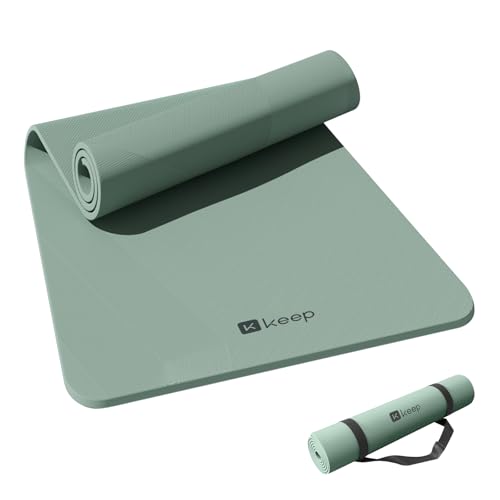
A 32-inch wide surface means you can spread your arms and legs into wide-legged poses without worrying about rolling off the edge. That extra real estate, paired with 7 mm of TPE cushioning, gives your knees and elbows a forgiving landing during floor work. The double-sided non-slip pattern, fingerprint-like on top, full-coverage on the bottom, keeps the mat planted on dry or wet surfaces. It’s the kind of thoughtful design that makes practice feel less about wrestling with your gear and more about finding your breath.
At 2.8 pounds with a free adjustable polyester strap, this mat is light enough to carry to the gym or yoga class without straining your shoulder. The 32-inch width gives you room to spread out in wide-legged poses without worrying about rolling off the edge, and the 7mm TPE padding cushions knees and elbows during floor work. It lacks the dense, floor-like stability of heavier mats like the Manduka PRO, but for someone who wants a spacious, portable mat they can actually bring along, that trade-off is worth it.
Product photos
Gaiam Premium Yoga Mat 5mm

What We Like
- 5mm cushion for joint comfort
- Non-slip textured surface for stable poses
- Made without six harmful phthalates
- Lightweight and portable with carrying strap
Trade-offs
- 24" width limits side-to-side space for wide poses
- PVC material off-putting to eco-conscious buyers
The 5mm thickness of this mat strikes a careful balance: enough cushion to soften your knees and wrists in kneeling poses, without the bulk that makes thicker mats feel unstable in balancing postures like tree or half moon. That makes it a natural starting point for someone building a home practice or packing a mat for the studio. The textured non-slip surface gives you grip in downward dog and warrior. At 2.6 pounds with a carrying strap, you won’t dread hauling it to class or the park. For anyone who wants a reliable, no-fuss mat that won’t break the budget, this one covers the essentials without overcomplicating things.
The trade-off is size. At 68 inches long and 24 inches wide, this mat fits the standard yoga frame. But if you’re taller than average or like to spread your feet wide in a wide-legged forward fold, you’ll find yourself stepping off the edge.
Manduka PRO Yoga Mat 6mm

What We Like
- Lifetime durability guarantee
- Ultra-dense 6mm joint protection
- Closed-cell surface resists moisture
- Non-slip dot pattern bottom layer
Trade-offs
- At 7.5 lb, heavy to carry
- PVC material not biodegradable
The 6mm ultra-dense cushioning is the defining feature here, it delivers the kind of joint protection and floor-like stability that makes standing balances feel planted and kneeling poses comfortable for longer holds. That closed-cell surface seals out sweat and moisture, so the mat stays cleaner between sessions without absorbing odors. For anyone practicing daily or teaching classes, this is the kind of build that removes distractions: no slipping, no shifting, no worrying about wear.
At 7.5 pounds, this mat is heavier than the Gaiam Premium 5mm (2.6 lb), so if you carry it to a studio, you will notice the difference. That weight comes from the high-density construction that keeps the mat stable on hard floors, and the dot pattern on the bottom grips firmly. It is a studio-quality mat best kept at home or in the car, not one you casually toss over your shoulder.
Product photos
Circuit Fitness by Marcy Non-Slip Exercise Mat

What We Like
- Weighs only 1.5 pounds
- Includes portable carry strap
- Dual-sided textured traction
- Moisture-resistant TPE material
Trade-offs
- Narrow 24-inch width restricts side-to-side movement
- 6mm thickness feels firm on hard floors
At 1.5 pounds with a carry strap, this mat is easy to take to a studio or gym. The closed-cell TPE material resists sweat and cleans with a damp cloth, which helps keep the surface fresh after use. It rolls up compactly for storage, making it a practical choice for anyone who needs a portable mat.
Weighing just 1.5 pounds, the mat is easy to carry with its included shoulder strap, making it simple to bring to a studio or gym. That portability does come with a narrower 24-inch width, so taller or broader users may find less room for wide stances during floor work. The 6mm thickness provides enough cushioning for yoga and Pilates while still offering stability for standing poses, though those who prefer more padding for joint-sensitive routines might want a thicker option. The closed-cell TPE construction resists moisture absorption, so a quick wipe with a damp cloth keeps the surface fresh after sweaty sessions.
Product photos
MRZZATA Extra Long Wide Thick Yoga Mat

What We Like
- Extra-long 84-inch length for tall users
- Wide 32-inch surface for spacious poses
- 7 mm cushioning for joint comfort
- Dual-use strap works as carry or stretching strap
Trade-offs
- At 2.5 lb, lighter than some prefer for stability
This mat measures 84 inches long and 32 inches wide, giving tall users enough room to stretch out without their feet hanging off the edge. The 7 mm TPE cushioning softens hard floors during kneeling or supine poses, and the double-sided non-slip texture keeps both the mat and your hands planted. It’s a thoughtful design for anyone who has ever felt squeezed on a regular mat.
At 2.5 pounds, it’s lighter than denser mats like the Manduka PRO (7.5 pounds), which some users may find less stable on certain surfaces. The 7 mm thickness provides more give than thinner mats, so if you prefer a very firm surface for balance poses, you might notice the difference. That said, for taller folks or anyone doing floor-based exercises, this mat’s spacious, cushioned design offers practical comfort.
Product photos
JadeYoga Harmony Yoga Mat

What We Like
- PVC- and phthalate-free construction
- Natural open-cell rubber for grip
- Tree planted for each mat purchased
Trade-offs
- Narrower than extra-wide options (24" vs 32")
- Open-cell rubber absorbs sweat and needs cleaning
The trade-off is that open-cell rubber is easy to clean but may require regular care to stay fresh. At 4.2 pounds and 24 inches wide, it is heavier than some alternatives like the KEEP Non-Slip Large Mat, which weighs 2.8 pounds and offers 32 inches of width. But if grip and stability are your priorities, this mat delivers a secure surface that supports your practice.
Product photos
Liforme Printed Yoga Mat
What We Like
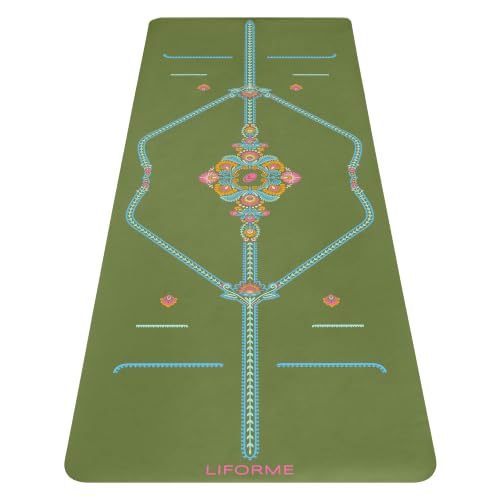
- Patented alignment markers for pose precision
- Grip improves with sweat for stability
Trade-offs
- 4.2 mm thickness offers less cushion than thicker mats
- Narrower than many extra-wide yoga mats
The GripForMe surface actually gets tackier as you sweat, so hot yoga sessions don’t turn into a slip-fest. At 72.8 inches long and 26.8 inches wide, it gives most bodies room to stretch out, and it comes with a free yoga bag for carrying it to class.
This mat focuses on grip and alignment cues rather than plush cushioning. At 4.2 mm thick, it is firmer under knees and elbows than thicker mats like the Gaiam Essentials Thick Yoga Mat at 10 mm. So if you spend a lot of time in kneeling poses or need extra joint padding, that thicker option might feel more forgiving. The Liforme also weighs 5.5 lb, which is noticeable if you walk to the studio; lighter mats like the KEEP Non-Slip Large Yoga Mat at 2.8 lb are easier to carry. But for someone who wants a stable, grippy surface with alignment guides and eco-friendly materials, this mat delivers.
Gaiam Essentials Thick Yoga Mat 10mm
What We Like
- 10mm extra-thick cushioning for joints
- Textured non-slip surface for controlled movement
- Lightweight with adjustable carrying strap
- Easy to clean with a damp cloth
Trade-offs
- Softer feel prioritizes comfort over firmness for stability
- Narrow 24-inch width limits movement for wider stances.
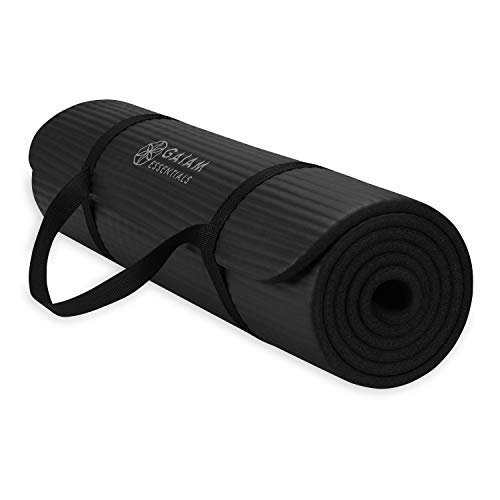
The 10mm thickness of this mat provides plush cushioning that helps reduce pressure on knees, hips, and joints during floor-based work. That extra padding is a benefit if you’ve ever felt discomfort through a kneeling pose on hardwood or tile. It’s built from low-odor NBR foam with a textured surface that helps reduce slipping on most hard floors during dry workouts, and it rolls up light enough to carry with the included adjustable strap. For anyone starting yoga, Pilates, or stretching at home, this mat prioritizes comfort so you can focus on the movement instead of the floor.
Soft, thick foam doesn’t offer the firm, stable base some poses demand. You’ll also want to plan ahead for the initial foam smell, it usually fades after a day or two of airing out.
Amazon Basics Extra Thick Exercise Yoga Mat

What We Like
- Half-inch thick cushioning for comfort
- Lightweight at only 2.2 pounds
- Textured surface for secure grip
- Included elastic carrying strap
Trade-offs
- 24-inch width limits side-to-side space
- NBR foam absorbs sweat and can develop odor over time
A full half-inch of NBR foam means this mat delivers serious padding for anyone whose knees, hips, or wrists complain during floor work. That extra thickness soaks up impact from yoga flows, Pilates moves, and bodyweight exercises, making it a forgiving surface for beginners or anyone returning after a break. The textured top helps keep you planted, and at just over two pounds with a strap included, you can toss it over your shoulder and head to the park or studio without a second thought.
The 0.5-inch thickness gives this mat plush cushioning for comfort on hard floors, but that extra padding comes from NBR foam, which stretches and springs back into shape for durability. At 24 inches wide, taller or broader users may find their hands or feet creeping off the edges during wider stances. For gentle stretching, restorative yoga, and everyday floor workouts, this mat provides comfort without weighing you down at just 2.2 pounds.
Product photos
Manduka PROlite Yoga Mat

What We Like
- Closed-cell surface seals out moisture
- No-slip dot pattern keeps mat firmly in place
- Lightweight 4.6 lb for easy carrying
Trade-offs
- Narrower than extra-wide mats, less room for wide stances
- Requires Manduka cleaner for best results
At just 4.6 pounds, this mat is easy to toss over your shoulder and carry to a studio without thinking twice. The 4.7mm high-density cushioning gives you joint protection without the squishy feeling that throws off balance, so you can hold poses with confidence. It’s designed for yogis who want a streamlined mat that still feels stable and supportive, especially in tight class settings where space is precious.
The 24-inch width is a bit narrower than some extra-wide mats, so if you like a sprawling stance, you might feel a little confined. But for most practitioners, that’s a fair price for the portability and the durability Manduka builds into the mat. Compared to the heavier Manduka PRO 6mm, this one is easier to carry, yet it still offers that same closed-cell, hygienic surface that keeps sweat from soaking in.
How We Evaluated Yoga Equipment
We looked at technical specifications from each manufacturer, reviewed expert commentary from yoga instructors and fitness editors, and analyzed patterns in thousands of owner reviews. This research-based approach lets us identify which products consistently perform as described.
Three criteria mattered most. First, surface dimensions and thickness, a narrow 24-inch mat works for some poses but feels cramped during wide stances, while extra-wide 32-inch options like the KEEP give you room to spread out. Second, material and grip performance: closed-cell surfaces repel sweat, open-cell rubber offers natural traction but absorbs moisture, and PVC provides durability at the cost of biodegradability.
Third, portability versus stability, a mat that weighs under 2 lb is easy to carry but may slide on carpet, while a 7.5 lb mat stays put but stays home.
A research-led evaluation has honest limits. We cannot tell you which mat feels best under your hands during a long flow, but we can tell you which specs and owner-reported patterns point to a reliable purchase. If you are new to yoga, our guide to the best yoga gear for beginners is a good next stop.
What To Look For In Yoga Equipment
The right yoga mat balances cushioning, grip, size, and weight against where and how you practice. These four criteria will help you narrow the field.
Choose a mat that is at least 68 inches long and 24 inches wide for standard use, or 72 by 32 inches if you are tall or prefer wide stances. Thickness between 5 mm and 7 mm suits most practices; go to 10 mm for sensitive joints on hard floors.
Mat Thickness and Cushioning
Thickness directly affects joint comfort and balance stability. A 5 mm mat like the Gaiam Premium provides adequate cushion for most studio floors and still rolls up easily. The 7 mm KEEP and Manduka PRO offer more forgiveness for knees and wrists during kneeling poses. At 10 mm, the Gaiam Essentials Thick Yoga Mat delivers maximum cushion for beginners and restorative practice, though the softer feel can make standing balances trickier.
Surface Dimensions
Standard yoga mats measure 24 inches wide and 68 to 72 inches long. That works fine for many practitioners, but tall users or those who enjoy wide-legged poses will appreciate extra-wide options. The KEEP Non-Slip Large Yoga Mat offers a generous 32-inch width, and the MRZZATA Extra Long Wide Thick Yoga Mat stretches to 84 inches in length. A wider surface also helps when using yoga props like blocks and straps, giving you room to position them without crowding.
Material and Grip
The surface material determines how well the mat grips when dry or sweaty. PVC mats like the Gaiam Premium and Manduka PRO offer reliable traction and durability, but they are not biodegradable. Natural rubber mats like the JadeYoga Harmony provide excellent grip that improves with moisture, though they absorb sweat and need regular cleaning. TPE materials, found on the Circuit Fitness by Marcy mat, balance grip with lighter weight and easier cleaning.
- Check the mat’s weight if you plan to carry it to class, anything over 5 lb becomes a chore.
- Look for closed-cell construction if you sweat heavily; it resists moisture absorption.
- Confirm the length works for your height, add 6 inches to your height as a minimum.
- Consider a carrying strap or bag if the mat does not include one.
A mat that works for home practice on carpet may feel too thin on a studio’s hardwood floor, so think about your primary surface before buying.
Yoga Equipment Compared
The table below compares the ten yoga mats we evaluated, highlighting key specs and the best use case for each.
| Product | Thickness | Dimensions | Weight | Material |
|---|---|---|---|---|
| KEEP Non-Slip Large Yoga Mat | 7 mm | 72"L x 32"W | 2.8 lb | TPE |
| Gaiam Premium Yoga Mat 5mm | 5 mm | 68" x 24" | 2.6 lbs | 6P-free PVC |
| Manduka PRO Yoga Mat 6mm | 6 mm | 71 x 26 in | 7.5 lb | OEKO-TEX certified PVC |
| Circuit Fitness by Marcy Non-Slip Exercise Mat | 6 mm | 74 x 24 x 0.2 in | 1.5 pounds | Closed-cell TPE |
| MRZZATA Extra Long Wide Thick Yoga Mat | 7 mm | 84 x 32 x 0.3 inches | 2.5 pounds | TPE |
| JadeYoga Harmony Yoga Mat | 3/16" | 68" x 24" | 4.2 lb | Natural open-cell rubber |
| Liforme Printed Yoga Mat | 4.2 mm | 72.8 x 26.8 in | 5.5 lb | Eco-polyurethane / natural rubber |
| Gaiam Essentials Thick Yoga Mat 10mm | 10 mm | 68"x24" | 2.8 lbs | NBR foam |
| Amazon Basics Extra Thick Exercise Yoga Mat | 0.5 inches | 74 x 24 inches | 2.2 pounds | NBR foam |
| Manduka PROlite Yoga Mat | 4.7 mm | 71 x 24 in | 4.6 lb | OEKO-TEX certified PVC |
Frequently Asked Questions
What thickness yoga mat is best for beginners?
A 6 mm to 7 mm mat offers a good balance of joint cushioning and stability for beginners. The KEEP Non-Slip Large Yoga Mat at 7 mm and the Manduka PRO at 6 mm both provide enough padding for knees and wrists without feeling overly soft during standing poses.
How do I clean a yoga mat?
Most mats can be wiped down with a mild soap and water solution after each use. Natural rubber mats like the JadeYoga Harmony need more frequent cleaning because open-cell rubber absorbs sweat. Closed-cell mats like the Manduka PRO resist moisture and require less maintenance.
What is the difference between PVC and natural rubber yoga mats?
PVC mats are durable, affordable, and offer reliable grip, but they are not biodegradable. Natural rubber mats provide excellent traction that improves when damp and are made from renewable materials, though they tend to be heavier and absorb sweat. The choice comes down to whether eco-friendliness or easy maintenance matters more to you.
How wide should a yoga mat be for tall people?
Tall practitioners and those who prefer wide stances should look for mats at least 32 inches wide. The KEEP Non-Slip Large Yoga Mat and the MRZZATA Extra Long Wide Thick Yoga Mat both offer 32-inch widths, giving you room to spread your feet and hands without stepping off the mat.
Can I use a regular exercise mat for yoga?
A standard exercise mat works for stretching and floor exercises, but most are too wide or lack the grip needed for yoga poses. Dedicated yoga mats use thinner, more stable materials that keep your hands and feet from sliding during downward dog or warrior poses. If you want a single mat for both yoga and general workouts, a 6 mm option with good texture works best.
The Bottom Line
The KEEP Non-Slip Large Yoga Mat is the best overall pick for home practitioners and studio-goers who want a wide, cushioned surface that does not weigh them down. Its 32-inch width, double-sided grip, and 7 mm padding address the three most common complaints about standard mats: cramped space, slippery surfaces, and sore joints.
If your budget is tight, the Gaiam Premium Yoga Mat 5mm delivers solid non-slip performance and joint cushion at a very accessible price point. Studio teachers who want a mat that will last through years of daily use should invest in the Manduka PRO Yoga Mat 6mm with its lifetime guarantee.
No single mat works for every body and every practice. Start by measuring your height and thinking about where you practice most, then let thickness and width guide your final choice.
