
How to Do Crunches Correctly: Form Cues That Work
This post contains affiliate links. As an Amazon Associate, we earn from qualifying purchases.
To do crunches correctly, set your feet about hip-width apart, keep your hands light (crossed over your chest or resting behind your head without pulling), and lift only your shoulder blades off the floor by drawing your rib cage toward your pelvis. Move smoothly, exhale on the way up, and end the set when your form starts to break.
The hands-light clause is where the advice splits. Mayo Clinic and Björn Borg agree on foot placement but disagree on where your fingers go: Mayo Clinic says do not clasp your hands behind your head, while Björn Borg says hands lightly behind the head or crossed over the chest are both acceptable. The how to do crunches correctly difference matters more for your neck than for your abs.
What follows: the setup in order, the hand-position argument, the rep-count question, and the one group of people who should skip crunches entirely.
Key Takeaways
- Feet about hip-width apart, knees comfortably apart. That base keeps your hip flexors from taking over the lift.
- Lift only the shoulder blades. A crunch stops where a sit-up keeps going, and that shorter range is the whole point.
- Exhale as you rise, inhale as you lower, then pause briefly at the top so momentum can’t do the work.
- Rep guidance runs from 15-20 per set to a session cap near 60 total flexion reps. Start at 2 sets of 15 if you’re new.
- Current or past disc pathology means a clinician decides, not a workout article.
The Setup: Feet, Hands, and Where the Rep Starts
Lie on your back with knees bent and feet flat, roughly hip-width apart, knees comfortably separated. Press your lower back gently into the floor before the first rep and keep it there.
A crunch begins with the feet flat and about hip-width apart, knees comfortably separated. The hands rest lightly behind the head or cross the chest, never pulling the neck forward. The movement starts in the abdominal wall, drawing the rib cage toward the pelvis while the lower back stays pressed into the floor.
The Mayo Clinic abdominal crunch video walks through the same base position: feet hip-width apart, knees comfortably apart, movement smooth and controlled. The short version of how to do crunches correctly fits in one line: rib cage to pelvis, shoulder blades off the floor, hands light.
The how to do crunches correctly floor grip matters more than it sounds. A dense mat helps here, and it won’t slide under your shoulders the way a thin travel mat does after the tenth rep.
- Set the base. Feet flat, hip-width apart, knees comfortably apart. Skip this and your hip flexors start the rep instead of your abs.
- Press the lower back down. An arch under your spine means the abs aren’t holding yet. A step or platform under the feet gives you something to press against.
- Pick a hand position you won’t pull from. Crossed on the chest, or resting lightly behind the head. Clasped fingers behind the skull is the version that strains necks.
- Lift the shoulder blades, not the whole back. Think rib cage toward pelvis. Rolling up one vertebra at a time increases abdominal activation, according to Nike trainer Cori Lefkowith.
- Hold for three deep breaths at the top, then lower with control. That breath-counted pause is the Mayo Clinic cue, and it kills the bounce.
You’ll feel the moment your hip flexors take over. It shows up as a pull at the front of the hip and a small lift in the lower back.
Should Your Hands Go Behind Your Head or Cross Your Chest?
Hand position gets more argument than it deserves. Both placements work. The failure is pulling, and pulling happens when the fingers interlace behind the skull and the elbows drive forward.
| Source | Hand placement | Stated reason |
|---|---|---|
| Mayo Clinic | Arms folded across the chest | Clasping behind the head risks neck injury and blocks ab isolation |
| Björn Borg | Lightly behind the head, or crossed on the chest | Both acceptable if the hands stay light |
| Nike | Hands behind the head, elbows wide | Standard setup cue from their trainers |
| Verywell Fit | Hands behind the head, or fist under the chin | Keeps the neck in alignment |
The disagreement is narrower than it looks: Mayo Clinic says do not clasp your hands behind your head at all, while Björn Borg says hands lightly behind the head or crossed over the chest are both acceptable as long as the hands stay light. Björn Borg says the same thing from the other direction: hands light, chin slightly tucked, neck relaxed.
I default to arms crossed over the chest for anyone learning the movement. It removes the option to pull, and you find out fast whether your abs are actually doing the work. Once the pattern is automatic, hands behind the head is fine.
What most people get wrong: Interlacing the fingers behind the skull and yanking on the way up. The neck takes the load, the abs switch off, and you’ll feel it as a stiff neck the next morning rather than sore abs.
How Many Crunches Should You Actually Do?
That number sits inside a much wider range of published advice, and the range only looks contradictory until you read the units.
- Mayo Clinic: no number at all. Do as many as you can with good form and stop when form begins to suffer.
- Verywell Fit: 15-20 reps with perfect form per set.
- Contreras and Schoenfeld (2011): about 60 total flexion reps per session, with untrained beginners starting at 2 sets of 15.
Read the units and the three positions reconcile. One is a per-set target, one is a per-session ceiling, and one is a form-based stop rule. Use all three together: 15-20 per set, stop the set when form slips, and keep the whole session under roughly 60 total.
The 60-rep figure comes from a 2011 review in the Strength & Conditioning Journal. It’s a ceiling for lumbar flexion volume across everything you do that day, so reverse crunches and cable work count toward it too.
Are Crunches Bad for Your Back?
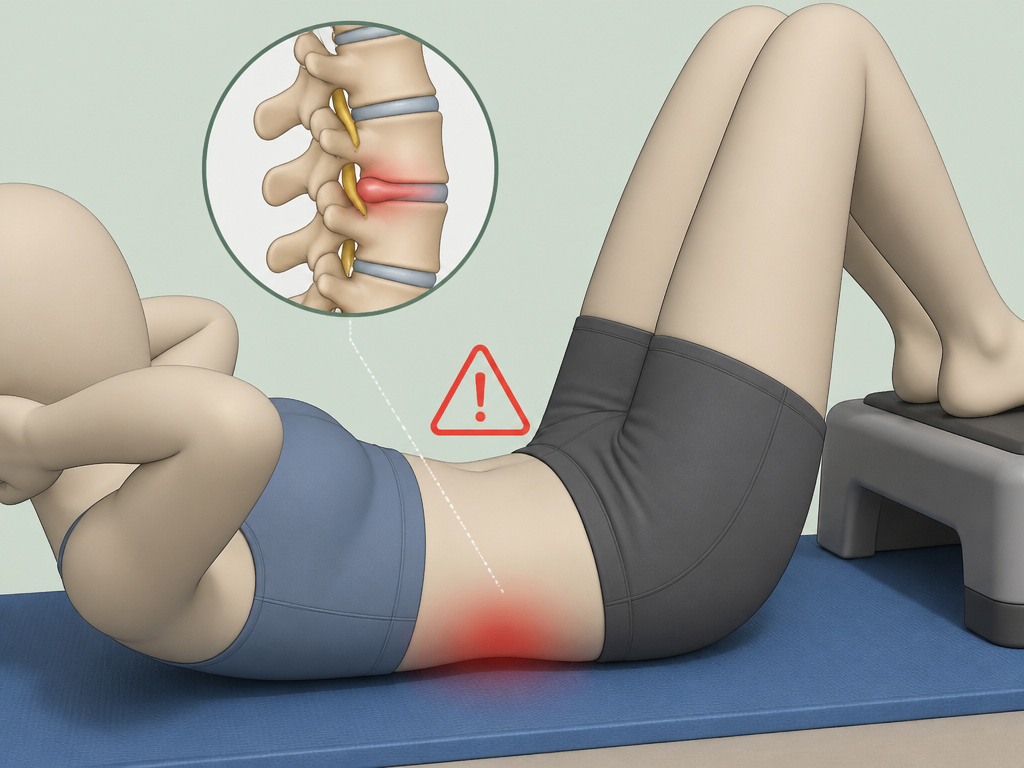
The blanket warning that crunches wreck your spine is not supported by the evidence. A 2016 paper by Schoenfeld and Kolber in the Strength & Conditioning Journal reviewed the case and concluded that a rule of avoiding crunches isn’t backed by the research. The same paper names the exception clearly: sustained or repeated flexion is likely to worsen symptoms in someone with a symptomatic lumbar disc herniation.
Before you start: If you have current or past disc pathology, get a clinician’s sign-off before adding loaded spinal flexion. If your lower back arches too much during a rep, prop your feet on a step or platform to support your back. If you’re pregnant, crunches are typically off the table after the first trimester.
Worth knowing: the flexion-risk case rests largely on cadaveric and animal tissue with the musculature removed. That tissue doesn’t replicate how a living spine responds, which is why the 2011 authors called the “limited bending cycles” idea premature rather than settled.
Who Should Skip Crunches
Anyone with current or historical disc pathology should leave the decision to a healthcare practitioner. Schoenfeld and Kolber are explicit about that, and it overrides every cue given here.
Verywell Fit adds two more groups: people with back or neck problems should check with a doctor or physical therapist first, and crunches are typically avoided after the first trimester of pregnancy and postpartum for anyone with diastasis recti. Older adults rebuilding core strength have better starting points in these ab workouts for seniors.
When the Rep Goes Wrong: Three Symptoms and Their Fixes
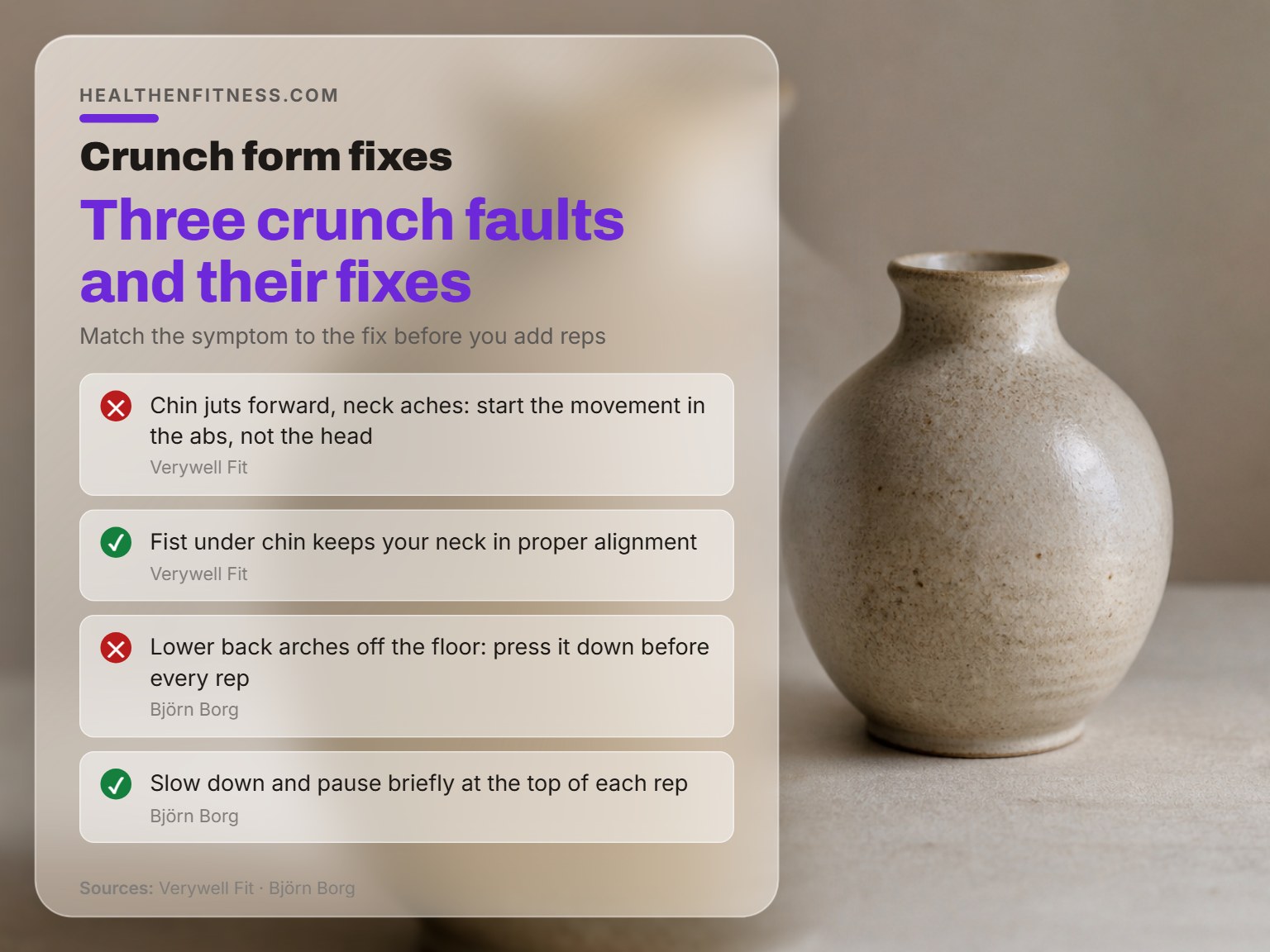
Three things go wrong in a bad crunch, and each one leaves a different tell. Match the symptom to the fix before you add reps.
| What you notice | Likely cause | Fix |
|---|---|---|
| Chin juts forward, neck aches | Movement starting in the head | Originate in the abs; fist under chin for alignment |
| Lower back arches off the floor | Core not engaged before the lift | Press the lower back down before every rep |
| Reps speed up and get sloppy | Momentum, not muscle | Slow down and pause briefly at the top |
The tell for momentum is sound. A controlled rep is nearly silent, and a swinging one lands with a soft thump each time your shoulders drop back to the floor.
Where this goes sideways: Chasing a rep number after your form has already broken. The final reps of a sloppy set load your neck and hip flexors, and the abs get nothing from them.
Breathing and Tempo: The Cues That Change the Rep
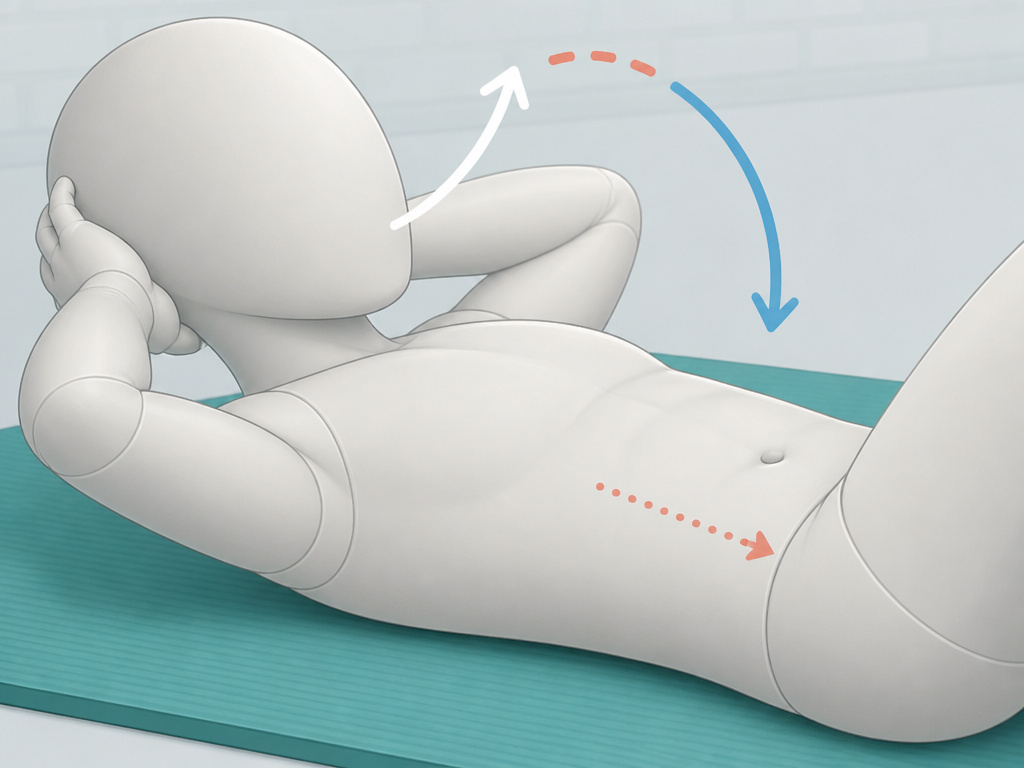
Late in the set, the exhale goes ragged and the shoulders start to pull forward. That’s the rep where most sets quietly turn into a neck exercise.
Björn Borg’s cue is simple: exhale as you crunch up, inhale as you lower back down. Mayo Clinic adds the three-breath hold at the top, which forces a slower tempo without a metronome.
Slow the rep down until it feels almost too easy. A crunch you can’t rush is a crunch your neck can’t hijack.
- Exhale as you rise, inhale as you lower. Holding your breath through the set turns a core exercise into a blood-pressure exercise.
- Pause at the top for a beat. Momentum is the enemy here.
- Visualize the bellybutton moving toward the pelvis. That’s the Mayo Clinic image, and it keeps the lift in the abs.
- Stop the set when the rep stops looking the same. That form-based stop rule beats any number on a program.
Where Crunches Fit in a Core Routine
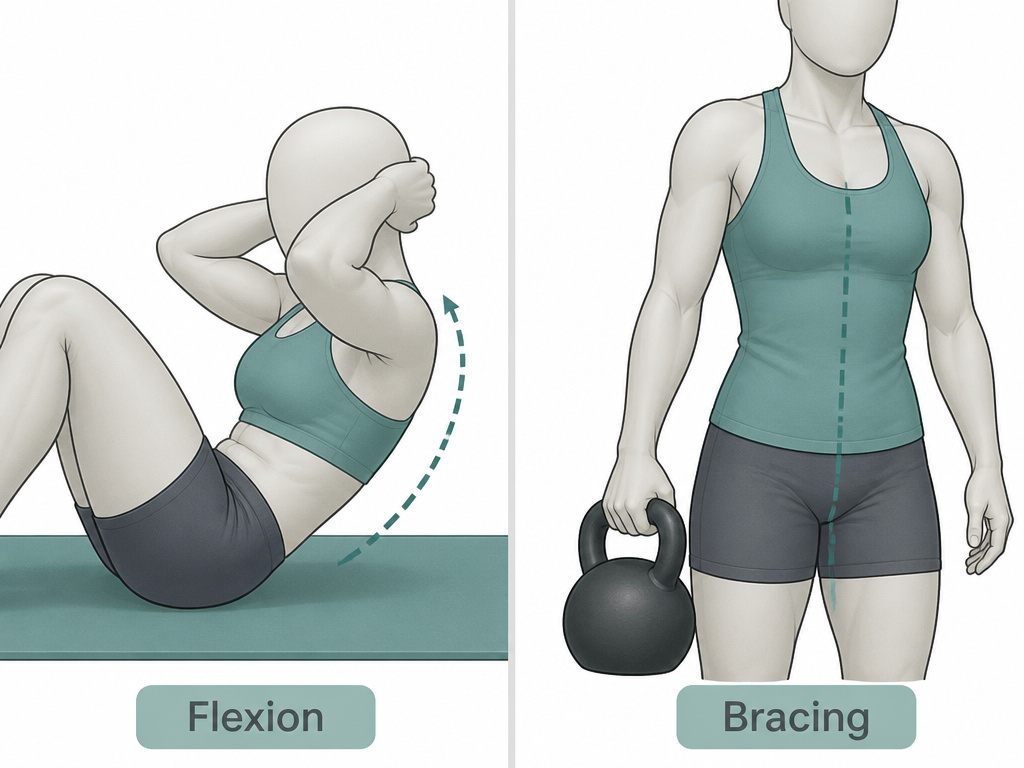
Core training works best when you split it into two jobs. One job is flexion, which is what crunches, cable crunches, and reverse crunches train. The other is resisting movement, which is what planks, dead bugs, and carries train.
I spent a stretch doing high-volume crunches because I wanted a flatter waist. After a stretch of high-volume sets, my waist hadn’t moved and my neck was sore. Spot reduction doesn’t work that way, and I’d picked the least efficient tool for the job I actually wanted.
The trunk’s more useful job is bracing. Learning bracing your core during a squat or a carry teaches the abs to hold position under load, which is what protects the spine when you pick something heavy off the floor.
- Suitcase carries. Load one side with a Rogue kettlebell and walk. The side trunk works overtime to keep you upright, and momentum can’t fake it.
- Dead bugs.
- Planks.
- Suspension work. A TRX Suspension Trainer turns a row into an anti-rotation drill, because the straps won’t let you cheat the angle.
Treat crunches as an accessory. The foundation is carries and planks, a few sets at a time, done often enough to repeat.
Crunch Variations Worth Adding (and One to Skip)
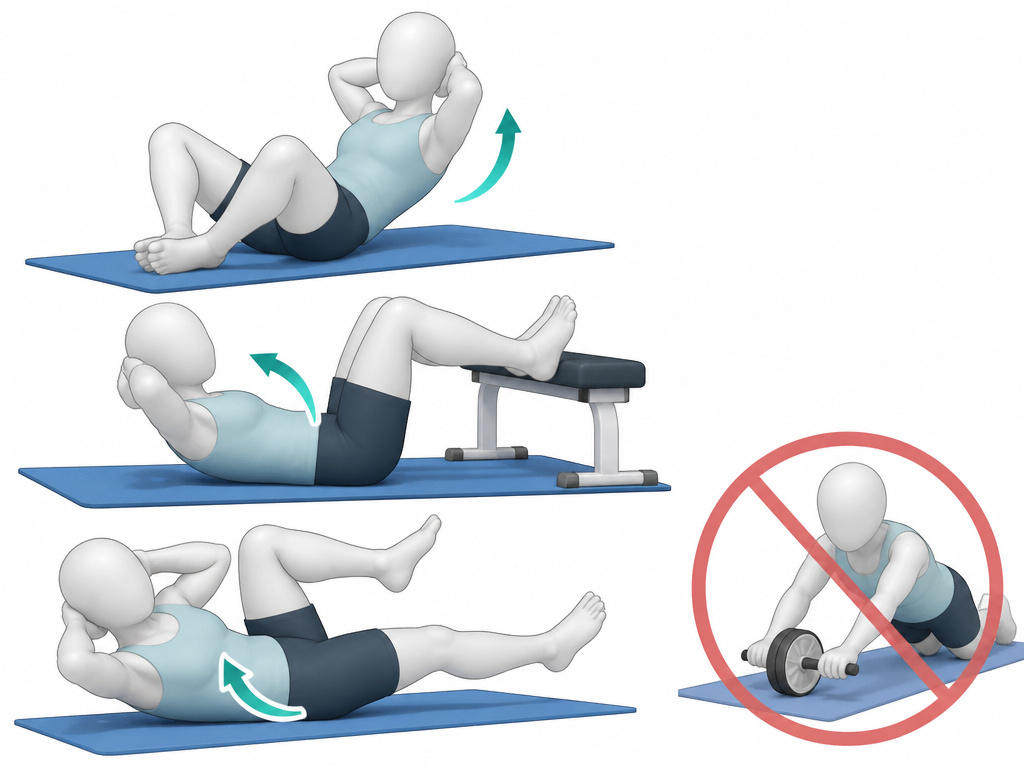
The butterfly crunch exists for one reason: the soles of the feet stay together and the knees fall open. That position steadies the pelvis, which is exactly what a beginner needs.
Beginner Variations
Nike lists two options that make the movement accessible without changing the spine’s job. The butterfly crunch keeps the feet together and knees open. The heels-on-bench crunch puts the lower legs on a bench, which takes the hip flexors out of the lift and lets you feel the abs earlier.
Advanced Variations
The bicycle crunch brings the obliques in by driving opposite elbow toward opposite knee. Cable crunches let you load the movement progressively, kneeling at a stack and pulling the ribs toward the pelvis. There’s a wider menu in these crunch variations, and most of them follow the same cues.
If you’re training at home with no equipment, these at-home ab workouts cover the same ground with bodyweight only.
The One to Skip
Ab-roller gadgets and “six-pack in two weeks” programs. The wheel version loads spinal flexion hard, and most people who buy one can’t hold a plank long enough to use it safely. An ab wheel is a fine tool for someone who already has the base. It’s a bad first purchase.
Frequently Asked Questions
How many crunches should a beginner do?
Two sets of 15 is the starting point one review recommends for untrained lifters. Keep the set short enough that every rep looks the same, and stop the moment your neck starts pulling. Add reps before you add speed.
Do crunches burn belly fat?
No. Crunches build the rectus abdominis, and they don’t preferentially burn fat from the area you’re working. I learned that the slow way over a stretch of high-volume sets. Fat loss comes from the broader picture, not from the exercise you pick for your abs.
Are crunches or sit-ups better?
They train the same muscle through different ranges. A crunch lifts just the shoulders off the floor, while a sit-up brings the whole torso up and recruits the hip flexors and back. If your goal is the abs specifically, the shorter range keeps the work where you want it.
Can you do crunches every day?
You can, but there’s no reason to. The 2011 review caps core work at roughly 60 flexion reps per session, and that ceiling exists so you don’t stack volume day after day. Keep the volume moderate alongside carries and planks.
What if crunches hurt my neck?
Check your hands first. If your fingers are interlaced behind your skull, switch to arms crossed over the chest and cut the set in half. If the pain stays after clean reps, get it looked at rather than training through it.
The Bottom Line
One rule I’d add that none of the standard cues cover: if your neck is sore the day after a set, you didn’t do too many crunches. You did them with your hands doing the lifting. Drop to arms crossed and cut the set in half before you change anything else.
This all assumes a back that’s been cleared for spinal flexion. If you have current or past disc pathology, the standard procedure described here doesn’t apply to you, and a clinician’s answer beats mine every time.
Do this today: one set of crunches with your arms crossed and a three-breath pause at the top. If your neck stays quiet, add a second set.
