
How to Handle Gym Conflict Politely: Exact Words to Use
This post contains affiliate links. As an Amazon Associate, we earn from qualifying purchases.
To handle gym conflict politely, name the specific problem, ask instead of accusing, and let staff take over if the other person won’t engage. Most conflicts are about equipment access, noise, filming, or hygiene. Written facility policies give you a neutral standard to point to instead of trading opinions.
The written policy is the lever almost nobody reaches for when thinking about how to handle gym conflict politely. A cardio machine with a posted limit and a member waiting turns a personal confrontation into a citation of house rules, and the person on the machine complies without argument.
What follows covers the five situations that start most gym arguments: equipment, hygiene, cameras, rude behavior, and the small-gym case where you already know the person. It also covers who actually has the authority to end it.
Key Takeaways
- Ask how many sets are left before you ask for anything else. It resolves most equipment conflicts in a single exchange.
- Point at the posted rule, not your opinion. “There’s a posted time limit and people are waiting” ends arguments that “you’ve been on that forever” starts.
- Handle odor privately or hand it to staff. The whole-class reminder is one documented approach, but it costs the room.
- Filming rules vary by facility. Some prohibit recording other members outright, others leave it to the manager.
- Escalate, then escalate again if it repeats. A pattern is what gives staff something to act on.
The Posted Rules You Can Point To Instead of Arguing
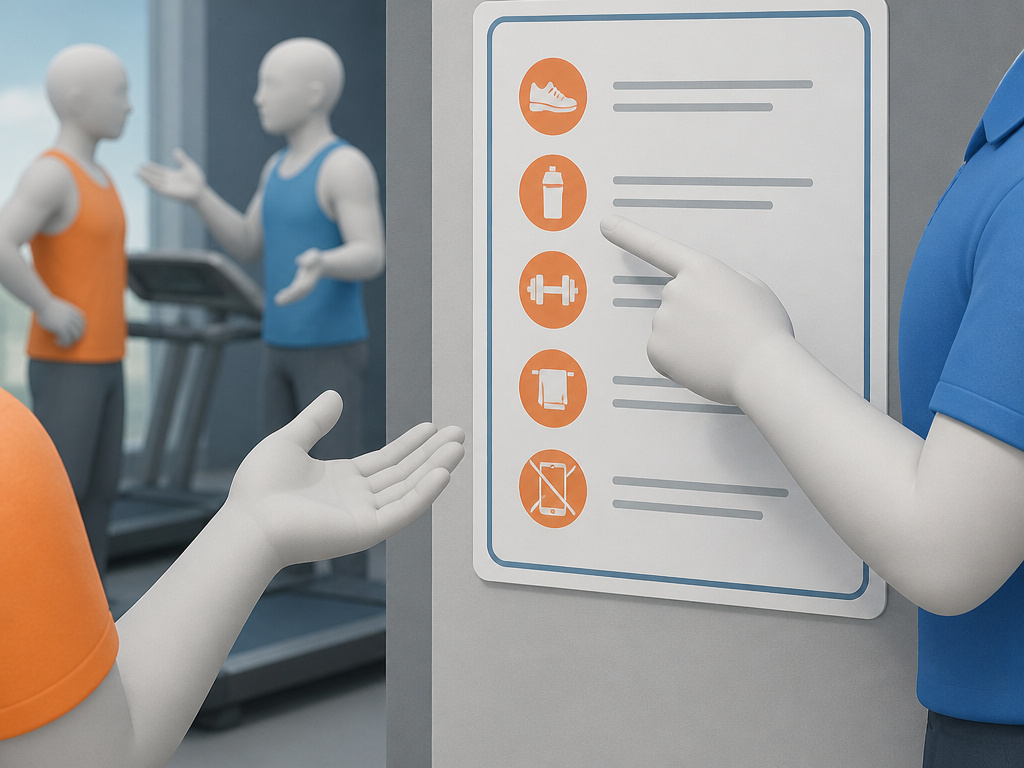
Every gym you walk into has a written policy, and almost nobody reads it. That document is the most useful tool in a how to handle gym conflict politely situation, because it lets you argue from house rules instead of personal preference.
Peak-hour cardio limits are commonly set at approximately 30 minutes per machine when others are waiting, according to written facility policies, while Under Armour’s guidance puts the posted limit at usually 20 to 30 minutes during peak hours. The same documents ask members to allow others to work in between sets, to return dumbbells, plates, and accessories to storage immediately after use, and to keep rest periods reasonable.
Those sentences cover most of what people actually argue about. The Tulare fitness floor etiquette policy fills in the rest: no reserving equipment you aren’t using, no occupying two machines at once, no dropping or slamming weights, no tampering with equipment, and no filming other members without consent.
Notice how little of that is opinion. “You’ve been on that thing all evening” is a fight. “There’s a posted time limit and people are waiting” is a fact.
The rules worth knowing before you need them:
- Wipe down equipment after each use, including handles and screens.
- Re-rack everything the moment you finish with it. Dumbbells, plates, and accessories.
- Let people work in between sets whenever it’s practical.
- Don’t camp. No reserving equipment you aren’t using, no two machines at once, and rest periods short enough that someone else gets a turn.
- Go easy on the fragrance. Facilities ask members to avoid excessive fragrances or perfumes, and a crowded floor amplifies it.
Most facilities supply their own cleaner, and the wipe down equipment habit matters more than the brand. If you’d rather carry your own, a canister of disinfectant spray or a pack of gym wipes lives fine in a gym bag, and a bottle of hand sanitizer handles the locker room door handle.
I read my own gym’s policy once, and the cardio limit was the only item on it I hadn’t already guessed.
The part nobody mentions: A policy only helps if you can quote it without sounding like a cop. Read it once when you join, not for the first time mid-argument.
If you want the unwritten half of this, the gym etiquette for beginners rundown covers what regulars expect before anyone has to ask.
Someone Is on the Machine You Need. What Do You Say?
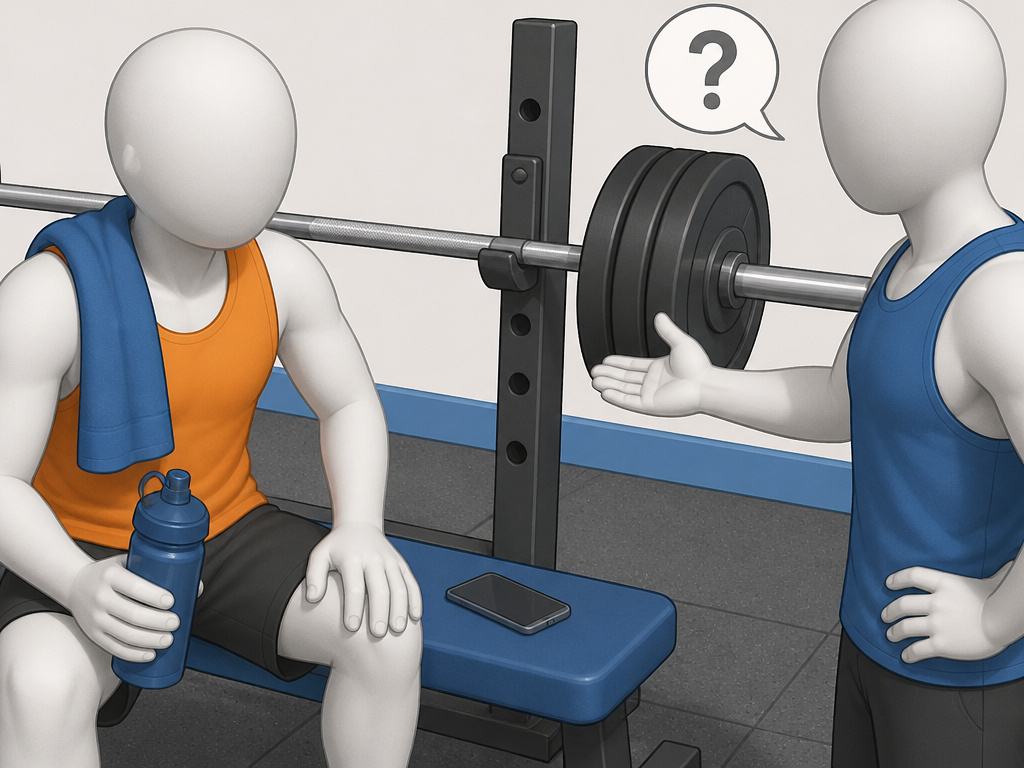
Ever stood six feet from a bench hoping the guy on it would notice you? He won’t. Say something.
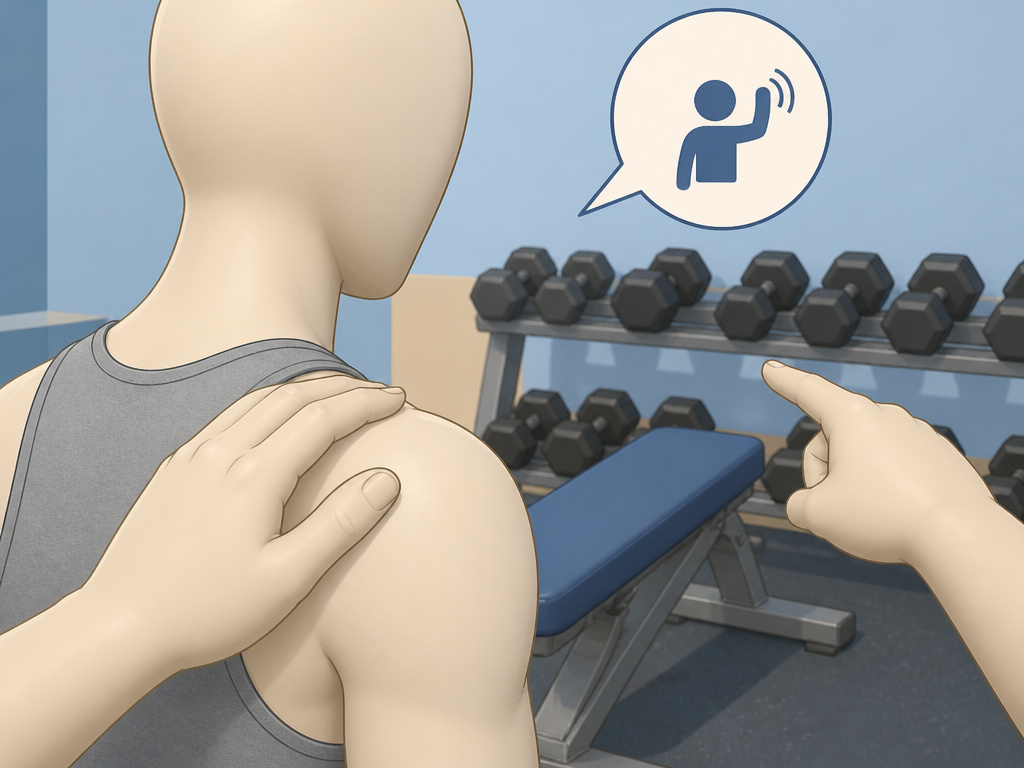
Before you start: Never walk between a lifter and the rack mid-set, never tap someone on the shoulder during a heavy rep, and never touch a loaded bar to get attention. A surprise during a bench press can put the bar on someone’s chest. Wait for the bar to hit the rack.
In this order:
- Wait for the set to end. Interrupting mid-rep is the one move that turns a polite ask into a confrontation, and you’ll be remembered for it.
- Ask how many sets are left. This is the whole trick. It’s a small question that gives the other person room to be reasonable, and it tells you whether to wait or work in.
- Offer to work in rather than asking them to leave. Working in between sets means taking turns on the same equipment, and most people say yes because it costs them nothing.
- If they’re scrolling between sets, say it plainly. “Are you using this, or can I jump in?” beats hovering, which reads as passive-aggressive and gets you ignored.
- If the machine sits unused while they hold it, get staff. You’ve asked, they’ve refused, and the policy is on your side. Standing there fuming is the worst of the three options.
The squat rack etiquette version is the same sequence with one addition: ask before you unload someone else’s plates, even if the bar looks abandoned. A rack with a towel on it and no human nearby is still someone’s rack for the next couple of minutes.
Cardio is the case where you rarely need words at all. Under Armour’s gym etiquette playbook puts the posted limit at usually 20 to 30 minutes during peak hours, and asks members to leave one machine of space when they can. If the sign is on the wall and the person is past it, point at the sign or find a staff member.
A treadmill belt changes pitch the second someone steps off it. That hum dropping an octave is how you know the machine is actually free and not just paused.
If the person you’re sharing with ends up spotting you, how to ask for a spot covers the phrasing so nobody has to guess at the rep count.
How Do You Handle Body Odor Without Humiliating Anyone?
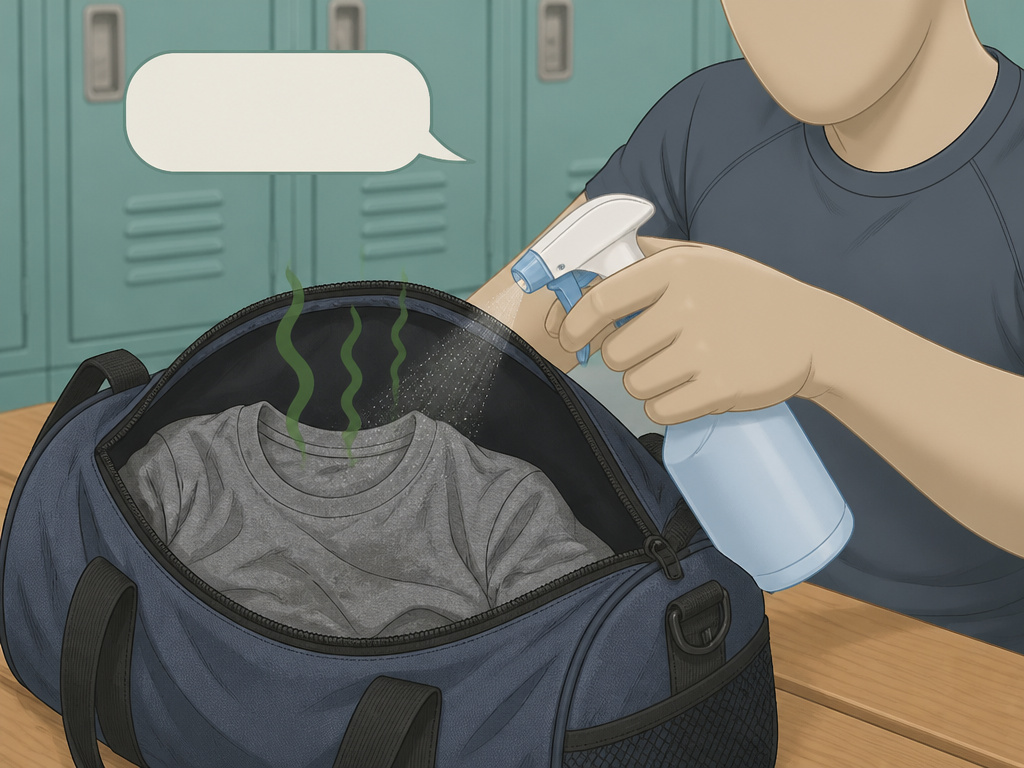
Two credible approaches exist here, and they start in opposite directions.
Fresh sweat fades. The smell that lingers is the sour, mildewed note of a shirt that sat damp in a gym bag overnight, and it carries across a whole row of mats. Under Armour’s guidance points at exactly that: moist clothes left in a closed bag grow bacteria.
One documented approach, from The Exercise Professional’s Guide to Group Fitness Instruction, is to address the whole room first, while the other camp opens privately with one conversation away from the group before anything is said in public. The suggested line is a general reminder to wash gym clothes and bathe between workouts, delivered to everyone rather than to one person. If that doesn’t fix it, you go to the individual privately, or ask a supervisor to do it.
The other camp, described at the brief level, opens privately with one conversation away from the group before anything is said in public. One conversation, away from the group, before anything is said in public.
Both are in use, and the split is real:
| Approach | Opening move | What it costs you |
|---|---|---|
| Whole-class reminder | General hygiene note to everyone | Four innocent people check their shirts |
| Private conversation | One sentence, away from the group | You have to be the one who says it |
| Supervisor handoff | Tell staff and let them handle it | Slower, and the person may guess who told |
What to Actually Say
Keep it to one sentence and make it about the space rather than the person. “Hey, would you mind washing your gear between sessions? It’s carrying a bit in the closed room” is enough. I’ve been on the receiving end of the vague version, and it took me a minute to work out whether I was the problem.
Both sequences are defensible, and the difference is who you’re willing to inconvenience. The broadcast version spares the individual and costs the room. The private version spares the room and costs you one awkward sentence.
If you can’t face saying it, that’s what staff are for. The textbook treats notifying a supervisor as a legitimate route when you’re not comfortable, and it isn’t a cop-out.
Filming, Speakerphone, and the Locker Room Camera
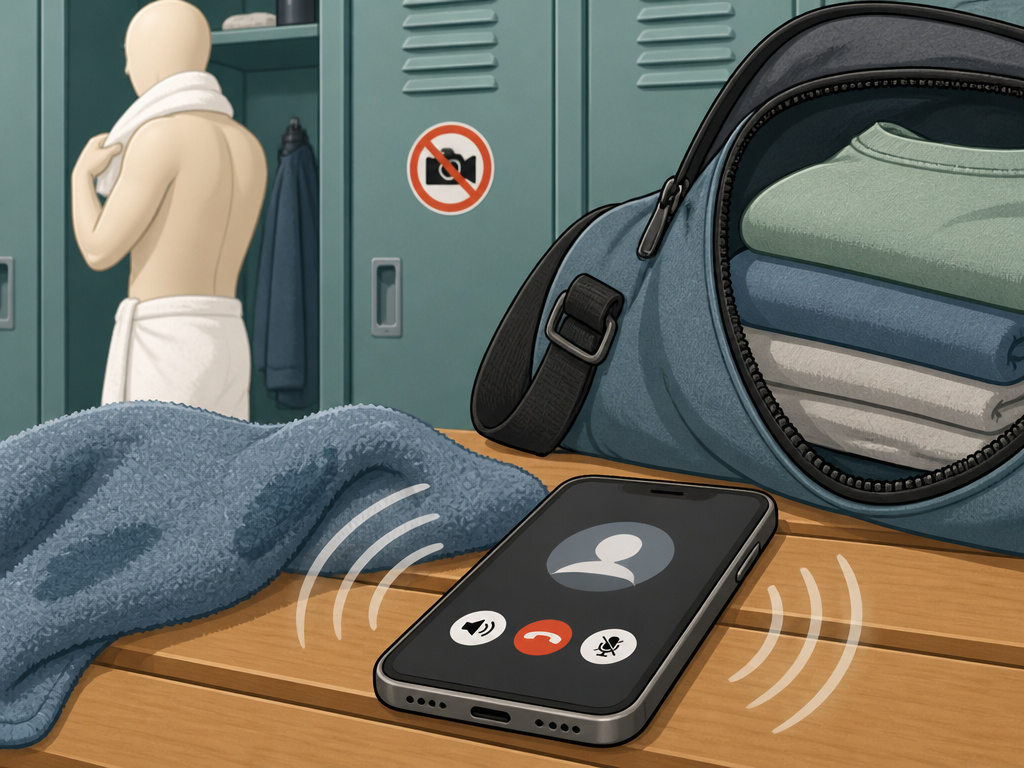
The locker room is where the rules get most explicit and the behavior gets worst.
Filming is the sharpest disagreement in the sources. The Tulare policy prohibits filming or photographing other members, guests, or staff without consent, full stop. Under Armour’s guidance is softer: some gyms ban it entirely, others allow it as long as nobody is shown without consent, the shot isn’t in the way, and it doesn’t create a hazard. Their advice is to ask the manager what your gym’s policy is before you press record.
So the practical answer depends on your facility, and the policy document is the thing to check. Ask the manager first. If someone is filming you and you don’t want to be in it, say so once, plainly, and get staff if they keep going.
The Locker Room Rules That Actually Get Broken
- No speakerphone calls and no loud music. Everyone in that room can hear you, including the person changing nearby.
- Keep the shower quick. Get in, clean up, get out, because someone else is waiting.
- Bring a clean bag each session. Damp kit left in a closed bag is the source of the problem described above.
- No filming.
A clean, dry bag also means you stop being the person other members avoid on the mat.
Rude, Aggressive, or Just Oblivious: Three Different Responses
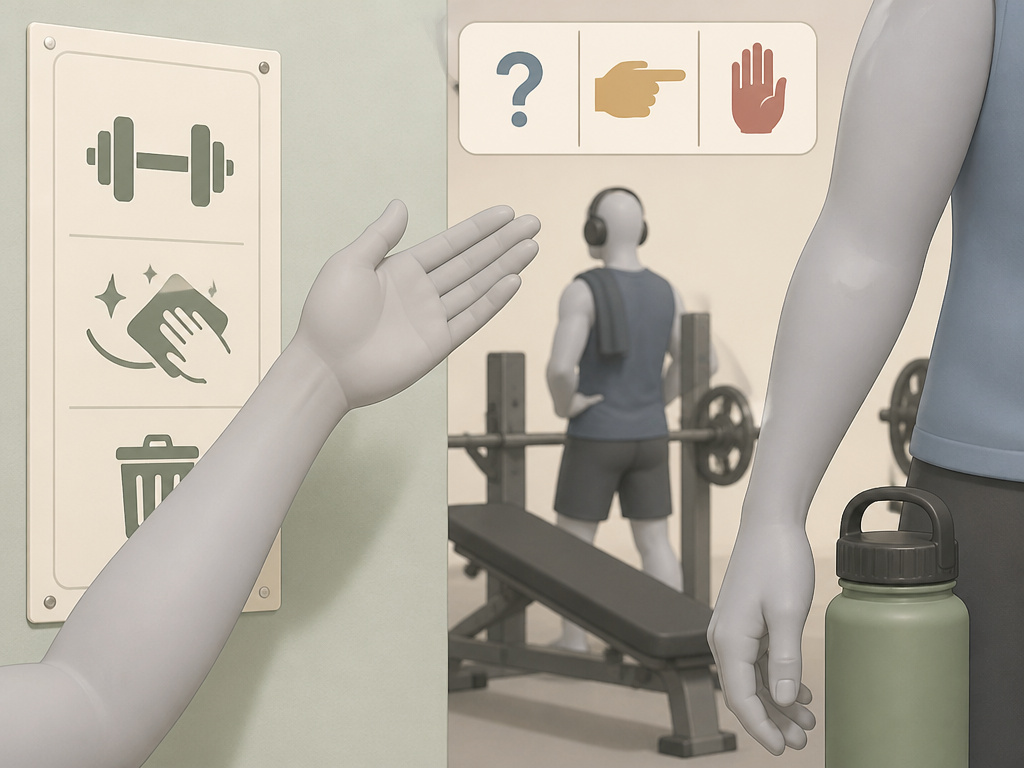
Three things get called rude at a gym, and only one of them is actually a conflict.
Oblivious is the most common. Someone is between sets with their headphones in, they didn’t see you waiting, and a single question fixes it. Treat this as the default until proven otherwise.
Rude is next. They saw you, they don’t care, and they’re not going to move. This is where the posted rule earns its keep, because you can point at the sign instead of arguing about fairness.
Aggressive is the rare one, and it’s the one where you stop trying to win. American Sport & Fitness puts it simply: don’t take it personally, and don’t react by getting defensive or angry back. The group fitness textbook goes further and says to ask the person to stop talking or to leave the room, then notify a supervisor if it continues or repeats, while American Sport & Fitness advises not taking it personally and not reacting defensively or angrily back.
Knowing how to handle gym conflict politely starts with reading which of the three you’re dealing with. Here’s the decision table I’d keep in your head:
| What’s happening | First move | Escalate when |
|---|---|---|
| Doesn’t notice you waiting | Ask how many sets are left | Rarely needs it |
| Holding two machines | Point at the posted rule | They refuse a second time |
| Snapping at you | Don’t match the tone | It repeats or follows you |
| Blocking the mirror | Suggest a different spot | They keep repositioning |
| Filming you | Ask them to stop | They refuse or post it |
A bar dropped from the top of a lift hits the platform with a flat crack you feel in your back teeth, and every head in the room turns. That noise is why facilities write “no dropping, slamming, throwing, or intentionally misusing weights” into the policy, and why dropping weights is a rule and not a preference.
Common mistake: Matching the other person’s tone because you’ve decided you’re in the right. Volume climbs faster than anyone plans for, and the person who raises their voice second is the one staff remember.
When to Stop Talking and Get Staff
The mirror case is worth its own line. The textbook answer is relocation: suggest the person move to a different spot in the room and put your attention back on the class, while American Sport & Fitness leans toward engaging with compassion instead. American Sport & Fitness leans toward engaging with compassion instead. If the person blocking the view is doing it on purpose, relocation ends it faster. If it’s accidental, a kind word works.
When It’s a Small Gym and You Know the Person
The early crowd at a small gym knows each other. That’s the setting where a minor annoyance turns into a standing grudge.
The group fitness textbook flags this directly. Interpersonal conflicts get harder at community, corporate, and school facilities, where participants know each other and may have issues that started outside the class. It also notes that cultural and identity-based differences can complicate the same conflicts further.
You can’t solve that with a script. What helps is timing: say the small thing early, before it hardens into something you’re both protecting.
I’d rather have one mildly awkward conversation early than a grudge I carry for months. Say it early, say it small, and keep it about the equipment or the space rather than about the person.
If the relationship outside the gym is the actual problem, the gym floor is the wrong place to settle it. Handle it elsewhere, or let staff handle it here.
Who Actually Has the Authority to Settle This?
The group fitness textbook puts the first call on the instructor and the second on a supervisor.
That’s the class setting. On the fitness floor, the Tulare policy makes staff instructions binding: members must follow posted rules and staff directions. Two different chains of authority, and knowing which one applies saves you an argument.
Class Settings vs. The Fitness Floor
In a class, the instructor runs the room. If they’re not comfortable addressing something, the textbook says they notify a supervisor, and the supervisor can take further action if the conflict escalates or repeats.
On the floor, it’s simpler. Staff decide, and their decision stands. You don’t need to win the argument with the other member, because you’re not the one enforcing anything. I’ve watched two members argue about a rule the front desk could have settled in one sentence.
Asking is a skill, and how to ask gym staff for help covers what to say so it lands as a request rather than a complaint.
One caveat: staff can’t fix what they can’t see. If you report something, be specific about the machine, the time, and what happened.
Frequently Asked Questions
What do I say if someone is using the machine I need?
Ask how many sets they have left. That one question tells you whether to wait, whether to work in, and whether the person is going to be reasonable. Wait until their set ends before you speak.
Is it rude to ask someone to move?
Not if you ask about the equipment rather than the person. “How many sets do you have left?” lands fine. “You’ve been on that forever” doesn’t. If they’re blocking a walkway or a mirror, suggest an alternative spot instead of asking them to leave.
Should I tell a staff member about body odor?
If you’re not comfortable saying it yourself, yes. The group fitness textbook treats notifying a supervisor as a legitimate option rather than a last resort. Staff can have the conversation without it being traceable to you.
Can I film my workout at the gym?
Check your gym’s policy first. Some facilities prohibit filming other members without consent outright, and others leave it to the manager’s discretion with conditions attached. Asking the manager before you record is the safe move either way.
What if the person gets angry when I ask?
Don’t match the tone. Step back, stop asking, and get staff involved. If it repeats or escalates, report it again, because a pattern is what gives staff something to act on.
The Bottom Line
One question handles most of this: ask how many sets are left before you ask for anything else. It works on the bench, the rack, the cable stack, and the treadmill, and nobody has to lose face.
Here’s the trigger that tells you to stop handling it yourself. If the same person blocks you repeatedly, the polite version has already failed, and repeating it just costs you another session. That’s when staff involvement stops being an escalation and becomes the obvious next step.
And the honest limit: a written policy won’t move someone who has decided to be unpleasant. It still gives staff a clear basis to act, which is more than you get from a story about how rude someone was.
Try this: read your gym’s posted policy start to finish. It turns your next conflict into a sentence you already know how to say.
