
How to Use a Treadmill for Beginners: Step by Step
This post contains affiliate links. As an Amazon Associate, we earn from qualifying purchases.
To use a treadmill for beginners, clip the safety key to your clothing, step on the way your machine’s manual tells you to, and walk at a conversational pace for 30 minutes, three times a week. Keep the incline at zero and your arms relaxed at your sides. If you are unsure how to use a treadmill for beginners, start with these basics.
The how to use a treadmill for beginners stepping-on part is where the manuals split. The Sole F85 tells you to put your feet on the belt before you start. The Kogan Foldfit tells you to stand on the side rails, start the belt, then step on. Both instructions are printed in current owner manuals for machines that do the same job.
What follows is the order that actually matters: the safety key, the setup, the starting pace, the heart rate math, and the duty cycle that only one of these manuals bothers to state.
Key Takeaways
- The safety key is a physical interlock. The Sole F85 will not start or run without it, and pulling it stops the Tunturi T20 immediately.
- Where you stand at start-up depends on your manual. Sole says feet on the belt; Kogan says side rails, then step on.
- The beginner band is 50 to 60 percent of max heart rate, which the Tunturi T20 pairs with 30 minutes, three times a week.
- Only the Kogan Foldfit states a duty cycle: one hour of continuous use, then power off and rest at least 10 minutes.
- Woodway asks for 80 inches (2 m) of clear space behind the machine. Most spare rooms do not have it.
What Stops a Treadmill From Starting?
The safety key is a physical interlock, and the Sole F85 will not start or run without it seated in the console. Nothing on the machine overrides that. If the belt sits dead while the screen lights up, check the key before you check anything else.
The safety key is a magnetic or latching plug that completes the console circuit. Removing it cuts power to the drive motor immediately. The Tunturi T20 console displays an E7 code when the key is not in the correct position at start-up, and the Sole F85 manual notes that removing the key also secures the machine from unauthorized use.
Tunturi’s warning is about order. Clip the key to your clothing first, and do not take the clip off until the key is out of the console. Reverse it and the emergency stop stops being an emergency stop.
A dead belt with a live screen is the most common false alarm. The E7 code tells you the console is fine and the key is not seated.
Then there is the screen that goes dark for no obvious reason. The Sole F85 console sleeps after 30 minutes of inactivity in Pause or Stop mode. That dark screen means the console has gone to sleep after 30 minutes of inactivity in Pause or Stop mode.
Clipping the key to a waistband takes a moment. Pressing buttons on a machine that is working perfectly takes a lot longer.
Set Up the Machine Before You Step On It
Floor space is the first thing to measure when you compare a how to use a treadmill for beginners. It is also the spec that gets skipped.
Woodway requires a minimum of 80 inches (2 m) of clearance behind the VIVE, measured to walls or furniture. That is a commercial-grade number from a commercial-grade manual, and it exists because people fall backwards off treadmills. Woodway also ships a safety sign and puts the responsibility for posting it on the owner.
Before you start: Keep hands, feet, hair and clothing clear of the belt, and never put a hand or foot underneath it. Do not connect the machine to power until assembly is finished, and leave 80 inches (2 m) of clear space behind it.
Kogan’s setup sequence is worth following even if you own a different machine, because the order is the point:
- Place the treadmill on a firm, level indoor surface. Kogan states this outright. A carpet edge or a sloped garage floor is not level, and the machine will walk.
- Rotate the rear adjustable feet until all four touch the floor, then rock the machine gently to confirm it is stable. Skipping this leaves one foot floating and the frame flexes on every stride.
- Leave the power off until assembly is complete. Kogan prints this in capitals. Powering up a half-built machine is how controllers get fried.
- Put on enclosed athletic footwear with clean soles. Kogan warns that dirt, stones and debris damage the belt and the running deck. Grit under the belt grinds the deck surface every step.
- Secure anything loose. Kogan’s wording is that nothing should be loose enough to become caught in the treadmill. A dangling drawstring is the classic offender.
Where your feet go at the moment you press start depends on who wrote your manual. The Sole F85 says place your feet on the belt before starting. The Kogan Foldfit says stand on the side rails, start the belt, then step on. Follow the one that came in your box. If it is long gone, the side-rail method gives you something to hold while the belt comes up to speed.
Kogan is blunt about footwear: enclosed athletic shoes, clean soles. That is the floor, not the ceiling. A guide to treadmill running shoes goes further on cushioning and grip, which matters once you add speed.
What Speed and Heart Rate Should a Beginner Target?
A 40-year-old beginner has a maximum heart rate of 180 beats per minute, using the formula the Tunturi T20 manual prints: 220 minus age.
The manual then splits training into three bands, and the beginner band is deliberately low.
| Zone | Percent of max heart rate | Who the manual says it suits |
|---|---|---|
| Beginner | 50-60% | Beginners and people returning after a long layoff |
| Advanced | 60-70% | People improving and maintaining fitness |
| Expert | 70-80% | The fittest, used to long endurance work |
Tunturi pairs the beginner band with at least three sessions a week at 30 minutes each. That is the whole prescription. No intervals, no hill repeats, no target pace printed anywhere.
Doing the Heart Rate Math
Take 220 minus your age, then multiply by 0.5 and 0.6. A 40-year-old lands on a beginner band of 90 to 108 beats per minute. That is a pace where you could hold a conversation, which is the entire point.
Easy conversational cardio does more for most people than a few punishing sessions a week. The Tunturi zones are built around that idea, and the manual warns you not to exceed your maximum heart rate during a workout.
I would skip the console’s fat-burn program for the first month. The Tunturi manual’s own zone table is built on 220 minus age, and the manual says outright that maximum heart rate varies from person to person. Walk at a pace where you could talk, and you are already in the right band.
If you want the numbers behind the console’s built-in programs, a guide to treadmill settings for fat loss walks through the speed and incline combinations and what each one is actually for.
Leave the incline at zero until walking feels automatic. When you are ready to add it, a guide on how to use incline on a treadmill covers the progression without wrecking your calves in week one.
Once 30 minutes at a conversational pace stops feeling like effort, a set of treadmill workouts gives you structured sessions to move on to.
One heart rate note that catches people out: Tunturi says do not use the hand pulse sensors at the same time as a chest belt. Pick one. The Sole F85 adds that erratic, wild numbers on the display mean a problem, not a reading, and you should not train off them.
How Long Can You Walk Before the Machine Needs a Rest?
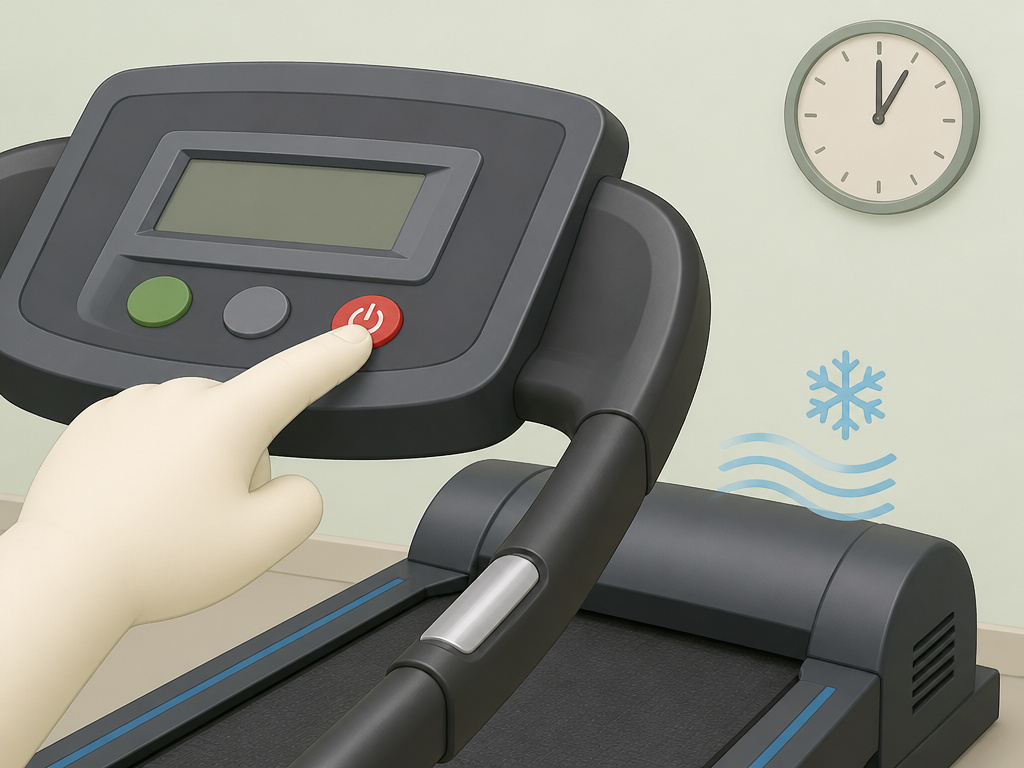
One hour. That is the longest continuous session the Kogan Foldfit manual allows before you power down and let the machine rest for at least 10 minutes.
No other manual in this set states a duty cycle at all. The Sole F85 is silent on it. That gap matters, because a home machine has a motor and a controller with a thermal limit whether or not the manual mentions it.
The Lubrication Interval Nobody Checks
Kogan ties belt lubrication to weekly hours rather than to a calendar. Light use, meaning under 3 hours a week, means lubricate every 10 months. Heavy use, over 7 hours a week, means every 5 months.
If your treadmill lives in a spare room and you walk less than 3 hours a week, put a lubrication reminder in your calendar for 10 months out. Nobody remembers this on their own.
Two error codes are worth knowing by name. E5 is overcurrent: Kogan says let the machine cool before restarting and check that the user is under the 90 kg limit. A burnt smell is a different category entirely. Kogan says stop using the machine and contact support. That smell is the one signal you should never walk past, and it reaches you before any error code does.
Form Cues That Beat Any Speed Setting
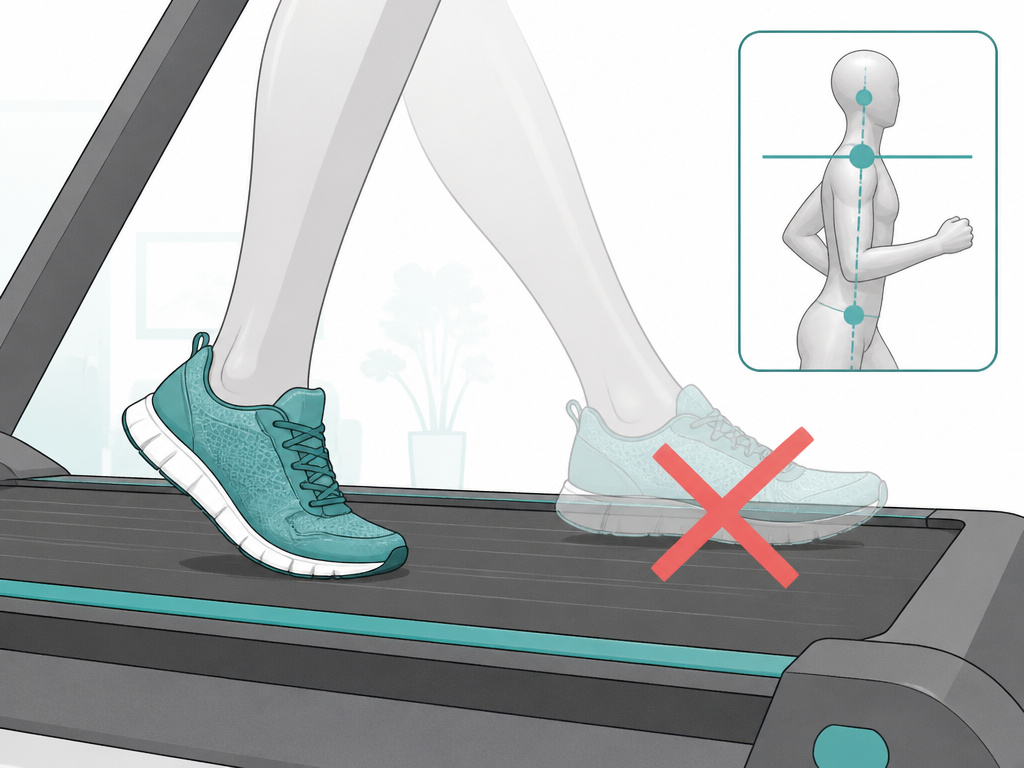
Your heel lands well in front of your hips, the belt jerks, and you grab the rails to steady yourself. That is over-striding, and it is the first thing to fix.
Woodway treats a heel landing as the tell. Its manual says to strike the running surface with the mid-foot or forefoot, and that landing on the heel means you are over-striding and should shorten the stride.
Foot Strike and Arm Swing
- Land mid-foot or forefoot. A heel strike out in front of your hips is the signature of a stride that is too long.
- Shorten the stride instead of reaching further forward. Reaching is what puts the heel down first.
- Keep your head, shoulders and hips stacked. Woodway warns against leaning forwards or backwards from the waist; keep your head, shoulders and hips in line.
- Arms relaxed at your sides when walking, with a loose 90-degree elbow bend when running.
- Hands stay out of the centre line and your shoulders stay level rather than swaying side to side.
Shortening the stride is a two-minute change that alters how the whole session feels. Most people fight the belt for weeks because nobody told them.
Woodway also recommends a warm-up before each workout and a cool-down after, with basic leg stretching before and after training if possible. That is a commercial manual covering its bases, and the advice still holds: one session with a trainer early saves months of guessing.
Where the Manuals Actually Disagree
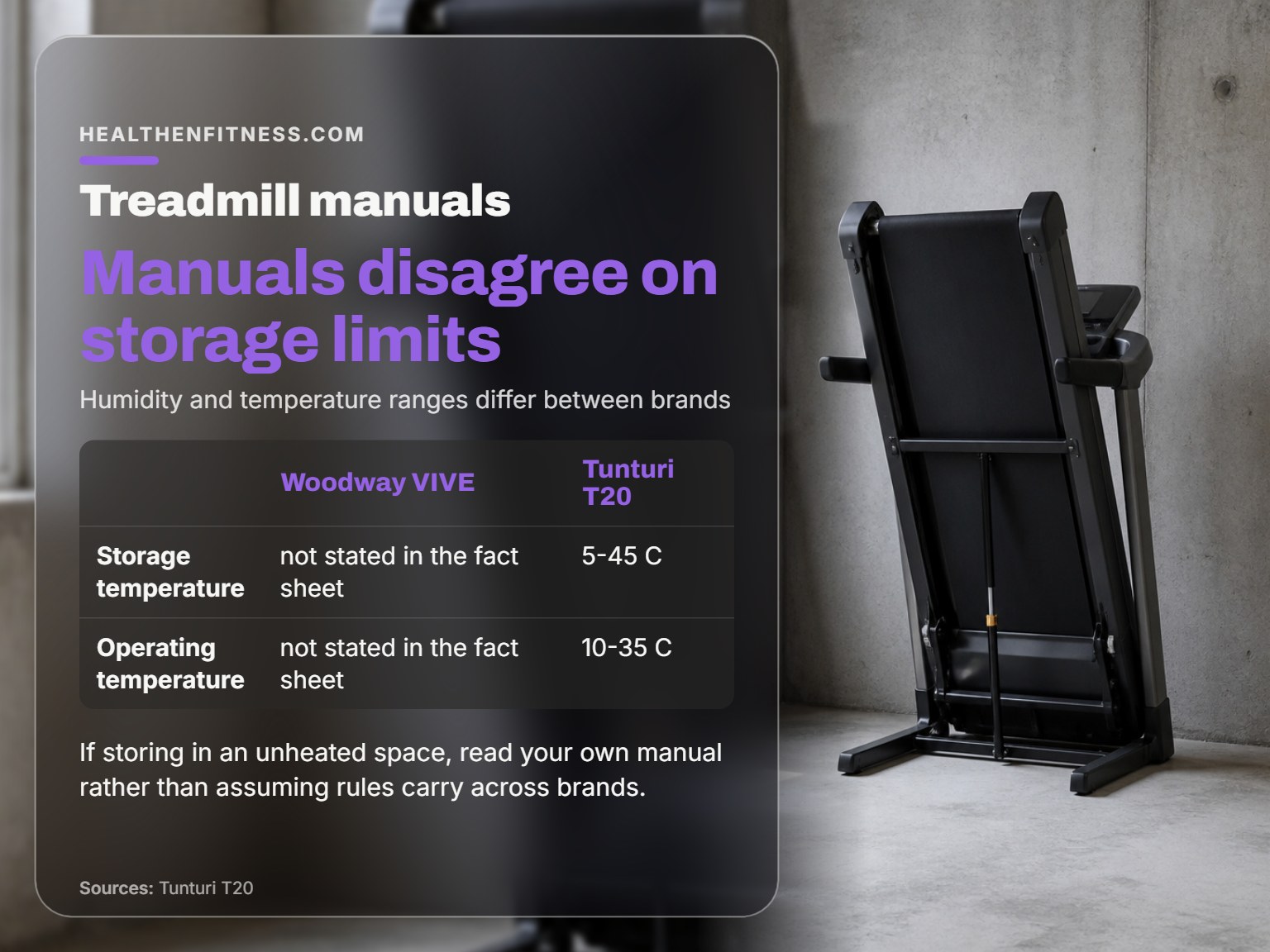
Woodway and Tunturi print opposite humidity limits for the same storage question, and the gap is wide enough to matter.
| Parameter | One manual says | Another says |
|---|---|---|
| Storage humidity | Woodway VIVE: 40-95% RH, non-condensing | Tunturi T20: never above 80% |
| Storage temperature | Woodway VIVE: not stated in the fact sheet | Tunturi T20: 5-45 C |
| Starting position | Sole F85: feet on the running belt | Kogan Foldfit: feet on the side rails |
| Continuous use | Kogan Foldfit: 1 hour, then rest 10 minutes | Sole F85: no limit stated |
The humidity and temperature rows matter if your machine lives in a garage. A cold snap that sits inside Woodway’s storage range sits outside Tunturi’s, and neither manual states a warm-up dwell time before you use a machine that has been sitting cold.
Tunturi’s operating range is 10 to 35 degrees C, with humidity never above 80 percent. If you are storing in an unheated space, read your own manual rather than assuming the rules carry across brands.
Easy to miss: Folding a Tunturi T20 at anything other than zero incline damages the folding mechanism. The manual is explicit that the incline must be at 0 before you fold.
The continuous-use row is the one worth checking on your own machine. Only Kogan states a limit, which means a machine that stays silent on it gives you no stated protection either.
The Beginner Mistakes That End the Habit
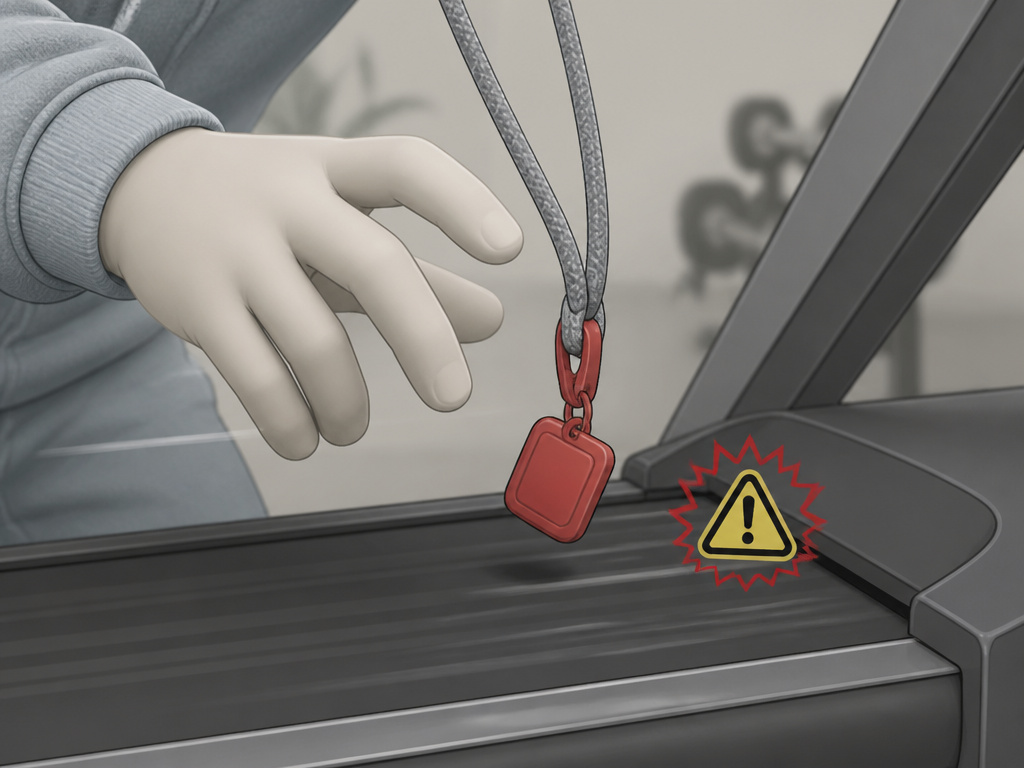
Treadmill habits tend to die from small annoyances. A loose hoodie, a belt that jerks, a key you cannot find at 6am.
- Stepping on or off while the belt is moving. Kogan bans jumping on or off a moving belt outright, and that includes a slow one.
- Walking in loose clothing. Kogan’s warning is specific: nothing loose enough to get caught in the machine.
- Training through pain, dizziness or shortness of breath. Kogan says stop immediately and see a medical professional before continuing.
- Using the machine when you are unwell, exhausted, or straight after a meal. Kogan lists all three as reasons to stay off it.
- Ignoring a burnt smell. Stop, unplug, and contact support.
Woodway lists a doctor visit before intensive training if you are over 40, have a heart condition, are overweight, or have not exercised for several years, while Kogan asks for a consult before any new program. Woodway lists those triggers for intensive training. Kogan asks for a consult before any new program.
A treadmill makes all three easy to commit in private.
When 30 minutes of walking stops feeling like work, a guide on start running as a beginner is the logical next step, and it is a smaller jump than it looks.
Frequently Asked Questions
Why does my treadmill show an E7 code?
The Tunturi T20 shows E7 when the safety key is not in the correct position during start-up. Reseat the key in the console slot and try again. If the code clears, the console was fine and the key was the whole problem.
How fast should a beginner walk on a treadmill?
The manuals do not print a speed for beginners. They print a heart rate band: 50 to 60 percent of maximum heart rate, which is 220 minus your age times 0.6 at the top end. Walk at a pace where you could hold a conversation and you are inside the band without watching the number.
Can I use a treadmill every day?
The Tunturi T20 prescription is at least three sessions a week at 30 minutes each, not daily. If you own a Kogan Foldfit, the per-session limit is one hour of continuous use followed by at least 10 minutes powered off. That is a session limit, not a daily one.
Where should I put a treadmill in my house?
On a firm, level indoor surface, per Kogan. Woodway requires 80 inches (2 m) of clearance behind the machine. Tunturi caps operating temperature at 10 to 35 degrees C and humidity at 80 percent, so an unheated garage in a cold climate falls outside its stated range.
What does the safety key actually do?
It completes the console circuit. Remove it and the drive motor loses power immediately, which is why the Tunturi T20 stops the moment the key comes out. It doubles as an access lock, since the Sole F85 will not run without it seated.
Is a treadmill safe if I have a pacemaker?
Tunturi says consult a physician before using a heart rate chest belt if you have a pacemaker. The chest belt transmits to the console, and the manual treats a pacemaker as a reason to get medical clearance first rather than a reason to avoid the machine entirely.
The Bottom Line
Do this today: find the safety key, clip it to your waistband, and walk for 30 minutes at a pace where you could hold a conversation. That is the entire beginner program, and it fits inside the Tunturi beginner band without a single interval.
When 30 minutes at that pace stops feeling like effort, keep the three sessions a week and make one of them harder rather than making every session harder. Turning every walk into a hard one is the mistake I see most, and it is the fastest way to make a habit feel like a chore.
None of this covers a machine with a fault. If the belt slips, the console throws a code you cannot clear, or you smell anything burning, stop and get it looked at. Woodway’s manual is explicit that a defective component gets replaced before the machine is used again.
Start smaller than you think you need to. Thirty minutes of walking beats a 30-day challenge you quit on day four.
