When Is the Gym Least Busy? What the Data Actually Says
This post contains affiliate links. As an Amazon Associate, we earn from qualifying purchases.
The gym is least busy on Sunday and in December, but the quietest hour depends on the building and the source: The Barbell says non-24-hour commercial gyms are least crowded between 12 p.m. And 3 p.m. And after 8 p.m., PerfectGym says gyms are generally least busy from 12 a.m. To 5 a.m., and The Barbell says 24-hour sites are emptiest from 12 a.m. To 5 a.m.
The when is the gym least busy question carries more weight than the hour. PureGym’s own app data names Tuesday as its busiest day and Sunday as its quietest, while a separate survey of commercial gyms puts Monday at the top. Both can be right, because they measured different rooms.
What follows is the day, the month, and the hour, with the source named each time so you can see where the numbers come from. Then the part that actually decides it: how to read your own gym in about ten minutes, and what to do when the only slot you have is 6 p.m.
Key Takeaways
- Sunday is the quietest day in PureGym’s app data, and December the quietest month, with the Sunday before Christmas the emptiest day of the year, though other sources disagree on which day and hour are quietest.
- Weekday crowds cluster between 4 p.m. And 7 p.m., with a second band from 8 a.m. To 11 a.m.
- Sources disagree on the busiest day: PureGym says Tuesday, The Barbell says Monday, and Iowa State’s data shows both running heavy.
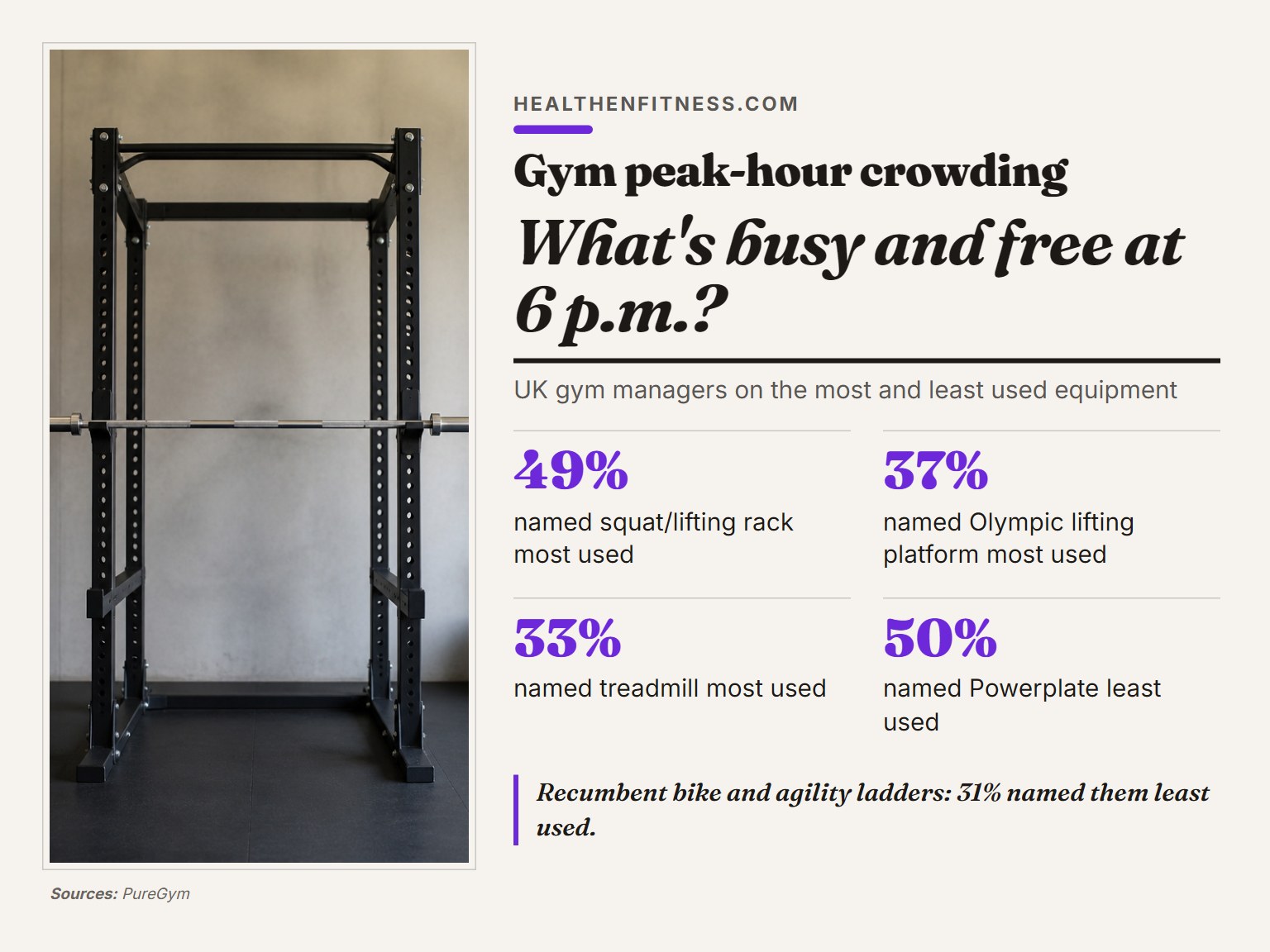
- At peak hour, skip the rack and the treadmill. 50% of UK gym managers named the Powerplate the least-used machine in their buildings.
- A first visit works better short and dull: a few exercises, a quiet slot, and a walk around the floor before you touch anything.
When Is the Gym Least Busy? It Depends on Which Gym You Mean
The quietest hour at your gym is not the quietest hour at the gym across town. National averages are a starting point, and that is all they are. Here is the shape most commercial gyms follow.
Gym attendance follows a predictable weekly curve. Commercial facilities peak between 4 p.m. And 7 p.m. On weekdays, with a secondary mid-morning band from 8 a.m. To 11 a.m. Quiet windows cluster in the early afternoon and late evening, though individual sites vary enough that local data beats any national average.
That curve shows up in a commercial-gym survey reported by The Barbell, while PureGym’s own app data names Tuesday as its busiest day and Sunday as its quietest. They agree on the weekday peak. They part company almost everywhere else.
| Source | Quietest window it names | Busiest window it names |
|---|---|---|
| PureGym (app data) | Sunday; December | Tuesday; February |
| The Barbell (survey plus Google Maps) | 12-3 p.m. And after 8 p.m. | 4-7 p.m. Weekdays |
| PerfectGym (vendor blog) | 12 a.m. To 5 a.m. | 4-7 p.m. |
| State Gym, Iowa State (facility data) | Friday; weekends | 4 p.m. Peak, about 1,300 visitors |
Why the Quiet-Hour Charts Disagree
Each source measured a different population, which explains most of the gap. PureGym counted check-ins through its own app, so it skews toward people who plan sessions in advance. The Barbell combined a survey with Google Maps “Popular Times,” which reflects walk-in traffic at whatever gyms the authors sampled. PerfectGym writes for gym operators and leans on vendor data.
Different rooms, different answers. Working out your own best time of day to work out takes your own check-in data, not a national chart.
I’ve stopped trusting any single chart for this. Two gyms four miles apart can have completely different Tuesday afternoons.
The Day-of-Week Split: Tuesday, Monday, or Sunday?
Pick your day before you pick your hour. The day-of-week disagreement is the widest gap in the data, and it is worth seeing plainly.
- PureGym’s app data names Tuesday as the busiest day and Sunday as the quietest.
- The Barbell’s survey puts Monday first, with peak hours stretching from 4 p.m. To 8 p.m., and calls Friday the least crowded weekday.
- Iowa State’s State Gym data shows Monday and Tuesday both running heavier, with Friday as the slowest weekday.
- Northwestern’s Blomquist gym breaks the Friday rule entirely. Its busiest window is 3 p.m. To 5 p.m. On Fridays.
So Tuesday and Monday are both defensible, and Friday is either the calmest weekday or the worst two hours of the week depending on which building you walk into.
Easy to miss: A “quietest day” label is an average across a whole day. A gym can be slowest on Friday overall and still have a 4 p.m. Peak of about 1,300 visitors that afternoon. Judge the hour you’ll actually attend.
My own habit is to take Wednesday or Thursday and ignore the Monday-versus-Tuesday argument entirely. Both sit in the middle of the pack in every dataset here, and neither has ever been so crowded that I left.
What January Does to a Gym, and Why February Catches People Out
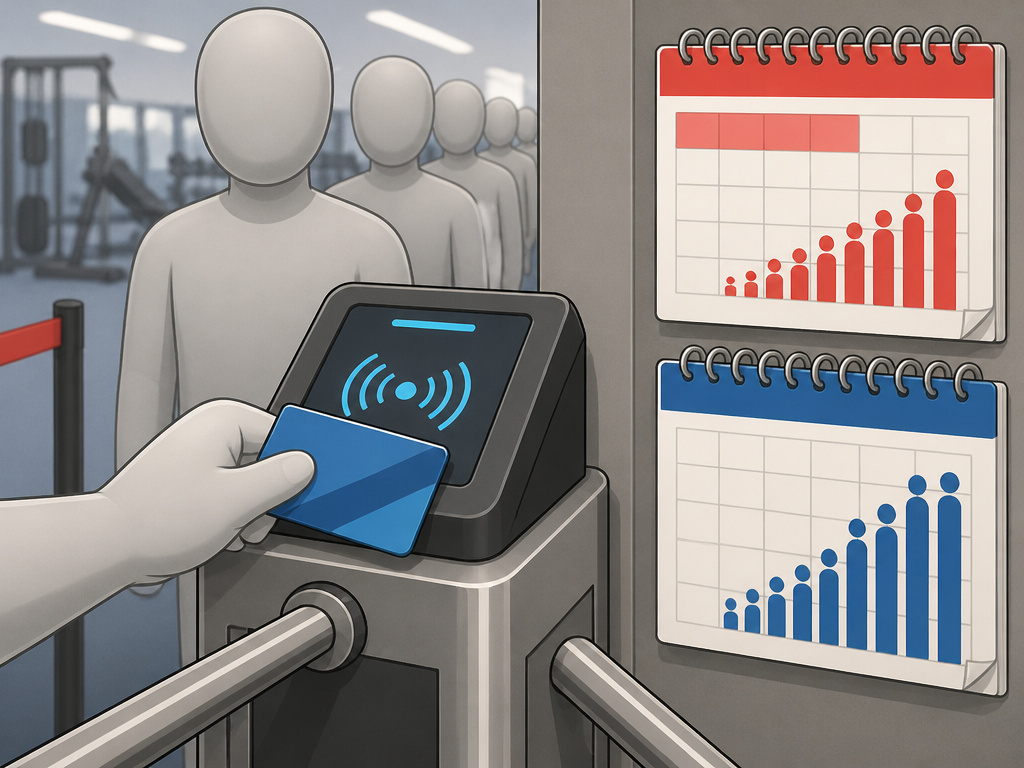
More than 12% of gym members join in January, against an 8.3% monthly average across the year, according to IHRSA research cited by The Barbell. That is roughly half again the normal monthly intake, and it lands in a four-week window.
The month question splits three ways:
- PureGym’s app data puts the busiest calendar month in February, with December the quietest.
- PerfectGym reports January as the busiest month across UK gyms, citing 4GLOBAL DataHub figures showing a 28% activity increase over December and a 10% edge over October, November and December combined.
- The Barbell notes IHRSA’s anecdotal read that March edges out January as the busiest attendance month, because new members from three months stack up.
Three sources, three answers, and each one is describing the same phenomenon from a different angle. Joining is a January behavior. Attending peaks later, once the joiners actually start showing up.
If your gym sits near a university, expect the January rush to last longer. Campus facilities stay busy until the term ends, and Berkeley’s entry data confirms the gym is busier when school is in session.
The other number worth holding onto: IHRSA reports that only 20% of January’s new joiners are still attending in July. Whatever crowd you’re dodging in February thins out considerably by summer.
Campus Gyms, 24-Hour Chains, and the Facilities That Break the Pattern
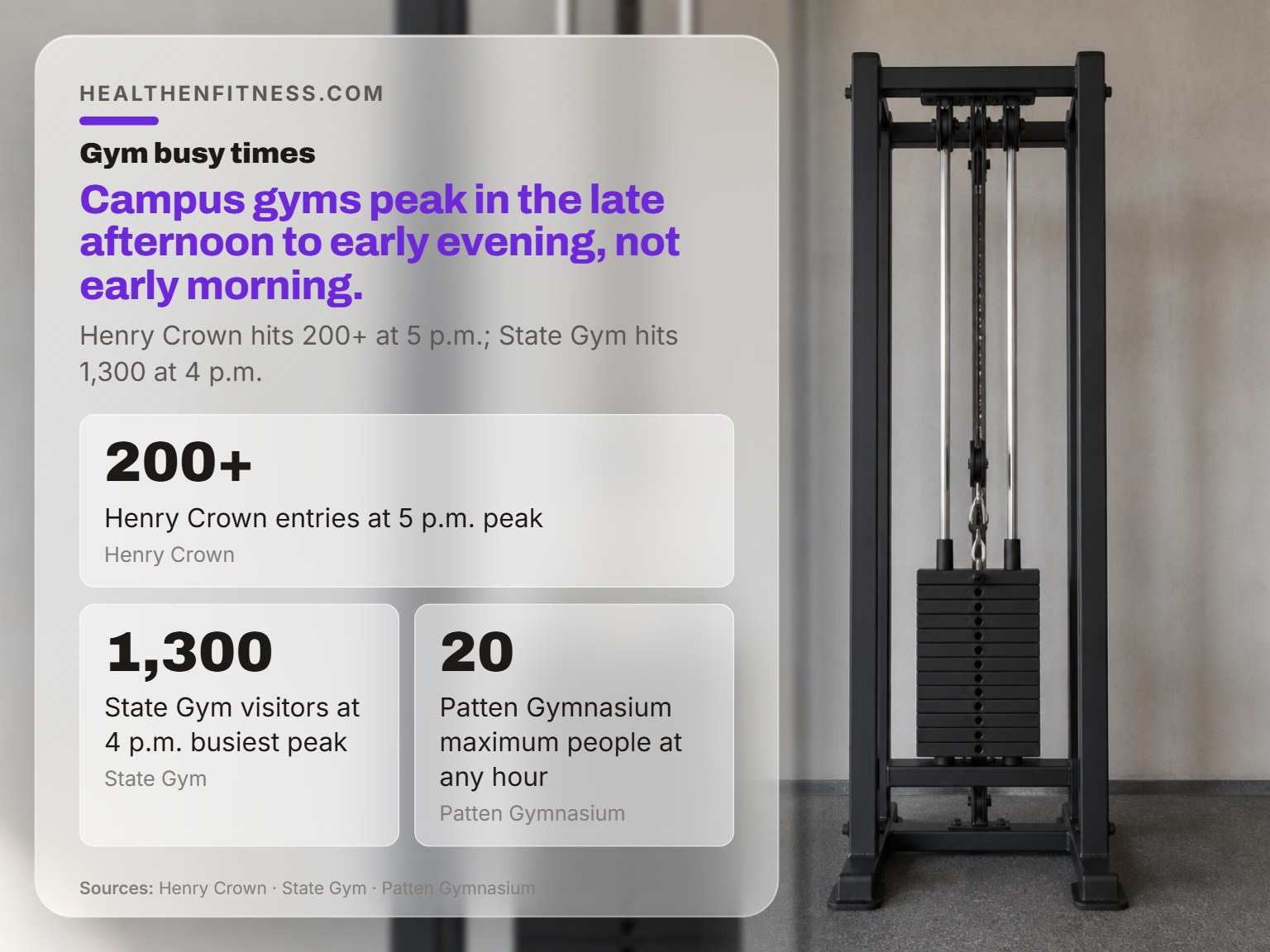
It’s 5 p.m. At Henry Crown and more than 200 people are inside. At Patten, on the same campus, the hourly count never climbs past 20.
Those two buildings sit minutes apart, and they might as well be in different cities. Northwestern’s check-in data shows Henry Crown peaking at 11 a.m. With roughly 70 to 100 entries, then again at 5 p.m. With over 200 people. Between 12 p.m. And 3 p.m. It drops below 70 on average, and the room sounds different. You hear the cable stack settle instead of a dozen plates landing at once.
Blomquist runs a wider peak, 3 p.m. To 6 p.m. On weekdays, which spreads the crowd out enough that it rarely reaches critical mass. Patten is the outlier: at most 20 people at any given hour, visitable pretty much any time without hassle.
Campus Gyms Run on a Different Clock
State Gym at Iowa State is open 6 a.m. To 11:59 p.m. Monday through Thursday, 6 a.m. To 10 p.m. Friday, 8 a.m. To 6 p.m. Saturday, and 8 a.m. To 11:59 p.m. Sunday. According to Iowa State’s State Gym figures, it averages more than 1,000 visitors around 6 a.m. On some weekdays, dropping to over 500 by 7 a.m. The busiest peak, around 4 p.m., sees about 1,300 visitors.
That 6 a.m. Number is the one that should reset your assumptions. Early morning is the second-heaviest band at a campus facility, which is close to the opposite of what the commercial-gym charts suggest.
The Berkeley analysis of Berkeley RSF entry data, covering January 2014 through April 2016, found the same term-time effect: the gym is busier when school is in session, full stop.
The 24-Hour Gym Exception
A 24-hour gym changes the arithmetic entirely. The Barbell’s survey found 24-hour commercial gyms are least busy from 12 a.m. To 5 a.m., which is not a useful window for most working adults but is genuinely empty.
The Barbell also flags three facility types where the standard chart fails outright: gyms near a large employer, which get a lunch-hour rush that inverts the “12-3 p.m. Is quiet” rule; gyms built around group classes or personal training, where peak is set by the timetable rather than walk-in traffic; and college gyms, which run later into the evening.
I’d take a campus gym at midday over a commercial gym at 6 p.m. Every time. The crowd is dense but predictable, and predictable is what you want when you’re new and still working out where things are.
How to Find Your Gym’s Quiet Hours in About Ten Minutes
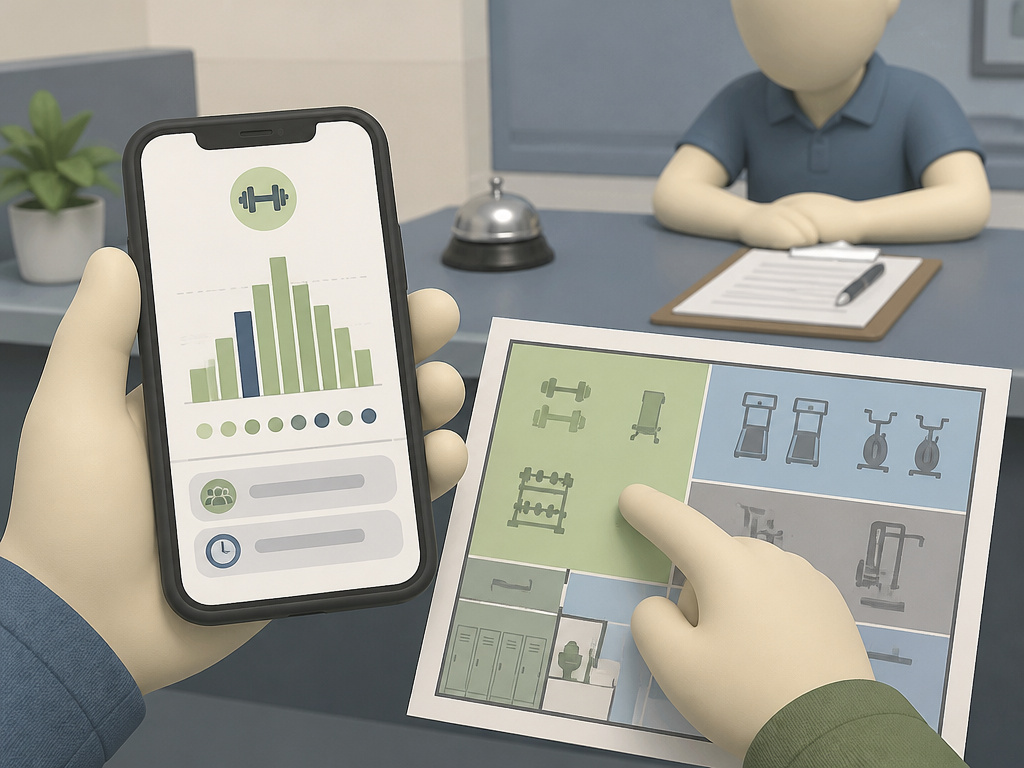
Three things beat any national chart: the app, the map, and the front desk.
- Check the gym’s own app first. PureGym’s app carries a live attendance tracker, and the company advises using it to plan visits. Skip this and you’re guessing from an average that may not describe your building at all.
- Pull up Google Maps “Popular Times” for your exact address. The Barbell recommends this for a reason: peak hours shift by location, and a gym next to a big employer gets a lunch rush a residential one never sees.
- Ask the front desk for the two quietest hours, one weekday and one weekend. Staff watch the door all day and will usually just tell you. Skip the question and you’ll default to the same 6 p.m. Slot as everyone else.
- Walk the floor at the time you’re considering. A short walk-through tells you whether the racks are free and how the room feels. Skipping this is how people end up paying for a membership they use twice.
Walking the floor is the step people skip, and it’s the one that matters most on a first visit. You’re not gathering data at that point. You’re letting the room stop being unfamiliar.
What to Do When the Only Slot You Have Is Peak Hour
Ever walked in at 6 p.m. And found every rack occupied? I did that on a busy morning once, rushed in, skipped the warm-up because the clock was ticking, and tweaked a hamstring on my first heavy set. It cost me some normal training time. The lesson was about pace: a crowded room sets it for you if you let it.
Fair warning: the fix is not to arrive earlier and hope. The fix is to pick exercises the crowd ignores.
PureGym surveyed its gym managers across the UK on which machines go unused. The answers are unusually consistent, and they line up neatly against what’s busy.
| Equipment | Share of UK gym managers | What it means at 6 p.m. |
|---|---|---|
| Squat/lifting rack | 49% named it most used | Expect a queue; have a backup |
| Olympic lifting platform | 37% named it most used | Busy, but turnover is quick |
| Treadmill | 33% named it most used | Usually the longest wait |
| Powerplate | 50% named it least used | Almost always free |
| Recumbent bike | 31% named it least used | Free even at peak |
| Agility ladders | 31% named it least used | Free, and useful for warm-ups |
That table is the most useful thing here if you train at 6 p.m. Swapping a rack exercise for a dumbbell or machine version costs you less than standing in line. A squat rack at peak hour often has people waiting and a bar that’s still warm from the last lifter.
Squat rack etiquette matters more at 6 p.m. Than at any other hour, and learning how to share equipment at the gym is the single skill that makes peak hour survivable.
Your First Visit Should Be Short and Slightly Boring
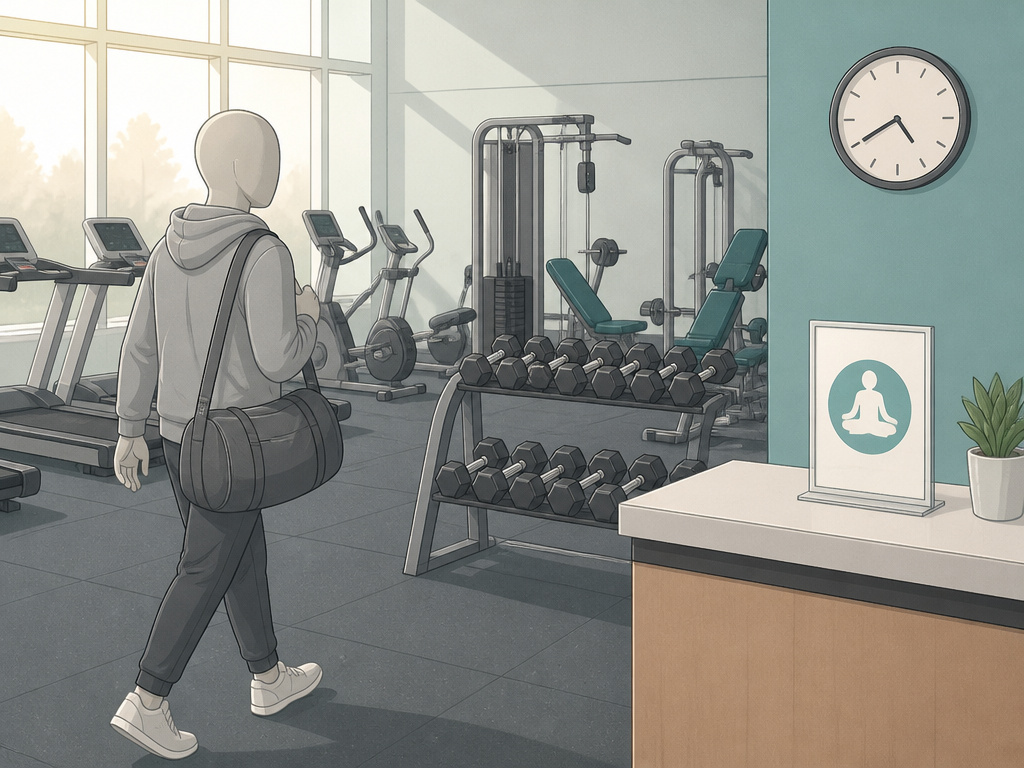
A first visit works best when it’s short and a little dull. Plan three or four exercises, arrive in a quiet window, and walk the floor before you touch anything.
Before you start: A crowded floor is where most first-visit problems happen. Warm up before your first working set, keep the load light enough that you can stop a rep midway, and stay clear of the rack area while someone is under the bar. Cold muscles plus a rushed start is the usual combination.
Start lighter than your ego wants. Your hands will be cold on the bar for the first set, and that’s normal. It’s also the reason the warm-up exists.
Two things are overrated and one is underrated. Booking a personal training package on day one is overrated: you don’t know the room yet, so you can’t tell a good coach from a confident one. Chasing a full, intense session on visit one is overrated too, and it’s the reason people are too sore to come back for a week.
The free orientation or tour is underrated. Many gyms offer one, and it shows you where everything lives so you’re not wandering.
If the crowd itself is the barrier, gym anxiety tips for beginners tend to focus on confidence. Timing is the cheaper fix. A quiet room does most of that work for you.
On brand choice, ask the front desk about quiet hours if quiet matters more than equipment variety. If the 6 p.m. Queue is what’s pushing you toward a home setup, a squat rack is often the piece people buy first.
Frequently Asked Questions
Is it worth changing my workout time just to avoid crowds?
Often yes, especially if you train with free weights or need a squat rack. Moving a session from the 4 p.m. To 7 p.m. Window to early afternoon can cut your wait time dramatically without changing your program. If your only option is peak hour, adjust your exercise order rather than your schedule.
Do quieter hours mean a worse workout?
No. A quieter floor usually means less waiting for equipment and more space to move, which can make sessions faster and more focused. The main tradeoff is fewer staff on hand and sometimes reduced class schedules. Check whether your location shortens staffed hours during the quietest windows before you commit to a new routine.
How can I find my own gym’s quiet hours without official data?
Call the front desk and ask which hours they see the fewest check-ins, then verify with a quick visit. Popular fitness apps and Google Maps list “popular times” for many gyms, which gives you an hourly picture by day. Combining a staff answer with a live visit is usually more reliable than any national chart.
Does the season change when the gym is quietest?
Yes. January and February bring resolution crowds, while December and summer months often thin out. The effect is strongest in the first few weeks of the year, when even off-peak hours can feel busy. If you are starting fresh, aim for late morning or early afternoon during those months.
Before You Go
The question of when is the gym least busy has a different answer in every building. The charts get you to the right neighborhood. The last step is local.
Here’s the trigger worth remembering. If your only available slot sits between 4 p.m. And 7 p.m. On a weekday, stop trying to beat the crowd and plan around it instead. Pick exercises from the least-used list. Accept a shorter session. Treat the first month as a scheduling experiment rather than a training block.
One concession: all of this assumes a general commercial gym. If you’re training for a meet or a specific sport, your coach’s timetable outranks every chart here, and I’m not the person to advise you on peaking.
One thing to try this week: open your gym’s app or its Google Maps listing, find the quietest hour that fits your real schedule, and book a single session in it. Just one. Then check whether the room matched what the data promised.
