
How to Train Obliques Without Widening Waist: Step-by-Step
This post contains affiliate links. As an Amazon Associate, we earn from qualifying purchases.
To train obliques without widening waist, keep the load light and the spine still. A 1984 University of Massachusetts study found sit-up training changed neither abdominal fat cell diameter nor waist circumference, so muscle growth is the only variable you control. Heavy side bends and weighted oblique crunches can thicken the waist; bodyweight rotation builds the side trunk without bulk.
That single variable runs on a loading rule. The obliques grow when they fight meaningful resistance, and they mostly hold their size when the resistance is bodyweight and gravity. Cathe Friedrich puts the threshold at “a substantial amount of resistance” and points out that light weights won’t produce significant muscle development.
What follows is that loading rule, the range of motion that actually trains the trunk, two places where the sources flatly contradict each other, and a weekly dose you can repeat without dreading it when you look up how to train obliques without widening waist.
Key Takeaways
- Skip loaded side bends and weighted oblique crunches if waist width matters to you; Friedrich names both as moves that can thicken the midsection.
- Bodyweight rotation and side planks build the side trunk without adding bulk, because the resistance stays too light to drive much growth.
- Start with 2 to 3 exercises, twice a week, 3 sets of 10 to 12 reps per Healthline’s beginner template.
- Sit-ups don’t strip fat off your midsection. The Massachusetts trial measured abdominal fat cells directly and found no change.
- Crunches train the abs through roughly the first 30 to 45 degrees only; past that, the hip flexors take the movement.
The Crunch Habit That Taught Me Nothing
Three months, most nights, a hundred crunches on the bedroom floor. My waist measured the same at the end as it did at the start, and my neck ached in a way that had nothing to do with my abs.
The University of Massachusetts finding is blunt: sit-up training does not reduce abdominal fat cell diameter, abdominal skinfold thickness, or abdominal circumference. Fat loss happens through a whole-body energy deficit, and no arrangement of trunk exercises changes where the body gives it up first. That is the finding that separates waist size from waist training.
The study is Katch and colleagues, published in 1984, and the subjects did sit-up training. Researchers measured adipose cell diameter, skinfold thickness, and circumference. None of the three moved.
So the first thing to clear out of the way is the spot reduction myth. Crunches don’t burn fat off your middle, and neither does any other exercise, no matter how much it burns on the day.
Friedrich adds the part that actually matters for waist width. The obliques run down the sides of your midsection, so growing them changes your silhouette. She names loaded side bends, weighted oblique crunches, and weighted cable crunches as the specific culprits.
Fat loss and muscle growth are separate systems, and only one of them responds to exercise choice.
Which is the whole reason the how to train obliques without widening waist question gets confusing. You can train the side trunk hard and still see a narrower waist, as long as you stay under the load threshold where the muscle starts adding width.
What Actually Moves in the First 30 to 45 Degrees
The rectus abdominis flexes the spine through roughly the first 30 to 45 degrees of a crunch, which is about the distance from lying flat to your shoulder blades leaving the floor.
Past 30 degrees, the hip flexors take charge. They cross the hip joint and attach high on the lumbar spine, so once the shoulder blades are up they can pull the whole trunk rather than just the ribcage. That’s why Kravitz’s manual rules out full sit-ups: the pressure the hip flexors place on the lower spine isn’t worth the extra range.
The feet-supported version isn’t a safe substitute either. Kravitz, citing Plowman’s 1992 work, notes that bent-knee sit-ups with the feet anchored can stress the lumbar spine in ways that may harm the discs.
| Variation | What’s doing the work | Verdict |
|---|---|---|
| Full sit-up | Hip flexors past 30 degrees | Not recommended |
| Feet-supported sit-up | Hip flexors plus lumbar load | Disc stress risk |
| Supine crunch, unsupported legs | Abs, minimal hip flexor | Best abdominal activity |
| Reverse crunch | Lower abs plus external obliques | Solid, pelvis lifts |
| Standing static hold | Abs holding posture | Good for pelvic tilt |
The trade-off is volume. Because the useful range is so small, Kravitz’s guidance is to add more repetitions and more exercises rather than chase a bigger crunch. Slow the tempo down and make each rep count instead.
Supine crunches with bent knees and unsupported legs maximize abdominal activity while minimizing rectus femoris involvement, per the same manual. That’s the version to keep.
The full Kravitz abdominal training guide is worth reading in the original if you want the citations behind each of those calls.
Do Side Bends Really Widen Your Waist?
Friedrich says yes, at least when there’s real weight in your hand. Kravitz says a 2 to 4 lb dumbbell is acceptable once your technique is clean, while Friedrich warns that substantial resistance on side bends can widen the waist. Both are describing the same muscle, and neither gives a load threshold where growth begins.
| Question | Cathe Friedrich | Kravitz manual |
|---|---|---|
| Light dumbbells on side bends | Won’t build much of anything | 2 to 4 lb, only when needed |
| Heavy side bends | Can widen the waist | Not addressed |
| Quadratus lumborum | Train it with side planks | It steals the side-bend move |
| Compound lifts | More of them, fewer isolation moves | Balance flexion, rotation, lateral flexion |
The quadratus lumborum is where the two positions really split. Friedrich treats it as a muscle worth training, because a weak QL puts extra stress on the lower back and makes you more susceptible to back pain and injury. Her answer is the side plank, which loads the QL without hypertrophying the external obliques.
Kravitz reads the same muscle differently. Citing Rasch and Burke’s 1978 kinesiology text, he notes the QL is more active than the external obliques during side bending. The burn you feel in fast side bends comes from overstretching and speed, not from oblique recruitment.
That burn is a hot pull straight down the flank, and it shows up quickly, long before any oblique would be working hard enough to grow.
Where this goes sideways: Loading a side bend and dropping fast. The weight travels further than the muscle can control, and within a few sessions the soreness moves from your flank into your spine.
And the fat question stays settled either way. Endless side bends won’t remove love handles, because fat comes off systemically. Friedrich’s blunt version: do enough of them and you may develop the muscle underneath, which makes the love handles look more prominent.
If a wider-shoulder, narrower-waist look is the goal, that’s a different conversation than oblique training, and it’s closer to what people mean by training for an hourglass figure.
How to Train Obliques Without Widening Waist: The Work I’d Keep
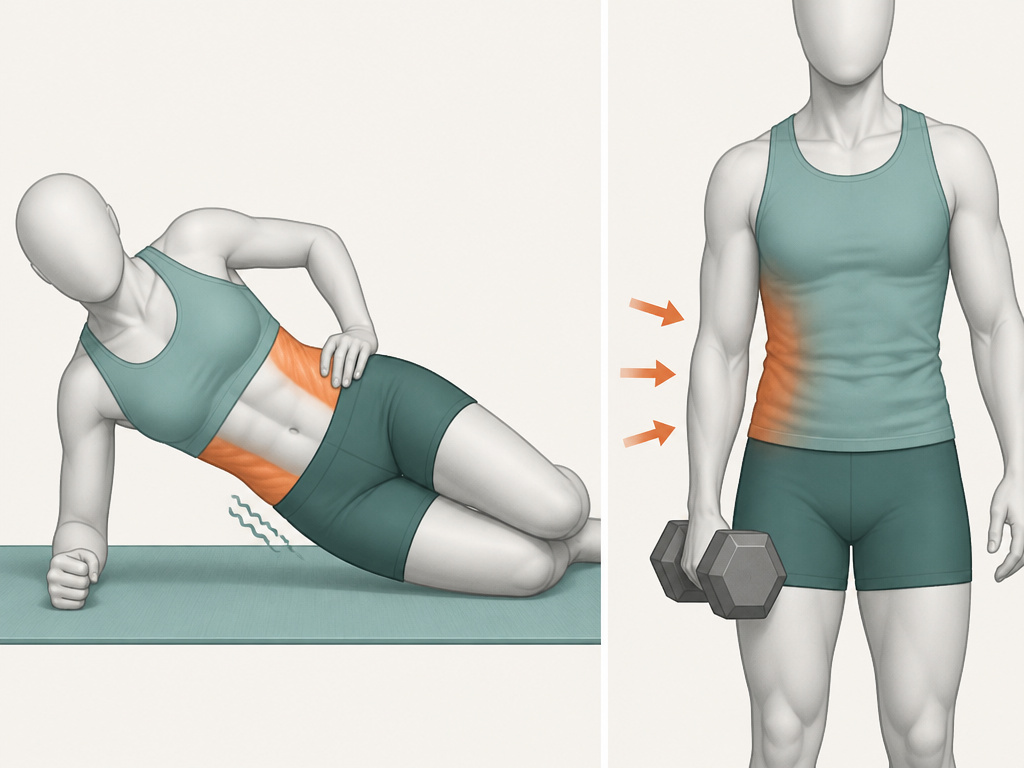
Side planks and carries do more for your trunk than any crunch variation, and they won’t add an inch to your waist.
Before you start: Fast unresisted trunk twists put rotational stress on the vertebrae, so slow the tempo down. If you have a diagnosed disc problem, or back pain that flares when you bend, get a clinician’s clearance before any of this. And keep the neck long in every crunch variation, because pulling on your head loads the cervical spine, not the abs.
The Side Plank Setup
- Set the elbow directly under the shoulder. Drift it forward and the front delt takes the load instead of the flank.
- Bend the knees to roughly 45 degrees and stack the top leg on the bottom one. A staggered setup lets the hip sag, and that sag is where the next-morning low-back ache comes from.
- Drive the bottom hip up until head, hip, and knee form one line. Stop at the first shake; pushing through it usually means the hip drops rather than the obliques working.
- Hold for a clean count, then switch sides. Skipping the switch trains one flank and leaves the other doing nothing.
A side plank that’s actually working shows up as a fine tremble in the bottom hip before you feel anything in the shoulder. If the shoulder is what’s complaining, the setup is off.
Friedrich’s reasoning for the side plank is that it’s isometric. No weights, no hypertrophy of the external obliques, and it still loads the QL and the other muscles that protect the back. The side plank form details matter more than the hold time.
Then there’s the carry, which is the most underrated trunk exercise in any gym. One dumbbell, one side, walk until the grip gives out. The obliques spend the whole set resisting a sideways pull, which is exactly the job they’re built for.
A suitcase carry trains the side trunk to resist movement rather than create it, and resisting is the skill that keeps your spine steady under a load.
For the anti-rotation side of things, a TRX Suspension Trainer handles the rollout variation well, and the core bracing technique you use on carries transfers straight into your squats and deadlifts.
How Often Should You Train Obliques to See a Change?
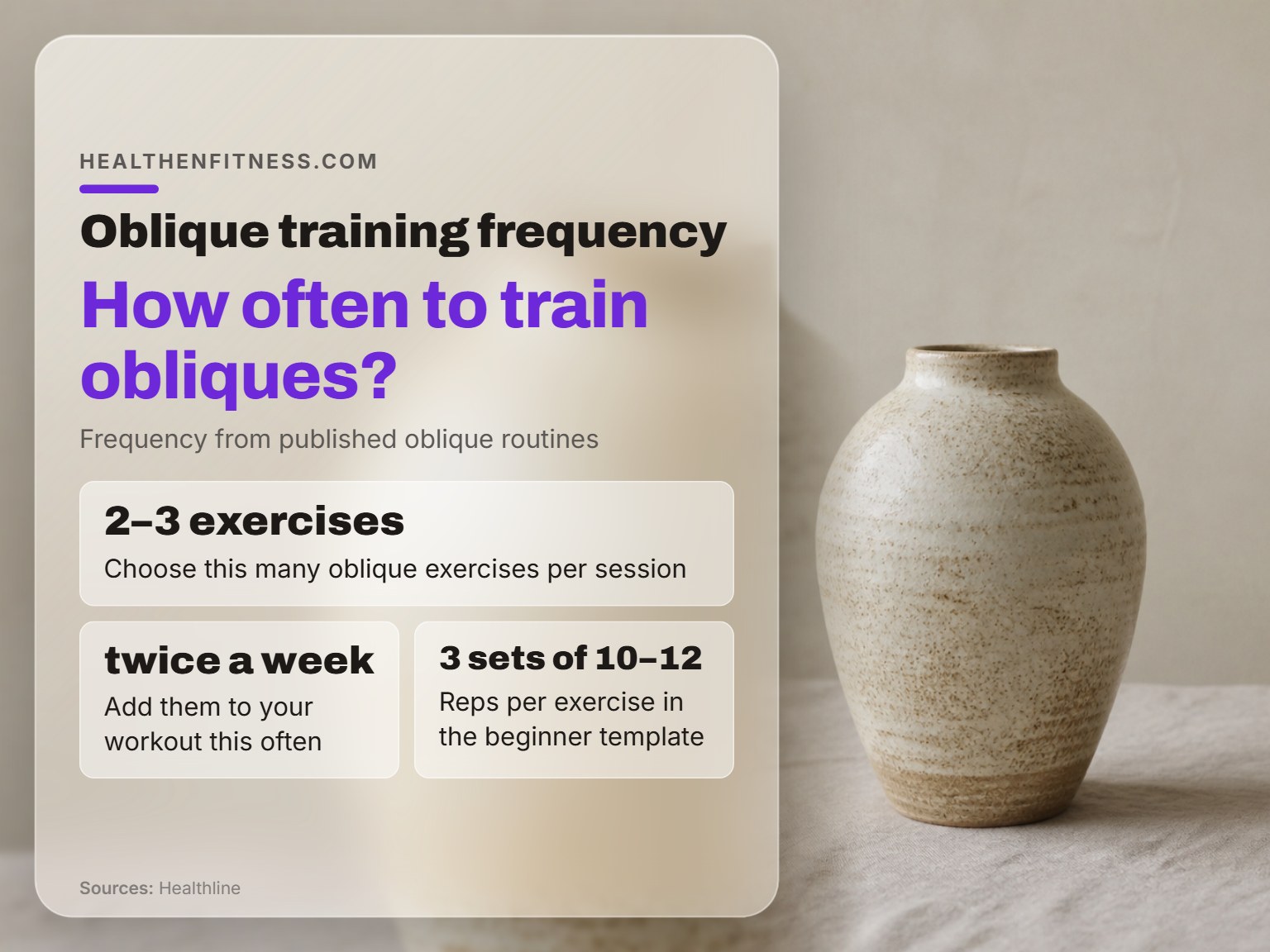
Two to three exercises, twice a week, three sets of 10 to 12 reps. That’s Healthline’s beginner template, and it’s a sane place to start.
The published trials run a bit denser. Gong’s 2015 study had healthy adults doing proprioceptive neuromuscular facilitation patterns at 3 to 5 sets a day, three times a week, for six weeks, and found thickness changes across all three lateral abdominal muscles.
The interesting result is about direction rather than volume. Jung and Lee randomized 26 healthy adults to hip resistance applied straight versus diagonally, and measured the transversus abdominis, internal oblique, and external oblique by ultrasound.
The diagonal group won on the deep layer. Between-group significance came in at P=0.018 for transversus abdominis percentage thickness change and P=0.018 for the thickness ratio. No significant between-group result was reported for the internal or external obliques.
That’s a smaller finding than the internet makes of it. The hip stabilization lateral abdominal study is a 26-person trial, and it didn’t measure waist circumference at all. Neither did Gong’s.
Two to three sessions a week, held for six weeks, is the smallest dose with published measurement behind it. Anything shorter is guesswork.
The mechanism is worth knowing. The obliques’ fibers run diagonally, so a diagonal resistance line loads more of them than a straight pull does. That’s why the PNF patterns abdominal muscle study found diagonal patterns outperformed single-plane training, and why the rotation work below earns its place.
If you want a menu to pick your two or three from, this list of oblique exercises covers the bodyweight end of it.
Rotation Work That Earns Its Place, and the Fast Version That Doesn’t
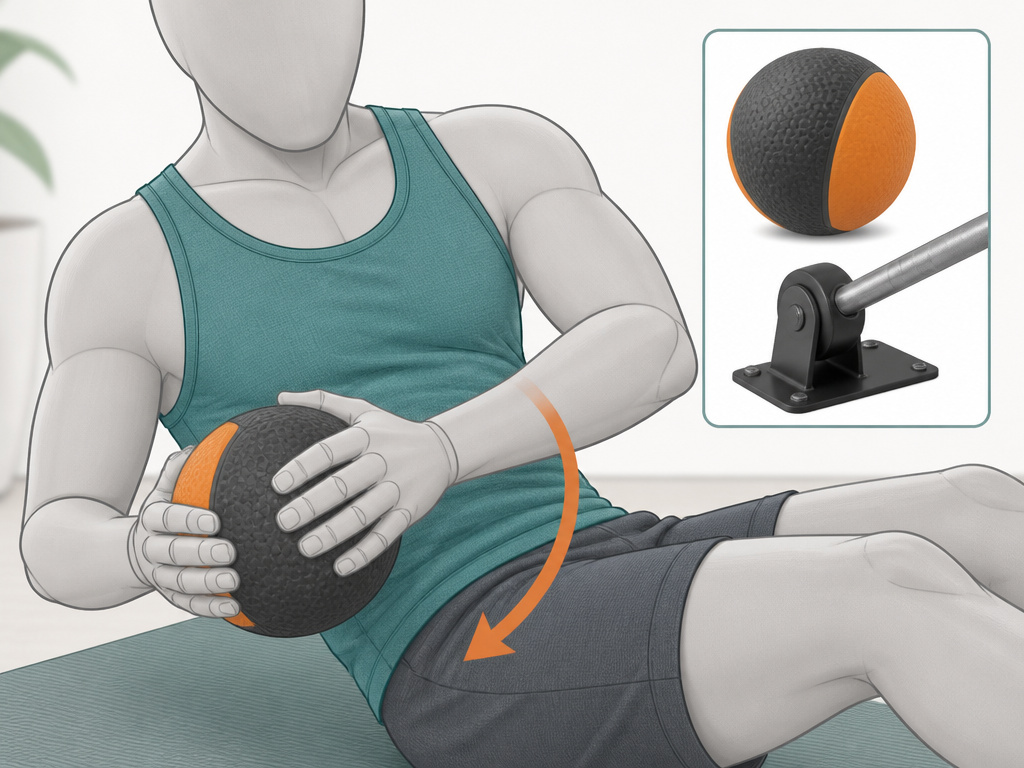
The rotation everyone warns you about is fine at bodyweight and a bad idea at speed.
- Russian twists. Bodyweight, controlled, heels down if the low back complains. Good Russian twist form is slow on the way down, not fast on the way across.
- Bicycle crunches. Friedrich notes these use no weight, so significant oblique development and a boxy waist are unlikely.
- Windshield wipers. Same reasoning, and the same rule about control.
- Medicine ball side toss. Stand 3 to 4 feet from a solid wall and keep the torso tall through the throw.
The medicine ball is where I’d spend a little money. A Perform Better medicine ball with a textured shell grips better in sweaty hands than the smooth ones, which matters when you’re catching a rebound.
For landmine rotations, Rogue’s landmine attachment turns any barbell into a rotation station, and the arc keeps the load on a diagonal rather than straight through the spine.
Easy to miss: Landmine and cable rotation stations are easy to use badly. Kravitz recommends a qualified trainer check your technique first, because a rounded spine under rotation is where the tweak happens.
Kravitz’s warning about the unloaded version is the one people skip. Fast, unresisted trunk movements can create undesirable rotational stress and wear and tear on the spinal vertebrae. Speed without load still costs you.
Where the Experts Split: Compound Lifts vs Direct Ab Work
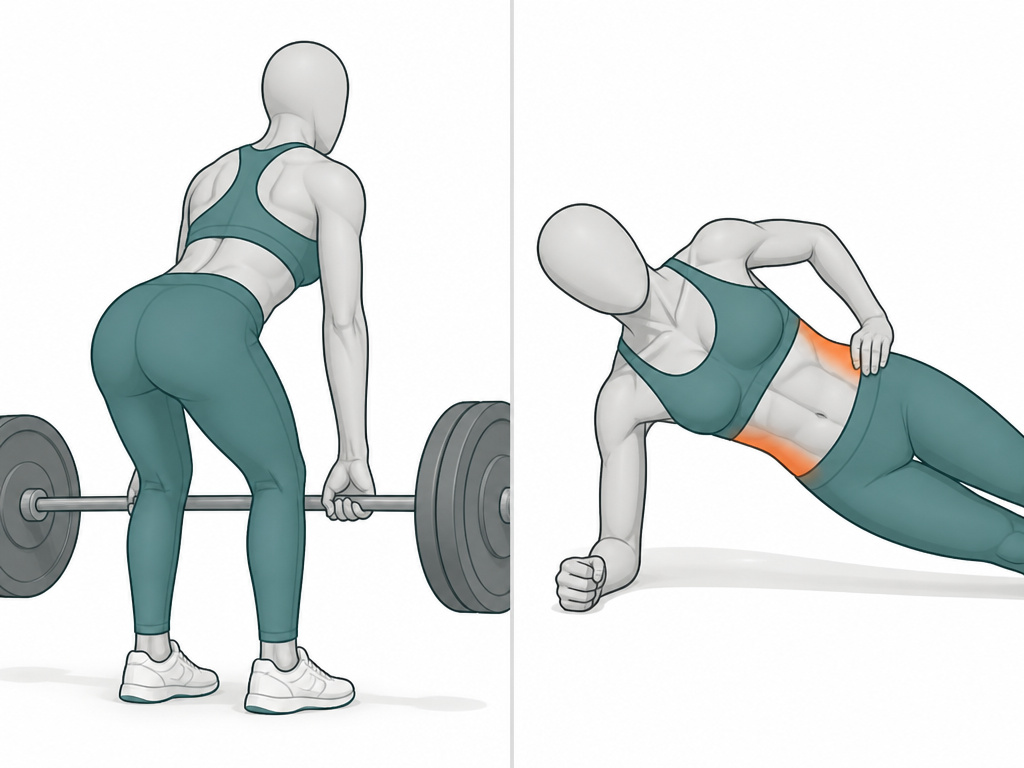
Friedrich recommends more compound lifts and fewer ab isolation moves, though she also notes that deadlifts and squats activate the abs only relatively weakly.
Her reasoning for compounds is sound on the fat side: squats and deadlifts work multiple muscle groups, burn more calories, and work the back for balance. She also says plainly that deadlifts and squats activate the abdominal muscles relatively weakly, and that planks activate the rectus abdominis and obliques more than either lift does.
That second claim is an EMG comparison she doesn’t source, and it sits awkwardly against her own recommendation. Fair enough, but it’s worth flagging rather than repeating as fact.
Is Spinal Flexion Dangerous?
Friedrich raises the idea that dynamic spinal flexion, as with crunches, may prematurely age the spine and increase disc disease risk. She frames it as “some thought,” which is honest, and that’s how I’d treat it.
Kravitz lands on the other side of the same question. Supine crunches with bent knees and unsupported legs maximize abdominal activity and minimize hip flexor involvement, and the 30 to 45 degree range is where the abs do their real work.
The long-term evidence on crunches and disc disease is thin, and anyone who tells you otherwise is overselling a hypothesis. If your back flares with bending, avoid flexion work. If it doesn’t, controlled crunches within that range are a reasonable tool.
Kravitz’s own prescription is a balance: spinal flexion, rotation, and lateral flexion, all in the back-lying position, done slowly. That’s a more useful target than picking a camp.
Frequently Asked Questions
Will training obliques make my waist bigger?
Only if you load them heavily enough to grow the muscle. Friedrich’s threshold is “a substantial amount of resistance,” and she notes light weights won’t produce significant development. Bodyweight rotation, side planks, and carries stay under that line for most people.
Can I lose belly fat by doing oblique exercises?
No. The 1984 University of Massachusetts trial found sit-up training changed neither abdominal fat cell diameter, skinfold thickness, nor abdominal circumference. Fat comes off through a whole-body energy deficit, and where it comes off is not something you choose.
Are Russian twists bad for your waist?
At bodyweight and controlled tempo, they’re fine. The risk shows up when you add speed or heavy resistance, because fast unresisted trunk rotation creates rotational stress on the vertebrae. Keep the reps slow and the load modest.
How many days a week should I train obliques?
Two to three. Healthline’s template uses 2 to 3 exercises twice a week at 3 sets of 10 to 12 reps, while Gong’s trial ran three sessions a week for six weeks. Both are reasonable, and consistency matters more than the exact count.
Do squats and deadlifts train your obliques enough?
Partly. Friedrich says compound lifts do activate the abs, but relatively weakly, and she rates planks higher for rectus abdominis and oblique activation. Treat compounds as a base and add two direct moves rather than relying on them alone.
The Bottom Line
Here’s the trigger that decides it: if your side-bend work involves a substantial amount of resistance, drop it. That’s the load range where Friedrich’s warning applies, and a suitcase carry gives you the same sideways resistance without the waist-width trade-off.
Do this today: pick two moves from this article, put them on the calendar twice a week for six weeks, and leave the weighted side bends out entirely.
One concession, because the advice isn’t universal. If you throw, row, or play a contact sport where a thicker trunk is an asset rather than a liability, the calculus flips and loaded rotation work belongs in your program. For everyone else chasing a steadier back and a waist that doesn’t grow, the boring version wins. Keep it simple and keep showing up.
