
10 Best Footwear For Gym in 2026
This post contains affiliate links. As an Amazon Associate, we earn from qualifying purchases.
For most gym-goers, the Reebok Nano X5 Cross Trainer is the best overall cross-training shoe because it balances stability for lifting with enough cushion for short runs and HIIT. The adidas Dropset Vario is our pick for heavy lifting, while the Nike Metcon 10 Cross Trainer earns the award for versatile workouts.
The challenge with gym shoes is that one pair rarely does everything well. A shoe built for heavy squats often feels like a brick during burpees, and a cushioned runner can wobble under a loaded barbell. You need a shoe that matches your actual training mix.
This guide is research-based. We looked at specifications, manufacturer descriptions, expert round-ups, and patterns in owner feedback to find ten shoes that serve different training styles. Whether you lift heavy, chase a PR in conditioning, or just want a solid all-rounder, there is a pick here for you.
Top 10 Footwear For Gym in the Market
Certain content that appears on this site comes from Amazon. This content is provided "as is" and is subject to change or removal at any time.
The Best Footwear For Gym, Reviewed
Reebok Nano X5 Cross Trainer

What We Like
- Dual-density midsole for stability and comfort
- Breathable Flexweave upper
- Plush collar keeps foot locked in
- Removable insole with arch support
Trade-offs
- At 1.0 lb, lighter than some lifting-focused trainers
The dual-density midsole uses firmer foam in the heel for stability under a barbell and more responsive foam in the forefoot for comfort on short runs or jumps. That balance makes this a true cross-trainer rather than a lifting shoe that punishes your toes on the treadmill. The Flexweave upper breathes well, the plush collar locks your heel down, and the removable insole lets you swap in your own orthotics if needed. If your gym sessions mix squats, lunges, burpees, and a quick jog to cool down, this shoe handles the variety without making you change footwear.
At just one pound, the Nano X5 is lighter than the Under Armour TriBase Reign 6, which some lifters prefer for extra ground feel. The decoupled Metasplit outsole enhances workouts from weight lifting to walking to short runs, so it handles a mix of gym activities without forcing you to specialize. Most people who want one shoe that does everything reasonably well, from the rack to the rower, will find this hits that sweet spot.
adidas Dropset Vario Training Shoe

What We Like
- TPU midfoot torsion system for heavy lifts
- Wide-fit construction enhances stability
- Breathable mesh upper keeps feet cool
- Repetitor Foam for responsive comfort
Trade-offs
- Heavier than many gym shoes at 2.1 pounds
- Not ideal for agility or sprint work
A TPU midfoot torsion system provides targeted support during heavy lifts to help maintain proper form, while the wide-fit construction and low-profile design keep you connected to the floor. Repetitor Foam adds cushion for warmups and accessory moves without sacrificing stability when the bar gets heavy.
At 2.1 pounds, the Dropset Vario is heavier than the Reebok Nano X5 (1.0 pounds), so it feels less nimble for quick lateral drills or high-rep metcons. For sessions that mix lifting with sprints and agility work, the Nano X5 might flow better. But the TPU midfoot torsion system and wide-fit construction are designed to give a stable base for heavy lifts, which is what this shoe prioritizes.
Product photos
Nike Metcon 10 Cross Trainer

What We Like
- Hyperlift plate for heavy lifts
- ReactX foam for energy return
- Wider toe box for toe splay
Trade-offs
- Stiff heel clip can feel rigid during casual walking
The Hyperlift plate under the heel optimizes stability for heavy lifts like squats, deadlifts, and cleans, so your foot stays planted under load. ReactX foam in the midsole increases energy return for high-intensity moves like box jumps and sprints, while flex grooves on the outsole add responsive cushioning. A wider toe box compared to the Metcon 9 lets your toes extend outward, helping you push through your whole foot for better power transfer. This shoe is built for gym sessions that mix heavy lifting with fast conditioning, without forcing a trade-off between stability and responsiveness.
The hyperlift plate under the heel optimizes stability for heavy lifts like squats, deadlifts, and cleans, so you can push hard without worrying about your foot shifting. A wider toe box than the Metcon 9 lets your toes spread out, helping you generate power through your whole foot. The midfoot band secures your foot onto the footbed when you pull the laces, and a sturdy heel cup and lace tuck keep everything locked in, so you can focus on form instead of slipping.
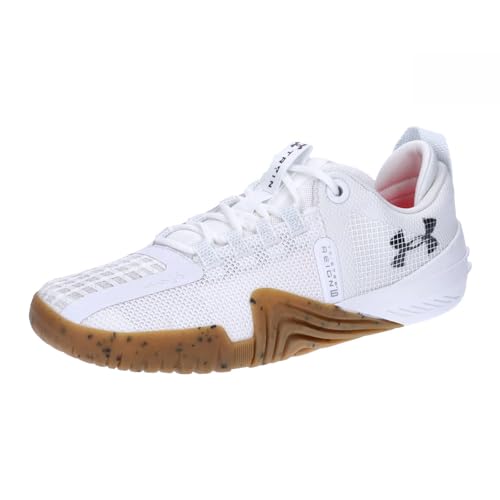
Under Armour TriBase Reign 6 Training Shoe
What We Like
- Strategic rubber under toe box for grip
- Dual-density midsole for support and comfort
- Low-to-ground build for power transfer
- UA WARP upper for secure support
Trade-offs
- At 2.6 pounds, heavier than many gym shoes
- Lacks a wide width option for broader feet
A low-to-ground build and strategic rubber under the toe box create a stable platform for explosive lifts and floor work. The three-point ground contact and UA WARP upper lock your foot in place, so you can push hard during squats, lunges, or burpees without slipping. This shoe suits anyone who prioritizes grip and ground feel during gym sessions, especially moves that demand solid footing like sled pushes or plyometric drills.
The trade-off is weight: at 2.6 pounds, the TriBase Reign 6 is noticeably heavier than the Reebok Nano X5 (1.0 pounds). That extra heft gives you durable construction and a dual-density midsole, but it might not be the first choice if you prefer a featherlight feel for fast-paced circuits. For lifters and floor-work enthusiasts who want maximum traction and stability, this is a purposeful, grounded option.
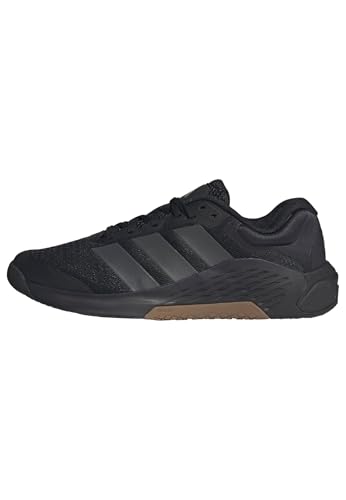
adidas Dropset 4 Power Trainer
What We Like
- Continental rubber outsole for wet/dry grip
- Full-length Repetitor foam for cushioning and stability
- Geofit heel pods lock in heel for support
- Haptic print upper resists abrasion, boosts airflow
Trade-offs
- At 2.1 lb, heavier than several gym cross-trainers
The full-length Repetitor foam in this shoe balances cushioning and stability, so you can move from a heavy squat to a box jump without feeling like you’re sinking into the floor or bouncing off it. That balanced feel, paired with the Continental rubber outsole, grips gym floors whether they’re wet from a spilled bottle or dry. This makes it a natural pick for anyone who wants one pair to handle lifting, climbing, and quick cardio drills. The Geofit heel pods wrap around your heel to keep it locked during lateral moves, and the haptic print upper resists scuffs while letting air flow through, which matters when you’re doing burpees in a warm gym.
At 2.1 pounds, this shoe is noticeably heavier than the Nike Metcon 10, which comes in at 1.0 pound. That extra heft can feel a bit clunky during fast-paced agility work or long treadmill intervals, so if your training is mostly sprinting or plyometric drills, you might prefer a lighter option. But for the lifter who also wants to do rope climbs, sled pushes, and the occasional run without switching shoes, the Dropset 4’s durable build and reliable grip make it a smart, do-it-all choice that won’t let you down mid-workout.
Product photos
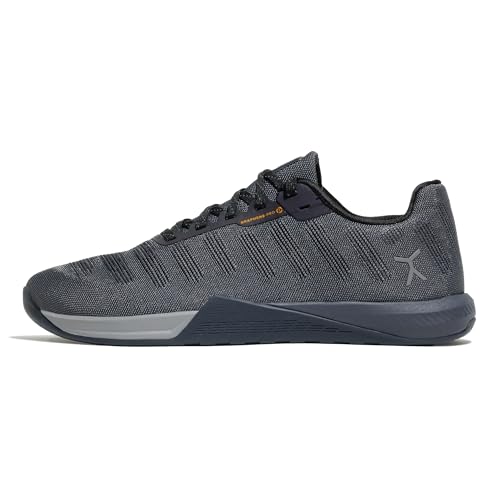
Flux Footwear Adapt Graphene XT Cross Trainer
What We Like
- Zero drop for natural stability
- Wide toe box supports full toe splay
- Graphene outsole for extreme grip
- Breathable ballistic mesh upper
Trade-offs
- Runs small, so sizing up is recommended
- Zero drop lacks cushion for heel strikers
A zero-drop platform and a wide anatomical toe box give you the grounded, stable base you want for deadlifts, cleans, and squats. The graphene-infused outsole grips hard on sled pushes and rope climbs, while the ballistic mesh keeps your feet cool through HIIT and CrossFit. This is a shoe built for lifters and functional trainers who prioritize form and force transfer over plush underfoot padding.
The AdaptSole insole packs over 100 flexible cushioning nodes for natural sensory feedback and soft underfoot comfort, so it works well for long wear and dynamic training, not just short sessions. Reviewers note that if you are used to substantial heel support, this shoe may require some adjustment. It is built for lifters and functional trainers who prioritize form and force transfer over plush underfoot padding.
New Balance 608 V5 Casual Cross Trainer

What We Like
- ABZORB heel crash pad absorbs impact
- Suede leather upper for durable structure
- Phantom Liner reduces interior seam irritation
- Dual density collar supports ankle stability
Trade-offs
- Suede upper retains moisture and is harder to clean
- Runs narrow for wide-footed buyers
The ABZORB heel crash pad and molded PU insert team up to soften every landing, which makes a real difference when you’re mixing treadmill jogs with bodyweight circuits or light dumbbell work. This is a shoe built for someone who wants reliable, all-day comfort without overthinking gear, someone who values a sturdy suede upper that molds to your foot over time rather than a flashy, race-day feel. It suits the budget-minded gym-goer who needs one pair for casual lifting, walking, and daily wear, not the person chasing PRs in a specialized lift or sprint.
Suede leather looks great but doesn’t breathe like mesh, and it’s trickier to wipe clean after a muddy run or a sweaty session. If your priority is a shoe that feels broken-in from day one and can handle a variety of light gym activities without fuss, this is a smart, wallet-friendly call.
PUMA Tazon 6 FM Cross Training Shoe

What We Like
- Engineered midfoot saddle for locked-in fit
- SoftFoam+ sockliner for step-in comfort
- EVA heel pod absorbs shock on impact
- TPU shank enhances stability and control
Trade-offs
- Cushioned feel reduces ground connection for lifting
- TPU shank adds stiffness for casual wearers
The engineered midfoot saddle and built-in TPU shank work together to deliver a locked-in fit and enhanced stability, which helps keep your foot secure during workouts. The SoftFoam+ sockliner provides superior step-in comfort with an extra-thick cushioned heel, so the shoe feels comfortable right away for all-day wear. This combination makes the PUMA Tazon 6 FM a practical choice for gym sessions and everyday activities where a secure, cushioned fit is important.
Product photos
Under Armour Charged Edge Cross Trainer

What We Like
- Charged Cushioning midsole for responsive rebound
- Dual-layer Ortholite sockliner for step-in comfort
- Breathable mesh upper with durable overlays
- Full rubber outsole with pivot traction pattern
Trade-offs
- Leather overlays add durability but reduce breathability slightly
- No stability features for heavy lifting
A compression-molded Charged Cushioning midsole delivers the kind of responsive rebound that makes jumping, lunging, and quick direction changes feel almost springy. That foam is built to hold up over time, so you get that lively feel session after session. The dual-layer Ortholite sockliner adds immediate plushness underfoot, making this a shoe you can slip on and forget about during a long circuit. It’s best for gym-goers who spend more time on dynamic moves, box jumps, burpees, agility drills, than on heavy squats or deadlifts.
At just half a pound, this shoe is lighter than the Nike Metcon 10 (1.0 pounds) and the Under Armour TriBase Reign 6 (2.6 pounds), so it feels nimble for fast-paced workouts. It won’t anchor you under heavy loads. The breathable mesh upper with leather and synthetic overlays holds up during dynamic movements, and the Charged Cushioning midsole uses compression molded foam for responsive landings. If your training leans toward cardio, HIIT, or mixed conditioning, the dual-layer Ortholite sockliner provides comfortable step-in feel right away.
Product photos
WHITIN Hi-Top Barefoot Sneaker

What We Like
- Supportive channel-quilted collar
- Spacious toe box for toe splay
- Zero drop sole for natural position
- Canvas upper with suede details
Trade-offs
- High-top design limits ankle mobility for some lifts
- Canvas upper limits breathability for high-intensity cardio
The channel-quilted collar and high-top silhouette focus on ankle stability, a feature not common in minimalist shoes. The collar provides a supportive wrap around the ankle, which can help you feel secure during lateral moves or standing lifts without the bulk of a traditional training shoe. The spacious toe box allows your toes to splay and relax for superior comfort, and the zero drop sole respects your foot’s natural position while increasing balance and stability. This shoe suits anyone who wants ankle support with a barefoot-style sole, especially for walking, light workouts, and lifting where you want to feel the floor.
The canvas upper gives the WHITIN Hi-Top Barefoot Sneaker an old-school look, but reviewers note it’s not the most breathable for high-intensity sessions where feet heat up quickly. For steady gym work, walking, and lifting where ankle support matters more than airflow, the shoe works well without overcomplicating things.
Product photos
How We Evaluated Footwear For Gym
We started by reviewing the technical specifications and design goals of each shoe: midsole materials, outsole rubber compounds, drop height, weight, and upper construction. Manufacturer documentation told us what each shoe was engineered to do, from power transfer to impact absorption.
Four criteria mattered most for gym footwear. Stability came first, a shoe that compresses under a heavy squat costs you force and safety. Next was versatility: how well does the shoe handle lifting, jumping, and lateral movement? Grip ranked high because slippery floors during deadlifts or sprints are dangerous. Cushioning mattered last, but only in context, too much softness hurts stability, too little makes box jumps punishing.
Every evaluation has limits. This guide synthesizes patterns from expert reviews and verifies them against what owners consistently report. It offers a reliable starting point, but fit and feel are personal, so choosing the right shoes still comes down to your foot shape and training style.
What To Look For In Footwear For Gym
The right gym shoe depends on what you do in the gym. A powerlifter needs different features than a CrossFit athlete or someone who walks on a treadmill. Here is what actually matters.
Look for a flat, stable base if you lift heavy. Prioritize grip and lateral support for HIIT and agility work. Choose moderate cushioning if you mix in short runs. Avoid ultra-cushioned running shoes for lifting, they compress under load and waste energy.
Heel-to-Toe Drop and Stack Height
Drop is the difference in height between the heel and forefoot. A zero-drop shoe (like the Flux Adapt Graphene XT or WHITIN Hi-Top) keeps your foot flat, which many lifters prefer for squats and deadlifts. A 4mm to 8mm drop, common in cross-trainers like the Reebok Nano X5 and Nike Metcon 10, offers a compromise: stable enough for lifting but comfortable for short runs and jumps. High-drop shoes (10mm or more) are better for running but can tilt you forward during a squat.
Outsole Grip and Floor Feel
Grip is non-negotiable for gym floors. The Under Armour TriBase Reign 6 puts strategic rubber under the toe box for traction during lunges and push-press. The adidas Dropset 4 uses Continental rubber for wet-or-dry grip. Look for full-length rubber coverage and a tread pattern that grabs without marking floors. A low-to-ground build, sometimes called a “low stack”, improves power transfer because less foam sits between you and the floor.
Upper Construction and Fit
The upper holds your foot during dynamic moves. Breathable mesh (found on the adidas Dropset Vario and Under Armour Charged Edge) keeps feet cool during high-intensity work. The Reebok Nano X5 uses a Flexweave upper that combines durability with ventilation. Pay attention to the toe box: the Nike Metcon 10 and Flux Adapt offer wider toe boxes for toe splay, which helps with balance. A secure midfoot, like the PUMA Tazon 6‘s engineered saddle, prevents sliding during lateral cuts.
Try shoes on with the socks you wear to the gym. Your toes should have wiggle room, and your heel should not lift during a lunge or squat.
Footwear For Gym Compared
The table below compares key specs and design priorities for all ten picks, so you can see at a glance which shoe fits your training style.
| Product | Weight | Upper Material | Closure / Fit |
|---|---|---|---|
| Reebok Nano X5 Cross Trainer | 1.0 pounds | Flexweave | N/A |
| adidas Dropset Vario Training Shoe | 2.1 pounds | Breathable mesh | Wide-fit construction |
| Nike Metcon 10 Cross Trainer | 1.0 pounds | Open-holed engineered mesh | N/A |
| Under Armour TriBase Reign 6 Training Shoe | 2.6 pounds | UA WARP | Standard tie laces |
| adidas Dropset 4 Power Trainer | 2.1 pounds | N/A | Secure lace with Geofit heel pods |
| Flux Footwear Adapt Graphene XT Cross Trainer | N/A | Ballistic mesh | N/A |
| New Balance 608 V5 Casual Cross Trainer | 0.9 pounds | Suede leather | Lace-up |
| PUMA Tazon 6 FM Cross Training Shoe | 0.8 pounds | N/A | Lace-up with midfoot saddle |
| Under Armour Charged Edge Cross Trainer | 0.5 pounds | Breathable mesh, leather & synthetic overlays | N/A |
| WHITIN Hi-Top Barefoot Sneaker | N/A | Canvas | High-top silhouette |
Frequently Asked Questions
Can I use running shoes for weightlifting?
Running shoes have thick, cushioned heels that compress under heavy loads, making squats and deadlifts less stable. For lifting, look for a flat, firm sole or a dedicated weightlifting shoe with a raised heel for better squat depth.
What is the difference between cross-trainers and weightlifting shoes?
Cross-trainers are designed for mixed workouts, lifting, jumping, and short runs. Weightlifting shoes have a raised heel and a rigid, non-compressible sole for maximal power transfer. A comparison of training shoes helps you decide which type fits your routine.
How should gym shoes fit for lifting?
Your toes should have room to splay for balance, and your heel should stay locked in place during squats and lunges. A snug midfoot prevents sliding. Many lifters prefer a wider toe box, which is why the Nike Metcon 10 and Flux Adapt are popular choices.
Are barefoot-style shoes good for the gym?
Zero-drop, wide-toe-box shoes like the Flux Adapt and WHITIN Hi-Top can improve stability and foot strength for lifting. However, they lack cushioning for high-impact moves like box jumps or running. They work best for strength-focused training, not HIIT or cardio.
What is the best gym shoe for walking on a treadmill?
A cross-trainer with moderate cushioning and a flexible forefoot works well for treadmill walking. The New Balance 608 V5 and Under Armour Charged Edge offer comfortable cushioning for walking, but avoid heavily cushioned running shoes if you also lift. Check our list of shoes for gym and walking for more options.
The Bottom Line
The Reebok Nano X5 Cross Trainer is the best overall footwear for gym because it handles lifting, HIIT, and short runs without compromising on stability or comfort. It is the shoe for anyone who wants one pair that does it all, no swapping between sets.
If your priority is heavy squats and deadlifts, the adidas Dropset Vario gives you the flat, stable platform and TPU torsion system that powerlifters need. For budget-conscious shoppers, the New Balance 608 V5 offers durable comfort for light gym work and daily wear, though it is not built for intense lifting or agility.
The most important factor when buying gym shoes is matching the shoe to your actual training. A versatile cross-trainer works for most people, but specialists, powerlifters, barefoot fans, or high-impact HIIT athletes, should choose the shoe that suits their dominant movement. Your feet and your workout style will thank you.
