
How to Cool Down After a Workout: What Actually Works
This post contains affiliate links. As an Amazon Associate, we earn from qualifying purchases.
Cool down after a workout with 5 to 15 minutes of easy walking or cycling within about an hour of finishing. Keep it under 30 minutes. A 2018 review in Sports Medicine found active cool-downs speed blood lactate clearance but do little for soreness or next-day recovery.
Blood lactate clearance is real, and the review confirms it. What the review also examined was next-day performance, soreness, injury rates, and the long-term adaptive response. Most of those came out trivial or unclear.
What follows is what the evidence supports, what it doesn’t, and how to build a cool-down that fits a real training week.
Key Takeaways
- 5 to 15 minutes of easy movement is the typical cool-down, and the ceiling is about 30 minutes.
- Soreness doesn’t budge: most evidence says active cool-downs don’t significantly reduce muscle soreness.
- Blood lactate clears faster, but muscle-tissue lactate and next-day recovery don’t necessarily follow.
- Cold water is a mixed bag: acute benefit in hot conditions, chronic impairment of strength gains over 12 weeks.
- Sleep beats every recovery gadget on the market, and it’s free.
What a Cool-Down Actually Does (and What It Doesn’t)
Active cool-downs do less than the fitness industry claims.
I used to spend ten minutes on a foam roller after every leg session, convinced it was answering the how to cool down after a workout question. It felt nice under my back. My training log never showed a difference the next morning. Sleep did more for me than any roller I’ve owned.
The narrative review of cool-down effects in Sports Medicine is the most thorough look at this question. It found that active cool-downs accelerate blood lactate clearance, but not necessarily muscle-tissue lactate clearance. Most evidence indicates they don’t significantly reduce muscle soreness. They likely don’t attenuate the long-term adaptive response or prevent injuries.
Active cool-downs performed within approximately one hour of exercise accelerate blood lactate clearance. The effect on muscle-tissue lactate is less clear. Most studies report trivial effects on next-day performance, with some beneficial and a few harmful outcomes. The long-term adaptive response does not appear to be attenuated by an active cool-down.
The review also flagged what it couldn’t settle. It’s unknown whether cool-downs reduce the likelihood of post-exercise illness, syncope, or cardiovascular complications. Cool-downs may partially prevent immune system depression and promote faster recovery of the cardiovascular and respiratory systems.
What most people get wrong: Treating the cool-down as a recovery tool when it’s really a transition tool. The evidence supports the transition back to rest, not the recovery of the muscle.
A foam roller is a nice tool, but it’s not a recovery strategy. Neither is a gym fan pointed at your face. Both make the session more comfortable. Neither changes what happens inside the muscle.
How Long Should a Cool-Down Last?
How long should a cool-down last? Five to 15 minutes covers most people.
The 2018 review describes typical practice as 5 to 15 minutes of low-to-moderate intensity, performed within about an hour of the session. The same review sets the ceiling at under 30 minutes, specifically to prevent substantial interference with glycogen resynthesis.
That glycogen point matters if you train twice a day or refuel between sessions. Go past 30 minutes and you risk interfering with the fuel replacement your next session depends on.
| Duration | What it covers | Risk if exceeded |
|---|---|---|
| 5 to 10 min | Typical practice | None documented |
| 10 to 15 min | Upper end of typical | None documented |
| 15 to 30 min | Extended cool-down | Glycogen interference possible |
| Over 30 min | Beyond the evidence base | Substantial glycogen interference |
If you’re training twice a day, hydration during exercise and glycogen replacement matter more than the cool-down itself. The cool-down is the transition. The refuel is the recovery.
The 5-15 Minute Cool-Down That Fits Real Life
Five to fifteen minutes. That’s the whole window.
Here’s how to cool down after a workout without turning it into a second session.
The 4-Step Routine
- Walk or cycle easy for 3 to 5 minutes. The American Heart Association warns that stopping suddenly causes light-headedness, though the 2018 review notes it is unknown whether cool-downs actually reduce the likelihood of syncope.
- Add 2 to 3 minutes of movement that matches your session. If you squatted, do bodyweight squats. If you ran, walk. Mismatched movement doesn’t hurt, but it doesn’t help either.
- Do 2 to 3 minutes of gentle mobility for whatever feels stiff. The range of motion is real. Soreness isn’t the point.
- Stop while you still feel good. Going past 30 minutes starts to interfere with glycogen resynthesis, which is the fuel replacement your next session depends on.
Start smaller than you think. A five-minute walk after a hard session beats a fifteen-minute routine you skip because it feels like homework.
I watched a newcomer build from ten minutes of exercise to 30 over two months. The same principle applies here: start with 5 minutes and add a minute a week.
Skip it if you feel light-headed or dizzy. Sit down and drink water instead.
Does Stretching During Cool-Down Prevent Soreness?
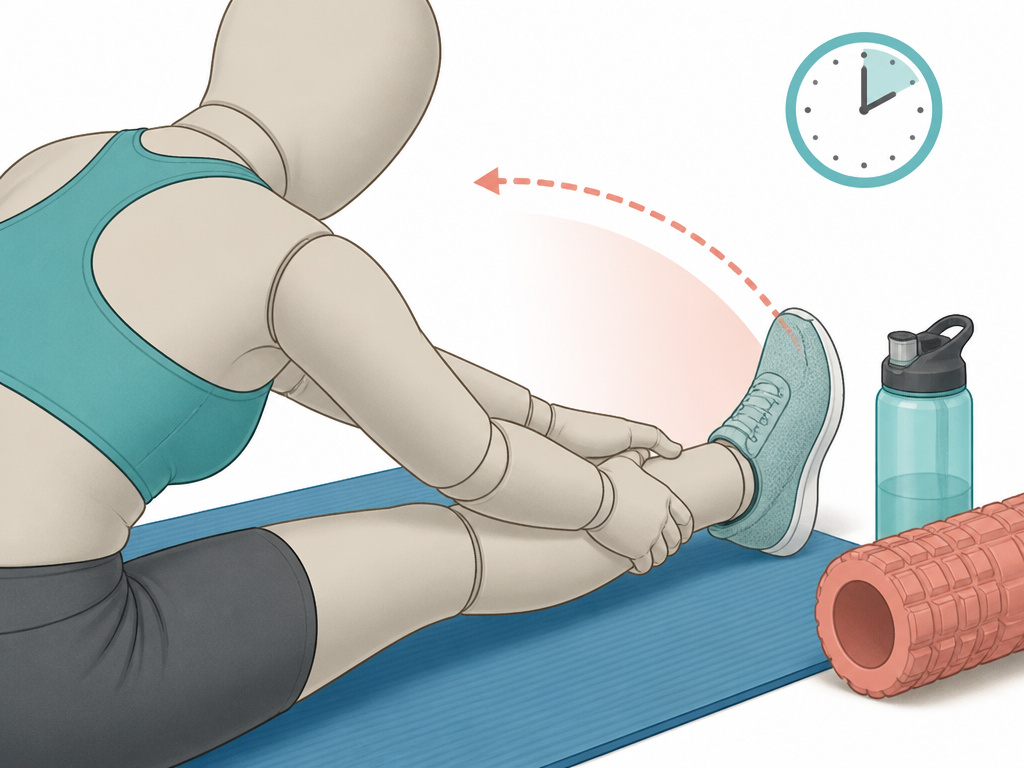
Does stretching during cool-down prevent soreness? The honest answer is no.
This is where the American Heart Association and the research part ways. The American Heart Association cool-down guide states that stretching during cool-down can help reduce the buildup of lactic acid, which can lead to muscle cramping and stiffness, while the 2018 review found active cool-downs accelerate blood lactate clearance but not necessarily muscle-tissue lactate.
The 2018 review found something narrower. Active cool-downs accelerate blood lactate clearance, but not necessarily muscle-tissue lactate. And most evidence indicates they don’t significantly reduce muscle soreness.
Both can be true at once. Blood lactate does clear faster with light movement. What doesn’t follow is the soreness reduction, because soreness comes from muscle damage, not lactate.
Stretch for range of motion, not for soreness. The evidence supports one and not the other.
If you want a stretching routine that actually does something, stretching after a workout is worth doing for range of motion. Just don’t expect it to fix how you feel tomorrow.
Ice Baths and Cold Water: When They Help, When They Hurt
Cold water immersion sits in a strange spot in the recovery world.
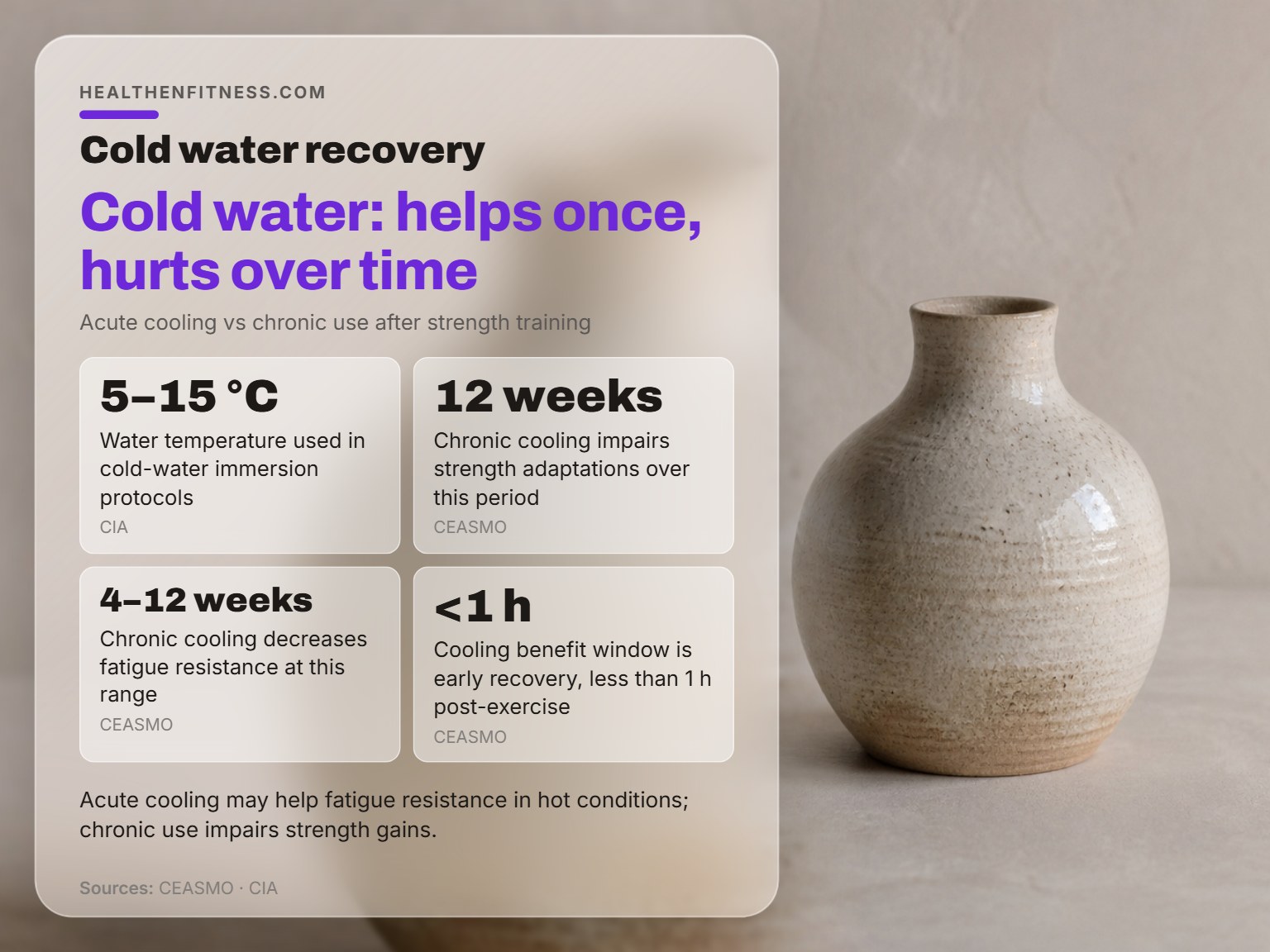
The protocols use water between 5 and 15 degrees Celsius, according to an overview of cooling interventions for athletes overview. The question is what those protocols actually deliver.
A 2022 review in Sports Medicine – Open found that acute cooling can help fatigue resistance in hot conditions and possibly maximal-strength recovery after resistance work. The same review found that chronic cooling impairs strength adaptations over 12 weeks and decreases fatigue resistance at 4 to 12 weeks.
That’s the split. Use it once after a hot session and you might get something. Use it after every session and you’re trading long-term strength for short-term comfort.
Worth knowing before you start: Cold water immersion is not a free recovery tool. Chronic use after strength sessions is associated with impaired strength adaptations over 12 weeks. Save it for hot conditions or back-to-back competitions, not your Tuesday night lift.
| Method | Best for | Main limitation |
|---|---|---|
| Active cool-down | Blood lactate clearance | Little effect on soreness |
| Static stretching | Range of motion | No soreness or injury benefit |
| Cold water immersion | Hot conditions, acute fatigue | Impairs strength gains over 12 weeks |
| Passive rest | Convenience | No recovery benefit over sitting |
The Placebo Problem
There’s also a placebo problem. A 2014 study found post-exercise cold water immersion benefits were not greater than the placebo effect. A 2009 study found a single 10-minute bout had no beneficial effect on muscle-damage symptoms. And prolonging the duration of cooling does not enhance recovery after a marathon.
Heating does the opposite. A 2017 study found that post-exercise recovery of contractile function and endurance is accelerated by heating and slowed by cooling skeletal muscle.
The post-exercise recovery cooling and heating literature is worth reading in full before you buy a tub. If you’re set on cold water, ice bath protocols are worth understanding before you fill it.
A controlled cold plunge is safer than a bathtub full of ice. The temperature control matters.
When to Skip the Cool-Down Entirely
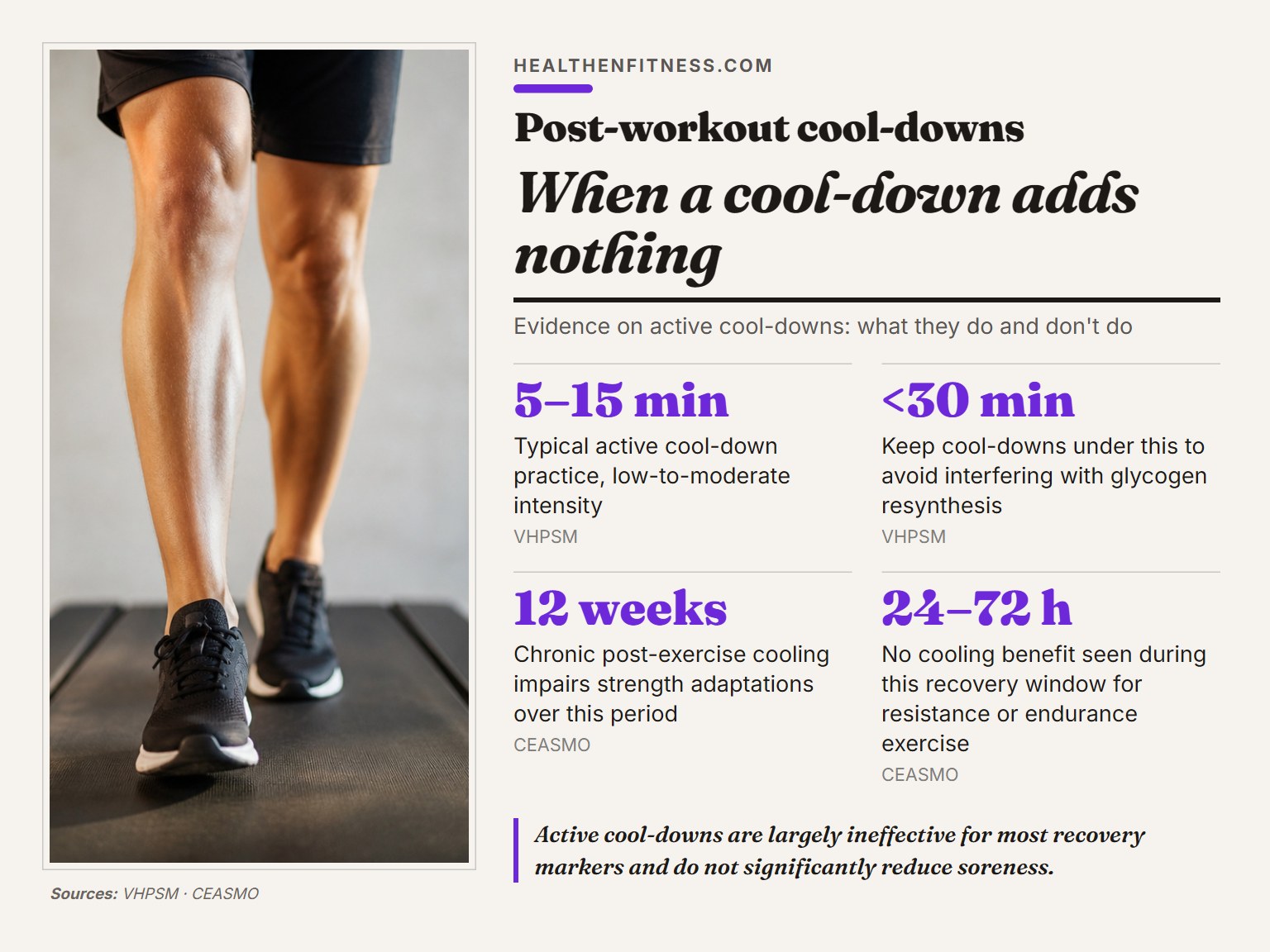
Everyone tells you to cool down after every session. Sometimes you should skip it.
- Your whole session is under 30 minutes. A 15-minute cool-down eats half your training time and adds nothing the session didn’t already give you.
- You’re chasing strength gains and lifting again in 48 hours. Extended cooling and long cool-downs can interfere with the adaptations you’re after.
- You’re already walking home. That’s the cool-down. Don’t double up.
- You feel light-headed or dizzy. Sit down, drink water, and skip the rest. Pushing through is how people faint.
The best cool-down is the one you’ll actually do. A five-minute walk beats a thirty-minute routine you skip.
Skip this if your cool-down is longer than your warm-up. That ratio is backwards. Warm-ups have stronger evidence behind them than cool-downs do.
The Recovery Habits That Beat Any Cool-Down
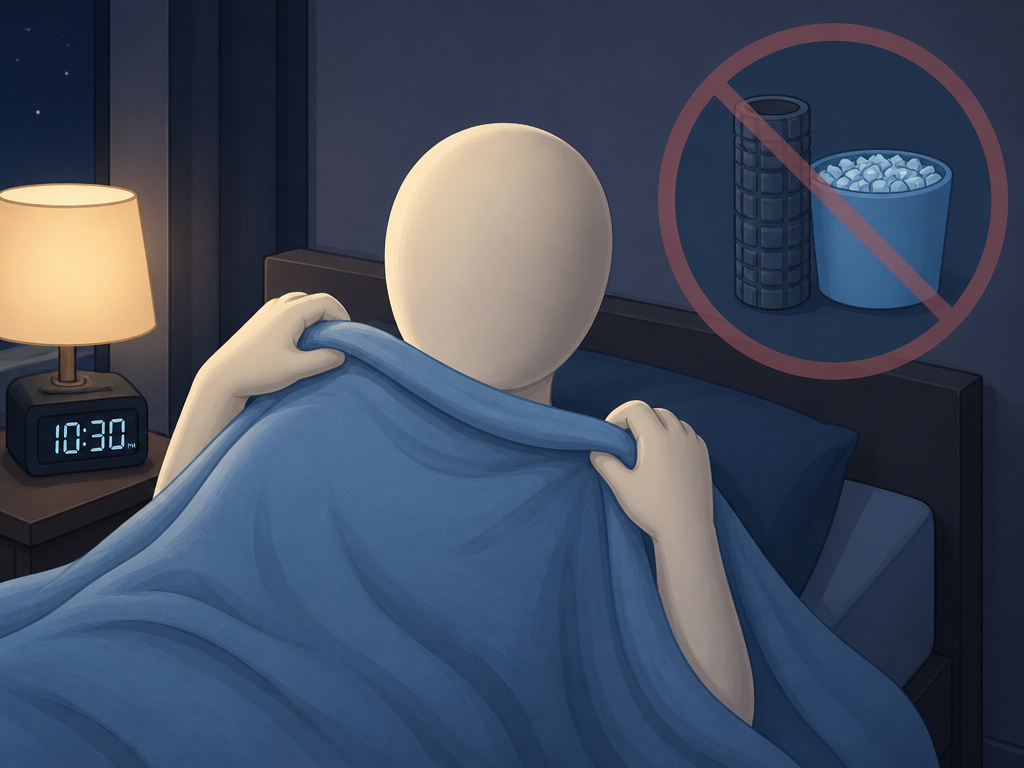
The best recovery tool you own is a bed.
Sleep does more for recovery than any cool-down, ice bath, or foam roller. That’s the one thing the research consistently supports.
I gave up tracking workouts in my head years ago. After forgetting what I’d lifted the previous week more than once, I couldn’t tell whether I was progressing. A simple written log fixed that, and it made weight increases an easy decision.
Food is the other half. what to drink after a workout covers the rehydration side, and a normal meal covers the rest.
If you train late, sleep after a late workout is the cool-down that actually matters. Lowering body temperature is part of how you fall asleep, and a cool shower does that faster than sitting on the couch.
A gym fan helps during the session, but it doesn’t replace the transition. And post-workout face wipes are a small comfort, not a recovery strategy.
One more thing worth knowing: most cool-down studies used untrained or recreationally trained subjects. The findings may not transfer cleanly to well-trained athletes. If you’re competing at a high level, treat this article as a starting point, not a prescription.
Frequently Asked Questions
Do I need to cool down after every workout?
No. A 5 to 15 minute cool-down is reasonable after hard sessions, but a walk home counts. The evidence doesn’t support a mandatory cool-down after every session.
Does cooling down prevent soreness?
Most evidence says no. The 2018 review in Sports Medicine found active cool-downs don’t significantly reduce muscle soreness. Soreness comes from muscle damage, not lactate.
Is stretching better than walking for a cool-down?
For range of motion, yes. For soreness, neither does much. Pick the one you’ll actually do.
How cold should an ice bath be?
Protocols use water between 5 and 15 degrees Celsius. Colder isn’t better, and longer isn’t better either.
Can I cool down by just sitting?
Sitting is a passive cool-down, and it’s the comparison group in most studies. It’s fine. It just doesn’t do more than the active version.
The Bottom Line
Cool down for 5 to 15 minutes, keep it under 30, and don’t expect it to fix soreness. The evidence is clear on the first two and skeptical on the third.
Here’s the threshold that matters: if your cool-down is longer than your warm-up, you’ve probably got the ratio backwards. Warm-ups have stronger evidence behind them than cool-downs do.
One concession: if you’re training in heat, or competing twice in a day, cold water and extended cooling have a real role. That’s the exception, not the rule.
How to cool down after a workout comes down to a five-minute walk after your next session. That’s the whole assignment. If it sticks for two weeks, add the mobility work. If it doesn’t, at least you’re walking.
