
10 Best Home Gym Machines in 2026
This post contains affiliate links. As an Amazon Associate, we earn from qualifying purchases.
For a full-body strength setup that doesn’t require a garage makeover, the JEEKEE All-in-One Home Gym earns our best overall spot. Its zero-wobble reinforced frame and quick-select weight stack make changing resistance effortless. The BowFlex PR1000 Home Gym folds away to reclaim floor space, while the Goimu Wall Mount Cable Station is ideal when every square inch counts.
We have compared specs, studied manufacturer details, and reviewed owner feedback to find the machines that work well. This guide will help you match the right machine to your home, your goals, and your ceiling height.
Choosing a home gym machine means balancing floor space, resistance type, and how much weight you realistically need. A machine that fits your apartment today might feel limiting in six months if you progress quickly. We looked at everything from foldable benches to power cages with 2000-lb capacities so you can find the machine that fits your current fitness level and your room.
Our research-based evaluation combines manufacturer specifications, expert round-ups, and patterns in owner feedback to highlight what works and what doesn’t. No testing claims here, just honest, detailed comparisons to help you buy with confidence.
Top 10 Home Gym Machines in the Market
Certain content that appears on this site comes from Amazon. This content is provided "as is" and is subject to change or removal at any time.
The Best Home Gym Machines, Reviewed
JEEKEE All-in-One Home Gym

What We Like
- Zero-wobble reinforced frame with stabilizing bar
- Dual-function press arms switch between chest press and butterfly
- Quick-select weight stack with clear markings
- Compact footprint fits garages and apartments
Trade-offs
- 252 lbs makes it hard to move once assembled
- No leg press function included
A 150-pound selectorized weight stack with quick-adjust markings means you can switch between exercises without fumbling with plates, keeping your workout smooth and focused. The zero-wobble reinforced frame, with an extra bottom stabilizing bar and dual angled support rods, keeps the machine steady even during heavier sets. So you can push hard without that shaky feeling some home gyms have. This all-in-one setup covers chest press, lat pulldown, leg extension, and more, making it a strong fit for anyone who wants a complete strength routine in a compact space without the hassle of multiple machines.
At 252 pounds, this home gym is heavy enough that once you assemble it, you won’t want to move it around, so plan your space carefully. It does not include a leg press function, which some other machines in this category offer, so if that exercise is essential for your routine, you may need to look elsewhere. For most people focused on upper body and basic leg work, the JEEKEE provides a stable, versatile setup that stays put.
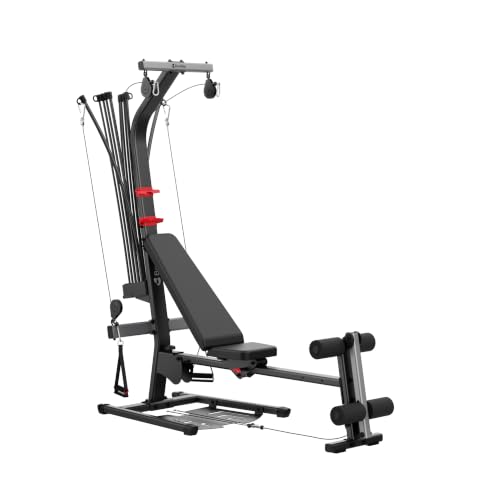
BowFlex PR1000 Home Gym
What We Like
- Foldable bench saves floor space
- 210 lbs Power Rod resistance
- Built-in rowing station adds cardio
- 20+ exercises for full-body training
Trade-offs
- At 131 lbs, still heavy to move often
- 97-inch length needs generous floor space
- Resistance maxes at 210 lbs for advanced lifters
With 210 pounds of Power Rod resistance and a guide for over 20 exercises, this home gym lets you do presses, pulldowns, crunches, and even rowing on the built-in sliding seat. The bench folds flat, which helps reclaim floor space when the machine isn’t in use. That makes it a practical choice for anyone who wants full-body strength and cardio training without giving up a permanent area of the room.
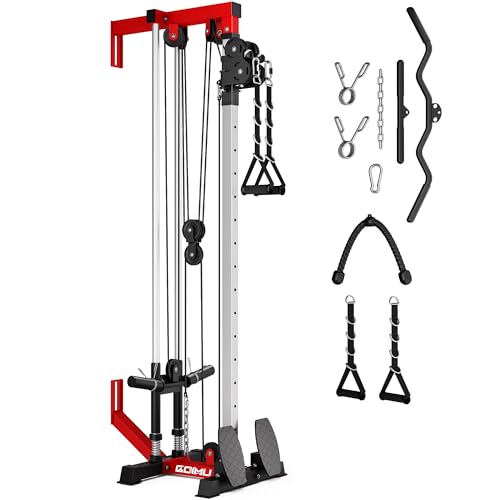
Goimu Wall Mount Cable Station
What We Like
- 17 adjustable pulley positions
- Dual independent pulleys for varied angles
- 1:1 and 2:1 ratio switching
Trade-offs
- Requires concrete or masonry wall installation
- No weight stack included, uses plate loading
At just 3.28 square feet of floor space, this wall-mounted station fits where a full cage or stack machine simply can’t. The 17 pulley positions and dual independent carriages let you set up everything from high lat pulldowns to low cable flys without the wobble that plagues freestanding units. Industrial 14-gauge steel and an H-shaped base keep things steady, so you can focus on the lift rather than fighting the machine. For anyone with a garage corner or apartment wall who wants serious cable work without sacrificing living space, this is the smartest way to go.
The trade-off is installation: it needs a concrete or masonry wall, and at 81.3 pounds it’s not a solo job to mount. That permanent placement means you can’t shuffle it around like some freestanding all-in-one machines, but you also don’t need a heavy unit dominating your floor. If your walls are drywall-only or you rent and can’t drill, this isn’t the pick. But if you can bolt it in, you get smooth, wobble-free lifts and a lifetime frame warranty for a fraction of the footprint.
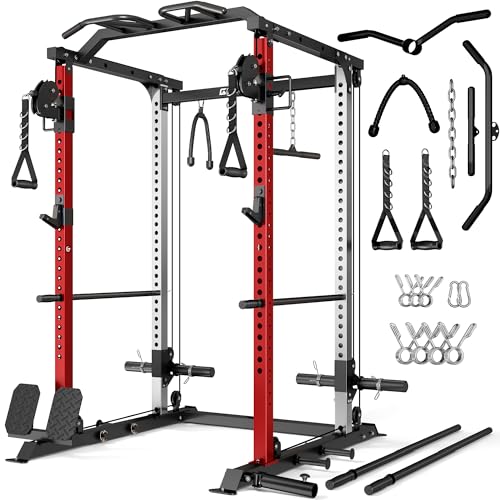
Goimu DP01 Power Cage
What We Like
- 2000 lb capacity for heavy lifting
- Dual independent pulley system for unilateral work
- 31 cable and 29 J-hook height options
- Compact 17.88 sq ft footprint
Trade-offs
- Requires separate weight plates and attachments
- 2:1 pulley ratio feels lighter than a weight stack
A 2000-pound load rating means this cage can handle serious iron without wobbling, even when you’re pushing near your limit. The real trick is the dual independent pulley system built right into the frame, letting you do cable crossovers, unilateral rehab work, or partner training without needing a second machine. With 31 height settings on the cables and 29 on the J-hooks, you can dial in everything from lat pulldowns to bench press with precision. This setup grows with you, from beginner to advanced lifter.
The Goimu DP01 is a bare cage, not a weight-stack machine. You’ll need to buy your own plates and attachments, which adds cost and storage demands. Compared to the BowFlex PR1000, which comes with built-in resistance rods, the Goimu requires more upfront investment in gear and a bit more assembly know-how. But if you already own plates or plan to build a serious home gym over time, the DP01 gives you a foundation that won’t limit your progress.
Mikolo Home Gym Workout Station

What We Like
- 152 lb weight stack for drop sets
- 90+ exercise options in one machine
- 14-gauge steel frame for stability
- Includes preacher curl and leg press attachments
Trade-offs
- At 300 lbs, moving it is a two-person job
- Requires 80-inch ceiling clearance for safe use.
A 152-pound weight stack means you can switch from lat pulldowns to leg presses without ever handling a loose plate, and the machine supports over 90 different exercises. The frame is built from 14-gauge steel, and the counterweight block is enclosed in a steel sheet for protection, so the whole unit stays stable during heavy use. That combination of fixed weights and a wide movement range makes it a practical choice for full-body strength training without the hassle of changing plates.
This Mikolo is big and heavy: at 300 pounds and 80 inches tall, you will need a dedicated corner and a friend to help position it. Compared to the lighter BowFlex PR1000, this Mikolo takes up more floor space but gives you a weight stack instead of resistance rods. For anyone who values convenience over portability, it is a practical choice for a home gym.
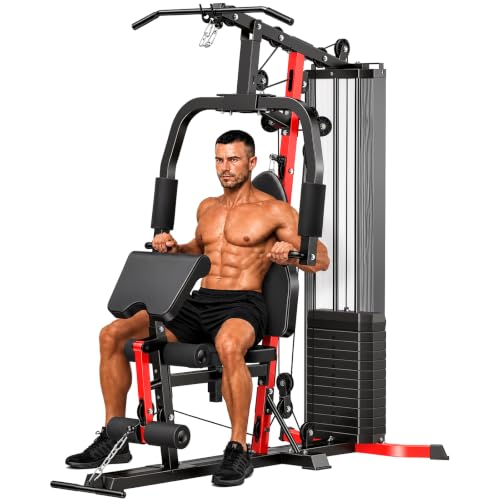
ROBORE Home Gym System
What We Like
- 160 lb built-in weight stack
- High, mid, and low pulley options
- Adjustable seat and removable preacher curl pad
- Stable build with guarded weight stack
Trade-offs
- At 220 lb, it needs a dedicated floor spot
- Setup takes time with multiple boxes and instructions
The 160-pound weight stack gives you more built-in resistance than many 150-pound home gym stations in this class, so you can train with heavier loads without buying extra plates. The selectorized stack lets you change weight quickly for progressive overload or drop sets, and the high, mid, and low pulleys support exercises like lat pulldowns, chest press, and cable ab crunches in one station. This setup works for someone who wants a full-body strength routine at home and doesn’t plan to add extra weight plates.
The ROBORE is large: at 66 inches long and 220 pounds, this is a stationary piece that needs floor space and a buddy to help move it into place. Compared to the lighter, wall-mounted Goimu cable station (81.3 pounds), the ROBORE demands a permanent spot in your garage or basement. But if you value a full weight stack over portability, the added heft and stability make it a straightforward choice for steady, safe training.
Product photos
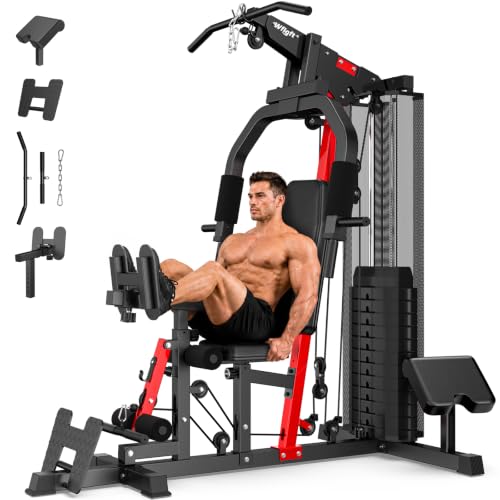
WFLGFT Multi Function Home Gym
What We Like
- 148 lb waterproof, rust-proof weight stack
- Compact footprint for tight spaces
- Adjustable seat, pedals, and butterfly arms
- Supports over 35 exercises
Trade-offs
- At 108 lb, it can shift during heavy pulls
- Weight stack maxes at 148 lb
At just 108 pounds total weight, the WFLGFT Multi Function Home Gym is one of the lightest all-in-one machines you can set up in a bedroom or apartment corner. That 148-pound weight stack covers chest presses, lat pulldowns, leg extensions, and more than 35 other moves, so you get a full-body workout without needing a separate bench or cable tower. The adjustable seat and multi-position butterfly arms help different body types find a comfortable fit, which makes this a practical starting point for someone building their first home gym on a modest floor plan.
The trade-off for that light, compact design is stability. At 108 pounds, this machine is less than half the weight of the Mikolo Home Gym Workout Station, which means you might feel some wobble during aggressive lat pulldowns or heavy rows. If you have a dedicated garage or basement and plan to lift heavy for years, a heavier unit will serve you better. But for a small apartment or a first-timer who values a compact footprint and smooth, quiet performance, this is a smart, space-conscious choice.
Product photos
JELENS H11 Home Gym

What We Like
- Three pulley positions (high/medium/low)
- Steel shaft pulley with polished steel cable
- Adjustable seat height and leg extension pedal
Trade-offs
- 79.9-inch height requires ample ceiling clearance
- Heavy 252-pound unit difficult to move once assembled
The three pulley positions, high, medium, and low, let you target nearly every upper-body movement without swapping attachments or repositioning the whole machine, which keeps your workout flow smooth. The steel shaft pulley and polished high-strength steel wire rope deliver smooth, quiet operation, so you won’t get that jerky cable feel that can throw off a set of chest flys or seated rows. You can also dial in the seat height and butterfly arm angle to match your own proportions, making the setup feel tailored to you.
The 150-pound weight stack is plenty for most beginners and intermediates, but if you’re already pressing or rowing heavy, you might outgrow it sooner than you’d like. The JX FITNESS SCM-1160 offers 160 pounds, but the JELENS triple-pulley layout gives you more cable positions for varied exercises. Just make sure you have the ceiling height, nearly 80 inches, before you commit.
Product photos
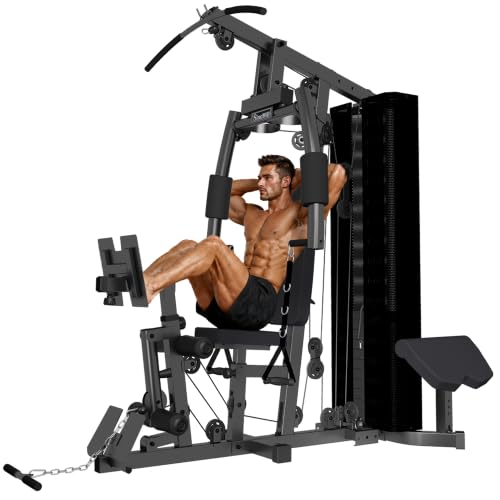
JX FITNESS SCM-1160 Home Gym
What We Like
- Thick steel frame and weight guards
- 160 lb weight stack included
- No manual adjustment for push/clamp
- Removable, height-adjustable elbow pad
Trade-offs
- At 287 lb, moving it is a two-person job
- Large footprint needs dedicated floor space
- Assembly requires following numbered hardware
The frame and weight guards are made of thick steel, which provides a sturdy structure for resistance training. With a 160 lb weight stack and a design that switches between push and clamp exercises without manual adjustment, it suits someone who wants a no-fuss home gym for consistent full-body strength work. The removable, height-adjustable elbow pad adds comfort for exercises like triceps dips, and the product is backed by over 20 years of professional fitness equipment experience.
This home gym weighs 287 pounds, so you will need help to move it into position and plan where it goes. The detailed installation instructions and tutorial video with numbered hardware make assembly straightforward, but the frame’s weight means you should have a second person for setup. For someone who values a heavy, stable machine over portability, this is a practical choice.
Product photos
Sportsroyals Home Gym Workout Station

What We Like
- 35+ exercises from 6 stations
- Heavy-duty steel H-base stays planted
- Adjustable for users 5'2" to 6'3"
- Compact storage for leg and preacher pads
Trade-offs
- At 314 lbs, moving it is a two-person job
- 81-inch height needs a tall ceiling
A 150-pound weight stack and 35+ exercises packed into a 75-inch footprint mean you can do serious full-body work without taking over the garage. It targets chest, back, arms, legs, and abs through dedicated stations like chest fly and leg press, plus a preacher curl pad that stores away. That adjustability from 5’2″ to 6’3″ makes it a rare find for households with different heights, and the smooth pulley system keeps reps quiet enough for early mornings.
The real trade-off is weight: at 314 pounds, this machine is a commitment to stay put. If you ever need to rearrange your space, plan on a buddy and some muscle. The 150-pound stack covers most users building muscle or toning, and the adjustable stations fit a range of body sizes. For anyone wanting a compact, stable multi-station that fits multiple heights, this delivers big results in a small footprint.
Product photos
How We Evaluated Home Gym Machines
We started by digging into the specs that matter most for home use: footprint dimensions, weight stack capacity, frame construction, and exercise variety. Manufacturer data told us about steel gauges, pulley ratios, and assembly requirements. Expert round-ups and patterns in owner feedback revealed which machines hold up over time and which ones wobble, squeak, or frustrate users during setup.
Three criteria drove our rankings. Stability came first, a wobbly machine is unsafe and discouraging. We prioritized reinforced frames, stabilizing bars, and heavy-duty bases that stay planted during aggressive pulls or presses. Versatility mattered next: the best machines offer multiple stations, adjustable pulleys, and attachments for chest, back, legs, and arms without requiring a second mortgage on attachments. Finally, we weighed footprint against function. A machine that requires an 81-inch ceiling or a 97-inch floor span isn’t right for every home, so we noted clearance needs honestly.
A research-led evaluation has limits. We can’t tell you how a machine feels during a heavy lat pulldown or whether the seat padding holds up after a year of daily use. What we can do is surface the specs, trade-offs, and user-reported patterns so you walk into your purchase informed. For a broader look at what’s available, explore our guide to best home fitness gyms.
What To Look For In Home Gym Machines
Choosing a home gym starts with three questions: How much space do you have, how much weight do you need, and how much assembly are you willing to tolerate? The answers will narrow your options fast.
A home gym machine should fit your room (height and footprint), match your strength level (weight stack or plate-loaded capacity), and offer enough exercises to keep you engaged without overwhelming you with complexity.
Space and Ceiling Clearance
Home gym machines are heavy and hard to move once assembled. Measure your floor space and ceiling height before you shop. The JEEKEE All-in-One Home Gym has a compact footprint that fits garages and apartments, but the Sportsroyals Home Gym Workout Station needs 81 inches of ceiling clearance.
If you’re in a basement with low joists or a room with a ceiling fan, a wall-mounted option like the Goimu Wall Mount Cable Station might be the smarter choice. For a deeper look at space-saving setups, check out our guide to best multi-station home gyms.
Resistance Type and Weight Capacity
Weight stacks offer convenience, just pull a pin to change resistance. Plate-loaded machines are more flexible for progressive overload but require you to buy and store plates. The Mikolo Home Gym Workstation has a 152-lb weight stack for drop sets, while the Goimu DP01 Power Cage supports up to 2000 lbs of plates for serious heavy lifting.
Beginners often prefer a weight stack for quick changes between exercises. Advanced lifters who need more than 150 lbs on leg exercises should consider a power cage or a machine that accepts additional plates. If you’re curious about rack-based training, our home gym racks guide covers the options.
Frame Construction and Stability
A stable frame keeps you safe and makes workouts feel smooth. Look for thick steel, reinforced bases, and stabilizing bars. The JX FITNESS SCM-1160 uses a thick steel frame and weight guards that resist wobble, while the ROBORE Home Gym System has a stable build with a guarded weight stack. Lighter machines like the WFLGFT Multi Function Home Gym (108 lbs) can shift during heavy pulls, so consider anchoring them or choosing a heavier model if you plan to train aggressively.
- Measure your ceiling height and floor footprint before buying.
- Check whether the machine uses a weight stack or plate loading.
- Confirm the weight stack max matches your strength goals for at least a year.
- Look for adjustable pulleys, seats, and arms to fit your body and exercise variety.
- Read assembly reviews, some machines arrive in multiple boxes with numbered hardware.
A heavier machine is usually more stable, but make sure you can get it through your door and into the room where it will live.
Home Gym Machines Compared
The table below compares the ten home gym machines side by side, highlighting their key specs and best-use scenarios.
| Product | Weight Stack | Dimensions | Product Weight |
|---|---|---|---|
| JEEKEE All-in-One Home Gym | 150 lbs | 67 x 39 x 79 inches | 252 lbs |
| BowFlex PR1000 Home Gym | 210 lbs Power Rod | 97 x 76 x 81 inches | 131 lbs |
| Goimu Wall Mount Cable Station | N/A | 28.1 x 24.8 x 78.7 in | 81.3 lb |
| Goimu DP01 Power Cage | N/A | 57.9 x 46.5 x 84.2 inches | N/A |
| Mikolo Home Gym Workout Station | 152 lbs | 75 x 36.3 x 80 in | 300 lbs |
| ROBORE Home Gym System | 160 lb | 66 x 38 x 79 inches | 220 lb |
| WFLGFT Multi Function Home Gym | 148 lbs | 63.4 x 34.6 x 80.7 in | 108.0 lbs |
| JELENS H11 Home Gym | 150 LBS | 74.8 x 38.5 x 79.9 in | N/A |
| JX FITNESS SCM-1160 Home Gym | 160 lb | 74.6 x 40.7 x 80.0 in | 287.0 lb |
| Sportsroyals Home Gym Workout Station | 150 lbs | 75 x 51 x 81 in | 314 lbs |
Frequently Asked Questions
What is the best home gym machine for a small apartment?
The BowFlex PR1000 Home Gym folds away to reclaim floor space, making it a strong choice for apartments. The Goimu Wall Mount Cable Station is even more space-efficient if you can mount it on a concrete or masonry wall. Measure your ceiling height first, some compact machines still need 80 inches of clearance.
How much weight do I need in a home gym machine?
Beginners can start with a lower amount of resistance. Intermediate lifters should look for at least 150 lbs on the weight stack or a plate-loaded machine that allows adding more weight. Advanced lifters who need more than 150 lbs on leg exercises will want a power cage or a machine like the Goimu DP01 Power Cage that accepts additional plates.
What is the difference between a weight stack and plate-loaded machine?
A weight stack lets you change resistance by moving a pin, which is fast and convenient during circuit training. Plate-loaded machines require you to add or remove plates manually, which takes more time but allows for finer weight increments and higher total capacity. Weight stacks are common on all-in-one machines; plate loading is typical on power cages and cable stations.
Can I do leg exercises on a home gym machine?
Most home gym machines include leg press or leg extension attachments. The Mikolo Home Gym Workstation includes a leg press attachment, while the JELENS H11 Home Gym has a leg extension pedal. Machines without a dedicated leg press function, like the JEEKEE All-in-One Home Gym, still allow leg work through pulleys and attachments, but advanced lifters may find the resistance insufficient.
How long does it take to assemble a home gym machine?
Assembly time varies from one to four hours depending on the machine’s complexity. The ROBORE Home Gym System requires setup with multiple boxes and instructions, while simpler wall-mounted units go up faster. Most machines arrive with numbered hardware and detailed manuals. Having a second person helps, many units weigh over two hundred pounds.
The Bottom Line
The JEEKEE All-in-One Home Gym is the best overall pick for most home exercisers who want a stable, space-efficient machine with quick weight changes and full-body versatility. Its zero-wobble frame and compact footprint make it a reliable centerpiece for garages, spare rooms, and even larger apartments where floor space is precious.
If your space is tighter, the BowFlex PR1000 Home Gym folds away when not in use, and the Goimu Wall Mount Cable Station disappears onto the wall entirely. For lifters who need heavy capacity or a power-cage setup, the Goimu DP01 Power Cage and the Mikolo Home Gym Workstation offer serious weight stacks and exercise variety.
The single most important factor is fit, measure your ceiling height and floor space before you fall in love with any machine. A gym that doesn’t fit your room won’t get used, no matter how many exercises it promises. Choose the machine that matches your space, your strength level, and your willingness to assemble it, and you’ll have a workout partner that lasts.
