
10 Best Treadmills in 2026
This post contains affiliate links. As an Amazon Associate, we earn from qualifying purchases.
For most home exercisers, the ProForm Carbon TLX Treadmill is the best overall pick thanks to its versatile 0-12 MPH speed range and 0-12% incline combined with ProShox cushioning that reduces joint impact during runs. If noise is your main concern, the SOLE F63 Folding Treadmill delivers a quiet motor and a spacious 20×60 inch deck. Apartment dwellers should consider the Abonow Treadmill for Home, which pairs a quiet 3.0 HP brushless motor with dual screens.
Finding a treadmill that fits your space, budget, and fitness goals without turning your living room into a noisy storage problem is the real challenge. A machine that works for a marathon runner will feel overwhelming to someone who just wants to walk while watching TV. We focused on deck size, motor power, cushioning, and storage features to match different home situations.
This guide is based on manufacturer specifications, expert round-ups, and patterns in owner feedback. We organized ten treadmills by their strongest feature so you can zero in on what matters most for your home setup.
Top 10 Treadmills in the Market
Certain content that appears on this site comes from Amazon. This content is provided "as is" and is subject to change or removal at any time.
The Best Treadmills, Reviewed
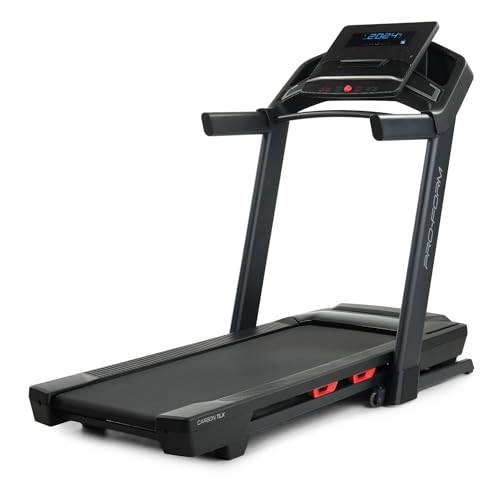
ProForm Carbon TLX Treadmill
What We Like
- ProShox cushioning reduces joint impact
- 0-12 MPH speed range
- 0-12% incline for full-body workout
- Folds compact with smooth hydraulic foot bar
Trade-offs
- 221 lb makes relocation a two-person job
- iFIT membership required for auto-adjust features
- Bluetooth heart rate monitor sold separately
A 0-12 MPH speed range and 0-12% incline mean you can walk, jog, or sprint uphill without ever leaving your living room. The ProShox cushioning soaks up impact, so your knees and hips get a gentler ride than on pavement or a bare deck. That combination of versatility and joint-friendly comfort makes this a natural fit for anyone who wants one machine that handles everything from recovery walks to interval training.
The trade-off is weight: at 221 lb, this is not a treadmill you casually move between rooms. It folds and rolls, but you will want a dedicated spot. For the runner who wants real range and doesn’t mind a permanent home for their gear, this is a rewarding investment.
Product photos
SOLE F63 Folding Treadmill

What We Like
- Spacious 20×60 inch cushioned deck
- 15 incline levels for varied intensity
- Folds with hydraulic assist and transport wheels
Trade-offs
- Curbside-only delivery means you bring it inside yourself
- LED display only, no built-in touchscreen
The 15 incline levels give you plenty of room to push intensity, and the fold-and-roll design tucks it away when company comes over. For someone who wants a dependable, low-noise treadmill for steady home use, this one fits the bill without unnecessary frills.
Size is the main trade-off: at 75 inches long, it needs a clear spot when set up, and curbside delivery means you’ll bring the box inside yourself. Compared to the ProForm Carbon TLX, which also folds and weighs 221 pounds, the SOLE F63 may be easier to move if you have help. If your priority is a quiet motor and a roomy deck that absorbs impact, this is your pick. Just measure your space first and have a buddy ready for unboxing.
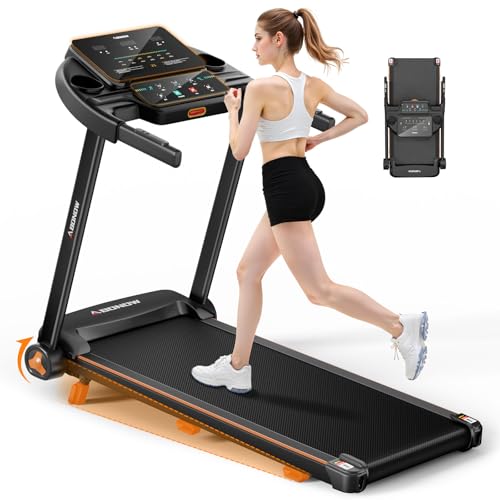
Abonow Treadmill for Home
What We Like
- Quiet 3.0 HP brushless motor
- Dual-screen with 13.3" and 10.2" displays
- 6 shock absorbers for joint protection
- 90% pre-assembled for quick setup
Trade-offs
- Running belt is narrow at 15.35 inches wide
- At 59 lb, it's heavy for frequent moving
A 3.0 HP brushless motor that stays below 45 dB means you can run in an apartment or home office without disturbing anyone else in the room. That quiet power, paired with a 280 lb weight capacity and 12 preset programs, makes this treadmill a strong match for walkers and runners who share their space with roommates, family, or coworkers.
The 59-pound weight also makes it less portable than a walking pad like the CURSOR FITNESS model, though the foldable design helps tuck it away. This is a solid home treadmill for steady workouts in tight quarters, not a sprint machine for long-legged athletes.
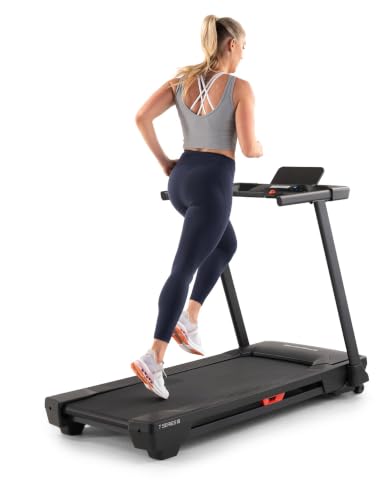
NordicTrack T Series 5 Treadmill
What We Like
- Auto-adjusts speed and incline with iFIT
- ActivePulse heart rate zone control
- KeyFlex cushioning reduces joint impact
- SmartAdjust scales workouts to your level
Trade-offs
- iFIT membership required for guided features
- Bluetooth HR monitor sold separately
The 0-10% incline range and 0-10 MPH speed are solid for walkers and runners, but what really sets this treadmill apart is how it uses iFIT to take the guesswork out of your session. Press start, and the machine automatically matches the trainer’s pace and terrain, so you don’t have to fiddle with buttons mid-stride. ActivePulse even adjusts speed and incline to keep your heart rate in the ideal zone (you’ll need a Bluetooth HR monitor, sold separately). This is the kind of treadmill that gives you a coach-like experience at home, without having to design your own workouts or second-guess your effort level.
Most of that intelligence requires an iFIT membership. Without it, you’re left with a capable but basic machine, manual speed and incline control, no auto-adjustment, no heart rate coaching. Compared to the 221-pound ProForm Carbon TLX, the NordicTrack is easier to position but still a dedicated piece of gear. If you’re happy to follow guided workouts and want the treadmill to do the thinking, this is a smart fit.
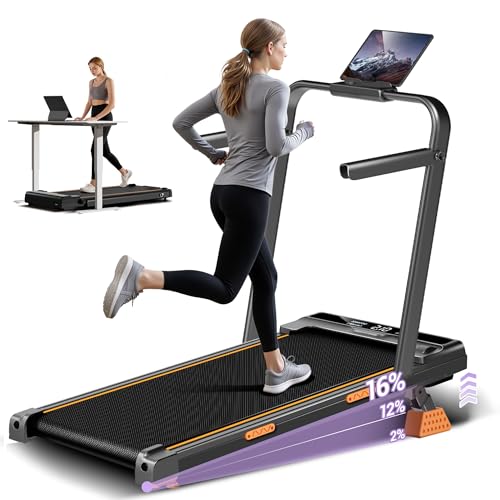
CURSOR FITNESS Walking Pad Treadmill
What We Like
- Manual incline up to 16%
- 330 lb weight capacity
- Padded side handrails for stability
Trade-offs
- Max speed 6.3 MPH limits jogging
- Running surface 35.8 inches short for taller users
- Manual incline requires stopping to adjust
A manual incline that reaches 16% is rare on a walking pad, and here it means you can simulate real hill work without any motors or electronics to fail. The 2.5 HP motor keeps things quiet and smooth from a slow 0.6 MPH start, which is kind to beginners or anyone easing back into movement. That low starting speed plus the padded side handrails make this a natural fit for seniors, office workers, or anyone who wants a steady walking session while they read or type.
The trade-off comes in speed and stride length. At 6.3 MPH max, this is a walking machine, not a runner’s tool, so if you need to break into a jog, the Abonow Treadmill with its higher top speed will suit you better. The 35.8-inch deck also means taller folks may find their natural stride cramped, especially at higher inclines. The manual incline requires you to adjust by hand, which is fine for steady hill workouts but less convenient than the auto-adjust on the WELLFIT Walking Pad. If you want a compact walking pad with hill training and no electronic complexity, this is a straightforward choice.
Product photos
WELLFIT Walking Pad Treadmill
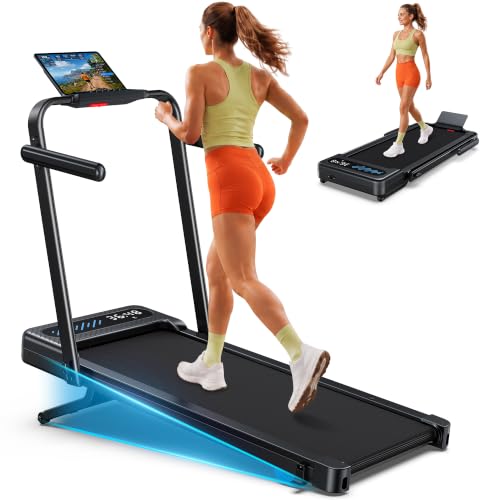
What We Like
- 375 lb weight capacity
- 12% auto incline
- 3.5 HP quiet brushless motor
- Foldable with transport wheels
Trade-offs
- 40" belt length limits running stride
- 16" belt width feels narrow for wider gaits
- 57 lb weight makes moving it a workout
A 375-pound capacity means this walking pad can support heavier users without feeling wobbly, while the 3.5 HP brushless motor stays quiet enough for early-morning or late-night workouts without waking anyone. The 12% auto incline lets you ramp up intensity with a button press, and the 40-inch-long belt gives enough room for walking or light jogging. It’s a sturdy, space-saving option for home or office, especially if you need to keep noise down.
The belt size is the main trade-off: at 40 inches long and 16 inches wide, it works well for walking but feels short and narrow for a natural running stride. Compared to the SOLE F63, which has a longer deck, this is clearly built for steady walking and jogging rather than full-speed running. The 57-pound weight and foldable design with wheels make it easier to store than a full-size treadmill, but you will still feel the heft when moving it between rooms.
LONTEK 18% Incline Treadmill
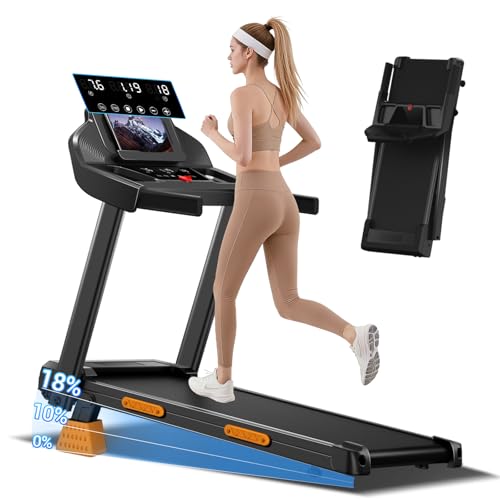
What We Like
- 18% manual incline for steep climbing
- 400 lb weight capacity
- Folds to 4.1 inches for storage
Trade-offs
- Manual incline requires stopping to adjust
- Small 15×37.5 inch running belt
- Top speed 7.5 MPH limits serious runners
The folding design collapses to just over four inches tall, which means it slides under a bed or couch easily and won’t dominate your living space. Built-in wheels make it simple to move from room to room or tuck away after a workout. Reviewers note that the 90% pre-assembled frame allows setup in minutes without complicated installation, so you can start walking or running right away. At 43.6 pounds, it’s light enough for one person to reposition, yet the steel frame and 400-pound load capacity keep it stable during use.
The incline is manual, not automatic, so you have to stop and insert the attachments to change the slope mid-workout. That kills the flow if you like interval hill sessions. The running belt is also on the short side at 37.5 inches, which feels cramped for taller users taking a full stride. If your priority is steep climbing in a compact footprint, this is the one to grab.
Product photos
LIFErank Walking Pad Treadmill
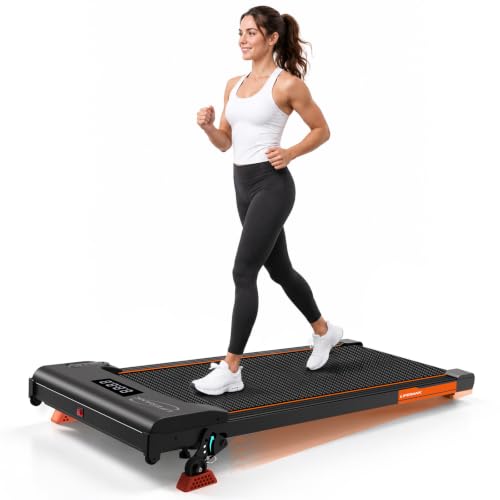
What We Like
- Ultra-light 37.5 lb with transport wheels
- 4-level incline up to 9%
- Quiet 2.5 HP motor under 30 dB
- 5-layer cushioning for joint comfort
Trade-offs
- Max speed 4.0 MPH limits jogging use
- Short 47.2-inch deck for taller strides
- No handlebar for added stability
At just 37.5 pounds with built-in transport wheels, this walking pad is genuinely easy to move from under a desk to a corner of the living room. That makes it a natural fit for anyone who wants to add low-impact walking into a work-from-home routine or small apartment.
Product photos
RHYTHM FUN Treadmill with Incline
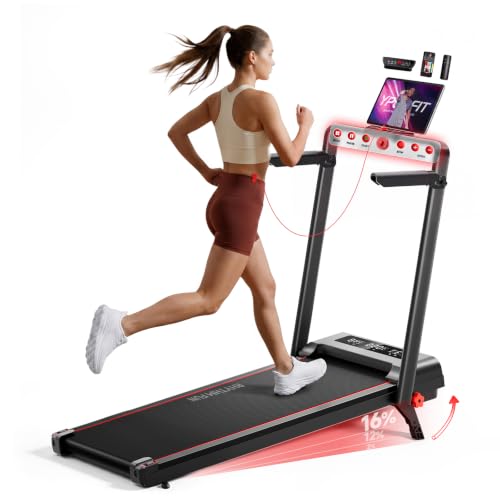
What We Like
- Folds to just 5 inches tall
- Weighs only 43 lbs for easy moving
- Manual 16% incline for extra challenge
- Includes handle bar for safety
Trade-offs
- Narrow 15-inch belt limits stride freedom
- Max 5 mph too slow for serious running
- Manual incline requires stopping to adjust
When folded, this treadmill is only 5 inches tall and weighs 43 pounds, so you can slide it under a couch or bed and forget it’s there. That kind of storage is a lifesaver if you’re in a small apartment or dorm where every inch counts. The 16% incline helps you burn more calories during your walk, and the handle bar keeps you steady while you move. You can also prop up your phone on the holder and use the Ypoofit app to track your progress.
The trade-off for that tiny footprint is a running belt that measures just 15 inches wide and a top speed of 5 mph. If you’re used to a full stride or want to push into a real run, you’ll feel cramped and capped. Compare that to the ProForm Carbon TLX, which at 221 pounds takes up more floor space, making it better suited for serious runners but far less portable. The RHYTHM FUN is the right call when your priority is stashing it away between sessions, not chasing personal records.
Product photos
ShineMaos Walking Pad Treadmill

What We Like
- 8% incline for gentle challenge
- 350 lb weight capacity
- Folds flat to 4 inches tall
- 45 dB quiet operation
Trade-offs
- Max speed 3.8 MPH limits jogging use
- No handlebar when folded under desk
A 3.0 HP brushless motor that hums at just 45 dB means you can walk while on a conference call without anyone hearing a thing. That quiet power, paired with an 8% incline and a 350-pound weight capacity, makes this a surprisingly capable walking pad for someone who wants to stay active during a workday or sneak in steps while watching TV. It folds down to only four inches tall, so sliding it under a sofa or bed is genuinely effortless. No wrestling with a heavy, upright machine.
The biggest trade-off is speed: at a max of 3.8 MPH, this is strictly a walking tool, not a running treadmill. If you want to break into a jog, something like the Abonow Treadmill for Home tops out at a much higher speed. But for the person who needs a compact, storable walking pad that can handle a heavier user and add a little incline variety, the ShineMaos delivers exactly what it promises. It won’t take over your living space.
Product photos
How We Evaluated Treadmills
We started by comparing published specs from each manufacturer, focusing on motor horsepower, belt dimensions, speed range, incline options, and folded dimensions. Owner feedback patterns helped us understand real-world noise levels, assembly difficulty, and durability over time. Expert round-ups from fitness publications gave us additional perspective on cushioning quality and smart feature reliability.
The three criteria that mattered most were running surface size, motor power, and storage practicality. A treadmill with a short or narrow belt limits stride freedom, while an underpowered motor struggles during sustained use. For home buyers, folded height and transport wheels determine whether a machine actually gets stored or becomes a permanent floor fixture.
This evaluation is research-led, drawing from technical documents, expert commentary, and what owners consistently report across multiple retail platforms. This approach allows comparison of a wider range of models than direct testing would permit, though it relies on reported performance rather than direct measurement.
What To Look For In Treadmills
Choosing a treadmill means matching the machine’s specs to your body, your space, and how you actually plan to use it. A runner needs a longer deck and higher speed; a walker can prioritize compact storage and quiet operation.
Focus on belt length (at least 50 inches for running), motor power (continuous duty HP, not peak), and folded height if storage space is tight. Cushioning matters for joint health, and incline range adds workout variety without taking up more floor space.
Running Surface and Belt Size
The belt is where you spend every minute of your workout, so its dimensions matter more than almost any other spec. For running, look for a belt at least 50 inches long and 18 inches wide. The SOLE F63’s 20×60 inch deck gives taller runners room for a natural stride. Walking pads like the WELLFIT and CURSOR FITNESS models have shorter belts around 40 inches, fine for walking but restrictive for jogging. Narrow belts under 16 inches, like the Abonow’s 15.35-inch width, can feel cramped during longer sessions.
Motor Power and Noise
Motor power is measured in continuous horsepower (CHP), not the peak number some brands advertise. A 2.5-3.0 CHP motor handles walking and light jogging; serious runners should look for 3.0 CHP or higher. The Abonow’s 3.0 HP brushless motor runs quietly enough for apartment use, while the LIFErank’s 2.5 HP motor stays under 30 dB for office-friendly operation. Quieter motors often use brushless technology, which also tends to last longer than brushed alternatives.
Cushioning and Joint Protection
Good cushioning absorbs impact without feeling spongy underfoot. The ProForm Carbon TLX uses ProShox cushioning, which owners report makes longer runs more comfortable. Multiple shock absorbers, like the six found on the Abonow, distribute force more evenly across the deck. If you have existing knee or hip concerns, prioritize models with adjustable or multi-layer cushioning systems over basic foam padding.
Incline Range and Adjustability
Incline adds intensity without increasing speed, making it valuable for both calorie burn and muscle engagement. Automatic incline, found on the ProForm Carbon TLX and WELLFIT, lets you change grade mid-stride. Manual incline, common on walking pads like the LONTEK and CURSOR FITNESS, requires stopping to adjust but offers steeper grades, the LONTEK reaches 18%. For walkers, a 12% auto incline like the WELLFIT’s provides plenty of challenge without the hassle of stopping.
- Measure your ceiling height if you plan to run at an incline, a tall user on a raised treadmill can hit their head.
- Check the folded dimensions against your storage spot, especially height clearance under a bed or couch.
- Confirm the weight capacity matches your body weight plus any safety margin for dynamic movement.
- Look at the warranty length for the motor, frame, and parts, longer warranties signal better build quality.
A simple rule: the belt should be at least as long as your longest stride plus a few inches of buffer at each end.
Treadmills Compared
The table below compares all ten treadmills side by side so you can see how belt size, motor power, incline range, and weight capacity stack up across our picks.
| Product | Speed | Incline | Weight Capacity |
|---|---|---|---|
| ProForm Carbon TLX Treadmill | 0-12 MPH | 0-12% | N/A |
| SOLE F63 Folding Treadmill | N/A | 15 levels | 325 lbs |
| Abonow Treadmill for Home | 8.5/10MPH | 8% | 280 lbs |
| NordicTrack T Series 5 Treadmill | 0-10 MPH | 0-10% | N/A |
| CURSOR FITNESS Walking Pad Treadmill | 0.6 to 6.3 MPH | 16% Manual | 330 lbs |
| WELLFIT Walking Pad Treadmill | 0.6-7.6 MPH | 0%–12% auto | 375 lbs |
| LONTEK 18% Incline Treadmill | 0.6-7.5 MPH | 0-18% manual | 400 lbs |
| LIFErank Walking Pad Treadmill | 0.5-4.0 MPH | 9% | 265 lb |
| RHYTHM FUN Treadmill with Incline | 0.5-5.0 mph | Manual 16% | 300LBS |
| ShineMaos Walking Pad Treadmill | 3.8 MPH | 8% | 350 lbs |
Frequently Asked Questions
What size treadmill belt do I need for running?
For running, look for a belt at least 50 inches long and 18 inches wide. Taller runners over six feet need more length for a natural stride. The SOLE F63‘s 20×60 inch deck is generous enough for most runners, while walking pads with 40-inch belts are too short for jogging.
How much does a good home treadmill cost?
A quality home treadmill typically falls in the mid-range to premium price bracket. Budget-friendly walking pads start around a few hundred dollars, while full-size running treadmills with incline and cushioning cost more. The value comes from matching the machine’s capabilities to your intended use; a walker does not need a commercial-grade motor.
Are folding treadmills as durable as non-folding models?
Yes, modern folding treadmills use reinforced hinges and hydraulic lift systems that maintain durability. The ProForm Carbon TLX folds with a smooth hydraulic foot bar, and the SOLE F63 uses hydraulic assist. The folding mechanism adds some weight but does not compromise the frame or belt alignment when properly maintained.
Can I use a walking pad for jogging?
Most walking pads have a top speed of 4-6 MPH, which supports light jogging but not sustained running. The CURSOR FITNESS Walking Pad maxes out at 6.3 MPH, and the RHYTHM FUN reaches 5 MPH. If you plan to run regularly, choose a full-size treadmill with at least 10 MPH top speed and a longer belt.
What maintenance does a treadmill need?
Basic maintenance includes lubricating the belt every few months, keeping the motor area free of dust, and checking belt tension. Most owners report that brushless motors require less upkeep than brushed ones. A yearly inspection of the folding mechanism and transport wheels helps catch wear before it becomes a problem.
The Bottom Line
The ProForm Carbon TLX Treadmill is our best overall pick because it balances a wide speed and incline range with joint-friendly cushioning and a compact fold. It suits runners and walkers who want versatility without sacrificing floor space. If guided workouts matter more, the NordicTrack T Series 5 offers automatic speed and incline adjustments through iFIT.
For budget-conscious buyers or those with limited space, the Abonow Treadmill for Home and the LIFErank Walking Pad deliver quiet operation and small footprints. The LONTEK 18% Incline Treadmill gives hill trainers a steep manual grade in a package that folds to just 4.1 inches tall. Whatever your choice, make belt length your first check, a treadmill that is too short will frustrate you every time you step on it.
