
What to Do If You Get Dizzy During a Workout: First Steps
This post contains affiliate links. As an Amazon Associate, we earn from qualifying purchases.
If you get dizzy during a workout, sit or lie down and drink water. A small snack helps if you skipped a meal. Sources differ on whether to stop: Parkview advises stopping the workout and not resuming until you feel better, while USC advises sitting, hydrating, and snacking, stopping for the day only if symptoms persist. Fainting during exercise, chest pain, or a heart rate that won’t settle needs immediate medical care.
Blood pressure ties those causes together. Stand up fast after a floor set and blood pools in your legs before your heart catches up. Dehydration shrinks the blood volume doing that work, so the same stand-up hits harder on a hot day. Knowing what to do if you get dizzy during a workout helps you respond safely.
What follows is the order of operations: the first minute, the what to do if you get dizzy during a workout question, the difference between a spell that passes and one that needs a doctor, and what to change so it stops happening.
Key Takeaways
- Sit or lie down first. Drinking while you’re still standing keeps blood pooling in your legs.
- Fainting during exercise is a red flag for a heart problem, according to NINDS, and needs immediate medical care.
- Counterpressure maneuvers work when you can’t get down: cross and squeeze your legs, or grip your hands and pull your elbows out.
- A spell that clears in a few minutes still deserves a checkup if it keeps repeating.
- Set your safeties before the first rep if you train alone. A dizzy spell under a loaded bar is how people get pinned.
Why Do You Get Dizzy During a Workout?
Two of the most common causes are dehydration and low blood sugar, and a third is a fast change of position. Cleveland Clinic exercise physiologist Michael Crawford calls the position-change version orthostatic hypotension. It’s a short drop in blood pressure that hits when you stand up quickly or stop moving suddenly.
The mechanism is straightforward. Blood gathers in your legs and abdomen when you’re upright and still, so less of it returns to the heart. Baroreceptors in your neck and chest sense the shortfall and tell your heart to speed up. Until pressure recovers, the edges of the room go grey and your ears start to ring.
Orthostatic hypotension is a brief drop in blood pressure that follows a change of position, such as rising from a bench or stepping off a machine. Blood gathers in the legs and abdomen, less returns to the heart, and the brain registers the shortfall through baroreceptors in the neck and chest.
Dehydration takes a different route to the same place. Less fluid means lower blood volume, so the same stand-up produces a bigger dip. Heat makes it worse. A warm room, a hot bath, or a sunny day all appear on the NHS Plymouth list of triggers for postural symptoms.
Reflex syncope, sometimes called vasovagal syncope, is the most common cause of fainting overall. Fear, pain, standing too long, dehydration, and donating blood all set it off. Cardiac syncope accounts for only about 1 in 10 cases, but it’s the type that reflects a serious heart problem. The NINDS syncope and fainting fact sheet lists chest pain, sudden heart-rate changes, and fainting during exercise as the warning signs.
The First Minute: What to Do the Moment Dizziness Hits
Sit down. That’s the first step, and it’s the one people skip.
Before you start: A dizzy spell under a loaded bar is how lifters get pinned or drop a plate on a foot. Set spotter arms or safety pins at the height where the bar just clears your chest before the first rep. Spotter arms for your rack don’t help if they’re leaning against the garage wall.
Here’s the sequence, in order:
- Stop the set where you are. Racking a half-finished rep beats grinding it out, because the last rep of a hard set is where form breaks first.
- Get low. Sitting works. Lying down with your legs raised above heart level works better, and Health NZ suggests putting your feet on a chair.
- Drink water. Plain water covers most sessions. Parkview notes you need more on hot days because you sweat more.
- Eat something small if you skipped a meal. A granola bar, a protein bar, or a piece of fruit is enough to lift a glucose dip.
- Stand up in stages. Pump your ankles, sit up slowly, then stand. Rising fast the second time reproduces the first dip, which is why NHS Plymouth recommends the staged approach.
- Stop for the day if it doesn’t clear. USC’s trainers say to end the session and contact a provider when symptoms persist.
The order matters more than the individual steps when you compare a what to do if you get dizzy during a workout. Sitting down before you drink stops the pooling that caused the dip. Drinking while still upright gives the fluid somewhere to sit.
Once you’re steady, finish properly. Cleveland Clinic notes that suddenly stopping can drop blood pressure, so a real cool down after a workout is worth doing rather than a token lap of the gym.
Should You Keep Training After a Dizzy Spell?
The advice you’ll find online doesn’t agree with itself, and the gap matters more than it looks.
| Source | Advice when dizziness starts | Counterpressure maneuvers? |
|---|---|---|
| Parkview | Stop the workout; hydrate, rest, or snack; don’t resume until you feel better | No |
| USC trainer advice | Sit, hydrate, snack; stop for the day only if symptoms persist | No |
| Health NZ | Sit or lie down; standing maneuvers if you can’t get down | Yes |
| NINDS | Sit or lie down at the first warning sign | Not specified |
Read the first two rows against the last two and the split is obvious. Consumer fitness sources treat a dizzy spell as a hydration problem with a pause button. Government and clinical sources treat it as a signal that needs a position change first and a cause investigation second.
Mine is stricter. If I have to sit down, the session is over. A two-second head rush when I stand up from a bench is one thing. Needing to put my head between my knees is another, and I’d rather lose one workout than spend a week dizzy.
Where this goes sideways: Going back to the same set after five minutes because you feel fine again. Blood pressure recovers faster than whatever caused the drop, so the second spell tends to land harder than the first.
Sorting the Cause: Dehydration, Low Blood Sugar, or Something Cardiac
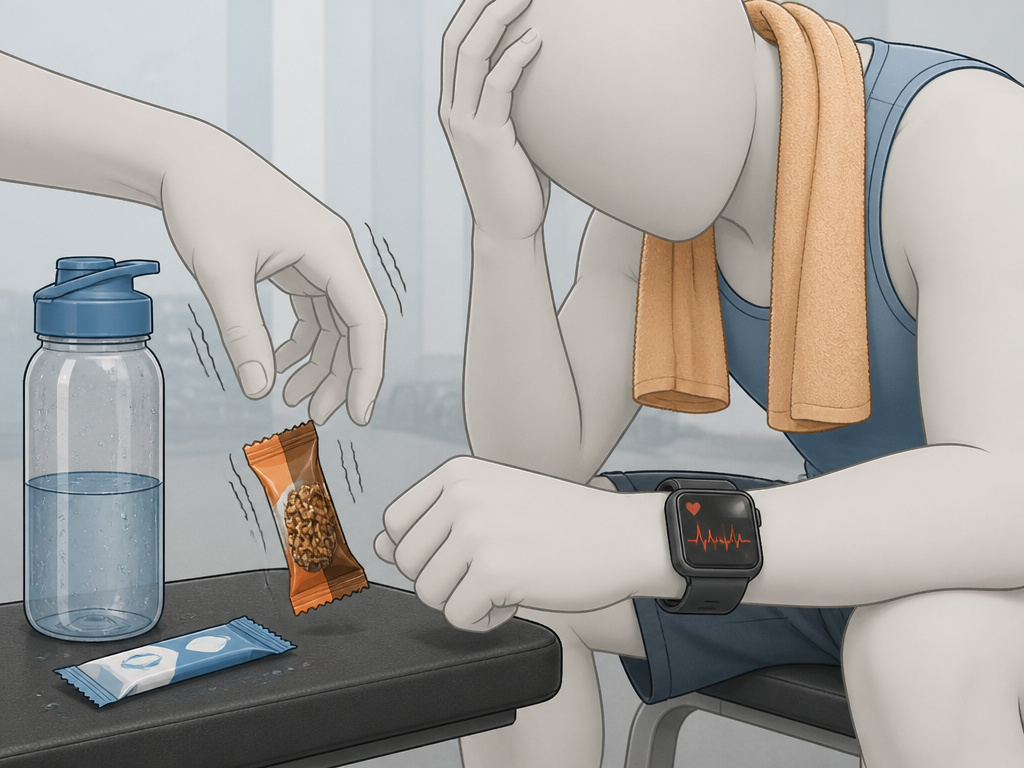
A blood-sugar dip and a dehydration dip feel different, and the difference shows up before you stand up.
| What you notice | Likely cause | What to do |
|---|---|---|
| Dizzy on standing, clears in seconds | Orthostatic drop | Rise in stages, drink water |
| Dizzy late in a hot session, dark urine | Dehydration | Stop, drink, cool off |
| Shaky, clammy, irritable, skipped a meal | Low blood sugar | Sit and eat something small |
| Chest pain or a heart rate that won’t settle | Cardiac red flag | Stop and get medical care |
The Dehydration Version
A dehydration dip builds across the session. You sweat, blood volume drops, and the workload that felt fine earlier starts tilting the room. Dark urine and a dry mouth are the signs of dehydration to check for afterwards.
I used to treat a soaked shirt as proof of a good session. A few of those left me no stronger, and one left me lightheaded on the walk to the car. A soaked shirt tells you the room was warm.
How much you drink depends on the session. The general guidance on how much water to drink during a workout is a starting point, and electrolytes during workouts matter more once you’re sweating hard in heat.
The Low Blood Sugar Version
A glucose dip arrives with a cold, clammy sweat on your upper lip and hands that shake on the bar. Parkview lists dizziness, lightheadedness, tiredness, nausea, and shakiness as the cluster. It shows up most often in people who skip breakfast before a morning session.
A small snack before you train prevents most of it. The what to eat before a workout question has a short answer: something with carbohydrate you can digest easily.
The Cardiac Version
This one doesn’t follow either pattern. It shows up during exertion, sometimes with chest pain or a heart rate that jumps or stumbles. A 2009 review in the Clinical Journal of Sport Medicine draws the line bluntly: most episodes just after exercise are benign, while exercise-related syncope in athletes can indicate serious cardiovascular disease when it happens during exercise.
In short: if it happens during the work, get it checked before your next session. If it happens after you stop, hydration and food cover most of it.
What to Do If Someone Actually Faints
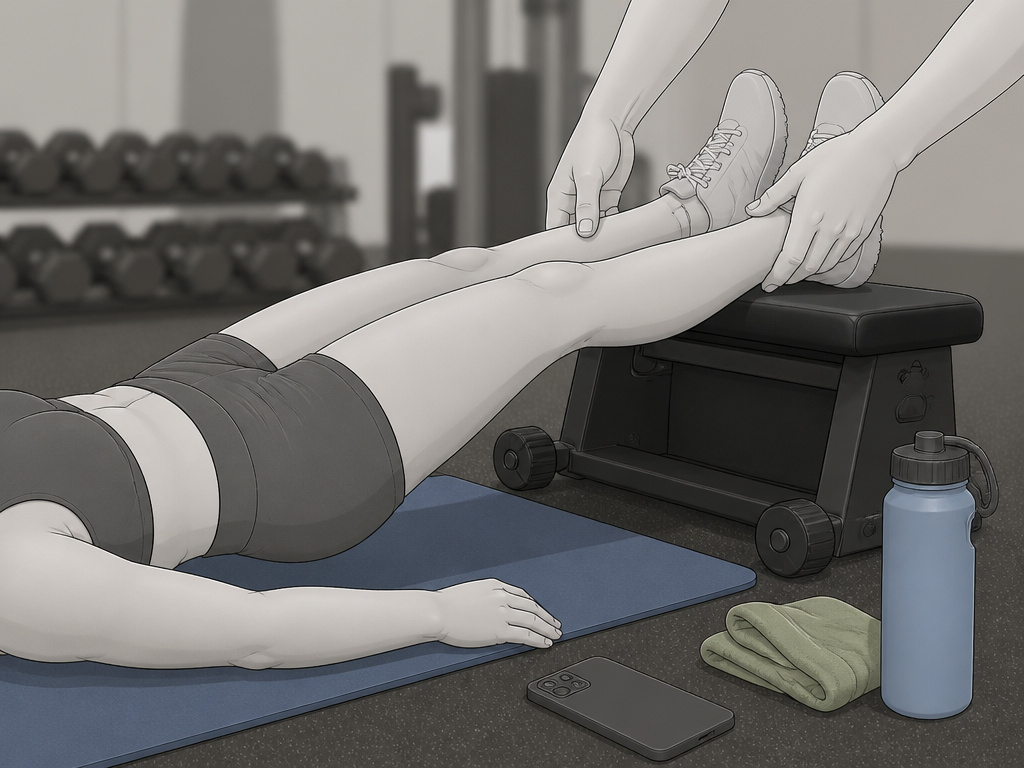
Someone goes down between sets. The gym goes quiet, two people reach for their phones, and nobody touches the person on the floor.
Start with the position. Health NZ advises lying the person down and raising their legs above the level of the heart, with feet on a chair if one is handy. NHS Plymouth’s postural hypotension leaflet says to raise the legs in the air and gives no measurement. Either version beats leaving them sitting up.
Syncope usually lasts only a few minutes before people slowly return to normal, according to NINDS. If there was chest pain or a racing heart beforehand, that’s the pattern NINDS says needs immediate medical care.
- Don’t sit them upright the moment they open their eyes, because the pressure drop repeats.
- Don’t offer food or drink until they’re fully alert and talking normally.
- Do get them checked afterwards, even if they insist they’re fine. Health NZ says to see a healthcare provider after any faint.
Driving home afterwards is the part people get wrong. A second episode behind the wheel is a much worse problem than a missed session.
Counterpressure Maneuvers: The Move Most Gym Advice Leaves Out
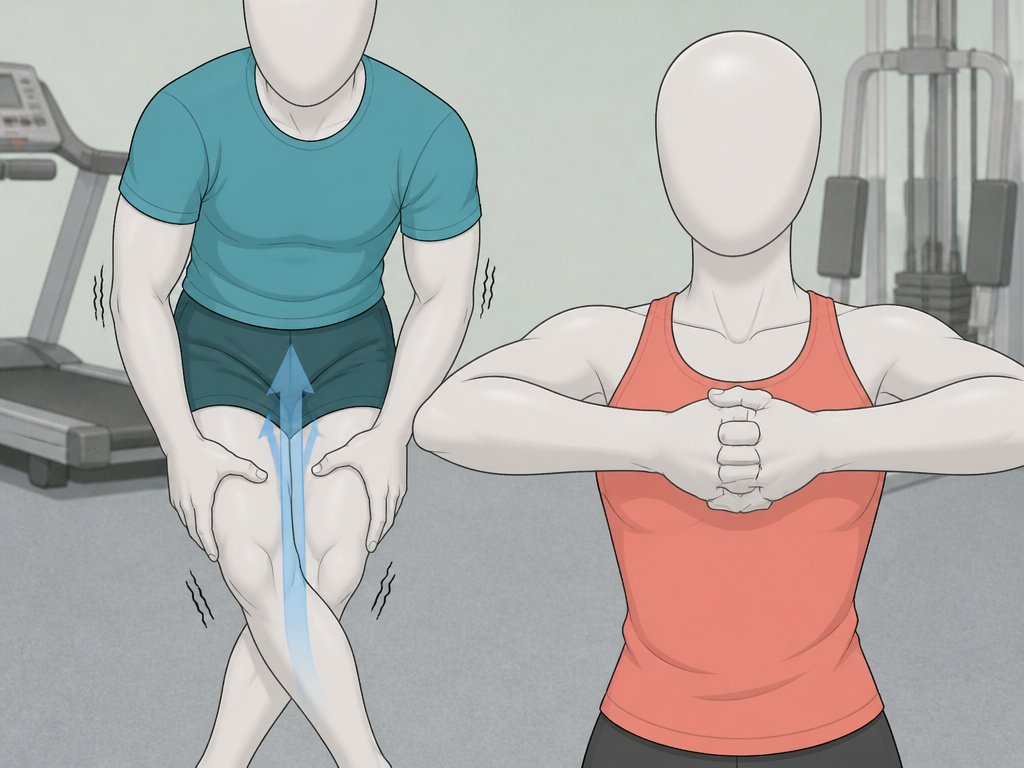
Health NZ lists two maneuvers you can do standing up, and the biggest consumer fitness sources don’t mention either one.
Cross your legs and squeeze them together while standing. Or grip your hands together and pull, moving your elbows away from your body. Both work by contracting large muscle groups, which squeezes the blood vessels in your legs and arms and pushes blood back toward your heart.
Use one to buy time until you can sit down. It’s the right tool when you’re mid-set on a machine or walking off a treadmill and the floor isn’t an option. Get to the floor if you can.
Easy to miss: Counterpressure maneuvers don’t belong anywhere near chest pain, a pounding heart that won’t slow, or sudden weakness on one side. Those need a phone call, not a leg squeeze.
Cross and squeeze, or grip and pull. Either one buys you time to reach a bench, and neither one fixes the cause.
The AHA first aid presyncope update covers presyncope response at guideline level, and it’s worth reading if you coach or train other people.
When Should You See a Doctor for Workout Dizziness?
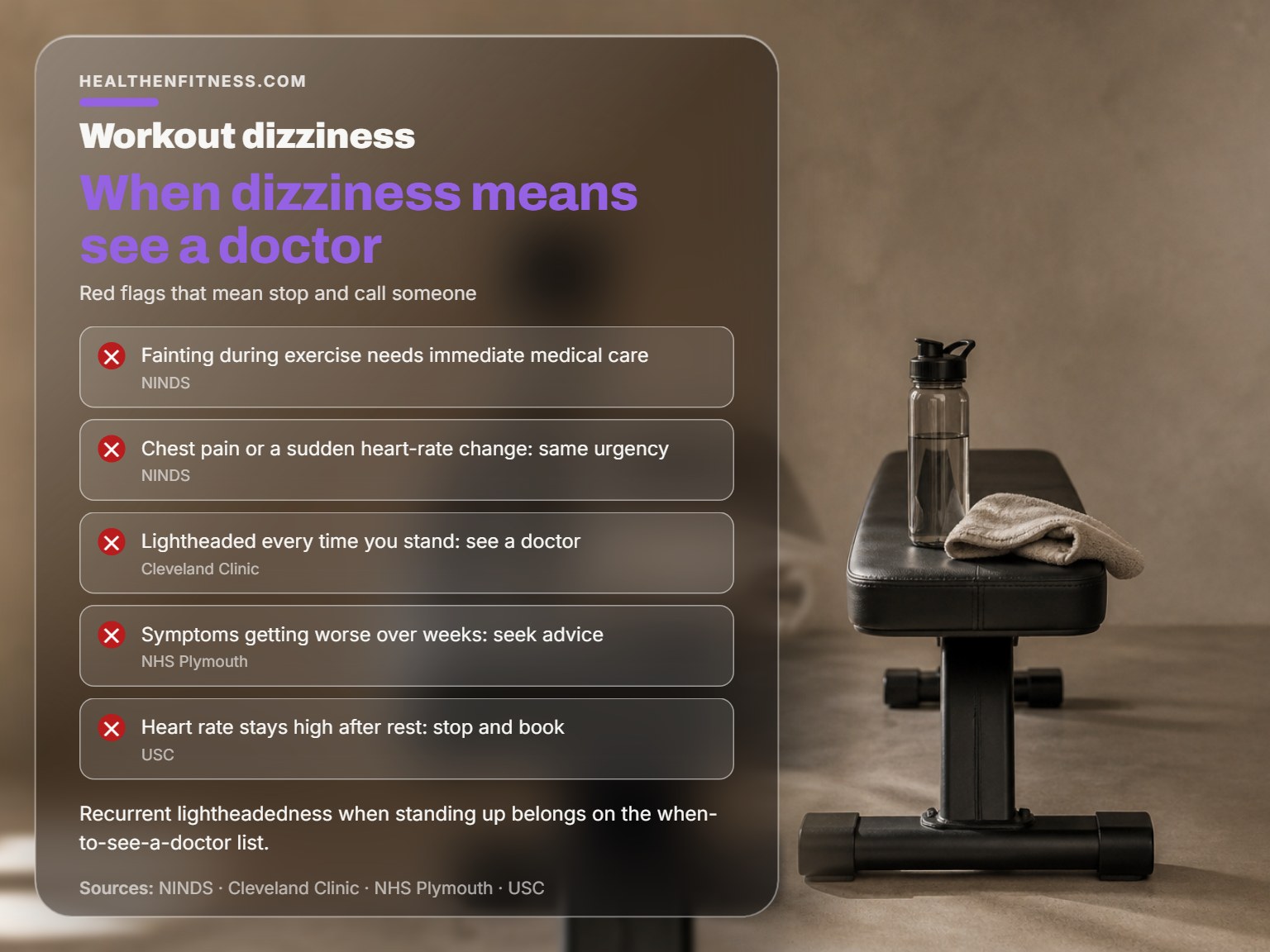
Book the appointment.
POTS: A Different Playbook
POTS is postural orthostatic tachycardia syndrome, and NINDS names it as a condition that affects how the body responds to standing. Standard hydrate-and-sit advice may not be enough on its own. Cleveland Clinic recommends an evaluation from a cardiologist or neurologist before starting, then lower-gravity work: semi-recumbent cycling, a rowing machine, or a seated stair-stepper. Free weights are on the avoid list because a dizzy spell raises the odds of dropping the weight.
If that’s your situation, the exercises for POTS list is a better starting point than a general program.
The red flags that mean stop and call someone:
- Fainting during exercise. NINDS flags it as a cardiac warning sign that needs immediate care.
- Chest pain or a sudden heart-rate change. Same source, same urgency.
- Lightheadedness every time you stand. Cleveland Clinic says to see a doctor when it happens regularly.
- Symptoms getting worse over weeks. NHS Plymouth says to seek advice rather than wait it out.
- A heart rate that stays high after you’ve rested. USC’s trainers say stop and make an appointment.
Recurrent spells belong on the when to see a doctor list even when each one passes. And if you’ve been stacking hard sessions, repeated dizziness is worth checking against the signs of overtraining list.
I’d rather see someone cut a session short than watch them train through a second spell. The workout you skip costs you nothing. The one you finish while dizzy is the one that ends with a bar on the safeties.
Frequently Asked Questions
Is it normal to get dizzy during a workout?
Not normal enough to ignore. Health NZ notes that fainting and dizziness are usually not caused by something serious, but they can come from an underlying condition. Cleveland Clinic points to dehydration, heat, and position changes as the common triggers.
Should I stop working out if I feel dizzy?
At least for the set, yes. Parkview advises stopping when lightheadedness shows up and not returning until you feel better. USC’s trainers take a slightly softer line: sit, hydrate, snack, and end the session only if symptoms persist.
What should I eat or drink when I get dizzy mid-workout?
Water first. If you skipped a meal, Parkview suggests a granola bar, a protein bar, or fruit. Both are aimed at the two most common causes: low blood volume and low blood sugar.
Can dehydration alone make you dizzy?
Yes. Dehydration lowers blood volume, and lower blood volume means a bigger pressure drop when you stand or change position. Cleveland Clinic lists dehydration as a direct cause of exercise-related lightheadedness.
When is dizziness during exercise an emergency?
Fainting during exercise, chest pain, or a sudden change in heart rate. NINDS lists all three as warning signs of cardiac syncope and says they need immediate medical care.
The Bottom Line
The threshold I use is simple. If you have to lie down, the session is done. If you get a two-second head rush when you stand and it clears, drink something and carry on with lighter work.
The exception is anything that happens during the work rather than after it. Fainting mid-set, chest pain, or a heart rate that won’t come down means a same-day call to a doctor.
One thing to try this week: set your spotter arms before your first working set and leave them there for the whole session. It takes less time than loading the bar, and it’s the cheapest insurance in the gym.
