
Vegan Meal Planning for Lifters: A Plate-by-Plate Guide
This post contains affiliate links. As an Amazon Associate, we earn from qualifying purchases.
Vegan meal planning for lifters starts with three numbers: 1.5 to 1.8 g/kg of protein per day, 24.6 mg of iron for female athletes, and 4.6 micrograms of B12. A 2026 validation study of 120 athlete plates found the easy-training vegetarian plate for a 75 kg lifter delivered only 1.3 g/kg protein.
Those three numbers are where the plan gets hard. The protein target is a range because four sources anchor it at four different points. The iron figure is a female-athlete criterion that fails two-thirds of the plates researchers built against it. That gap between what a plate delivers and what the target requires is where vegan lifters actually lose ground.
What follows walks the plate itself. What 1.5 g/kg looks like in real food. Where the validated plates fell short. How four different protein targets compare. And the specific spots (cutting phases, easy training loads, female athletes) where the standard plate method breaks.
Key Takeaways
- Hit 1.5 to 1.8 g/kg of protein per day; 1.5 g/kg is the low end of the published g/kg anchors, not the ceiling.
- A 75 kg lifter’s easy-training vegetarian plate delivered only 1.3 g/kg, and the shortfall concentrated at easy loads and light weight categories.
- Female athletes need 24.6 mg of iron, a criterion 67% of validated plates failed; male athletes need 10.8 mg.
- Zinc is the most consistent miss (all 12 plates below the male criterion); B12 was also widely missed, with 8 of 12 plates below 4.6 micrograms.
- Vitamin D was the one micronutrient food alone could not cover in the modeled bodybuilder diet, and sodium ran above recommended limits.
What Does 1.5 g/kg of Protein Actually Look Like on a Plate?
Ever tried to hit 1.5 g/kg of protein on lentils alone? You can, but the volume gets silly fast.
The target is a rate, not a portion. A 75 kg lifter needs to carry it across four or five eating occasions instead of two big ones, and plant sources are bulkier per gram of protein than a chicken breast.
The validated athlete’s plate was built for 60 kg and 75 kg athletes across easy, moderate, and hard training loads, with a protein target of 1.5 g/kg. The easy-training vegetarian plate for the 75 kg athlete delivered only 1.3 g/kg, significantly below target (P<0.05), and the shortfall concentrated at light weight categories and easy training loads.
Getting there on plants is doable. Tofu, tempeh, seitan, and lentils all carry protein in a form that fits a plate, and protein for vegetarians who lift covers the specific sources and their ratios.
Whey powder disappears into a shaker and is gone in a swallow. A cup of cooked lentils sits in the stomach like a small beanbag for the next hour. That difference in how full you feel is why the timing of plant protein matters more than the total.
Where the Validated Plates Fell Short: Iron, Zinc, and B12
Eight of twelve validated plates fell below the female iron criterion. Every single one fell below the male zinc criterion. The B12 picture was only slightly better, with eight of twelve plates under the 4.6 microgram target.
A plate of black beans and rice looks generous on the table and still comes up short on zinc. That is the part the protein number misses.
The Iron Criterion Gap
The female iron criterion used in the validated plate study was 24.6 mg, compared with 10.8 mg for males. That 2.3-fold gap produced opposite adequacy verdicts on the same food plates: 4 of 12 plates failed the male criterion, and 8 of 12 failed the female criterion.
Female lifters on a plant-based diet are the group most likely to need targeted iron planning. That is not a marketing claim; it is the conclusion the validation study reached when it applied the female criterion to the same plates.
Zinc: The One Every Plate Missed
The zinc criterion was 12.7 mg for males and 9.2 mg for females. All 12 validated plates fell below the male criterion. Only 5 of 12 (42%) met the female criterion.
Zinc is harder to hit on plants, and the zinc gap showed up even when the protein number looked fine.
B12 and the Training-Load Pattern
The B12 target was 4.6 micrograms. Eight of twelve plates fell below it. Only the moderate- and hard-training plates were sufficient.
That pattern is the most useful finding in the whole study. The shortfalls were not spread evenly. They concentrated at easy training loads and light bodyweight categories, which is exactly where a lifter is least likely to be paying attention.
| Nutrient | Criterion (male / female) | Plates failing |
|---|---|---|
| Iron | 10.8 mg / 24.6 mg | 4 of 12 male / 8 of 12 female |
| Vitamin B12 | 4.6 micrograms | 8 of 12 |
| Fiber | 14 g/1000 kcal ceiling | 12 of 12 above |
The Protein Target Fight: 1.5 vs 1.68 vs 1.8 g/kg
Lynch et al. Built their validated plates to 1.5 g/kg. A rugby player model used 1.68 g/kg per day. A bodybuilder model used 1.8 g/kg per day. And a nitrogen-balance study in minimally active male vegans found RDA-level protein sufficient for that much less demanding population.
Four anchors, four populations, no single right answer. The gap between 1.5 and 1.8 g/kg works out to a meaningful daily difference at any bodyweight.
| Study | Protein target | Population |
|---|---|---|
| Lynch et al. (Veg AP) | 1.5 g/kg | 60 kg and 75 kg athletes |
| Rugby model (PMC 2024) | 1.68 g/kg/day | Adult male rugby players |
| Bodybuilder model (Nutrients 2024) | 1.8 g/kg/day | Male bodybuilders |
| Nitrogen balance (Nutrients 2023) | RDA-level | Minimally active male vegans |
The bodybuilder model is the most optimistic of the four. The plant-based diets resistance training protein study modeled 1.8 g/kg/day and 2.75 grams of leucine per meal, and concluded protein and leucine requirements are met without additional planning when calories are scaled up, whereas Lynch et al. And the Advances in Nutrition review insist on careful planning.
The framing itself is contested. PCRM’s ultra-athlete plan uses 20% protein at 4,500 kcal, while the modeling studies anchor on g/kg. The two framings produce different prescriptions for the same athlete.
For lifters trying to add muscle, the 1.8 g/kg anchor is the safer bet. It is the figure the bodybuilder model used, and it leaves margin for the days appetite drops. The 1.5 g/kg target is a floor for the validated plates, not a personal prescription.
Do You Actually Need to Plan, or Does It Sort Itself Out?
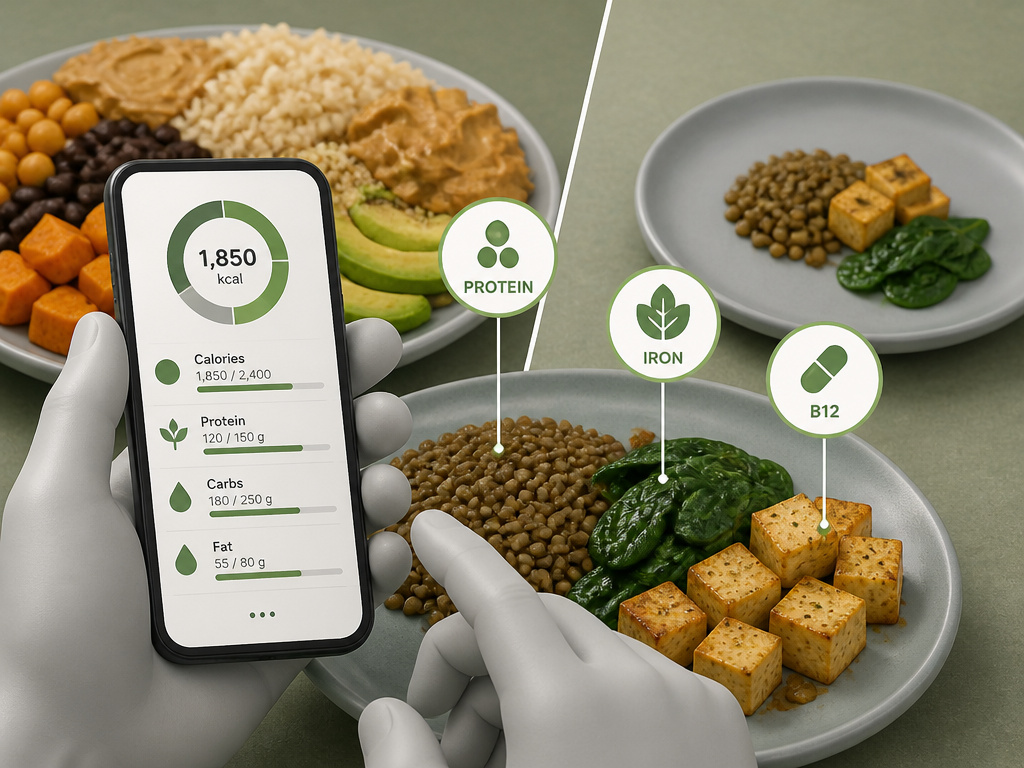
Two of the sources in this set flatly disagree on this. The bodybuilder modeling study concludes protein and leucine requirements are met without additional planning when calories are scaled up. Lynch et al. And the Advances in Nutrition review both insist on careful consideration, evaluation, and planning, specifically flagging iron, zinc, B12, and fiber.
Both can be right at once. The bodybuilder model met every micronutrient except vitamin D from food alone, but it did so at a calorie level high enough to carry the volume. The Lynch plates were built at 60 kg and 75 kg bodyweights with a fixed calorie envelope, and the shortfalls showed up hardest at the light weight and easy training end.
Here is what that means for a real lifter. The bodybuilder model suggests that if you are eating enough to grow, the plate largely sorts itself out, while Lynch et al. And the Advances in Nutrition review insist on careful planning; if you are cutting, injured, or training easy that week, the same plate stops covering the bases.
Three signs you need to plan rather than wing it:
- You are cutting: the protein drop in vegan bodybuilders during the cut is the clearest failure mode in this set.
- You are female: the 24.6 mg iron criterion fails 67% of validated plates.
- You are training easy this week: the shortfalls concentrated at easy loads and light weights.
Vegan meal planning for lifters is easier than the online noise suggests, but only if you track the right numbers. Some nutrition trackers log iron and B12 alongside protein, which a protein-only log misses.
If your plate is plant-based and your training is easy, assume the plate is short until proven otherwise. The validated plates were short in exactly that spot.
Building the plate itself is the easier half. how to build a balanced meal covers the protein-starch-vegetable split that makes the numbers land without weighing every ingredient.
The Cutting Phase Trap That Catches Vegan Lifters
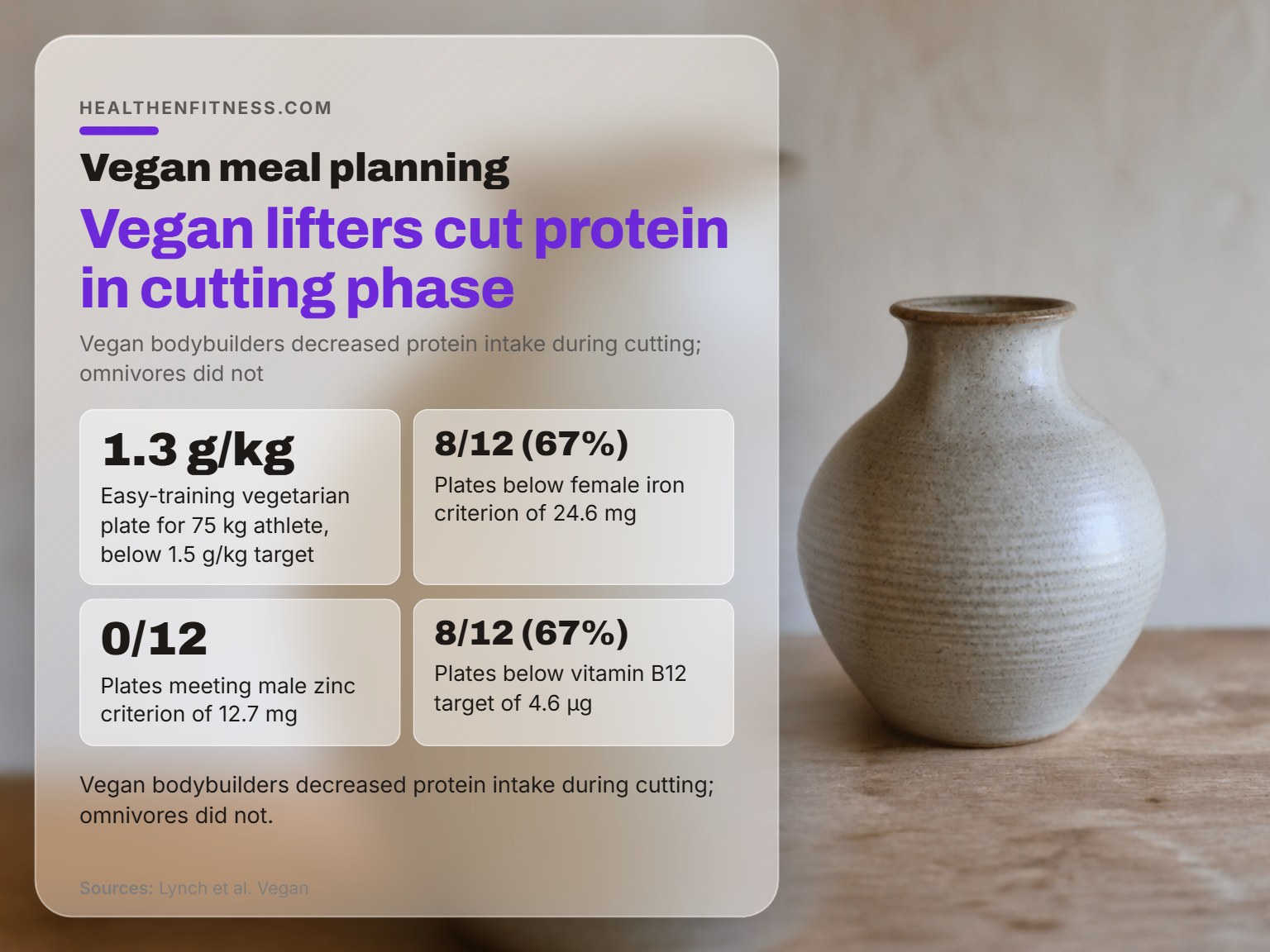
The cutting phase is where vegan lifters lose protein first. A 2023 study of bodybuilders found vegan athletes decreased protein intake during the cutting phase while omnivores did not.
The vegan bodybuilders preparation phases study found the drop was specific to the cutting phase. Omnivores did not decrease protein intake during the cut; vegans did.
Cutting drops total calories, and when the calorie budget shrinks, the plant eater can hit fullness before hitting the protein target.
Where this goes sideways: Cutting on beans and lentils alone. The volume that worked at maintenance becomes a wall once calories drop, and protein intake slides below target. Isolated plant protein closes the gap faster than another bowl of legumes.
The fix is to protect protein first when calories drop. vegetarian diet for muscle gain walks the meal order that keeps protein steady through a cut, and it applies to vegan lifters with a couple of swaps.
Budget matters here too. eating on a budget covers the cheap protein sources that make the plate work without a supplement budget.
Building a Post-Workout Plate That Actually Works
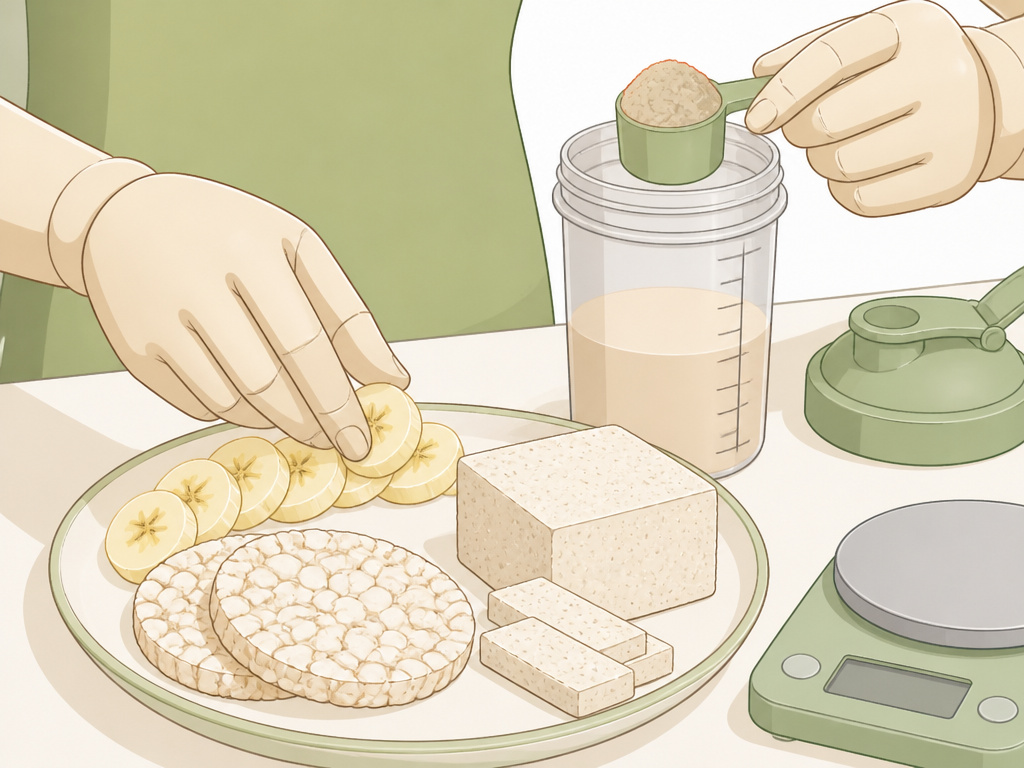
Three numbers govern the post-workout plate: 1.0 g/kg of carbohydrate, 0.3 g/kg of protein, and a realistic portion size for a 50 to 90 kg athlete.
VegPlate for Sports sets the post-workout plate at 1.0 g/kg of carbohydrate (mostly simple) plus 0.3 g/kg of protein, and the framework is designed for athletes between 50 and 90 kg bodyweight.
Before you start: Cool cooked beans and grains fast before they go in the fridge. Spread them on a sheet pan instead of stacking them in a deep container, and refrigerate as soon as they stop steaming. A deep container of warm lentils is the classic meal-prep failure: the center stays warm for hours and the batch goes off before the week is out.
Building it in practice:
- Start with the carbohydrate: 1.0 g/kg of mostly simple carbs. A banana plus a rice cake is a start; a larger athlete needs more.
- Add 0.3 g/kg of protein: a scoop of vegan protein powder covers it for most lifters, or a block of firm tofu if you prefer food.
- Skip the fiber load: the post-workout plate is the wrong place for the big legume bowl. Save the lentils for the meal two hours later, when fullness is not fighting your appetite.
- Drink to thirst, not to a number: no source in this set supports a fixed post-workout water target, and over-drinking during a cut can crowd out calories you need.
The texture of a post-workout shake should be thin and drinkable, not a paste. Thin matters, because the goal is calories in, not a chewing exercise.
Fiber, Sodium, and Vitamin D: The Three Quiet Problems
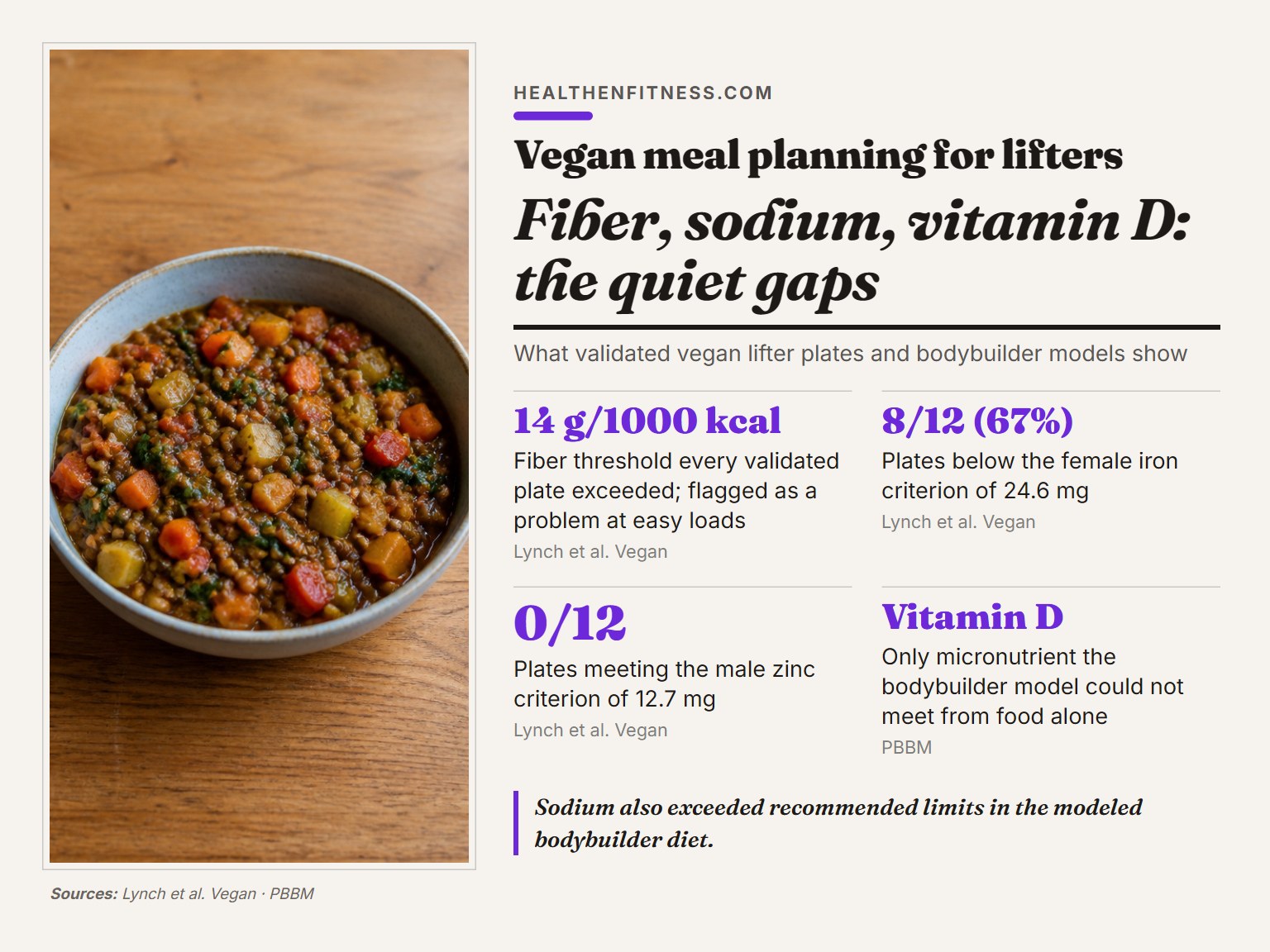
Fourteen grams per thousand calories is the fiber number every validated plate exceeded. Fiber is the one place where the sources in this set genuinely diverge. Lynch treats the high fiber content of the validated plates (all above 14 g/1000 kcal) as a problem to avoid at easy training loads. No other source in this set flags fiber as a limiting factor.
The practical read is that fiber is a problem of context, not a problem of amount. Lynch treats high fiber (all plates above 14 g/1000 kcal) as a problem to avoid at easy training loads, while no other source in this set flags fiber as a limiting factor. At hard training loads and high calorie intakes, fiber is fine; at easy loads and light bodyweights, the same fiber load crowds out the protein and micronutrients the plate is supposed to deliver.
Sodium is the second quiet problem. The bodybuilder model exceeded recommended sodium limits, which tracks with what happens when a lifter leans on processed plant foods to hit protein targets.
Vitamin D was the only micronutrient the bodybuilder model could not meet from food alone. That is a food-supply problem, not a planning problem: the model’s conclusion was that the shortfall needs to be addressed outside the plate.
Three signs the plate is not covering the bases:
- Fatigue that does not lift after a deload: iron and B12 shortfalls both present this way, and neither shows up on a standard protein log.
- Cravings that spike in the evening: often a first-meal protein gap, not a willpower problem.
- Slow recovery between sessions: zinc and vitamin D both play a role, and both are easy to miss on a plant-heavy diet.
Plant protein vs whey for a lifter: the bodybuilder model met protein and leucine requirements on plants alone when calories were scaled up, while Lynch et al. And the Advances in Nutrition review insist on careful planning. Whey still has a place if you tolerate it and want a fast post-workout option.
The VegPlate for Sports food guide is the most practical framework in this set for translating the numbers into meals, and its 50 to 90 kg design range covers most recreational lifters. A practical vegan advice for athletes paper is the one to read if you want the food-level version of this, and it covers the everyday swaps that make the plate work.
Honestly, tracking iron and B12 is tedious. Many lifters do it once, find the gap, fix it, and stop logging. That is the right way to use a tracker: as a one-time audit, not a permanent habit.
Frequently Asked Questions
How much protein should a vegan lifter eat per day?
Four published anchors put the target between 1.5 and 1.8 g/kg per day. The 1.5 g/kg figure is what Lynch et al. Used for their validated athlete’s plates, the rugby player model used 1.68 g/kg, and the bodybuilder model used 1.8 g/kg. For a lifter trying to add muscle, the 1.8 g/kg anchor leaves the most margin.
Is vegan meal planning for lifters harder than omnivore planning?
It is harder in specific spots, not across the board. The bodybuilder model met every micronutrient except vitamin D from food alone when calories were scaled up, while Lynch et al. And the Advances in Nutrition review insist on careful planning. The validated plates fell short on iron, zinc, and B12 at easy training loads and light bodyweights. The difficulty is concentrated, not universal.
Do I need supplements on a vegan lifting diet?
Vitamin D is the one micronutrient the bodybuilder model could not meet from food alone, so that is the clearest case for a supplement. B12 is the next most consistent gap, with 8 of 12 validated plates below the 4.6 microgram target. Iron and zinc are food-fixable for most lifters, but female athletes should track iron specifically.
What is the female iron criterion and why does it matter?
The female iron criterion used in the validated plate study was 24.6 mg, compared with 10.8 mg for males. That 2.3-fold gap produced opposite adequacy verdicts on the same food plates: 4 of 12 plates failed the male criterion, and 8 of 12 failed the female criterion. Female lifters on a plant-based diet are the group most likely to need targeted iron planning.
Why did vegan bodybuilders lose protein during the cut?
2023 study found vegan bodybuilders decreased protein intake during the cutting phase while omnivores did not. The mechanism is fullness: plant protein sources carry fiber and water, so the same protein dose takes up more stomach space, and a calorie cut hits the protein target first.
Is high fiber a problem on a vegan lifting diet?
Lynch treats the high fiber content of the validated plates (all above 14 g/1000 kcal) as a problem to avoid at easy training loads. No other source in this set flags fiber as a limiting factor. The practical read is that fiber is a problem of context: fine at hard training loads and high calories, a limiting factor at easy loads and light bodyweights.
The Bottom Line
Here is the threshold that matters most. If you are training easy that week and your bodyweight is on the lighter end, the standard plate method is the least reliable version of this for you. That is exactly where Lynch found the shortfalls concentrated, and it is where the female iron criterion (24.6 mg) fails two-thirds of the plates researchers built.
This all changes if you are in a cutting phase. The protein drop in vegan bodybuilders during the cut is the clearest failure mode in this set, and it is the one place where a plant-based lifter needs a plan that an omnivore does not.
Today, just log one normal day in a nutrition tracker and look at iron and B12, not just protein. If either is under target, you have found the gap that matters more than the protein number you have been chasing.
