
10 Best Nike Gym Shoes in 2026
This post contains affiliate links. As an Amazon Associate, we earn from qualifying purchases.
The Nike Metcon 10 Men’s Training Shoes earn our best overall pick thanks to their Hyperlift plate for heavy lifts and a wider toe box that lets your feet splay for power. For women focused on lifting, the Nike Free Metcon 5 Women’s Training Shoes offer a wide heel and cushioned foam core. The Nike MC Trainer 4 Men’s Workout Shoes excel for lateral movement and agility drills.
Finding the right Nike gym shoe means matching your workout style to the shoe’s strengths. A shoe built for heavy squats feels stiff during box jumps, while a flexible trainer for plyometrics won’t give you the stable platform you need under a loaded barbell.
We evaluated these 10 models by examining manufacturer specifications, expert round-ups, and patterns in owner feedback. This guide highlights the key trade-offs so you can choose the pair that fits your training priorities.
Top 10 Nike Gym Shoes in the Market
Certain content that appears on this site comes from Amazon. This content is provided "as is" and is subject to change or removal at any time.
The Best Nike Gym Shoes, Reviewed
Nike Metcon 10 Men's Training Shoes

What We Like
- Hyperlift plate for heavy lifts
- Wider toe box for foot splay
- ReactX foam for energy return
- Sticky rubber in high-wear areas
Trade-offs
- Midfoot band can feel restrictive for wide arches
- Hyperlift plate feels stiff for running or walking.
The Hyperlift plate under the heel gives you a rock-solid base for heavy squats, deadlifts, and cleans, so you can focus on driving through your legs instead of wobbling. That stability pairs with a wider toe box than the Metcon 9, letting your toes spread out and helping you plant more power through your whole foot. Add in ReactX foam in the midsole for a bouncy feel during box jumps or sprints, and you have a trainer that handles both the barbell and the cardio side of a session without compromise. It suits anyone who wants one shoe that does not force them to choose between lifting heavy and moving fast.
The Hyperlift plate under the heel optimizes stability for heavy lifts like squats, deadlifts, and cleans, so you can push through your whole foot without wobbling. Compared to the Nike Free Metcon 5, which leans more toward flexibility and lighter workouts, this shoe is built for controlled lifting and high-intensity drills where stability matters more than natural foot motion. If your gym days mix heavy compound lifts with explosive moves, this is the one to grab.
Nike Free Metcon 5 Women's Training Shoes

What We Like
- Wide heel for stable weight lifting
- Softer foam core cushions foot
- Internal weave distributes midfoot pressure
- Designed for sudden direction changes
Trade-offs
- Heavier than the Metcon 10 Women's Cross Trainers
- Not ideal for runners needing a lightweight shoe.
The wide heel gives you a solid base for squats and deadlifts, so you can focus on driving through your legs without wobbling around. That stability is what makes this shoe a natural fit for anyone who spends a good chunk of their gym session under a barbell. The softer foam core cushions your foot during jumps and lunges, and the wide internal weave wraps your midfoot to keep things snug when you cut or brake quickly. If your training mixes lifting with dynamic moves like box jumps or agility drills, this shoe bridges that gap without making you feel like you are standing on a block of concrete.
Product photos
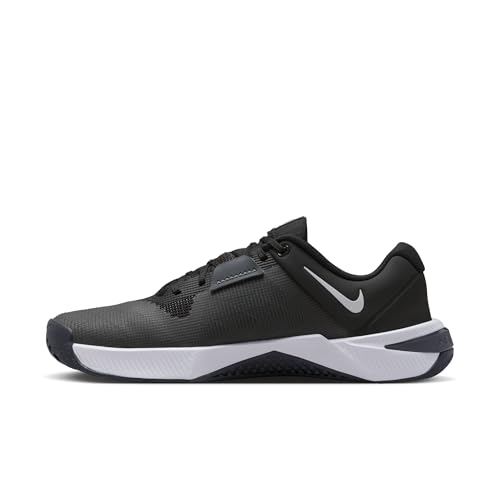
Nike Metcon 10 Women's Cross Trainers
What We Like
- Hyperlift plate optimizes stability for heavy lifts
- Wider toe box lets toes spread for power
- ReactX foam adds energy return for jumps
- Sticky rubber grip on high-wear areas
Trade-offs
- Heavier than some training shoes at 1.0 pounds
- Narrower toe box than the Metcon 9
A Hyperlift plate under the heel puts stability front and center for squats, deadlifts, and cleans, so you can plant your feet and push hard without wobbling. That wider toe box compared to the Metcon 9 lets your toes splay naturally, helping you root through your whole foot when the weight gets serious. If your gym sessions revolve around heavy compound lifts and you want a shoe that keeps you grounded, this one is built for that exact job.
The 1.0-pound build makes this shoe heavier than some options, such as the women’s Free Metcon 5 at 1.8 pounds. But that weight is part of the stability-focused design. For lifters who want a solid base for heavy compound lifts, the Metcon 10 delivers exactly what the name promises: rock-solid footing for the moves that matter most.
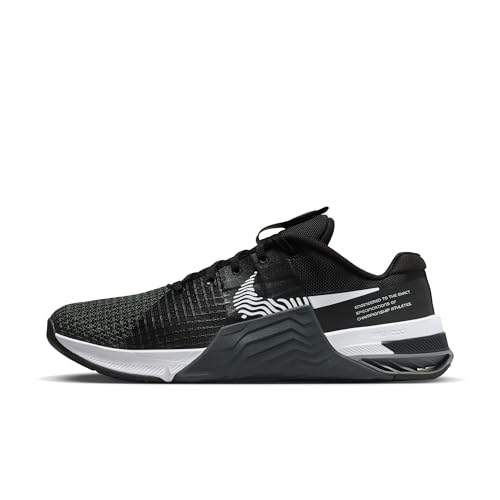
Nike Metcon 8 Men's Training Shoes
What We Like
- Nike React Foam for responsive cushioning
- Wide flat heel for stable lifting
- Sole carvings improve flexibility during movement
Trade-offs
- At 1.1 lb, heavier than Nike Free Metcon 5 Men's 0.9 lb
A wide, flat heel gives you a rock-solid base for squats and deadlifts, so you can push through heavy sets without rocking side to side. That stability is paired with Nike React Foam underfoot, which softens landings during box jumps or burpees without feeling mushy. The sole carvings let the shoe bend naturally when you lunge or sprint. This makes it a smart pick if your gym sessions mix strength work with agility drills and you want one shoe that handles both without compromise.
The trade-off is weight: at 1.1 pounds, it is noticeably heavier than the men’s Free Metcon 5 at 0.9 pounds. So if you prioritize speed for short runs or jump rope intervals, the lighter option may feel snappier. But for anyone who regularly sets up a barbell and then moves to a plyo box or battle ropes, the Metcon 8 balances stability and flexibility better than most. It is not a dedicated runner, but for the lifter who also wants to move, this shoe earns its place in the bag.
Product photos
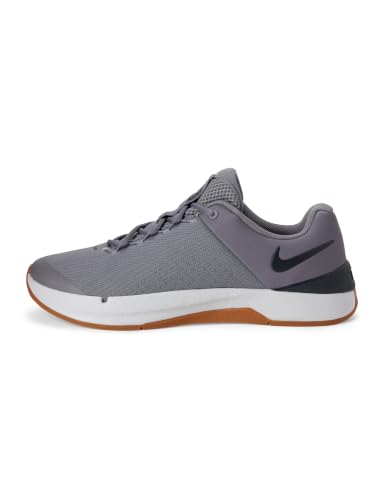
Nike MC Trainer 4 Men's Workout Shoes
What We Like
- Flat base for lateral stability
- Forefoot flex grooves for flexibility
- Foam midsole for soft cushioning
- Rubber outsole for multi-directional traction
Trade-offs
- Foam midsole offers less support for heavy loads
- 0.7-pound build limits stability under heavy barbell work
A flat, stable base is the key feature here, and it’s exactly what you need when you’re shuffling side to side during agility drills or quick defensive moves. The forefoot flex grooves let you bend naturally, so you won’t feel like you’re fighting the shoe when you change direction. This pair suits anyone whose gym sessions involve lateral movements, think court sports, ladder drills, or dynamic warm-ups, where staying grounded matters more than pure lifting stability. The foam midsole adds soft cushioning to keep you comfortable during high-intensity circuits, and the rubber outsole grips well on multiple surfaces, so you can pivot without slipping.
At just 0.7 pounds, these shoes are lightweight, so they won’t drag you down during fast lateral drills. A flat, stable base keeps you grounded when cutting side to side, and forefoot flex grooves let your foot bend naturally. But the foam midsole offers soft cushioning, not the rigid support some lifters want for heavy barbell work.
Product photos
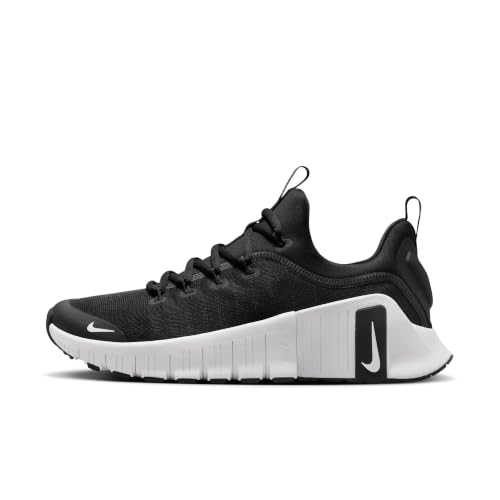
Nike Free Metcon 6 Women's Training Shoes
What We Like
- Laser-siped outsole for better flexibility
- Flywire cables for secure dynamic fit
- Added heel foam improves stability
- Breathable mesh with built-in stretch
Trade-offs
- Heavier than the Nike Free Metcon 5 (1.4 vs 1.8 pounds)
- Not for those who prefer a minimalist, barefoot-style shoe
A laser-siped outsole and rounded big-toe side of the forefoot mean this shoe is built to move with you during explosive jumps and quick lateral cuts, exactly what plyometric work demands. The high flexibility lets your foot bend naturally when you land and spring back up, while the added foam in the heel keeps you stable when you dig in for another rep. If your workouts involve box jumps, burpees, or any move that asks for agility and quick direction changes, this design supports that without feeling clunky.
At 1.4 pounds, this shoe is heavier than the Nike MC Trainer 4 (0.7 pounds), so if you prioritize a featherlight feel for long cardio sessions, you might notice the extra weight. But that heft comes from intentional cushioning and stability features that help absorb impact and keep you secure. The breathable engineered mesh and Flywire cables provide ventilation and a secure fit during workouts.
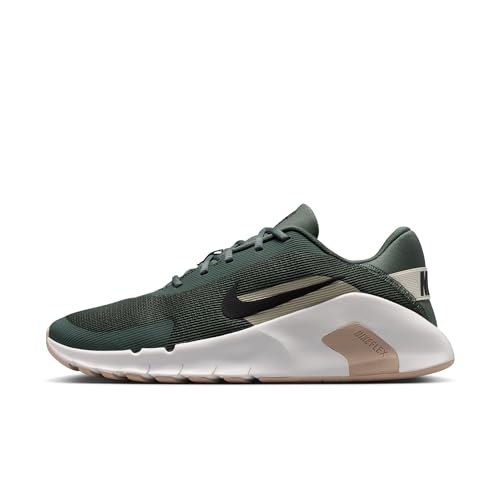
Nike Flex Train Men's Workout Shoes
What We Like
- Rubber outsole cutouts boost flexibility
- Full-length foam midsole for cushioning
- Mesh upper is lightweight and breathable
- Elastic heel band adds support
Trade-offs
- Not designed for heavy lifting stability
- Mesh upper lacks durability for rope climbs
Weighing 0.7 pounds, this shoe is built with a rubber outsole that has built-in cutouts and thin forefoot slits to let the sole bend naturally. The full-length foam midsole cushions landings, while the breathable mesh upper and an elastic band around the heel provide support. This design suits workouts that involve shifting between lunges, jumps, and bodyweight moves, offering freedom of motion for those who want a trainer that moves with them.
The rubber outsole has built-in cutouts and thin slits in the forefoot, so the shoe bends easily during agility drills and quick direction changes. A full-length foam midsole provides cushioning for comfort during light cardio and functional movement. But the flexible construction means it lacks the rigid platform of the Nike Metcon 10 Men’s Training Shoes, which weighs 1.0 pounds and is built for heavy, stable lifts.
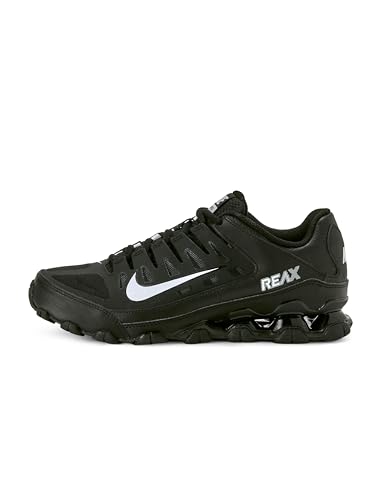
Nike Reax 8 Women's Trainer
What We Like
- Flexible forefoot bends during planking and lunges
- Bulky midsole supports heavy lifts
Trade-offs
- Less stable under maximal lifts than heavier models
- Weighs less than other cross trainers for heavy lifting
A flexible forefoot that bends and dips under pressure makes this trainer a natural partner for planking and lunges. These are exercises where your foot needs to move with you, not fight you. The traction pattern keeps you planted on gym floors, while the bulky midsole adds support when you’re going after heavy lifts. This shoe suits anyone who spends more time in dynamic moves like planks and lunges than in pure heavy lifting, offering a blend of mobility and stability that keeps your foundation steady without locking you in place.
The trade-off here is weight: at just 0.6 pounds, the Reax 8 is noticeably lighter than the women’s Metcon 10 (1.0 pounds). That means it won’t feel as planted under a heavy barbell. That lightness works in its favor for agility drills and high-rep lunges, but if your sessions lean toward maximal lifts, the Metcon 10’s extra heft might feel more reassuring. For everyday gym-goers who mix lunges, planks, and lighter strength work, this shoe hits a sweet spot between flexibility and support.
Product photos
Nike Free Metcon 5 Men's Trainers

What We Like
- Molded heel clip for support
- Webbing eyelets for dynamic containment
- Redesigned upper for fit
- Stability for strength training
Trade-offs
- At 0.9 lb, heavier than some gym shoes
- Prioritizes stability over pure flexibility
The molded heel clip and webbing eyelets give you a locked-in feel during heavy lifts while the redesigned upper keeps things breathable for mobility drills. That combination makes it a smart pick if you want one shoe that handles squats and lunges just as well as dynamic warm-ups or quick agility work. It suits anyone who values a stable platform for strength but doesn’t want to swap shoes when it is time to move freely.
The weight is 0.9 pounds, which is heavier than the Nike MC Trainer 4 at 0.7 pounds. That difference matters if you are doing fast-paced drills where every ounce counts, but the Free Metcon 5’s design focuses on stability for strength work. For most gym-goers, the weight is a trade-off between support and speed.
Product photos
Nike Free Metcon Cross Trainer Men's Shoes

What We Like
- Wide heel for stable lifting
- Softer foam cushions the foot
- Internal weave distributes midfoot pressure
- Lightweight at 0.9 pounds
Trade-offs
- Not as rigid as dedicated lifting shoes
- Heavier than the Nike MC Trainer 4 at 0.9 pounds
A wide heel base gives you a solid foundation for squats and presses, while the softer foam core cushions every step so your feet don’t ache after a long session. The internal weave wraps the midfoot to handle sudden stops and direction changes, making this trainer a smart pick if you mix weightlifting with agility drills or cardio circuits. It’s built for the lifter who wants comfort without giving up a secure stance under the bar.
The trade-off is that softer foam can feel a bit less stable under maximal loads compared to the firmer Nike Metcon 10. If your primary focus is heavy deadlifts or Olympic lifts, the Metcon 10 offers a denser platform for that purpose. But for everyday gym-goers who value cushioning during warm-ups, box jumps, and lighter strength work, the Free Metcon hits a nice balance between support and all-day comfort.
How We Evaluated Nike Gym Shoes
We built this guide by studying manufacturer specs, reading expert round-ups from strength and conditioning sources, and analyzing common themes in gym-goer feedback. The goal was to understand what each shoe does well and where it falls short for specific training styles.
Three criteria mattered most. First, stability: a wide, flat heel and a rigid plate help you stay planted under heavy loads. Second, flexibility: forefoot grooves and cutouts let the shoe bend naturally for lunges, jumps, and agility work. Third, weight and feel: lighter shoes suit high-rep metcons and cardio, while heavier builds offer more support for lifting.
A research-led evaluation can’t replace trying a shoe on your own foot, but it can narrow your options. We focused on clear trade-offs so you know exactly what you gain and what you give up with each pick.
What To Look For In Nike Gym Shoes
Before you buy, think about your main training style. The right shoe depends on whether you lift heavy, move fast, or do a bit of both.
Look for a flat, wide heel for stable lifting, flexible forefoot for dynamic moves, and a secure fit that doesn’t pinch. Match the shoe’s strengths to your workout.
Stability For Lifting
A shoe built for heavy squats and deadlifts needs a firm, flat base. The Nike Metcon line uses a Hyperlift plate that keeps your foot stable under the bar. A wide heel distributes weight evenly, which helps you drive through the floor. If you lift heavy multiple times a week, prioritize stability over flexibility. The trade-off is that these shoes feel stiff for running or walking.
Flexibility For Movement
For lunges, box jumps, and plyometrics, you want a shoe that bends with your foot. Look for forefoot flex grooves or cutouts in the outsole. The Nike Free Metcon series uses a laser-siped outsole and softer foam core to allow natural movement. The downside is that flexible shoes offer less support for maximal lifts.
Fit And Weight
A secure fit keeps your foot from sliding inside the shoe during lateral cuts and direction changes. Flywire cables and webbing eyelets help lock the midfoot. Weight matters too: lighter shoes around 0.7 to 0.9 pounds suit high-rep cardio, while heavier shoes around 1.0 to 1.1 pounds offer more stability for lifting.
- Check the toe box width: a wider toe box lets your toes splay for better balance.
- Look at the outsole pattern: sticky rubber in high-wear areas improves grip for rope climbs and sled pushes.
- Consider the heel-to-toe drop: a lower drop keeps you closer to the ground for lifting.
- Test the midfoot feel: some shoes have a band that can feel restrictive if you have wide arches.
- Match the weight to your workout: lighter for cardio, heavier for lifting.
A shoe that does everything well doesn’t exist. Pick the trade-off that matches your main training goal.
Nike Gym Shoes Compared
The table below compares the key specs and trade-offs of each shoe so you can see at a glance which model fits your training style.
| Product | Weight | Midsole Foam | Heel Feature |
|---|---|---|---|
| Nike Metcon 10 Men's Training Shoes | 1.0 pounds | ReactX foam | Hyperlift plate |
| Nike Free Metcon 5 Women's Training Shoes | 1.8 pounds | Softer foam core | Wide heel for lifting |
| Nike Metcon 10 Women's Cross Trainers | 1.0 pounds | ReactX | Hyperlift plate |
| Nike Metcon 8 Men's Training Shoes | 1.1 pounds | Nike React Foam | Wide and flat |
| Nike MC Trainer 4 Men's Workout Shoes | 0.7 pounds | Foam | Flat, stable base |
| Nike Free Metcon 6 Women's Training Shoes | 1.4 pounds | N/A | N/A |
| Nike Flex Train Men's Workout Shoes | 0.7 pounds | Full-length foam | Elastic band |
| Nike Reax 8 Women's Trainer | 0.6 pounds | Bulky for support during heavy lifts | N/A |
| Nike Free Metcon 5 Men's Trainers | 0.9 pounds | N/A | Molded heel clip |
| Nike Free Metcon Cross Trainer Men's Shoes | 0.9 pounds | Softer foam core | Wide heel base |
Frequently Asked Questions
What is the difference between Nike Metcon and Nike Free Metcon?
The Metcon line prioritizes stability for heavy lifting with a rigid Hyperlift plate and wide flat heel. The Free Metcon blends that stability with a softer foam core and more flexible outsole, making it better for dynamic moves and plyometrics. Choose Metcon for lifting, Free Metcon for mixed training.
Can I use Nike gym shoes for running?
Most Nike training shoes are not ideal for running. The stiff heel and heavier build that help with lifting make them uncomfortable for longer runs. If you need one shoe for both, look for a versatile model like the Nike Free Metcon or consider a dedicated cross-trainer. For more details, check our guide on Nike for running and gym.
Are Nike Metcon shoes good for wide feet?
The Nike Metcon 10 has a wider toe box than previous models, which helps with foot splay during lifts. However, some owners report the midfoot band feels restrictive for wide arches. If you have wide feet, try the Metcon 10 or look for models with a more forgiving upper.
What Nike shoe is best for CrossFit?
The Nike Metcon 10 is the most popular choice for CrossFit because it balances stability for heavy lifts with enough flexibility for dynamic movements. The Free Metcon 5 is a good alternative if you prioritize agility and natural foot movement over maximal stability.
How do I clean my Nike training shoes?
Use a soft brush or cloth with mild soap and water. Avoid machine washing, which can damage the foam and adhesives. Let them air dry away from direct heat. For stubborn dirt on the outsole, a gentle scrub with an old toothbrush works well.
The Bottom Line
The Nike Metcon 10 Men’s Training Shoes are the best overall pick for anyone who wants a stable, durable shoe for heavy lifting and high-intensity workouts. The Hyperlift plate and wider toe box give you a solid foundation for squats and deadlifts, while the ReactX foam adds energy return for jumps.
If your training focuses on lateral movement and agility, the Nike MC Trainer 4 Men’s Workout Shoes offer a flat base and forefoot flex grooves. For women who lift heavy, the Nike Free Metcon 5 Women’s Training Shoes provide a wide heel and cushioned foam core. Budget-conscious gym-goers who value flexibility should check the Nike Flex Train Men’s Workout Shoes.
The single most important buying factor is matching the shoe to your main training style. A stable lifting shoe won’t feel good for plyometrics, and a flexible trainer won’t support maximal loads. Pick the trade-off that fits your workouts. For a broader look at options, read our guide on best gym shoes.
