
10 Best Lifting Belts For Men in 2026
This post contains affiliate links. As an Amazon Associate, we earn from qualifying purchases.
The Dark Iron Fitness Genuine Leather Weightlifting Belt wins as the best overall lifting belt for men because it combines 100% genuine leather construction with a double-prong buckle that holds firm under max loads. It also offers 12 adjustment holes for a precise fit. For competitive lifters who want a quick on-off, the Gymreapers 10MM Lever Weightlifting Belt takes the Best Lever Belt award, while the SBD 13mm Powerlifting Lever Belt earns Best For Heavy Powerlifting for those chasing elite-level totals.
The challenge with picking a lifting belt is that one style does not suit every lifter. A powerlifter needs rigid, competition-legal support for a one-rep max squat; a general gym-goer might prefer a lighter nylon belt for circuit training. The buckle type, thickness, and material all affect how the belt performs for your specific routine.
We built this guide by examining specifications, manufacturer documentation, expert recommendations, and patterns in owner feedback across the most popular lifting belts on the market. The result is a clear breakdown of 10 belts organized by their strengths so you can match a belt to your training style without guesswork.
Top 10 Lifting Belts For Men in the Market
Certain content that appears on this site comes from Amazon. This content is provided "as is" and is subject to change or removal at any time.
The Best Lifting Belts For Men, Reviewed
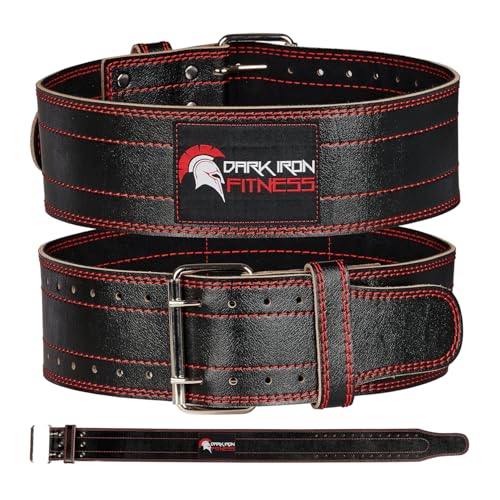
Dark Iron Fitness Genuine Leather Weightlifting Belt
What We Like
- 100% genuine leather with double-row stitching
- Double-prong buckle won't slip during max lifts
- 12 adjustment holes for precise fit
- Keeper loop secures excess belt length
Trade-offs
- At 1.4 pounds, heavier than some nylon belts
- Double-prong buckle takes longer to fasten than a lever
A 4-inch wide genuine leather belt with a double-prong buckle gives you the rigid core support you need for heavy squats and deadlifts without the belt digging into your ribs. The 12 adjustment holes at one-inch intervals let you dial in the fit precisely, so the belt stays put during a max deadlift or a set of overhead presses. This is the belt for lifters who want proven, no-nonsense construction and don’t mind spending a few extra seconds fastening it.
The trade-off is that the double-prong buckle takes more time to cinch than a lever-style belt like the Gymreapers 10MM Lever, which snaps shut instantly between sets. At 1.4 pounds, the Dark Iron is also heavier than a nylon belt, though that weight comes from the thick leather that provides the stability serious training demands. If you value security over speed and want a belt that will hold up through years of heavy lifting, this one delivers exactly what the specs promise.
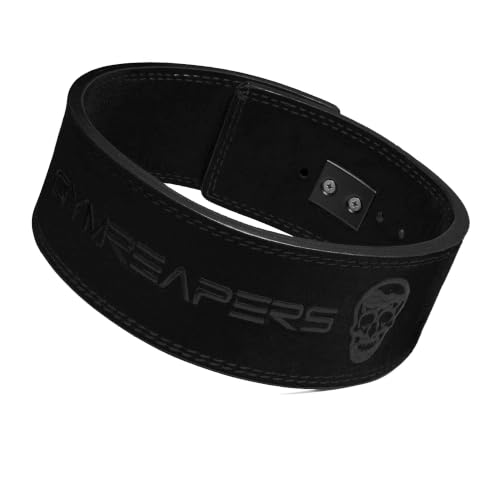
Gymreapers 10MM Lever Weightlifting Belt
What We Like
- IPF-approved for competition
- 10mm leather core for support
- Steel lever buckle holds
Trade-offs
- Lever buckle less adjustable mid-session
- 10mm thickness can feel stiff before break-in.
The 10mm thickness is the heart of this belt. It gives you the rigid support you need for heavy squat and deadlift sessions, letting you brace hard without worrying about your lower back caving in. That’s why it’s my top pick for competitive lifters: it’s IPF-approved, so you can train and step on the platform in the same gear, and the 3.9-inch width wraps your torso snugly without excessive pressure points. The steel lever buckle locks in place, so you set it once and forget it, no mid-session re-tightening, just pure focus on the lift.
One downside is that 10mm of leather is stiff, especially before it breaks in, and it can feel restrictive during movements that need more mobility, like some Olympic lifts or dynamic warm-ups. Compared to the SBD 13mm belt, this one is a different thickness, but it’s still a serious piece of gear meant for maximal lifting, not casual workouts. If you’re a powerlifter or someone who trains with heavy compounds, this belt delivers exactly what you need. If you’re just starting out or prefer a more flexible belt for general strength work, you might find it too rigid.
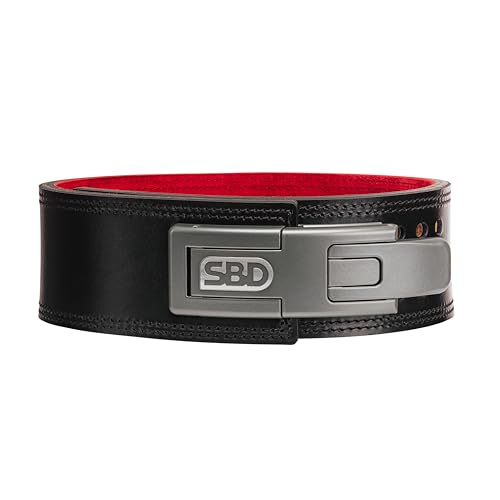
SBD 13mm Powerlifting Lever Belt
What We Like
- Maximum competition-legal 13mm thickness
- Patented Gliding Lever for quick adjustments
- Four-layer British leather molds to waist
- Developed with elite powerlifters and coaches
Trade-offs
- 13mm thickness limits flexibility for lighter training
- Lever closure less convenient than prong for beginners
- Full leather break-in period before optimal fit
The stiffest support allowed in powerlifting competition comes from this belt’s 13mm thickness and 10cm width, so you get a rigid surface to brace against on squats, deadlifts, and bench press. Four layers of British cowhide and suede give it the density to hold its shape while gradually molding to your waist over time. The patented Gliding Lever combines the adjustability of a prong belt with the tight, secure lock of a lever belt, which makes quick changes between training sets or competition attempts straightforward. Designed with input from world-class powerlifters, coaches, and health professionals, it delivers the support elite lifters trust for max-effort work.
That rigidity means the 13mm belt is thicker and less flexible than a 10mm option like the Gymreapers lever belt, which some lifters prefer for warm-ups or varied training. The leather will mold naturally to your waist, but you should expect a break-in period before it conforms fully. For athletes who train specifically for powerlifting meets and want the maximum support allowed in competition, this belt is built for that purpose. Not ideal for general gym-goers who want a flexible belt for varied training styles.
Product photos
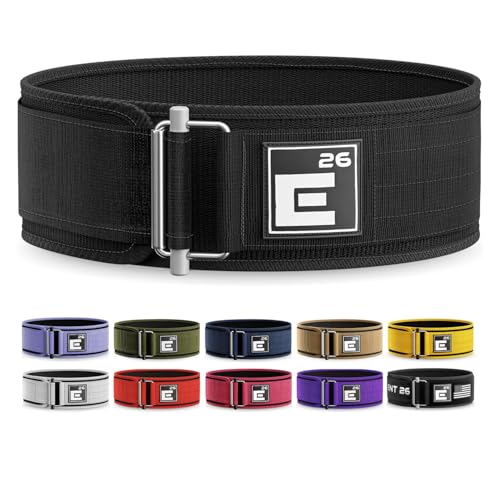
Element 26 Self-Locking Weight Lifting Belt
What We Like
- Self-locking buckle engages automatically under load
- Quick-release roller for fast removal
- Breathable nylon does not retain sweat
- No break-in period required
Trade-offs
- Nylon offers less rigid support than leather belts
- Nylon can feel less durable over years than thick leather
Weighing just 0.6 pounds, this belt folds up small enough to toss in any gym bag. Yet the full metal self-locking buckle engages automatically under load to keep it secure during heavy squats, deadlifts, and cleans. The nylon material is breathable and doesn’t retain sweat like some other materials, and there’s no break-in period, so you can use it right out of the package. The uniform 4-inch design meets requirements for sanctioned Olympic lifting competitions and functional fitness events. That makes it a practical choice for lifters who want a lightweight, breathable belt with a quick-release roller for instant removal between sets.
Nylon is comfortable and flexible, but it doesn’t offer the same rigid support as a thick leather belt like the Dark Iron Fitness Genuine Leather Weightlifting Belt, which weighs 1.4 pounds. For most gym sessions, especially squats, deadlifts, cleans, snatches, and jerks, the Element 26’s self-locking convenience and breathable design make it a low-fuss companion that conforms to your core for spinal stability.
Product photos
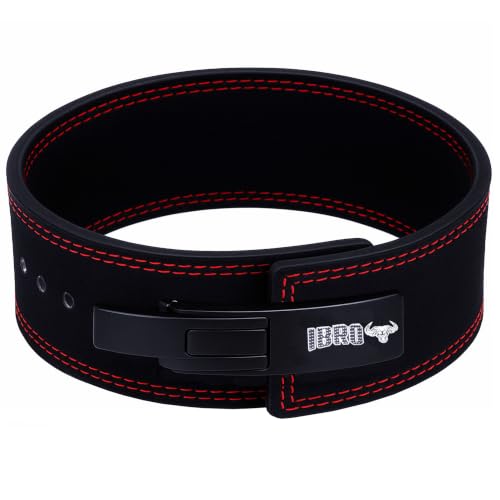
IBRO Powerlifting Lever Belt
What We Like
- Quick-release lever for consistent tightness
- Genuine leather holds shape over time
- Double stitching for durability
- Easy 2-minute setup with QR video
Trade-offs
- Arrives unassembled, requires Phillips screwdriver
- Lever screws need checking before each session
- No IPF approval listed for competition use
The quick-release steel lever buckle locks to the exact same tightness every set and opens in one motion between squats and deadlifts, so you never fumble with holes or straps mid-workout. That consistency matters when you’re bracing heavy, no guessing if you’re too loose or too tight. The 10mm genuine leather core with suede finish stays firm out of the box and softens slightly over a few sessions without folding or rolling, which means reliable support set after set. This belt suits lifters who want a no-fuss, repeatable fit from their first heavy squat to their heaviest deadlift, especially if you prefer a lever over prongs or velcro.
The steel lever buckle clamps to the exact same tightness every time and opens in one motion between sets, so you can brace hard on squats, deadlifts, and bench without fumbling with holes or straps. The belt arrives unassembled, so you’ll need a Phillips screwdriver (not included) to mount the lever yourself, and you should tighten the lever screws firmly and check them before each session. Setup takes about two minutes: wrap the belt around your waist, fit the lever in the holes where it closes snugly, and follow the QR card or listing video.
Product photos
RDX Cowhide Leather Weight Lifting Belt

What We Like
- Wide padded lumbar back for bracing support
- Twin-prong steel buckle prevents slipping
- Suede inner lining adds comfort during lifts
Trade-offs
- Sizing requires belly-button measurement, not pant size
- Belt is only 7mm thick, less rigid than 10mm belts.
The 6-inch wide padded lumbar section on this RDX belt gives you a broad, stable surface to brace your core against during heavy squat and deadlift work. That is exactly why it works so well for lifters who prioritize lower-back support. The suede inner lining helps it feel comfortable against your skin, and the twin-prong steel roller buckle lets you dial in the fit across ten holes, with a leather flap to keep the buckle from digging into your belly.
Beast Power Gear Lever Weight Lifting Belt

What We Like
- Quick locking lever buckle for fast adjustments
- 10mm thick leather resists stretching
- 4-inch width wraps torso evenly for support
Trade-offs
- Lever buckle does not allow mid-set adjustments
- No mid-set adjustability with the lever buckle
A 10mm thick leather belt with a heavy duty lever buckle that snaps shut in seconds means you spend less time fiddling and more time under the bar. This is the kind of quick, secure fit that matters when you’re loading up for a heavy squat or deadlift and just want consistent support set after set. The four-inch width wraps your torso evenly, bracing your abs and lower back so you can push harder with confidence. It’s built for lifters who value speed and stability over the slow, hole-by-hole adjustment of a prong belt.
A lever belt like this one doesn’t offer mid-set micro-adjustments. So if your waist changes size between warm-ups and work sets, you will need to plan ahead. At 3.9 pounds it is noticeably heavier than a belt like the double prong model from Dark Iron Fitness, which weighs 1.4 pounds, so it may feel bulky if you prefer a lighter carry. That said, the premium leather and suede lining are built to resist stretching and keep your support consistent, making this a smart pick for anyone who wants a no-nonsense lever belt that locks in fast and stays put.
POZTEV Powerlifting Lever Belt

What We Like
- Quick-release lever mechanism
- 10mm thick leather construction
- 4-inch vertical back support
Trade-offs
- Only one waist size range offered
- Not IPF approved for competition use
The 10mm thickness and 4-inch vertical back support mean this belt gives you the rigid, consistent pressure against your core that heavy squats and deadlifts demand, without the flex of thinner belts. The lever buckle lets you lock in that tightness in a split second and release it just as fast between sets, so you spend more time lifting and less time fiddling with straps. For anyone looking for a leather lever belt that offers solid support at a reasonable price, this model delivers.
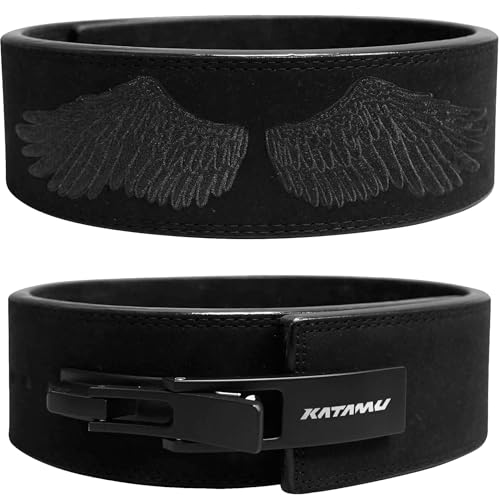
Katamu Black Out Wings 10mm Lever Belt
What We Like
- USPA and IPL approved for competition
- Steel lever locks same tension every set
- Uniform 4-inch width for consistent bracing
- 10mm leather breaks in faster than 13mm
Trade-offs
- Lever requires screwdriver for initial adjustment
- Too stiff for casual gym-goers who prefer flexibility
The steel lever buckle locks in seconds and releases instantly between sets, so you avoid the hassle of prong holes during a workout. At 10mm thick, this belt provides firm, rigid support for heavy squat and deadlift work while breaking in faster than a 13mm belt, which means less time waiting for it to conform to your body. It is approved for USPA and IPL powerlifting competition, so it meets the requirements for those federations.
One thing to know is that the lever position is set with the included mini screwdriver, so you will need to dial it in once for a personalized fit. That is fine for most lifters, but if you prefer to adjust tightness between exercises or share the belt, a prong buckle like the one from Dark Iron Fitness might be more flexible. For anyone looking for a competition-approved lever belt that breaks in faster than a 13mm option, this Katamu model delivers on its stated specs.
Product photos
Iron Bull Strength Powerlifting Lever Belt

What We Like
- 13mm thick suede leather
- USPA & IPL approved
- Improved chrome lever buckle
- 4-inch height for core stability
Trade-offs
- Heavy-duty design suits only serious lifters
- Requires exact waist measurement for sizing
This 13mm thick suede leather belt is designed for serious and extreme lifters, offering maximum support for heavy squat and deadlift sessions. The suede surface provides a non-slip grip, and the 4-inch height helps stabilize your back and core evenly. The improved chrome lever buckle is built with nearly indestructible materials, so you can tighten and loosen quickly without worrying about equipment failure. It’s a competition-approved choice for those pushing heavy weights.
This belt is not for casual gym-goers. Its extreme stiffness and bulk require a commitment to heavy lifting. Compared to the Gymreapers 10mm lever belt, the Iron Bull offers a thicker 13mm construction, which provides more support but less flexibility, making it less forgiving for lighter workouts. If you’re not chasing maximal lifts, a thinner belt might be more practical. But for those who want the ultimate in competition-ready support, this belt delivers.
Product photos
How We Evaluated Lifting Belts For Men
Our evaluation draws from manufacturer specifications, federation approval lists, expert round-ups from strength coaches, and the collective experience of lifters who have used these belts for months or years. We focused on the design details that actually affect performance under the bar rather than marketing claims.
The four criteria that mattered most were buckle security, thickness and rigidity, material quality, and competition approval. A belt that slips mid-lift or buckles under heavy loads is useless regardless of how comfortable the padding feels. We prioritized belts with proven closure mechanisms, double-prong steel buckles, steel lever systems, and self-locking designs, and noted which belts carry IPF, USPA, or IPL approval for lifters who compete.
A research-led evaluation has honest limits. We cannot tell you exactly how a belt will feel after a year of heavy deadlifts or whether the break-in period will frustrate you personally. What we can do is organize the available evidence so you understand the trade-offs before you buy. For more detail on how these categories stack up, see our comprehensive lifting belt guide.
What To Look For In Lifting Belts For Men
Choosing a lifting belt comes down to matching the belt’s construction to your training goals. A powerlifter squatting heavy loads needs different support than someone doing deadlifts in a CrossFit class.
Focus on buckle type, thickness, material, and competition approval. A lever belt offers consistent tightness; a prong buckle offers adjustability. Leather provides rigid support; nylon offers flexibility. Thicker belts suit heavy lifting; thinner belts suit general training.
Buckle Type
The buckle is the most critical part of the belt because it determines how securely the belt stays tight under load and how quickly you can get it on and off. Double-prong buckles, like the one on the Dark Iron Fitness Genuine Leather Weightlifting Belt, engage two prongs into separate holes for a fail-safe grip that will not slip during max lifts. The trade-off is that threading the prongs takes a few extra seconds between sets.
Lever buckles use a steel cam mechanism that clamps the belt at a single tension point. The Gymreapers 10MM Lever Weightlifting Belt and SBD 13mm Powerlifting Lever Belt use this system, which locks at the same tightness every time. Lever belts are faster than prong belts but do not allow mid-set adjustments, if you want to loosen the belt between a squat and a deadlift, you have to release the lever and reset.
Self-locking buckles, like the one on the Element 26 Self-Locking Weight Lifting Belt, engage automatically when tension is applied and release with a roller mechanism, which is the fastest option for dynamic training.
Thickness and Rigidity
Belt thickness directly correlates with how much intra-abdominal pressure you can create during a heavy lift. A 13mm belt like the SBD offers maximum resistance to compression, which is why it is the thickest belt legal in powerlifting competition. The Iron Bull Strength Powerlifting Lever Belt also uses 13mm suede leather for lifters who want that level of support. These belts require a break-in period and can feel stiff for the first few weeks.
Ten-millimeter belts strike the most popular balance between support and flexibility. The Gymreapers 10MM Lever Weightlifting Belt and Beast Power Gear Lever Weight Lifting Belt both use this thickness, providing enough rigidity for heavy squats and deadlifts while remaining manageable for bench press. Thinner belts, like the RDX Cowhide Leather Weight Lifting Belt at 7mm, offer more flexibility for general strength training but provide less bracing support for maximal lifts. If you are looking for that middle-ground support, our best leather belts guide covers options at various thicknesses.
Competition Approval
If you compete in powerlifting, the belt must meet federation rules. The IPF (International Powerlifting Federation) requires belts to be no thicker than 13mm and no wider than 4 inches. The Gymreapers 10MM Lever Weightlifting Belt carries IPF approval, making it competition-ready for the largest federation. The SBD 13mm Powerlifting Lever Belt also meets IPF specs at the maximum legal thickness.
The USPA and IPL have slightly different rules, and the Katamu Black Out Wings 10mm Lever Belt and Iron Bull Strength Powerlifting Lever Belt both carry USPA and IPL approval. If you do not compete, federation approval is not necessary, but it is a useful quality signal because approved belts have passed dimensional and construction standards. For lifters focused on the deadlift specifically, our guide to best deadlift belts covers belts that excel in that movement.
- Check your federation’s belt rules before buying if you plan to compete
- Measure your waist at belly-button height, not your pant size, for accurate sizing
- Allow for a break-in period of 2-4 weeks with leather belts
- Bring the belt to the gym and try it at working weight before a competition
- Verify that the lever or buckle mechanism can be serviced if it wears out
A belt that fits snugly at your belly button and stays tight under load will serve you better than any material or brand name.
Lifting Belts For Men Compared
The table below compares the 10 lifting belts for men across the key specs that matter for your training. It covers buckle type, thickness, material, and competition approval, so you can see at a glance how each belt stacks up against your needs.
| Product | Material | Width | Closure | Thickness |
|---|---|---|---|---|
| Dark Iron Fitness Genuine Leather Weightlifting Belt | Genuine leather | 4.0 inches | Double-prong buckle | N/A |
| Gymreapers 10MM Lever Weightlifting Belt | Bovine leather | 3.9 inches | Steel lever | 10mm |
| SBD 13mm Powerlifting Lever Belt | British cowhide leather | 10cm | Patented Gliding Lever | 13mm |
| Element 26 Self-Locking Weight Lifting Belt | 100% premium nylon | 4 inches | Full metal self-locking buckle | N/A |
| IBRO Powerlifting Lever Belt | Genuine leather with suede finish | 4 inches uniform | Quick-release steel lever buckle | 8mm, 10mm, 13mm |
| RDX Cowhide Leather Weight Lifting Belt | Genuine cowhide leather | 4 in. or 6 in. | Industrial-grade steel roller buckle with twin prongs | 7 mm |
| Beast Power Gear Lever Weight Lifting Belt | Premium leather with suede lining | 4 inches | Heavy duty lever buckle | 10mm |
| POZTEV Powerlifting Lever Belt | Leather | 4 inches | Lever buckle | 10 mm |
| Katamu Black Out Wings 10mm Lever Belt | Leather with steel lever | 4 inches | Steel lever buckle | 10mm |
| Iron Bull Strength Powerlifting Lever Belt | Suede leather | 4 inches | Chrome lever | 13mm |
Frequently Asked Questions
What is the difference between a prong belt and a lever belt?
A prong belt uses one or two metal prongs that insert into holes along the belt, allowing you to adjust tightness by moving to a different hole. A lever belt uses a steel cam mechanism that clamps the belt at a single point, giving you the same tension every time. Prong belts offer more adjustability between exercises; lever belts are faster to fasten and unfasten.
How tight should a lifting belt be?
A lifting belt should be snug enough that you cannot slide a hand between the belt and your abdomen, but not so tight that you cannot take a full breath before bracing. When you brace your core against the belt, the belt should feel like a solid wall. If you can breathe normally with the belt fastened, it is too loose.
Do I need a 13mm belt or is 10mm enough?
Belts with a thickness of 10mm are sufficient for most lifters, including those squatting and deadlifting heavy loads. Thirteen-millimeter belts offer maximum support for elite-level powerlifters handling near-maximal loads, but they are stiffer and require a longer break-in period. For general strength training and most recreational lifters, 10mm provides the best balance of support and comfort.
Can I use a weightlifting belt for CrossFit?
Yes, but the belt type matters. Thick leather belts can restrict movement during dynamic exercises like burpees or box jumps. Many CrossFitters prefer a thinner nylon belt like the Element 26 Self-Locking Weight Lifting Belt, which is breathable and allows more mobility. For dedicated CrossFit lifting belts, look for models under 7mm that still provide bracing support for heavy cleans and squats.
When should I start using a lifting belt?
Most strength coaches recommend using a belt when you begin lifting at a high percentage of your one-rep max on compound lifts like squats and deadlifts. A belt is a tool for heavier loads, not for every warm-up set. If you are still learning proper bracing technique, it is better to master bracing without a belt first. For a full breakdown, see our guide to using a lifting belt.
The Bottom Line
The Dark Iron Fitness Genuine Leather Weightlifting Belt is the best overall choice for most lifters. Its double-prong buckle and 12 adjustment holes provide the security and fit that suit everything from heavy deadlifts to volume squat days. It is a durable leather belt that will last for years, and the price reflects fair value for that construction.
If you compete or want the fastest, most consistent setup between sets, the Gymreapers 10MM Lever Weightlifting Belt is the best lever option at a reasonable entry point. For elite powerlifters chasing maximum support, the SBD 13mm Powerlifting Lever Belt is the gold standard for competition-ready rigidity. Beginners or lifters who prefer flexibility should look at the Element 26 Self-Locking Weight Lifting Belt for its no-break-in nylon design.
The single most important factor in choosing a lifting belt is the buckle type and thickness that matches your training intensity. A belt that stays tight under load and fits your waist correctly will outperform any other feature.
