
10 Best Gym Shoes For Lifting in 2026
This post contains affiliate links. As an Amazon Associate, we earn from qualifying purchases.
The best gym shoe for lifting needs a flat, firm platform that keeps your feet stable under heavy weight. The NOBULL Men’s Outwork Shoe wins Best Overall because its low 4mm drop, carbon rubber sole, and wider toe box create a planted base for squats, deadlifts, and presses without sacrificing gym-floor versatility. For dedicated heavy compound work, the Nike Metcon 10 offers a Hyperlift plate and ReactX foam, while the Nike Romaleos 4 delivers the rigid platform Olympic lifters demand.
Choosing a shoe for lifting means balancing stability against the other work you do in the gym. A thick, cushioned running shoe lets your foot sink and wobble under a loaded barbell, increasing injury risk. A dedicated lifting shoe with a raised heel helps you hit depth in squats but feels awkward for box jumps or rowing. The right pick depends on whether you lift exclusively or mix in cardio and agility.
This guide ranks ten top lifting shoes based on manufacturer specifications, expert recommendations, and patterns in owner feedback. We break down what each shoe does best and who should buy it, so you can match your training style to the right platform.
Top 10 Gym Shoes For Lifting in the Market
Certain content that appears on this site comes from Amazon. This content is provided "as is" and is subject to change or removal at any time.
The Best Gym Shoes For Lifting, Reviewed
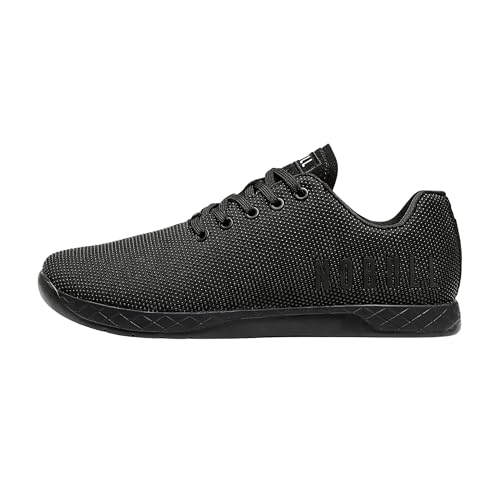
NOBULL Men's Outwork Shoe
What We Like
- Flat, firm, low-to-ground platform
- High-traction carbon rubber sole
- Wider toe box for stable footing
- Durable water-repellent coating
Trade-offs
- Minimal 4mm drop limits versatility for running
- Low 4mm drop limits comfort for running or dynamic cardio
A flat, firm platform with a 4mm heel-toe drop means you stay low and connected to the floor during deadlifts, squats, and presses. That minimal drop keeps your weight balanced over your midfoot, so you don’t tip forward under a loaded barbell. The wider toe box lets your toes spread naturally, helping you find a solid stance before you lift. This shoe is built for anyone who wants a stable, no-nonsense foundation for strength work, without extra cushioning or a raised heel getting in the way.
The trade-off is that the same low profile and firm midsole that make it great for lifting feel less forgiving during dynamic warm-ups or cardio circuits. If your routine mixes in box jumps or short runs, a shoe with more midsole cushioning, like the Nike Metcon 10, may suit those moves better. But for pure strength training, the Outwork’s carbon rubber sole and locked-down canvas upper deliver grip and stability that prioritize heavy lifting over versatility.
Nike Metcon 10

What We Like
- Hyperlift plate optimizes stability for heavy lifts
- Wider toe box lets toes spread for power
- ReactX foam gives responsive energy return
- Sticky rubber grip on high-wear zones
Trade-offs
- Not a dedicated weightlifting shoe with raised heel
The Hyperlift plate under the heel is the key feature here, it gives you a stable, solid base for squats, deadlifts, and cleans without the stiff feel of a dedicated lifting shoe. That wider toe box compared to the Metcon 9 lets your toes splay naturally, which helps you drive through your whole foot when the weight gets heavy. For anyone who wants one shoe that handles heavy barbell work and still lets you move through box jumps or sprints without changing footwear, this is a smart pick.
At just one pound, the Metcon 10 is lighter than the Nike Romaleos 4, which weigh four pounds. That lightness helps with agility work, but if your main focus is maximal stability under a heavy squat or clean, the Romaleos’ extra heft might serve you better. The Metcon 10 is a cross-trainer that leans hard into lifting, it’s not a specialist, but it’s a very capable all-rounder.
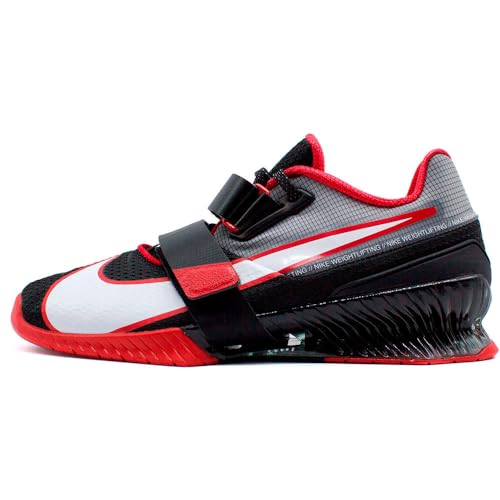
Nike Romaleos 4
What We Like
- Wide heel creates stable base for heavy lifts
- Rigid midsole enables optimal power transfer
- Adjustable straps secure foot during intense workouts
- Wide flat outsole supports explosive movements
Trade-offs
- At 4.0 pounds, heavier than many training shoes
- Rigid midsole not designed for walking comfort
A rigid midsole with a built-in heel lift changes how your body transfers force from the ground upward, which is exactly what makes the Nike Romaleos 4 stand out for Olympic lifting. The wide heel and flat outsole give you a stable platform for snatches and cleans, while the wide straps over the laces lock your foot in place during explosive movements. If you are working on technique or pushing toward heavier numbers, that stability lets you focus on the pull rather than wobbling through the catch.
This model is designed for one job, not for everything. At 4.0 pounds, it is noticeably heavier than the Nike Metcon 10, and the rigid sole is not designed for walking comfort. For anyone serious about Olympic lifting, that focused design is exactly the point, but if you need one shoe for lifting and general training, you may want to consider a different option.
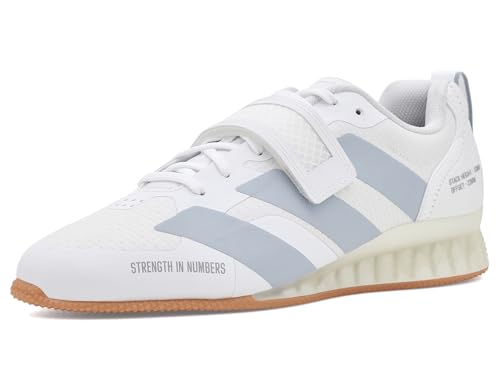
adidas Adipower Weightlifting 3
What We Like
- Hook-and-loop plus lace closure
- High-density midsole for heavy loads
- Rubber outsole for outstanding grip
Trade-offs
- Round toe limits toe splay compared to wide toe box designs
- No raised heel for Olympic lifters who need heel elevation
A hook-and-loop strap over a lace-up closure means you can lock your heel in place and still fine-tune forefoot tension. That is exactly what you want when the bar is loaded heavy and you can’t afford any foot shift inside the shoe. The high-density midsole provides a stable platform under big weights, so your force goes straight into the floor rather than getting absorbed by squishy foam. This is the shoe for lifters who prioritize a structured, locked-down fit and don’t mind a traditional round toe shape.
The round toe silhouette is a traditional design choice, and the 1.0-pound build keeps the shoe lightweight. Lifters who prefer a wider toe box or a heavier platform may want to consider other options. But for those who value a secure, adjustable fit with a supportive midsole for heavy squats and pulls, this Adipower delivers structured support without extra bulk.
Product photos
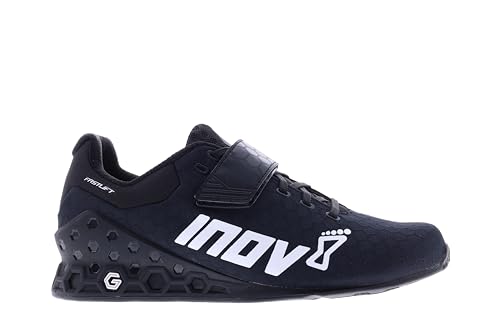
INOV8 Fastlift Power G 380
What We Like
- Graphene enhanced outsole for unrivalled grip
- Graphene POWERHEEL withstands huge forces
- Full-length POWERTRUSS midsole for angled support
- Breathable ripstop upper allows natural foot movement
Trade-offs
- No wide toe box option for lifters who need toe splay
A graphene enhanced rubber outsole gives you unrivalled grip on the platform, so you can plant your feet and push through heavy squats or deadlifts without slipping. That same graphene is extremely durable, meaning the traction lasts longer than standard rubber. The shoe also packs a graphene infused POWERHEEL that handles huge forces, plus a full-length POWERTRUSS midsole for angled stability. It’s a great fit if you want maximum ground contact and confidence during maximal lifts, especially for lifters who prioritize staying locked in over quick transitions.
Weight is the main consideration here: at 2.0 pounds, the Fastlift Power G 380 is heavier than a shoe like the Nike Metcon 10, which comes in at 1.0 pounds. That extra heft helps with stability but makes it less ideal for dynamic workouts or agility drills. The hook-and-loop strap provides a secure custom fit for added stability during heavy lifts.
CASTIRON LIFT Unisex Lifting Shoes
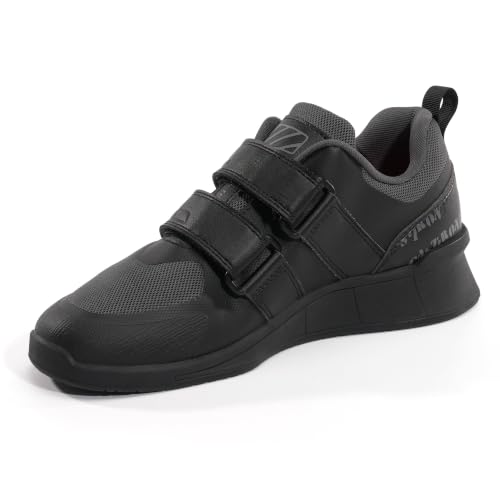
What We Like
- Wide toe box lets toes spread naturally
- 1.6in heel aids deep squat form
- Dual Velcro straps for quick, secure fit
- Breathable mesh upper keeps feet cool
Trade-offs
- No laces means less micro-adjustability in fit
- Full rubber outsole adds weight compared to lighter trainers
A 1.6-inch raised heel is the tallest drop in CASTIRON LIFT’s lineup, giving you maximum ankle compensation to stay upright through deep squats, cleans, and snatches. That wide toe box is the standout feature here: it gives your toes room to spread and grip the floor, which is a real advantage if standard lifting shoes pinch your forefoot. Lifters who need extra space up front and extra heel height to hit depth without rounding their back will find this model a good match.
The no-lace, dual-Velcro closure locks you in fast but doesn’t let you fine-tune tension across different parts of your foot the way laces can. And while the 1.6-inch heel is great for squats, it’s higher than the 1.4-inch heel on the CASTIRON LIFT IronLifter 2, so if you do a lot of deadlifting or prefer a flatter platform, that other model might suit you better. For anyone who has struggled with cramped toes and needs serious squat depth support, this shoe delivers exactly that.
CASTIRON LIFT IronLifter 2

What We Like
- Wide toe box for toe splay
- 1.4-inch heel aids squat depth
- TPU + rubber outsole for stable power transfer
- Breathable microfiber upper resists creasing
Trade-offs
- Women's sizing only (EU 37-42)
- No lace-free option for quick changes
A 1.4-inch raised heel tilts your ankle forward, helping lifters with limited ankle mobility reach a deeper squat without losing balance. That makes the IronLifter 2 a natural pick if you struggle with ankle mobility or want a more upright torso under the bar. The wide toe box gives your toes room to spread and grip the floor during heavy squats and deadlifts, instead of being squeezed into a narrow last. The TPU and rubber outsole delivers stable, non-compressing support, anchoring your foot to the floor for consistent power transfer during squats, cleans, and snatches.
That same heel height has its limits. For deadlifts, a 1.4-inch wedge may not suit everyone, but the shoe is designed for squats and Olympic lifts. The breathable microfiber upper resists creasing and stretching over time while staying breathable, and the lace-up with hook-and-loop strap lets you dial in a precise, locked-down midfoot fit. It’s a purpose-built tool for lifters who prioritize depth and stability.
Product photos
adidas Dropset Vario Training

What We Like
- Wide fit for natural foot splay
- Repetitor foam midsole for firm platform
- TPU midfoot torsion system for stability
- Breathable mesh upper manages heat
Trade-offs
- At 2.4 lb, heavier than some training shoes
- Heavier than the Nike Metcon 10 at 1.0 pounds
A wide fit that lets your toes splay naturally under the bar is the single most practical feature here, because it stops that annoying wobble when you’re grinding through a heavy squat. The Repetitor foam midsole gives you a firm, consistent platform for energy return, while the TPU midfoot torsion system locks your foot in place during lunges or step-ups. This makes the Dropset Vario a stable base for lifting without turning every gym session into a balancing act. It’s built for versatility, not just one move, so you can flow from deadlifts to conditioning circuits without switching shoes.
At 2.4 pounds, these are noticeably heavier than the Nike Metcon 10, which means they feel a bit clunkier during fast-paced drills or box jumps. That extra heft comes from the durable rubber outsole and supportive construction, so it’s a fair exchange for stability if your priority is strength work. For general gym-goers who want a trainer that handles heavy lifts and light cardio alike, this one earns its spot.
Product photos
INOV8 Bare-XF

What We Like
- Zero drop keeps feet flat for deadlifts
- Wide toe box lets toes spread naturally
- Sticky rubber outsole prevents slipping
- Minimal cushioning improves ground feel
Trade-offs
- Very little cushioning for walking or cardio
- Minimal cushioning is not suited for high-impact cardio
A zero-drop sole means your heel sits flat on the floor, exactly where you want it for deadlifts. That flat stance, paired with a wide toe box that lets your toes spread out, gives you a stable base to pull from. The sticky rubber outsole grips the platform so you don’t slide even under heavy weight, and the minimal cushioning keeps you connected to the ground. Lifters who want that barefoot feel without actually going barefoot, especially for deadlifts and squats where stability matters more than padding, will appreciate this design.
Minimal cushioning is designed for ground connection during indoor workouts, not for high-impact activities like running or jumping. Compared to the Nike Metcon 10, which weighs 1.0 pounds, the Bare-XF is heavier at 2.3 pounds, a difference that reflects its durable rubber outsole for stable footing. Best for dedicated deadlift sessions, not for all-day wear.
Product photos
Osterland Weightlifting Shoes

What We Like
- Anti-slip rubber outsole with grooves
- Double-layer Velcro straps for stability
- Breathable microfiber and fabric upper
- Ergonomic design for multiple lifts
Trade-offs
- Velcro-only closure lacks lace adjustability
- 1.3-inch heel unsuitable for flat-deadlift preference
A 1.3-inch raised heel on these Osterland shoes is designed to improve lifting posture, so you get a stable base for squats and overhead lifts. The double-layer Velcro straps wrap the entire foot, increasing stability during weight exercises. A rubber outsole with anti-slip grooves enhances grip on the ground, while the breathable microfiber and fabric upper speeds up sweat evaporation to keep feet dry during long sessions.
The trade-off here is that same 1.3-inch heel. It works great for squats and Olympic lifts, but if you prefer a completely flat platform for deadlifting, you might find the heel gets in the way of your starting position.
Product photos
How We Evaluated Gym Shoes For Lifting
We started by studying the technical specs that matter most for lifting: heel-to-toe drop, midsole rigidity, outsole grip, and platform width. Manufacturer data on stack height, weight, and materials formed the baseline. Then we cross-referenced expert round-ups from strength coaches and reviewed patterns in owner feedback to see which shoes actually perform in real gyms.
Four criteria carried the most weight. Stability came first, a lifting shoe must keep the foot flat and locked in under load. Outsole grip mattered for deadlifts and explosive movements where slipping wastes power. Fit and toe splay ranked high because a cramped toe box compromises balance and force transfer. Versatility counted for shoes that need to handle both heavy lifts and conditioning work.
The honest limit of a research-led evaluation is that we haven’t worn every pair through a training cycle. What we can offer is a clear, data-backed comparison of what each shoe is built to do, paired with real-world feedback from lifters who have put them through hundreds of sessions. For a deeper look at the category, our guide to the best gym shoes covers more ground for general training.
What To Look For In Gym Shoes For Lifting
Finding the right lifting shoe comes down to understanding how your foot interacts with the floor under a loaded barbell. The wrong shoe steals power and compromises safety.
Choose a shoe with a flat, firm sole and minimal heel-to-toe drop for deadlifts and squats. For Olympic lifts, a raised heel helps depth. A wide toe box lets toes spread for better balance. Grip matters, look for carbon rubber or graphene-enhanced outsoles.
Heel-to-Toe Drop and Platform Height
Drop is the height difference between the heel and forefoot. For deadlifts, zero drop keeps your foot flat, letting you push through the whole foot. For squats and Olympic lifts, a raised heel shifts weight forward, helping you reach depth with better upright torso position. The NOBULL Outwork has a minimal 4mm drop suited to general lifting, while the CASTIRON LIFT Unisex Lifting Shoes offer a 1.6-inch heel for deep squats. Understanding the difference between lifting and running shoes helps clarify why drop matters.
Midsole Rigidity and Outsole Grip
A compressible midsole absorbs force your legs should transfer to the barbell. Look for rigid midsoles, high-density foam, TPU shanks, or full-length plates, that don’t squish under load. The Nike Romaleos 4 uses a rigid midsole for optimal power transfer. Outsole grip is equally critical: carbon rubber, sticky rubber compounds, or graphene-enhanced materials like INOV8’s POWERHEEL prevent slipping on the platform.
Fit, Toe Box Width, and Closure System
Your toes need room to spread for a stable base. A narrow toe box forces the foot into a compromised position under heavy weight. The CASTIRON LIFT IronLifter 2 and INOV8 Bare-XF prioritize wide toe boxes for natural splay. Closure systems range from laces (best for micro-adjustment) to Velcro straps (fast and secure but less customizable). The adidas Adipower Weightlifting 3 combines both for a locked-in feel. If you need more options, our roundup of shoes for gym workouts includes hybrid models.
- Check the heel-to-toe drop matches your primary lifts
- Press the midsole with your thumb, it should resist compression
- Wiggle your toes inside the shoe; they should spread freely
- Check the outsole material for grip on gym flooring
- Consider closure type: laces for adjustability, straps for speed
A good rule: if you can feel the floor through the shoe when standing, you can feel it under a barbell.
Gym Shoes For Lifting Compared
The table below compares key specs across all ten picks, drop, weight, heel height, and best use, so you can see at a glance how each shoe stacks up.
| Product | Weight | Closure | Outsole Material |
|---|---|---|---|
| NOBULL Men's Outwork Shoe | 11.1 oz | Lace-up with midfoot band | Carbon rubber with circular tread |
| Nike Metcon 10 | 1.0 pounds | Lace-up with midfoot band | N/A |
| Nike Romaleos 4 | 4.0 pounds | Wide straps over laces | Wide, flat outsole |
| adidas Adipower Weightlifting 3 | 1.0 pounds | Hook-and-loop with lace-up | Rubber |
| INOV8 Fastlift Power G 380 | 2.0 pounds | Hook & Loop midfoot strap | Graphene enhanced rubber |
| CASTIRON LIFT Unisex Lifting Shoes | N/A | Dual Velcro straps, no laces | Full rubber non-slip |
| CASTIRON LIFT IronLifter 2 | N/A | Lace-up + hook-and-loop strap | TPU + rubber anti-slip |
| adidas Dropset Vario Training | 2.4 pounds | N/A | Durable rubber |
| INOV8 Bare-XF | 2.3 pounds | N/A | Sticky rubber grip |
| Osterland Weightlifting Shoes | N/A | Double-layer nylon Velcro straps | Durable rubber with anti-slip grooves |
Frequently Asked Questions
Can I use running shoes for weightlifting?
Running shoes have thick, compressible midsoles and a high heel-to-toe drop (8-12mm), which makes your foot unstable under heavy loads. They are designed for forward motion, not vertical force transfer. For lifting, choose a shoe with a flat, firm platform and minimal drop.
What is the difference between a lifting shoe and a cross-training shoe?
Lifting shoes prioritize a rigid, elevated heel for squats and Olympic lifts, often with straps for lockdown. Cross-training shoes like the Nike Metcon 10 balance stability for lifting with cushioning for jumps, sprints, and agility work. If you only lift, choose a dedicated lifting shoe. If your sessions mix strength and cardio, a cross-trainer is more versatile.
Do I need a raised heel for squats?
A raised heel helps lifters with limited ankle mobility reach depth with a more upright torso. It shifts the knees forward without the heels lifting off the ground. If you have good ankle mobility and squat flat-footed without issue, a zero-drop shoe like the INOV8 Bare-XF works fine. The CASTIRON LIFT shoes offer a 1.6-inch heel for those who need more assistance.
Are barefoot or minimalist shoes good for lifting?
Barefoot and zero-drop shoes like the INOV8 Bare-XF are excellent for deadlifts because they keep your foot flat and improve ground feel. The wide toe box allows natural toe splay for balance. However, they lack cushioning for jumping or running and offer no heel elevation for squats. Our guide to barefoot shoes for gym work covers when they help and when they don’t.
How should lifting shoes fit?
A lifting shoe should fit snugly in the heel and midfoot with no heel slip. The toe box should be wide enough for toes to spread naturally. For shoes with straps, the foot should feel locked in without pressure points. If the shoe has a raised heel, your toes should not slide forward during the squat descent.
The Bottom Line
The NOBULL Men’s Outwork Shoe is the best overall pick for lifters who want a stable, low-to-ground platform for heavy compound lifts. It also offers enough versatility for general gym work. If you primarily squat and deadlift with little cardio, the Nike Metcon 10 offers the Hyperlift plate for heavy compound work, while the Nike Romaleos 4 delivers the rigid platform Olympic lifters need for explosive movements.
For budget-conscious lifters, the adidas Dropset Vario Training gives you a wide fit and firm platform without the premium price tag. Lifters with wide feet should look at the CASTIRON LIFT Unisex Lifting Shoes for their generous toe box and 1.6-inch heel. Deadlift specialists will appreciate the INOV8 Bare-XF‘s zero-drop, barefoot feel.
The single most important factor in choosing a lifting shoe is matching the platform, drop, rigidity, and heel height, to your primary lifts. Get that right, and everything else is fine-tuning.
