
10 Best Gym Mats For Garage in 2026
This post contains affiliate links. As an Amazon Associate, we earn from qualifying purchases.
The AIRHOP Rubber Top Interlocking Gym Mats win as the best overall because their textured rubber top resists scratches and scuffs while upgraded interlocking locks prevent shifting during workouts. For extra cushion under heavy drops, the SUPERJARE 1-Inch Rubber Top Gym Mat offers maximum protection, while the Grytfit Interlocking Rubber Floor Tiles deliver solid rubber durability for heavy racks.
Setting up a garage gym means your concrete floor takes a beating from dropped weights, heavy racks, and sweat. Without proper protection, you risk cracked slabs, noise complaints, and equipment sliding during deadlifts or burpees.
We evaluated 10 gym mats by comparing specifications, manufacturer claims, expert recommendations, and patterns in owner feedback. This guide covers thickness, material, durability, and installation so you can choose the right floor protection for your garage setup.
Top 10 Gym Mats For Garage in the Market
Certain content that appears on this site comes from Amazon. This content is provided "as is" and is subject to change or removal at any time.
The Best Gym Mats For Garage, Reviewed
AIRHOP Rubber Top Interlocking Gym Mats

What We Like
- Textured rubber top resists scratches and scuffs
- Upgraded interlocking locks prevent shifting during use
- Waterproof surface cleans easily with a damp cloth
- Dual-layer design absorbs shock and reduces noise
Trade-offs
- At 29 lbs, carrying the full set is a workout itself
- Recycled rubber can have a noticeable odor initially
Covering 48 square feet with twelve 24-inch tiles, this set gives you a full 8×6-foot zone for barbell work, dumbbell circuits, or a treadmill without piecing together odd shapes. The dual-layer build, textured recycled rubber on top, high-density EVA foam underneath, stops dumbbell drops from denting your garage floor and keeps your equipment from sliding around mid-rep. That combination makes it a straightforward choice for anyone setting up a home gym who wants floor protection without overcomplicating the setup.
At just over half an inch, these tiles absorb impact from moderate weights and bodyweight moves. But if you plan to drop heavy deadlifts repeatedly, you might want something closer to the 0.79-inch AIRHOP Extra-Thick mats for extra cushion. Assembly is genuinely simple, the upgraded interlocking locks click together firmly and stay put during burpees or sled pushes, and the waterproof surface means you can wipe away sweat or chalk in seconds. For most garage-gym starters, this is the sweet spot between protection and practicality.
Product photos
SUPERJARE Rubber Top Gym Flooring
What We Like
- Dual-layer EPDM rubber and EVA foam
- Interlocking edges with detachable borders
- Reduces noise and vibration during workouts
- Protects floors from heavy equipment
Trade-offs
- At 0.56 inches, thinner than some garage mats
- Rubber odor reduced but not eliminated
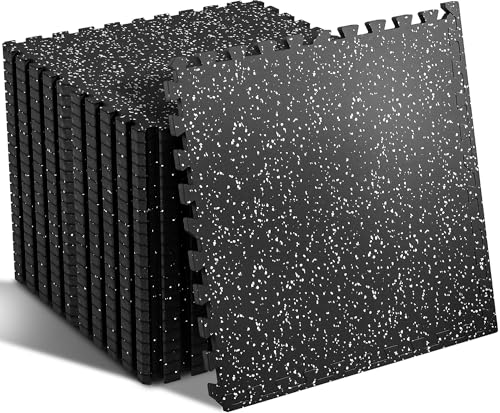
A 0.56-inch dual-layer build with a sturdy EPDM rubber top and high-density EVA foam base means this mat can handle heavy dumbbells, barbells, and even a treadmill without tearing or wearing through quickly. The interlocking edges allow you to connect the tiles, and each tile comes with two detachable borders so you can create a square or rectangular shape to fit your space. For someone setting up a home gym, this mat reduces noise and vibrations from workouts and protects floors from scratches and impact.
Thickness is the main factor to weigh here. At just over half an inch, it’s noticeably thinner than the SUPERJARE 1-inch option, which offers more impact absorption for heavy Olympic lifts. That said, if you’re doing mostly bodyweight work, kettlebells, or moderate strength training, this dual-layer design gives you a stable, grippy surface without the bulk or cost of a thicker mat.
AIRHOP Extra-Thick Rubber Top Mats

What We Like
- 0.79-inch thickness for heavy equipment
- Textured rubber top prevents slipping
- Interlocking locks stay secure during use
- Waterproof surface cleans with a damp cloth
Trade-offs
- 31.7 lbs total weight makes repositioning awkward
- 0.79-inch thickness is thinner than the 1-inch SUPERJARE mat
At 0.79 inches thick, these AIRHOP tiles give you serious cushioning for heavy weights and loud equipment without letting the floor take the abuse. The dual-layer design, rubber on top, dense EVA foam underneath, means dropped dumbbells or a barbell rerack won’t dent your garage concrete or annoy anyone upstairs. That extra thickness also helps absorb shock during high-impact moves like box jumps or burpees, so your joints feel the difference after a long session. If you’re setting up a garage gym with a squat rack, treadmill, or kettlebells, this mat handles the load and stays put thanks to the upgraded interlocking locks that resist shifting mid-workout.
These tiles are heavy, 31.7 pounds for the set, so rearranging your floor layout isn’t a quick job. Each tile measures 24 by 24 inches, which means fewer pieces to snap together for the 48-square-foot coverage compared to smaller tiles. Once they’re down, the textured rubber surface gives you reliable grip even when things get sweaty. If you prioritize floor protection and noise reduction over quick reconfiguration, this is the extra-thick option that earns its place in a garage gym.
Product photos
SUPERJARE 1-Inch Rubber Top Gym Mat
What We Like
- 1-inch thickness for heavy drops
- Non-slip surface for stable lifting
- Interlocking tiles with detachable borders
Trade-offs
- Requires extra sets for larger workout areas.
- Each 24-inch tile weighs over 2.5 pounds.
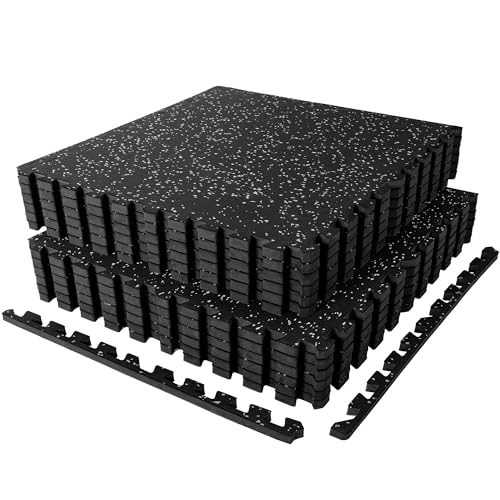
A full inch of thickness provides superior floor protection and shock absorption, so you can drop loaded barbells and swing kettlebells without worrying about dents or scratches on your concrete. The non-slip rubber surface delivers strong traction for stable squats and deadlifts, while the high-density EVA foam base cushions your joints during high-impact circuits. If you’re outfitting a garage gym and want to train hard without disturbing family or neighbors, this mat’s thickness offers real peace of mind.
The 48-square-foot coverage works well for a compact deadlift or squat area, but if your garage doubles as a full workout zone, you will need to buy extra sets. Each tile measures 24 inches square and 1 inch thick, so plan your layout carefully to avoid gaps. The interlocking edges make assembly and disassembly easy, allowing you to rearrange or extend the mat as your space needs change.
Product photos
Grytfit Interlocking Rubber Floor Tiles
What We Like
- Solid rubber edge to edge
- Slip-resistant and moisture-tolerant
- Precision interlocking for tight seams
- Resists tearing, indenting, and shifting
Trade-offs
- 22.5" tiles are smaller than standard 24" options
- No foam layer for softer impact absorption
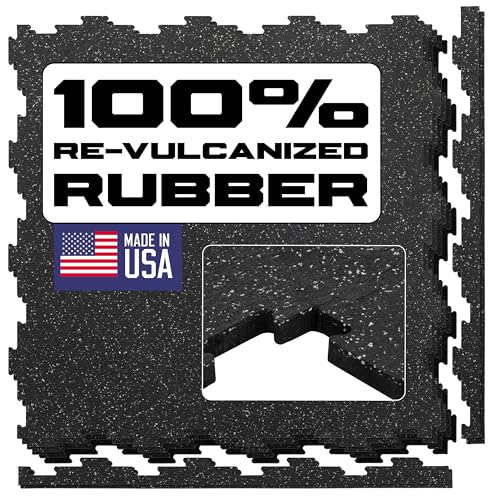
A 100% solid rubber tile from edge to edge means this mat simply won’t crumble or compress like foam alternatives when you drop a heavy barbell or park a squat rack on it. That dense, recycled rubber construction also shrugs off moisture and garage grime, so you can train without worrying about peeling corners or slippery spots. If you need a floor that stays flat and stable under heavy equipment, this tile delivers the durability you need.
Solid rubber gives you very little cushion for kneeling, stretching, or high-impact landings. So if you spend as much time on the floor as under the bar, a rubber-top foam mat like the AIRHOP 0.56in Thick might feel more forgiving. And at 22.5 inches per tile, you will need more tiles to cover the same area as standard 24-inch squares, which adds up in both cost and installation time. For a dedicated garage gym where durability and stability matter more than softness, this is the straightforward, built-to-last choice.
Product photos
Ackland AMZ-RFM-0002 Gym Mat

What We Like
- Heavy solid rubber construction
- Non-slip surface for stability
- Anti-vibration for quiet workouts
- Easy to clean and maintain
Trade-offs
- At 69.3 lb, very heavy to move
- Single large mat limits layout flexibility
- No interlocking edges for expansion
A single 72-by-42-inch slab of solid rubber weighing 69.3 pounds means this mat stays planted under a loaded barbell or a dropping dumbbell. The 19 mm thickness absorbs impact and dampens vibration, so your garage floor stays protected and your neighbors stay quiet. For anyone who wants one dedicated heavy-lift zone without fussing with puzzle-piece seams or shifting tiles, this is the straightforward, no-nonsense answer.
The mat weighs 69.3 pounds, so repositioning it is a real chore, and because it’s one solid piece you cannot reconfigure the layout or add coverage later without buying another full mat. Compared to interlocking tile sets like the AIRHOP Extra-Thick Rubber Top Mats, which come in 12 separate tiles, this Ackland mat commits you to a fixed footprint. If you know exactly where your rack or bench lives and you never plan to move it, the stability is worth the weight.
Product photos
American Floor Mats Heavy Duty Rubber Roll

What We Like
- Thick 1/2 in solid rubber
- Large 4 x 8 ft roll coverage
- Commercial-grade build
Trade-offs
- Roll format harder to reposition than tiles
- No interlocking edges for easy expansion
A full 4 x 8 ft sheet of 1/2-inch solid rubber covers a large area in one continuous piece, so you don’t have to piece together multiple tiles. That thickness provides a dense surface that can handle heavy gym equipment without compressing easily. If you’re creating a dedicated lifting zone or a multi-purpose workout area, this roll gives you a uniform floor that stays flat and doesn’t have seams that could catch or separate.
A single roll is less forgiving than interlocking tiles when you need to reconfigure the layout. If you plan to change your gym arrangement often, interlocking mats let you take apart and reassemble the floor. But if you want a solid, uninterrupted surface that won’t develop gaps over time, this roll is a straightforward option.
Rubber-Cal Elephant Bark Rubber Flooring

What We Like
- Made from recycled tires
- Withstands harsh conditions indoors or out
- Wear-resistant for abrasive use
- Simple DIY roll-out installation
Trade-offs
- At 88 lb, heavy to move and cut
- 0.4-inch thickness is thinner than some garage mats
- Requires tape or adhesive to stay flat
A single 4 x 11-foot roll of recycled tire rubber covers a large area in one piece, so you avoid the gaps that come with puzzle-piece tiles. The material is made to withstand harsh conditions indoors or out, which means it handles garage use like temperature changes and heavy foot traffic. If you want flooring that uses recycled materials and installs by simply laying it down with tape or adhesive, this is a straightforward choice for a garage gym.
At 88 pounds, this roll of rubber flooring demands a second pair of hands to maneuver into place, but the payoff is a single, continuous surface made from recycled tires. Its 0.4-inch thickness is slimmer than many interlocking mats, so it won’t provide as much give under heavy weights. Owners report it holds up well in abrasive conditions, making it a practical choice for a workshop or garage floor that sees daily abuse.
Rubber-Cal Eco-Sport Interlocking Tiles

What We Like
- Available in 4 interesting colors
- Designed for high-traffic wet areas
- Modular and wear resistant
Trade-offs
- Only 28 sq ft coverage per pack
- Thinner than some 1-inch garage mats
- Smaller tile size means more seams
With four color options, you can actually match your gym to the rest of your space instead of settling for plain black rubber. That variety is rare among garage floor mats, so if you want your home gym to look intentional rather than thrown together, these tiles let you do that without sacrificing durability.
Coverage is the main consideration here: each pack covers only 28 square feet, so a typical two-car garage will need several packs, and the 19.5-inch tiles create more seams than larger options like the AIRHOP Extra-Thick Rubber Top Mats (which have 14-inch tiles). Those seams are a natural result of the tile size. But if color matters to you and you don’t mind a few more joints in the floor, the Eco-Sport tiles give you a sturdy, impact-absorbing surface that is designed for high-traffic wet areas.
Dalmbox Rubber Top Interlocking Mats
What We Like
- Durable rubber top resists tearing and cracking
- Foam core cushions impact and reduces noise
- Non-slip textured surface keeps equipment stable
- Easy to wipe clean after sweaty sessions
Trade-offs
- Foam core, not solid rubber, less durability under very heavy loads
- At 0.56 in thick, less cushion than thicker garage mats
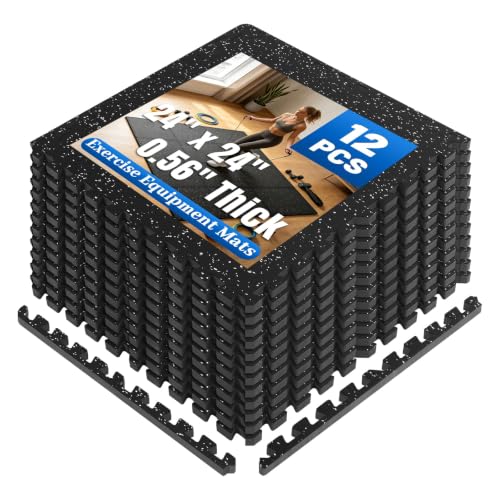
The rubber top on these interlocking tiles gives you a tough, easy-to-clean surface that stays put under your treadmill or squat stand. The foam core underneath soaks up impact and quiets the thud of dropped weights. That combination makes them a smart pick if your garage doubles as a workout space and you want something that feels solid underfoot without turning every deadlift into a noise complaint. They’re especially practical for everyday strength training and cardio gear, where you need traction and protection for your floor, but don’t need the extreme rigidity of a full rubber slab.
That foam core, while comfortable, won’t hold up as well under very heavy loads as a solid rubber mat would. So if your garage gym is built around maxing out on heavy racks, consider a solid rubber option instead. For most home lifters doing bodyweight, dumbbell, and moderate barbell work, though, these deliver a nice balance of cushion and durability without feeling like you’re standing on a yoga mat.
Product photos
How We Evaluated Gym Mats For Garage
Our evaluation is based on analysis of product specifications, manufacturer documentation, expert round-ups, and common themes in owner feedback. We prioritized patterns that real users consistently report.
Three criteria mattered most for garage gym mats. First, thickness and density determine whether a mat absorbs shock from dropped weights or just sits there. Second, material composition, solid rubber versus foam core versus recycled rubber, affects durability, odor, and moisture resistance. Third, installation and coverage includes tile size, interlocking mechanism quality, and how easily you can expand or reconfigure the floor.
An honest limit of a research-led evaluation: we cannot verify every claim about odor levels or long-term wear. Owner feedback helps, but individual experiences vary with climate, usage intensity, and subfloor condition. For the most reliable garage gym flooring, cross-reference these picks with your specific equipment and workout style.
What To Look For In Gym Mats For Garage
Choosing the right garage gym mat means balancing protection, durability, and ease of setup. Here is what matters most.
Focus on thickness for impact absorption, material for durability and odor, and tile size for installation ease. Garage concrete needs at least 1/2 inch for moderate weights and 3/4 to 1 inch for heavy Olympic lifting.
Thickness and Impact Protection
Thickness directly affects how well a mat protects your floor and dampens noise. For moderate weight training and cardio, 1/2 inch (0.5 inches) is adequate. For heavy deadlifts, dropping a loaded barbell from hip height, or Olympic lifting, look for 3/4 inch or thicker. The SUPERJARE 1-Inch Rubber Top Gym Mat provides the most generous buffer against concrete damage and joint strain.
Material: Rubber vs. Foam Core vs. Recycled
Solid rubber mats offer the best durability and moisture resistance for garage environments where temperature swings and humidity are common. Recycled rubber options like the Rubber-Cal Elephant Bark Rubber Flooring are eco-friendly but can have a stronger initial odor. Foam core mats with a rubber top, such as the Dalmbox Rubber Top Interlocking Mats, provide better cushion for bodyweight exercises but may compress under very heavy static loads like a squat rack.
Tile Size and Installation
Standard interlocking tiles are 24 inches square, which makes covering a rectangular garage straightforward. Smaller 22.5-inch tiles like the Grytfit Interlocking Rubber Floor Tiles mean more seams and slightly more cutting to fit edges. Roll flooring covers large areas with a single surface but is heavy (up to 88 pounds per roll) and requires tape or adhesive to stay flat. For flexibility, interlocking tiles let you reconfigure your layout later.
A good rule: measure your workout zone and buy one extra pack of tiles for mistakes or future expansion.
Gym Mats For Garage Compared
The table below compares key specs for each of our top 10 garage gym mats, including thickness, material, and tile size, so you can quickly see which fits your space and budget.
| Product | Thickness | Tile Size | Material |
|---|---|---|---|
| AIRHOP Rubber Top Interlocking Gym Mats | 0.56 in | 24 x 24 in | Rubber top + high-density EVA foam |
| SUPERJARE Rubber Top Gym Flooring | 0.56 inches | 24 x 24 inches | EPDM rubber top + EVA foam base |
| AIRHOP Extra-Thick Rubber Top Mats | 0.79 in | 24 x 24 in each | Rubber top + EVA foam bottom |
| SUPERJARE 1-Inch Rubber Top Gym Mat | 1 inch | 24 x 24 inches | EPDM rubber top / EVA foam base |
| Grytfit Interlocking Rubber Floor Tiles | N/A | 22.5" x 22.5" | 100% heavy-duty rubber |
| Ackland AMZ-RFM-0002 Gym Mat | 0.75 in | 42" x 72" | Solid rubber |
| American Floor Mats Heavy Duty Rubber Roll | 1/2 in (12 mm) | 4 ft x 8 ft | Solid rubber |
| Rubber-Cal Elephant Bark Rubber Flooring | 0.4 inches | 4 x 11 feet (roll) | Recycled rubber from tires |
| Rubber-Cal Eco-Sport Interlocking Tiles | 0.8 inches | 19.5 x 19.5 inches | Interlocking rubber tiles |
| Dalmbox Rubber Top Interlocking Mats | 0.56 in | 24"x24" | Rubber top / EVA foam core |
Frequently Asked Questions
How thick should a garage gym mat be?
For moderate weight training and cardio, 1/2 inch is sufficient. For heavy Olympic lifting or dropping weights from overhead, choose at least 3/4 inch, with 1 inch offering the best protection. Thicker mats also reduce noise and vibration for neighbors.
Can I put gym mats directly on concrete?
Yes, most garage gym mats are designed for direct concrete installation. Ensure the concrete is clean, dry, and level before laying mats. Some thinner roll flooring may require double-sided tape or adhesive to prevent shifting during intense workouts.
How do I get rid of rubber mat odor?
New rubber mats, especially those made from recycled materials, often have a strong smell. Air them out in a well-ventilated garage for several days. Wiping the surface with a mild vinegar-water solution can help. The odor typically fades within one to two weeks.
Are interlocking mats better than roll flooring?
Interlocking mats are better for flexibility, you can rearrange, expand, or move them easily. Roll flooring provides a surface with fewer seams where dirt can collect, but it is heavy and permanent once installed. Choose interlocking if you plan to change your layout.
What is the best material for a garage gym floor?
Solid rubber is the most durable and moisture-resistant material for garage gyms. It withstands dropped weights, resists tearing, and cleans easily. Foam core mats offer more cushion but may compress under heavy equipment. Recycled rubber is eco-friendly but can smell stronger initially.
The Bottom Line
The AIRHOP Rubber Top Interlocking Gym Mats are the best overall choice for most home garage gyms. Their textured rubber top and reliable interlocking locks make assembly straightforward, and the dual-layer design absorbs shock from moderate weight training and cardio. If you drop heavy weights, the SUPERJARE 1-Inch Rubber Top Gym Mat provides the thickest protection for your concrete and joints.
For a permanent deadlift station where the floor layout stays fixed, consider the Ackland AMZ-RFM-0002 Gym Mat or the American Floor Mats Heavy Duty Rubber Roll. Budget-conscious buyers should look at the Grytfit Interlocking Rubber Floor Tiles for solid rubber durability without the premium price of thicker options.
The single most important factor is thickness: match the mat depth to the heaviest weight you plan to drop. Protect your floor first, then consider material and installation convenience. For more ideas on setting up a garage gym, explore our complete guide to building your home workout space.
