
7 Best Fitness Tracker Devices in 2026
This post contains affiliate links. As an Amazon Associate, we earn from qualifying purchases.
For most of us, the Google Fitbit Air Screenless Activity Tracker is the best overall pick because it removes the biggest distraction, a screen, while delivering fast charging and a featherlight fit. If battery life is your priority, the Garmin Vivosmart 5 lasts a full week. And for those who want the lightest possible band, the Xiaomi Smart Band 11 barely feels like you are wearing anything at all.
The real challenge with fitness trackers is finding one that actually fits your daily habits, not just your workout playlist. Maybe you hate charging things, or you need sleep data that tells you something useful, or you simply cannot stand a bulky screen on your wrist during yoga.
We put this guide together by digging through specs, manufacturer claims, and patterns in what real owners say works, and what does not. You get seven honest picks, each with a clear strength and a clear trade-off, so you can match the right device to your routine.
Top 7 Fitness Tracker Devices in the Market
Certain content that appears on this site comes from Amazon. This content is provided "as is" and is subject to change or removal at any time.
The Best Fitness Tracker Devices, Reviewed
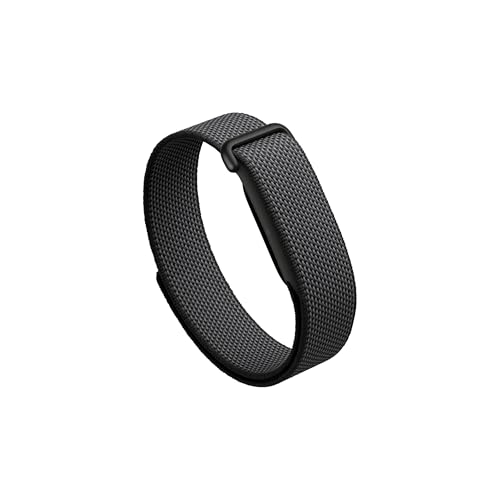
Google Fitbit Air Screenless Activity Tracker
What We Like
- No screen for distraction-free wear
- Fast 5-minute charge gives 1 day
- Lightweight micro-adjustable fit
Trade-offs
- No screen means no glanceable stats during workouts
- Premium coaching requires separate subscription after trial
A battery that lasts up to seven days and recharges a full day in just five minutes means you can stop hunting for a charger every night. That alone makes the Google Fitbit Air the kind of tracker you actually wear through work, sleep, and sweaty gym sessions without thinking about it. The screenless design keeps your focus on movement, not notifications, and the lightweight micro-adjustable band (130-210 mm) sits so quietly you forget it is there. For anyone who wants steady health tracking, heart rate, sleep, and activity, this is the most practical everyday companion in the guide.
The obvious trade-off is that no screen means you cannot glance at your heart rate mid-set. If you need live workout data at a glance, the Xiaomi Smart Band 11 with its screen puts numbers right in front of you. But the Fitbit Air makes up for that with comfort and simplicity: it moves from bracelet to workout band to sleep band in seconds, and the long battery means fewer interruptions. It is the best overall pick for people who want reliable tracking without the screen clutter.
Product photos
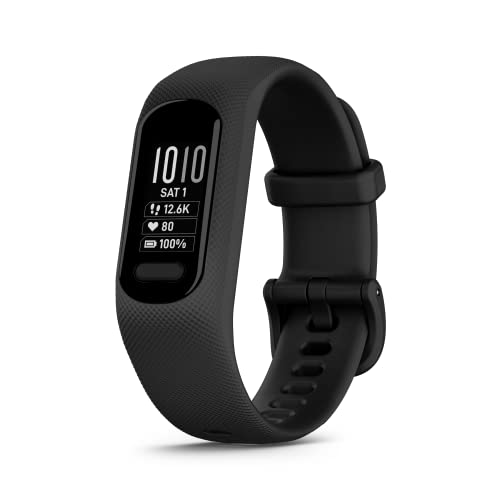
Garmin Vivosmart 5 Health Fitness Tracker
What We Like
- Up to 7 days of battery in smartwatch mode
- Swim and shower safe waterproof design
- Bright, bigger display with touchscreen and button
- Tracks sleep quality with personalized improvement insights
Trade-offs
- Pulse Ox not available in all countries
- No built-in GPS; relies on phone for outdoor tracking
Seven days of battery life means you can wear this tracker from Monday through Sunday without hunting for a charger halfway through the week. That kind of endurance suits anyone who wants health monitoring, heart rate, sleep stages, stress, even respiration, without the daily plug-in ritual. The touchscreen and button combo makes it easy to swipe through stats or start a pool swim, and the brighter display is a welcome upgrade if you’ve squinted at smaller screens before. For someone who values consistency over constant charging, this is the tracker that keeps up with your routine, not the other way around.
The Vivosmart 5 connects to your smartphone’s GPS to track outdoor walks, runs and rides, so if you prefer to leave your phone behind, you’ll need a tracker with built-in GPS. It does offer a touchscreen and button interface, is safe for swimming and showering, and provides sleep quality scoring through the Garmin Connect app. For daily wellness tracking without phone-free route mapping, this is a straightforward option.
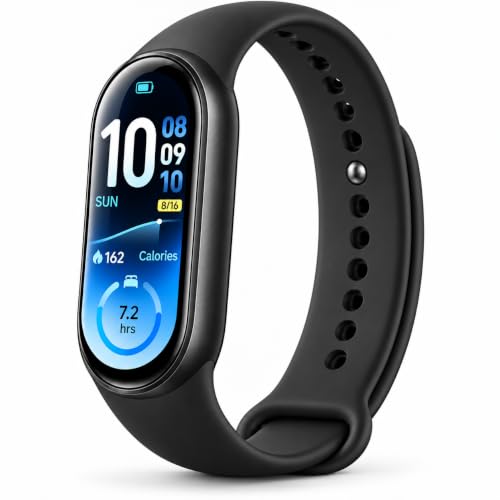
Xiaomi Smart Band 11 Fitness Tracker
What We Like
- Ultra-light 15.6g barely noticeable on wrist
- Slim 9.99mm curved body for comfort
- 21-day battery reduces charging hassle
- 5ATM waterproof for swimming and showers
Trade-offs
- Requires phone nearby for connected GPS
- No built-in GPS for standalone tracking
At just 15.6 grams and 9.99 millimeters thin, this band slips under long sleeves and against your skin like it isn’t there. That featherlight feel is the whole point: you can wear it through a sweaty gym session, a full workday, and even overnight sleep tracking without that nagging urge to take it off. The 1.72-inch AMOLED screen gives you quick access to your stats, and the 21-day battery means you won’t be hunting for a charger every week. It’s built for anyone who wants fitness tracking without the wrist presence of a chunky gadget.
Compare that to the Garmin Vivosmart 5, which also skips onboard GPS but packs a slightly larger frame and a shorter battery life. For daily steps, gym workouts, swim sessions, and sleep monitoring, the Xiaomi band delivers the essentials in a package you genuinely forget you’re wearing.
Product photos
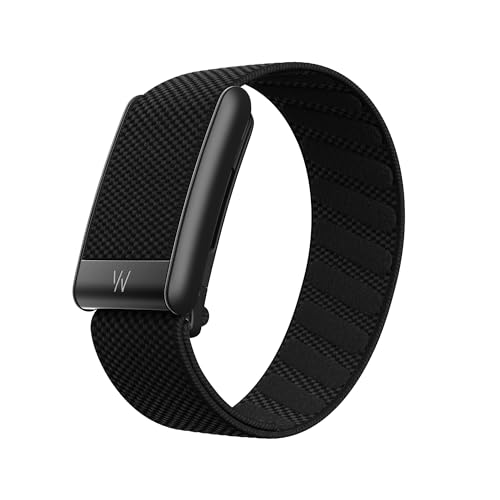
WHOOP 5.0 Screenless Fitness Wearable
What We Like
- 14+ day battery with wrist charging
- AI Coach turns metrics into personalized actions
- Healthspan feature tracks aging pace
Trade-offs
- Requires 12-month membership to use device
- No screen for quick glance at stats
A 14+ day battery and IP68 water resistance mean you can wear this tracker through showers, swims, and long trips without needing to find a charger. For someone who wants to understand how sleep, stress, and training affect their body day by day, this screenless band delivers deep insights without the distraction of a display.
The catch is the mandatory 12-month membership. Unlike the Garmin CIRQA Smart Band, which requires no subscription, WHOOP bundles the device cost into a recurring fee. That model includes the personalized coaching and journaling features, but it requires a commitment. If you prefer a simpler tracker without ongoing costs, the Garmin is a better fit. For anyone serious about optimizing recovery and willing to commit, the WHOOP 5.0 offers a level of detail that supports informed decisions.
Garmin CIRQA Smart Band
What We Like
- Screenless design for distraction-free wear
- Up to 10 days of battery life
- No subscription required for full features
- Auto-detects activities and learns from edits
Trade-offs
- No visible display for quick glance at stats
- Basic activity data visible only in app
- Pulse Ox not available in all countries
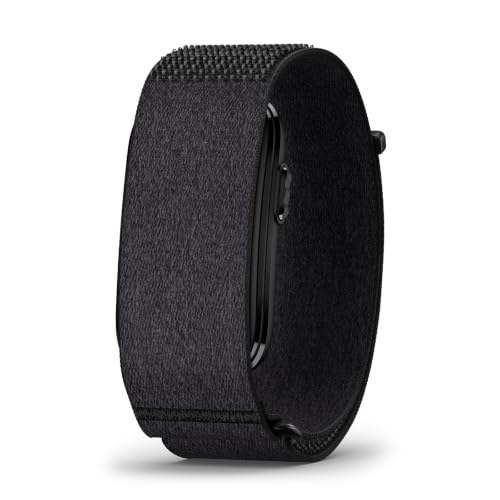
Up to 10 days of battery life means you can wear this band through most of a workweek and weekend without having to search for a charger. The screenless fabric band is designed for all-day and all-night wear, so you get sleep scores and breathing variation insights without a glowing display. It suits anyone who wants heart rate, stress, Body Battery, and women’s health tracking without the distraction of notifications or a screen, just the data in the Garmin Connect app when you want it.
The biggest difference between the CIRQA Smart Band and a screen-equipped tracker like the Xiaomi Smart Band 11 is that you can’t glance at your wrist mid-run to see your pace or heart rate. Instead, you see basic activity data through the on-device button and check detailed stats in the Garmin Connect app after your workout. For outdoor activities, pairing with your phone’s GPS gives accurate tracking. That trade-off makes this band ideal for people who want a comfortable, no-distraction wearable for all-day wear and sleep monitoring, with up to 10 days of battery life and no subscription. It’s not for anyone who needs a visible display during workouts.
Fitbit Inspire 3 Fitness Tracker
What We Like
- Daily Stress Management Score with mindfulness sessions
- 24/7 heart rate with irregular rhythm notifications
- Automatic sleep tracking with Sleep Score
- 40+ exercise modes and auto tracking
Trade-offs
- Requires smartphone for full features and setup
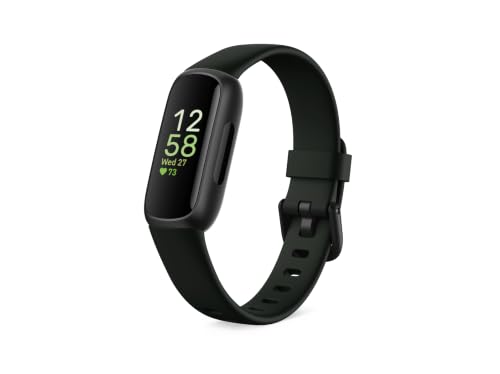
A daily Stress Management Score that combines heart rate, sleep, and activity data into one glanceable number makes this tracker stand out for anyone who wants to keep tabs on their mental load. Paired with guided breathing sessions and irregular heart rhythm alerts, it turns raw biometrics into a gentle nudge to slow down. That focus on well-being, not just steps, is why it fits someone who tends to push too hard and forget to breathe. The sleep tracking is automatic too, so you wake up to a Sleep Score without tapping a thing, and the smart wake alarm vibrates you out of light sleep instead of jolting you awake.
The Inspire 3 does not include built-in GPS, so if you run or bike without your phone, you will not get accurate distance or pace data. The Garmin Vivosmart 5 offers connected GPS, which may be better for outdoor athletes. The full feature set depends on keeping your phone nearby. Still, for stress-first tracking and sleep insights that actually feel actionable, this is a focused tool that does not try to be everything at once.
Product photos
Xiaomi Mi Smart Band 10 Fitness Tracker

What We Like
- 21-day battery life
- 1-hour fast charging
- 1500 nits sunlight-readable display
Trade-offs
- Xiaomi Fit app only supports metric system
- Requires third-party app for imperial units
A full 21 days between charges is the kind of freedom that makes you forget your charger at home. When you do remember, an hour plugged in is all it takes to get back to full. That fast charging, paired with a bright 1500-nit AMOLED screen you can actually read under the sun, makes this band a natural fit for anyone who wants tracking without the daily tether.
The trade-off is that the official Xiaomi Fit app works in metric only, so if you prefer pounds and inches, you’ll need to connect it to Google Fit through a third-party app. That extra step isn’t a dealbreaker, but it’s worth knowing before you buy. For metric users or anyone willing to set up the workaround, this band delivers exceptional battery stamina and fast refueling that few competitors match.
Product photos
How We Evaluated Fitness Tracker Devices
We started with the specs that matter most: battery life, weight, display type, water resistance, and sensor accuracy claims. Then we cross-referenced those numbers against expert round-ups and the most common praise and complaints from owners who wear these things every day. No tracker gets a pass just because it has a big name.
Our top criteria were battery life, comfort for all-day wear, screen distraction level, and whether the core health features work without a subscription. Battery life determines how often you actually have to plug it in. Comfort matters especially during sleep. Some people want stats at a glance, while others want to ignore the wrist entirely. We also paid close attention to how each device handles step counting and calorie burn estimates, two metrics people rely on most but often misunderstand.
The honest limit is that these trackers were not tested on a wrist for weeks. What can be offered is a clear picture of what each tracker promises, where owners say it falls short, and which trade-off is worth making for your specific needs. For a deeper look at how these devices compare, the comprehensive fitness tracker guide covers the full landscape.
What To Look For In Fitness Tracker Devices
Choosing a fitness tracker comes down to matching the device’s strengths to your real routine. Here is what matters most.
Look for the tracker that fits your life: long battery for forgetful chargers, screenless for focus, lightweight for sleep wear, and water resistance for swimmers.
Battery Life And Charging Speed
Nothing kills a fitness habit faster than a dead band. Most trackers claim 5-10 days, but real-world battery drops with GPS or continuous heart rate. The Garmin Vivosmart 5 hits a full week in smartwatch mode, while the Xiaomi Smart Band 11 stretches to 21 days. Charging speed matters too, the Google Fitbit Air gets a full day from just a 5-minute charge, which is a lifesaver for anyone who forgets to plug things in.
Display And Distraction
Some people want a screen for quick lap checks; others want to forget the tracker exists. Screenless designs like the Google Fitbit Air and WHOOP 5.0 keep you focused on the workout, not the wrist buzz. If you need visible stats during a run, the Xiaomi Mi Smart Band 10 has a 1500 nits display that is readable in direct sun. Think honestly about whether you want glanceable data or a distraction-free zone.
Water Resistance And Activity Tracking
If you swim or shower with your tracker, check the ATM rating. The Xiaomi Smart Band 11 is 5ATM waterproof, good for swimming and showers. The Garmin Vivosmart 5 is swim-proof too. For activity tracking, look at how many modes are built in. The Fitbit Inspire 3 offers 40+ exercise modes with auto tracking, which matters if you switch between yoga, cycling, and weightlifting in the same week.
- Check whether the tracker needs a phone nearby for GPS (most do at this price).
- See if the app works with your phone’s operating system and preferred units.
- Look for sleep tracking that gives you a score or insights, not just raw hours.
- Confirm whether premium coaching or advanced metrics require a subscription.
A tracker that annoys you to charge or wear will end up in a drawer. Pick the one you will actually keep on your wrist.
For a broader view of what is available, our top fitness trackers roundup covers more options. If you are looking specifically at fitness tracker watches with larger displays, that guide digs into the smartwatch-style picks. And for those who prefer a subscription-free experience, our best smart fitness devices list focuses on trackers that keep all features open.
Fitness Tracker Devices Compared
The table below lines up all seven trackers side by side so you can compare battery, weight, screen type, and water resistance at a glance.
| Product | Display | Battery Life | Compatibility |
|---|---|---|---|
| Google Fitbit Air Screenless Activity Tracker | Screenless | Up to 7 days | iOS & Android |
| Garmin Vivosmart 5 Health Fitness Tracker | Touchscreen + button | Up to 7 days | Bluetooth, GPS via phone |
| Xiaomi Smart Band 11 Fitness Tracker | 1.72" AMOLED | 21 days | Android & iOS |
| WHOOP 5.0 Screenless Fitness Wearable | Screenless | 14+ days | N/A |
| Garmin CIRQA Smart Band | Screenless | Up to 10 days | N/A |
| Fitbit Inspire 3 Fitness Tracker | N/A | N/A | iOS 16.4+ / Android 11.0+ |
| Xiaomi Mi Smart Band 10 Fitness Tracker | 1.72" AMOLED | 21 days | N/A |
Frequently Asked Questions
Which fitness tracker has the longest battery life?
The Xiaomi Smart Band 11 offers up to 21 days of battery life, making it the longest-lasting option here. The Garmin Vivosmart 5 follows with a full week in smartwatch mode. Battery life varies with features like continuous heart rate monitoring and GPS use.
Do I need a screen on my fitness tracker?
Not necessarily. Screenless trackers like the Google Fitbit Air and WHOOP 5.0 are designed for people who want to avoid distractions and check stats later on their phone. If you need to see your pace or heart rate during a run, a display model like the Xiaomi Mi Smart Band 10 is better.
Are fitness trackers waterproof for swimming?
Many are, but check the ATM rating. The Xiaomi Smart Band 11 has 5ATM water resistance, meaning it is safe for swimming and showers. The Garmin Vivosmart 5 is also swim-proof. Not all trackers handle pool chlorine or salt water equally, so confirm the rating before jumping in.
What is the difference between a fitness tracker and a smartwatch?
Fitness trackers focus on health metrics like steps, sleep, and heart rate, usually with smaller screens or no screen at all. Smartwatches offer apps, notifications, and larger displays but often have shorter battery life. If you just want activity and sleep data, a tracker is lighter and lasts longer.
Can I use a fitness tracker without a subscription?
Yes, most trackers work fully without a subscription. The WHOOP 5.0 is the exception, it requires a 12-month membership to use the device. The Garmin CIRQA Smart Band and Google Fitbit Air offer all core features without ongoing fees, though some have optional premium tiers.
The Bottom Line
The Google Fitbit Air Screenless Activity Tracker is our best overall pick for anyone who wants reliable health tracking without wrist distractions, fast charging, and a comfortable fit for all-day wear. It is the tracker that disappears into your routine.
If battery life is your biggest concern, the Garmin Vivosmart 5 gives you a full week between charges and works in the pool. For the lightest possible band, the Xiaomi Smart Band 11 at 15.6 grams is barely there during sleep or gym sets. And if recovery data matters more than step counts, the WHOOP 5.0 delivers deep analytics, just be ready for the subscription.
The single most important buying factor is honesty about your own habits. A tracker is only useful if you wear it, charge it, and actually look at the data. Pick the one that fits your wrist, your schedule, and your definition of progress.
