
10 Best Quality Yoga Mats in 2026
This post contains affiliate links. As an Amazon Associate, we earn from qualifying purchases.
The KEEP Non-Slip Large Yoga Mat is the best quality yoga mat overall because its extra-wide 32-inch surface and double-sided non-slip texture offer a stable, spacious platform for any practice. For a portable option with great cushioning, the Gaiam Premium Yoga Mat is a strong choice, while the Manduka PRO Yoga Mat delivers unmatched durability for studio regulars.
Finding a quality yoga mat means balancing grip, cushioning, size, and materials against your specific practice. A mat that works for gentle stretching may fail during a sweaty hot yoga session, and a thick mat for hard floors can be too heavy to carry to class.
This guide is based on a careful review of specifications, manufacturer claims, and patterns in owner feedback across dozens of models. We ranked the top ten mats to help you match the right one to your body, budget, and routine.
Top 10 Quality Yoga Mats in the Market
Certain content that appears on this site comes from Amazon. This content is provided "as is" and is subject to change or removal at any time.
The Best Quality Yoga Mats, Reviewed
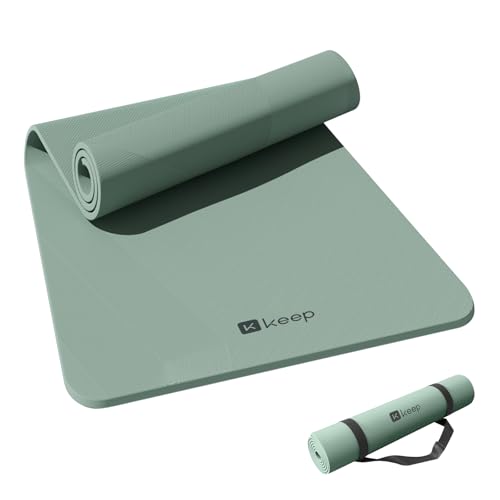
KEEP Non-Slip Large Yoga Mat
What We Like
- Extra-wide 32-inch surface for spacious poses
- 7mm thick padding protects knees and elbows
- Double-sided non-slip texture for wet or dry
- Eco-friendly TPE material, free of plasticizers
Trade-offs
- At 2.8 lbs, lighter mats exist for travel
- 7mm thickness less cushioning than 1" options
A 32-inch width means you can spread into wide-legged poses or dynamic flows without worrying about rolling off the edge, which is a rare luxury in yoga mats. The 7mm padding offers enough cushion to protect your knees and elbows during floor work, while the double-sided non-slip texture keeps you steady on dry or wet surfaces. Made from TPE, it avoids the plasticizers and formamide found in some cheaper mats, so it’s gentler on both your body and the planet. This combination of generous space, reliable grip, and eco-conscious materials makes it a versatile foundation for practitioners who want a mat that does not compromise on comfort or stability.
At 2.8 pounds it is light enough to carry with the included strap, but if you are hiking to a park studio every day, a sub-2-pound mat like the YOGATI will feel easier on your shoulder. And while 7mm is a solid middle ground for most floor poses, those who spend a lot of time on bony joints or hard gym floors may prefer the extra plush of a 1-inch mat like the Retrospec Solana. Still, for the majority of yogis who want a wide, stable, and planet-friendlier mat that handles everything from gentle stretching to sweaty vinyasa, this is a smart, well-rounded pick.
Product photos
Gaiam Premium Yoga Mat

What We Like
- 5mm cushion protects joints
- Non-toxic 6P-free PVC material
- Textured non-slip surface for stability
- Lightweight and portable with strap
Trade-offs
- 24" width limits side-to-side movement
- PVC material not biodegradable
The 5mm cushion gives your knees, wrists, and hips enough padding for floor work without the bulk of a thicker mat, so you stay stable in poses like downward dog. The textured non-slip surface helps you hold your stance without sliding, which is useful whether you are just starting out or have been practicing for years. At 2.6 pounds and with an Easy-Cinch carrying strap, it rolls up light enough to take to a studio or park.
That portable, cushioned design has a standard 68-by-24-inch footprint that might feel snug if you’re tall or like to spread out in wide stances. Compared to the KEEP Non-Slip Large Yoga Mat, which offers 72 by 32 inches and 7mm of thickness, the Gaiam gives up some real estate and a bit of plushness for easier carrying and a firmer, more stable surface.
Manduka PRO Yoga Mat

What We Like
- Lifetime durability guarantee
- Closed-cell surface resists moisture
- No-slip dot pattern keeps mat steady
- 6mm dense cushioning for joint protection
Trade-offs
- At 7.5 lbs, heavy to carry to class
- 71-inch length limits space for taller practitioners
The lifetime guarantee means this mat is built to last through years of regular practice. With a dense 6mm closed-cell surface that seals out moisture, it stays hygienic after sweaty sessions while the no-slip dot pattern on the bottom keeps it planted on any floor. That combination of durability and stability is why teachers trust it for studio use. If you want a mat that won’t need replacing for a long time, this is a strong option.
At 7.5 pounds, this isn’t the mat you toss in a tote for a quick class across town. Compare that to the KEEP Non-Slip Large Yoga Mat at 2.8 pounds, which is far easier to carry but won’t offer the same dense support or closed-cell hygiene. The 71-inch length may feel short for taller practitioners. For home practice or a permanent studio mat where portability isn’t the priority, the durability and stability more than justify the heft.
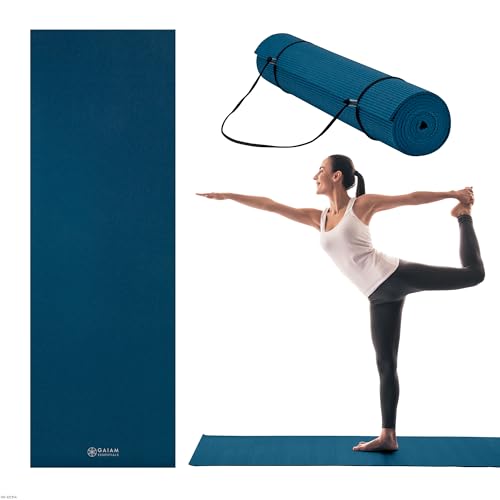
Gaiam Essentials Yoga Mat
What We Like
- Non-toxic 6P-free PVC construction
- Textured non-slip surface for grip
- Lightweight with carrying sling
- Extra-long 72-inch length
Trade-offs
- Narrower 24-inch width limits side-to-side space
- Requires 2-3 days of airing out before first use
The 6mm cushioning protects your knees and wrists in poses like Warrior or Triangle, keeping you stable on hardwood or carpet. A textured non-slip surface helps your hands and feet stay put during Vinyasa flow or Pilates, and the 72-inch length fits taller bodies comfortably. It’s a straightforward, no-fuss option for anyone wanting a reliable mat.
The 24-inch width is standard, but if you tend to spread your arms wide in Downward Dog or like extra room for side stretches, you might feel a bit cramped compared to wider mats like the KEEP Non-Slip Large Yoga Mat. Also, the manufacturer recommends airing the mat out for 2-3 days before first use. For a budget-friendly mat that covers the basics of grip, cushioning, and portability, this is a solid place to start.
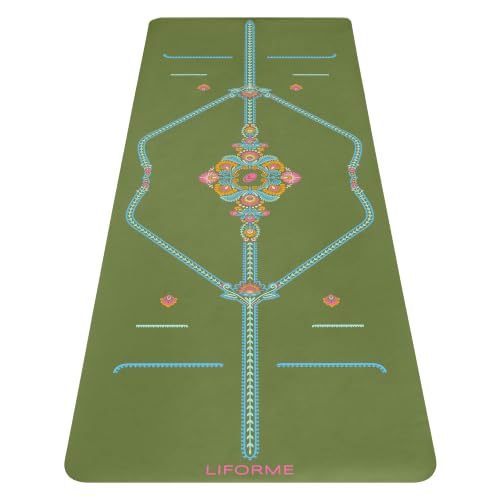
Liforme Printed Yoga Mat
What We Like
- Sweat-activated grip gets stickier when wet
- Patented AlignForMe alignment markers
- Eco-friendly, non-toxic, PVC-free materials
- Comes with a free yoga bag
Trade-offs
- At 26.8 inches wide, narrower than some mats
- 4.2 mm cushioning is firm, not plush
The Liforme’s GripForMe surface is designed to get grippier as you sweat, which flips the usual hot-yoga problem on its head. Instead of sliding around when things get slippery, you get a more stable connection to the mat in every pose. That alone makes it a smart pick for anyone who practices in a heated room or tends to get clammy hands. The printed AlignForMe guides provide visual cues for foot and hand placement, helping you improve form and precision without needing to look away from your practice.
This mat is narrower than some alternatives, so if you spread your limbs wide in extended side angle or warrior poses, your feet might land off the edge. It also has a firmer 4.2 mm cushion, which gives you solid feedback from the floor but won’t feel as forgiving on knees or elbows as the 7 mm KEEP mat. Still, for yogis who prioritize grip and alignment cues over pillow-like padding, the Liforme delivers exactly what it promises: a stable, sweat-proof platform that doesn’t compromise on eco-friendly materials.
Retrospec Solana Extra Thick Yoga Mat

What We Like
- 1-inch thick for joint comfort
- Non-slip grip for stability
- BPA-free and latex-free
- Includes nylon carrying strap
Trade-offs
- 24-inch width limits side-to-side space
- Heavy 2.2 pounds for a yoga mat
A full inch of cushioning alleviates stress on pressure points such as joints, hips, hands, and knees, making floor exercises noticeably more comfortable. The non-slip material keeps you steady and balanced while staying securely on the floor, and the nylon carrying strap makes it easy to transport from home to studio.
That plush feel comes with a narrower 24-inch width, so sprawling poses or wide-legged stretches might feel a bit cramped compared to a wider mat like the KEEP Non-Slip Large Yoga Mat. You also might notice a slight smell out of the box, but airing it for a day or two clears that up. If your priority is pressure relief over floor real estate, this mat delivers where it counts.
Gogokiwi Extra Wide Yoga Mat

What We Like
- Extra-wide 36" surface for big frames
- Dual-thickness option for joint comfort
- Closed-cell material resists sweat absorption
- Carry strap doubles as a stretching band
Trade-offs
- At 2.7 lb, lighter than dense premium mats
- Dual-sided texture designed for dry-hand traction only
A 36-inch width gives you room to spread out without constantly checking the edges. That extra space means taller folks or anyone who likes a wide stance in warrior poses can actually relax into the posture instead of worrying about their hand slipping off the mat. The 72-inch length covers most body types, and you can choose between the standard 1/4-inch thickness for stability or the 1/2-inch version when your knees and wrists want more padding. The closed-cell RecFoam keeps sweat from soaking in, so a quick wipe-down leaves it fresh for the next session.
This mat prioritizes width over density. At 2.7 pounds it’s easy to carry, but it doesn’t have the heft of a Manduka PRO (7.5 pounds) that stays put on carpet or hard floors without sliding. The dual-sided texture is designed for dry-hand traction during home workouts. The included strap that also works as a stretching band is a clever bonus for post-flow hamstring work.
Product photos
HAPBEAR Extra Large Yoga Mat

What We Like
- Double-sided non-slip surface
- 6mm cushioning protects joints
- Lightweight TPE material, no harsh odors
- Comes with storage bag and straps
Trade-offs
- Not for use on carpet
- Slight smell initially, needs airing 1-2 days
A 48-by-72-inch surface gives you twice the room of a standard mat, so you can stretch out fully during wide-legged poses or sprawling floor workouts. That generous space, paired with 6mm of TPE cushioning, makes this a smart pick for taller practitioners. Anyone who likes to move dynamically across the mat, or people with sensitive joints who want a little extra padding without feeling like they’re sinking into foam, will appreciate it. The double-sided non-slip texture helps keep you stable during your practice, and the lightweight build (four pounds) means you won’t dread tossing it in the included bag and hauling it to the gym or park.
The wave-pattern bottom only grips on hard floors; if your home studio is carpeted, this mat will slide around on you, so it’s really built for wood, tile, or laminate surfaces. Compared to the Manduka PRO, which weighs 7.5 pounds and uses a denser PVC, the HAPBEAR is lighter and more portable, but it also lacks the Manduka’s denser construction for heavy daily use. For someone who wants a big, comfortable, easy-to-carry mat for home workouts on hard floors, this is a practical choice that skips the extra weight and cost.
Product photos
YOGATI Yoga Mat With Alignment Lines

What We Like
- Laser-etched alignment lines guide posture
Trade-offs
- At 24 inches wide, narrower than some alternatives
- 6mm thickness less forgiving on very hard floors
The laser-etched center markings on this mat show exactly where your palms and heels should land, which takes the guesswork out of alignment for beginners while helping experienced practitioners fine-tune symmetry. At 1.9 pounds, it rolls tight in seconds and the included shoulder harness makes trips between house, studio, park, or beach effortless. A textured closed-cell surface holds hands and feet steady through hot flows, planks, lunges, or downward dog, so every pose feels secure instead of slippery.
A 24-inch width and 0.2-inch thickness mean taller or broader practitioners may find the surface snug, and very hard floors might feel less cushioned during long floor sequences. Compare that to the KEEP Non-Slip Large Yoga Mat, which gives you a wider 32-inch surface and 0.3-inch padding for more sprawl and cushion, though it weighs nearly a pound more. This YOGATI mat is purpose-built for alignment-focused practice and easy transport, not for those who need maximum real estate or plushness for restorative work.
Product photos
GymCope Large Exercise Mat

What We Like
- Massive 6×8 ft workout surface
- 7mm thick cushion for joint protection
Trade-offs
- At 28 pounds, it's heavy to carry
- 0.3 inch thickness limits portability for yoga classes
If your workout routine involves shoes, high-impact moves, or multiple people sharing the floor, this mat makes sense. It’s not trying to be a lightweight travel companion, it’s the permanent foundation of your home gym.
The trade-off is plain: this mat weighs 28 pounds. Rolling it up and carrying it to a yoga studio or across the apartment feels like moving furniture, not gear.
Product photos
How We Evaluated Quality Yoga Mats
To find the best quality yoga mats, we analyzed specifications and manufacturer data for over forty models. We also studied patterns in owner feedback from multiple retail sources and consulted expert round-ups to understand what features actually matter for different practice styles. This research-led approach means we can tell you what to expect from each mat, even if we haven’t personally unrolled every one.
Four criteria mattered most. Grip and texture came first because a slippery mat ruins focus and risks injury. We looked at materials and surface treatments that perform well in both dry and wet conditions. Cushioning and thickness came second, as joint protection is essential for comfort on hard floors. But too much padding can destabilize balancing poses. Size and portability were third, since a mat that is too narrow or too heavy becomes a daily frustration. Finally, material and durability determined whether a mat would last through years of practice or break down quickly.
The honest limit of a research-led evaluation is that we cannot report on long-term wear patterns or how a mat feels after a hundred sessions. Owner feedback helps fill those gaps, but individual experiences vary. What we can offer is a clear picture of how each mat’s design and specs match different practice needs.
For a deeper look at the category, our comprehensive guide to yoga mats covers everything from budget to premium options. If you are curious about what goes into the mat itself, our guide to yoga mat materials explains the pros and cons of TPE, PVC, natural rubber, and cork.
What To Look For In Quality Yoga Mats
Shopping for a quality yoga mat means understanding how your body moves and where you practice. The right mat makes your practice safer and more enjoyable, while the wrong one can be a constant source of frustration.
Focus on grip for your typical practice surface, cushioning that protects your joints without destabilizing standing poses, and a size that fits your frame and your carrying routine.
Grip and Texture
A mat’s grip is its most important job. For dry-hand practices like Vinyasa or Hatha, a textured PVC or TPE surface usually provides enough traction. For hot yoga or anyone who sweats heavily, look for a mat with a sweat-activated grip that gets stickier when wet, like the one on the Liforme Printed Yoga Mat. Some mats use an open-cell surface that absorbs moisture, while closed-cell surfaces resist it and are easier to clean. Our guide to grippy yoga mats covers the best options for high-sweat practices.
Cushioning and Thickness
Thickness is a trade-off between comfort and stability. A standard 5mm or 6mm mat, like the Gaiam Premium Yoga Mat, offers good joint protection for most floors without feeling squishy underfoot. Thicker mats around 10mm to 1 inch, such as the Retrospec Solana Extra Thick Yoga Mat, are ideal for hard floors and restorative poses but can make balancing poses feel less stable. For a deep dive into your options, see our roundup of thick yoga mats.
Size and Portability
Width and length matter more than most shoppers realize. A standard 24-inch wide mat forces your hands and feet to stay in a narrow lane, which can feel restrictive during wide-legged poses or lunges. Extra-wide mats like the KEEP Non-Slip Large Yoga Mat at 32 inches or the Gogokiwi Extra Wide Yoga Mat at 36 inches give you room to spread out.
Length is also critical for taller practitioners, look for at least 72 inches if you are over 5’8″. Portability depends on weight and how the mat carries. A 2-pound mat with a strap is easy to bring to class, while a 7.5-pound mat like the Manduka PRO is better left at home.
- Check the mat’s width against your shoulder stance and hand placement in Downward Dog.
- Measure your height plus six inches to find the right length.
- Weigh the mat on a bathroom scale if portability matters, manufacturer weights can be optimistic.
- Look for a carrying strap or bag, especially if the mat is over 4mm thick.
A mat that is too small will annoy you every single practice. Measure your space before you buy.
Quality Yoga Mats Compared
The table below compares all ten quality yoga mats across the key specs that matter most for your decision: thickness, width, material, and weight.
| Product | Dimensions | Thickness | Weight | Material |
|---|---|---|---|---|
| KEEP Non-Slip Large Yoga Mat | 72"L x 32"W | 7mm | 2.8 lbs | TPE |
| Gaiam Premium Yoga Mat | 68"x24" | 5mm | 2.6 lbs | 6P-free PVC |
| Manduka PRO Yoga Mat | 71" x 26" | 6 mm | 7.5 pounds | OEKO-TEX certified PVC |
| Gaiam Essentials Yoga Mat | 72" x 24" | 6 mm | 3.0 pounds | 6P-free PVC |
| Liforme Printed Yoga Mat | 72.8 x 26.8 inches | 4.2 mm | 5.5 pounds | Eco-polyurethane / natural rubber |
| Retrospec Solana Extra Thick Yoga Mat | 72"x24" | 1 inch | 2.2 pounds | BPA-free, latex-free |
| Gogokiwi Extra Wide Yoga Mat | 72" x 36" x 1/4" | 1/4 in | 2.7 lb | RecFoam (closed-cell) |
| HAPBEAR Extra Large Yoga Mat | 48×72 inches | 6mm | 4.0 pounds | TPE |
| YOGATI Yoga Mat With Alignment Lines | 72 x 24 x 0.2 in | 6mm | 1.9 lb | 6mm dual-layer TPE |
| GymCope Large Exercise Mat | 96 x 72 x 0.3 inches | 7 mm | 28.0 pounds | High-density PVC |
Frequently Asked Questions
What thickness yoga mat is best for hard floors?
For hard floors like tile, wood, or concrete, a mat between 5mm and 6mm thick offers good joint protection without compromising balance. Thicker mats around 10mm to 1 inch, like the Retrospec Solana Extra Thick Yoga Mat, provide more cushioning for kneeling poses and sensitive joints, but they can feel unstable for standing balances.
How do I clean a quality yoga mat?
Most mats can be cleaned with a mild soap and water solution sprayed on a microfiber cloth, then wiped down after practice. Avoid soaking the mat or using harsh chemicals, which can break down the surface over time. Open-cell mats like those made from natural rubber need more frequent cleaning to prevent odor buildup.
What is the best yoga mat material for grip?
Natural rubber and TPE offer excellent grip for dry practices, while polyurethane-coated surfaces provide the best traction for hot yoga. PVC mats like the Gaiam Essentials Yoga Mat offer reliable grip at a lower price point but are less eco-friendly.
How wide should a yoga mat be for tall people?
Standard yoga mats are 24 inches wide, which can feel narrow for taller practitioners with broader shoulders or a wider stance. An extra-wide mat, like the Gogokiwi Extra Wide Yoga Mat, provides ample space for side-to-side movement. For length, look for at least 72 inches if you are over 5’8″.
Are premium yoga mats worth the money?
Premium mats like the Manduka PRO Yoga Mat cost more upfront but offer a lifetime durability guarantee and superior materials that resist wear over years of daily practice. If you practice several times a week, investing in a high-end mat often saves money in the long run by avoiding replacement. For a curated list of options, see our research-based picks for premium mats within a budget-friendly range.
The Bottom Line
The KEEP Non-Slip Large Yoga Mat is the best quality yoga mat for most practitioners because its 32-inch width, 7mm cushioning, and reliable double-sided grip cover the essentials without compromise. It suits everyone from beginners building a home practice to experienced yogis who want room to move.
If your budget is tighter, the Gaiam Essentials Yoga Mat delivers dependable grip and cushioning at an affordable price, though you will need to air it out before first use. For those who practice hot yoga, the Liforme Printed Yoga Mat with its sweat-activated grip and alignment markers is worth the premium.
The single most important factor in choosing a quality yoga mat is matching the grip and thickness to your specific practice environment. A mat that stays put and protects your joints will serve you well for years.
