
10 Best Healthy Yoga Mats Under 100 in 2026
This post contains affiliate links. As an Amazon Associate, we earn from qualifying purchases.
For a healthy yoga practice, the mat beneath you matters as much as the poses above it. The Balancea Yoga Mat With Strap is our best overall pick because it combines a non-slip suede top with an eco-friendly TPE base, all in a lightweight 1.7-pound package that travels easily. We also found excellent options for those who prioritize natural materials, like the Body By Yoga Luxury Cork Yoga Mat, and for those who need extra cushioning, like the Gaiam Premium Yoga Mat.
Shopping for a healthy mat on a budget means balancing material safety, grip, and portability without sacrificing your budget. Many mats contain PVC, latex, or other chemicals that can off-gas, while others lack the grip needed for a safe practice. The real challenge is finding a mat that is both non-toxic and performs well on the studio or home floor.
This guide is based on a thorough review of manufacturer specifications, material certifications, and patterns in owner feedback. We focused on mats that are free from PVC, latex, and other common irritants, and that offer reliable grip and durability. Our goal is to help you choose a mat that supports both your practice and your health.
Top 10 Healthy Yoga Mats Under 100 in the Market
Certain content that appears on this site comes from Amazon. This content is provided "as is" and is subject to change or removal at any time.
The Best Healthy Yoga Mats Under 100, Reviewed
Balancea Yoga Mat With Strap

What We Like
- Non-slip suede top and TPE base
- Lightweight at 1.7 pounds
- Eco-friendly, PVC- and latex-free
- Includes carrying strap
Trade-offs
- 5mm thickness offers less cushion than thicker mats
- At 24 inches wide, narrower than some mats like the KEEP Non-Slip Large Yoga Mat at 32 inches
At just 1.7 pounds, this mat is genuinely light enough to toss in a bag and carry to class without feeling like you are hauling gym equipment. The suede top grips well even when things get sweaty, and the TPE base keeps it planted on the floor, so you are not sliding around during downward dog or balancing poses. For someone who wants a dependable, everyday mat that travels easily and skips the toxic materials, this one checks a lot of boxes without overcomplicating things.
The 5mm cushion is comfortable for most floor work but not as plush as the 6mm Gaiam Premium Yoga Mat. So if your knees or hips are particularly sensitive, you might want a little more padding. At 72 inches long, this mat is the same length as several other options, like the Ellylife and Ewedoos mats. For the majority of practitioners who value portability, grip, and eco-friendly materials, this mat makes a smart, straightforward choice.
Body By Yoga Luxury Cork Yoga Mat
What We Like
- Cork grip improves with moisture
- Thicker cork layer for durability
- Extra long and wide for tall users
- Natural rubber base stays put
Trade-offs
- At 9.9 lbs, it's heavy to carry
- Cork requires occasional cleaning with spray
- Thinner than some cushioned mats at 5mm
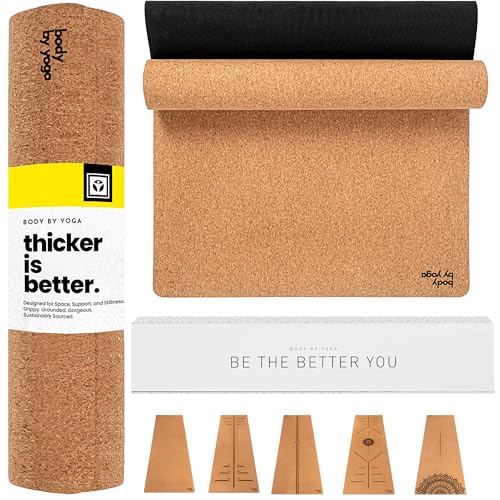
The cork surface gets grippier as you sweat, which means the more you push yourself in a hot class, the more stable your Downward Dog becomes. At 80 inches long and 26 inches wide, this mat offers more room to move than standard 72-inch mats. The natural rubber base adds heft and helps the mat stay in place on any surface, so you aren’t fighting sliding during standing balances. It’s built for performance, not portability, and that trade-off makes sense if your practice stays in one place.
The weight is the honest trade-off here. At nearly ten pounds, this is not the mat you toss in a gym bag for a quick lunchtime session. If you walk or bike to the studio, something like the Balancea Yoga Mat With Strap at 1.7 pounds is far easier to carry. But that lightness comes with a smaller surface and less stability. For dedicated studio practice or home use where you value grip that works with moisture and a surface that wipes clean easily, the extra weight buys real stability and durability.
Product photos
Ellylife Yoga Mat Natural Rubber
What We Like
- Extra-large 74.8 x 26.8 in surface
- PU top stays grippy when wet
- Natural rubber bottom grips floors
- Printed alignment lines for form check
Trade-offs
- At 6.3 lb, heavier than many mats
- 5 mm thickness less cushion for joints
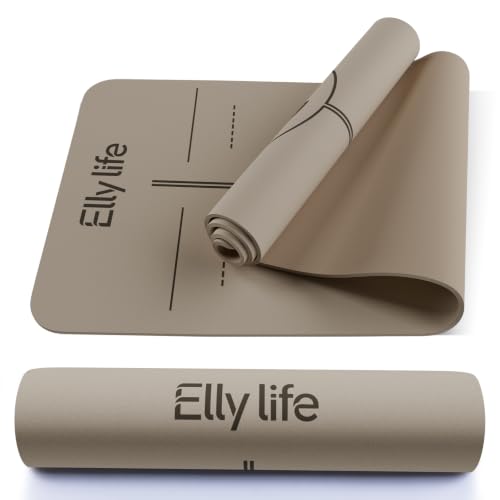
An extra-large 74.8 by 26.8 inch surface gives you plenty of room to spread out during flows, and the printed alignment lines let you check your pelvis and limb angles without guessing. That combination makes it a smart pick for anyone who values proper form over flashy extras. The PU top stays tacky even when you sweat, so you won’t slide around during hot sessions, and the natural rubber bottom holds steady on wood, tile, or concrete.
The trade-off is weight. At 6.3 pounds, this mat is noticeably heavier than something like the Balancea Yoga Mat With Strap, which weighs just 1.7 pounds. If you carry your mat to the studio or pack it for travel, that extra poundage adds up. The 5 mm thickness also provides less cushion for wrists and knees than thicker options, so if joint comfort is your top priority, you might prefer a plusher mat. For home practice where portability matters less and alignment matters more, this is a focused tool.
Product photos
Ewedoos Eco Friendly Yoga Mat

What We Like
- Eco-friendly TPE, no latex or PVC
- Dual non-slip surfaces for stability
- Built-in alignment lines for proper form
- Includes carrying strap for portability
Trade-offs
- At 0.2 inches, thinner than some prefer for hard floors
The SGS-certified TPE material means no latex, no PVC, and no odor, so if you’re bothered by synthetic smells or want to avoid those substances, this mat delivers on that front. At 0.2 inches thick, it provides the cushioning the manufacturer calls outstanding, which helps during floor-based poses. The built-in alignment lines guide precise hand and foot placement, making it easier to maintain proper body alignment without guessing. And the included strap makes it convenient for on-the-go use and storage, so you don’t need to buy a separate carry solution.
Compared to the Gaiam Premium Yoga Mat, which has a listed thickness of 4.4 inches (likely a data error), the Ewedoos is 0.2 inches thick. So it’s not the plushest option for those who want a lot of padding. The dual non-slip surfaces, a wavy underside that grips the floor and a textured top that prevents hands and feet from slipping, keep you stable during practice. The 3-layer structure adds a middle mesh layer for better tear resistance, balancing firm stability with comfortable cushioning. It’s a mat built around the core features: eco-friendly materials, alignment support, and easy transport.
Liforme Yoga Pad

What We Like
- Non-slip grip stays grippy when sweaty
- Built-in alignment system guides poses
- PVC-free, non-toxic, eco-friendly materials
- Includes free carrying bag
Trade-offs
- At 13 x 25.2 inches, it's a pad, not a full mat
- 4.2mm thickness offers less cushion than thicker mats
- Small surface limits movement for taller users
If your practice demands grip that doesn’t quit when things get sweaty, the Liforme Yoga Pad’s “GripForMe” material is the reason to pay attention. It uses a specially engineered eco-polyurethane and rubber top layer that stays tacky even when wet, so you won’t slip in downward dog or warrior poses. The built-in “AlignForMe” system guides your hands and feet into proper alignment, which helps prevent injuries for yogis of all experience levels. At 4.2mm thick, it provides enough support for knees and elbows without feeling bulky, and it’s PVC-free and non-toxic for a cleaner practice.
This is a compact pad (13 by 25.2 inches) rather than a full-length mat, so taller practitioners or those who like to spread out may find it restrictive. Compared to the Balancea Yoga Mat, which offers a full 72-inch length and 0.2-inch thickness for more coverage and cushion, the Liforme is better suited for travel, studio classes, or as a grippy top layer on an existing mat. If you need a spacious surface for flowing sequences, the Balancea gives you more room to move. But if non-slip performance is your top priority, the Liforme delivers a grip that few mats can match.
ARPFLEX Natural Rubber Yoga Mat

What We Like
- Extra-wide 26.8-inch surface
- Sweat-absorbing PU top layer
- Dual-sided non-slip surface
Trade-offs
- Requires air drying fully before rolling up.
- Heavy at 6.6 pounds for travel or carrying.
The 26.8-inch width gives you noticeably more room than standard 24-inch mats, so you won’t feel cramped during wide-legged poses or when shifting your hands and feet. It’s especially suited for hot yoga or sweaty sessions, since the PU top layer actually grips better as you perspire.
Product photos
Gaiam Premium Yoga Mat

What We Like
- Extra-thick 6mm cushioning for joints
- Textured non-slip surface for grip
- Non-toxic, 6P-free PVC material
- Includes free downloadable yoga class
Trade-offs
- At 68 inches, shorter than some mats for taller users
- Requires 2-3 days of airing out before first use
The 6mm thickness provides extra cushioning for your joints during floor poses and kneeling sequences, which can make a real difference if you have sensitive knees or hips. The textured non-slip surface is designed for excellent traction and superior grip, helping you stay stable in your practice. The non-toxic, 6P-free PVC construction means you’re not exposed to several common phthalates, making it a healthier choice for you and the planet. It’s a thoughtful option for anyone who wants joint comfort without sacrificing grip, especially if you’re newer to yoga or have sensitive pressure points.
If you’re over six feet tall, the 68-inch length might feel tight for full-body stretches, making the 72-inch KEEP Non-Slip Large Yoga Mat a better fit for longer frames. But for most home practice, this Gaiam delivers reliable cushioning and traction at a friendly price point.
KEEP Non-Slip Large Yoga Mat
What We Like
- Extra-wide 32" surface
- 7 mm cushioning for joints
- Double-sided non-slip texture
- Lightweight at 2.86 lbs
Trade-offs
- At 7 mm, less ground feel for balance poses
- Narrower than 80-inch mats for very tall users
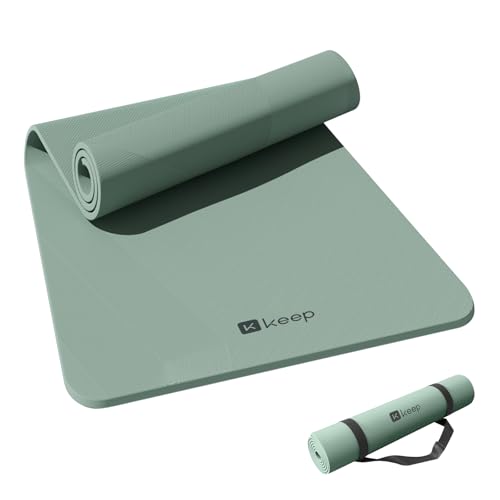
A 32-inch-wide surface means you can spread out into wide-legged poses or dynamic flows without worrying about rolling off the edges. The 7 mm padding gives your knees and elbows a forgiving landing, which makes this mat a smart pick if you’re newer to yoga or prefer extra cushion during floor work. It’s also impressively light at just 2.86 pounds, so tossing it over your shoulder with the included strap feels effortless on the way to class or the park.
That plush thickness comes with a slightly muted connection to the floor. If you rely on subtle feedback for balancing poses like tree or half moon, you might miss the direct ground feel of a thinner mat. Compared to the Body By Yoga Luxury Cork Mat, which is 80 inches long and 26 inches wide and weighs 9.9 pounds, this KEEP mat is shorter, wider, and much lighter. It’s a practical, no-fuss option for anyone who wants room to move without carrying extra weight.
Product photos
KEEP 7mm TPE Yoga Mat

What We Like
- 30% more cushion than 6mm mats
- Dual-grip non-slip on carpet and wood
- Lightweight 2.55 lbs with carry strap
- Closed-cell TPE resists sweat and odors
Trade-offs
- At 24" wide, snug for broader stances
- Requires a towel for hot yoga sessions
Seven millimeters of high-density TPE cushioning means your knees, elbows, and spine get noticeably softer landings during planks, kneeling poses, or floor work, without the wobble that comes from a squishy mat. That extra 30% padding over standard 6mm mats is the reason this KEEP mat is especially kind to sensitive joints. It’s also light enough to sling over your shoulder with the included strap, so you can take that joint relief to the studio or gym without huffing and puffing.
At 24 inches wide, this mat suits practitioners who keep their stance relatively narrow during standing poses. Users who habitually spread their feet wide in warrior or lunge sequences will find the edges sooner than they might prefer. The 72-inch length accommodates users of all heights without crowding the head or feet. For those who prioritize a compact, portable mat over a sprawling practice surface, the width trade-off is a deliberate design choice that keeps the overall package lightweight and easy to carry. The double-color design helps quickly distinguish the floor side from the practice side, a practical touch for quick setup.
Manduka Begin Yoga Mat

What We Like
- 5mm cushioning supports joints
- Lightweight at 2.1 pounds
- Reversible dual-color design
- Eco-friendly TPE foam, latex-free
Trade-offs
- At 68 inches, shorter than some mats
- 5mm thickness less cushioning than thicker mats
- Wipe-clean care needs mild soap
With 5mm of cushioning, this mat supports your joints during floor poses while still being light enough at 2.1 pounds to carry to class or store at home without feeling bulky. The center alignment stripe helps you keep poses symmetrical, which is useful when you are learning where to place your hands and feet. Its reversible dual-color design adds a bit of style, and the eco-friendly TPE foam is latex-free, making it a safe choice for most practitioners. Lightweight and easy to roll out, it works well for beginners, kids, or seniors who want to practice independently.
At 68 inches long, taller practitioners may find their toes or head hanging off the edge, especially compared to the 72-inch Balancea Yoga Mat With Strap.
Product photos
How We Evaluated Healthy Yoga Mats Under 100
Our research began with a deep dive into the materials used in each mat, cross-referencing manufacturer data with expert round-ups on the safest and most sustainable options. We looked for mats that clearly state they are PVC-free, latex-free, and made from materials like natural rubber, cork, or TPE (thermoplastic elastomer), which are known for being less toxic than traditional PVC.
The three criteria that mattered most were material safety, grip performance, and value. Material safety came first because the goal is a healthy mat. We prioritized mats with certifications or clear ingredient lists. Grip was second, especially for hot or dynamic practices where slipping can lead to injury. Value meant getting a durable, well-constructed mat that performs well without exceeding a reasonable budget.
An honest limit of a research-led evaluation is that we cannot replicate the feel of each mat under real practice conditions. While we can report on specifications and owner feedback, personal preferences for thickness, texture, and firmness are subjective. We encourage you to consider your own practice style and body type when making a final choice. For a deeper look, check out our guide to yoga mat materials to understand the differences between TPE, natural rubber, and cork.
What To Look For In Healthy Yoga Mats Under 100
Finding a healthy mat means understanding what goes into it, how it grips the floor, and how it supports your body. The right mat will be free from harmful chemicals, stay put during your practice, and offer enough cushion for your joints.
Look for mats made from natural rubber, cork, or TPE that are explicitly PVC- and latex-free. Prioritize a non-slip surface that works when wet, and choose a thickness that matches your need for cushion versus ground feel.
Material Safety and Certifications
The foundation of a healthy yoga mat is its material composition. PVC (polyvinyl chloride) is common in many budget mats but can contain phthalates and other plasticizers that off-gas. Natural rubber, cork, and TPE are safer alternatives. Some mats, like those certified by Oeko-Tex or made from USDA-certified biobased materials, offer third-party verification of their safety. Our guide to nontoxic yoga mats covers the specific materials to look for and which ones to avoid. Always check the product description for “PVC-free,” “latex-free,” and “non-toxic” labels.
Grip and Stability
A mat that slips, whether on the floor or under your hands and feet, is a safety hazard. For dry practices, a textured PVC or TPE surface works well. For hot yoga or sweaty sessions, a natural rubber base or a cork top layer is ideal because cork actually becomes grippier when wet.
A mat’s bottom surface is equally important; natural rubber or a textured TPE base will grip the floor better than a smooth one. If you practice on carpet, you may need a mat with a stronger grip or a thicker base. For more on grip materials, see our comparison of natural yoga mats.
Thickness and Cushioning
Mat thickness typically ranges from 3mm to 7mm. Thinner mats (3-5mm) offer more ground feel and stability for balancing poses, making them popular for travel and studio use. Thicker mats (6mm and above) provide more joint cushioning, which is helpful for people with sensitive knees, wrists, or hips, and for practices that involve a lot of floor work like Pilates or yin yoga. Your body weight and the surface you practice on (hardwood vs. Carpet) will also influence which thickness is right for you.
- Check if the mat is labeled “PVC-free,” “latex-free,” and “non-toxic” before buying.
- Consider your practice style: hot yoga needs a moisture-absorbing top, while gentle yoga can use any non-slip surface.
- Measure your height and the mat’s length to ensure you have room for all poses.
- Think about portability: heavier natural rubber mats are great for home, while lightweight TPE mats are better for class.
- Read owner feedback about the mat’s initial odor and how long it takes to air out.
A good rule of thumb: if you can’t find the material composition clearly listed, move on to a mat that makes its ingredients known.
Healthy Yoga Mats Under 100 Compared
The table below compares our top picks side-by-side, highlighting their key materials, dimensions, and best uses to help you narrow down your choice.
| Product | Thickness | Material | Weight | Dimensions |
|---|---|---|---|---|
| Balancea Yoga Mat With Strap | 5mm | Suede top, TPE base | 1.7 pounds | 72 x 24 inches |
| Body By Yoga Luxury Cork Yoga Mat | 0.2 inches | Cork + Natural Rubber | 9.9 pounds | 80 x 26 x 0.2 inches |
| Ellylife Yoga Mat Natural Rubber | 5 mm | Natural rubber + PU top | 6.3 lb | 74.8 x 26.8 in |
| Ewedoos Eco Friendly Yoga Mat | 0.2 inches (1/4'') | TPE (SGS-certified) | N/A | 72 x 24 inches |
| Liforme Yoga Pad | 4.2mm | Eco-polyurethane & rubber | 1.4 pounds | 13 x 25.2 x 0.2 inches |
| ARPFLEX Natural Rubber Yoga Mat | N/A | Natural rubber + PU top layer | 6.6 pounds | 72.0 x 26.8 x 0.2 inches |
| Gaiam Premium Yoga Mat | 6mm | 6P-free PVC | 3.1 pounds | 68"x24" |
| KEEP Non-Slip Large Yoga Mat | 7 mm | TPE | 2.86 lbs | 72" x 32" |
| KEEP 7mm TPE Yoga Mat | 7 mm | TPE (PVC-free, latex-free) | 2.55 lbs | 72" x 24" |
| Manduka Begin Yoga Mat | 5mm | Eco-friendly TPE foam | 2.1 pounds | 68 x 24 inches |
Frequently Asked Questions
What is the healthiest material for a yoga mat?
The healthiest materials are natural rubber, cork, and TPE (thermoplastic elastomer). These are free from PVC, phthalates, and latex, which can cause irritation or off-gas. Natural rubber offers excellent grip and durability, cork becomes grippier when wet, and TPE is lightweight and recyclable. Always look for mats labeled “PVC-free” and “non-toxic.”
How thick should a yoga mat be for joint pain?
For joint pain, a mat that is 6mm or thicker provides the most cushioning. The Gaiam Premium Yoga Mat at 6mm and the KEEP 7mm TPE Yoga Mat are good examples. Thicker mats help protect knees, wrists, and hips during floor poses. Remember that more cushioning can reduce stability in balancing poses, so find the thickness that works for your body and practice.
Can I use a yoga mat for other types of exercise?
Yes, many yoga mats work well for Pilates, stretching, and floor-based strength training. Mats with extra thickness, like the Gaiam Premium Yoga Mat, are especially good for Pilates because they cushion the spine and hips. For high-intensity workouts, a mat with a non-slip surface is important to prevent sliding. If you are looking for more specific options, our guide to the best premium mats covers versatile choices.
How do I clean a natural rubber or cork yoga mat?
Natural rubber mats should be cleaned with a mild soap and water solution, then dried completely to prevent damage. Cork mats require a gentle spray cleaner and should not be soaked, as moisture can break down the cork. Avoid harsh chemicals or machine washing, as these can ruin the material. Most manufacturers recommend spot cleaning with a damp cloth.
What is the difference between TPE and PVC yoga mats?
TPE (thermoplastic elastomer) is a recyclable, lightweight material that is free from PVC and latex. It offers good grip and cushioning and is often more eco-friendly. PVC (polyvinyl chloride) is heavier, more durable, and cheaper, but it can contain phthalates and off-gas during its first uses. For a healthy practice, TPE, natural rubber, or cork are better choices than PVC.
The Bottom Line
The Balancea Yoga Mat With Strap is our best overall pick for most yogis. Its combination of a non-slip suede top, eco-friendly TPE base, and featherlight 1.7-pound weight makes it ideal for anyone who wants a safe, portable mat for studio or travel. If you practice hot yoga or want a natural surface, the Body By Yoga Luxury Cork Yoga Mat offers superior grip and a stable rubber base.
For those on a budget, the Ewedoos Eco Friendly Yoga Mat delivers alignment guides and eco-friendly materials at a great value. If joint cushioning is your priority, the Gaiam Premium Yoga Mat or the KEEP 7mm TPE Yoga Mat provide the extra thickness your body needs. Beginners will appreciate the Manduka Begin Yoga Mat for its lightweight, reversible design and clear alignment guidance.
The single most important factor when buying a healthy yoga mat is material safety. Always choose a mat that is explicitly PVC- and latex-free, and one that fits your practice style and body type. A mat that is safe for you and the planet will support your practice for years to come.
