
10 Best Belts For Gym in 2026
This post contains affiliate links. As an Amazon Associate, we earn from qualifying purchases.
For serious gym work, the Gymreapers 10MM Lever Weightlifting Belt earns our Best Overall spot thanks to its IPF and USAPL approval, 10mm genuine leather, and contoured 4-inch design that balances support with mobility. Competitive lifters should also consider the Iron Bull Strength 10mm Double Prong Belt for a traditional prong closure or the RDX IPF Compliant Powerlifting Belt for dual thickness options.
Choosing a gym belt comes down to your lifting style and goals. A powerlifter needs a stiff, competition-legal belt for max-effort squats and deadlifts, while a general gym-goer might prioritize comfort and quick adjustability for varied workouts. The wrong belt can limit your performance or just collect dust in your locker.
We built this guide by analyzing manufacturer specifications, competition approval lists, and patterns in owner feedback across dozens of models. Our research covers leather thickness, buckle types, sizing accuracy, and durability so you can match the right belt to your training.
Top 10 Belts For Gym in the Market
Certain content that appears on this site comes from Amazon. This content is provided "as is" and is subject to change or removal at any time.
The Best Belts For Gym, Reviewed
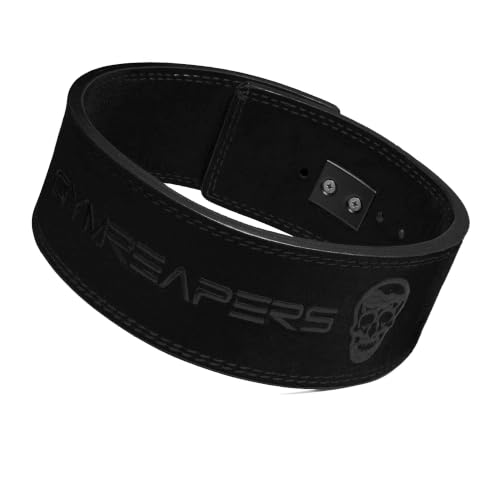
Gymreapers 10MM Lever Weightlifting Belt
What We Like
- IPF and USAPL competition approved
- 10mm thick genuine bovine leather
- Heavy-duty Camac steel lever buckle
- Contoured 4-inch design for snug fit
Trade-offs
- Lever buckle requires precise adjustment to get right
- Genuine leather needs break-in period
A 10mm thick lever belt built from premium bovine leather and approved by IPF, USAPL, and other major federations means you can train and compete without swapping gear. The contoured 4-inch width wraps your torso snugly without digging into your sides, and the Camac steel lever buckle locks tight with a quick motion so you stay braced through every rep. This is the belt for lifters who want one piece of kit that handles heavy squats, deadlifts, and bench press from day one in the gym straight through to the platform.
The trade-off is that genuine leather requires a proper break-in before it feels fully molded to your body, and the lever mechanism takes a bit of fiddling to find your exact fit at first. If you prefer a belt that conforms quickly and don’t mind a short adjustment period, this is the better long-term investment.
Iron Bull Strength 10mm Double Prong Belt

What We Like
- IPF approved for competition use
- 10mm suede leather offers firm support
- Double prong closure stays secure
- Lifetime warranty against defects
Trade-offs
- Requires short break-in period to conform
- Not ideal for those wanting a quick-release lever buckle
A 10mm thickness from a single cut of suede leather gives this belt the firm, consistent support you want for heavy squats and deadlifts, without the bulk of a 13mm belt. The double prong closure locks in place reliably, and the IPF approval means it’s ready for competition use right out of the package. If you’re training for a meet or simply want a belt that holds up to serious weight, this one delivers the stability and durability you need.
The leather requires a short break-in period before it fully conforms to your shape, as noted in the product details. Compared to the Gymreapers 10MM Lever Belt, which uses a quick-release lever, this double prong design takes a little more time to fasten but gives you a more traditional, adjustable fit. It’s a classic choice for lifters who prioritize competition legality and no-nonsense support over convenience.
RDX IPF Compliant Powerlifting Belt

What We Like
- IPF compliant for competition use
- Dual thickness options (10mm/13mm)
- 12 precisely spaced adjustment holes
- Multi-layer leather with steel rivets
Trade-offs
- Roller buckle takes practice to fasten quickly
- Size chart requires measuring around belly button, not pant size
A 13mm genuine cowhide leather belt with IPF compliance means you can walk onto any powerlifting platform without worrying about equipment checks. The uniform 4-inch width spreads pressure evenly across your core, so you can brace hard on heavy squats and deadlifts. Serious lifters who train for meets will appreciate the dual thickness options: the 10mm gives a bit more flexibility for volume days, while the 13mm locks in rigid support for max attempts. The dual-prong roller buckle holds tight through the entire session, no mid-set loosening.
The 13mm version of this belt is built to IPF competition specs, so it meets the strict criteria for meets like USAPL and IPL right from the start. The roller buckle locks in tight and holds firm, which means you won’t have to adjust it mid-lift, though it does take a bit more time to fasten compared to a lever belt. If you want a belt that’s ready for the platform and don’t mind a short learning curve with the buckle, this is a reliable choice for meet prep.
Iron Bull Strength 13mm Lever Belt

What We Like
- New chrome lever buckle is nearly indestructible
- Non-slip suede leather surface
- Competition approved by USPA and IPL
Trade-offs
- Only for serious or extreme lifters
- Requires careful sizing by true waist measurement
- Limited flexibility due to 13mm thickness
The genuine suede leather provides a non-slip grip against your shirt or skin, and the updated chrome lever buckle is built to handle serious abuse without failing.
This level of rigidity is overkill for lighter training days or general gym work, where a thinner belt like the Gymreapers 10MM Lever Weightlifting Belt may be more suitable. Stick with this if your goals are strictly about heavy powerlifting, but consider a thinner belt if you want something more versatile for varied workouts.
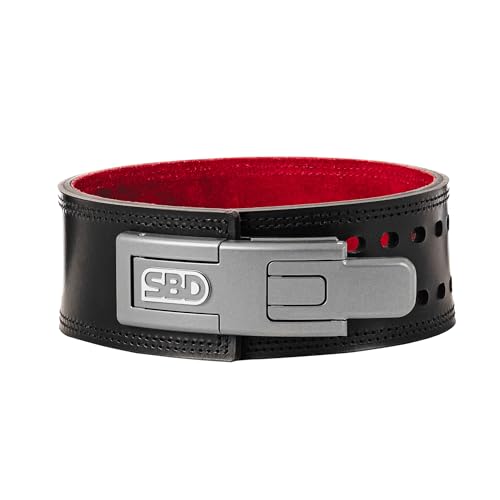
SBD 10mm Powerlifting Belt
What We Like
- British cowhide leather molds to waist
- Gliding lever adjusts like prong, locks like lever
- Low-profile buckle reduces pinching
- Input from elite powerlifters and coaches
Trade-offs
- 10mm thickness less rigid than 13mm belts
- Not ideal for lifters who prefer a prong-style belt
The belt uses two cuts of genuine British cowhide leather, which provides support while molding comfortably to your waist over time. The patented gliding lever offers the adjustability of a prong belt with the secure lock of a lever belt, allowing quick tightening or loosening during training, squats, and deadlifts. This combination makes it a practical choice for lifters who want one belt that works across different exercises and body positions.
At 10mm thick, it offers a balance of comfort and support that suits most training sessions, from warm-ups to near-max attempts. The low-profile buckle with rounded edges minimizes pinching, discomfort, and interference during lifts like bench press, squat, and overhead press, a detail that improves comfort over a long session.
Product photos
Harbinger Padded Leather Contoured Belt

What We Like
- Padded leather with suede lining
- Contoured design for added comfort
- Double-stitched for extra durability
- Steel roller buckle secures tension
Trade-offs
- Not as stiff as 10mm+ powerlifting belts
- Only available in four waist sizes
A 4-inch width gives your lower back and core the support they need during heavy squats and deadlifts, and the genuine leather construction helps you maintain proper posture under load. The padded leather and suede lining provide comfort that many all-leather belts lack, and the contoured design adds to the fit. If you want a belt that offers real structural support from day one, this is a smart pick for mid-to-heavy training sessions.
If you’re pulling near-max singles or competing in a federation, a firmer 10mm or 13mm belt like the Iron Bull Strength 10mm Double Prong Belt might suit you better. This is a padded belt, not a stiff powerlifting slab. The dual-prong steel roller buckle locks tension in place, and at 1.1 pounds the padded construction makes it a well-made middle ground for general strength work where comfort matters more than absolute rigidity.
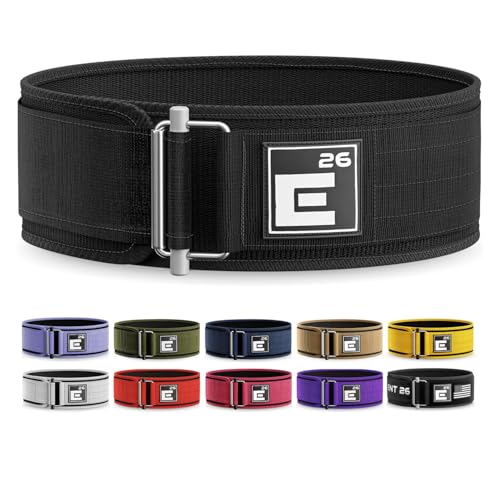
Element 26 Self-Locking Weight Lifting Belt
What We Like
- Self-locking buckle for security
- Breathable nylon resists sweat
- No break-in period needed
- Infinitely adjustable for precise fit
Trade-offs
- 4-inch width offers less lower back coverage
- Nylon flexes more than stiff leather belts
The self-locking metal buckle engages automatically under load, so you never have to worry about the belt slipping mid-squat or deadlift. That quick-release roller also lets you pop it off between sets without fumbling, which is a small luxury when you are already gassed. Made from premium nylon that breathes and doesn’t soak up sweat like leather, this belt is comfortable for long sessions and easy to clean. It is infinitely adjustable too, so you can dial in exactly the right pressure for each lift without being stuck in preset holes. If you want a no-fuss belt that supports heavy work without the break-in period, this one delivers.
The 4-inch width is uniform all around, which is standard for many lifting belts and suitable for Olympic lifting competitions. The nylon material is breathable and does not retain sweat like leather, making it comfortable for long sessions and easy to clean. If you prefer a stiffer, more rigid feel, a leather belt might be more to your liking, but the Element 26 offers quick adjustments, easy packing, and automatic locking security. It is competition approved for Olympic lifting, so you can wear it in meets without second-guessing.
Product photos
RDX Cowhide Leather Padded Belt

What We Like
- Genuine cowhide leather for durability
- Wide padded lumbar support
- Dual-prong steel buckle prevents slipping
- Suede inner lining for comfort
Trade-offs
- Thicker belts offer more rigidity for max loads
- Thinner than 10mm belts used by some powerlifters
A 7 mm genuine cowhide leather belt gives you a solid middle ground between everyday comfort and serious support. The wide padded lumbar area helps you brace properly before squats or deadlifts, while the suede lining keeps things comfortable against your skin. This belt suits anyone who wants reliable back protection without the bulk of a 10 mm or 13 mm belt, making it a practical choice for regular gym-goers and intermediate lifters.
Seven mm leather flexes more than thicker options like the Gymreapers 10MM Lever Belt, so if you’re pushing near-maximal loads, you might miss the extra rigidity. The dual-prong buckle gives you ten adjustment holes for a precise fit, but the leather flap over the buckle can feel a bit bulky. For most workouts and steady progress, this RDX belt offers dependable support at a reasonable build quality.
Product photos
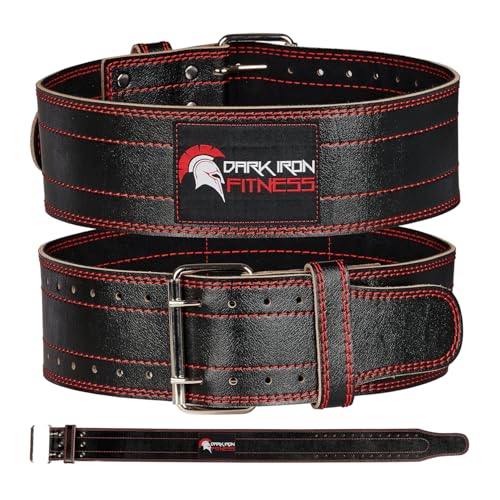
Dark Iron Fitness Genuine Leather Belt
What We Like
- Double-prong buckle for secure hold
- Reinforced double-stitching for durability
- 12 adjustment holes for precise fit
- Genuine leather with stylish color options
Trade-offs
- 4-inch width can limit mobility for some lifts
- Leather requires break-in period for comfort
A 4-inch width and genuine leather construction give this belt a balanced mix of rigid support and comfort for heavy lifting. The double-prong buckle and reinforced stitching keep it secure under max loads, while 12 adjustment holes at 1-inch intervals let you dial in a snug fit without guessing. It works well for powerlifting, squats, deadlifts, and even daily warehouse use, making it a versatile choice for lifters who want real leather.
The main trade-off is that the 44-inch length and 4-inch width may feel restrictive for taller lifters or those who prefer a narrower belt for Olympic lifts. The Dark Iron belt uses a traditional double-prong system, while the Gymreapers 10MM Lever Belt features a lever closure and is IPF approved. If you value genuine leather, this is a solid everyday belt for steady strength training.
Product photos
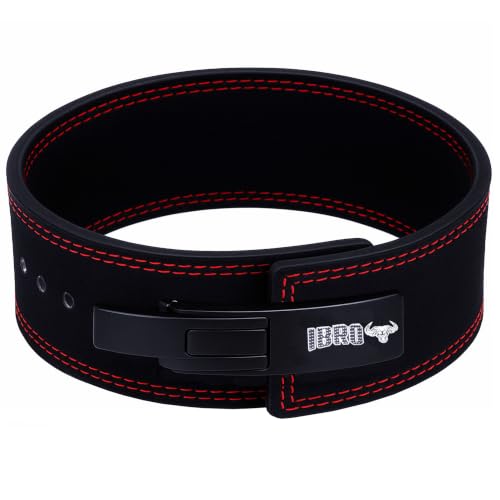
IBRO Powerlifting Lever Belt
What We Like
- Quick-release lever for consistent tightness
- Available in 8mm, 10mm, or 13mm thickness
- Genuine leather with double stitching
- Easy 2-minute sizing and setup
Trade-offs
- Arrives unassembled; Phillips screwdriver not included
- Lever screws need checking before each session
- Firm out of the box; requires break-in time
A 10mm thickness and 4-inch width give this lever belt a balanced feel for most lifters. It’s stiff enough to brace against on heavy squats and deadlifts, but not so rigid that it fights you during warm-ups. The quick-release steel lever locks to the same tightness every set, so you don’t waste time fiddling with holes or straps between reps. It’s built from genuine leather with double stitching, so it holds its shape session after session without folding or rolling. That makes it a strong pick for anyone who wants a consistent, no-fuss belt that adapts to their waist as they progress.
Setup takes a few minutes: the belt arrives unassembled, and you’ll need a Phillips screwdriver (not included) to attach the lever. You also have to tighten the lever screws before each session, easy to overlook when you’re in a hurry. The payoff is a quick-release steel lever that clamps to the exact same tightness every set, so you can brace hard on squats and deadlifts without fumbling with holes or straps.
Product photos
How We Evaluated Belts For Gym
We started by reviewing the technical specs that matter most for gym belts: material thickness, buckle design, competition approval status, and sizing range. Manufacturer documentation told us which belts meet IPF, USAPL, USPA, and IPL standards, while expert round-ups from strength coaches helped us understand how different designs perform under heavy loads.
Our evaluation focused on four key criteria. Stiffness and support came first, belts must resist compression during heavy squats and deadlifts. Fit and adjustability mattered next, since a belt that shifts during a set is dangerous. Durability and construction quality, including stitching and rivet reinforcement, determined long-term value. Finally, we considered competition legality for lifters who train for meets.
An evaluation has honest limits. Verified owner reports about break-in periods, buckle reliability, and real-world sizing quirks were used. For the most thorough breakdown, our comprehensive guide to lifting belts covers every model in greater depth.
What To Look For In Belts For Gym
Choosing a gym belt means matching three variables to your training style. The table below summarizes the key differences between our top picks.
Focus on thickness, buckle type, and competition approval first. Material and width matter for comfort, but those three will determine whether the belt actually helps your lifts.
Thickness and Stiffness
The thickness of a leather belt directly affects how much intra-abdominal pressure you can create. Most powerlifting belts are 10mm or 13mm thick. A 10mm belt offers a good balance of support and flexibility for general strength work, while a 13mm belt provides maximum rigidity for heavy squats and deadlifts. Thinner belts, like the padded leather options, are more comfortable for moderate lifting but won’t hold up to max-effort loads. Our heavy-duty powerlifting belts roundup covers the stiffest options available.
Buckle Type: Lever vs. Prong
Lever buckles offer consistent tightness and quick release between sets, making them popular among competitive powerlifters. The trade-off is that lever belts require precise sizing and may need adjustment if your waist changes. Prong belts, either single or double, allow more flexibility in fit and are easier to size by feel, but they take longer to fasten and unfasten. For a deeper dive into the best quick-adjust options, our quick-adjust lever lifting belts guide has you covered.
Competition Approval
If you plan to compete in powerlifting, check whether a belt is approved by the IPF, USAPL, USPA, or IPL. These organizations have specific rules about belt width, thickness, and buckle design. The Gymreapers 10MM Lever and Iron Bull Strength 10mm Double Prong are both IPF approved, while the Iron Bull Strength 13mm Lever meets USPA and IPL standards. Casual lifters can ignore this criterion entirely.
- Measure your waist at belly button height, not your pant size.
- Check the belt’s width, most powerlifting belts are 4 inches wide.
- Look for reinforced stitching and steel rivets in leather belts.
- Consider a nylon belt if you want zero break-in time and sweat resistance.
- Read return policies carefully; leather belts cannot be returned after sizing.
A belt that fits properly should feel snug but not painful when you brace your core.
Belts For Gym Compared
The table below compares our top picks across the features that matter most for gym training, including thickness, buckle type, and competition approval.
| Product | Width | Material | Closure |
|---|---|---|---|
| Gymreapers 10MM Lever Weightlifting Belt | 4 inches | Genuine bovine leather | Lever buckle (Camac steel) |
| Iron Bull Strength 10mm Double Prong Belt | 4 inches | Suede leather | Double prong |
| RDX IPF Compliant Powerlifting Belt | 4 inches | Genuine cowhide leather | Dual-prong roller buckle |
| Iron Bull Strength 13mm Lever Belt | 4 inches | Suede leather | Lever buckle (chrome) |
| SBD 10mm Powerlifting Belt | N/A | Genuine British cowhide leather | Patented Gliding Lever |
| Harbinger Padded Leather Contoured Belt | 4 inches | Genuine leather | Dual-prong steel roller buckle |
| Element 26 Self-Locking Weight Lifting Belt | 4 inches | 100% premium nylon | Self-locking metal buckle |
| RDX Cowhide Leather Padded Belt | 4 or 6 inches | Genuine cowhide leather | Dual-prong roller buckle |
| Dark Iron Fitness Genuine Leather Belt | 4 inches | 100% genuine leather | Double-prong metal lever buckle |
| IBRO Powerlifting Lever Belt | 4 inches | Genuine leather core with suede finish | Quick-release steel lever buckle |
Frequently Asked Questions
What thickness gym belt should I buy?
Choose 10mm for a balance of support and flexibility that works for most lifters. Go with 13mm if you are a serious powerlifter who wants maximum rigidity for heavy squats and deadlifts. Thinner belts, around 6mm to 8mm, are better for general strength training and moderate loads.
Are lever belts better than prong belts?
Lever belts provide faster, more consistent tightness between sets, which competitive powerlifters often prefer. Prong belts offer more adjustability and are easier to size correctly if your waist measurement changes. Neither is universally better, it depends on whether you value speed or flexibility.
Do I need an IPF approved belt?
Only if you plan to compete in IPF or USAPL sanctioned meets. These organizations require belts to meet specific width and thickness standards. For casual gym training or non-IPF competitions, any quality belt that fits well will work fine.
How tight should a weightlifting belt be?
A gym belt should be tight enough that you can feel it pressing against your abdomen when you brace your core, but not so tight that it restricts your breathing or causes pain. You should be able to slide one finger between the belt and your body when standing relaxed.
Can I use a leather belt for CrossFit?
Leather belts work for CrossFit, but they are less ideal for workouts that involve rapid position changes or gymnastics. Many CrossFitters prefer nylon belts because they are breathable, require no break-in, and allow more freedom of movement. Our lifting belts for CrossFit guide covers the best options for that style of training.
The Bottom Line
The Gymreapers 10MM Lever Weightlifting Belt is our Best Overall pick for lifters who want a single, competition-legal belt that handles both training and meets. Its 10mm leather, contoured 4-inch design, and Camac steel lever buckle deliver the support and consistency that serious gym-goers need.
If your budget is tighter or you prefer a traditional prong closure, the Iron Bull Strength 10mm Double Prong Belt offers IPF approval and a lifetime warranty at a competitive value. For lifters who train at the extremes of weight, the Iron Bull Strength 13mm Lever Belt provides unmatched rigidity for heavy squats and deadlifts.
The single most important factor when buying a gym belt is getting the right thickness for your lifting goals. Choose 10mm for versatility, 13mm for max support, and a thinner or nylon belt for general training. Measure your waist accurately, and you will find a belt that makes every set safer and more productive.
